PuriActives® MEVAL 100L
SCIENTIFIC MARKETING PRESENTATION · ENGLISH
PuriActives®MEVAL 100L
Mevalonolactone 100LHigh-purity mevalonolactone enabled by synthetic biology
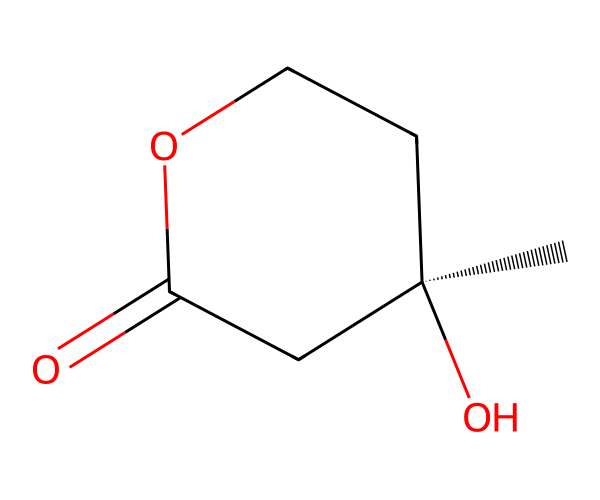
(R)-mevalonolactone · C6H10O3 · MW 130.14
A foundational metabolite of the mevalonate pathway, brought into modern skin and hair science through precision biotechnology.
| High purityDefined, controlled composition | High activityMevalonate pathway biology |
| Clean productionControlled biosynthesis | Green biotechnologyResource-efficient platform |
OPENING PERSPECTIVE
A new generation of metabolic actives is reshaping skin science
Cosmetic science is moving beyond conventional antioxidant and moisturizing concepts toward support for more fundamental biological processes: cellular energy, lipid synthesis, metabolic signaling, epidermal renewal, and barrier homeostasis.
Healthy skin depends not only on structural components, but also on the metabolic pathways that continuously build and maintain them.
Five core processes in metabolic skin scienceCellular energyLipid synthesisMetabolic signalingEpidermal renewalBarrier homeostasis
NARRATIVE MAP
Five questions, one complete storyline
| 01 | Why is the mevalonate pathway essential to skin and hair biology? |
| 02 | Why is mevalonolactone scientifically compelling as a cosmetic active? |
| 03 | What evidence supports its biological relevance—from cells to human skin? |
| 04 | Why do high purity and synthetic-biology production matter to formulators? |
| 05 | What new product concepts can be built with PuriActives® MEVAL 100L? |
Storyline: Biology (the mevalonate pathway in skin and hair) → Evidence (cells, 3D epidermis, human studies) → Scalp and hair → Platform (synthetic biology and purity) → Applications.
CHAPTER 01 · BIOLOGY
The mevalonate pathway: a central metabolic hub linking lipid synthesis, cellular signaling, and tissue homeostasis
It operates in both the epidermis and the hair follicle.
1.1 Skin care is shifting from surface correction to metabolic support
Healthy skin depends not only on structural components, but also on the metabolic pathways that continuously build and maintain them.
| Traditional model | Metabolic model |
|---|---|
| Supply finished materials from the outside:· Occlusive and humectant moisturization· Topical lipid supplementation· Antioxidant quenching· Surface exfoliationThese benefits are real, but often symptomatic and temporary. | Support the pathways that generate skin lipids and signals:· De novo lipid biosynthesis· Lipid transport and secretion· Metabolic signaling (PPAR, ABCA12)· Epidermal renewal capacityThis approach targets the underlying mechanism of barrier homeostasis. |
Where MEVAL 100L fits: mevalonolactone supplies substrate to the mevalonate pathway—the metabolic route through which every epidermal cell synthesizes cholesterol and isoprenoids.
1.2 Mevalonolactone: a stable, ready-to-use form of a foundational metaboliteode=”block” data-draft-type=”table” data-size=”normal” data-row-style=”normal”>
| (R)-mevalonolactoneLactone form | (R)-mevalonateOpen-chain form |
aft-node=”block” data-draft-type=”table” data-size=”normal” data-row-style=”normal”>
| (R)-mevalonolactoneLactone form | (R)-mevalonateOpen-chain form |
Reversible hydrolysis in aqueous environments
| INCI / CAS | Mevalonolactone / 674-26-0 (EC 211-615-0) |
|---|---|
| Formula / MW | C6H10O3 / 130.14 |
| Active configuration | (R)-(–)-mevalonolactone, the naturally bioactive enantiomer |
| Regulatory identity | EU CosIng (humectant); China IECIC 2021 (No. 03342) |
Why the lactone form?
Mevalonolactone is the intramolecular δ-lactone of mevalonate; the two forms interconvert in water. The lactone is chemically stable and easier to formulate and store. Like a prodrug-like delivery form, it hydrolyzes in the aqueous environment of skin into the biologically active acid.
Isolated hepatocytes take up the lactone and channel it into sterol synthesis at least as efficiently as the free acid.
Sources: Chen B. et al., Skin Res Technol. 2022;28:804–814; Edwards P.A. et al., J Biol Chem. 1983;258:7272–7275; PubMed 901801.
1.3 One pathway supplies the lipids that maintain the barrier
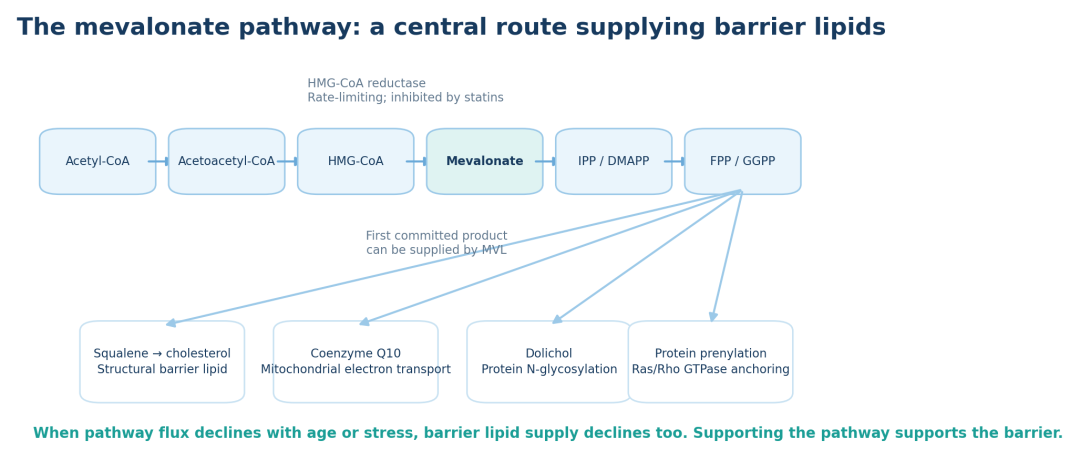
- HMG-CoA reductase: the rate-limiting step; inhibited by statins.
- Mevalonate: the first committed product; can be supplied by mevalonolactone.
- Squalene → cholesterol: a structural lipid of the stratum corneum barrier.
- Coenzyme Q10: supports mitochondrial electron transport and antioxidant defense.
- Dolichol: supports protein N-glycosylation in the endoplasmic reticulum.
- Protein prenylation: anchors Ras/Rho-family signaling GTPases to membranes.
When pathway flux declines with age or stress, the supply of barrier lipids declines as well. Supporting the pathway supports the barrier.
1.4 Ceramides, cholesterol, and free fatty acids form the “mortar” of the barrier
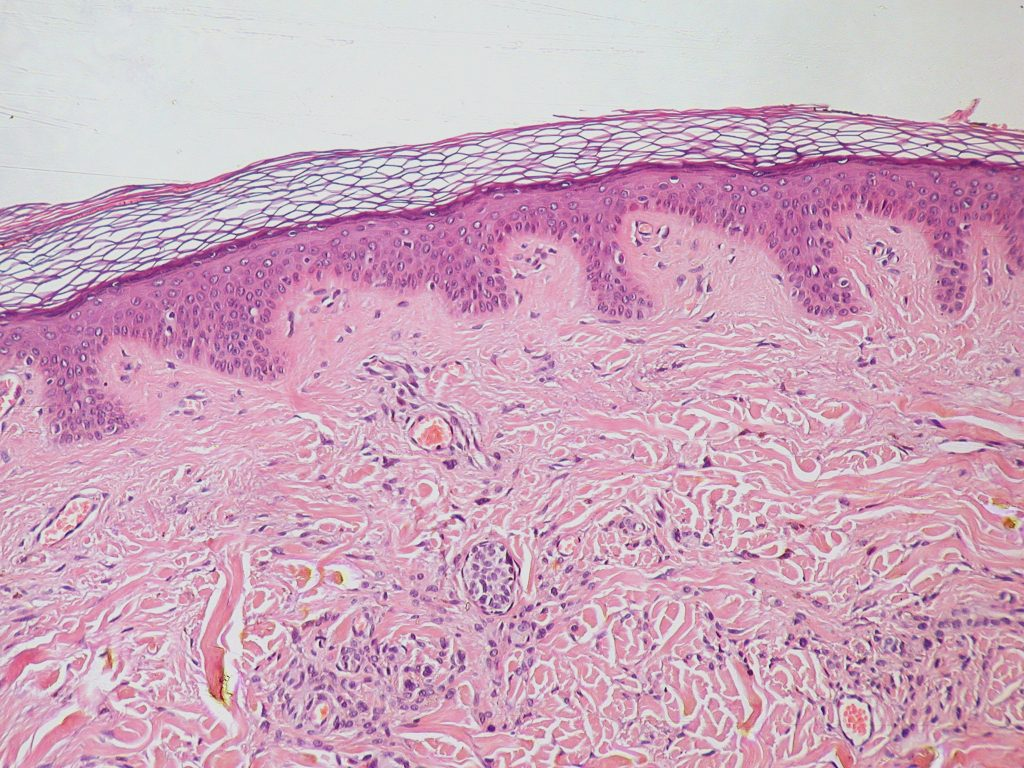
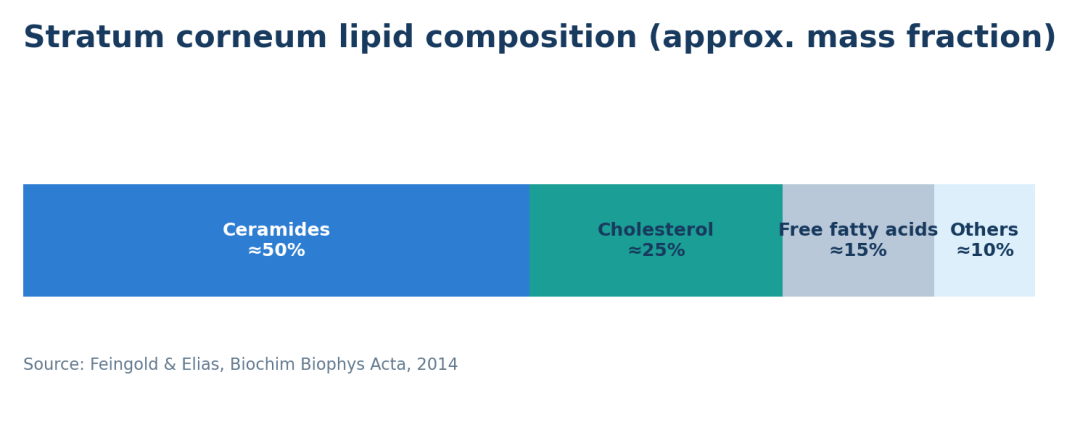
- Ceramides: the backbone of lamellar sheets.
- Cholesterol: regulates lamellar fluidity and packing; its synthesis is required for barrier repair.
- Free fatty acids: complete the crystalline lipid matrix that limits water loss.
Of these three, cholesterol supply depends directly on the mevalonate pathway.
1.5 Blocking the pathway impairs the barrier; adding mevalonate restores it
| Condition | Observation |
|---|---|
| ControlVehicle-treated mouse epidermis | Normal lamellar body structure; barrier recovery follows the normal time course after disruption. |
| Pathway inhibitionTopical HMG-CoA reductase inhibitor | Abnormal lamellar body morphology; delayed barrier recovery. |
| Inhibition + mevalonateCo-application of mevalonate or cholesterol | Lamellar body structure normalizes and recovery is rescued. Cholesterol produces the same rescue effect. |
Epidermal cholesterol synthesis is causally required for barrier repair—and mevalonate supplementation can reverse this deficit.
Source: Feingold et al., J Clin Invest, 1990;86(5):1738–1745. Topical lovastatin model in mouse epidermis.
1.6 Cholesterol synthesis falls in aged epidermis—and mevalonate helps restore it
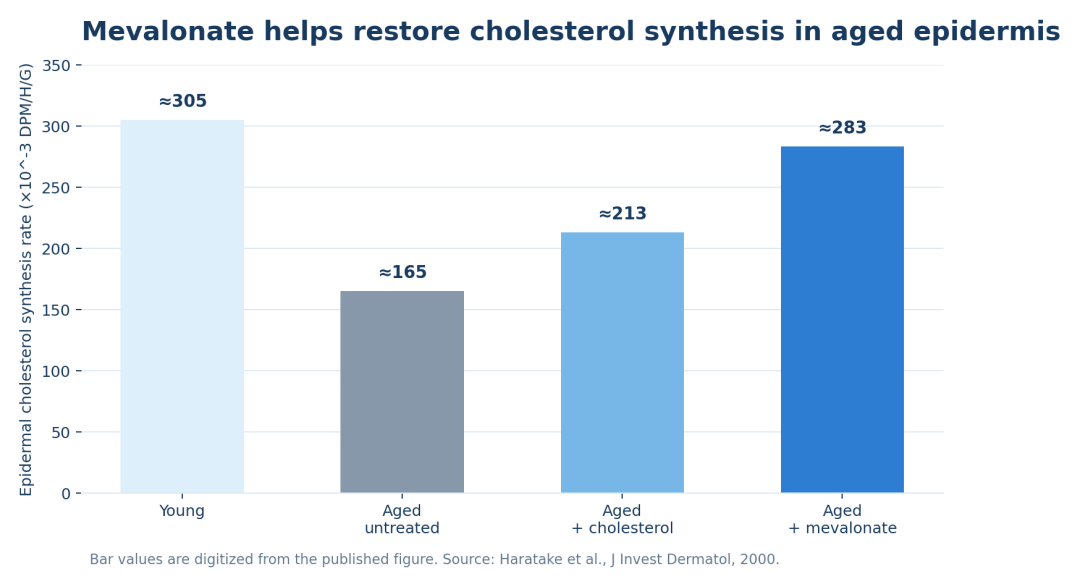
- Cholesterol synthesis in aged epidermis falls to about half the young level.
- Topical cholesterol only partially restores synthesis.
- Topical mevalonate restores synthesis close to the young level and improves barrier recovery.
- The effect is age-dependent: young skin is not affected.
Supplying a pathway substrate outperforms supplying the end product.
CHAPTER 02 · EVIDENCE
From cells to skin: lipid synthesis, 3D epidermal models, and a randomized human study
This chapter also includes independent technical literature on fermentation-derived (R)-mevalonolactone.
2.1 Two complementary routes in keratinocytes
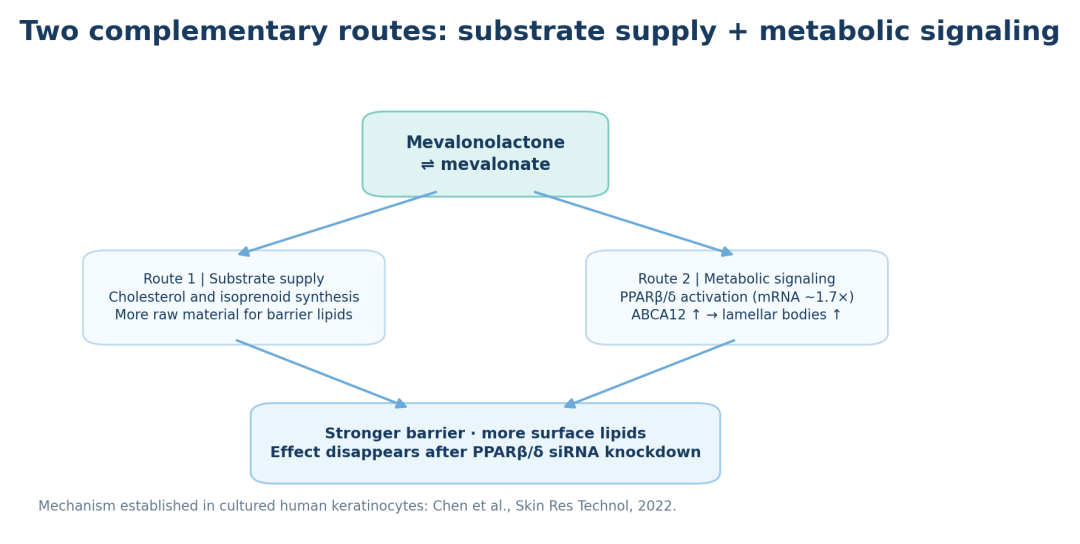
- Route 1 | Substrate supply: supplies the mevalonate pathway downstream of the rate-limiting step, supporting cholesterol, isoprenoid, ceramide, and free fatty acid production.
- Route 2 | Metabolic signaling: mevalonate-derived signaling increases PPARβ/δ expression (mRNA ~1.7-fold), followed by increased ABCA12 and lamellar bodies, enabling more lipid transport and secretion into the stratum corneum.
- The effect disappears after PPARβ/δ knockdown by siRNA.
Mechanism established in cultured human keratinocytes: Chen et al., Skin Res Technol, 2022;28(6):804–814.
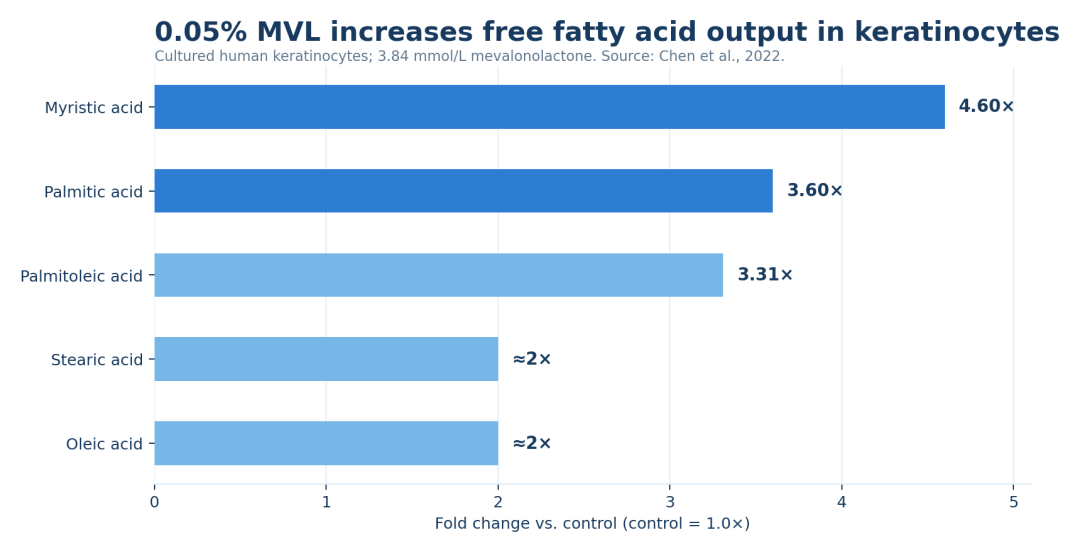
2.2 In vitro: free fatty acid output increases severalfold
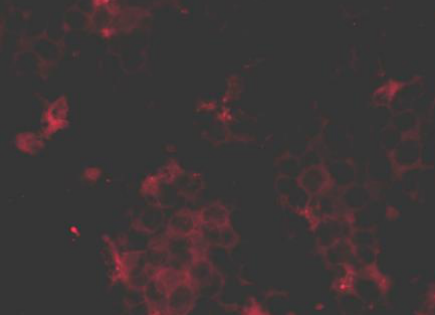
| Control — Nile Red staining | + MVL — stronger lipid fluorescence |
| Control — Nile Red staining | + MVL — stronger lipid fluorescence |
- Free fatty acids are one of the three major structural lipids of the barrier.
- The largest increases occur in long-chain fatty acids—the same family of raw materials used to build ceramides.
- Nile Red fluorescence visually confirms the lipid increase in the same model.
This pathway does more than synthesize cholesterol—it amplifies the broader lipid-synthesis program.
Fold changes: Chen et al., Skin Res Technol, 2022. Nile Red images: independent technical literature on fermentation-derived (R)-mevalonolactone, presented at the 132nd Annual Meeting of the Pharmaceutical Society of Japan.
2.3 3D epidermal model: TEWL falls to 27% of control
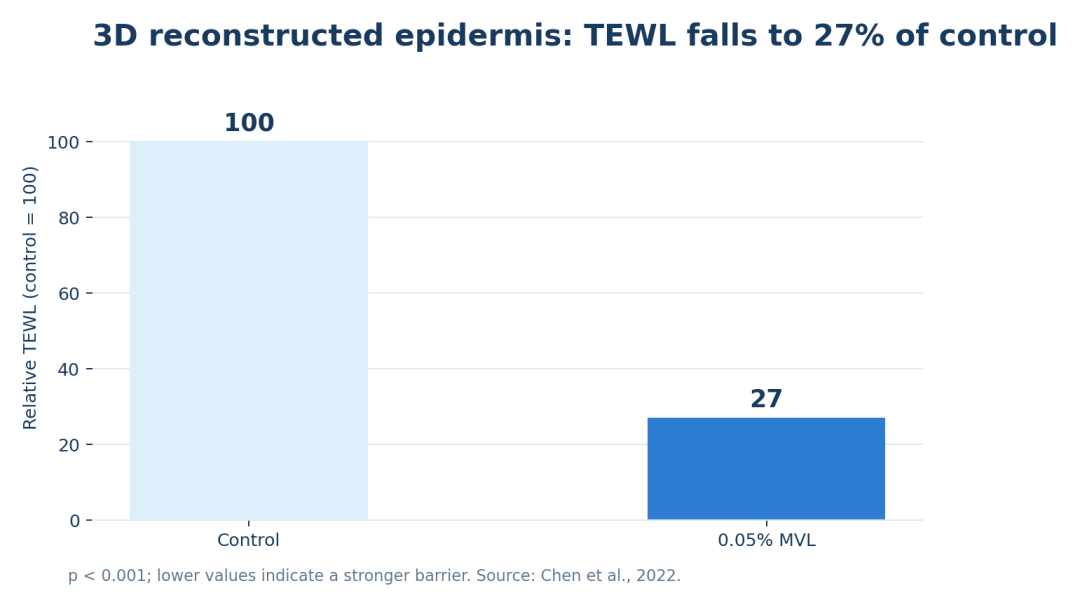
- TEWL (transepidermal water loss) is a standard functional measure of barrier integrity.
- A 73% reduction in a living, stratified epidermal model goes beyond what a single-cell assay can show.
- The result connects cellular lipid data with tissue-level barrier performance.
From lipid biochemistry to a functional barrier—closed within the same model system.
2.4 Randomized human study: 0.1% MVL emulsion improves barrier and lipids
Sixty-six women in winter; randomized, vehicle-controlled; 0.1% mevalonolactone emulsion applied twice daily for 2 weeks (MVL n=30 and vehicle n=29 included in the analysis).
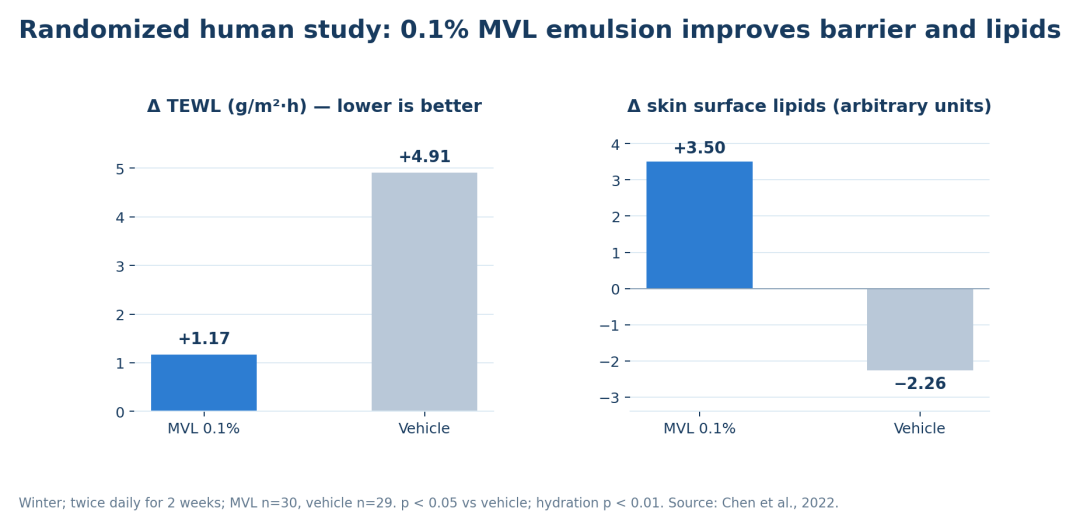
- Winter conditions increased TEWL; the MVL group barely increased (+1.17), while the vehicle group increased markedly (+4.91).
- Surface lipids increased in the MVL group (+3.50) and decreased with vehicle (−2.26), consistent with the in vitro lipid data.
- Stratum corneum hydration improved significantly versus vehicle (p < 0.01). Together, the three measures indicate a stronger, better-supplied barrier.
The pathway-level mechanism observed in vitro translates into measurable benefits in human skin.
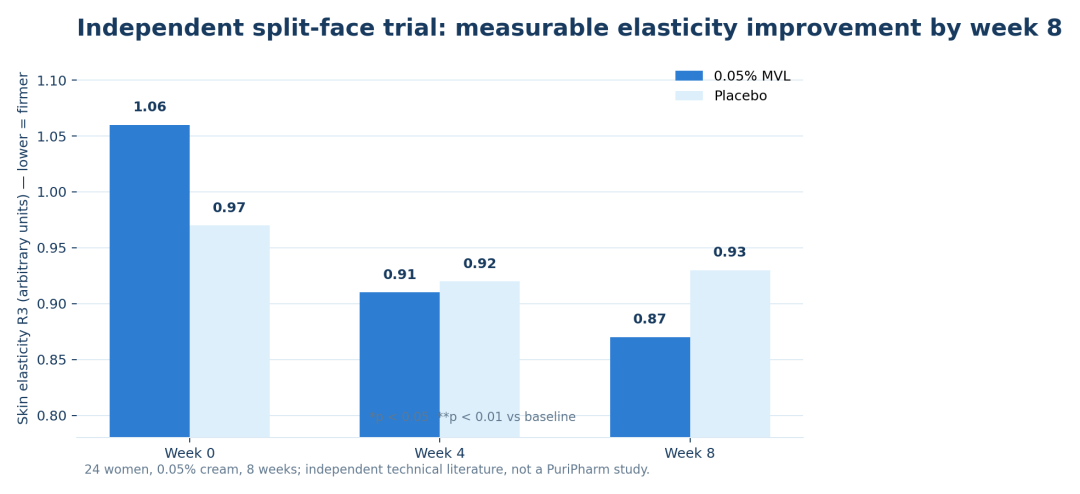
2.5 Independent split-face data: (R)-MVL is associated with visible wrinkle improvement
Independent technical literature on fermentation-derived (R)-mevalonolactone (not a PuriPharm study): randomized split-face trial, 24 women, 0.05% cream, 8 weeks.
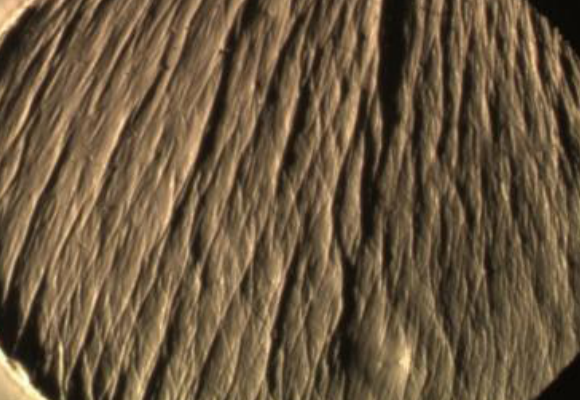
| Before use | After 8 weeks |
| Before use | After 8 weeks |
Skin surface replicas (crow’s-feet area), SV600 analysis: finer and shallower texture after 8 weeks.
Additional data from the same literature
- Water retention in a 3D epidermal model was approximately three times the control.
- TEWL decreased from approximately 4.3 to 1.2 g/m²/h (n=9).
Source: independent technical literature on fermentation-derived (R)-mevalonolactone. Not a PuriPharm study; not measured data for MEVAL 100L.
2.6 Early signals beyond the barrier
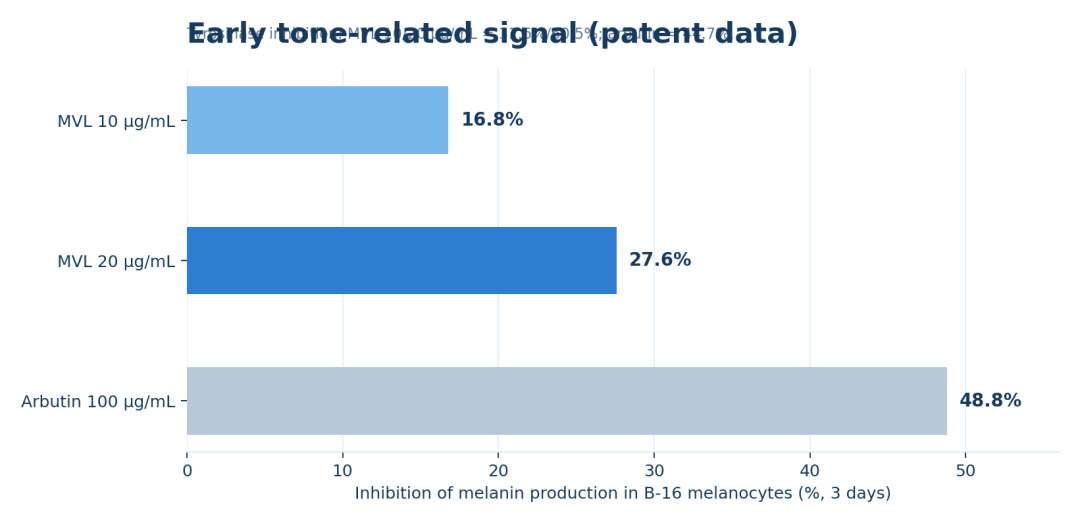
| Antioxidant network· The mevalonate pathway also builds the isoprenoid side chain of coenzyme Q10.· Patent literature proposes mevalonolactone to support epidermal CoQ10 and antioxidant defense.· Mechanistic rationale only; human data are not yet available. | Microbiome and safety· MVL inhibits Staphylococcus epidermidis biofilm formation in vitro.· Relevant to the skin and scalp surface ecosystem.· Oral-intake studies report a favorable safety profile in models. |
Directional early signals—development opportunities, not current product claims.
Sources: KR10-2018-0114391 A (melanin/tyrosinase); DE10148266 A1 (CoQ10 concept); Scopel et al., 2014, PMID 24111986; Yogev et al., PNAS, 2023;120(7):e2217831120.
2.7 Summary: one molecule, a five-step chain
| Step | Link | Meaning |
|---|---|---|
| 01 | Pathway supply | Mevalonate energizes lipid-synthesis pathways |
| 02 | Lipid output ↑ | Cholesterol, free fatty acids, ceramide precursors |
| 03 | Barrier function ↑ | TEWL falls in 3D epidermis and human skin |
| 04 | Hydration and lipids ↑ | Human RCT: hydration and surface lipids increase |
| 05 | Firmness and texture | Literature: improved elasticity and wrinkle appearance |
Healthy aging means keeping the skin’s own production line running.MEVAL 100L supports the source—not just the surface.
CHAPTER 03 · SCALP AND HAIR
The same pathway: hair follicles and epidermis share a lipid supply line
The hair follicle is one of the most metabolically active structures in the human body.
3.1 Hair follicles and epidermis rely on the same cholesterol supply
What the literature shows
- The follicular cholesterol-synthesis machinery is highly active. DHCR24, the terminal enzyme of cholesterol synthesis, is strongly expressed in hair follicles, and cholesterol is incorporated into the hair shaft during hair formation.
- The pathway is downregulated in hair loss. HMGCR and HMGCS1—genes controlling mevalonate production—are downregulated in patients with alopecia.
- Disrupting lipid signaling damages follicles. PPARγ deletion causes scarring alopecia in animal models.
- Recent research links cholesterol to hair growth. A 2025 report connects cholesterol with sympathetic-nerve activation, hair-follicle stem-cell proliferation, and hair loss when synthesis is blocked.
| ImplicationCholesterol supply in the follicle is active and essential—and compromised in hair loss. | Rational entry pointA pathway-supporting active can supply the substrate used by the tissue’s own lipid-building machinery. |
Sources: Palmer et al., 2020; Karnik et al., 2009; Nikhila et al., 2025; Guo et al., 2025. Follicle data are literature evidence, not measured results for MEVAL 100L.
3.2 Scalp care is becoming “skinified”—and the follicle is a metabolic organ
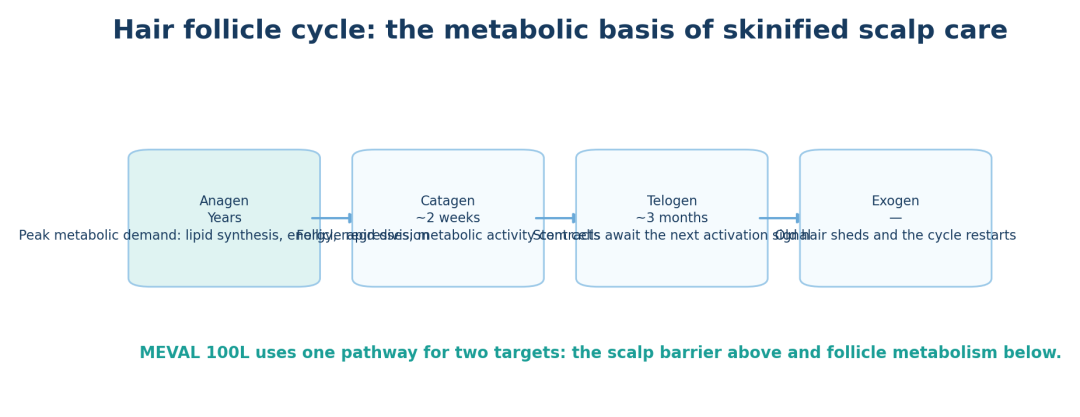
| The scalp is skin· The scalp stratum corneum uses the same lipid triad: ceramides, cholesterol, and free fatty acids.· Barrier damage appears as dryness, tightness, and flaking—the most common scalp-care concerns.· A healthy scalp barrier is the foundation for all hair benefits. | The follicle is a metabolic organ· Anagen follicles are among the most metabolically active tissues in the body.· Hair-shaft construction depends on cholesterol synthesis and lipid supply.· Pathway genes are downregulated in hair loss—supply matters. |
MEVAL 100L uses one pathway for two targets: the scalp barrier above and follicle metabolism below.
CHAPTER 04 · PURIPHARM PLATFORM
Synthetic biology turns pathway insight into a manufacturable active
High purity, the correct enantiomer, clean production, and scalability.
4.1 Producing mevalonolactone in a nature-inspired way
| Traditional chemical route | PuriPharm route — fermentation |
|---|---|
| · Petrochemical feedstocks· Multi-step synthesis relying on protecting-group chemistry· Racemic product—50% (R), 50% inactive (S)· Solvent-intensive purification· Process waste at every step | · Renewable feedstocks—sugars rather than petrochemicals· Engineered microorganisms run the full pathway in a single fermenter· Stereoselective—the biologically active (R)-enantiomer· Mild aqueous conditions—ambient temperature and pressure· Scalable—reported titers above 100 g/L in the literature |
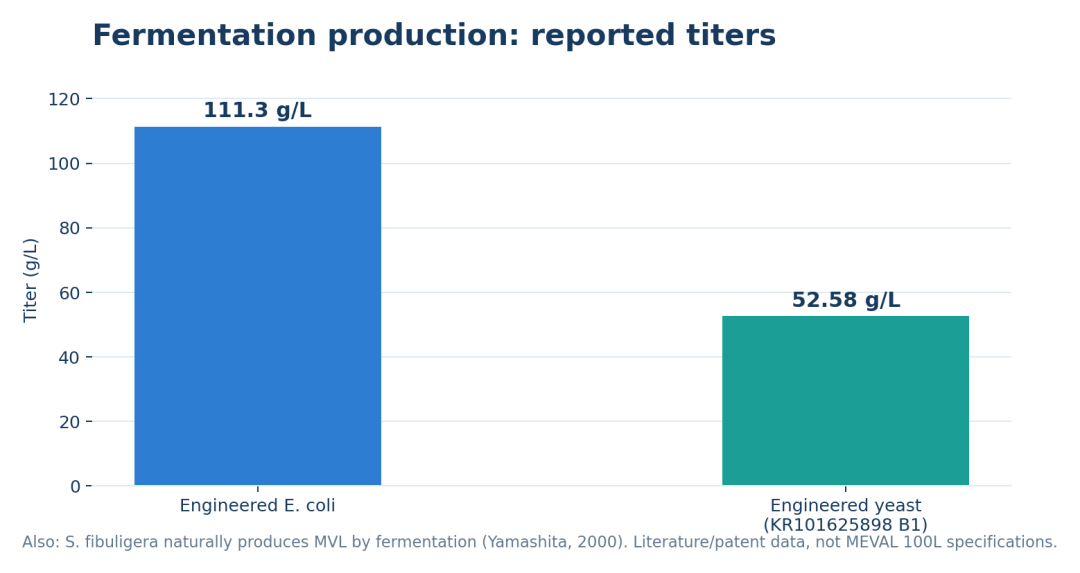
Literature and patent data; not specifications for MEVAL 100L.
4.2 Three disciplines, one value chain
| 01 | Biology identifies the pathway. |
| 02 | Biotechnology manufactures the active. |
| 03 | Cosmetic science turns it into benefits. |
This is the PuriPharm development model behind MEVAL 100L.
4.3 Only the (R)-enantiomer enters the pathway
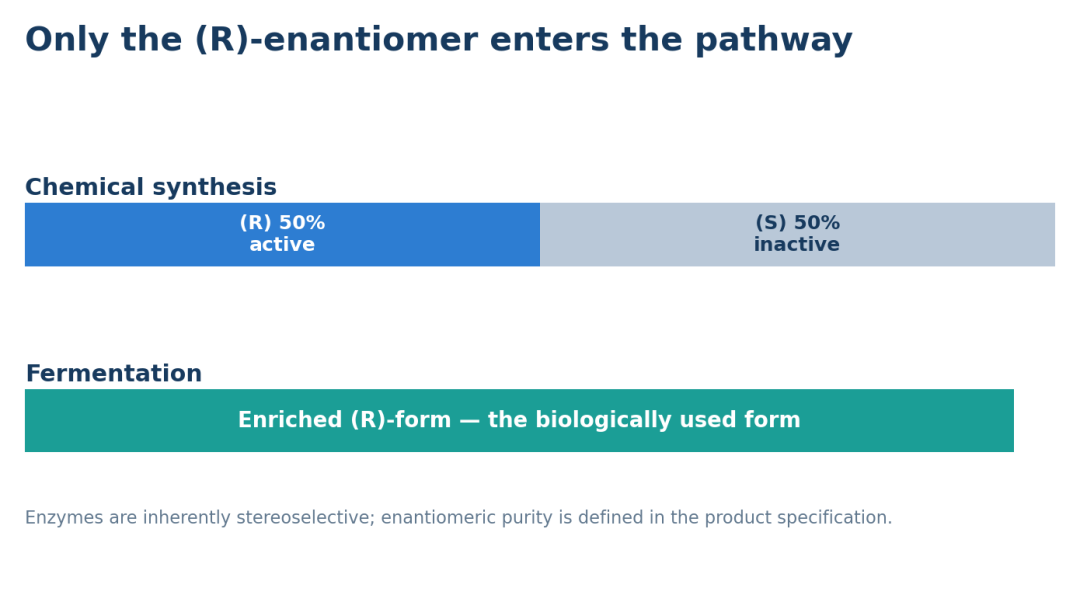
- Mevalonolactone has one stereocenter; the (R)-form is the natural form used by mevalonate kinase.
- The (S)-form does not enter the pathway.
- Half of a racemic mixture is an inactive “passenger.” Enantioselective fermentation removes it—every gram of MEVAL 100L is in the form skin can use.
4.4 Precision biology, cleaner chemistry
- Renewable feedstocks: sugars replace petrochemical starting materials.
- Mild aqueous fermentation: ambient temperature and pressure, without harsh reagents.
- Fewer steps, less waste: one fermenter replaces a multi-step synthesis sequence.
- A molecule biology already knows: the lactone hydrolyzes to mevalonate, a natural human metabolite.
Qualitative process attributes only; no quantitative sustainability claim is made. Life-cycle data are available upon request.
CHAPTER 05 · PRODUCT AND APPLICATIONS
MEVAL 100L: a clearly characterized molecule with nothing to hide
5.1 Product identity and recommended use level
| INCI name | Mevalonolactone |
|---|---|
| CAS / EC No. | 674-26-0 / 211-615-0 |
| Formula | C6H10O3 · MW 130.14 g/mol · water-miscible lactone |
| Stereochemistry | (R)-enantiomer—the bioactive form, produced by fermentation |
| CosIng function | Humectant (EU CosIng database) |
| IECIC 2021 (China) | Listed, No. 03342—historical maximum leave-on use level 0.05% |
| Recommended use | 0.05–1%—based on published in vitro and human studies |
Only publicly verifiable identity information is listed here; no specifications are invented. Full product specifications (appearance, purity, enantiomeric excess, microbial limits) are available from PuriPharm Co., Ltd.
5.2 One active, six skin-care directions (ranked by evidence strength)
| Direction | Evidence | Product relevance |
|---|---|---|
| 01 Barrier repair | Human RCT | Daily moisturizing and barrier creams. Supplies substrate for all three barrier lipids; TEWL benefits are validated in 3D epidermis and human skin. |
| 02 Healthy aging and firming | Technical literature | Elasticity and wrinkle-appearance care. Independent split-face data for (R)-MVL show measurable improvement within 8 weeks. |
| 03 Dry and sensitive skin | Human RCT | Winter protection and recovery. In the randomized study, hydration increased and surface lipids were preserved under winter stress. |
| 04 Tone and radiance | Exploratory | Patent data show inhibition of melanin and tyrosinase in B-16 melanocytes. A development direction, not a claim. |
| 05 Antioxidant support | Exploratory | The same pathway builds the side chain of coenzyme Q10, providing a mechanistic basis for pairing with antioxidant systems. |
| 06 Microbiome-friendly care | Exploratory | In vitro inhibition of S. epidermidis biofilm suggests relevance to the surface ecosystem. Early signal only. |
Directions 04–06 are supported only by patent-level or in vitro data; they represent development potential, not finished-product claims.
5.3 Scalp and hair: four entry points, one logic
| 01 | Scalp barrier care|Skin evidence directly applicableLeave-on scalp tonics and serums for dry, tight, flaky scalps. The scalp stratum corneum uses the same lipid triad as facial skin—barrier evidence can be transferred directly. |
| 02 | Hair-growth support concept|ExploratoryThe follicular cholesterol machinery is active during anagen and downregulated in hair loss. Supplying pathway substrate is a rational—but still to be validated—growth-support strategy. |
| 03 | Aging-scalp care|Analogy to skin agingScalp skin ages like facial skin: lipid synthesis declines and the barrier weakens. The healthy-aging logic from Chapter 2 naturally extends to the scalp. |
| 04 | Microbiome-friendly scalp care|ExploratoryIn vitro biofilm inhibition points toward scalp-ecosystem applications—an early signal to be developed, not a claim. |
Follicle-level evidence comes from pathway literature; product-level hair claims require dedicated studies. PuriPharm welcomes co-development projects.
5.4 Three skin-care concepts to start the co-development conversation
Concept A · Face | Metabolic barrier serum
0.1% MEVAL 100L combined with a ceramide–cholesterol–free fatty acid complex. Substrate plus building blocks: the serum replenishes finished lipids while feeding lipid synthesis.
Evidence anchor—human RCT: TEWL remained at +1.17 versus +4.91 with vehicle; hydration and surface lipids increased.
Concept B · Face/body | Winter repair cream
0.05–0.1% MEVAL 100L in a rich physiological-lipid base. Designed for seasonal barrier stress: dryness, tightness, and elevated TEWL in cold weather.
Evidence anchor—the randomized study was conducted in winter under real barrier stress.
Concept C · Face | Firming serum
0.05% MEVAL 100L paired with a peptide system. A metabolic view of firming: lipid supply improves skin quality while peptide signaling acts on the dermal matrix.
Evidence anchor—technical literature: elasticity R3 improved within 8 weeks (0.05% cream).
Concepts are illustrative starting points for co-development. Final claims must be validated in the finished formula; technical-literature anchors do not constitute measured data for MEVAL 100L.
5.5 Three scalp and hair concepts on the same platform
Concept A · Leave-on scalp | Scalp barrier tonic
0.05–0.1% MEVAL 100L in a lightweight water-based scalp tonic. Addresses dryness, tightness, and flaking at the source—the scalp’s own lipid supply.
Logic anchor—scalp barrier biology matches facial skin; skin RCT evidence can be transferred directly.
Concept B · Scalp serum | Anagen-support serum
0.1% MEVAL 100L in a follicle-directed leave-on serum. A metabolic concept for hair-density care: support the pathway on which anagen follicles depend.
Logic anchor—pathway genes are downregulated in hair loss (literature). Product-level validation is required.
Concept C · Scalp essence | Aging-scalp essence
0.05–0.1% MEVAL 100L paired with antioxidant ingredients. Extends the healthy-aging story to the scalp: lipid supply, barrier quality, and comfort.
Logic anchor—cholesterol data in aged skin (Haratake 2000) are relevant to scalp-skin aging.
Concepts are illustrative starting points for co-development. Hair-growth positioning is exploratory and requires dedicated product-level studies before any claim is made.
5.6 Formulating with MEVAL 100L: simple, compatible, literature-guided
| Practical guidance | Pairing logic |
|---|---|
| · Use level: 0.05–1%. Human data are concentrated at 0.05–0.1%; observe local limits (China IECIC: historical maximum leave-on use level 0.05%).· Water-miscible lactone. Can be added directly to aqueous systems and the water phase of emulsions.· Lactone ⇌ acid equilibrium. In water, MVL equilibrates with mevalonate—both are pathway-relevant; conventional skin-care pH is suitable.· Small, stable molecule. MW 130.14—no macromolecular handling constraints.· Compatible with physiological lipids. Designed to pair with ceramides, cholesterol, and fatty acids. | + Physiological lipidsSubstrate + building blocks—a complete barrier concept+ HumectantsBarrier lipid supply + water retention—a moisturization concept+ Peptides / antioxidantsMetabolic support + signaling actives—a firming concept |
General literature-guided recommendations, not a validated formula. PuriPharm technical service can provide starting formulations and stability support upon request.
CHAPTER 06 · COMMERCIAL VALUE
From science to market: the four-dimensional value framework of MEVAL 100L
| 01 | DifferentiationA new mechanism story—metabolic support for the skin’s own lipid production, not another moisturizer or occlusive. |
| 02 | EvidenceA layered evidence package: human RCT, 3D epidermis, and keratinocyte mechanism—plus clearly labeled independent literature. |
| 03 | SupplyA fermentation platform: renewable feedstocks, (R)-selectivity, and scalability—consistent quality from batch to batch. |
| 04 | ComplianceEstablished INCI identity, CosIng function, and IECIC 2021 listing—a well-documented ingredient. |
A differentiated story the marketing team can tell,and an evidence chain the regulatory team can defend.
Four market currents converge in one molecule
| Barrier-first skin care | Consumers increasingly see barrier health as the foundation of skin quality. MEVAL 100L goes directly to barrier biology—and is supported by human data. |
| Skin longevity and healthy aging | The category is shifting from anti-aging correction toward maintaining the skin’s own production capacity—exactly the metabolic story of the mevalonate pathway. |
| Skinification of scalp care | Scalp products increasingly borrow skin-care actives and language. MEVAL 100L brings scalp-relevant barrier and follicle logic. |
| Green biotech actives | Brands are replacing petrochemical synthesis with fermentation. MEVAL 100L is made by synthetic biology: renewable feedstocks, (R)-selectivity, and clean production. |
Positioning MEVAL 100L means standing at the intersection of these four currents.
Qualitative trend mapping only—no market-statistics claim is included.
Why MEVAL 100L: five reasons, one molecule
- A real mechanism—the mevalonate pathway is causally required for barrier repair.
- Human evidence—a randomized, vehicle-controlled study on real winter-stressed skin.
- The correct enantiomer—(R)-selective fermentation rather than a racemic compromise.
- Clean and scalable—synthetic-biology production based on renewable feedstocks.
- A dual platform—one active spanning skin care and scalp/hair care.
High purity · High activity · Clean production · Green biotechnology
REFERENCES AND DATA SOURCES
- Chen B, Lu N, Lee KS, Ye L, Hasegawa C, Maeda K. Application of mevalonolactone prevents deterioration of epidermal barrier function by accelerating the lamellar granule lipid transport system. Skin Res Technol. 2022;28(6):804–814. doi:10.1111/srt.13202.
- Feingold KR, Man MQ, Menon GK, Cho SS, Brown BE, Elias PM. Cholesterol synthesis is required for cutaneous barrier function in mice. J Clin Invest. 1990;86(5):1738–1745.
- Haratake A, Ikenaga K, Katoh N, Uchiwa H, Hirano S, Yasuno H. Topical mevalonic acid stimulates de novo cholesterol synthesis and epidermal permeability barrier homeostasis in aged mice. J Invest Dermatol. 2000;114(2):247–252. doi:10.1046/j.1523-1747.2000.00875.x.
- Feingold KR, Elias PM. Role of lipids in the formation and maintenance of the cutaneous permeability barrier. Biochim Biophys Acta. 2014;1841(3):280–294. doi:10.1016/j.bbalip.2013.11.007.
- Edwards PA, Lan SF, Tanaka RD, Fogelman AM. Mevalonolactone inhibits the rate of synthesis and enhances the rate of degradation of 3-hydroxy-3-methylglutaryl coenzyme A reductase in rat hepatocytes. J Biol Chem. 1983;258(12):7272–7275.
- Scopel M, Abraham WR, Antunes AL, Henriques AT, Macedo AJ. Mevalonolactone: an inhibitor of Staphylococcus epidermidis adherence and biofilm formation. Med Chem. 2014;10(3):246–251. doi:10.2174/15734064113096660055.
- Yogev Y, Shorer Z, Koifman A, et al. Limb girdle muscular disease caused by HMGCR mutation and statin myopathy treatable with mevalonolactone. Proc Natl Acad Sci USA. 2023;120(7):e2217831120. doi:10.1073/pnas.2217831120.
- Palmer MA, Blakeborough L, Harries M, Haslam IS. Cholesterol homeostasis: links to hair follicle biology and hair disorders. Exp Dermatol. 2020;29(4):299–311. doi:10.1111/exd.13993.
- Karnik P, Tekeste Z, McCormick TS, Gilliam AC, Price VH, Cooper KD, Mirmirani P. Hair follicle stem cell-specific PPARγ deletion causes scarring alopecia. J Invest Dermatol. 2009;129(5):1243–1257.
- Panicker SP, Ganguly T, Consolo M, Price V, Mirmirani P, Honda K, Karnik P. Sterol intermediates of cholesterol biosynthesis inhibit hair growth and trigger an innate immune response in cicatricial alopecia. PLoS One. 2012;7(6):e38449. doi:10.1371/journal.pone.0038449.
- Nikhila L, Surya S, Najeeb SH, et al. Disrupted cholesterol biosynthesis and hair follicle stem cell impairment in the onset of alopecia. PLoS One. 2025;20(9):e0308455. doi:10.1371/journal.pone.0308455.
- Guo M, Jiang J, Zhang A, Yu W, Huang X. Cholesterol promotes hair growth through activating sympathetic nerves and enhancing the proliferation of hair follicle stem cells. Mol Med. 2025;31(1):86. doi:10.1186/s10020-025-01139-z.
- Yamashita M, et al. Mevalonolactone fermentation by Saccharomycopsis fibuligera. Fragrance Journal. 2000;28(2):62–65.
- Korean patent application KR10-2018-0114391 A (skin-brightening use of mevalonolactone); Korean patent KR101625898 B1 (fermentative production); German patent application DE10148266 A1 (CoQ10 support); international application WO2021041363 A1 (lipidomic effects).
- Independent technical literature on fermentation-derived (R)-mevalonolactone: split-face elasticity study (0.05% cream, 8 weeks, n=24) and Nile Red lipid data, 132nd Annual Meeting of the Pharmaceutical Society of Japan.
Data labeled as “technical literature” in this presentation were generated with fermentation-derived (R)-mevalonolactone—not MEVAL 100L—and are shown only as literature evidence.

Let’s build the next generation ofmetabolic actives together.
PuriPharm Co., Ltd.Building 6, No. 1366 Hongfeng Road, Huzhou, Zhejiang, China+86 572 2745768 · www.puriactives.com
PuriActives® MEVAL Mevalonolactone 100L — Product Presentation
AcneZero
PuriActives® AcneZero — Multi-Pathway Botanical Blemish Care System
PURIACTIVES® MULTI-BOTANICAL BLEMISH CARE SYSTEM
AcneZero 痘必清
A Multi-Pathway, Botanical Synergy System for Blemish-Prone Skin
From Single-Target to Multi-Pathway Care
SebumInflammationOxidative StressMicrobiomeSoothing & Barrier
PuriPharm Co., Ltd.B2B technical & marketing material · For cosmetics industry professionals only
CONTENTS
A complete evidence chain from mechanism to commercial value
| 01 | Understanding Blemish-Prone Skin — The Mechanism Map of a Multifactorial Skin Condition |
| 02 | Product Overview — Composition, Positioning & the Phospholipid-Based Active System |
| 03 | The Five Axes — Ingredient-Level Scientific Evidence & Mechanisms |
| 04 | Botanical Actives in Focus — Scientific Profiles of Seven Plant Extracts |
| 05 | Synergy · Claims · Applications — From Evidence Grading to B2B Value |
Evidence grading: A = AcneZero’s own product data; B = published ingredient literature; C = reasonable extrapolation from ingredient information. Ingredient-level literature results are not equivalent to finished-product efficacy.
01
Understanding Blemish-Prone Skin
Acne is not a simple “bacterial problem.” It is a multifactorial condition in which sebum production, follicular keratinization, microbes, inflammatory cascades and oxidative stress intertwine — and this is exactly where single-target solutions reach their limits.
In this chapter | The acne pathogenesis network · The oxidative-stress amplifier · The limits of single-target care
Acne Pathogenesis: A Network of Five Mutually Amplifying Pathways
01 UNDERSTANDING BLEMISH-PRONE SKIN | ACNE PATHOGENESIS
| ① Excess sebum production | IGF-1 / androgen signaling drives sebaceous lipid synthesis via PI3K–Akt–mTORC1, providing the substrate for downstream oxidation and microbial imbalance. |
| ② Abnormal follicular keratinization | Lipid peroxides (e.g., squalene monohydroperoxide) promote keratinocyte hyperproliferation; the follicle becomes plugged and microcomedones form. |
| ③ Microbes & dysbiosis | Cutibacterium acnes (formerly Propionibacterium acnes) overgrows in anaerobic, lipid-rich follicles and activates innate immunity via TLR2; biofilms and resistant strains make management harder. |
| ④ Inflammatory cascade amplification | The TLR2/TLR4 → NF-κB/MAPK pathway drives the release of IL-1β, IL-6, IL-8 and TNF-α, determining redness, swelling, pain and the risk of post-inflammatory hyperpigmentation. |
| ⑤ Oxidative stress & lipid peroxidation | UV, pollution and microbes jointly trigger sebum oxidation; oxidized lipids in turn aggravate abnormal keratinization and inflammation — the network’s “amplifier.” |
Mechanistic framework: Cong TX, et al. Arch Dermatol Res. 2019;311(5):337-349. DOI:10.1007/s00403-019-01908-x; Dréno B, et al. J Eur Acad Dermatol Venereol. 2018;32(Suppl 2):5-14; Condrò G, et al. Pharmaceuticals. 2023;16(12):1704.
The Underestimated Amplifier: Squalene Peroxidation
01 UNDERSTANDING BLEMISH-PRONE SKIN | SQUALENE PEROXIDATION
Squalene accounts for about 10–15% of sebum lipids, and its multiple double bonds make it highly prone to oxidation into squalene monohydroperoxide — a strongly comedogenic compound. In vivo studies confirm that both squalene and its peroxidized forms are significantly higher in acne-prone skin than in healthy skin, correlating positively with sebum output and porphyrin intensity; acne-prone skin also shows higher transepidermal water loss (TEWL), indicating an impaired barrier.
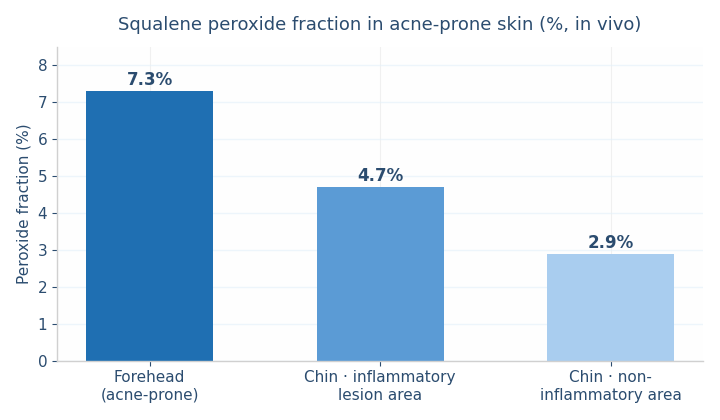
Reading the chart: squalene peroxidation is higher in inflammatory lesion areas than in non-inflammatory areas — lipid peroxidation moves in the same direction as inflammation, forming a vicious cycle of “oxidation → inflammation → more oxidation.”
Implications for formulation strategy
· “Antibacterial only” cannot break the oxidation cycle — antioxidant and anti-lipid-peroxidation design must be part of anti-blemish formulations;· The barrier of blemish-prone skin is already compromised, so efficacy systems must be both low-irritation and barrier-friendly;· Oxidation management is also linked to post-inflammatory hyperpigmentation (PIH) risk — the shared foundation of “fighting acne” and “post-blemish recovery.”
Data redrawn from: Condrò G, Sciortino R, Perugini P. Squalene peroxidation and biophysical parameters in acne-prone skin: a pilot “in vivo” study. Pharmaceuticals (Basel). 2023;16(12):1704. DOI:10.3390/ph16121704 (mechanistic background literature, not data on this product)
The Ceiling of Single-Target Solutions Is Exactly the Opportunity for Multi-Pathway Care
01 UNDERSTANDING BLEMISH-PRONE SKIN | UNMET NEEDS
| Challenges of traditional single-pathway approaches | The answer from multi-pathway botanical synergy |
|---|---|
| Antibiotic pathway — C. acnes resistance keeps rising; long-term use faces resistance and microbiome disturbance;Retinoid pathway — effective for keratinization, but irritation, dryness and peeling limit use on sensitive, blemish-prone skin;Single-botanical pathway — usually covers only “antibacterial” or “anti-inflammatory,” hardly matching acne’s multifactorial mechanism;The overlooked link — oxidative stress and barrier damage have long been absent from the anti-acne narrative, yet directly affect recurrence and post-blemish condition. | ● Division of labor across ingredients: different botanicals act on sebum, inflammation, oxidation, microbes and the barrier — covering the mechanistic network rather than a single point;● Non-antibiotic antimicrobial strategy: plant-derived actives (e.g., berberine-type alkaloids) show C. acnes inhibition and anti-biofilm potential in the literature, avoiding the antibiotic-resistance narrative;● Cosmetics-compliant storytelling: framed as “blemish-prone skin care / oil control / soothing,” within cosmetic claim boundaries;● Gentle enough for daily use: product safety data support no skin irritation and no eye irritation, suiting long-term care scenarios. |
Note: the left column is background at the level of literature and industry consensus, used to explain formulation design logic; it is not an evaluation of any pharmaceutical regimen. The “non-antibiotic antimicrobial strategy” on the right is ingredient-level literature evidence (Grade B).
Background: Cong TX, et al. Arch Dermatol Res. 2019;311(5):337-349; Sun L, et al. Front Microbiol. 2023;14:1276383. DOI:10.3389/fmicb.2023.1276383; product safety: AcneZero MSDS v1.1 (Grade A)
02
Product Overview | AcneZero
Seven botanical actives × a phospholipid-based active system: with the ingredient list and MSDS as the highest factual basis, defining a modern anti-blemish ingredient by mechanistic division of labor rather than “single-point sterilization.”
In this chapter | Positioning · Eleven-component formula · Phospholipid-based active system · The five-axis master model
Positioning: A Multi-Pathway Ingredient for Blemish-Prone Skin Management
02 PRODUCT OVERVIEW | PRODUCT IDENTITY
PuriActives® AcneZero is a multi-botanical anti-blemish ingredient developed by PuriPharm for cosmetics customers worldwide. Its active core combines seven botanical extracts — Canarium album (olive) leaf extract, bioflavonoids, Salvia miltiorrhiza extract, Gardenia jasminoides fruit extract, Mahonia fortunei extract, silymarin, and Stevia rebaudiana leaf/stem extract — carried by a phospholipid-based active system, covering five axes: sebum – inflammation – oxidation – microbiome – barrier. It is not a “single sterilizing molecule,” but an evidence-graded, multi-pathway solution.
| Product information (per MSDS v1.1) | |
|---|---|
| Trade name | AcneZero 痘必清 (PuriActives® brand) |
| Intended use | Cosmetic skincare ingredient (B2B industrial use) |
| Appearance & odor | Yellow liquid, characteristic odor |
| Solubility | Water-soluble (20°C) |
| Storage | 4–25°C, protect from light |
| Safety | No skin irritation, no eye irritation (MSDS data, Grade A) |
| Regulatory status | Listed in China’s Inventory of Existing Chemical Substances (IECIC) |
| Document version | MSDS v1.1 (2019-07-13) |
POSITIONING IN ONE SENTENCE
“From single-target anti-acne to multi-pathway blemish-prone skin management.”
· Target customers: cosmetics brands, formulators, OEM/ODM R&D teams· Suitable dosage forms: serums, toners, lotions, masks and other water-based systems· Claim framework: oil control · soothing · microbiome balance · antioxidant · barrier support · post-blemish tone care
Product information: PuriPharm AcneZero MSDS v1.1 and AcneZero Ingredient List (internal documents, Grade-A factual basis). Please confirm recommended dosage and compatibility parameters with the PuriPharm technical team.
Eleven Components: A Formula You Can Read Mechanistically
02 PRODUCT OVERVIEW | COMPOSITION
| Component (INCI) | CAS No. | Typical value (%) |
|---|---|---|
| Canarium Album Leaf Extract | — | 2.5 |
| Bioflavonoids | 61788-55-4 | 3.0 |
| Salvia Miltiorrhiza Extract | 90106-50-6 | 2.5 |
| Gardenia Jasminoides Fruit Extract | 92457-01-7 | 3.5 |
| Mahonia Fortunei (Chinese mahonia) Extract | — | 3.0 |
| Silymarin | 22888-70-6 | 0.5 |
| Stevia Rebaudiana Leaf/Stem Extract | 91722-21-3 | 5.0 |
| Phospholipids | 123456-35-0 | 5.0 |
| Glycerin | 56-81-5 | 38.0 |
| Propylene Glycol | 57-55-6 | 31.5 |
| Aqua (Water) | 7732-18-5 | 5.5 |
Formula structure (grouped by typical values)
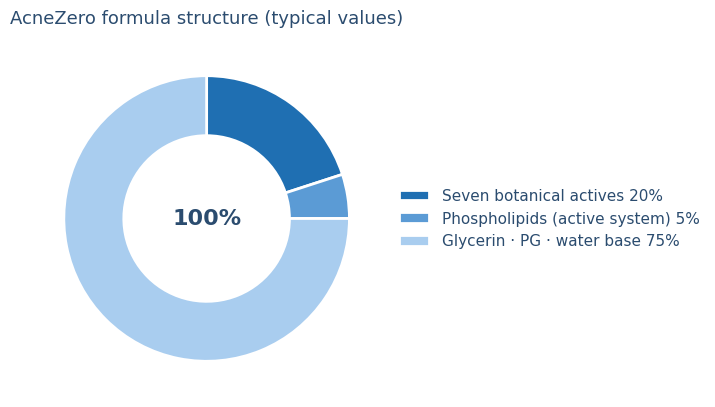
· Botanical actives total 20% and phospholipids 5%, forming the functional “active + delivery” layer;· Glycerin, propylene glycol and water form the humectant solvent base, also responsible for mildness and system stability.
Data source: PuriPharm AcneZero Ingredient List and AcneZero MSDS v1.1 (Grade A — the highest factual basis, never modified for marketing). Values shown are typical values from the company’s ingredient list; specification ranges are detailed in the product ingredient list.
The Phospholipid-Based Active System: A Classic Skin-Affinity Delivery Strategy
02 PRODUCT OVERVIEW | PHOSPHOLIPID-BASED ACTIVE SYSTEM
AcneZero builds its active-carrier system on 5% phospholipids. Phospholipids share a natural affinity with stratum corneum lipids and are a classic skin-friendly delivery and stabilization strategy in cosmetic science, helping water- and oil-soluble botanical actives coexist stably in one system.
● Skin-lipid affinity: the phospholipid bilayer is homologous to stratum corneum lipids, favoring spreading and retention of actives on the skin surface;● Classic delivery evidence: as early as 1980, Mezei and Gulasekharam showed that a phospholipid system (liposomal lotion) increased skin delivery of triamcinolone acetonide to 4–5× that of an ointment base — laying the literature foundation for phospholipids in dermal delivery;● Multi-phase stability: the emulsifying and dispersing capacity of phospholipids supports the uniform coexistence of seven botanicals with the water-based vehicle;● Barrier-friendly: phospholipids themselves are mild, skin-lipid-related ingredients, matching the fragile-barrier needs of blemish-prone skin.
Hydrophilic heads · facing the water phaseHydrophobic tails · carrying lipophilic activesHydrophilic heads · facing the water phase
Schematic: phospholipid bilayer structure (self-drawn illustration)
Claim boundary: AcneZero is a Phospholipid-based Active System. This material makes no liposome, nanovesicle or nano-delivery claims for it; liposome-related literature is cited only as classic supporting evidence for the dermal-delivery value of phospholipid systems.
Reference: Mezei M, Gulasekharam V. Liposomes — a selective drug delivery system for the topical route of administration. Life Sci. 1980;26:1473-1477 (Grade-B background evidence). Phospholipid content: AcneZero Ingredient List (Grade A).
The AcneZero Five-Axis Model
02 PRODUCT OVERVIEW | MULTI-PATHWAY MODEL
AcneZero | Seven botanicals × phospholipid-based system
| A1 Sebum management | Mahonia (berberine) · olive leaf · bioflavonoidsTargeting SREBP-1/PPAR-γ lipid-synthesis signaling |
| A2 Inflammation management | Salvia · gardenia fruit · bioflavonoids · olive leaf · steviaTargeting the TLR2/4 → NF-κB/MAPK inflammatory cascade |
| A3 Oxidative-stress management | Silymarin · bioflavonoids · olive leaf · steviaScavenging free radicals and inhibiting sebum lipid peroxidation |
| A4 Microbiome management | Mahonia (berberine) · salvia · silymarinNon-antibiotic C. acnes management and biofilm inhibition |
| A5 Soothing & barrier support | Stevia · phospholipids · gardenia fruitTight-junction protein and skin-friendly lipid support |
The model summarizes mechanistic division of labor based on published ingredient literature (combined Grade B/C evidence); it is not a clinical-trial conclusion for this product. Axis-by-axis evidence is detailed in Chapter 3. Composition: AcneZero Ingredient List (Grade A).
03
The Five Axes · Ingredient-Level Scientific Evidence
Each axis answers a formulation question: which ingredient, acting on which step, with evidence from where, and how strong. All data are annotated with study models and literature sources.
In this chapter | A1 Sebum · A2 Inflammation · A3 Oxidative stress · A4 Microbiome · A5 Soothing & barrier
Axis 1 · Sebum Management: Regulating Lipid-Synthesis Signaling
03 THE FIVE AXES | AXIS 1 · SEBUM CONTROL
Key signaling axis of sebum synthesis (mechanistic background)
IGF-1 / androgens → PI3K–Akt → SREBP-1/PPAR-γ → Excess sebum
Ingredient-level evidence (sebocyte models)
Berberine (marker compound of Mahonia)| Grade BIn SZ95 human sebocytes, 40 μM berberine significantly downregulated the key lipogenic enzymes FASN and DGAT1, reduced fatty-acid and triglyceride secretion, and inhibited NF-κB p65 activation (J Inflamm Res, 2025).
Olive leaf extract| Grade C (literature species Olea europaea, extrapolation reference)In SEB-1 sebocytes it significantly inhibited linoleic-acid-induced lipid accumulation without cytotoxicity, and downregulated AKT/ERK phosphorylation and PPAR-γ/SREBP-1 expression (Curr Issues Mol Biol, 2026).
Mechanistic benchmark: EGCG (polyphenol)| literature benchmarkReduced sebum synthesis in SEB-1 cells via AMPK–SREBP-1 and improved acne in an 8-week randomized split-face human trial (J Invest Dermatol, 2013) — validating the clinical feasibility of the “botanical polyphenols regulate sebum” pathway.
Division of labor in AcneZero: Mahonia extract (berberine source; botanical basis in Chapter 4) | olive leaf extract (polyphenols; sebum-regulation extrapolation reference) | bioflavonoids (polyphenol-family synergy)
Sources: Berberine inhibits acne-related lipid secretion and inflammation by regulating the hsa-miR-3150a-3p/TP53 pathway. J Inflamm Res. 2025; Kim J, et al. Curr Issues Mol Biol. 2026;48(6):549. DOI:10.3390/cimb48060549; Yoon JY, et al. J Invest Dermatol. 2013;133(2):429-440; Cong TX, et al. 2019 (signaling-axis background)
Axis 2 · Inflammation Management: Intercepting the TLR → NF-κB Cascade
03 THE FIVE AXES | AXIS 2 · INFLAMMATION
The C. acnes-triggered inflammatory cascade (mechanistic background)
C. acnes & its products → TLR2/TLR4 → NF-κB/MAPK → IL-1β · IL-6 · IL-8 · TNF-α → Redness · lesions · PIH
Interception point 1: the receptor layer (TLR2/TLR4 downregulation)Quercetin (representative bioflavonoid)| Grade B In C. acnes-stimulated HaCaT keratinocytes, THP-1 and RAW264.7 cells, it inhibited inflammatory cytokine release and downregulated TLR2, p38/ERK/JNK phosphorylation and MMP-9, with in vivo anti-inflammatory validation in a mouse-ear model (Int Immunopharmacol, 2021).
Interception point 2: the signaling layer (TAK1/NF-κB inhibition)Tanshinone IIA (marker compound of Salvia)| Grade B Concentration-dependently inhibited LPS-induced MCP-1, IL-6, TNF-α and NO production, downregulated TLR4 expression, and suppressed TAK1 phosphorylation and NF-κB p65 nuclear translocation (Int J Mol Med, 2019).
Why “multiple interception points” beat single-point inhibition:· Acne inflammation is driven in parallel by multiple receptor–signaling routes; blocking a single node is easily bypassed;· In the literature, AcneZero’s botanicals act at different levels — TLR2 (quercetin), TLR4/TAK1 (tanshinone IIA, geniposide), NF-κB (stevioside, berberine);· This multi-point division of labor is the design logic of the product’s inflammation-management axis (see the evidence matrix below).
Sources: Lim HJ, et al. Int Immunopharmacol. 2021;96:107557. DOI:10.1016/j.intimp.2021.107557; Meng Z, et al. Int J Mol Med. 2019;43(4):1847-1858. DOI:10.3892/ijmm.2019.4100; cascade background: Cong TX, et al. 2019; Dréno B, et al. 2018
Inflammation-Management Evidence Matrix: Five Ingredients, Four Interception Layers
03 THE FIVE AXES | AXIS 2 · EVIDENCE MATRIX
| Ingredient / marker | Study model | Key results | Reference (Grade B) |
|---|---|---|---|
| Quercetin (representative bioflavonoid) | C. acnes-stimulated HaCaT/THP-1/RAW264.7; mouse-ear model | ↓IL-6/IL-8/TNF-α; ↓TLR2, p38/ERK/JNK, MMP-9 | Lim et al. Int Immunopharmacol. 2021 |
| Tanshinone IIA (Salvia marker) | LPS-stimulated vascular smooth muscle cells | ↓MCP-1/IL-6/TNF-α/NO; ↓TLR4–TAK1–NF-κB | Meng et al. Int J Mol Med. 2019 |
| Gardenia fruit extract / geniposide | LPS-induced inflammation models; in vivo zebrafish model | ↓IL-1β/IL-6/TNF-α; ↓TLR4 signaling, NF-κB p65/MAPK | Chen et al. Exp Ther Med. 2021; Song et al. Inflammation. 2014 |
| Stevioside (stevia marker) | Cellular oxidative-inflammation model | ↓IL-6/IL-8/TNF-α; ↓NF-κB/IκB/ERK1/2 phosphorylation | Xu et al. Antioxidants. 2023 |
| Berberine (Mahonia marker) | C. acnes mouse-ear acne model | ↓Ear-tissue IL-6/IL-1β/TNF-α; reduced ear thickness and colonizing bacterial load | Sun et al. Front Microbiol. 2023 |
How to read: the above are published ingredient-level studies (Grade B) covering cell, zebrafish and mouse in vivo models; they support the mechanistic division of labor of ingredients in the formula and are not equivalent to finished-product human efficacy conclusions for AcneZero. A baicalin rabbit-ear acne study (Yang et al. 2019) provides parallel evidence for flavonoid anti-inflammation.
Full citations are listed in the References at the end ([6][12][13][15][4][17]).
Axis 3 · Oxidative-Stress Management: Protecting Sebum from Oxidation
03 THE FIVE AXES | AXIS 3 · OXIDATIVE DEFENSE
Squalene peroxidation is the amplifier connecting “oiliness” and “inflammation.” AcneZero’s antioxidant axis is built on four polyphenol systems — silymarin, bioflavonoids, olive leaf and stevia — with literature evidence covering free-radical scavenging, antioxidant-enzyme upregulation and lipid-peroxidation inhibition.
Silymarin| Grade BA classic flavonolignan antioxidant. A human study of a silymarin-containing antioxidant serum showed reduced skin lipid peroxidation, plus improvement in acne-related erythema and post-inflammatory hyperpigmentation (J Drugs Dermatol, 2024). → Human clinical data in Chapter 4 (Silymarin)
Stevioside| Grade BAt 250 μM in cell models, stevioside significantly reduced ROS and MDA (a lipid-peroxidation marker) while upregulating T-SOD, CAT and GSH-Px antioxidant enzymes, and inhibited NF-κB/ERK1/2 phosphorylation (Antioxidants, 2023).
Olive-leaf polyphenols + bioflavonoids| Grade B/COleuropein reduced ROS in a UVB model (Grade-C extrapolation; literature species Olea europaea); the ortho-dihydroxyl structure of bioflavonoids confers strong radical-scavenging capacity, with efficiency linked to the C2–C3 double bond and 4-carbonyl features (structure–activity review, 1999).
Breaking the vicious cycle: the antioxidant axis directly reduces the formation of squalene-peroxidation substrates — lowering the upstream drive of abnormal keratinization while cutting the continuous fuel that oxidized lipids supply to the inflammatory cascade. This is the structural difference between AcneZero and “oil-control-only, sterilization-only” solutions.
Sources: J Drugs Dermatol. 2024;23(4). DOI:10.36849/JDD.8120; Xu Q, et al. Antioxidants (Basel). 2023;12(5):1070. DOI:10.3390/antiox12051070; Zhang DQ, et al. Food and Fermentation Industries. 1999;25(6):52-57; Kim J, et al. 2026
Axis 4 · Microbiome Management: A Non-Antibiotic Antimicrobial Pathway
03 THE FIVE AXES | AXIS 4 · MICROBIOME BALANCE
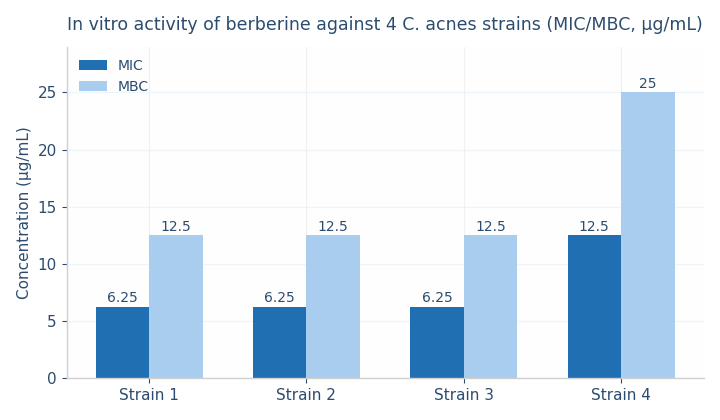
Data redrawn from the original table of Sun et al. 2023 (4 strains including ATCC reference and clinical isolates); inhibition-zone diameters 32.07–35.27 mm. The reference antibiotic doxycycline in the same study had an MIC of 0.31 μg/mL — berberine is a plant-derived, non-antibiotic molecule whose value lies in avoiding the antibiotic-resistance narrative.
Beyond inhibition: biofilms and in vivo validation● Anti-biofilm: 10–60 μM berberine concentration-dependently inhibited C. acnes growth and biofilm formation, and downregulated cell-wall synthesis genes murC/murD/mraY/murG (Front Microbiol, 2023; J Inflamm Res, 2025);● In vivo model: in a C. acnes mouse-ear model, berberine reduced ear thickness, ear weight and colonizing bacterial load, with ear-tissue IL-6/IL-1β/TNF-α declining in parallel;● Tanshinone synergy: a review reports tanshinones’ inhibitory and anti-biofilm activity against C. acnes (including resistant strains) (Fitoterapia, 2025);● Silymarin support: improvements in lesions and microbiome-related indices were observed in human studies (see Chapter 4).
From “sterilization” to “microbiome balance”: modern dermatology no longer pursues total sterilization, but manages C. acnes overgrowth and biofilms. A plant-derived, multi-target antimicrobial strategy is consistent with this philosophy — and does not constitute an antibiotic-type claim.
Sources: Sun L, et al. Front Microbiol. 2023;14:1276383. DOI:10.3389/fmicb.2023.1276383 (in vitro + mouse-ear model, Grade B); J Inflamm Res. 2025 (SZ95 cells, Grade B); Zhang T, et al. Fitoterapia. 2025 (review). Ingredient literature data, not measured on this product.
Axis 5 · Soothing & Barrier: The Safety Foundation of Blemish Care
03 THE FIVE AXES | AXIS 5 · SOOTHING & BARRIER
The problem: the barrier of blemish-prone skin is inherently fragile. In vivo research shows that TEWL (transepidermal water loss) is significantly higher in acne-prone skin than in healthy skin — the stratum corneum barrier is impaired (Pharmaceuticals, 2023). This means an anti-blemish ingredient that adds irritation would instead worsen redness and discomfort: mildness is not a bonus, but the entry ticket.
AcneZero’s triple barrier-friendly design● Stevia (stevioside)| Grade B: upregulates tight-junction proteins claudin-1, occludin and ZO-1, supporting barrier integrity (Antioxidants, 2023);● Phospholipid system| Grade A/B: a skin-lipid-homologous, skin-friendly structure combining active carrying with barrier care;● Glycerin–propylene glycol humectant base| Grade A: a classic humectant pair that relieves the dryness and flaking common in blemish-prone skin.
| 0Skin irritation(MSDS conclusion: no skin irritation) | 0Eye irritation(MSDS conclusion: no eye irritation) |
Product-owned safety data | Grade A · Source: PuriPharm AcneZero MSDS v1.1 — one of the few Grade-A (product-owned) data points in this material.
What this means for formulators:· Suitable for formulas positioned for sensitive, blemish-prone skin and long-term daily care;· The soothing narrative is backed by ingredient-level barrier literature, not just a “mildness claim”;· Together with the sebum, inflammation, oxidation and microbiome axes, it completes a full care loop.
Sources: Condrò G, et al. Pharmaceuticals (Basel). 2023;16(12):1704 (TEWL background); Xu Q, et al. Antioxidants (Basel). 2023;12(5):1070 (tight-junction proteins, Grade B); AcneZero MSDS v1.1 (safety, Grade A).
04
Botanical Actives in Focus
Seven botanicals, seven scientific profiles: botanical origin, marker actives, key literature evidence, and each one’s role in the five-axis system.
In this chapter | Bioflavonoids · Salvia · Silymarin · Olive leaf · Mahonia · Gardenia fruit · Stevia
Bioflavonoids: Dual Inflammation–Oxidation Management from the Polyphenol Family
04 BOTANICAL ACTIVES | BIOFLAVONOIDS
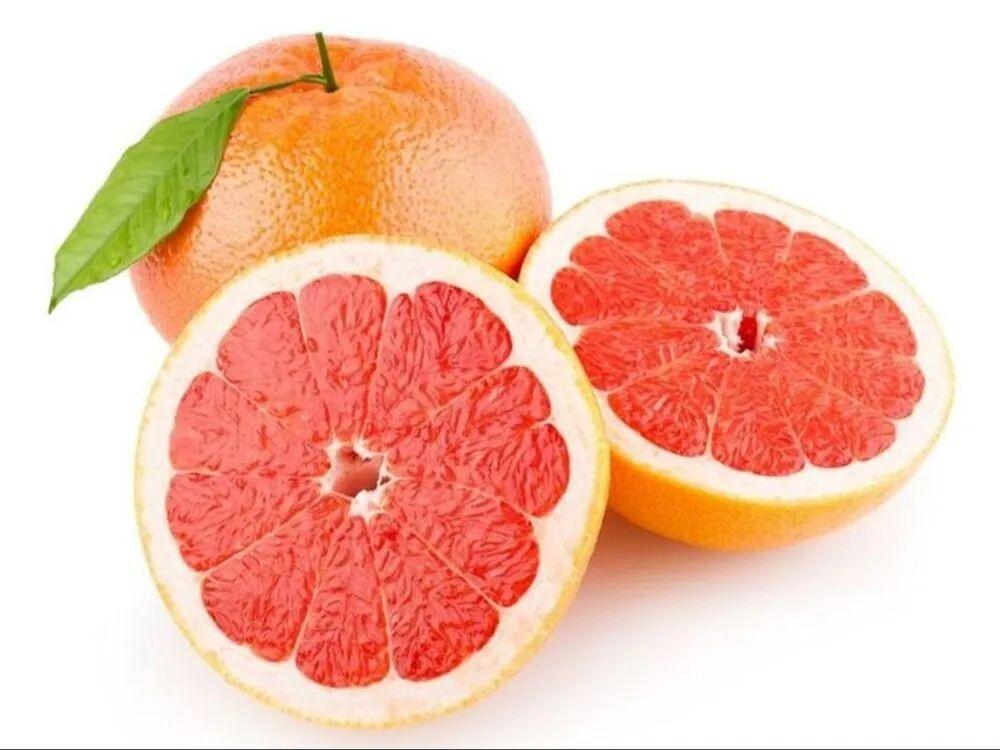
Citrus fruits are a classic source of bioflavonoids (illustrative image)
| INCI | Bioflavonoids |
| CAS | 61788-55-4 |
| Role in system | Dual support: inflammation · oxidation |
Structure determines activity: flavonoids’ radical-scavenging capacity is directly tied to molecular structure — the C2–C3 double bond, the 4-carbonyl group and ortho-dihydroxyl groups are the key features of efficient scavengers; the ranking follows a clear structure–activity relationship (e.g., rutin > quercetin > morin > hesperidin, system-dependent).
Quercetin: direct evidence in acne-inflammation models| Grade BIn C. acnes-stimulated keratinocytes and immune cells it inhibited cytokines and downregulated TLR2/MAPK/MMP-9, with in vivo validation in a mouse-ear model (Int Immunopharmacol, 2021).
Baicalin: parallel evidence in a rabbit-ear acne model| Grade BRNA-seq showed baicalin reduced rabbit-ear acne lesions, lowered serum TNF-α/IL-1β/IL-6/IL-8, and broadly suppressed TNF signaling (J Tradit Chin Med Sci, 2019).
Why flavonoids are the “infrastructure” of anti-blemish blends: one molecular family covers both radical scavenging (Axis 3) and inflammatory-signal inhibition (Axis 2), with structural diversity, wide sourcing and a long safety record — making bioflavonoids a natural hub connecting the axes. The human anti-acne study of EGCG (J Invest Dermatol, 2013) further proves the clinical feasibility of the polyphenol pathway.
Sources: Zhang DQ, Tai JX, Fu Q. Research and application of bioflavonoids. Food and Fermentation Industries. 1999;25(6):52-57; Lim HJ, et al. 2021; Yang X, et al. J Tradit Chin Med Sci. 2019;6(3):201-210; Yoon JY, et al. 2013 (all Grade-B ingredient literature)
Salvia Miltiorrhiza Extract: A Dual Blockade of Microbes and Inflammation
04 BOTANICAL ACTIVES | SALVIA MILTIORRHIZA
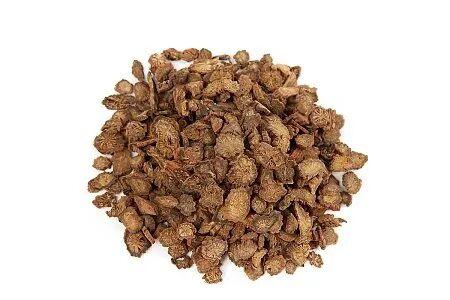
Dried Salvia miltiorrhiza root (illustrative image)
| INCI | Salvia Miltiorrhiza Extract |
| CAS | 90106-50-6 |
| Role in system | Dual axes: microbiome · inflammation |
Marker actives: tanshinones (lipophilic diterpene quinones) and salvianolic acids (water-soluble phenolic acids).
Microbiome axis| Grade B A 2025 Fitoterapia review systematically summarized tanshinones’ molecular mechanisms against acne, including inhibitory activity against C. acnes (including resistant strains) and anti-biofilm effects — together with berberine forming the product’s plant-derived antimicrobial combination.
Inflammation axis| Grade B Tanshinone IIA concentration-dependently inhibited MCP-1, IL-6, TNF-α and NO via the TLR4/TAK1/NF-κB pathway (Int J Mol Med, 2019).
Tanshinone IIA’s interception levels in inflammatory signaling
↓ TLR4 → ↓ p-TAK1 → ↓ NF-κB nuclear translocation → ↓ Inflammatory factors
Reading the diagram: tanshinone IIA suppresses three levels simultaneously — receptor (TLR4), kinase (TAK1) and transcription factor (NF-κB). This is the “multi-interception-point” design embodied within a single ingredient (Meng et al. 2019, LPS cell model).
Sources: Zhang T, et al. Tanshinone in acne therapeutics. Fitoterapia. 2025 (review); Meng Z, et al. Int J Mol Med. 2019;43(4):1847-1858. DOI:10.3892/ijmm.2019.4100 (Grade-B ingredient literature)
Silymarin: The Antioxidant Mainstay with Human Clinical Data
04 BOTANICAL ACTIVES | SILYMARIN
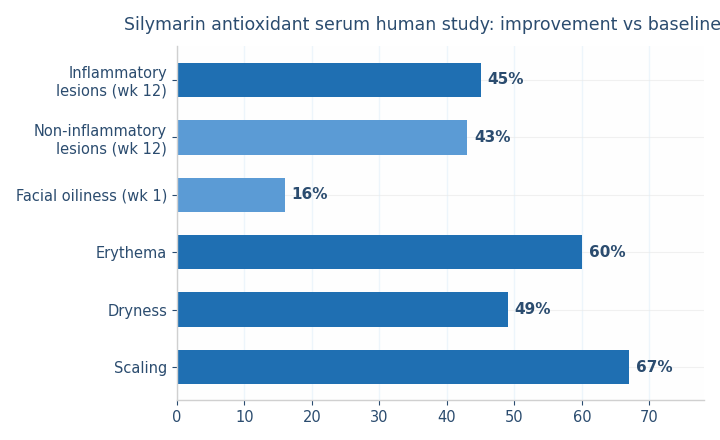
Data redrawn from J Drugs Dermatol. 2024: lesion and oiliness endpoints from the monotherapy study (n=56, 12 weeks); erythema / dryness / scaling from the combination-regimen tolerability study (n=40). The studies also reported reduced lipid peroxidation and improved post-inflammatory hyperpigmentation.

Milk thistle (Silybum marianum)
A second human study (0.5% silymarin serum): 22 subjects with mild-to-moderate acne, 4 weeks: mGAGS score, lesion counts and melanin index decreased significantly, with no adverse events (J Cosmet Dermatol, 2023).
Role in AcneZero:● The human-evidence anchor of the oxidative-stress axis: anti-lipid-peroxidation maps directly onto the squalene-peroxidation mechanism;● The melanin-index reduction connects to the post-blemish tone-care narrative (see Chapter 5);● Its typical value in the ingredient list is 0.5% — the same order of magnitude as the concentrations used in clinical studies (Grade-A formula fact).
Sources: A silymarin antioxidant serum improves facial acne alone and as part of a treatment regimen. J Drugs Dermatol. 2024;23(4). DOI:10.36849/JDD.8120; Kim J, et al. J Cosmet Dermatol. 2023;22(2):561-568. DOI:10.1111/jocd.15439 (Grade-B ingredient literature, not clinical data on this product)
Olive Leaf Extract: A Polyphenol Carrier for Sebum–Inflammation Dual Regulation
04 BOTANICAL ACTIVES | OLIVE LEAF

Olive branches and leaves (illustrative image)
| INCI | Canarium Album Leaf Extract |
| CAS | — |
| Role in system | Sebum · inflammation · oxidation |
Sebocyte evidence| Grade C (literature species Olea europaea, extrapolation reference)A 2026 study (SEB-1 human sebocytes): olive leaf extract significantly inhibited linoleic-acid-induced lipid accumulation without cytotoxicity; downregulated AKT/ERK phosphorylation and PPAR-γ/SREBP-1 expression; and reduced IL-8, TNF-α and PGE2 in C. acnes- or UVB-stimulated HaCaT keratinocytes (Curr Issues Mol Biol, 2026).
Antioxidant evidence for the marker compound oleuropein| Grade CProteomics showed oleuropein downregulated pro-inflammatory cytokines and upregulated antioxidant defenses in H₂O₂-stimulated HaCaT cells (2025); oleuropein and hydroxytyrosol are skin-permeable elastase/collagenase inhibitors with synergistic antioxidant activity in human dermal fibroblasts (Int J Food Sci Nutr, 2022).
Evidence boundary (scientific integrity):· The in vitro studies above used Olea europaea leaf; this product uses Canarium album leaf extract, and the data serve as a reference from related olive-leaf polyphenol research (Grade-C reasonable extrapolation), not as direct measurements on this ingredient in the product;· In the same study, no direct antibacterial activity was detected for this extraction process — the product therefore positions olive leaf for sebum regulation, anti-inflammation and antioxidant support, while the microbiome axis is carried by Mahonia, Salvia and silymarin;· This is exactly the point of the five-axis division of labor: let each ingredient do what its evidence does best.
Sources: Kim J, et al. Curr Issues Mol Biol. 2026;48(6):549. DOI:10.3390/cimb48060549; Li H, et al. Int J Food Sci Nutr. 2022;73(4):460-470; INCI information: AcneZero Ingredient List (Grade A)
Mahonia Fortunei: The Botanical Source of Berberine
04 BOTANICAL ACTIVES | MAHONIA
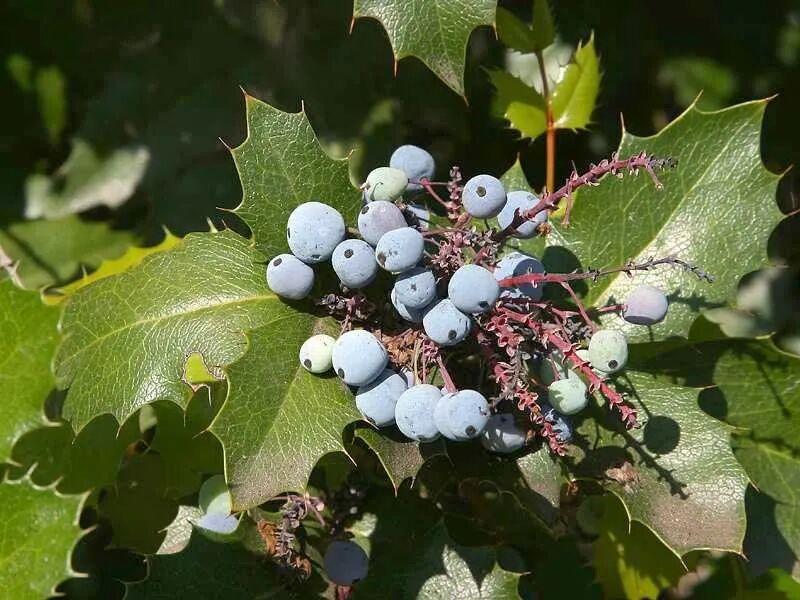
Mahonia plant (image source: Wikimedia Commons)
| INCI | Mahonia Fortunei (Chinese mahonia) Extract |
| CAS | — |
| Role in system | Core of the microbiome axis |
Botanical basis (patent literature): Chinese patent CN1069493A records that Mahonia (Berberidaceae) rhizomes contain 1.5–2.4% berberine, and the refining process described therein achieves 98.1% berberine purity — a clear documentary basis for Mahonia as a botanical source of berberine.
Berberine’s anti-acne evidence: in vitro MIC 6.25–12.5 μg/mL, anti-biofilm activity, downregulation of cell-wall synthesis genes, and anti-inflammatory effects in a mouse-ear model (see Chapter 3, Axis 4); inhibition of lipid synthesis and NF-κB in SZ95 sebocytes (see Chapter 3, Axis 1).
Same-genus support| Grade B: bisbenzylisoquinoline alkaloids from Mahonia aquifolium show lipoxygenase (LOX) inhibition and anti-lipid-peroxidation activity, highly correlated with each other (r=0.9533) — suggesting the genus’s alkaloids combine microbiome-management and antioxidant potential (Pharmazie, 1996).
Sources: Liao ZJ. Process for extracting and refining berberine from Mahonia. Chinese patent CN1069493A, published 1993-03-03; Bezáková L, et al. Pharmazie. 1996;51(10):758-761; Sun L, et al. 2023; J Inflamm Res. 2025 (Grade-B ingredient literature)
Gardenia Fruit Extract: The Bridge from Anti-Inflammation to Post-Blemish Care
04 BOTANICAL ACTIVES | GARDENIA FRUIT
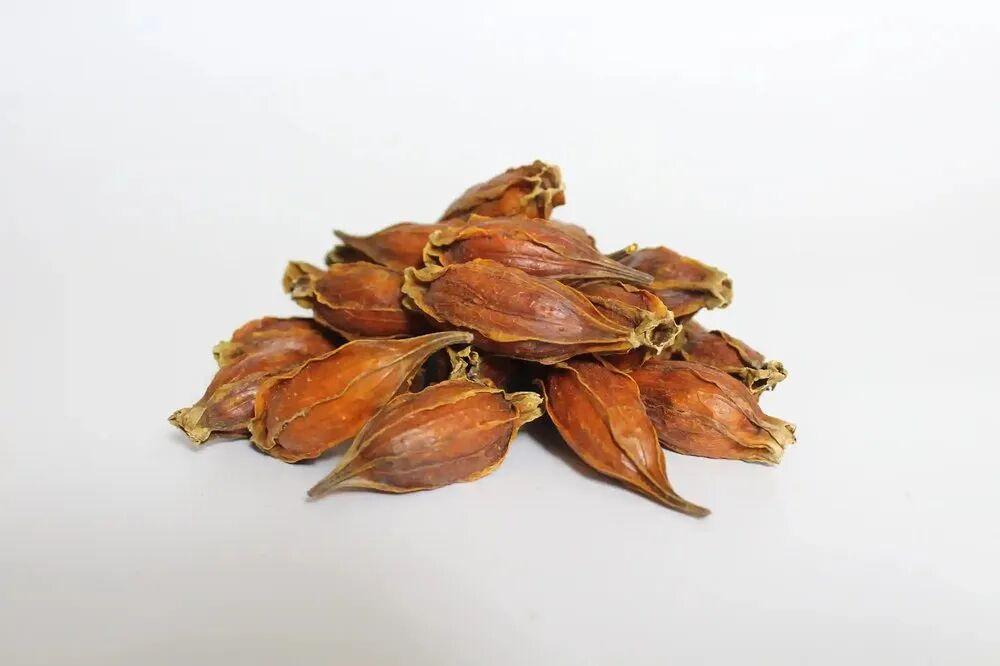
Dried gardenia fruits (illustrative image)
| INCI | Gardenia Jasminoides Fruit Extract |
| CAS | 92457-01-7 |
| Role in system | Inflammation axis · post-blemish care |
Gardenia fruit extract (GJE)| Grade B Significantly inhibited LPS-induced IL-1β, IL-6 and TNF-α release via TLR4/NKAP signaling downregulation, with anti-inflammatory activity validated in an in vivo zebrafish model (Exp Ther Med, 2021).
Geniposide (marker compound)| Grade B Acts downstream of TLR4 to inhibit NF-κB p65 and MAPK pathways, exerting anti-inflammatory effects in animal inflammation models (Inflammation, 2014).
Crocetin (gardenia-derived active)| Grade B In B16F10 melanoma cells it inhibited tyrosinase activity and melanin synthesis, downregulated tyrosinase and MITF proteins and scavenged ROS — pointing to the post-inflammatory hyperpigmentation (PIH) management chain (Anticancer Agents Med Chem, 2018).
| Gardenia fruit’s “two-phase” value: acute and recovery | |
|---|---|
| Acute phase (inflammation management)GJE / geniposide inhibit the TLR4–NF-κB/MAPK cascade, reducing IL-1β/IL-6/TNF-α release and easing the driving signals of redness and swelling. | Recovery phase (post-blemish care)Crocetin inhibits the tyrosinase–MITF axis and scavenges ROS, intervening upstream of melanin synthesis in the dark-mark formation chain (see Chapter 5). |
Sources: Chen J, et al. Exp Ther Med. 2021;22(1):700. DOI:10.3892/etm.2021.10132; Song X, et al. Inflammation. 2014;37:1588-1598; Hashemi-Shahri S, et al. Anticancer Agents Med Chem. 2018 (Grade-B ingredient literature)
Stevia Leaf/Stem Extract: A Sweet Answer for Barrier and Soothing
04 BOTANICAL ACTIVES | STEVIA
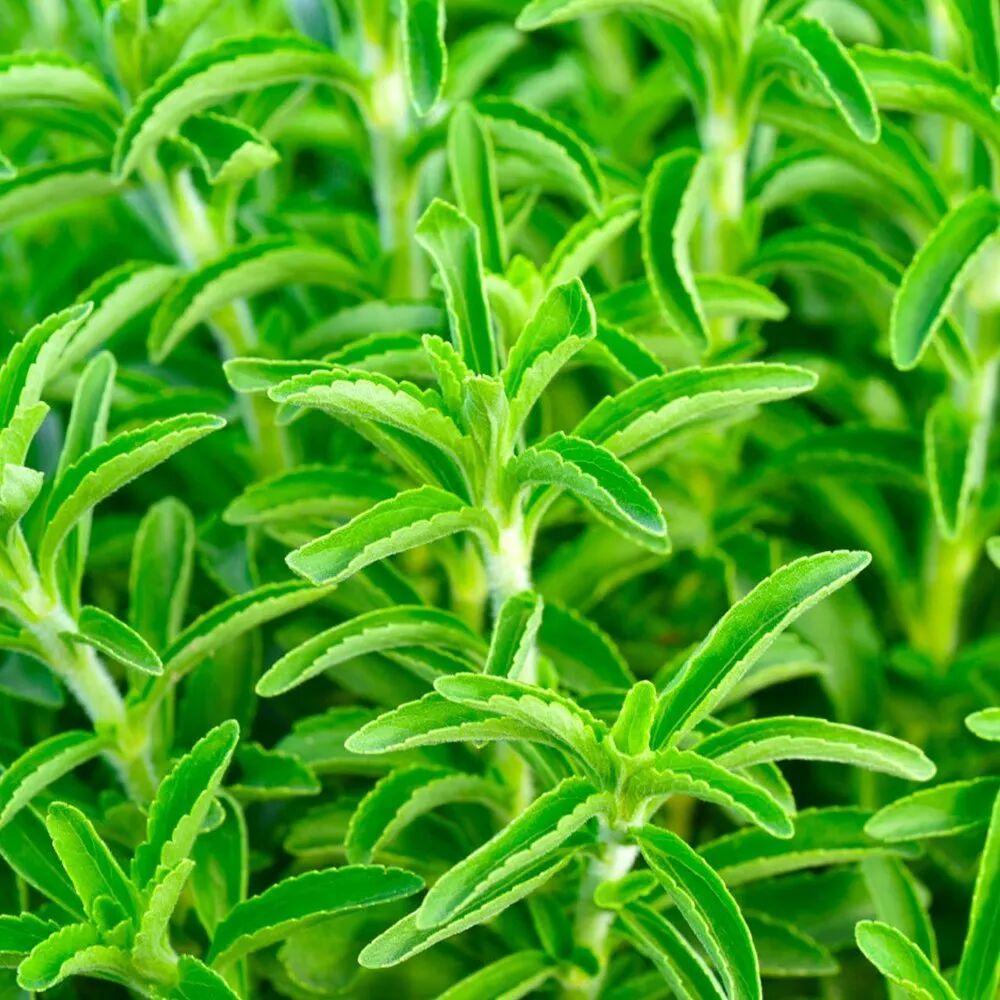
Stevia rebaudiana plant (illustrative image)
| INCI | Stevia Rebaudiana Leaf/Stem Extract |
| CAS | 91722-21-3 |
| Role in system | Barrier · soothing · antioxidant |
Stevioside (marker compound)| Grade B At 250 μM in cell models, stevioside showed a triple “antioxidant + anti-inflammatory + barrier” effect:· Antioxidant: ↓ROS, ↓MDA; ↑T-SOD, ↑CAT, ↑GSH-Px;· Anti-inflammatory: ↓IL-6, ↓IL-8, ↓TNF-α; ↓NF-κB/IκB/ERK1/2 phosphorylation;· Barrier: ↑claudin-1, ↑occludin, ↑ZO-1 tight-junction proteins (Antioxidants, 2023).
Immunomodulatory support| Grade B Stevioside activates AMPK and suppresses macrophage inflammatory responses (Molecules, 2021); 1 mM stevioside inhibited NF-κB in LPS-stimulated THP-1 cells (summarized in a 2023 review).
Why stevia is the “finishing ingredient” of the five-axis system: what anti-blemish formulas most often overlook is user experience and barrier consequences. With the highest typical value among the botanicals in the ingredient list (5%), stevia leaf/stem extract carries the soothing and barrier-support role: tight-junction upregulation directly answers the impaired-barrier fact of elevated TEWL in blemish-prone skin, closing the loop of “efficacy” and “mildness” within one formula.
Sources: Xu Q, et al. Antioxidants (Basel). 2023;12(5):1070. DOI:10.3390/antiox12051070; Wei F, et al. Molecules. 2021;26(4):858; content: AcneZero Ingredient List (Grade A)
05
Synergy · Claims · Applications
Translating ingredient evidence into market language: the synergy matrix, an evidence-graded claims system, the post-blemish care chain and application scenarios — every claim traceable to its source.
In this chapter | 7 botanicals × 5 axes synergy matrix · Claims & evidence grading · Post-blemish care · Applications · B2B value
Seven Botanicals × Five Axes: The Synergy Matrix at a Glance
05 SYNERGY·CLAIMS·APPLICATIONS | SYNERGY MATRIX
| Ingredient | A1 Sebum | A2 Inflammation | A3 Oxidation | A4 Microbiome | A5 Barrier & soothing |
|---|---|---|---|---|---|
| Mahonia (berberine) | ● | ● | ○ | ● | |
| Salvia (tanshinones) | ● | ○ | ● | ||
| Silymarin | ○ | ○ | ● | ○ | ● |
| Olive leaf (polyphenols) | ● | ● | ● | ||
| Bioflavonoids | ● | ● | ○ | ||
| Gardenia fruit (geniposide / crocetin) | ● | ○ | ● | ||
| Stevia (stevioside) | ○ | ● | ● |
● Ingredient-level literature evidence for that axis (mainly Grade B; Grade-C extrapolation for olive leaf) ○ Indirect or auxiliary support (e.g., same-genus evidence, review support, associated endpoints in human studies) — The matrix summarizes the literature cited in Chapters 3–4; it is not the result of finished-product efficacy testing.
Matrix source: all ingredient literature cited in this material (see References); composition: AcneZero Ingredient List (Grade A).
The Claims System: Every Claim Has Its Evidence Coordinates
05 SYNERGY·CLAIMS·APPLICATIONS | CLAIMS & EVIDENCE GRADING
| Market claim (cosmetics framework) | Supporting logic | Key sources | Grade |
|---|---|---|---|
| Oil Control | Berberine inhibits FASN/DGAT1 and lipid secretion in sebocytes; olive leaf modulates SREBP-1/PPAR-γ (Grade-C extrapolation) | J Inflamm Res. 2025; CIMB. 2026 | B/C |
| Blemish-Prone Skin Care | Berberine in vitro MIC/MBC, anti-biofilm and mouse-ear model; tanshinone antimicrobial review | Front Microbiol. 2023; Fitoterapia. 2025 | B |
| Soothing | Quercetin, tanshinone IIA, gardenia fruit and stevioside inhibit the TLR–NF-κB cascade at multiple levels | See the evidence matrix in Chapter 3 | B |
| Antioxidant Defense | Silymarin human study reduces lipid peroxidation; stevioside ↑antioxidant enzymes; flavonoid structure–activity relationship | JDD. 2024; Antioxidants. 2023 | B |
| Microbiome Balance | Non-antibiotic, plant-derived antimicrobial strategy managing C. acnes overgrowth and biofilms | Front Microbiol. 2023 | B |
| Barrier Support + Post-Blemish Tone Care | Stevioside upregulates tight-junction proteins; silymarin human study improves melanin index; crocetin inhibits tyrosinase | Antioxidants. 2023; J Cosmet Dermatol. 2023 | B |
Evidence grading: A = AcneZero’s own product data (MSDS safety, ingredient list); B = published ingredient literature (cell / animal / human, models as stated in the original papers); C = reasonable extrapolation from ingredient information. Finished-product efficacy verification is recommended before making finished-product claims.
Claim boundary: the above is a cosmetics efficacy narrative framework (blemish-prone skin care / oil control / soothing / microbiome balance / antioxidant / barrier & post-blemish tone care) and does not constitute drug or therapeutic claims.
The Post-Blemish Care Chain: Full Coverage from Inflammation to Dark Marks
05 SYNERGY·CLAIMS·APPLICATIONS | POST-BLEMISH CARE
The formation chain of post-inflammatory hyperpigmentation (PIH) and its intervention points
Inflammatory cascade (IL/TNF-α) → Oxidative-stress amplification → Tyrosinase/MITF activation → Melanin deposition · dark marks
Intervention point ①: silymarin (human evidence)In a 4-week human study of a 0.5% silymarin serum (n=22), acne severity scores and lesion counts fell while the skin melanin index decreased significantly (J Cosmet Dermatol, 2023); a 2024 human study (n=56) reported improved post-inflammatory hyperpigmentation and reduced lipid peroxidation (J Drugs Dermatol, 2024).
Intervention point ②: crocetin (mechanistic evidence)Gardenia-derived crocetin inhibited tyrosinase activity and reduced melanin synthesis in B16F10 cells, downregulated tyrosinase and MITF protein expression and scavenged ROS — intervening upstream of melanin synthesis in dark-mark formation (Anticancer Agents Med Chem, 2018).
The complete narrative: inflammation management (Axis 2) reduces the upstream drive of PIH, antioxidant defense (Axis 3) blocks the amplification step, and silymarin plus gardenia provide human and mechanistic evidence for dark-mark care — AcneZero places “fighting acne” and “post-blemish recovery” within the same ingredient logic, giving brands a full-cycle product story from the acute phase to recovery.
Sources: Kim J, et al. J Cosmet Dermatol. 2023;22(2):561-568; J Drugs Dermatol. 2024;23(4). DOI:10.36849/JDD.8120; Hashemi-Shahri S, et al. Anticancer Agents Med Chem. 2018 (Grade-B ingredient literature)
Applications: From the Facial Core to Extended Scenarios
05 SYNERGY·CLAIMS·APPLICATIONS | APPLICATIONS
| Facial care (core scenario) | Body care | Scalp care (extended research direction) |
|---|---|---|
| · Blemish-care serum: the lead format for the full five-axis story· Oil-control lotion / gel: sebum management + microbiome balance· Soothing repair mask: inflammation management + barrier support· Post-blemish tone-care serum: the silymarin + gardenia PIH evidence chain· Targeted spot care: high-concentration multi-pathway positioning | · Back / chest blemish care: sebaceous-dense areas — a natural extension of the oil-control + microbiome narrative· Body mist / toner: water solubility suits large-area formats (Grade-A formula fact: water-soluble at 20°C)· Post-workout refreshing care: oil and microbiome management scenarios | · The scalp is likewise a sebum- and microbe-dominated ecosystem: Malassezia-mediated sebum peroxidation products (squalene monohydroperoxide, MDA) are among the triggers of dandruff (literature background)· AcneZero’s sebum-management, antioxidant and microbiome ingredient logic is mechanistically transferable to scalp scenarios· Positioning note: this is an extended research direction based on published literature; the MSDS defines the product’s use as a cosmetic skincare ingredient, and scalp applications require separate evaluation and validation |
Formulation fit: the water-based (water-soluble) vehicle suits serums, toners, masks and gels; recommended pH, heat/light stability and specific compatibility parameters should be confirmed with the PuriPharm technical team — this material does not invent a recommended dosage.
Scalp background: DeAngelis YM, et al. J Investig Dermatol Symp Proc. 2005;10(3):295-297; product use and solubility: AcneZero MSDS v1.1 (Grade A).
B2B Partnership Value: A One-Stop, Multi-Pathway Anti-Blemish Solution
05 SYNERGY·CLAIMS·APPLICATIONS | PARTNERSHIP VALUE
| For brands: a complete science story | For formulators: clear engineering parameters | Regulatory & documentation support |
|---|---|---|
| · The five-axis mechanism + synergy matrix converts directly into product-page and detail-page storytelling· Every claim carries an evidence grade, standing up to regulatory and platform review· A full-cycle product-line imagination “from the acute phase to post-blemish recovery” | · Water-soluble (20°C), friendly to water-based formats· 4–25°C light-protected storage, routine supply-chain management· MSDS data showing no skin and no eye irritation, reducing the safety-assessment burden (Grade A) | · Listed in China’s Inventory of Existing Chemical Substances (IECIC)· Complete INCI / CAS information; transparent, traceable ingredient list· MSDS v1.1 and supporting technical documents for export and multi-market compliance assessment· The ingredient literature pack (References) supports claim filing and content review |
CONTACT | Business & Technical Inquiries
PuriPharm Co., Ltd.Web www.puriactives.comEmail service@puripharm.comTel +86-572-2745768Address 7F, Building 6E, No. 1366 Hongfeng Road, Huzhou, Zhejiang, China
Product specifications and regulatory information: AcneZero MSDS v1.1 (Grade A); contact details: official company materials. Please contact the technical team for recommended dosage and finished-product efficacy verification plans.
References & Documentary Basis
REFERENCES
- Cong TX, Hao D, Wen X, et al. From pathogenesis of acne vulgaris to anti-acne agents. Arch Dermatol Res. 2019;311(5):337-349. DOI:10.1007/s00403-019-01908-x
- Dréno B, et al. Cutibacterium acnes and acne vulgaris: a brief look at the latest updates. J Eur Acad Dermatol Venereol. 2018;32(Suppl 2):5-14.
- Condrò G, Sciortino R, Perugini P. Squalene peroxidation and biophysical parameters in acne-prone skin: a pilot “in vivo” study. Pharmaceuticals (Basel). 2023;16(12):1704. DOI:10.3390/ph16121704
- Sun L, Yu Q, Peng F, et al. The antibacterial activity of berberine against Cutibacterium acnes: its therapeutic potential in inflammatory acne. Front Microbiol. 2023;14:1276383. DOI:10.3389/fmicb.2023.1276383
- Berberine inhibits acne-related lipid secretion and inflammation by regulating the hsa-miR-3150a-3p/TP53 pathway. J Inflamm Res. 2025.
- Lim HJ, Kang SH, Song YJ, et al. Inhibitory effect of quercetin on Propionibacterium acnes-induced skin inflammation. Int Immunopharmacol. 2021;96:107557. DOI:10.1016/j.intimp.2021.107557
- A silymarin antioxidant serum improves facial acne alone and as part of a treatment regimen. J Drugs Dermatol. 2024;23(4). DOI:10.36849/JDD.8120
- Kim J, et al. Efficacy and safety of silymarin containing antioxidant serum as an adjuvant treatment of mild-to-moderate acne vulgaris. J Cosmet Dermatol. 2023;22(2):561-568. DOI:10.1111/jocd.15439
- Yoon JY, Kwon HH, Min SU, et al. Epigallocatechin-3-gallate improves acne in humans by modulating intracellular molecular targets and inhibiting P. acnes. J Invest Dermatol. 2013;133(2):429-440.
- Kim J, Jo YW, Bang WJ, et al. Olive leaf extract suppresses sebogenesis and inflammation via AKT/ERK and SREBP-1/PPAR-γ signaling in human sebocytes. Curr Issues Mol Biol. 2026;48(6):549. DOI:10.3390/cimb48060549
- Chen J, et al. Anti-inflammatory activities of Gardenia jasminoides extracts in retinal pigment epithelial cells and zebrafish embryos. Exp Ther Med. 2021;22(1):700. DOI:10.3892/etm.2021.10132
- Song X, et al. Geniposide plays an anti-inflammatory role via regulating TLR4 and downstream signaling pathways in lipopolysaccharide-induced mastitis in mice. Inflammation. 2014;37:1588-1598. DOI:10.1007/s10753-014-9885-2
- Xu Q, et al. Stevioside improves antioxidant capacity and intestinal barrier function. Antioxidants (Basel). 2023;12(5):1070. DOI:10.3390/antiox12051070
- Wei F, et al. Stevioside activates AMPK to suppress inflammation in macrophages. Molecules. 2021;26(4):858. DOI:10.3390/molecules26040858
- Meng Z, Si CY, Teng S, et al. Tanshinone IIA inhibits lipopolysaccharide-induced inflammatory responses through the TLR4/TAK1/NF-κB signaling pathway in vascular smooth muscle cells. Int J Mol Med. 2019;43(4):1847-1858. DOI:10.3892/ijmm.2019.4100
- Zhang T, et al. Tanshinone in acne therapeutics: integrating molecular mechanisms, drug development, and multimodal treatment strategies. Fitoterapia. 2025.
- Yang X, Huang G, You L, et al. High-throughput RNA sequencing reveals the anti-inflammatory mechanism of baicalin on Propionibacterium acnes-induced acne in rabbits. J Tradit Chin Med Sci. 2019;6(3):201-210.
- Bezáková L, et al. Lipoxygenase inhibition and antioxidant properties of bisbenzylisoquinoline alkaloids isolated from Mahonia aquifolium. Pharmazie. 1996;51(10):758-761.
- Hashemi-Shahri S, et al. ROS-scavenging and anti-tyrosinase properties of crocetin on B16F10 murine melanoma cells. Anticancer Agents Med Chem. 2018.
- Mezei M, Gulasekharam V. Liposomes — a selective drug delivery system for the topical route of administration: gel dosage form. Life Sci. 1980;26:1473-1477.
- Li H, et al. Oleuropein and hydroxytyrosol as skin-permeable elastase/collagenase inhibitors with synergistic antioxidant activity in human skin fibroblasts. Int J Food Sci Nutr. 2022;73(4):460-470.
- DeAngelis YM, et al. Three etiologic facets of dandruff and seborrheic dermatitis: Malassezia fungi, sebaceous lipids, and individual sensitivity. J Investig Dermatol Symp Proc. 2005;10(3):295-297.
- Zhang DQ, Tai JX, Fu Q. Research and application of bioflavonoids. Food and Fermentation Industries. 1999;25(6):52-57. (In Chinese)
- Liao ZJ. Process for extracting and refining berberine from Mahonia. Chinese patent CN1069493A, published 1993-03-03. (In Chinese)
Internal company documents (Grade-A factual basis): PuriPharm AcneZero MSDS v1.1 (2019-07-13); AcneZero Ingredient List.
From single-target anti-acneto multi-pathway blemish-prone skin management.
PuriActives® AcneZero — Seven botanicals × phospholipid-based active system × five axes
PuriPharm Co., Ltd. | INNOVATION FOR HEALTH & BEAUTYwww.puriactives.com | service@puripharm.com | +86-572-2745768 | Huzhou, Zhejiang, China
PuriActives® Sodium Trehalose Sulfate 10%
PuriActives® Sodium Trehalose Sulfate 10%
Beyond Hydration · Barrier Biology
TECHNICAL PRODUCT PRESENTATION
PuriActives® Sodium Trehalose Sulfate 10%
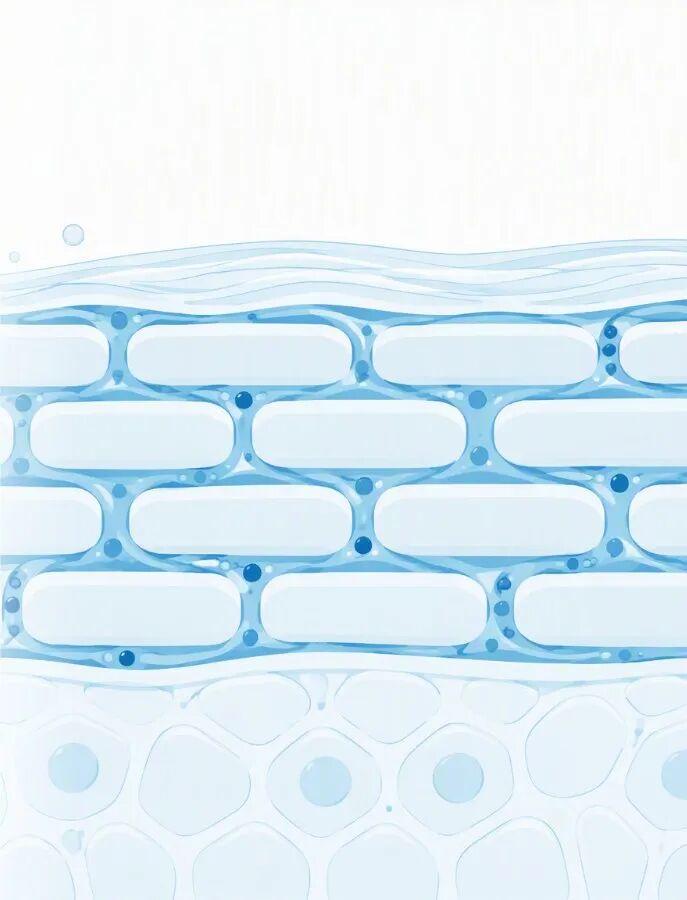
From Hydration to Activation of the Skin’s Own Moisturizing Barrier
Beyond Hydration · Barrier Biology
INCI NAME: SODIUM TREHALOSE SULFATEPuriPharm Co. Ltd.
RETHINKING HYDRATION
Moisturization Is More Than Adding Water to Skin
CLASSICAL MOISTURIZATION: WATER FROM OUTSIDE
Humectant: draws water from the environment or deeper layersEmollient: softens the stratum corneum and improves skin feelOcclusive: forms a film and reduces evaporationAll three add or retain water, but do not directly build the skin’s own moisturizing system.
BARRIER BIOLOGY: HELPING SKIN MANAGE WATER
01 Keratinocyte differentiation and cornification02 Epidermal lipid transport (ABCA12)03 Ceramide barrier organization04 Filaggrin (FLG) metabolism05 Natural moisturizing factor (NMF) production
PuriActives® Sodium Trehalose Sulfate moves from external hydration toward support for the skin’s endogenous moisturizing system.
PRODUCT IDENTITY
PuriActives® Sodium Trehalose Sulfate 10%
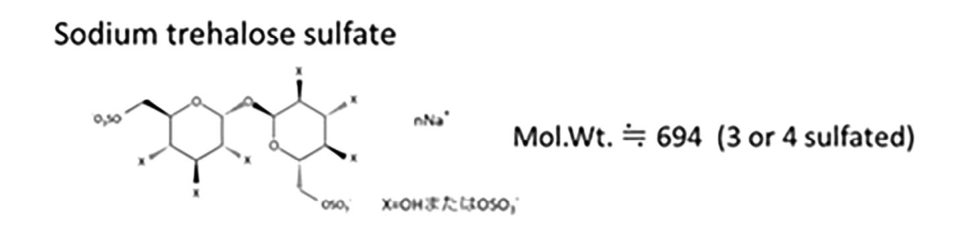
Chemical structure of sodium trehalose sulfate, Maeda et al., 2024
| Item | Information |
|---|---|
| INCI NAME | SODIUM TREHALOSE SULFATE |
| Ingredient category | Low-molecular-weight sulfated disaccharide active |
| Functional positioning | Moisturizing active · barrier-care active · skin-conditioning active |
| Molecular feature | Mol.Wt. ≈ 694 (tri- or tetra-sulfated) |
Trehalose backbone
↓
Sulfation
↓
Sodium salt
Sulfation differentiates it from ordinary trehalose, transforming a sugar into a barrier-active molecule.
WHY SULFATION
Trehalose Is Only the Starting Point: Sulfation Changes Biological Behavior
Trehalose
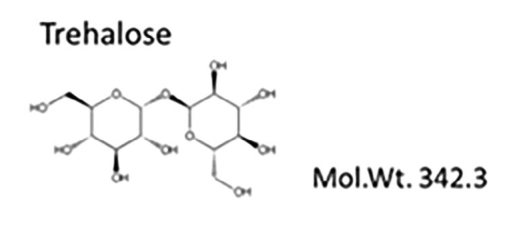
Sodium trehalose sulfate
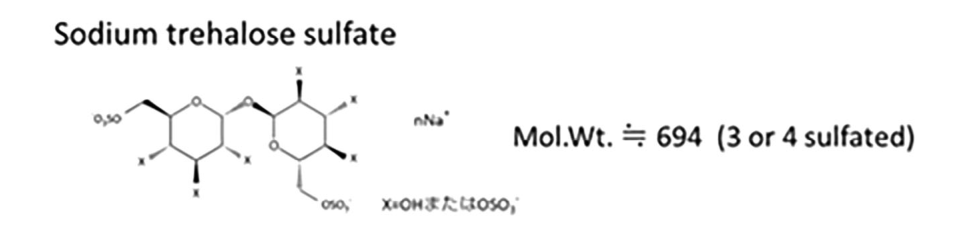
Key comparisons in the Maeda study
- Unsulfated trehalose did not produce the same complete barrier-gene expression response as sodium trehalose sulfate.
- In a 3D epidermal-model TEWL test, the trehalose group did not differ significantly from control, while the sodium trehalose sulfate group showed a significant reduction.
- Low-molecular-weight sulfated disaccharides below 1,000 Da can act on stratum-corneum barrier function.
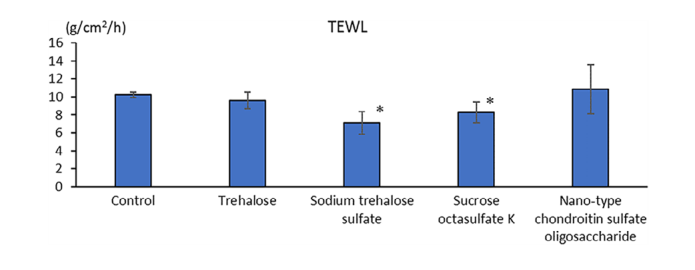
3D epidermal-model TEWL (g/cm²·h): only the sulfated-sugar group was significantly lower than control, *p<0.05.
Source: Maeda K, et al. Skin Res Technol. 2024;30:e13666. Chemical structures reproduced from Figure 2.
THREE PILLARS OF THE BARRIER
An Effective Barrier Depends on Three Coordinated Systems
Cornified Envelope
IVL · TGM1
Intercellular Lipids
ABCA12 · Ceramide
Natural Moisturizing Factors
FLG · CASP14 · CAPN1 · BLMH
Sodium trehalose sulfate is supported by evidence across all three systems.These systems determine the “bricks” of the stratum corneum, the “mortar” between them, and water storage within the bricks.
Source: Maeda K, et al. Skin Res Technol. 2024;30:e13666.
MECHANISM OVERVIEW
One Molecule, Multiple Pathways to Strengthen the Moisturizing Barrier
After topical application, sodium trehalose sulfate participates in epidermal biological regulation:
01 IVL / TGM1 ↑
Cornified-envelope formation ↑
02 ABCA12 ↑
Lamellar-granule lipid transport ↑Ceramide-barrier organization ↑
03 FLG / CASP14 / CAPN1 / BLMH ↑
Free amino acids ↑Natural moisturizing factors (NMF) ↑
All three pathways converge on: barrier integrity ↑ · stratum-corneum hydration ↑ · transepidermal water loss (TEWL) ↓
Evidence chain: qPCR gene expression · immunofluorescence protein validation · free-amino-acid measurement · 3D-model TEWL · four-week double-blind human study
Source: Maeda K, et al. Skin Res Technol. 2024;30:e13666.
LIPID TRANSPORT · ABCA12
ABCA12 Enables the Skin to Transport Its Own Barrier Lipids
ABCA12 is a key lipid transporter in keratinocytes. This ATP-binding cassette transporter loads intracellular lipids into lamellar granules and delivers them to the stratum corneum.
Intracellular lipid synthesis
↓
Loading into lamellar granules
↓
Release of intercellular lipids in the stratum corneum
↓
Formation of a complete barrier-lipid structure
This supports the endogenous epidermal lipid-transport system rather than merely adding lipids from outside.
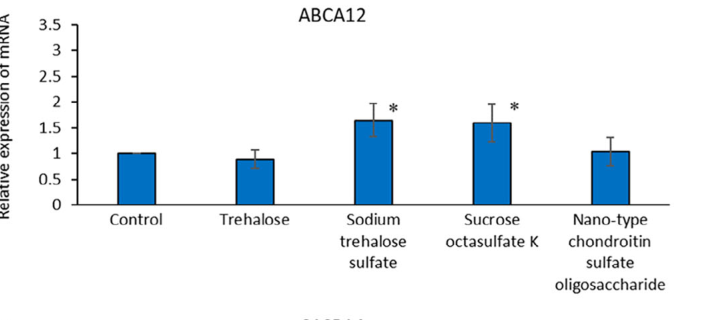
Relative ABCA12 mRNA expression in a 3D epidermal model, *p<0.05 vs. control.
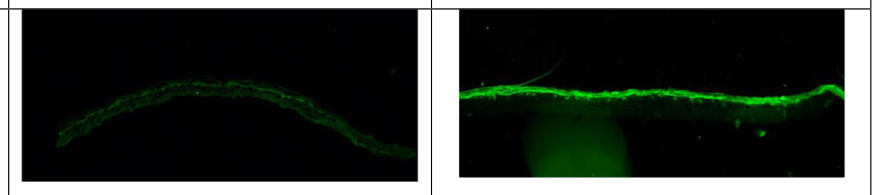
ABCA12 immunofluorescence: stronger signal in the sodium trehalose sulfate group, 3D epidermal model.
Sources: Maeda K, et al. Skin Res Technol. 2024;30:e13666; Sakai K, et al. Exp Dermatol. 2007;16:920–926.
CERAMIDE-RICH BARRIER
From ABCA12 to a Ceramide-Rich Barrier
ABCA12 ↑
↓
Lipid loading and transport ↑
↓
Lamellar granules
↓
Intercellular lipids
↓
Ceramide-rich barrier
Immunofluorescence validation: stronger ceramide signal
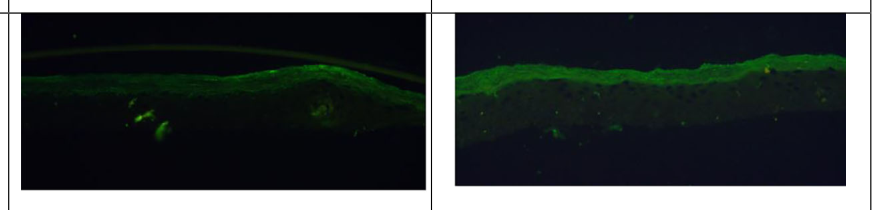
Control, left; sodium trehalose sulfate treatment, right
In a 3D epidermal model, the sodium trehalose sulfate group showed stronger ceramide immunofluorescence than the vehicle control, suggesting support for the organization of intercellular barrier lipids in the stratum corneum.
Why it matters: Ceramides are core components of stratum-corneum intercellular lipids and determine barrier density. When ABCA12 function is impaired, lamellar-granule lipids decline and structural barrier defects emerge. Supporting ABCA12 supports the skin’s own lipid supply chain.
Source: Maeda K, et al. Skin Res Technol. 2024;30:e13666, Figure 5C.
FILAGGRIN · NMF PATHWAY
Activating the Skin’s Natural Moisturizing Factor Pathway
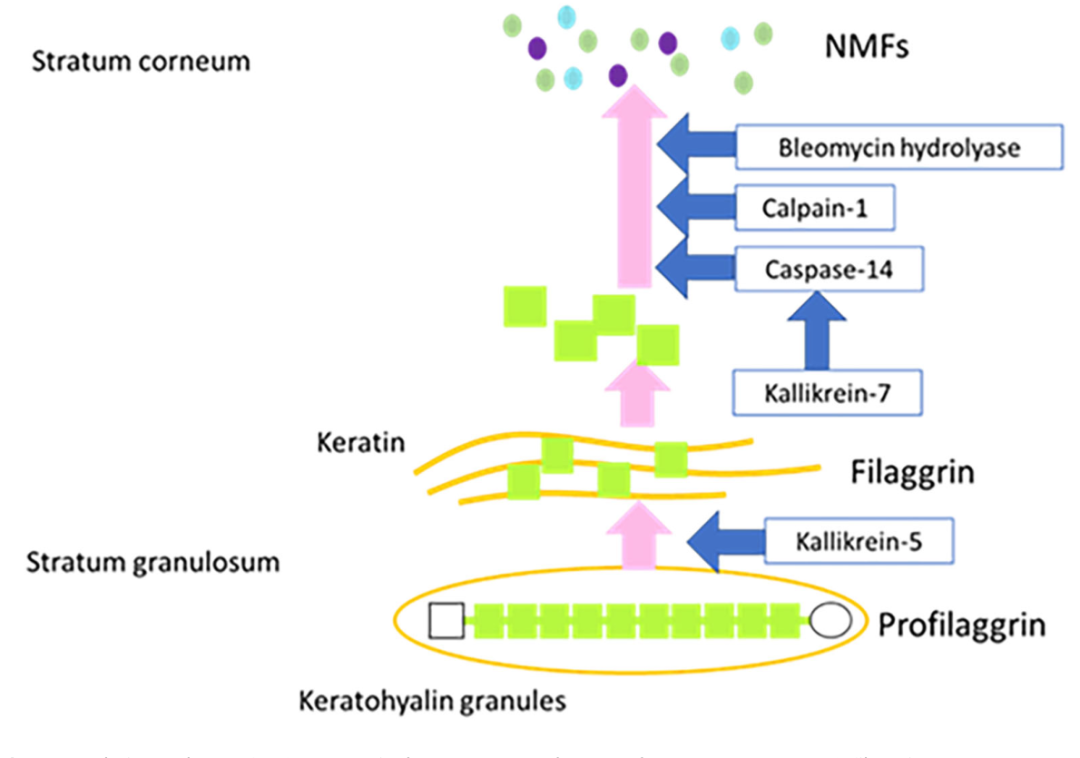
Pathway by which FLG is degraded in the granular layer and stratum corneum to generate NMF, Maeda et al., 2024, Figure 1.
Profilaggrin in the granular layer
↓
Filaggrin (FLG)
↓
FLG processing and degradation: CASP14 / CAPN1 / BLMH
↓
Free amino acids
↓
Natural moisturizing factors (NMF)
↓
Stratum-corneum hydration
This is the skin’s own moisturizing system, not water supplied from outside.
Sources: Maeda K, et al. Skin Res Technol. 2024;30:e13666; Hoste E, et al. J Invest Dermatol. 2011;131:2233–2241.
MULTI-GENE BARRIER RESPONSE
One Intervention Activates Seven Barrier-Related Pathways
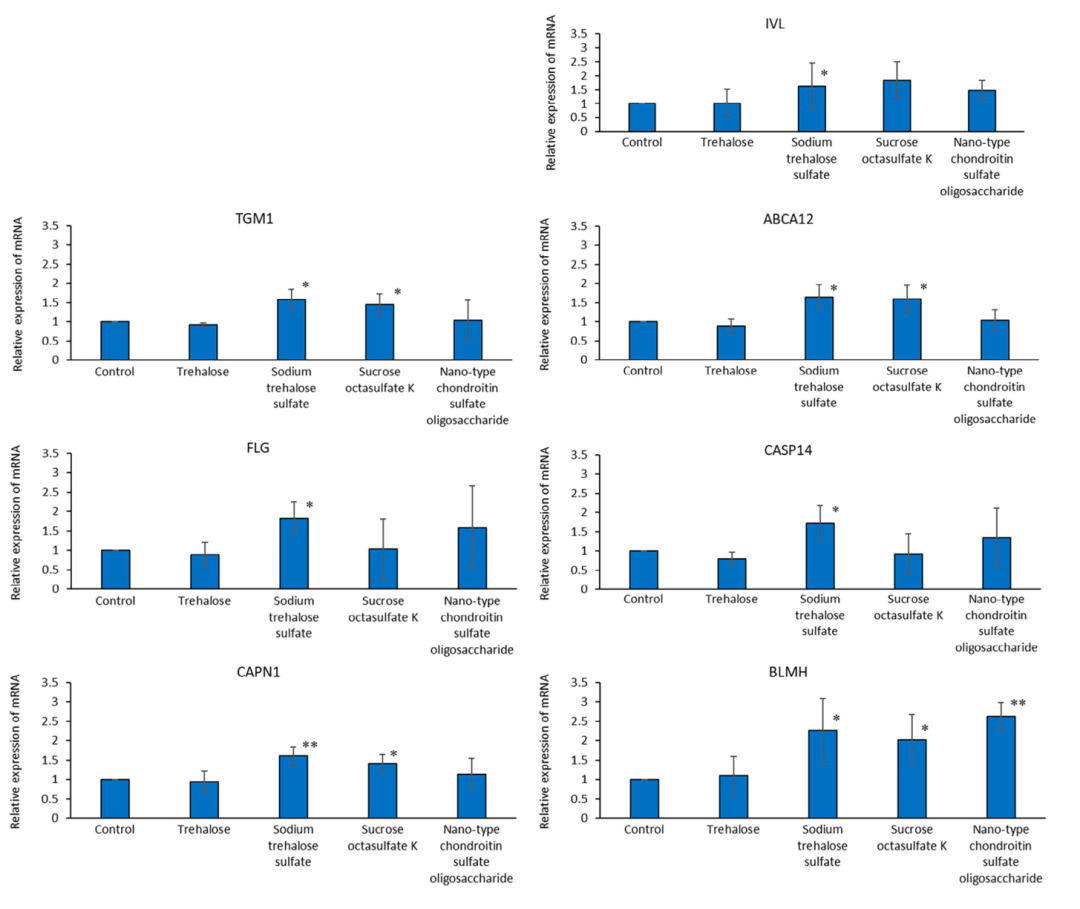
3D epidermal-model qPCR: all seven mRNA markers were significantly upregulated by sodium trehalose sulfate, *p<0.05, **p<0.01 vs. control; n=3.
IVL Involucrin ↑
TGM1 Transglutaminase 1 ↑
ABCA12 Lipid transport ↑
FLG Filaggrin ↑
CASP14 ↑
CAPN1 ↑
BLMH ↑
The response covers cornified-envelope formation, lipid transport and NMF production rather than a single target.
Source: Maeda K, et al. Skin Res Technol. 2024;30:e13666, Figure 4.
PROTEIN-LEVEL EVIDENCE
From Gene Expression to Barrier Structure
TGM1
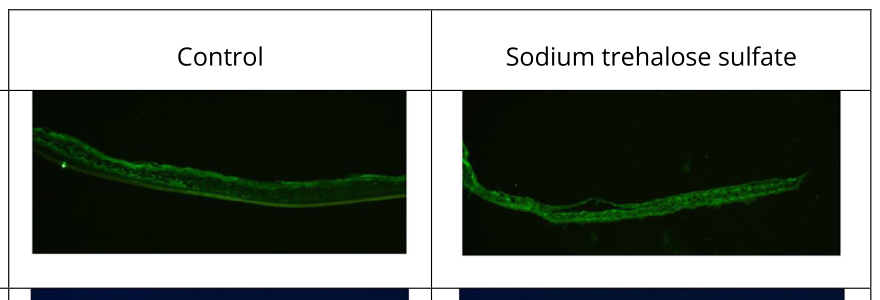
Control, left; STS treatment, right
ABCA12
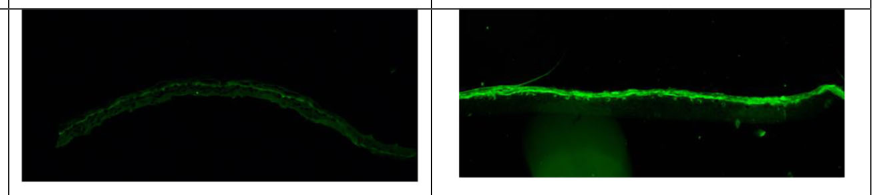
Control, left; STS treatment, right
Ceramide
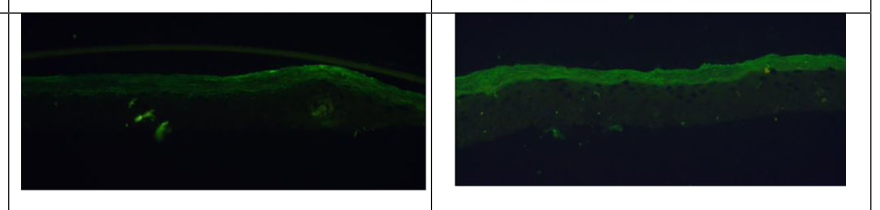
Control, left; STS treatment, right
FLG
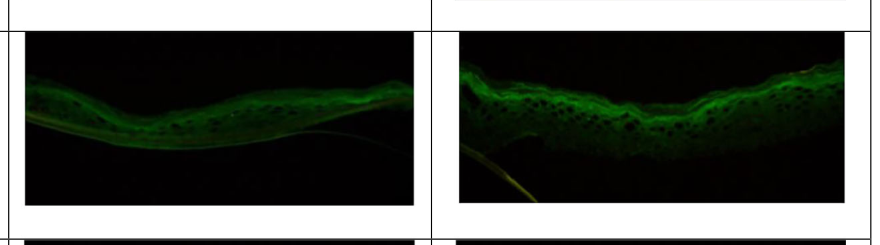
Control, left; STS treatment, right
In 3D epidermal-model immunofluorescence, the sodium trehalose sulfate group showed greater fluorescence intensity and distribution area for TGM1, ABCA12, ceramide and FLG than the vehicle control. The evidence therefore extends beyond mRNA changes to proteins and barrier structure.
Source: Maeda K, et al. Skin Res Technol. 2024;30:e13666, Figure 5.
FREE AMINO ACIDS · NMF SOURCE
Increasing the Source Materials for Natural Moisturizing Factors
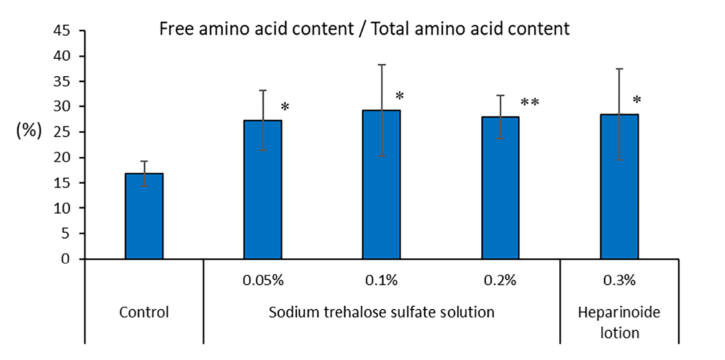
Free amino acids / total amino acids, %, 3D epidermal model, n=4; *p<0.05, **p<0.01 vs. control.
Significant increases from 0.05% to 0.20%: the 0.05%, 0.10% and 0.20% STS solution groups were all higher than control.
Free amino acids are core components of natural moisturizing factors and arise from filaggrin degradation. After sodium trehalose sulfate treatment, the free-amino-acid ratio in the 3D epidermal model was significantly higher than control.
It not only attracts water, but also supports the skin in producing its own natural moisturizing factors.
Source: Maeda K, et al. Skin Res Technol. 2024;30:e13666, Figure 6.
IMMEDIATE HYDRATION
Visible Improvement in Stratum-Corneum Water Content from 15 Minutes
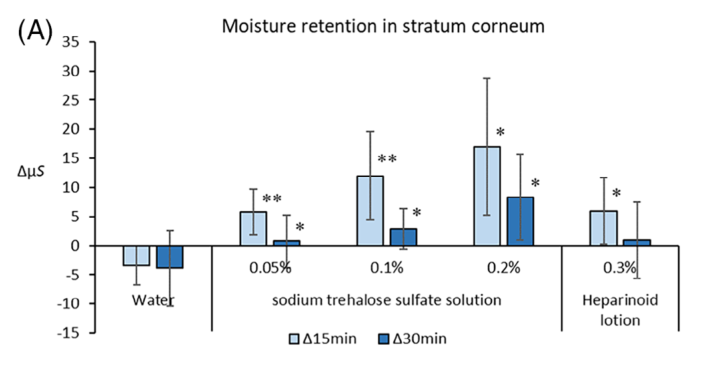
Short-term human forearm test: change in stratum-corneum water content, ΔμS, 15 / 30 min; n=5; *p<0.05, **p<0.01 vs. control.
15 min
An increase in water content was already observed.
30 min
The improvement persisted and remained significant.
After treatment with 0.05%, 0.1% and 0.2% sodium trehalose sulfate solutions, stratum-corneum water content was significantly higher than with the water control. The comparison 0.3% heparinoid emulsion was significant only at 15 minutes and no longer differed significantly from control at 30 minutes.
Immediate hydration and support for endogenous moisturization can be achieved together.
Source: Maeda K, et al. Skin Res Technol. 2024;30:e13666, Figure 7A.
TEWL · BARRIER EFFICIENCY
Reducing Water Loss and Improving Barrier Efficiency
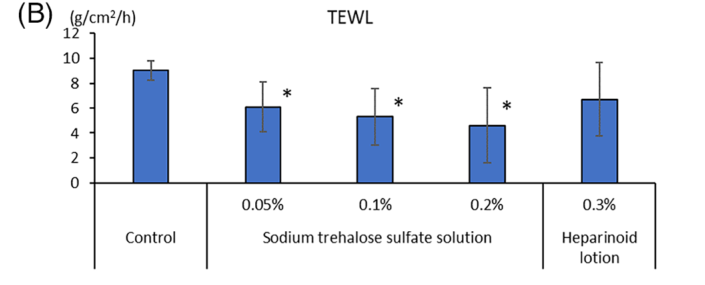
3D epidermal-model TEWL, g/cm²·h, three days after treatment; n=3; *p<0.05 vs. control.
Transepidermal water loss is a core measure of skin-barrier integrity. Lower TEWL indicates a stronger ability to retain water. All three sodium trehalose sulfate concentration groups had significantly lower TEWL than control.
ABCA12 + ceramide + TGM1 / IVL
↓
Barrier integrity ↑
↓
Water loss ↓
Source: Maeda K, et al. Skin Res Technol. 2024;30:e13666, Figure 7B.
HUMAN STUDY DESIGN
Four-Week Randomized Double-Blind Human Study
Randomized
Random allocation
Double-blind
Double-blind design
Placebo-controlled
Placebo control
4 Weeks
Continuous facial use
| Item | Study information |
|---|---|
| Participants | Included in statistical analysis: active group n=13; placebo group n=11 |
| Test formulations | Active group: toner and emulsion containing 0.05% sodium trehalose sulfate; placebo group: visually matched blank formulations |
| Use | Twice daily, morning and evening, for four weeks |
| Primary endpoints | TEWL and stratum-corneum water content |
| Ethics and enrollment | Conducted according to the Declaration of Helsinki and approved by an ethics committee, protocol HENM21083001, 1 October 2021; 26 women aged 33–59 enrolled |
Source: Maeda K, et al. Skin Res Technol. 2024;30:e13666.
4-WEEK CLINICAL RESULTS
Four Weeks of Use Improved Hydration and Barrier Function Together
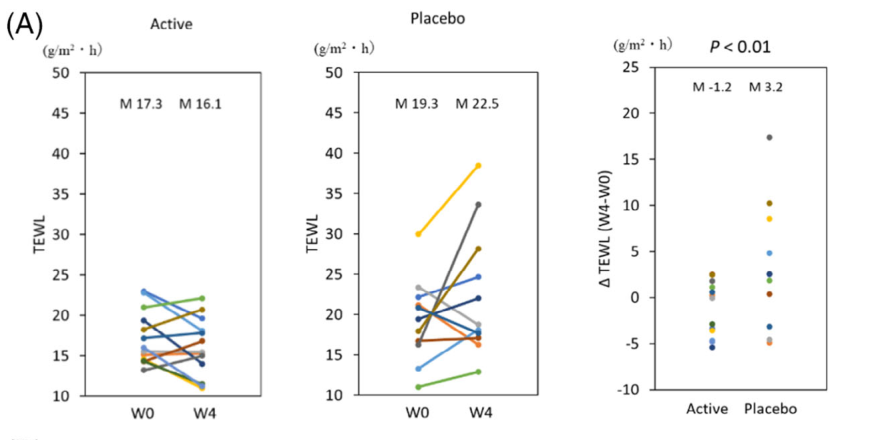
TEWL, g/m²·h: active-group mean W0→W4, 17.3→16.1; between-group comparison of ΔTEWL, p<0.01.
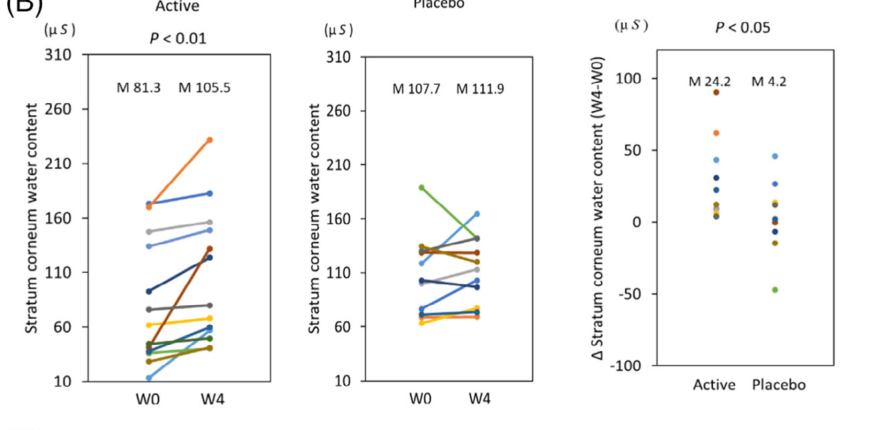
Stratum-corneum water content, μS: active group 81.3→105.5, p<0.01; between-group comparison of change, p<0.05.
Significant TEWL improvement
Active group Δ −1.2 vs placebo group Δ +3.2
Significant increase in stratum-corneum water content
Active group Δ +24.2 vs placebo group Δ +4.2
Significant between-group differences
Both core endpoints favored the active group
Source: Maeda K, et al. Skin Res Technol. 2024;30:e13666, Figures 8A and 8B; n=13 active / n=11 placebo.
HYDRATION + CLARITY
A Healthy Barrier Can Also Improve the Look of Skin
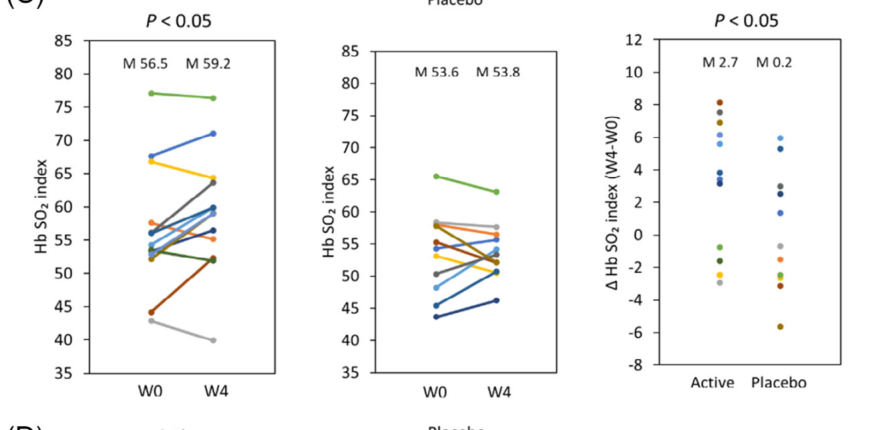
Blood oxygenation index: increased after four weeks in the active group; between-group comparison of change, p<0.05.
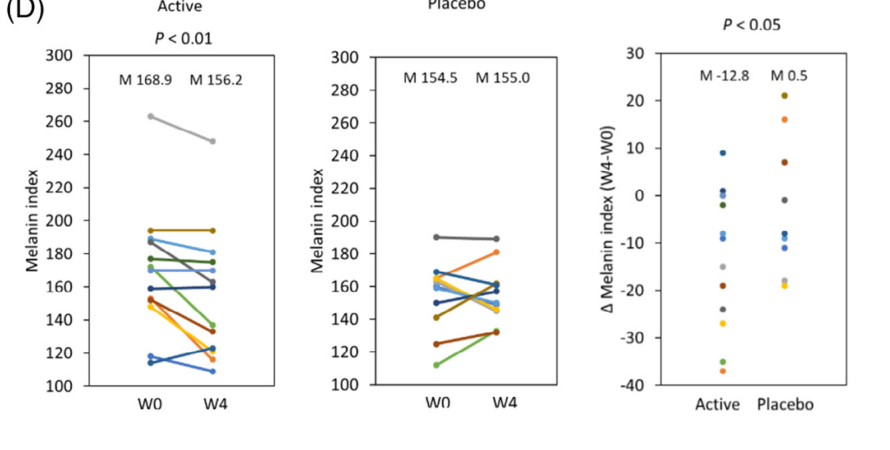
Melanin index: decreased after four weeks in the active group; between-group comparison of change, p<0.05.
The paper also observed improvements in tone-related measures: blood oxygenation index ↑ and melanin index ↓.
These were accompanying observational endpoints in the four-week human study and do not support a strong whitening claim.
Suggested marketing language: improves dry, dull appearance · enhances a hydrated, translucent look · supports a more even, healthy-looking skin tone · provides barrier and hydration support for brightening products
Source: Maeda K, et al. Skin Res Technol. 2024;30:e13666, Figures 8C and 8D.
DRY & SENSITIVE SKIN
Breaking the Barrier Damage–Dryness–Sensitivity Cycle
Barrier disruption
↓
TEWL ↑
↓
Dehydration
↓
Roughness and tightness
↓
Environmental sensitivity
↓
Further barrier disruption
Where sodium trehalose sulfate acts
Barrier: supports the cornified envelope and barrier integrityLipids: supports endogenous lipid transport and ceramide organizationNMF: supports natural moisturizing factor productionHydration: increases stratum-corneum water content and reduces TEWL
Suitable product concepts
Dry-skin care · sensitive-skin barrier care · seasonal-transition careMature dry skin · companion care for high-activity products such as retinoids and acidsPost-cleansing tightness care
SCALP IS SKIN
The Scalp Also Needs an Intact Barrier
The scalp is an extension of the skin and similarly depends on:
- Stratum-corneum structure and the cornified envelope
- Intercellular lipids and ceramides
- Natural moisturizing factors and water balance
When the scalp barrier is impaired: dryness · tightness · discomfort · flaking · reduced quality of hair appearance
PuriActives® Sodium Trehalose Sulfate can extend to: scalp serum · hair tonic · shampoo · conditioner · scalp mask · leave-on scalp essence
SULFATED SACCHARIDES PLATFORM
Sulfated Saccharides: an Emerging Scalp and Hair Research Platform
This page concerns platform research on sulfated saccharides. It is not human hair-growth clinical evidence for sodium trehalose sulfate.
US 5,618,798: hair and scalp applications of sulfated saccharides
The patent covers topical use of sulfated monosaccharides, disaccharides and oligosaccharides in hair and scalp applications, including shampoo, hair tonic, hair conditioner, gel, emulsion and lotion formats.
Positioning of this page: scalp moisture + barrier + hair environment. The focus is scalp moisturization and barrier care, not pharmaceutical hair-growth promotion.
Supporting studies on sulfated saccharides:
- US 4,912,093: synthetic sulfated saccharides and wound care
- WO 1989/05646: sulfated saccharides and inflammatory skin care
- US 5,605,938: sulfated anionic polymers and cellular mechanisms
- FR 2877565: dextran sulfate and soothing applications
- Toyama S, et al. 2025: topical OJI-204 for skin dryness and dryness-induced itching, Biomedicines. 2025;13:556
FORMULATION APPLICATIONS
Highly Flexible Applications from Serums to Scalp Care
SKIN CARE
TonerEssence / serumAmpouleLotion / creamMaskEye careSensitive-skin care
HAIR & SCALP
ShampooConditionerScalp serumHair tonicScalp sprayHair mask
As a water-soluble, low-molecular-weight active, it is suitable for aqueous products, serums, emulsions, rinse-off scalp products and leave-on scalp products.
FORMULATION DESIGN
Building the Next Generation of Barrier-Moisturizing Systems
STS + Hyaluronic Acid
Immediate water retention + support for the endogenous moisturizing system
STS + Ceramide
Endogenous lipid transport + exogenous lipid supplementation
STS + Panthenol
Barrier support + soothing care
STS + Ectoin
Environmental-stress care
STS + Niacinamide
Multidimensional barrier care
STS + Amino Acid / NMF Complex
Endogenous NMF generation + exogenous NMF supplementation
These formulation-design suggestions are based on complementary mechanisms. Actual performance of each combination requires validation in the specific formulation.
DOSE TRANSLATION
A 10% Active System Connected to the Published Human-Study Dose
PuriActives® Sodium Trehalose Sulfate 10%: 10% active content in the ingredient
↓
Recommended finished-formula addition: 0.50%
↓
Actual sodium trehalose sulfate concentration in the formula: 0.05%
This directly corresponds to the 0.05% active concentration used in the human study by Maeda et al.
Studies at this concentration included a four-week randomized double-blind placebo-controlled human trial showing improvements in TEWL and stratum-corneum water content, a short-term human hydration test, and validation of genes, proteins and free amino acids in a 3D epidermal model.
Source: Maeda K, et al. Skin Res Technol. 2024;30:e13666.
WHY PURIACTIVES®
PuriActives® Sodium Trehalose Sulfate 10%
01 Barrier biology
ABCA12 / TGM1 / IVLSupports the cornified envelope and endogenous lipid transport
02 Endogenous moisturization
FLG / NMF / free amino acidsSupports the skin in producing its own moisturizing factors
03 Human validation
Four-week randomized double-blind studyTEWL ↓ · stratum-corneum water content ↑
04 Dual-scenario application
Skin + scalpOne platform for skin and scalp care
Lasting moisturization means more than bringing water into the skin. It also means helping the skin manage its own water.
REFERENCESMaeda K, Zhou Z, Guo M, Zhang J, Chen L, Yang F. Functional properties and skin care effects of sodium trehalose sulfate. Skin Res Technol. 2024;30:e13666. doi:10.1111/srt.13666Hoste E, et al. J Invest Dermatol. 2011;131:2233–2241. · Denecker G, et al. Nat Cell Biol. 2007;9:666–674. · Sakai K, et al. Exp Dermatol. 2007;16:920–926.Supporting platform research on sulfated saccharides: US 4,912,093 · US 5,618,798 · WO 1989/05646 · US 5,605,938 · FR 2877565 · Toyama S, et al. Biomedicines. 2025;13:556.
PuriPharm Co. Ltd.www.puriactives.com · service@puripharm.com+86-572-2745768 · Building 6, No. 1366 Hongfeng Road, Huzhou, Zhejiang, ChinaPuriActives® is a registered trademark of PuriPharm Co., Ltd. This material introduces a cosmetic ingredient.
PuriActives® BioCalmin
PuriActives® BioCalmin
Precision Molecular Soothing for Sensitive Skin & Scalp
PURIPHARM CO. LTD. — COSMETIC ACTIVE INGREDIENTS
PuriActives® BioCalmin

Precision Molecular Soothing for Sensitive Skin & Scalp
INCI: Hydroxyphenyl Propamidobenzoic AcidScientific name: Dihydroavenanthramide D (DHAvD), nature-inspired synthetic avenanthramide
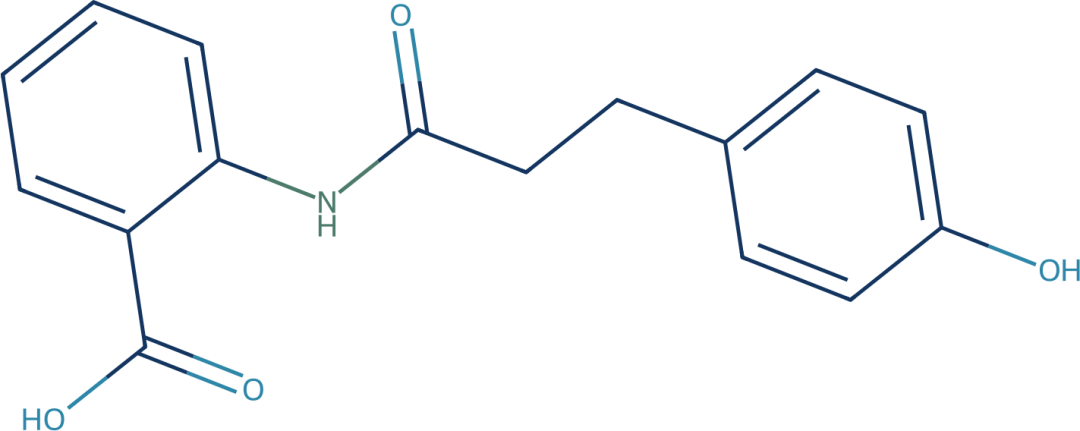
Nature-Inspired Chemistry · Fast Comfort · Multi-Pathway Defense
THE CHALLENGE — SKIN BIOLOGY
When Skin Overreacts, Multiple Signals Converge
COMMON MANIFESTATIONS:Itching、Redness、Burning、Stinging、Tightness、Dryness、Irritation、Scalp discomfort
POTENTIAL TRIGGERS:SurfactantsEnvironmental stress、Dry skin、Shaving、Hair coloring、Bleaching、Exfoliating acid、Retinoids、Frequent cleansing、Compromised skin barrier
THE SIGNALING CASCADE — SCHEMATIC
External Stress
↓
Sensory Nerve Activation · Substance P
↓
Mast Cell Activation
↓
Histamine + Inflammatory Mediators
↓
Itch · Redness · Discomfort
One trigger can set off the full neurogenic irritation chain — effective soothing starts upstream.
THE MOLECULE
Nature-Inspired Precision Chemistry
Dihydroavenanthramide D (DHAvD) | MW ≈ 285.3 Da | logP ≈ 3.34
| Item | Information |
|---|---|
| INCI NAME | Hydroxyphenyl Propamidobenzoic Acid |
| SCIENTIFIC NAME | Dihydroavenanthramide D (DHAvD) |
| INGREDIENT FAMILY | Nature-inspired synthetic avenanthramide |
A synthetic analogue nature-inspired by oat avenanthramides — the phenolic anthranilic acid amides behind the protective chemistry of oats — engineered as a highly defined molecular active with consistent, reproducible performance.
Key actions
Anti-itchAnti-rednessAnti-histamine pathway
Product attributes
AntioxidantEffective at low concentrationsSkin & scalp soothing
Molecular properties per published pharmaceutical-formulation research on DHAvD. Highly defined molecular identity — not an oat extract. Activity at low concentrations, across both skin and scalp applications.
DESIGN LOGIC
From Oat Defense Chemistry to Targeted Cosmetic Soothing
Avenanthramides are anthranilic acid amides known for biological activities relevant to skin comfort. PuriActives® BioCalmin translates that biology into one defined, reproducible molecule.
Oat Avenanthramide Biology
↓
Structure–Activity Understanding
↓
Dihydroavenanthramide D
↓
Consistent Molecular Soothing Performance
MOLECULAR ADVANTAGES
Controlled molecular identityReproducible quality, batch after batchStrong activity at ppm-level concentrations
MULTIFUNCTIONAL ADVANTAGES
Multifunctional soothing profileAntioxidant capacityBroad formulation potential
Nature-Inspired. Molecularly Defined.The premium positioning — beyond “naturalness”: defined, reproducible, potent.
MECHANISM
One Molecule. Four Levels of Skin Comfort.
NET RESULT: Less Itch · Less Redness · Less Irritation · More Comfort
01 Substance P / Mast Cell Pathway
Helps inhibit Substance P-induced histamine release from mast cells.
02 Histamine-Related Itch & Redness
Helps reduce downstream itch and erythema responses in challenged skin.
03 Inflammatory Signaling
Published mechanistic research supports modulation of NF-κB-related inflammatory signaling.
04 Oxidative Stress
Strong radical-scavenging activity helps limit the oxidative amplification of irritation.
MECHANISM IN FOCUS
Interrupting the Substance P–Mast Cell–Histamine Axis
Sensory Nerve
↓
Substance P
↓
Mast Cell
↓
Histamine
↓
Itch · Redness
PuriActives® BioCalmin inhibits Substance P-induced histamine release.
Substance P released from sensory nerves stimulates mast cells and promotes histamine release, driving itching, redness and neurogenic skin discomfort. Published studies show that synthetic avenanthramides including Dihydroavenanthramide D inhibit Substance P-induced histamine release from mast cells; the original patent literature describes anthranilic acid amides for precisely this purpose.
Target the Signal Before It Becomes Visible Discomfort.
Evidence type: in vitro mast-cell assay; patent literature.
EVIDENCE — IN VITRO
Strong Activity at ppm-Level Concentrations
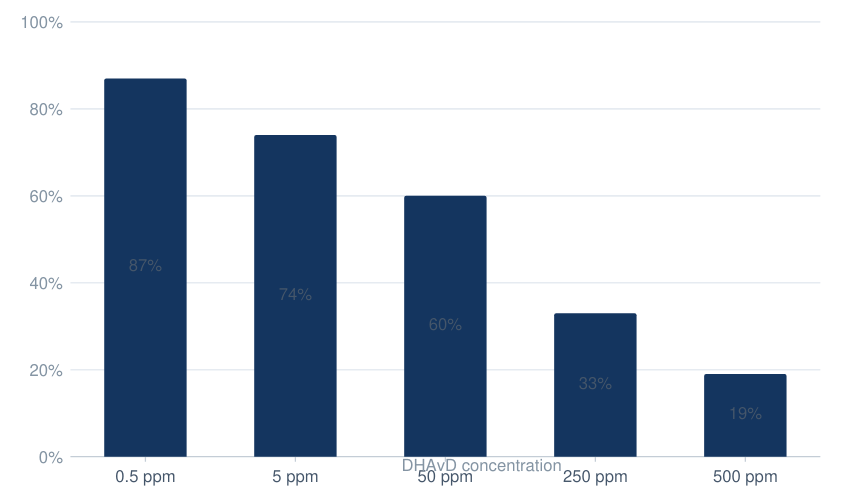
−81%histamine net release at 500 ppm DHAvD vs. stimulated control
Published in-vitro mast-cell results show progressive, dose-dependent suppression of histamine net release as DHAvD concentration rises from 0.5 to 500 ppm — potent activity well below typical use levels.
Histamine net release relative to Substance P-stimulated control (= 100%). Chart redrawn from published data.Source: Schmaus G, Herrmann M, Joppe H, Lange S, Koch O, Pillai R, Röding J. Dihydroavenanthramide D for Anti-irritant and Anti-itch. Cosmetics & Toiletries. 2007;122(11):55–66.
EVIDENCE — HUMAN IN VIVO
From Mast Cells to Human Skin
| HUMAN IN VIVO — HISTAMINE CHALLENGE | STUDY DESIGN |
|---|---|
| Method | Double-blind, placebo controlled |
| Challenge | Histamine challenge (skin-prick model) |
| Subjects | ≈ 10 subjects per study |
| Formulations | O/W emulsions with 500 ppm synthetic avenanthramides |
| Controls | Placebo & untreated controls |
| Assessment | Itch and redness scoring up to 180 minutes |
Itch Reduction
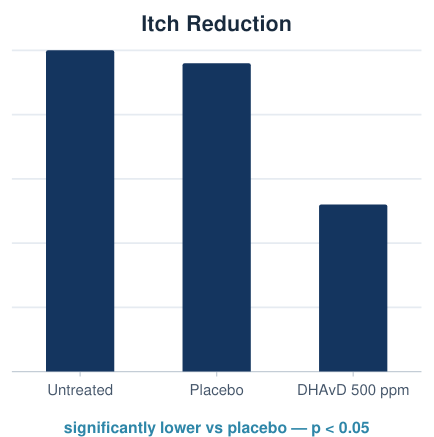
significantly lower vs placebo — p < 0.05
Redness Reduction
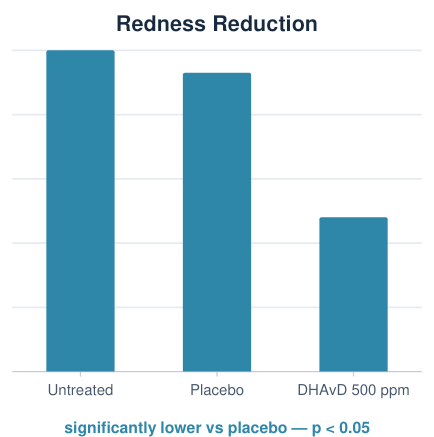
significantly lower vs placebo — p < 0.05
Schematic representation of the published outcome — synthetic avenanthramides including Dihydroavenanthramide D significantly reduced histamine-induced itch and redness versus placebo and untreated skin; bar heights are illustrative, not original quantitative values. Source: Schmaus G, et al. Cosmetics & Toiletries. 2007;122(11):55–66.
Visible Redness Down. Perceived Itch Down.
POTENCY
Powerful Soothing Does Not Require High Loading
500 ppm
= 0.05% active
The concentration that demonstrated meaningful anti-itch and anti-redness activity in the published human histamine-challenge model.
High biological potency
Meaningful activity at a low concentration.
Efficient formulation concept
Supports efficient formulation design.
Attractive in sophisticated sensitive-skin formulations
Suitable for advanced sensitive-skin products.
Compatible with multi-active cosmetic systems
Can be integrated into multi-active systems.
Published active concentration for Dihydroavenanthramide D (Schmaus G, et al. 2007). Final PuriActives® BioCalmin use level and assay: refer to the current PuriPharm TDS / SPEC.
EVIDENCE — ANTIOXIDANT
Soothing + Radical Defense
ABTS ANTIOXIDANT ASSAYIC50 = 26.54 μMIC50 = 7.57 μg/mL
Published ABTS data report radical-scavenging activity for DHAvD comparable with the reference antioxidants α-tocopherol and Trolox under the same assay conditions.
- Helps neutralize reactive radicals
- Helps reduce oxidative amplification of irritation
- Supports environmental-stress protection concepts
- Complements sensitive-skin and healthy-aging formulations
Calm Today. Defend Against Tomorrow’s Stress.
Source: Schmaus G, et al. Dihydroavenanthramide D for Anti-irritant and Anti-itch. Cosmetics & Toiletries. 2007;122(11):55–66.
MECHANISTIC CONTEXT
Beyond Histamine: Supporting Control of the Inflammatory Cascade
ROS / Cytokine Stress
↓
IκB degradation
↓
NF-κB Activation
↓
Inflammatory Mediator Expression
Published mechanistic studies on DHAvD demonstrate suppression of NF-κB-related signaling and downstream iNOS / NO responses in experimental biological models — a second, histamine-independent layer of the molecule’s soothing logic.
How to read this evidence: Supporting mechanistic evidence — not a direct clinical skin-efficacy claim. The experimental disease model in the source publication is not a product indication.
MECHANISTIC STUDY — NF-κB · iNOS · NOReference: Lv N, Song MY, Lee YR, et al. Biochem Biophys Res Commun. 2009;387(1):97–102.
MOLECULAR ROBUSTNESS
Stable Across a Remarkably Broad pH Window
Broad pH stability expands formulation possibilities.
pH 3 — pH 5 — pH 7 — pH 9 — pH 12
acidicalkaline
Published stability research evaluated DHAvD at pH 3 · 5 · 7 · 9 · 12 over 24 weeks and reported only slight degradation — even under very acidic and very alkaline conditions.
24 weeks of stability evaluation
WHERE BROAD pH STABILITY MATTERS
Facial skin careCleansing productsShaving products
MORE APPLICATIONS
Scalp productsHair coloring systemsBleaching-associated comfort concepts
Molecule-level stability data (published research; Schmaus G, et al. 2007). Final product pH range and handling: current PuriPharm TDS / SPEC.
FORMULATION SCIENCE
Unlocking Dermal Availability Through Smart Vehicle Design
Vehicle design determines how much DHAvD reaches viable skin.
EX VIVO HUMAN SKIN — FRANZ DIFFUSION
- 2–4× higher DHAvD release within 30 minutes with a 2% butylene glycol / pentylene glycol blend
- ≈ 2× penetration into viable skin layers within 30 minutes
- Sustained delivery advantage maintained over 300 minutes
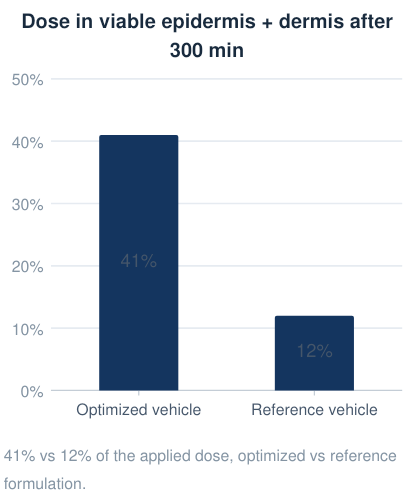
41% vs 12% of the applied dose, optimized vs reference formulation.
Published formulation science using Dihydroavenanthramide D. Source: Heuschkel S, Wohlrab J, Schmaus G, Neubert RHH. Eur J Pharm Biopharm. 2008;70(1):239–247. doi:10.1016/j.ejpb.2008.04.005
SCALP CARE
Sensitive Scalp Is Sensitive Skin
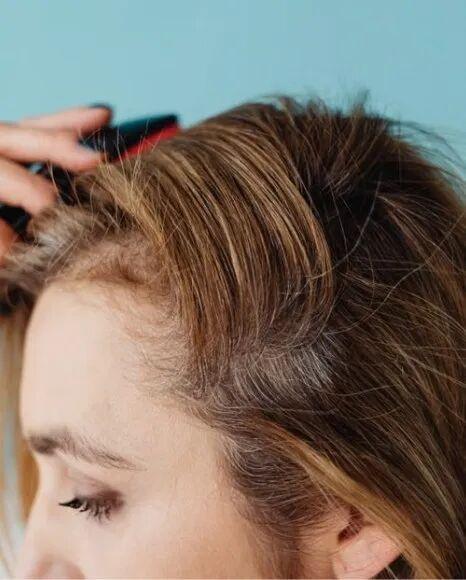
WHAT SENSITIVE SCALP FEELS LIKE
Itching · Burning · Redness · Dryness · Tightness · Dandruff-associated discomfort · Irritation after coloration or bleaching
WHERE BIOCALMIN FITS
Scalp soothing tonicsSensitive-scalp shampoosAnti-dandruff shampoosScalp serums
MORE APPLICATIONS
Dry-scalp treatmentsHair-color aftercareBleaching / perming comfortDaily scalp care
Comfort Starts at the Scalp.
EVIDENCE — CLINICAL SCALP STUDY
Noticeable Scalp Comfort in 30 Minutes
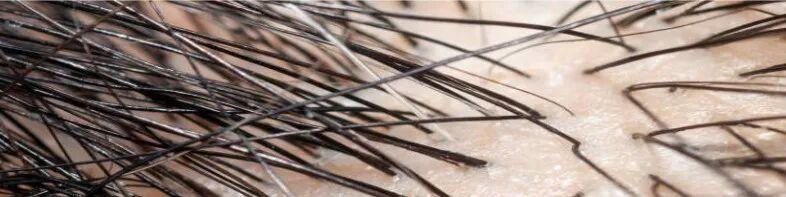
−57%
scalp itch vs. placebo
after 30 minutes · single application · p < 0.05
| CLINICAL SCALP STUDY | Information |
|---|---|
| Participants | 18 volunteers with itchy scalp |
| Test formulation | 1% tested same-active formulation |
| Design | Single application, placebo controlled |
| Evaluation | 30-minute evaluation |
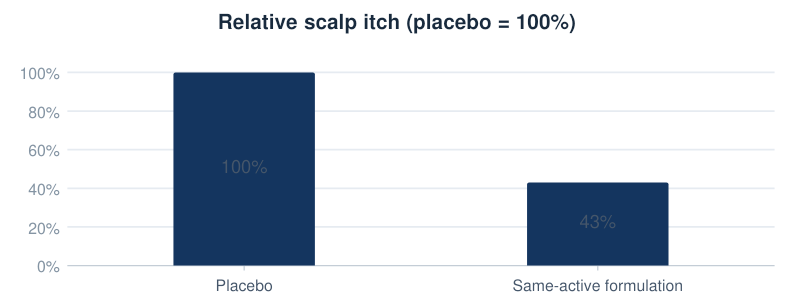
Relative scalp itch (placebo = 100%).
Source: Published same-active scalp clinical study; n = 18; 30-minute single-application evaluation. Chart redrawn in the PuriPharm visual system.
EVIDENCE — CLINICAL SCALP STUDY
Immediate Comfort. Sustained Performance.
CLINICAL SCALP STUDY — 5 DAYS−40% itching vs. baseline after five days−47% itching vs. placebo after five days
The same study reported a marked reduction in burning sensation.
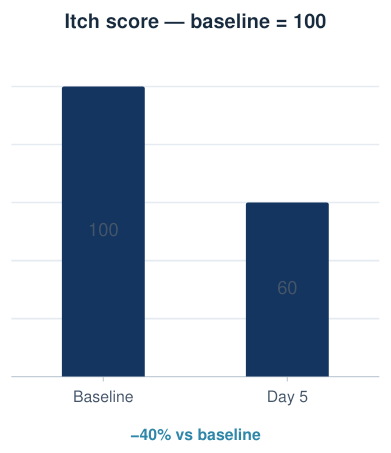
−40% vs baseline
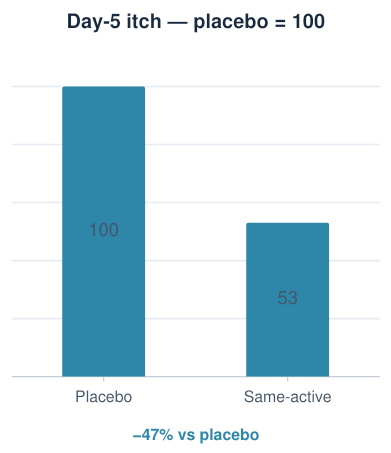
−47% vs placebo
From Fast Relief to Daily Scalp Comfort
18 volunteers with itchy scalp · once-daily use · 5-day treatment · placebo comparison · symptom scores for itching and burning. Published same-active scalp clinical study; charts redrawn from reported results.
SCALP CARE — COMBINATION CONCEPT
Go Beyond Flake Control
Anti-Dandruff Active + Dihydroavenanthramide D
↓
Flake Management + Itch Comfort
Published patent literature reports combinations of DHAvD with climbazole for itchy scalp and anti-dandruff applications. Human studies described in the patent showed improved itch reduction when the two actives were combined — the anti-dandruff active manages flakes while DHAvD addresses the itch signal.
0.05% DHAvD + 0.2% ClimbazoleSynergy index 0.77synergistically enhanced itch-relieving activity in the patent dataset
APPLICATIONS: Anti-dandruff shampoo · Anti-dandruff scalp serum · Scalp lotion · Itchy dry-scalp products
PATENT REFERENCES:WO2004047833A2 — Anthranilic acid amides and derivatives thereof as cosmetic and pharmaceutical agents (2004)WO2007062957A1 / EP1959915B1 / US8911795B2 — Anthranilic acid amide + anti-dandruff active combinations for itch relief (2007)
APPLICATIONS — SKIN CARE
High-Performance Soothing Across Skin-Care Categories

Add Comfort Without Compromising Performance.
SENSITIVE SKIN
Sensitive-skin serumSoothing essenceRedness-care creamDaily comfort moisturizerSensitive body lotion
HIGH-ACTIVITY SKIN CARE
Retinoid companion careAHA / BHA / PHA formulationsBrightening systemsPost-exfoliation careAdvanced anti-aging formulas
STRESS & RECOVERY
After-sunAfter-shavePost-cleansing comfortDry, itchy-feeling skin careMask formulationsEnvironmental-stress products
APPLICATIONS — HAIR & SCALP
A Dedicated Soothing Strategy for Modern Scalp Care
APPLICATION CONCEPTS
Sensitive scalp shampooScalp soothing tonicAnti-dandruff shampooAnti-dandruff serumDry scalp care
MORE FORMATS
Scalp essencePost-hair-color carePost-bleaching comfortRelaxing / straightening aftercareLeave-on scalp spray
CORE BENEFIT ARCHITECTURE
Anti-ItchAnti-RednessScalp ComfortAnti-Dandruff SupportPost-Chemical-Treatment Soothing
From sensitive-skin care to advanced scalp comfort — one molecule, two territories.
WHY PURIACTIVES® BIOCALMIN
Calm the Signal. Restore the Comfort.
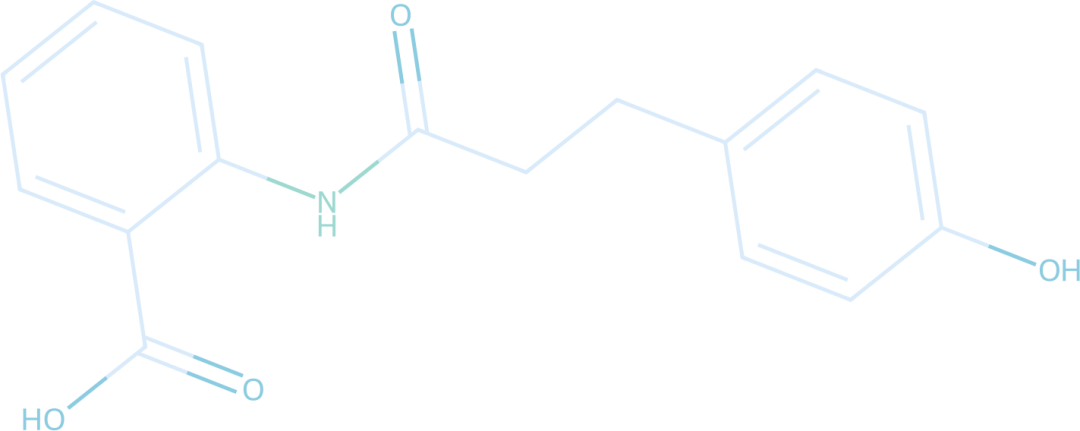
PuriActives® BioCalmin — Hydroxyphenyl Propamidobenzoic Acid. A precision molecule for next-generation soothing formulations, from sensitive-skin care to advanced scalp comfort.
FAST
Rapidly helps relieve itch and discomfort.
TARGETED
Acts on the Substance P–mast cell–histamine pathway.
PROVEN
Supported by human, cellular and formulation research.
MULTIFUNCTIONAL
Soothing + redness care + antioxidant defense.
VERSATILE
Designed for advanced skin and scalp concepts.
NanoActive™ SA
NanoActive™ SA Nano-encapsulated Salicylic Acid
Precision purification, from pores to scalp
NEXT-GENERATION SALICYLIC ACID DELIVERY
NanoActive™ SA | Nano-encapsulated Salicylic Acid

Precision purification, from pores to scalp
Powered by PURISOME® FlexVes™ Liposome Technology
INCI: Salicylic Acid
POSITIONING
Proven salicylic acid efficacy × advanced nanoliposomal delivery
NanoActive™ SA combines the well-established biological value of salicylic acid with PuriPharm’s proprietary nano-delivery platform, offering a more formulation-friendly, skin-compatible and targeted solution for modern cosmetic formulations.
Classic salicylic acid, scientifically validated
Keratin renewal and normalized desquamationComedolytic action and follicular decongestionSebum and blemish management
PURISOME® nanoliposomal delivery
Water-phase friendlyControlled, sustained deliveryPotential for follicular targeting
Face care · Body care · Scalp and hair care
MODERN SKIN & SCALP CHALLENGES
Oily skin and scalp: persistent, recurring concerns
Recurring concerns
01 Visibly enlarged pores02 Excess keratin buildup03 Blackheads and whiteheads04 Rough, uneven texture05 Shine and dullness06 Recurrent pore congestion07 Scalp oil and adherent flakes
What determines the appearance of visible pores?
Keratin buildup within folliclesLevel of sebum productionStructural visibility of follicular openingsSkin surface texture
Pore appearance = keratin × sebum × structure × texture
Pore concerns are multifactorial. This limits purely astringent approaches and provides a clear scientific entry point for actives that manage keratinization.
THE CLASSIC ACTIVE
Salicylic acid: an enduring classic in skin science

Salicylic Acid · C₇H₆O₃
INCI: Salicylic AcidType: aromatic hydroxy acid (BHA), pKa ≈ 3.0Properties: lipophilic, with affinity for sebum-rich and follicular environments; limited solubility in water at room temperature.
01 Aromatic hydroxy-acid structure
The benzene ring and ortho hydroxyl and carboxyl groups determine its distinctive physicochemical behavior.
02 Lipophilicity
Unlike water-soluble AHAs, it can enter sebum-rich follicular environments.
03 Affinity for the pilosebaceous unit
It can act where comedones and blemishes originate.
04 Activity within the stratum corneum
It acts on connections between corneocytes without requiring deep penetration.
Its molecular properties give salicylic acid a distinctive role in pore and follicular care.
MECHANISM 01 · DESMOLYTIC ACTION
Mechanism 1: desmolysis regulates cohesion rather than “dissolving keratin”
Modern skin science holds that salicylic acid disrupts intercellular connections and reduces corneocyte cohesion, allowing abnormally accumulated keratin to shed in an orderly manner rather than simply “dissolving keratin.”
Densely accumulated stratum corneum
↓
Reduced corneocyte cohesion
↓
Normalized desquamation
↓
Smoother skin surface
Formulation relevance: Desmolysis rather than aggressive peeling supports keratin management with a lower burden. This biology underpins applications for oily skin, pores, blemishes and the scalp.
MECHANISM 02 · COMEDOLYTIC ACTION
Mechanism 2: comedolytic action along the follicular pathway
Comedone formation cascade
Hyperkeratinization
↓
Follicular opening blockage
↓
Microcomedone
↓
Blackhead / whitehead
↓
Inflammatory lesion
① Normalized desquamation
Corrects hyperkeratinization at the follicular opening and reduces blockage at its source.
② Lipophilic penetration
Moves through the sebum-rich environment into the follicle instead of remaining on the surface.
③ Reduced cellular buildup
Decreases abnormal accumulation of keratinocytes within the follicle.
④ Comedolysis
Helps clear established blockages and improve blackheads and whiteheads.
Effective comedone management depends on keratinization within the follicle, not only surface cleansing. Salicylic acid’s lipophilicity gives it this distinctive position.
Mechanism review: Arif T. Clin Cosmet Investig Dermatol. 2015;8:455–461.
MECHANISM 03 · INFLAMMATION & BLEMISH BIOLOGY
Mechanism 3: the inflammatory dimension of acne biology
Inflammation is present throughout acne development, including the invisible microcomedone stage. Blemish care therefore should not begin only after lesions become visible.
Published literature reports that salicylic acid modulates multiple inflammation-related pathways, including arachidonic-acid metabolism and inflammatory signaling. Together with its desmolytic and comedolytic actions, this supports both purification and stabilization.
Sebum production + abnormal keratinization
↓
Changed follicular microenvironment
↓
Microbial involvement
↓
Amplified inflammatory cascade
↓
Erythema, papules and post-acne marks
Salicylic acid intervenes at several upstream points: keratinization, the follicular environment and inflammation.
These mechanism-level statements reflect literature consensus and explain ingredient-level biological relevance. They do not constitute pharmaceutical treatment claims.
Mechanism review: Arif T. Clin Cosmet Investig Dermatol. 2015;8:455–461.
CLINICAL EVIDENCE 01 · ASIAN ACNE STUDY
30% salicylic acid peel: a 12-week study in Asian patients with acne
35
Asian participants
Mild to moderate
Facial acne
30%
Salicylic acid peel
Every 2 weeks
One treatment
12 weeks
Observation period
77.1%
Reported moderate or good improvement
- Significant reduction in inflammatory lesions
- Significant reduction in non-inflammatory lesions
- Significant decrease in overall acne severity
- No statistically significant worsening in stratum-corneum hydration, surface lipids, skin pH or TEWL
Lee HS, Kim IH. Salicylic acid peels for the treatment of acne vulgaris in Asian patients. Dermatol Surg. 2003;29:1196–1199.
This is published clinical evidence for salicylic acid, not a finished-product efficacy trial of NanoActive™ SA.
CLINICAL EVIDENCE 02 · COMEDONE COUNT
Mean facial comedone count fell by approximately 75% over 10 weeks

Statistical significance
p = 0.001
Study information
Participants: 16 Japanese patientsSystem: 30% salicylic acid in PEGFrequency: once every 2 weeksDuration: 10 weeks
Mean count decreased from 39.3 at baseline to 9.2 at Week 10, with continued improvement throughout follow-up.
Hashimoto Y, et al. Salicylic acid peels in polyethylene glycol vehicle for the treatment of comedogenic acne in Japanese patients. Dermatol Surg. 2008;34:276–279.
Published evidence for a 30% salicylic acid–PEG peel, not a finished-product efficacy trial of NanoActive™ SA.
POST-ACNE MARKS · UNEVEN TONE
From acne to post-acne marks: a framework for managing pigmentation
How salicylic acid can improve uneven tone
① Normalize exfoliation: accelerate surface renewal
↓
② Remove pigment-containing corneocytes: lift superficial deposited pigment
↓
③ Improve acne-related inflammation: reduce conditions that promote new marks
↓
A more even-looking skin tone
Salicylic acid is not a tyrosinase inhibitor. Its tone-related value comes from the combined effects of keratin renewal and inflammation management, not direct inhibition of melanin synthesis.
Comparative clinical evidence
30% salicylic acid vs 30% glycolic acidMild-to-moderate acne with post-inflammatory hyperpigmentation (PIH)
Study findings
Both peel regimens improved PIH; the salicylic acid group showed better tolerability in this study; relevant to combined acne and post-acne-mark concerns.
The literature also documents salicylic acid use in superficial peels for melasma and photo-induced uneven tone.
Reference: Arif T. Clin Cosmet Investig Dermatol. 2015;8:455–461.
TEXTURE & PHOTOAGING
Beyond blemish care: keratin renewal and younger-looking texture
Controlled keratin renewal can address not only blemishes, but also surface features associated with aging and photodamage:
- Roughness and grainy texture
- Dullness and loss of radiance
- Fine surface lines
- Uneven texture
- Visible signs of photoaging
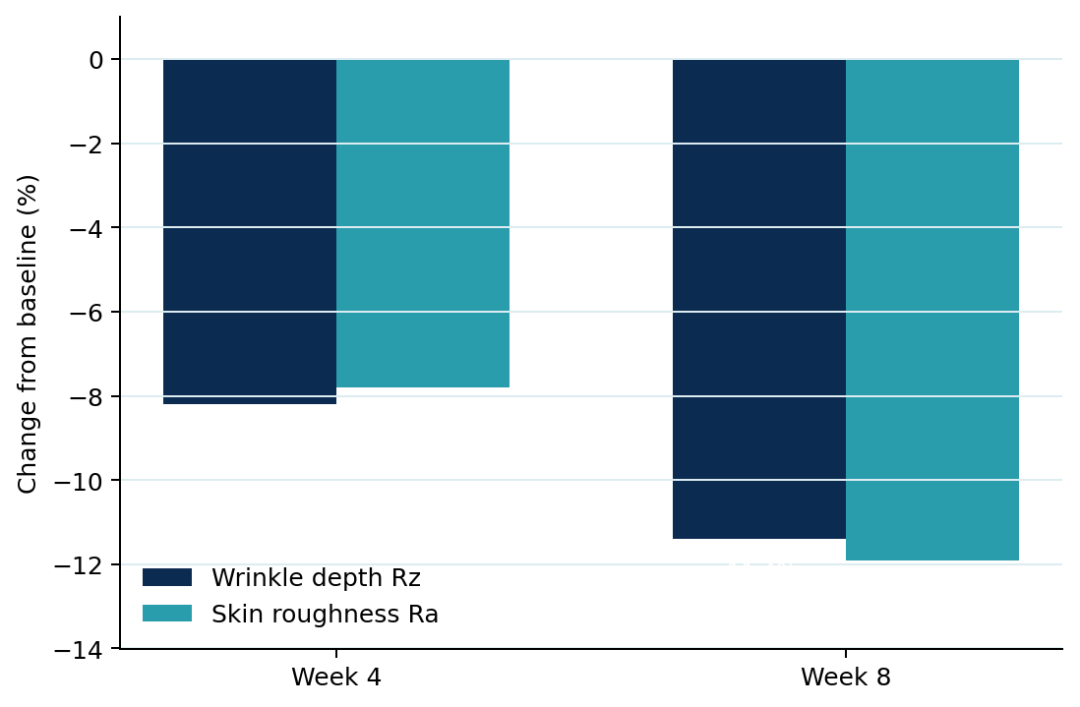
Change from baseline with a sodium salicylate formulation
Evidence boundary: The study tested a sodium salicylate formulation, not free salicylic acid. Histology also indicated increases in fibrillin and procollagen I. The findings support salicylate/exfoliation biology and are not direct clinical evidence for NanoActive™ SA.
Merinville E, et al. Three clinical studies showing the anti-aging benefits of sodium salicylate in human skin. J Cosmet Dermatol. 2010;9:174–184. Wrinkle depth and skin roughness decreased significantly at Weeks 4 and 8.
THE FORMULATION PARADOX
The challenge with salicylic acid is delivery, not efficacy
Salicylic acid has limited solubility in water at room temperature. Traditional clear aqueous products often rely on ethanol, glycols, surfactant solubilization, partial neutralization and precise pH management, creating a persistent trade-off between efficacy and formulation elegance.
Traditional free-salicylic-acid formulation pathway
Salicylic acid powder
↓
Solvent system
↓
Partial neutralization
↓
pH adjustment
↓
Trade-offs in crystallization, irritation and sensory profile
Each step solves one problem while introducing another compromise.
NanoActive™ SA technology pathway
NanoActive™ SA
↓
Pre-engineered nano-delivery
↓
Easy incorporation into the aqueous phase
↓
Controlled active delivery · formulation freedom
The carrier addresses solubility so formulators regain design flexibility. Delivery technology is the dividing line in modernizing salicylic acid.
FREE ACID & pH
The free-acid state determines effective delivery
Salicylic Acid ⇌ Salicylate− + H+
Molecular form (free acid) Ionic form (salicylate)
pH < pKa
Free acid predominates, with a greater tendency to penetrate.
pKa ≈ 3.0
Key reference point for the ionization equilibrium.
pH > pKa
The salt form predominates, increasing water solubility.
01 Molecular and ionic forms
They differ in solubility, partition coefficient and skin penetration.
02 pH determines equilibrium
Small pH adjustments can change the free-acid fraction in the same formulation.
03 Carrier and pH jointly affect penetration
The formulation itself is part of salicylic acid performance.
04 Cost of conventional neutralization
Higher water solubility comes with a changed effective free-acid fraction.
PURISOME® Technology proposition: A nanocarrier environment supports effective salicylic acid delivery while improving formulation compatibility and reducing reliance on high solvent levels and complex neutralization strategies.
THE PURIPHARM RESPONSE
NanoActive™ SA: PuriPharm’s technology response
NanoActive™ SANano-encapsulated salicylic acidINCI: Salicylic AcidPowered by PURISOME® FlexVes™ Liposome Technology
Maintains an effective free-acid state
The carrier environment protects the effective form of salicylic acid.
Aqueous formulation compatibility
Disperses stably and incorporates easily into aqueous systems.
Potential for clear formulations
Supports modern formats such as clear serums and gels.
Reduced solvent dependence
Reduces the need for large amounts of ethanol or polyols.
Controlled delivery
Gradual release produces more even exposure.
Improved skin comfort
A sustained-release approach supports a better user experience.
Potential for follicular targeting
Follicular reservoir effect and localized enrichment.
Face and scalp applications
One platform supports multiple use cases.
This is a redesigned delivery pathway for salicylic acid, not merely salicylic acid placed inside a carrier.
THE TECHNOLOGY PLATFORM
PURISOME® FlexVes™ Liposome Technology
PuriPharm’s proprietary advanced nanoliposomal platform uses skin-compatible phospholipid bilayer vesicles.
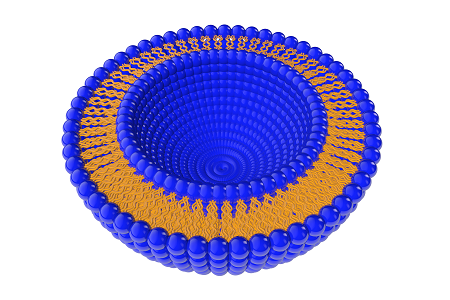
Cross-sectional schematic: amphiphilic phospholipids self-assemble into a bilayer that encapsulates or associates with the active.
01 Improved formulation compatibility
A water-dispersed format bypasses the solubility bottleneck.
02 Controlled, sustained release
Carrier association releases the active gradually through interfacial processes.
03 Lower potential for localized irritation
Avoids sudden skin contact with a high concentration of free acid.
04 Improved deposition and delivery
Skin-compatible lipids promote active deposition in the target region.
Hereafter referred to as PURISOME® Technology. Its four delivery advantages support the same goal: bringing the active to the intended site at an appropriate rate.
DELIVERY MECHANISM
PURISOME® FlexVes™: a redesigned salicylic acid delivery pathway
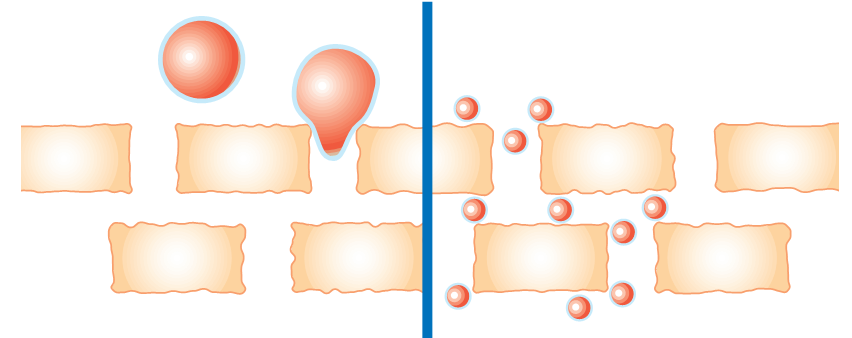
Schematic: larger particles remain on the surface because they cannot pass through intercellular gaps, while smaller nanocarriers can move along these gaps and release the active.
01 Interaction with stratum-corneum lipids
Skin-compatible phospholipids approach intercellular lipids.
02 Gradual release
The active is progressively released from the carrier interface.
03 Follicular deposition
The carrier moves along the follicular pathway and enriches the target region.
Nanoscale delivery · skin-compatible lipids · controlled release · improved compatibility · follicular-delivery potential · better sensory profile
The schematic follows standard pharmaceutics models of phospholipid bilayer vesicle interactions with skin.
FOLLICULAR TARGETING
Follicular targeting and the follicular-reservoir concept
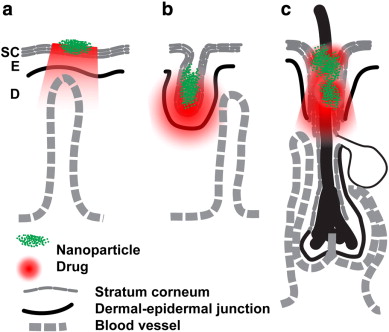
Nanoparticles vs free drug: a, stratum-corneum surface; b, enrichment in the follicular infundibulum; c, migration deeper along the follicle.
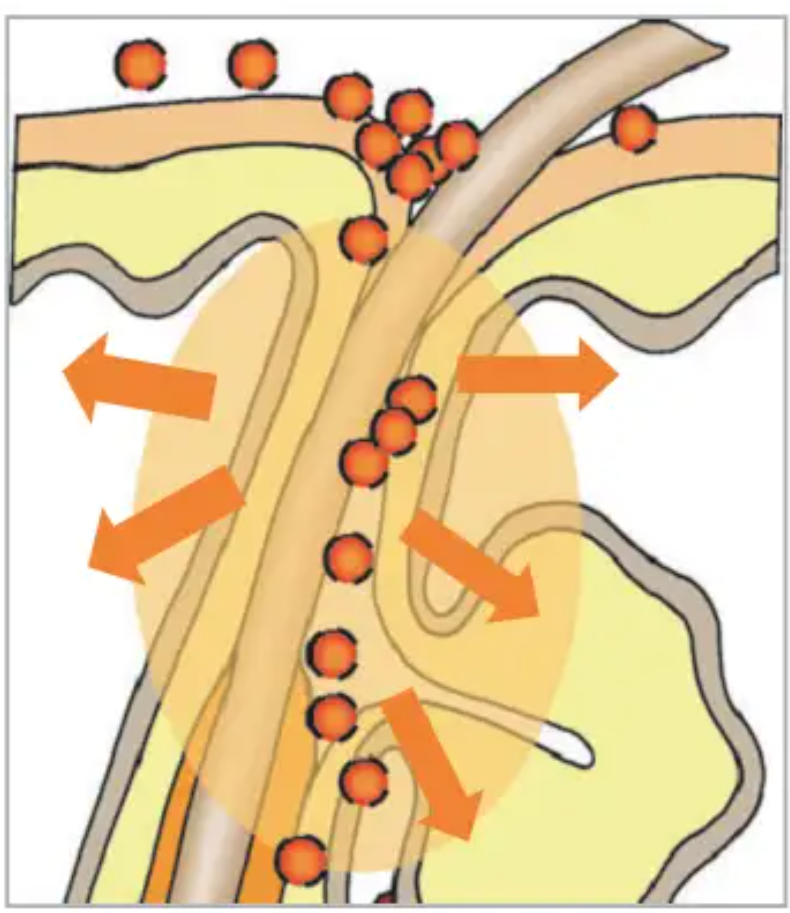
Particles deposit in the follicular infundibulum and diffuse into surrounding tissue.
Follicular targeting · follicular reservoir · localized enrichment
- Blackheads and comedones
- Oily pores
- Scalp buildup
- Keratin buildup within follicles
Statements about follicular targeting and reservoirs are based on the PURISOME® Technology platform’s delivery concept and are consistent with existing NanoActive™ platform data.
Left image adapted from Prow TW, et al. Nanoparticles and microparticles for skin drug delivery. Adv Drug Deliv Rev. 2011;63:470–491.
CONTROLLED RELEASE & SKIN COMFORT
From concentration peaks to gradual release
Traditional free salicylic acid
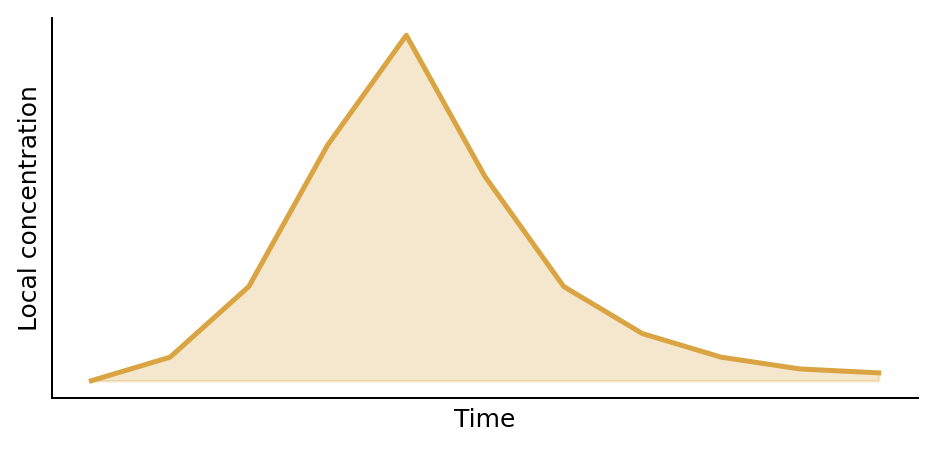
Rapid local exposure produces a concentration peak, with potential stinging and irritation.
NanoActive™ SA
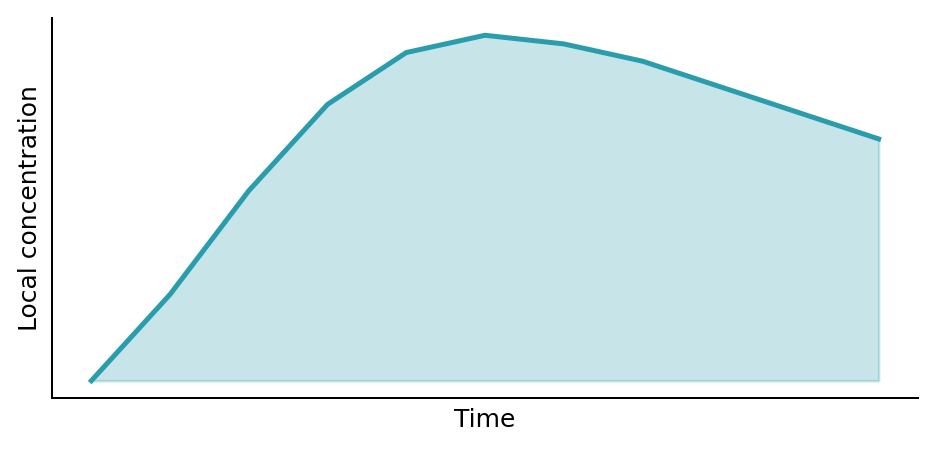
Carrier-associated delivery supports gradual release, more even local exposure and potential for improved comfort.
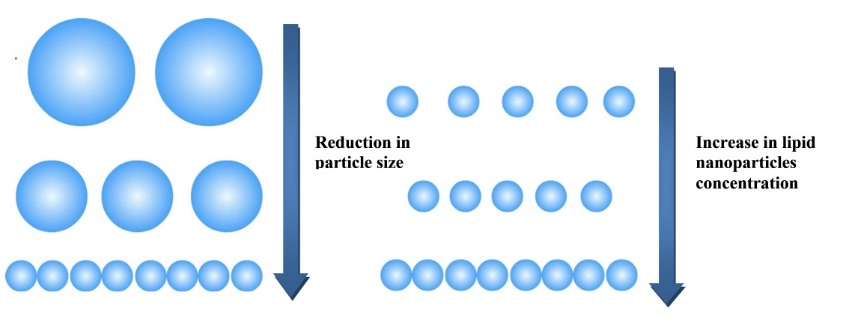
Nanocarrier occlusion effectSmaller particles and a higher number of carriers per unit area can form a denser lipid film on the skin surface. This may improve stratum-corneum hydration, promote active penetration and reduce water loss, adding another mechanistic basis for efficacy with comfort.
FOR FORMULATORS
Making salicylic acid easier to formulate and use
- Easy incorporation and process-friendly handling
- Suitable for aqueous systems
- Potential for transparent and clear formulations
- Reduced dependence on high ethanol levels
- Less need for aggressive solubilization strategies
- Compatible with serums, gels, cleansers and scalp formats
- Can be added at low temperature, depending on the process
| Process and compatibility guidance | Details |
|---|---|
| Suggested use level | Approximately 1–5% |
| Addition method | Add at low temperature |
| Compatibility note | Avoid combining with divalent or trivalent metal ions |
Based on historical PuriPharm technical materials. If this information differs from the latest product TDS, follow the current TDS.
Formulation freedom is itself a product advantage.
APPLICATION MAP
One application map, from face to scalp
FACE
Anti-acne serumPore-refining serumKeratin-regulating tonerCleanserClear gelMoisturizer for oily skinBlemish care
BODY
Body acne sprays and lotionsKeratosis pilaris careExfoliating body washCare for rough areas
SCALP & HAIR
Anti-dandruff shampooShampoo for oily scalpScalp serumScalp exfoliating treatmentScalp-cleansing products
One technology platform supports three major application areas: face, body and scalp.
SCALP & HAIR 01 · SCALP BIOLOGY
From facial pores to scalp follicles
Persistent scalp concerns
01 Scalp keratin buildup02 Excess scalp oil03 Adherent flakes04 Buildup at follicular openings05 Scalp cleanliness and freshness06 Disrupted scalp-renewal rhythm
Why salicylic acid suits scalp care
Desmolytic action: softens and removes corneocytes adhering to the scalp surface.Reduced surface buildup: addresses adherent layers formed by oil and keratin.Clearer follicular openings: lipophilicity supports entry along the sebum-rich environment.Improved appearance of oily scalp: a fresher scalp and lighter-feeling roots.
Scalp follicles present a problem structurally analogous to facial pores. Scalp care is another application of the same keratin biology, not merely an extension of facial care.
SCALP & HAIR 02 · DANDRUFF CARE
Scalp purification and dandruff care
Biology of dandruff
Dandruff is associated with abnormal desquamation of the stratum corneum.Malassezia plays an important role in dandruff biology.Effective management should address flake control, microbial factors and overall scalp condition.
Scalp positioning of NanoActive™ SA
① Desmolytic scalp active② Scalp-flake removal③ Oily-scalp care④ Follicular cleansing⑤ Supporting ingredient in anti-dandruff shampoo systems
Scientific boundary: salicylic acid should not be claimed as a standalone antifungal ingredient. In multi-ingredient anti-dandruff systems, it contributes keratin management and flake control.
Suggested formats: anti-dandruff shampoo · shampoo for oily scalp · scalp serum · scalp treatment liquid · scalp exfoliating treatment · pre-shampoo scalp care
Dandruff systems require multiple complementary mechanisms. NanoActive™ SA addresses the keratin and flake-control component.
COMPARISON
Traditional salicylic acid vs NanoActive™ SA
| Dimension | Traditional salicylic acid | NanoActive™ SA |
|---|---|---|
| Aqueous formulation difficulty | High: limited water solubility | Low: easy dispersion and incorporation in water |
| Crystallization risk | Potential precipitation and crystallization | Carrier encapsulation lowers risk |
| Solvent dependence | Often requires high levels of ethanol or polyols | Dependence substantially reduced |
| pH management | Precise control changes the free-acid fraction | A more flexible formulation window |
| Delivery profile | Rapid release and local concentration peak | Gradual release and more even exposure |
| Skin comfort | Stinging possible at high concentration | Sustained-release approach with comfort potential |
| Clear-formulation capability | Limited | Supports clear, transparent formulations |
| Follicular delivery | Relies on compensating formulation engineering | Potential for follicular targeting and reservoir deposition |
| Dosage-form flexibility | Limited selection | Serums, gels, cleansers and scalp formats |
| Fit for scalp applications | Dual challenge of solubilization and irritation | Aqueous-friendly and suited to modern scalp formats |
VALUE PROPOSITION
NanoActive™ SA: a four-dimensional value proposition
EFFICACY|Classic salicylic acid, multidimensional purification
Peer-reviewed literature supports the combined mechanisms of keratin renewal, comedolysis and inflammation modulation.
DELIVERY|PURISOME® nanoliposomal delivery
Skin-compatible phospholipid bilayer vesicles carry the active and support follicular targeting and reservoir deposition.
COMFORT|Sustained-release concept for a better experience
Gradual release smooths concentration peaks and troughs, adding comfort potential to efficacy.
FORMULATION|Aqueous-friendly with greater design freedom
From serums to shampoos, the platform enables salicylic acid formats that were previously difficult to formulate.
Evidence for efficacy, technology for delivery, attention to experience and room for formulation.
REFERENCES
References and evidence grading
Published literature cited in this presentation
- Lee HS, Kim IH. Salicylic acid peels for the treatment of acne vulgaris in Asian patients. Dermatol Surg. 2003;29:1196–1199.
- Hashimoto Y, et al. Salicylic acid peels in polyethylene glycol vehicle for the treatment of comedogenic acne in Japanese patients. Dermatol Surg. 2008;34:276–279.
- Arif T. Salicylic acid as a peeling agent: a comprehensive review. Clin Cosmet Investig Dermatol. 2015;8:455–461.
- Merinville E, et al. Three clinical studies showing the anti-aging benefits of sodium salicylate in human skin. J Cosmet Dermatol. 2010;9:174–184.
Clinical evidence for salicylic acid
References [1] and [2]: 30% peel systems, not finished-product studies.
Evidence for a salicylate derivative
Reference [4]: sodium salicylate, supporting the biological pathway.
Mechanism and review literature
Reference [3]: exfoliation, comedolysis and skin-tone applications.
None of the published references cited here constitutes a finished-product efficacy trial of NanoActive™ SA.
NANOACTIVE™ SA
Making classic salicylic acid more suitable for next-generation formulations
Powered by PURISOME® FlexVes™ Liposome Technology
PuriPharm Co. Ltd.
NanoActive™ Azelaic Acid 50%
ENGLISH VERSIONComplete English Article
PURIPHARM CO., LTD. · TECHNICAL PRESENTATION · COSMETIC ACTIVE INGREDIENT
NANOACTIVE™ SERIES · NANO-ENCAPSULATED ACTIVES
NanoActive™Azelaic Acid 50%
Nano-encapsulated Azelaic Acid 50%
Multi-pathway skin clarification · Pigment management · Follicular clarification

Abstract: 50% high-payload azelaic acid combined with next-generation nanoliposome delivery. Four published evidence pathways—keratinization regulation, microbiome clarification, inflammation modulation, and pigment management—address the classic formulation paradox of an effective but difficult-to-formulate molecule.
Powered by PURISOME® FlexVes™ Liposome TechnologyPuriPharm Co., Ltd.
PART II · ENGLISH VERSION
POSITIONING · PRODUCT POSITIONING
Re-engineering how azelaic acid is delivered
50% high-payload azelaic acid × next-generation nano delivery
Powerful multi-pathway biology
↓
A difficult-to-formulate molecule
↓
PURISOME® nanoliposome delivery
↓
Modern azelaic acid formulation
Azelaic acid has long-established value in blemish-prone skin, pigmentation, and follicular biology. Its main limitation is formulation and delivery rather than efficacy. NanoActive™ Azelaic Acid 50% addresses this classic paradox through a 50% active payload and PURISOME® nanoliposome delivery.
ONE MOLECULE · MULTIPLE PATHWAYS
The multidimensional biology of azelaic acid
Azelaic acid is more than an anti-acne ingredient. It is one of the few multifunctional actives that simultaneously addresses keratinization, the microbiome, inflammation, and pigmentation pathways.
01
Keratinization regulation
Regulates terminal differentiation of keratinocytes in the follicular infundibulum and helps reduce follicular keratin buildup at its source.
02
Microbiome clarification + inflammation modulation
Interferes with intracellular bacterial protein synthesis, reduces neutrophil ROS release, and modulates inflammatory signaling.
03
Pigment management
Competitively inhibits tyrosinase to support the management of post-acne marks, visible hyperpigmentation, and uneven tone.
04
Follicular and scalp microenvironment
Published evidence of follicular accumulation extends its potential use to scalp and follicular care.
Blemish-prone skin · Abnormal keratinization · Microbiome · Visible inflammation · Post-acne marks · Uneven tone · Oxidative stress · Follicular and scalp care: multiple pathways addressed by one molecule.
THE FORMULATION PARADOX
Effective, yet difficult to formulate
≈ 0.24%
Intrinsic water solubility of azelaic acid at 20°C · reported in the literature
15–20%
Use levels in established topical efficacy research · historical literature and pharmaceutical products
How can a high-dose, poorly soluble molecule be incorporated into an elegant modern formulation?
Note: 15–20% refers to use levels in historical literature and pharmaceutical products. It illustrates the formulation challenge and does not represent a recommended cosmetic use level for NanoActive™ Azelaic Acid 50%.
MECHANISM I · KERATINIZATION REGULATION
Keratinization regulation: reducing follicular keratin buildup at the source
Abnormal keratinocyte differentiation
↓
Follicular hyperkeratinization
↓
Microcomedone formation
↓
Comedones and clogged pores
↓
Inflammatory lesions
Published evidence shows that azelaic acid has antikeratinizing activity and helps restore disrupted terminal differentiation of keratinocytes in the follicular infundibulum.
- Reduces follicular hyperkeratosis
- Decreases the number and volume of keratohyalin granules
- Improves abnormal follicular keratinization and restores terminal keratinocyte differentiation
Cosmetic value positioning: helps reduce follicular keratin buildup at its source.
Pathological sequence in acne-prone follicles: abnormal keratinization is the starting point. Normal Follicle vs Hyperkeratinized Follicle.
PUBLISHED EVIDENCE · HISTOLOGIC EVIDENCE OF KERATINIZATION NORMALIZATION
Marked reduction and normalization of hyperkeratosis after 8–12 weeks
8–12 weeks
20% azelaic acid cream, applied twice dailyMarked reduction or normalization of intrafollicular and interfollicular hyperkeratosis
01
Marked reduction in hyperkeratosis
Histologic observations showed marked improvement or normalization of both intrafollicular and interfollicular hyperkeratosis.
02
Fewer and smaller keratohyalin granules
The number and size of keratohyalin granules decreased, indicating normalization of the keratinization process.
03
Normalization of terminal keratinocyte differentiation
Disrupted terminal differentiation was corrected, restoring a healthier follicular keratinization pattern.
Gollnick H. Azelaic acid — pharmacology, toxicology and mechanisms of action on keratinization in vitro and in vivo. J Dermatol Treat. 1993.Published evidence on conventional azelaic acid formulations; not a finished-product clinical trial of NanoActive™ Azelaic Acid 50%.
MECHANISM II · FOLLICULAR MICROBIOME
Follicular microbiome: antimicrobial action from within the cell
Azelaic acid
↓
Transport into the bacterial cell
↓
Interference with intracellular protein synthesis
↓
Reduced microbial growth and proliferation
This is more specific than a general claim of “killing acne bacteria.” Published mechanistic research indicates that azelaic acid enters bacterial cells via transport mechanisms and interferes with intracellular protein synthesis, thereby reducing microbial growth and proliferation.
01
Cutibacterium acnes
Formerly Propionibacterium acnes; the historical name is retained when citing original publications.
02
Staphylococcus epidermidis
A resident skin bacterium examined in microbiome-related research.
PUBLISHED EVIDENCE · ANTIMICROBIAL ACTION
At least 96% reduction in skin-surface and follicular-associated bacteria after 8 weeks
≥96%
Reduction in bacteria sampled from the skin surface and follicles
20%
Azelaic acid cream
8 weeks
Topical treatment period
Surface + follicle
Two sampling levels
After 8 weeks of topical treatment with 20% azelaic acid cream, counts of propionibacteria and staphylococci on the skin surface and within follicles fell by at least 96%, demonstrating microbiome clarification that reaches into the follicle.
Holland KT, Bojar RA. Antimicrobial effects of azelaic acid. J Dermatol Treat. 1993.Published evidence using a conventional 20% azelaic acid cream; not a finished-product clinical trial of NanoActive™ Azelaic Acid 50%.
MECHANISM III · ROS & INFLAMMATION
Reducing oxidative stress and modulating inflammatory signals
Azelaic acid
↓
Reduced neutrophil ROS release
↓
Lower oxidative inflammatory burden
Pathway examined in published research: CD36 → NADPH oxidase → ROS → MAPK → NF-κB
The literature reports that azelaic acid can reduce reactive oxygen species generation and downregulate oxidative inflammatory cascades. Related studies also involve innate immune signaling nodes such as TLR2, KLK5, and LL-37/cathelicidin, although the strength of evidence varies by target.
01
Soothes blemish-prone skin
Cosmetic value
02
Supports improvement in the appearance of redness
Cosmetic value
03
Improves the inflammatory environment around clogged follicles
Cosmetic value
04
Supports a healthier-looking skin texture
Cosmetic value
CLINICAL EVIDENCE · INFLAMMATORY LESIONS
Greater reduction in inflammatory lesion counts with 15% azelaic acid gel
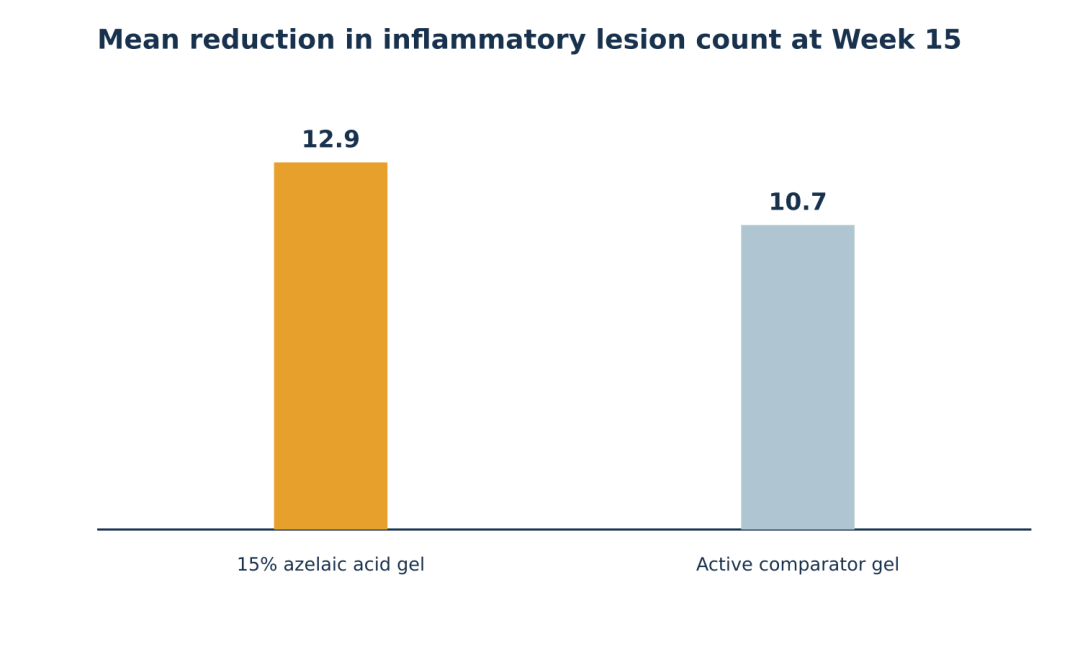
- 251 adult patients
- Moderate-to-severe papulopustular rosacea
- 15-week controlled clinical study
- 15% azelaic acid gel vs active comparator gel; the azelaic acid group had a greater mean reduction in inflammatory lesion count
This evidence supports the anti-inflammatory skin biology of azelaic acid. The comparator is described generically and no commercial brand is identified.
Elewski BE, et al. A comparison of 15% azelaic acid gel and 0.75% metronidazole gel in the topical treatment of papulopustular rosacea. Arch Dermatol. 2003;139:1444–1450.
MECHANISM IV · PIGMENT CONTROL
Pigment management through competitive tyrosinase inhibition
L-Tyrosine
↓
Tyrosinasecompetitively inhibited by azelaic acid
↓
L-DOPA
↓
Dopaquinone
↓
Melanin
Azelaic acid has been reported to competitively inhibit tyrosinase and to have specific biological relevance in hyperactive melanocyte systems. Together with reduced ROS, modulation of melanogenesis, and improvement of the post-inflammatory environment, this forms a more complete pigment-management pathway. Azelaic acid is not a bleaching agent; it is a multi-pathway pigment-management active.
- Post-acne marks
- Uneven tone
- Visible hyperpigmentation
- Management of dullness and skin clarity
CLINICAL EVIDENCE · HYPERPIGMENTATION
20% azelaic acid: an established clinical foundation for pigment management
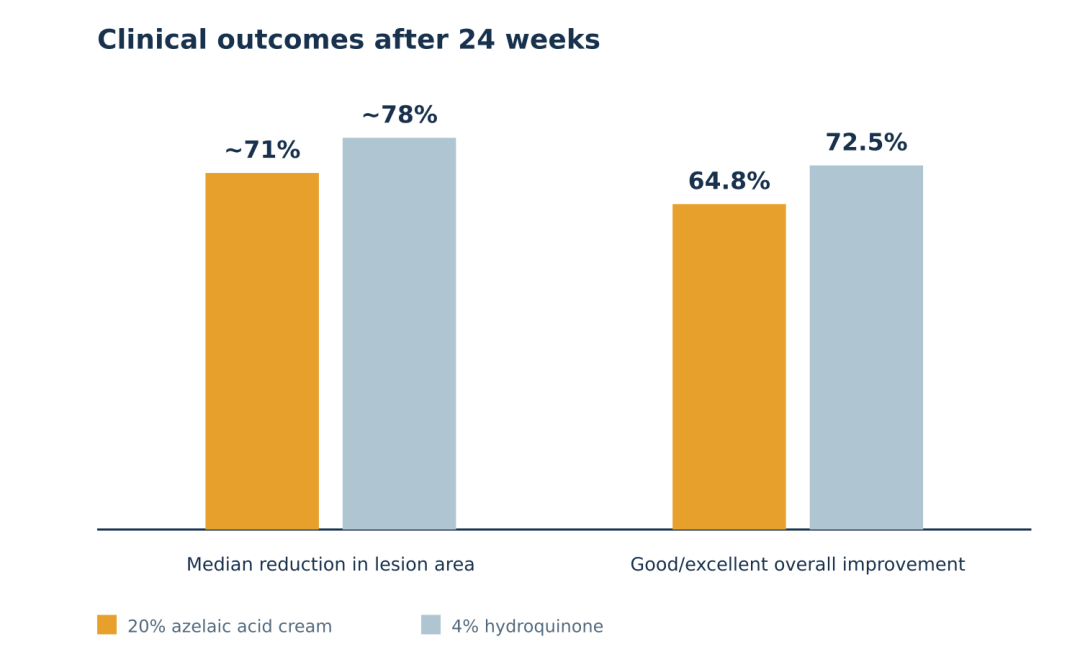
- Randomized, double-blind, controlled clinical study
- 329 female participants
- 24 weeks · 20% azelaic acid vs 4% hydroquinone
- Median reduction in lesion area: approximately 71% vs approximately 78%
- Good/excellent overall improvement: 64.8% vs 72.5%
- No statistically significant difference between groups in overall improvement
Clinical research in melasma and other hyperpigmentation concerns shows that azelaic acid has an efficacy foundation comparable with that of a classic reference ingredient.
Gupta AK, et al. The treatment of melasma: A review of clinical trials. J Am Acad Dermatol. 2006;55:1048–1065.
POST-ACNE MARKS · FROM BLEMISH TO MARK
Pigmentation may persist after the blemish resolves
Follicular blockage
↓
Inflammation
↓
ROS / inflammatory mediators
↓
Melanocyte activation
↓
Post-inflammatory hyperpigmentationPIH / post-acne marks
Five stages addressed by azelaic acid: keratinization, the inflammatory environment, microbiome balance, tyrosinase, and oxidative stress.
From blemish to mark: one active addresses a more complete biological pathway.
FOLLICULAR DELIVERY MATTERS · EVIDENCE OF FOLLICULAR ACCUMULATION
The follicle is where azelaic acid needs to reach
- Single topical application of 20% azelaic acid cream
- 9 healthy adults · forehead and back
- Follicular casts collected over 5 hours
- Measurable accumulation of azelaic acid in the pilosebaceous unit
36–251
mmol/L · estimated peak concentration in back follicles
2–112
mmol/L · estimated peak concentration in forehead follicles
Follicular concentrations reached or exceeded the concentrations required to inhibit C. acnes and S. epidermidis in vitro. This provides a scientific foundation for the PURISOME® follicular-delivery concept.
Bojar RA, et al. Follicular concentrations of azelaic acid after a single topical application. Br J Dermatol. 1993;129:399–402.Published data on a conventional azelaic acid formulation; not a NanoActive™ Azelaic Acid 50% product study.
WHY NANO DELIVERY MATTERS
Azelaic acid needs better delivery, not proof of efficacy
| Formulation realities of conventional azelaic acid | NanoActive™ delivery rationale |
|---|---|
| Extremely low intrinsic water solubility (≈0.24% at 20°C) | NanoActive™ Azelaic Acid 50% |
| Historical products rely on high effective use levels | PURISOME® liposomal delivery · high active payload |
| Risk of crystallization, recrystallization, and particles | Improved formulation compatibility · lower free-crystal burden |
| Risk of a gritty skin feel and high solids loading | Controlled skin and follicular delivery |
| Difficult to incorporate into low-viscosity, transparent modern dosage forms | |
| Limited suitability for serums and scalp formats |
Delivery efficiency, not simply the concentration added.
SCIENTIFIC PRECEDENT · PHOSPHOLIPID VESICLE DELIVERY
Vesicular delivery of azelaic acid: scientific exploration since 2004
As early as 2004, azelaic acid was systematically investigated in phospholipid-based vesicular systems, including liposomes and ethosomes. Vesicle morphology, particle-size distribution, and in vitro release were fully characterized.
- Characterization of phospholipid vesicle morphology and size distribution
- Franz-cell in vitro release curves
- Systematic comparison of release from liposomes and ethosomes
Phospholipid-vesicle delivery is an established scientific strategy for improving topical azelaic acid formulation and release behavior.
Esposito E, et al. Ethosomes and liposomes as topical vehicles for azelaic acid: A preformulation study. J Cosmet Sci. 2004;55:253–264.
PUBLISHED PROOF OF CONCEPT · LIPOSOMAL AZELAIC ACID
10% liposomal azelaic acid produced greater stratum corneum deposition than a conventional 20% formulation
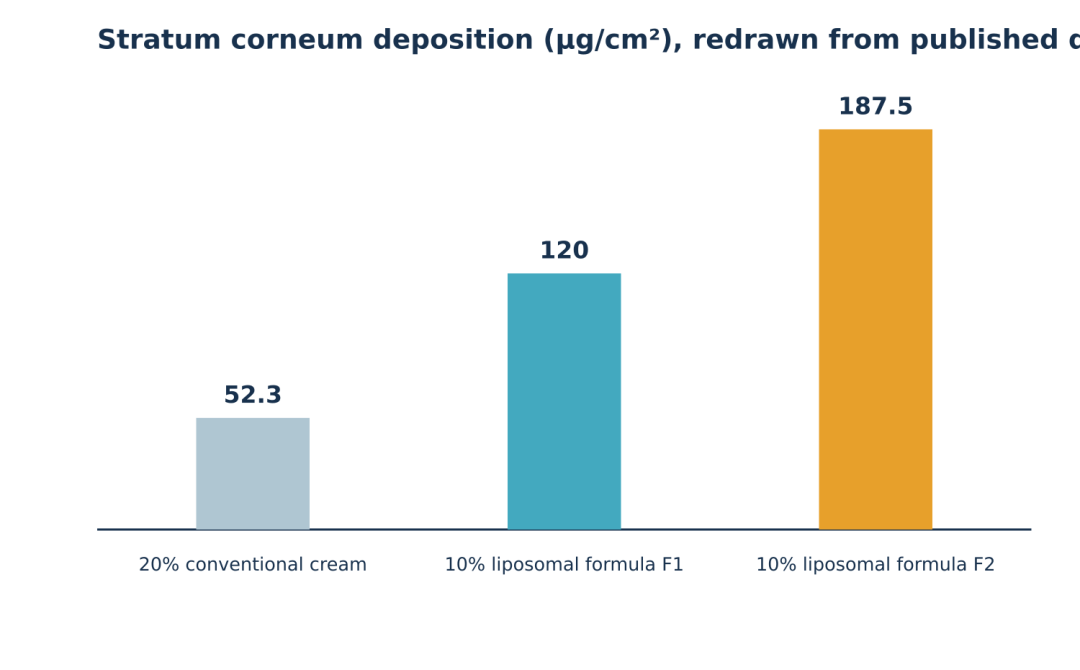
- Approximate liposome diameter: 211 nm
- PDI ≈ 0.22–0.24, indicating a uniform distribution
- With half the active concentration, stratum corneum deposition increased 2.3–3.6-fold
Delivery efficiency, not simply the concentration added.
Burchacka E, et al. Biomed Pharmacother. 2016;83:771–775. DOI: 10.1016/j.biopha.2016.07.014An independently published proof-of-concept study of liposomal azelaic acid; not PURISOME® technology data.
DELIVERY TECHNOLOGY
PURISOME® FlexVes™
A delivery system redesigned for high-payload azelaic acid
PURISOME® is PuriPharm’s proprietary nanoliposome delivery platform. Nanoscale phospholipid-bilayer vesicles carry a 50% azelaic acid payload from an aqueous environment, through the stratum corneum and follicular openings, to support local accumulation and controlled release.
01
Improved formulation compatibility
FORMULATION
02
Optimized skin and follicular delivery
DELIVERY
03
Sustained release
CONTROL
04
Improved user experience with a high active load
COMFORT
Powered by PURISOME® FlexVes™ Liposome Technology
PRODUCT PROFILE
NanoActive™ Azelaic Acid 50%
Nano-encapsulated Azelaic Acid 50% · Powered by PURISOME® FlexVes™ Liposome Technology
| Product name | NanoActive™ Azelaic Acid 50% |
| INCI | Azelaic Acid |
| Active content | 50% azelaic acid (raw-material active-payload specification) |
| Delivery technology | PURISOME® FlexVes™ Liposome Technology |
| Active molecule | Azelaic acid |
| Chemical class | Saturated C9 dicarboxylic acid |
| Molecular formula | C9H16O4 |
| Molecular weight | 188.22 |
| Structural formula | HOOC–(CH2)7–COOH |
Azelaic acid is a naturally occurring saturated nine-carbon dicarboxylic acid. The 50% figure is the raw material’s active-content specification, not the use concentration in a finished product. Particle size, pH, recommended use level, and other technical parameters should follow the latest PuriPharm TDS.
HIGH ACTIVE PAYLOAD
50% azelaic acid active payload
50%
AZELAIC ACID PAYLOAD
50% high active payload
↓
PURISOME® nano delivery
↓
Greater formulation freedom
50% is the active-content specification of the raw material, not the use concentration in a finished formulation.
A high-payload raw material allows formulators to deliver a meaningful azelaic acid level without introducing excessive carrier material into the finished product. This preserves valuable formulation space for refining skin feel, stability, and dosage form, leaving genuine freedom for serums, gels, emulsions, and scalp formats.
DELIVERY MECHANISM
Controlled release from the aqueous phase into the follicle
Aqueous environment
↓
Nanolipid vesicles
↓
Stratum corneum
↓
Follicular opening
↓
Local controlled release
Nanoscale phospholipid vesicles carry azelaic acid along the skin surface and follicular pathways, supporting local accumulation and sustained release in the target area. In this way, the delivery destination becomes part of formulation design.
BLEMISH-PRONE SKIN · MULTI-PATHWAY CARE
Azelaic acid addresses three of the four acne pathways
| Pathway | Role | Description |
|---|---|---|
| Follicular hyperkeratinization | Core action | Regulates keratinization and addresses the source of follicular blockage |
| Microbial colonization | Core action | Interferes with intracellular bacterial protein synthesis and clarifies the follicular microbiome |
| Inflammation / ROS | Core action | Reduces oxidative stress and modulates inflammatory signaling |
| Sebum–follicle environment | Associated environment | Indirectly relates to this pathway by improving the follicular microenvironment |
Scientific rigor note: current literature does not support a claim that azelaic acid directly suppresses sebum secretion, so no such claim is made here. Its value lies in acting simultaneously on three core pathways: keratinization, the microbiome, and inflammatory oxidative stress.
Multi-pathway management for blemish-prone skin: a complete path from keratinization and the microbiome to inflammation and pigmentation.
COMBINATION INSPIRATION · COMBINATION RESEARCH
Azelaic acid × salicylic acid: clinical exploration of a multi-pathway combination
| Study design · randomized controlled trial | Published results |
|---|---|
| 34 patients with acne · split-face design | Inflammatory and non-inflammatory acne lesions improved significantly on both sides |
| 4 treatments · 2-week intervals | The SA + AA side produced higher patient satisfaction and less discomfort |
| 20% salicylic acid + 20% azelaic acid | |
| Comparator side: 25% trichloroacetic acid (TCA) chemical peel |
Azelaic acid can be combined with other keratinization-regulating actives to build multi-pathway solutions for blemish-prone skin.
This was a clinical chemical-peel protocol. It is presented as scientific inspiration for combination concepts and does not constitute a cosmetic formulation recommendation or concentration guideline.
Abdel Hay R, et al. Clinical and dermoscopic evaluation of combined salicylic acid 20% and azelaic acid 20% versus trichloroacetic acid 25% chemical peel in acne: an RCT. J Dermatolog Treat. 2019;30(6):572–577. DOI: 10.1080/09546634.2018.1484876
SCALP CARE
From skin follicles to scalp follicles
The same follicular biology also applies to the scalp. Scalp care involves more than oil control.
Six microenvironmental concerns in scalp follicles: keratin buildup, follicular blockage, the inflammatory environment, microbiome balance, oxidative stress, and the sebum environment.
- Care for oily scalp · clarifying scalp formulas
- Follicular cleansing · acne-prone scalp
- Scalp microbiome management
- Scalp soothing and renewal
HAIR-FOLLICLE BIOLOGY
5α-reductase: an exploratory mechanism for scalp applications
Testosterone
↓
5α-Reductasepresent in human hair follicles
↓
DHT
Published biochemical research examined the inhibitory effect of azelaic acid—particularly when combined with zinc—on 5α-reductase activity in human skin. This provides mechanistic scientific support for exploring scalp applications.
Scientifically rigorous product-development language:
- Supports management of the follicular microenvironment
- Research on 5α-reductase-related mechanisms provides a new scientific direction for scalp applications
- Provides a mechanistic product-development rationale for oily-scalp and androgen-related follicular care
Stamatiadis D, et al. Inhibition of 5α-reductase activity in human skin by zinc and azelaic acid. Br J Dermatol. 1988;119:627–632.
APPLICATION MAP
One active for the face, body, and scalp
01
FACE
Anti-blemish oil-control serumPore-care serumPost-acne mark repair serumBrightening serumUneven-tone careRedness-care formulaMoisturizer for oily skinClarifying cleanser
02
BODY
Back-acne careChest-acne careBody hyperpigmentation serumFollicular roughness care
03
SCALP
Clarifying scalp serumOily-scalp serumFollicular-care serumScalp keratinization careSoothing scalp productsClarifying shampooHair-root serum
All application directions are positioned for cosmetic use. Compatibility with specific dosage forms should follow the latest PuriPharm TDS and formulation support.
COMPARISON · FORMULATION VALUE
Conventional azelaic acid powder vs NanoActive™ Azelaic Acid 50%
| Dimension | Conventional azelaic acid powder | NanoActive™ Azelaic Acid 50% |
|---|---|---|
| Aqueous-phase compatibility | Extremely low intrinsic water solubility (≈0.24% at 20°C) | Pre-engineered nanodispersion system |
| Dispersion difficulty | Requires solubilization or suspension strategies | Uniform dispersion and easy incorporation |
| Solids loading | High use levels create a high solids load | 50% high payload reduces formulation burden |
| Crystallization management | Free crystalline active; recrystallization must be controlled | Carrier-associated active delivery |
| Skin feel | Risk of grittiness | Smooth sensory profile designed for modern formats |
| Delivery strategy | Primarily passive diffusion | PURISOME® nanoliposome delivery |
| Follicular delivery | Limited potential | Delivery designed for the follicular pathway |
| Release behavior | Sustained release is difficult to achieve | Carrier-mediated sustained release |
| Formulation flexibility | Mainly high-viscosity suspension formats | Serums / gels / emulsions / scalp formats |
| Scalp suitability | Difficult | Good |
KEY VALUE PROPOSITION
Making high-concentration azelaic acid more suitable for next-generation formulations
01
Multi-pathway azelaic acid biology
MULTI-ACTION
02
50% high payload
HIGH PAYLOAD
03
PURISOME® nano delivery
PRECISION DELIVERY
04
Greater freedom for modern formulations
FORMULATION FREEDOM
05
From facial blemish-prone skin to scalp-follicle care
SKIN + SCALP
NanoActive™ Azelaic Acid 50%
Powered by PURISOME® FlexVes™ Liposome TechnologyPuriPharm Co., Ltd. · www.puriactives.com · service@puripharm.com
NanoActive™ Azelaic Acid 50%Powered by PURISOME® FlexVes™ Liposome TechnologyPuriPharm Co., Ltd. · www.puriactives.com · service@puripharm.com
NanoActive™ r-Retinoate
NanoActive™ r-Retinoate
A new-generation, high-performance vitamin A active
| 8×RETINOL POWERHigh efficacy at low concentration · High stability · Potential for high tolerabilityA new-generation hybrid retinoid | INCI Retinyl Retinoate |
PuriPharm Co. Ltd.
Source:Structure: PubChem CID 10303376. The 8× claim refers only to the low-concentration in vitro collagen synthesis experiment detailed in “8× Retinol-Level Collagen Performance.”
01 MOLECULAR DESIGN
The traditional vitamin A trade-off
Traditional vitamin A actives rarely combine activity, stability, and tolerability
| Retinoid | Core attribute | Key limitation |
|---|---|---|
| Retinoic Acid | High activity | Higher irritation potential and greater restrictions on use |
| Retinol | Gold standard | Sensitive to light, heat, oxygen, and other factors |
| Retinyl Esters | High stability | Usually lower biological activity |
High activity + High stability + High tolerability
What if one vitamin A molecule could offer all three?
Next: the hybrid retinoid architecture
Source:Kim H, Kim B, Kim H, et al. “Synthesis and in vitro biological activity of retinyl retinoate, a novel hybrid retinoid derivative.” Bioorganic & Medicinal Chemistry. 2008;16(12):6387–6393. DOI: 10.1016/j.bmc.2008.05.005.
01 MOLECULAR DESIGN
Hybrid Retinoid molecular architecture
One molecule combines the structural logic of two classic retinoids
RETINOL + RETINOIC ACID
Esterification forms RETINYL RETINOATE
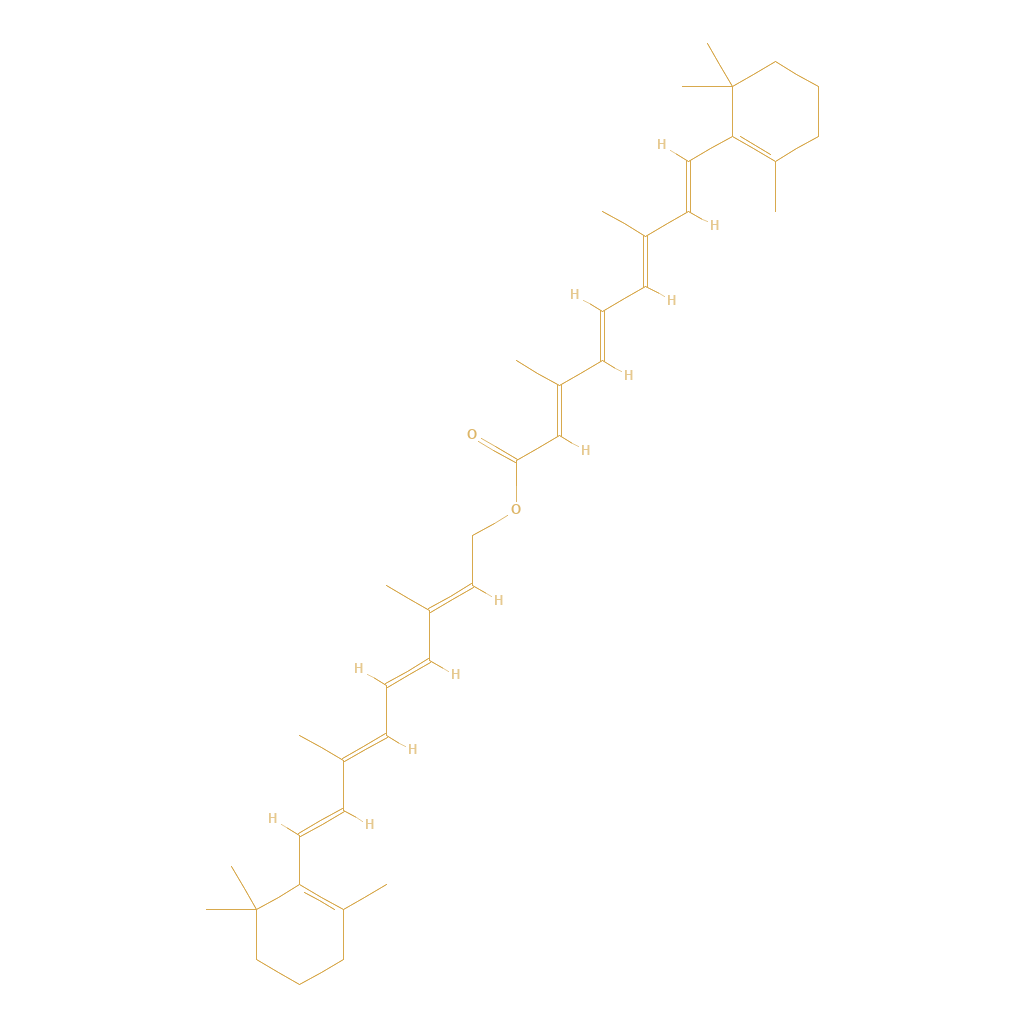
| No. | Design logic |
|---|---|
| 01 | Block the Retinoic Acid carboxyl group |
| 02 | Preserve the key retinoid ring structure and polyene chain |
| 03 | Rebalance activity, stability, and tolerability |
Source:Kim H, Kim B, Kim H, et al. “Synthesis and in vitro biological activity of retinyl retinoate, a novel hybrid retinoid derivative.” Bioorganic & Medicinal Chemistry. 2008;16(12):6387–6393. DOI: 10.1016/j.bmc.2008.05.005. Structure: PubChem CID 10303376.
01 MOLECULAR DESIGN
NanoActive™ r-Retinoate · Product overview
Core molecular information and market positioning
| Item | Information |
|---|---|
| Product | NanoActive™ r-Retinoate |
| INCI name | Retinyl Retinoate |
| Category | Hybrid RetinoidVitamin A derivativeAnti-aging active |
| Molecular data | Formula C₄₀H₅₆O₂Molecular weight 568.87CAS 15498-86-9 |
| Absorption maximum | λmax 333 nm; Retinol 323 nm |
8× Retinol collagen performancePhotostable retinoidImproved thermal stabilityDirect retinoid bioactivityHyaluronan boostHigh efficacy at low concentrationSkin and scalp applicationsCompatible with nano-delivery
Source:PubChem CID 10303376; Kim H, Kim B, Kim H, et al. “Synthesis and in vitro biological activity of retinyl retinoate, a novel hybrid retinoid derivative.” Bioorganic & Medicinal Chemistry. 2008;16(12):6387–6393. DOI: 10.1016/j.bmc.2008.05.005. Appearance, active content, particle size, PDI, carrier composition, recommended use level, pH, addition temperature, and storage conditions must follow the latest PuriPharm TDS / SPEC / COA.
02 COLLAGEN PERFORMANCE
8× Retinol-level collagen performance
Approximately eight times the collagen synthesis response of Retinol at low concentration
| 8×Collagen biosynthesis at low concentration41.29% ÷ 4.94% ≈ 8.36× | Retinol+4.94%Retinyl Retinoate+41.29% |
Test concentration: 10⁻⁶% (w/v)
Lower concentration, more collagen
Source:*In an in vitro collagen synthesis experiment at 10⁻⁶% (w/v), Retinyl Retinoate increased collagen synthesis by 41.29%, versus 4.94% with Retinol, equivalent to approximately 8.36×. US7173062B2, “Method for the Improvement of Skin Wrinkles Using Retinyl Retinoate.” See also Kim H, Kim B, Kim H, et al. “Synthesis and in vitro biological activity of retinyl retinoate, a novel hybrid retinoid derivative.” Bioorganic & Medicinal Chemistry. 2008;16(12):6387–6393. DOI: 10.1016/j.bmc.2008.05.005.
02 COLLAGEN PERFORMANCE
Lower concentration, more collagen
Retinyl Retinoate shows strong collagen synthesis performance even at low concentrations
| Concentration | Retinoic Acid | Retinol | Retinyl Palmitate | Retinyl Retinoate |
|---|---|---|---|---|
| 0.1 μM | 1% | — | — | 1.5% |
| 1 μM | 14% | 10% | 2% | 14% |
| 10 μM | 52% | 42% | 14% | 48% |
High efficacy at low concentration
Outperforms Retinol in the low-concentration range and approaches Retinoic Acid at some concentrations
Metric: increase in collagen synthesis (%)
Source:Kim H, Kim B, Kim H, et al. “Synthesis and in vitro biological activity of retinyl retinoate, a novel hybrid retinoid derivative.” Bioorganic & Medicinal Chemistry. 2008;16(12):6387–6393. DOI: 10.1016/j.bmc.2008.05.005. Redrawn from Figure 6. Bar values are visual readings from the axes and preserve the trend reported in the article.
02 COLLAGEN PERFORMANCE
A retinoid with direct biological activity
The molecule can display retinoid activity without first undergoing complete hydrolysis
| Route | Sequence | Interpretation |
|---|---|---|
| Traditional Retinyl Ester | Retinyl Ester → Retinol → Retinal → Retinoic Acid → RAR | Requires multiple conversion steps before entering RAR signaling |
| Retinyl Retinoate | Retinyl Retinoate → observed biological effect | Direct retinoid activity |
HPLC evidence
After two days of incubation with normal human skin fibroblasts, HPLC detected no new peaks corresponding to Retinol or Retinoic Acid.
The authors therefore attributed the observed biological activity to the molecule itself rather than simple hydrolysis.
Not an ordinary retinyl ester
Source:Kim H, Kim B, Kim H, et al. “Synthesis and in vitro biological activity of retinyl retinoate, a novel hybrid retinoid derivative.” Bioorganic & Medicinal Chemistry. 2008;16(12):6387–6393. DOI: 10.1016/j.bmc.2008.05.005.
02 COLLAGEN PERFORMANCE
Promotes synthesis and limits degradation
Bidirectional collagen management through RAR, AP-1, and collagen signaling
| Photoaging cascade | Direction associated with NanoActive™ r-Retinoate |
|---|---|
| UV / environmental stress → c-Jun / AP-1 ↑ → collagenase / MMP ↑ → collagen degradation → wrinkles | Retinoid signaling / RAR → AP-1 / c-Jun ↓ |
| Collagen degradation | Promotes synthesis: Collagen Biosynthesis ↑ |
| Increased collagenase / MMP | Reduces degradation signals: Collagenase / MMP ↓ |
52%
Collagenase inhibition
Retinyl Retinoate > Retinol
Source:Kim H, Kim B, Kim H, et al. “Synthesis and in vitro biological activity of retinyl retinoate, a novel hybrid retinoid derivative.” Bioorganic & Medicinal Chemistry. 2008;16(12):6387–6393. DOI: 10.1016/j.bmc.2008.05.005. With RARα expression, collagenase expression was inhibited by approximately 33% with Retinol, 52% with Retinyl Retinoate, and 64% with Retinoic Acid; also supported by US7173062B2, “Method for the Improvement of Skin Wrinkles Using Retinyl Retinoate.”
03 STABILITY & TOLERABILITY
Designed for photostability
Retinoid performance that withstands light exposure
48 h
UVA photostability
The main structure retained markedly greater stability even after 48 hours of UVA exposure.
UVA: 356 nm; observations at 2, 12, 24, and 48 hours
| Compound | 0 h | 2 h | 12 h | 24 h | 48 h |
|---|---|---|---|---|---|
| Retinyl Retinoate | Baseline | Stable | Stable | Stable | Only minor noise / no qualitative change |
| Retinol | Baseline | Clear degradation | No longer reliably identified qualitatively | No longer reliably identified qualitatively | No longer reliably identified qualitatively |
λmax: Retinol 323 nm; Retinyl Retinoate 333 nm
Source:Kim H, Kim B, Kim H, et al. “Synthesis and in vitro biological activity of retinyl retinoate, a novel hybrid retinoid derivative.” Bioorganic & Medicinal Chemistry. 2008;16(12):6387–6393. DOI: 10.1016/j.bmc.2008.05.005.; US7173062B2, “Method for the Improvement of Skin Wrinkles Using Retinyl Retinoate.” Photostability experiment: UVA 356 nm and qualitative ¹H NMR. “48 h” is the study duration, not a direct quantitative claim of percentage remaining.
03 STABILITY & TOLERABILITY
Stability beyond light exposure
Thermal stability was clearly better than Retinol after four weeks under accelerated conditions
| Four-week condition | Retinol remaining | Retinyl Retinoate remaining |
|---|---|---|
| Room temperature | 52.23% | 89.21% |
| 40°C | 34.51% | 68.23% |
| 4°C | 95.52% | 99.65% |
Improved thermal stabilityMore robust formulationsMore reliable retinoid performance
Source:US7173062B2, “Method for the Improvement of Skin Wrinkles Using Retinyl Retinoate.” Thermal stability experiment: HPLC quantification after four weeks at room temperature, 40°C, and 4°C.
03 STABILITY & TOLERABILITY
High performance with greater mildness
A wider cellular tolerance window and evidence from a human occlusive patch test
| In vitro MTT | IC₅₀ |
|---|---|
| +60%IC₅₀ versus RetinolLower cytotoxicity in this in vitro model | In vitro MTTIC₅₀Retinol25 μMRetinyl Retinoate40 μM |
| 24 h human occlusive patch test | Concentration | Irritation index; lower is better |
|---|---|---|
| Retinol | 0.075% | 2.5 |
| r-Retinoate | 0.075% | 1.3 |
| r-Retinoate | 0.30% | 1.3 |
| r-Retinoate | 0.55% | 1.3 |
High performance and low irritation in the same profile
Source:Kim H, Kim B, Kim H, et al. “Synthesis and in vitro biological activity of retinyl retinoate, a novel hybrid retinoid derivative.” Bioorganic & Medicinal Chemistry. 2008;16(12):6387–6393. DOI: 10.1016/j.bmc.2008.05.005. Normal human skin fibroblast MTT assay: IC₅₀ 40 μM versus 25 μM for Retinol. Human occlusive patch data: US7173062B2, “Method for the Improvement of Skin Wrinkles Using Retinyl Retinoate.”
04 BEYOND COLLAGEN
7.8× hyaluronan production
Extending from wrinkle care to hydration, plumpness, and barrier support
7.8×
Hyaluronan production
Primary human keratinocytes; 1 μM / 24 hRetinaldehyde ≈ 7.6× control
| Mechanistic path | Outcome |
|---|---|
| Retinyl Retinoate → HAS2 ↑ | Hyaluronan ↑ |
| Hyaluronan ↑ → CD44 interaction | Hydration · ECM support · Homeostasis |
Retinyl Retinoate upregulated HAS2 and increased CD44-related expression.
Source:Kim JE, Kim B, Kim H, et al. “Retinyl retinoate induces hyaluronan production and less irritation than other retinoids.” Journal of Dermatology. 2010;37(5):448–454. DOI: 10.1111/j.1346-8138.2010.00808.x. In primary human keratinocytes, Retinyl Retinoate at 1 μM for 24 h induced hyaluronan production to approximately 7.8 times the control level.
04 BEYOND COLLAGEN
High activity with less barrier disruption
Lower TEWL impact at the same 0.05% concentration
| Retinoid | Relative TEWL / barrier disruption ranking |
|---|---|
| Retinyl Retinoate | Lowest |
| Retinol | Low |
| Retinoic Acid | High |
| Retinaldehyde | High |
7.8× hyaluronan production + lower TEWL disruption
A better balance of efficacy and tolerability
Source:Kim JE, Kim B, Kim H, et al. “Retinyl retinoate induces hyaluronan production and less irritation than other retinoids.” Journal of Dermatology. 2010;37(5):448–454. DOI: 10.1111/j.1346-8138.2010.00808.x. Hairless-mouse TEWL model with 0.05% comparative application. The ranking redraws the irritation order reported in the article.
05 CLINICAL EVIDENCE
Human evidence with a Retinol comparator
Uncommon direct human comparison against Retinol
| 0.06%Retinyl RetinoateSignificantly better than 0.075% Retinol | 46Korean women · Periorbital wrinklesTwo randomized clinical studies |
| Study | Duration and completers | Intervention | Frequency |
|---|---|---|---|
| Study 1 | 12 weeks; 24 completed | 0.06% Retinyl Retinoate versus placebo | Twice daily |
| Study 2 | 8 weeks; 22 completed | 0.06% Retinyl Retinoate versus 0.075% Retinol | Twice daily |
Assessments: global photoaging score · photographs · skin replicas · Visiometer
Wrinkles improved significantly with Retinyl Retinoate versus placebo and Retinol.
Source:Kim H, Kim N, Jung S, et al. “Improvement in skin wrinkles from the use of photostable retinyl retinoate: a randomized controlled trial.” British Journal of Dermatology. 2010;162(3):497–502. DOI: 10.1111/j.1365-2133.2009.09483.x. Skin-replica analysis showed significant improvement, particularly in mean roughness.
05 CLINICAL EVIDENCE
22% greater improvement in maximum roughness
A 12-week double-blind randomized comparison versus 0.075% Retinol
| Study design | Information |
|---|---|
| +22%R2 maximum roughnessImprovement rate versus Retinol | Study designInformationDesignProspective · Double-blind · Randomized · ControlledParticipants11 Korean women; 35–56 yearsDuration / frequency12 weeks; twice dailyComparison0.06% Retinyl Retinoate versus 0.075% RetinolAnalysisVisiometer R2; 12-week head-to-head comparison |
Validated dimensions: fine-line reduction, elasticity, visual wrinkle grade, skin roughness, and dermal distance / intensity.
Source:Kim H, Koh J, Baek J, et al. “Retinyl retinoate, a novel hybrid vitamin derivative, improves photoaged skin: a double-blind, randomized-controlled trial.” Skin Research and Technology. 2011;17(3):380–385. DOI: 10.1111/j.1600-0846.2011.00512.x. At 12 weeks, the improvement rates for visual wrinkles and R2 maximum roughness were 22% higher than with Retinol.
05 CLINICAL EVIDENCE
Beyond anti-aging
Retinoid science for blemish-prone and oily skin
Protocol: 0.05% Retinyl Retinoate · 8 weeks · double-blind · vehicle-controlled · split-face; 15 women with mild-to-moderate acne.
| Eight-week outcome | Vehicle | Retinyl Retinoate |
|---|---|---|
| Total lesion count | −26.47% | −38.58% |
| Inflammatory lesions | −35.14% | −43.62% |
| Non-inflammatory lesions | −19.79% | −33.98% |
−27.18%
Forehead sebum
Baseline 104.86 μg/cm²; week 8: 76.36 μg/cm²
Blemish-prone skin careSebum balanceFollicular keratinization careClearer-looking skin
Source:Kim B, et al. “Retinyl Retinoate, a Retinoid Derivative Improves Acne Vulgaris in Double-blind, Vehicle-controlled Clinical Study.” Tissue Engineering and Regenerative Medicine. 2013;10(5):260–265. DOI: 10.1007/s13770-012-1088-z. Percentages are reductions in lesion counts after eight weeks; the change in sebum was statistically significant.
06 DELIVERY PLATFORM
Molecule × nano-delivery
Unlocking the full potential of r-Retinoate
Retinyl Retinoate is highly lipophilic, so formulation must solve several engineering challenges:
01 Dispersibility02 Stability03 Drug loading04 Skin delivery05 Controlled release
RETINYL RETINOATE + Nano-delivery
A performance-optimized retinoid delivery system
| Published NLC feasibility evidence | Value |
|---|---|
| Particle size | 230–300 nm |
| PDI | No value listed in the source slide |
| PRECIROL-NLC encapsulation efficiency | 97.8% |
| COMPRITOL-NLC encapsulation efficiency | 93.8% |
These values describe a published NLC system and are not specifications for NanoActive™ r-Retinoate.
Source:Lee SG, Jeong JH, Kim SR, et al. “Topical formulation of retinyl retinoate employing nanostructured lipid carriers.” Journal of Pharmaceutical Investigation. 2012;42(5):243–250. DOI: 10.1007/s40005-012-0036-1. Particle size, PDI, encapsulation efficiency, and carrier parameters for NanoActive™ itself must follow authentic PuriPharm TDS / SPEC / COA documents.
06 DELIVERY PLATFORM
Encapsulation amplifies delivery performance
Independent research shows that advanced delivery can further enhance Retinyl Retinoate
| Form | Exposure / penetration | Delivery performance |
|---|---|---|
| Free RR | Conventional exposure; limited penetration | — |
| Encapsulated RR | Improved penetration | More efficient delivery; enhanced anti-wrinkle performance |
Encapsulation → Improved penetration → More efficient delivery → Enhanced anti-wrinkle performance
| +6.05%Visual wrinkle improvement | +8.03%R2 maximum roughness |
Source:Kim H, et al. “Novel anti-wrinkle effect of cosmeceutical product with new retinyl retinoate microsphere using biodegradable polymer.” Skin Research and Technology. 2012;18(1):70–76. DOI: 10.1111/j.1600-0846.2011.00533.x. Outcomes compare a 3% PLA–retinyl retinoate (2%) microsphere cream with a 0.06% Retinyl Retinoate cream over four weeks. Published PLA microsphere evidence does not represent NanoActive™ technology.
07 APPLICATIONS
From face to scalp
Advanced retinoid science for scalp care
| SkinWrinkle careCollagen renewalHyaluronan boostFirmingRefined texturePhotoaging careBlemish-prone skinSebum balance | ScalpScalp renewalSebum balanceFollicular keratinization careScalp anti-agingPilosebaceous unit careHealthy follicular environment |
Retinoid signaling is present in hair follicles, sebaceous glands, and interfollicular epidermis, and participates in epithelial differentiation, sebaceous biology, and follicular keratinization.
Source:Mechanistic background: Everts HB, Sundberg JP, King LE Jr, Ong DE. “Immunolocalization of enzymes, binding proteins, and receptors sufficient for retinoic acid synthesis and signaling during the hair cycle.” Journal of Investigative Dermatology. 2007;127(7):1593–1604. DOI: 10.1038/sj.jid.5700753. Scalp positioning covers scalp health, anti-aging, oil control, and support for the follicular environment. No direct hair-growth claim should be made without product-specific clinical evidence.
07 APPLICATIONS
One retinoid, multiple performance dimensions
Eight efficacy dimensions create a complete premium active platform
| No. | Performance dimension |
|---|---|
| 01 | 8× Collagen Performance |
| 02 | Wrinkle Reduction |
| 03 | Photostability |
| 04 | Thermal Stability |
| 05 | Hyaluronan Boost |
| 06 | Better Tolerance |
| 07 | Blemish & Sebum Care |
| 08 | Scalp Renewal |
Source:The efficacy dimensions summarize the preceding evidence. Each quantitative claim retains its experimental model, comparator, concentration, and source in the corresponding section.
07 APPLICATIONS
Designed for the next generation of beauty innovation
Premium dual applications across skin and scalp
| Skin carePremium anti-aging serumLine-smoothing serumEye serum / eye creamNight repairDay-and-night retinoid productsPhotoaging careFirming and elasticity productsHydrating anti-aging productsBlemish-prone skin careOily-skin serum | Scalp and hair careScalp anti-aging essenceScalp anti-aging serumScalp renewal serumOily-scalp serumFollicular environment careLeave-on scalp carePremium scalp ampoule |
Formats: serum · cream · lotion · ampoule · eye care · scalp serum · leave-on care
Source:Application guidance is conceptual and based on published Retinyl Retinoate evidence. Recommended use level, pH, addition temperature, solubility, compatibility, storage conditions, and finished-product stability for NanoActive™ r-Retinoate must follow official PuriPharm TDS / SPEC / COA documents. No product-specific parameters are inferred here.
CLOSING
NanoActive™ r-Retinoate
Higher performance at a lower concentration. Redefining next-generation vitamin A anti-aging technology.
8× collagen performancePhotostabilityClinically evaluatedHyaluronan boostNano-delivery
A new-generation, high-performance vitamin A active
PuriPharm Co. Ltd.
Source:*“8× Retinol Power” is a marketing shorthand for an approximately 8.36-fold difference in low-concentration in vitro collagen synthesis performance: 41.29% versus 4.94% at 10⁻⁶% w/v. Source: US7173062B2. It does not mean 8× RAR activation, 8× human wrinkle reduction, 8× lower irritation, or 8× performance across all biological endpoints.
Clinical Evidence Review of the Dermatological Benefits of Retinal

CLINICAL EFFICACY EVIDENCE REVIEW
Clinical Evidence Review of Retinal (Retinaldehyde) for Skin Benefits
NanoActive® RAL nano-encapsulated retinal · Focus on pore improvement and anti-wrinkle efficacy · Peer-reviewed literature + proprietary Intertek human efficacy data
KEY NUMBERS
More than 30 years of clinical evidence focused on pores and wrinkles
| Evidence base | Randomized trials | Wrinkle improvement | Pore improvement |
|---|---|---|---|
| 19 human clinical studies1994–2026 | 6+ RCTs | −43.2%wrinkle-count improvement in 28 days with liposomal RAL | +20%pore improvement after 8 weeks with a 0.1% retinal serum |
Evidence focus
Required focus: pore appearance · wrinkle reductionAdditional benefits: skin texture · elasticity/firmness · pigment evenness · barrier/TEWL · redness · tolerability and safety
PuriPharm Co., Ltd. · Compiled from RCTs and international peer-reviewed journals, prioritizing US/global evidence · September 2026
EXECUTIVE SUMMARY
More than three decades of peer-reviewed evidence support the skin benefits of retinal
Retinal (retinaldehyde) is the immediate metabolic precursor of retinoic acid. More than 30 years of peer-reviewed human evidence span international journals including J Am Acad Dermatol, Dermatology, J Cosmet Dermatol, J Drugs Dermatol (US), and Dermatol Ther.
- Wrinkles: ≥10 human studies of 0.05–0.1% RAL, ranging from a 7.6% reduction in crow’s-feet depth at 8 weeks (RCT; comparable with glycolic-acid peels) to 27–34% reductions in wrinkle scores at 90 days in the largest cohort (n=1,462).
- Pores: A 2024 US JDD study reported a 20% improvement in pore appearance after 8 weeks with a 0.1% retinal serum (P<0.0001). A nanovesicular RAL study showed a 23.6% reduction in sebum after 4 weeks and significant reductions in open and closed comedones—the mechanistic basis for improved pore appearance.
- Liposomal / nano-encapsulated delivery: Human studies across four delivery technologies—multilamellar vesicles, liposomes, niosomes, and exosomes—reported efficacy comparable or superior to non-encapsulated comparators with good tolerability. In a proprietary 4-week Intertek human test of NanoActive® RAL serum (n=30), crow’s-feet count decreased 31.0%, forehead-wrinkle count decreased 27.7%, and skin-tone ITA° increased 12.0% (all P<0.001), with no adverse events.
Concentration window
All pivotal human studies were conducted at 0.05–0.1%: Creidi 1998 (0.05%); Kwon 2018 (0.05% vs 0.1%); Rouvrais 2018 / JDD 2024 / liposomal 3RC (0.1%); and encapsulated-delivery trials (0.05% and 0.1%).
A 24-week split-face study in 2026 found significant wrinkle improvement with 0.1% in facial areas where 0.05% did not reach significance. In Kwon 2018, only the 0.1% group showed a significant decline in melanin index.
Formulation recommendation: 0.05% for sensitive-skin or daily-use positioning; 0.1% to maximize wrinkle and tone-evening benefits. NanoActive® RAL nano-encapsulated retinal covers this concentration window.
Sources: Creidi 1998 (PMID 9843009); Cordero 2011 (PMID 21649816); Rouvrais 2018 (PMID 30027612); JDD 2024 (PMID 39496127); Kim 2021 (PMID 34587353); Brown 2023 (Springer 10.1007/s13555-023-01004-z)
INGREDIENT POSITIONING
Where retinal sits in the retinoid metabolic pathway
| Retinyl esters | Retinol | Retinaldehyde | Retinoic acid |
|---|---|---|---|
| Retinyl esters | Retinoltwo oxidation steps | Retinaldehydeone oxidation step → active acid | Retinoic acidreceptor-active |
Retinal is only one enzymatic oxidation step from the receptor-active form, retinoic acid, whereas retinol requires two. Retinal therefore combines high biological activity with substantially better tolerability than retinoic acid—a position confirmed in head-to-head clinical studies and authoritative reviews.
Keratinocytes convert retinal to retinoic acid only at specific stages of differentiation, creating a more controlled, self-limiting supply of active acid. This is the biological basis of its lower irritation potential. Retinal also has direct activity against Cutibacterium acnes, attributable to its aldehyde group—an effect not shared by retinol or retinoic acid.
Sources: Saurat 1994 (PMID 7798613); Fluhr 1999 (PMID 10473963); Milosheska & Roškar 2022 (Adv Ther); Pechère 2002 (Dermatology)
EVIDENCE LANDSCAPE
1994–2026: an evidence base led by European, US, and international studies

Figure 1. Human clinical evidence landscape. Bubble size represents sample size on a logarithmic scale; color indicates study region. Two South Korean RCTs provide rare controlled evidence for encapsulated vesicular delivery.
Source: 19 human studies (1994–2026) summarized in Table 1 of the report
ANTI-WRINKLE · FOUNDATIONAL RCT
Creidi 1998: the foundational randomized trial of retinal for wrinkles
- Design: randomized, double-blind, vehicle-controlled, full-face study; n=125 participants with facial photodamage; 44 weeks.
- Groups: 0.05% retinaldehyde cream vs 0.05% retinoic-acid cream vs vehicle. Silicone replicas of crow’s feet were assessed by optical profilometry.
- Results: At week 18, retinaldehyde and retinoic acid significantly reduced wrinkle and roughness features; the vehicle produced no statistically significant change. Benefits were maintained through week 44.
- Tolerability: Retinaldehyde was well tolerated throughout; retinoic acid caused more local irritation and reduced adherence.
Why this study is foundational
It established the core positioning of retinaldehyde as providing efficacy comparable with retinoic acid but substantially better tolerability. Nearly all subsequent cosmetic-retinoid reviews cite this study, and its 18-week onset window became a benchmark for later study durations, including liposomal RAL programs. Objective endpoints—optical profilometry and silicone replicas—provide quantifiable, reproducible claim support.
Source: Creidi et al. 1998, J Am Acad Dermatol (PMID 9843009)
ANTI-WRINKLE · LARGE-SAMPLE AND LONG-TERM EVIDENCE
Large cohorts and long-duration studies confirm wrinkle and structural improvements
| Study | Design / sample | Duration | Key anti-wrinkle results |
|---|---|---|---|
| Cordero 2011J Cosmet Dermatol · international multicenter | Open-label, n=1,462 | 90 days | Crow’s feet −27%; perioral −34%; nasolabial folds −20%; forehead −19% (all P<0.001; profilometry confirmed); elasticity +32–33% |
| Deda 2026Poland · double-blind split-face | n=56; age 30–58 | 24 weeks | 0.1% RAL significantly improved wrinkle parameters (0.05% did not reach significance); dermal density by 50-MHz ultrasound improved comprehensively, suggesting neocollagenesis; elasticity R2 +11.6–12.8% |
| Rouvrais 2018France · RCT vs glycolic-acid peels | n=55 | 8 weeks | Crow’s-feet depth −7.61% (P=.0007), comparable with three professional peels (20%/50%/70%); texture improvement significantly favored RAL (between-group P=.0252); 12-fold fewer adverse signs |
Cumulative long-term benefit
Deda 2026 is currently the longest split-face controlled retinal study. It provides instrument-based evidence of cumulative benefit, with dermal density continuing to rise between weeks 12 and 24.
Sources: Cordero 2011 (PMID 21649816); Deda 2026 (PMC12928007); Rouvrais 2018 (PMID 30027612)
ANTI-WRINKLE · ENCAPSULATED RETINAL
Human anti-wrinkle evidence for encapsulated delivery
−43.2%
28-day improvement in wrinkle count with liposomal RAL 0.1% + retinoid (P<0.001)
Brown 2023 · Dermatol Ther (Spain/Europe)Among 32 participants, including those with sensitive skin, crow’s-feet wrinkle count decreased in 100%; elasticity improved 13.9%, firmness 5.6%, and skin-tone evenness 7.0%, without a retinization period.
Kim 2021 · split-face RCT (South Korea; identified)Multilamellar-vesicle retinal (MLV-RAL) 0.05%/0.1% creams were compared with retinol at matched concentrations. After 8 weeks, wrinkle depth (Antera 3D), hydration, elasticity, and facial contour improved significantly; the MLV-RAL side outperformed the retinol side on every objective measure except dermal density. Neither side had adverse events.
Gold 2026 · J Cosmet Dermatol (US)Twenty women (Fitzpatrick I–VI) used exosome-encapsulated retinal for 12 weeks. Wrinkles/fine lines, erythema, tone, and texture improved significantly from week 2; 100% showed global facial aesthetic improvement at weeks 8 and 12, with no product-related adverse events.
Truchuelo-Díez 2026 · double-blind RCT (Spain)A combination of RAL 0.05% + retinol 0.3% significantly reduced wrinkle depth by day 28 and wrinkle amplitude at study end. Retinol 0.5% alone showed only a trend, indicating that low-dose retinal enabled efficacy approaching that of nearly twice the retinol concentration.
Sources: Brown 2023 (Springer 10.1007/s13555-023-01004-z); Kim 2021 (PMID 33569865); Gold 2026 (PMID 41735774); Truchuelo-Díez 2026 (MDPI 2079-9284/13/3/133)
PORE IMPROVEMENT · DIRECT ENDPOINT
A US clinical study directly documented improvement in pore appearance
+20%
Improvement in pore appearance after 8 weeks with a 0.1% retinal serum (P<0.0001)
JDD 2024 · J Drugs Dermatol (US)Thirty-two women—47% with skin of color and 57% with sensitive skin—applied the product to the face, neck, and chest three nights per week. Concurrent improvements were 12% for facial fine lines, 19% for chest fine lines, 19% for hyperpigmentation, and 5% for texture. Patch testing showed no sensitization or irritation.
Claim-use caveat
This was a single-arm, multicomponent finished-product study without a vehicle control. It therefore supports the statement that “a 0.1% retinal formulation improved pore appearance by 20% in 8 weeks,” not independent attribution to a single ingredient. In technical dossiers, it should be cited as third-party clinical background for the ingredient category and concentration.
Why it is useful for global marketing
The US setting, expert grading plus instrumental measurement, and inclusion of people with sensitive skin and skin of color make its demographics relevant to global markets.
Connection to mechanism
Visible enlarged pores are driven mainly by sebum output and follicular keratinization/plugging. The following nanovesicular RAL study provides mechanistic support for this direct endpoint.
This is the strongest single reference for a pore claim involving a 0.1% retinal product: US-based, peer reviewed, and inclusive of sensitive skin and skin of color.
Source: J Drugs Dermatol 2024 (PMID 39496127)
PORE IMPROVEMENT · MECHANISTIC BASIS
Nano-encapsulated RAL reduces sebum and comedones—the mechanistic chain for pore improvement
−23.6%
Decrease in sebum after 4 weeks with 0.05% RAL nanovesicles (Sebumeter)
Kim 2021 · J Cosmet Dermatol (South Korea; identified)Twenty-three participants with mild-to-moderate acne were studied for 4 weeks. Closed and open comedones decreased significantly at weeks 2 and 4 (P<0.05); sebum fell from 327.95 to 250.65 μg/cm²; scaling index declined; and no irritation occurred. Follicle-penetrating vesicles delivered RAL to the pilosebaceous unit—the anatomical site where comedones and enlarged pores arise.
International comedolytic evidence from France
Morel 1999 (Clin Exp Dermatol; multicenter RCT, n=74): 0.1% RAL gel + 4% erythromycin significantly improved comedones and microcysts (P=0.005), with excellent local tolerability.
Poli 2005 (Dermatology; double-blind, vehicle-controlled, multicenter): 0.1% RAL / 6% glycolic acid significantly reduced papules, pustules, and comedones from month 1; at month 3, overall improvement was about twice that with vehicle (86.1% vs 58.8%).
Retinoid-class corroboration: A tazarotene 0.1% RCT (n=563) showed significantly better pore-size outcomes than vehicle at week 12. A 2025 network meta-analysis of 23 RCTs / 3,905 participants confirmed that topical retinoids significantly improve fine lines, providing the highest evidence tier for the pathway.
Claim linkage: Comedone clearance and normalization of follicular keratinization are recognized routes to visibly smaller pores; the RAL-specific data above provide direct support.
Sources: Kim 2021 (PMID 34587353); Morel 1999 (PMID 10564319); Poli 2005 (PMID 15724103); Lin 2025 (PMID 40707570)
QUANTITATIVE SUMMARY
Magnitude of efficacy improvements reported across studies

Figure 2. Improvements from baseline reported in human clinical studies. Gold = pore/sebum endpoints (required focus); navy = wrinkle/texture/pigment/elasticity endpoints.
Sources: Brown 2023; Cordero 2011, Kim 2021, Kwon 2018, Rouvrais 2018 (J Cosmet Dermatol); J Drugs Dermatol 2024
ADDITIONAL EFFICACY EVIDENCE
Texture · elasticity · pigmentation · redness · tolerability
Skin texture and roughness
Kwon 2018 (double-blind RCT, South Korea): texture improved 13.7% with 0.1% and 12.6% with 0.05%, measured by Antera 3D. Rouvrais 2018: 0.1% RAL cream improved texture more than professional glycolic-acid peels (between-group P=.0252).
Elasticity / firmness / dermal density
Diridollou 1999: epidermal thickness and skin elasticity increased significantly (P<0.01). Deda 2026: comprehensive gains in dermal density and elasticity R2 +11.6–12.8% at 24 weeks. Brown 2023: elasticity +13.9% and firmness +5.6% in 28 days.
Hyperpigmentation and tone evenness
Kwon 2018: melanin index declined significantly only in the 0.1% group (−6.5%). JDD 2024 (US): hyperpigmentation improved 19% (P<0.0001; 47% skin of color). Cordero 2011: pigmentation scores decreased 31–34% over 90 days.
Redness and rosacea-prone skin
Vienne & Ochando 1999 (Dermatology): redness and swelling decreased in 75% of 23 participants with rosacea. Gold 2026: erythema improved significantly from week 2. Differentiated positioning: “a retinoid suitable for sensitive, redness-prone skin.”
Tolerability and safety
Fluhr 1999 (n≈355): retinoic acid caused significantly more erythema/scaling than retinaldehyde, whose irritation approached placebo levels. Sachsenberg-Studer 1999 (n=357) confirmed tolerability and absence of phototoxicity. Recent studies reported zero adverse events in the MLV-RAL RCT; Deda 2026 observed irritation in only 1/56 and no thinning of the stratum corneum.
Activity against C. acnes
Pechère 2002 (Dermatology): retinaldehyde showed direct antibacterial activity against C. acnes, attributable to its aldehyde group; retinol and retinoic acid did not. This provides supplementary mechanistic support for the pore/comedone narrative.
Sources: Kwon 2018; Diridollou 1999; JDD 2024; Vienne & Ochando 1999; Fluhr 1999 (PMID 10473963); Pechère 2002
DELIVERY-SYSTEM RATIONALE
Why retinal benefits from liposomal / nano-encapsulated delivery
Retinal is intrinsically photolabile and readily oxidized, making stability and controlled release central formulation challenges. Authoritative reviews state that nanoformulations—liposomes, multilamellar vesicles, niosomes, solid lipid nanoparticles, and nanostructured lipid carriers—can simultaneously improve retinoid stability, skin penetration, and irritation profiles.
Human evidence for encapsulated retinal spans four delivery technologies: multilamellar vesicles (Kim 2021), liposomes (Brown 2023), niosomes (Kim 2021), and biomimetic exosomes (Gold 2026). All reported efficacy comparable or superior to non-encapsulated comparators with good tolerability.
Preclinical delivery data
- Pisetpackdeekul 2016 (Int J Nanomedicine): chitosan-grafted “pro-retinaldehyde” nanoparticles improved stability, enabled sustained release, and reduced irritation. In a split-face comparison, 0.025% retinaldehyde nanoparticle hydrogel outperformed 0.025% tretinoin hydrogel on texture parameters in aged skin.
- Limcharoen 2020 (ACS Biomater Sci Eng): the same platform achieved sustained delivery, epidermal proliferation/differentiation activity, and follicular penetration.
- Nayak 2018 (J Drug Targeting): a nanostructured lipid carrier co-loading coenzyme Q10 and 0.05% retinaldehyde produced significant in-vivo anti-wrinkle effects with a better safety profile.
Follicular penetration directly supports pore positioning: vesicular carriers deliver retinal to the pilosebaceous unit, where comedones and enlarged pores arise. PuriPharm NanoActive® RAL was developed using this nano-encapsulated retinal approach and directly builds on the human and preclinical delivery evidence above.
Sources: Milosheska & Roškar 2022 (Adv Ther); Zhong 2024 (J Cosmet Dermatol 10.1111/jocd.16415); Pisetpackdeekul 2016; Limcharoen 2020; Nayak 2018
PROPRIETARY EFFICACY VALIDATION
Four-week human efficacy test of NanoActive® RAL serum
Sponsor: Huzhou PuriPharm Biomedical Technology Co., Ltd. · Testing laboratory: Intertek (Shanghai; report CRS-2020-PR-01) · Product: nano-encapsulated retinal serum · Single-center, open-label, before-and-after study · All 30 participants completed (Chinese women; mean age 49.0, range 38–55) · Whole-face use twice daily for 4 weeks · Instruments: PRIMOS 3D wrinkle analysis and Skin-Colorimeter CL400 · No adverse events
Instrumental results (baseline W0 → week 4 W4)
| Site / instrument | Parameter | W0 mean | W4 mean | Improvement | P value |
|---|---|---|---|---|---|
| Crow’s feet (PRIMOS) | Count | 273.87 | 188.83 | −31.05% | <0.001*** |
| Area (%) | 18.16 | 15.90 | −12.45% | <0.001*** | |
| Length (μm) | 218.20 | 191.77 | −12.11% | <0.001*** | |
| Forehead wrinkles (PRIMOS) | Count | 360.87 | 261.00 | −27.67% | <0.001*** |
| Area (%) | 18.54 | 16.32 | −11.98% | <0.001*** | |
| Length (μm) | 311.90 | 288.07 | −7.64% | <0.001*** | |
| Skin tone (CL400) | L* value | 59.10 | 60.63 | +2.59% | <0.001*** |
| ITA° value | 31.35 | 35.11 | +12.02% | <0.001*** |
Participant self-assessment (n=30)
- Overall satisfaction 96.7%
- Firmer, more elastic skin 93.3%
- Brighter tone / improved radiance 93.3%
- Gentle and non-irritating 93.3%
- Finer, smoother skin 90.0%
- Improved under-eye fine lines 90.0%
- Whitening effect 83.3%
Source: Intertek test report CRS-2020-PR-01 (2020-10-30); all instrumental improvements P<0.001 (***); sponsor: Huzhou PuriPharm Biomedical Technology Co., Ltd.
CORE EVIDENCE TABLE
Core human clinical evidence table (selected studies; full version in report Table 1)
| Study (journal) | Design | n | Region | RAL concentration | Key efficacy result |
|---|---|---|---|---|---|
| Creidi 1998, JAAD | Double-blind RCT | 125 | France | 0.05% | Significant improvement in wrinkles/roughness by profilometry from week 18; better tolerability than retinoic acid |
| Cordero 2011, J Cosmet Dermatol | Open multicenter | 1,462 | International | 0.05% | Crow’s feet −27%; perioral −34%; elasticity +32–33% at 90 days |
| Rouvrais 2018, J Cosmet Dermatol | RCT vs peels | 55 | France | 0.1% | Crow’s-feet depth −7.61% at 8 weeks; comparable with glycolic peels; superior texture outcome |
| Brown 2023, Dermatol Ther | Clinical + in vitro | 32 | Spain/EU | Liposomal 0.1% | Wrinkle count −43.2% at 28 days; crow’s feet decreased in 100% |
| JDD 2024, J Drugs Dermatol | Open instrumental | 32 | US | 0.1% | Pores +20% (P<0.0001) at 8 weeks; fine lines +12%; pigmentation +19% |
| Deda 2026, J Cosmet Dermatol-indexed | Double-blind split-face | 56 | Poland | 0.1% vs 0.05% | Significant wrinkle improvement with 0.1%; comprehensive rise in dermal density at 24 weeks |
Six representative studies are shown. The complete 19-study evidence table—including labels for Korean studies, multicomponent finished products (†), and tolerability—appears in Section 7 of the report.
All studies were published in peer-reviewed international journals; PMID / DOI links are provided in the report.
CLAIM RECOMMENDATIONS
Evidence-supported cosmetic claim language
| Claim area | Suggested cosmetic-compliant wording | Supporting evidence |
|---|---|---|
| Anti-wrinkle | Helps reduce the appearance of fine lines and wrinkles | ≥10 human studies, including 4+ RCTs; Creidi 1998, Rouvrais 2018, Brown 2023; proprietary 4-week Intertek study (crow’s feet −31.0%) |
| Pore refinement | Visibly improves the appearance of pores; helps reduce excess sebum and unclog pores | JDD 2024 (direct endpoint); Kim 2021 niosome; Morel 1999 / Poli 2005 (comedones) |
| Texture / elasticity / even tone | Improves skin texture and firmness; helps promote a more even-looking skin tone | Kwon 2018, Diridollou 1999, Cordero 2011, JDD 2024 |
| Redness / sensitive skin | Suitable for sensitive and redness-prone skin | Vienne & Ochando 1999; Gold 2026; Fluhr 1999 (tolerability) |
Application note
All studies used finished products containing 0.05–0.1% retinal. NanoActive® RAL falls within this window. Claim validation should reuse instrumental endpoints from the cited trials, such as Antera 3D and Sebumeter.
Full sources and qualifying conditions for each claim are provided in Section 8 of the report.
COMPLIANCE AND LIMITATIONS
Considerations when using this evidence package
- Multicomponent finished-product studies (marked † in the report): Some high-value studies tested multicomponent finished products. Their results support the ingredient category and concentration, not independent attribution to a specific raw material. Cite them as third-party technical background and state that in-vitro data do not represent finished-product clinical efficacy.
- Acne-treatment language: Treatment claims in trials by Morel, Poli, Dréno, and others must be softened in cosmetic jurisdictions to language such as “blemish-prone skin” and “helps unclog pores.”
- South Korean studies: Two Korean studies are clearly identified. If a client requires non-Asian evidence only, French, Polish, Spanish, and US studies still form a complete anti-wrinkle and pore narrative in the core evidence table.
- Positioning of proprietary data: The 4-week Intertek test of NanoActive® RAL serum (n=30) was a single-center, open-label, before-and-after study and can serve as proof of concept for finished-product efficacy. For a higher evidence grade, upgrade to a randomized, controlled, 8–12-week instrumental study using Antera 3D + Sebumeter + Cutometer. The Deda 2026 and JDD 2024 protocols provide publication-grade templates that can be reused.
Detailed compliance language and disclaimers are provided in Section 8 and in the final statement of the report.
CONCLUSION
Retinal: more than 30 years of clinical evidence focused on pore improvement and anti-wrinkle efficacy
- Anti-wrinkle: ≥10 human studies and 4+ RCTs, fully covering the 0.05–0.1% concentration window.
- Pores: A direct US JDD 2024 endpoint (+20% at 8 weeks), supported by mechanistic evidence for reduced sebum and comedones with nanovesicles.
- Encapsulated delivery: Human studies across four carrier technologies show comparable or superior efficacy with good tolerability.
- Proprietary validation: In a 4-week Intertek test of NanoActive® RAL serum (n=30), crow’s-feet count fell 31.0%, forehead-wrinkle count 27.7%, and ITA° increased 12.0% (all P<0.001), with no adverse events.
PuriPharm Co., Ltd. · NanoActive® RAL nano-encapsulated retinal · PuriActives® efficacy ingredient seriesThis material is a scientific literature compilation supporting cosmetic-ingredient development. It summarizes third-party published research for technical reference only and does not constitute proprietary clinical data, medical advice, or evidence for medicinal claims. Clients should verify the applicability of every claim and citation under the regulations of their target markets.
© 2026 PuriPharm Co., Ltd. · Retinal Clinical Efficacy Evidence Review
NanoActive™Retinal – Bakuchiol 纳米包裹视黄醛-补骨脂酚
NanoActive™Retinal – Bakuchiol
Nano-Encapsulated Retinal–Bakuchiol
Dual-Pathway Retinoid Renewal · Nano-Delivery Technology
INCI NAME — RETINAL, BAKUCHIOL
PuriPharm Co. Ltd. · Technical Marketing Presentation
02 · RETINOID CARE — THE NEXT CHAPTER
Retinoid Care Is Entering Its Next Stage
Retinoids remain the most evidence-supported active family for managing skin photoaging. The questions facing brands and formulators have moved beyond whether a formula contains a retinoid to four more fundamental issues: Can the active be converted efficiently? Can it remain stable? Can consumers sustain long-term use? Does the formula provide sufficient design freedom?
| Core question | Explanation |
|---|---|
| 01 Efficacy | Retinoids must be converted to retinoic acid to act; the conversion pathway determines the speed and intensity of activity. |
| 02 Stability | High activity comes with sensitivity to light and oxygen; active retention during shelf life and in-formula is essential. |
| 03 Tolerance | Irritation determines adherence, and adherence determines whether long-term benefits can be realized. |
| 04 Formulation | Dosage form, sensory profile and system compatibility define the space for product differentiation. |
The next-stage answer: advanced actives × complementary mechanisms × nano delivery.
03 · PRODUCT OVERVIEW
NanoActive™ Retinal-Bakuchiol
| Identity | Information |
|---|---|
| Product name | Nano-Encapsulated Retinal–Bakuchiol |
| INCI name | Retinal, Bakuchiol |
| Technology platform | NanoActive™ nano-encapsulation and delivery system |
| Application settings | Dual use across skin care and scalp care |
| 01 | Biology: Retinal is the direct precursor of retinoic acid; one oxidation step drives advanced retinoid biology. |
| 02 | Synergy: Bakuchiol supports retinol-like gene expression, antioxidant defense, inflammatory modulation, extracellular-matrix biology and skin homeostasis. |
| 03 | Delivery: NanoActive™ improves protection, dispersion, formulation suitability and delivery performance for sensitive actives. |
This is not a simple ingredient blend. It is a next-generation dual-pathway renewal platform integrating high-efficiency renewal, complementary mechanisms, nano delivery and both skin and scalp applications.
04 · 01 · BIOLOGY — RETINAL
Why Retinal: Closer to the Active EndpointRetinyl esters → Retinol → Retinal → Retinoic acid
| Metabolic node | Description |
|---|---|
| Retinyl esters | Storage form; hydrolyzed to retinol. |
| Retinol | Requires a rate-limiting oxidation step to form retinal. |
| Retinal | An advanced cosmetic retinoid that requires only one oxidation step to form retinoic acid. |
| Retinoic acid | The active retinoid endpoint; a drug active not permitted as a cosmetic ingredient. |
| Key advantage | Data and significance |
|---|---|
| Approximately 3× biological activity | Bypassing retinol’s first rate-limiting oxidation step gives retinal approximately three times the retinoid biological activity of retinol. |
| At least 11× faster conversion | Conversion of retinal to retinoic acid is estimated to be more than 11 times faster than the retinol pathway and occurs in both differentiated and undifferentiated keratinocytes. |
Retinal is the direct precursor of retinoic acid—an advanced retinoid positioned closer to the active endpoint.
Siegenthaler G, Saurat JH, Ponec M. Biochem J. 1990;268(2):371–378. | Brown A, et al. Dermatol Ther (Heidelb). 2023;13(10):2299–2317.
05 · 01 · BIOLOGY — ADVANCED RETINOID BIOLOGY
One Oxidation Step Directly Drives Classical Retinoid SignalingRetinal → one-step oxidation → retinoic acid → RAR/RXR nuclear receptors → target-gene transcription → visible epidermal and dermal renewal
| 01 | Retinal undergoes one oxidation step inside keratinocytes to form retinoic acid. |
| 02 | Retinoic acid binds nuclear RAR receptors and forms heterodimers with RXR. |
| 03 | RAR-RXR binds promoter regions and regulates target genes involved in skin biology. |
| 04 | The result is visible renewal across both the epidermis and dermis. |
| Level | Biological effects |
|---|---|
| Epidermis | Accelerated epidermal renewal; regulation of keratinocyte differentiation; increased epidermal thickness; upregulation of RA-activity markers such as CRABP-II; regulation of barrier- and hydration-related genes; improved desquamation, texture refinement and tone uniformity. |
| Dermis | Support for fibroblast function and extracellular-matrix remodeling; new collagen deposition; inhibition of UV-induced MMP-related matrix degradation; restoration of the elastic-fiber network; visible outcomes in wrinkles, texture, laxity and photoaging pigmentation. |
A complete retinoid-biology pathway drives systematic renewal from the epidermis to the dermis.
Saurat JH, et al. J Invest Dermatol. 1994;103(6):770–774. | Fisher GJ, et al. Nature. 1996;379(6563):335–339. | Xiao JH, et al. J Biol Chem. 1995;270(7):3001–3010.
06 · 01 · BIOLOGY — EPIDERMIS TO DERMIS
Retinal: From Epidermal Renewal to Dermal RemodelingEpidermis: renewal, differentiation, thickness and texture; Dermis: fibroblasts, collagen, elastic fibers, ECM and MMP management
| Evidence | Finding |
|---|---|
| Human study: epidermis and elasticity | After one year of 0.05% retinaldehyde, high-resolution ultrasound and rheological measurements showed significant increases in epidermal thickness and skin elasticity (p < 0.01), with a trend toward increased dermal thickness. |
| Ex vivo: repair of UVA damage | In a UVA-photodamaged human skin model, two weeks of 0.05% retinaldehyde restored elastic fibers and collagen to levels close to non-photodamaged skin. |
| Biological effects in human skin | Topical retinaldehyde induced typical retinoid effects, including epidermal thickening and CRABP-II expression, while maintaining good tolerance. |
Metabolic position → retinoid biology → epidermal renewal → ECM/collagen/elastin support → visible human outcomes: one complete evidence chain.
Diridollou S, et al. Dermatology. 1999;199(Suppl 1):37–41. | Boisnic S, et al. Dermatology. 1999;199(Suppl 1):43–48. | Saurat JH, et al. J Invest Dermatol. 1994;103(6):770–774.
07 · 01 · CLINICAL EVIDENCE — PHOTOAGING
Human Photoaging: Improvement Comparable to Retinoic Acid
| Study design | Details |
|---|---|
| Randomized controlled study | n=125; 18 weeks; optical profilometry; 0.05% retinaldehyde (n=40) versus 0.05% retinoic acid (n=40) versus vehicle (n=45). |
| Dimension | Result |
|---|---|
| Efficacy: comparable | Both actives significantly reduced wrinkles and skin roughness; no statistically significant efficacy difference was observed between retinaldehyde and retinoic acid. An open study (n=32, four months) also found clear reductions in surface roughness and coarse wrinkles. |
| Tolerance: better | Local irritation was more frequent with retinoic acid and affected adherence. Retinaldehyde caused fewer local adverse reactions and supported better long-term adherence. Comparable efficacy plus better tolerance forms retinal’s core value proposition. |
In photoaged human skin, 0.05% retinaldehyde delivered wrinkle and roughness improvements comparable to 0.05% retinoic acid while maintaining significantly better local tolerance.
Creidi P, et al. J Am Acad Dermatol. 1998;39(6):960–965. | Creidi P, Humbert P. Dermatology. 1999;199(Suppl 1):49–52. | Mukherjee S, et al. Clin Interv Aging. 2006;1(4):327–348.
08 · 01 · CLINICAL EVIDENCE — LONG-TERM
Elasticity, Skin Thickness and Long-Term Performance
One-Year Instrumental Study: 0.05% Retinaldehyde
n=21 in the retinaldehyde group versus n=19 in the emollient-control group; high-resolution ultrasound plus echorheometry; measurements at baseline and one year.
| 01 | Temporal epidermal thickness increased significantly versus control (p < 0.01). |
| 02 | Skin elasticity improved significantly versus control using suction rheology (p < 0.01). |
| 03 | Dermal thickness showed an increasing trend, while skin stiffness showed a decreasing trend. |
| 04 | Tolerance remained good throughout, supporting long-term daily use. |
Increase in Dermal Thickness with a Non-Ablative Laser Regimen
Randomized double-blind study (n=16); 0.05% retinaldehyde versus vehicle for three months.

Diridollou S, et al. Dermatology. 1999;199(Suppl 1):37–41. | Mordon data cited in Mukherjee S, et al. Clin Interv Aging. 2006;1(4):327–348.
09 · 01 · TOLERANCE PROFILE
High Activity Does Not Have to Mean High Irritation

In long-term clinical use, all three reaction rates were significantly lower with retinaldehyde; between-group analysis p < 0.0001.
| Setting | Finding |
|---|---|
| Maximized conditions | Retinol and retinaldehyde showed similarly low irritation potential, while retinoic acid was significantly more irritating (p < 0.05). Laser Doppler confirmed an irritant effect for RA but not for ROL/RAL (p = 0.001). |
| Long-term clinical conditions | Retinaldehyde demonstrated clear retinoid biological activity, while rates of erythema, scaling and burning/pruritus were significantly lower than with retinoic acid. |
| Product implication | Efficacy and user experience can coexist, supporting sustained use and repurchase in premium retinoid products. |
Fluhr JW, et al. Dermatology. 1999;199(Suppl 1):57–60. | Sachsenberg-Studer EM. Dermatology. 1999;199(Suppl 1):61–63.
10 · 02 · SYNERGY — BAKUCHIOL
Why Bakuchiol
Bakuchiol is a plant-derived molecule with retinol-like gene-expression effects and multi-pathway skin activity. It is more than a natural retinol alternative; it represents an independent multi-pathway biology.
| Feature | Description |
|---|---|
| Source and class | Derived from the seeds and leaves of Psoralea corylifolia; a meroterpene phenol. |
| Structure and function | Chemically dissimilar to retinoids but functionally analogous to retinol. |
| Mechanism | Does not directly engage the RAR receptor pathway, helping explain its gentler tolerance profile. |
| Use pattern | No reported photosensitivity; suitable for morning and evening use. |
Retinol-like gene expression, collagen and ECM support, antioxidant defense, inflammatory-signal modulation, skin homeostasis and barrier support, and pigment management
Antioxidant defense × inflammatory modulation × ECM support × homeostasis maintenance form a second renewal pathway beyond retinal.
Chaudhuri RK, Bojanowski K. Int J Cosmet Sci. 2014;36(3):221–230.
11 · 02 · SYNERGY — GENE EXPRESSION & COLLAGEN
Bakuchiol: Retinol-Like Gene Expression × ECM Support

| Evidence dimension | Finding |
|---|---|
| Collagen expression | Human dermal fibroblast model; ELISA; untreated control set at 100%; 10 μg/mL. Bakuchiol exceeded retinol for Collagen I and IV expression and was comparable for Collagen III. |
| Gene-expression profile | DNA microarray analysis in a full-thickness reconstructed skin model showed highly similar overall regulation by bakuchiol and retinol, including upregulation of COL1A2, COL4A6, COL9A2, COL17A1, HAS3 and hydration-related AQP3. |
| Non-classical RA pathway | No effect on RA receptor genes such as RARB and RARG, suggesting action through non-classical retinoic-acid signaling and supporting a gentler irritation profile. |
| 12-week human study | 0.5% bakuchiol significantly improved fine lines and wrinkles, pigmentation, elasticity, firmness and overall photodamage without the adverse effects commonly associated with retinol therapy. |
Chaudhuri RK, Bojanowski K. Int J Cosmet Sci. 2014;36(3):221–230. | Brown A, et al. Dermatol Ther (Heidelb). 2023;13(10):2299–2317.
12 · 02 · BAKUCHIOL — HUMAN EVIDENCE
Comparable Efficacy to 0.5% Retinol with Better Tolerance
Study design: prospective, randomized, double-blind study; n=44; 12 weeks; 0.5% bakuchiol twice daily versus 0.5% retinol once daily; high-resolution facial imaging plus blinded dermatologist grading.

| Tolerance difference | Description |
|---|---|
| Retinol | More facial scaling and stinging were reported. |
| Bakuchiol | Suitable for morning and evening use, with no reported photosensitivity; offers wider design space for sensitive skin and higher-frequency use. |
Head-to-head human evidence shows that bakuchiol was comparable to 0.5% retinol for both wrinkles and pigmentation, with better tolerance.
Dhaliwal S, et al. Br J Dermatol. 2019;180(2):289–296. | Draelos ZD, et al. J Drugs Dermatol. 2020;19(12):1181–1183.
13 · 03 · COMPLEMENTARY BIOLOGY
Two Actives, Two Complementary Biological Systems
| Dimension | Retinal | Bakuchiol | Complementary value |
|---|---|---|---|
| Core pathway | Direct precursor of retinoic acid → classical RAR retinoid signaling | Retinol-like transcriptional response via a non-classical RA pathway | Dual-pathway coverage without full overlap |
| Epidermal action | Epidermal renewal, keratinocyte differentiation and epidermal thickness | Barrier and homeostasis support; enhancement of differentiation-related genes | Renewal plus homeostasis |
| ECM/collagen | Fibroblast function, new collagen deposition and MMP inhibition | Collagen I/III/IV expression and ECM support | Synthesis promotion × degradation management |
| Oxidation/inflammation | Management of photoaging-related matrix degradation | ROS defense and inflammatory-signal modulation | A protective environment for high-efficiency activity |
| Pigment/blemish-prone skin | Depigmenting activity, keratinization renewal and C. acnes inhibition | Pigmentation improvement and blemish-prone skin support | Multi-target clarity and tone management |
| Tolerance | Significantly better than retinoic acid | Better than 0.5% retinol in a head-to-head study | Long-term-use friendliness for premium products |
One pathway is a high-efficiency engine operating through classical RAR signaling; the other is a multi-pathway support system for homeostasis—Retinal × Bakuchiol complementary biology.
14 · 03 · DUAL-PATHWAY RENEWAL
Dual-Pathway Renewal: A More Complete Renewal LogicClassical RAR signaling from retinal plus multi-pathway homeostasis support from bakuchiol
| Retinal pathway | Bakuchiol pathway |
|---|---|
| One-step oxidation to retinoic acid | Plant-derived meroterpene phenol |
| RAR-RXR heterodimer and target-gene transcription | Retinol-like transcriptional response plus antioxidant and inflammatory modulation; non-classical RA pathway, NF-κB and ROS defense |
| Epidermal renewal, keratinocyte differentiation, ECM remodeling, collagen homeostasis and MMP management | Skin homeostasis, barrier support, ECM support, photoaging defense and pigment management |
Dual-pathway retinoid renewal: epidermal renewal · ECM support · oxidative defense · homeostasis maintenance.
15 · 03 · RETINAL + BAKUCHIOL — COMBINED HUMAN EVIDENCE
Combined-System Human Study: Multidimensional Signals in 28 Days
Study design: open-label proof of concept; n=32 women, 65.6% with sensitive skin; once nightly for 28 days; a complex containing 0.1% liposomal retinal plus bakuchiol, with Vigna aconitifolia extract, niacinamide and melatonin.

| 01 | 100% of subjects showed a reduction in crow’s-feet count; all 32 of 32 participants improved. |
| 02 | Good tolerance: no significant changes in erythema or burning/stinging; no participant, including those with sensitive skin, needed to alter the once-daily regimen. |
| 03 | Methods: Cutometer® for firmness R0 and elasticity R2, Primos®-CR for wrinkles and VISIA®-CR for tone; D0–D28 change from baseline; *p<0.05, ***p<0.001. |
Note: These data describe the complete active system containing retinal plus bakuchiol and do not isolate the individual contribution of either ingredient.
Brown A, et al. Dermatol Ther (Heidelb). 2023;13(10):2299–2317.
16 · 03 · FROM EFFICACY TO MECHANISM
From Human Efficacy to Molecular Mechanism
| 01 | Enhanced gene expression: In a full-thickness reconstructed human skin model, adding bakuchiol to 0.1% retinal further enhanced retinal’s regulation of keratinocyte-differentiation genes CASP14, KRT14 and TP63 and barrier genes FLG, CDSN and CLDN1. Several changes exceeded the 0.05% retinoic-acid control. |
| 02 | No increase in irritation potential: In a reconstructed human epidermis model, ET50 remained >24 hours for both 0.1% retinal alone and retinal + bakuchiol + Vigna aconitifolia extract, maintaining gentleness while improving performance. |
| 03 | Mechanistic interpretation: Bakuchiol upregulated CRABP-II and genes related to retinol metabolism, supporting efficient RA signaling and providing a complementary mechanistic explanation for combined-system efficacy. |
Ex Vivo UV-Photodamaged Skin Model: Combined System
| Marker | Change |
|---|---|
| CRABP-II expression | +68% |
| Hyaluronic acid | +71% versus UV-exposed skin |
| Procollagen I | +33% |
| Degraded collagen | −46% by CHP staining |
| MMP-1 expression | −36% |
| Total collagen | +16%, fully preventing UV-induced loss |
Scientific boundary: the evidence demonstrates multidimensional efficacy and complementary mechanisms for the combined system; it does not prove strict pharmacological synergy between the two ingredients.
Brown A, et al. Dermatol Ther (Heidelb). 2023;13(10):2299–2317.
17 · 04 · DELIVERY — THE FORMULATION CHALLENGE
Why Nano Delivery Is Needed
| Retinal: high activity, high sensitivity | Bakuchiol: the dispersion challenge of a lipophilic molecule |
|---|---|
| Oxidation-sensitive aldehyde structure | Lipophilic and naturally incompatible with high-water systems |
| Light-sensitive, with activity loss under illumination | Application and dispersion challenges in high-water systems |
| Storage-stability challenges | Formula uniformity requires technical support |
| Free active is vulnerable to the formulation environment | System compatibility requires optimization |
High activity does not automatically equal high performance. An active must be protected, dispersed and delivered before efficacy can be realized in a formula. NanoActive™ encapsulation is designed for sensitive actives.
18 · 04 · DELIVERY — NANOACTIVE™ TECHNOLOGY
Nano-Encapsulation Converts High Activity into High PerformanceNano-carriers encapsulate retinal and bakuchiol across protection, dispersion, delivery and formulation performance
| 01 | Protection: Isolates and protects sensitive actives, reducing direct exposure to light, oxygen and the formulation environment. |
| 02 | Dispersion: Improves the dispersion and uniformity of lipophilic actives in high-water systems and optimizes compatibility. |
| 03 | Delivery: Supports even delivery and distribution of actives on the skin. |
| 04 | Performance: Improves development flexibility across serums, emulsions, gels and other modern formats—converting high activity into high formulation performance. |
19 · 04 · FREE ACTIVE vs NANO-ENCAPSULATED
Free Active vs Nano-Encapsulated
| Free active | NanoActive™ encapsulation system |
|---|---|
| Light/oxygen/formulation environment: direct exposure to degradation factors | Active encapsulation: retinal and bakuchiol loaded into nano-carriers |
| Activity loss during storage and shelf life | Protection from light, oxygen and the formulation environment |
| Dispersion challenge and limited uniformity in high-water systems | Stable and uniform distribution in high-water systems |
| Restricted delivery, reduced performance and narrower dosage-form choice | Uniform delivery and greater design freedom across serums, emulsions, gels and other modern formats |
Specific technical parameters such as particle size, encapsulation efficiency, release profile and stability are subject to the PuriPharm product technical documents (TDS/COA).
20 · 05 · APPLICATION — SKIN PERFORMANCE
Wrinkles · Firmness · Elasticity · Renewal
| 01 | Wrinkles and photoaging: RAR-driven epidermal renewal and dermal remodeling; a retinal + bakuchiol system reduced wrinkle count by 43.2% in 28 days (p<0.001); retinaldehyde produced wrinkle and roughness improvement comparable to retinoic acid in an n=125 randomized trial. |
| 02 | Firmness and elasticity: Support for Collagen I/III, elastin, ECM and MMP management; after 28 days, elasticity increased 13.9% (p<0.001) and firmness increased 5.6% (p<0.05); one year of 0.05% retinaldehyde significantly improved skin elasticity (p<0.01). |
| 03 | Epidermal renewal: Regulation of keratinocyte differentiation and renewal, increased epidermal thickness (p<0.01), and improved texture and radiance—the mechanistic basis for night renewal and Skin Longevity products. |
| 04 | Tone improvement: Retinal depigmenting activity and epidermal renewal plus bakuchiol-associated pigment improvement in 59% of subjects; tone uniformity increased 7.0% after 28 days (p<0.05). |
Brown A, et al. Dermatol Ther (Heidelb). 2023;13(10):2299–2317. | Diridollou S, et al. Dermatology. 1999;199(Suppl 1):37–41. | Sorg O, et al. Dermatology. 2013;227(3):231–237. | Dhaliwal S, et al. Br J Dermatol. 2019;180(2):289–296.
21 · 05 · APPLICATION — ANTIOXIDANT · BLEMISH-PRONE SKIN
Antioxidant Defense and Blemish-Prone Skin Microenvironment ManagementUV/pollution → ROS → oxidative stress → inflammatory signaling → increased MMP → collagen degradation; bakuchiol supports ROS defense, inflammatory modulation and MMP management
A Distinct Antibacterial Dimension of Retinal

| 01 | In vivo: daily 0.05% retinaldehyde reduced median viable C. acnes density by 10² log/cm² after two weeks; vehicle had no effect. |
| 02 | Comedolytic and keratinization-renewal activity was observed in an animal model. |
| 03 | Bakuchiol antioxidant and inflammatory-modulating activity supports blemish-prone skin care. |
| 04 | Cosmetic language: clarity, balance, keratin renewal, blemish-prone skin care and microenvironment management. |
Pechère M, et al. Dermatology. 1999;199(Suppl 1):29–31. | Fort-Lacoste L, et al. Dermatology. 1999;199(Suppl 1):33–35. | Chaudhuri RK, Bojanowski K. Int J Cosmet Sci. 2014;36(3):221–230.
22 · 06 · SKIN & SCALP LONGEVITY
From Skin Longevity to Scalp Longevity
The scalp is an extension of facial skin. The same biology that drives facial renewal—epidermal turnover, barrier homeostasis, oxidative-stress management and ECM support—also applies to the scalp and follicular microenvironment.
Skin Longevity → Scalp Longevity → Follicular Microenvironment
| Setting | Core biology |
|---|---|
| Facial skin | Renewal, ECM, tone and homeostasis |
| Scalp | Keratinization renewal, barrier, ROS and inflammatory microenvironment |
| Follicular microenvironment | Epithelial homeostasis and perifollicular ECM |
| 01 | Scalp aging involves declining barrier function, accumulated oxidative stress and changes in the follicular microenvironment, sharing a mechanistic framework with facial photoaging. |
| 02 | The dual-pathway logic of retinoid biology and antioxidant support naturally extends to scalp-renewal applications. |
| 03 | The NanoActive™ delivery system supports dispersion and delivery in lightweight scalp-serum formats. |
Positioning: Scalp Longevity Active System | Scalp Longevity Serum | Advanced Scalp Renewal | Skin & Scalp Longevity
23 · 06 · SCALP & FOLLICLE BIOLOGY
Scalp Renewal and Follicular Microenvironment SupportScalp epidermis, dermal/follicular zone and follicular microenvironment
| Level | Support direction |
|---|---|
| Scalp epidermis | Keratinization renewal, scalp barrier and homeostasis |
| Dermal/follicular zone | Follicular epithelium, perifollicular ECM and sebaceous glands |
| Follicular microenvironment | ROS management, inflammatory signaling and environmental stress |
| 01 | Retinoid biology and the follicle: Retinoic-acid synthesis is localized to specific regions of the follicle and sebaceous gland, including the stem-cell microenvironment. Precisely regulated RA levels are essential to follicular epithelial homeostasis. |
| 02 | Oxidative stress and scalp aging: Oxidative stress is an important driver of scalp and hair aging. Bakuchiol’s antioxidant and inflammatory-modulating properties provide protective support for the perifollicular microenvironment. |
| 03 | Product positioning: Focuses on the scalp-care environment and biological support—scalp renewal, barrier maintenance and follicular microenvironment management—without drug-like hair-growth or anti-hair-loss claims. |
Everts HB. Biochim Biophys Acta. 2012;1821(1):222–229. | Trüeb RM. Int J Trichology. 2009;1(1):6–14. | Trüeb RM. Int J Cosmet Sci. 2015;37(Suppl 2):25–30.
24 · 07 · APPLICATION MAP
Multi-Setting Applications
| Face | Eye | Scalp & Hair |
|---|---|---|
| Advanced anti-aging serumsNight-renewal serumsLine-smoothing serumsFirming creamsSkin Longevity productsPhotoaging careTone-radiance careBlemish-prone skin care | Eye serumsLine-smoothing eye creamsCrow’s-feet managementIn the combined-system study, 100% of subjects showed fewer crow’s feet after 28 days | Scalp serumsAnti-aging scalp serumsScalp Longevity SerumHair Vitality SerumNight scalp careFollicular microenvironment care |
Premium concepts: Retinoid Cycling | Skin Longevity | Scalp Longevity | Healthy Aging | Preventive Aging | Night Renewal
25 · THE PLATFORM
A Next-Generation Dual-Pathway Retinoid Renewal PlatformAdvanced retinal biology + complementary multi-pathway bakuchiol activity + NanoActive™ nano delivery
| Platform value | Description |
|---|---|
| Performance | One oxidation step to RAR signaling, supported by a complete human-efficacy evidence chain. |
| Complementary biology | Retinol-like gene expression × antioxidant defense × homeostasis support. |
| Delivery | Protection, dispersion and delivery convert high activity into high formulation performance. |
| Skin + scalp applications | A platform spanning both Skin Longevity and Scalp Longevity. |
NanoActive™ Retinal-Bakuchiol: Retinoid performance, redefined.
PuriActives® and NanoActive™ are trademarks of PuriPharm Co., Ltd. This material is intended solely for technical communication concerning cosmetic ingredients.
26 · SCIENTIFIC REFERENCES
Scientific References
| 01 | Siegenthaler G, Saurat JH, Ponec M. Retinol and retinal metabolism. Relationship to the state of differentiation of cultured human keratinocytes. Biochem J. 1990;268(2):371–378. |
| 02 | Saurat JH, et al. Topical retinaldehyde on human skin: biologic effects and tolerance. J Invest Dermatol. 1994;103(6):770–774. |
| 03 | Creidi P, et al. Profilometric evaluation of photodamage after topical retinaldehyde and retinoic acid treatment. J Am Acad Dermatol. 1998;39(6):960–965. |
| 04 | Creidi P, Humbert P. Clinical use of topical retinaldehyde on photoaged skin. Dermatology. 1999;199(Suppl 1):49–52. |
| 05 | Diridollou S, et al. Efficacy of topical 0.05% retinaldehyde in skin aging by ultrasound and rheological techniques. Dermatology. 1999;199(Suppl 1):37–41. |
| 06 | Boisnic S, et al. Repair of UVA-induced elastic fiber and collagen damage by 0.05% retinaldehyde cream in an ex vivo human skin model. Dermatology. 1999;199(Suppl 1):43–48. |
| 07 | Pechère M, et al. Antibacterial activity of retinaldehyde against Propionibacterium acnes. Dermatology. 1999;199(Suppl 1):29–31. |
| 08 | Fort-Lacoste L, et al. Comedolytic effect of topical retinaldehyde in the rhino mouse model. Dermatology. 1999;199(Suppl 1):33–35. |
| 09 | Fluhr JW, et al. Tolerance profile of retinol, retinaldehyde and retinoic acid under maximized and long-term clinical conditions. Dermatology. 1999;199(Suppl 1):57–60. |
| 10 | Sachsenberg-Studer EM. Tolerance of topical retinaldehyde in humans. Dermatology. 1999;199(Suppl 1):61–63. |
| 11 | Mukherjee S, et al. Retinoids in the treatment of skin aging: an overview of clinical efficacy and safety. Clin Interv Aging. 2006;1(4):327–348. |
| 12 | Sorg O, et al. The potential depigmenting activity of retinaldehyde. Dermatology. 2013;227(3):231–237. |
| 13 | Kwon HS, et al. Efficacy and safety of retinaldehyde 0.1% and 0.05% creams used to treat photoaged skin: a randomized double-blind controlled trial. J Cosmet Dermatol. 2018;17(3):471–476. |
| 14 | Chaudhuri RK, Bojanowski K. Bakuchiol: a retinol-like functional compound revealed by gene expression profiling and clinically proven to have anti-aging effects. Int J Cosmet Sci. 2014;36(3):221–230. |
| 15 | Dhaliwal S, et al. Prospective, randomized, double-blind assessment of topical bakuchiol and retinol for facial photoageing. Br J Dermatol. 2019;180(2):289–296. |
| 16 | Brown A, et al. Natural retinol analogs potentiate the effects of retinal on aged and photodamaged skin: results from in vitro to clinical studies. Dermatol Ther (Heidelb). 2023;13(10):2299–2317. |
| 17 | Draelos ZD, et al. Clinical evaluation of a nature-based bakuchiol anti-aging moisturizer for sensitive skin. J Drugs Dermatol. 2020;19(12):1181–1183. |
| 18 | Fisher GJ, et al. Molecular basis of sun-induced premature skin ageing and retinoid antagonism. Nature. 1996;379(6563):335–339. |
| 19 | Everts HB. Endogenous retinoids in the hair follicle and sebaceous gland. Biochim Biophys Acta. 2012;1821(1):222–229. |
| 20 | Trüeb RM. Oxidative stress in ageing of hair. Int J Trichology. 2009;1(1):6–14. |
NanoActive™ BatyCer™

PURIPHARM CO. LTD. · INGREDIENT SCIENCE PLATFORM
NanoActive™ BatyCer™
Biomimetic Skin Barrier Lipid Platform
Powered by PURISOME® Liposome Delivery Technology
INCI NAME — BATYL ALCOHOL
02 · BARRIER SCIENCE
The New Era of Skin Barrier Science

| Technology generation | Core direction |
|---|---|
| Traditional moisturization | Surface hydration |
| Occlusive barrier technology | Reduction of surface water loss |
| Ceramide-based lipid repair | Replenishment of essential barrier lipids |
| Biomimetic lipid reconstruction | Restoration of skin-like lipid organization |
| Nano-delivery lipid platform | Nanoscale delivery of ordered biomimetic lipid systems |
Each generation of barrier care has moved closer to the skin’s own biology — from surface hydration toward the restoration of its native lipid organization.
NanoActive™ BatyCer™ embodies this progression: physiological lipids, engineered into an ordered architecture, delivered at the nanoscale.
“The future of barrier care is not only hydration — it is lipid architecture restoration.”
03 · PRODUCT OVERVIEW
NanoActive™ BatyCer™
Advanced Skin Barrier Lipid Platform
A multifunctional lipid delivery system that reassembles the skin’s native barrier lipids into a single, biomimetic stratum corneum architecture.
INTEGRATED LIPID SYSTEM
| 01 | Batyl Alcohol — signature functional lipid |
| 02 | Ceramide NP — essential barrier lipid |
| 03 | Cholesterol — membrane stabilizer |
| 04 | Phospholipids — vesicle-forming carriers |
| 05 | Stearic Acid — physiological fatty acid |

04 · THE SIGNATURE LIPID
Batyl Alcohol — The Signature Functional Lipid
INCI NAME
Batyl Alcohol
CHEMICAL IDENTITY
Glyceryl Octadecyl Ether (1-O-octadecyl glycerol)
STRUCTURAL CHARACTERISTICS
| 01 | C18 alkyl chain — long-chain lipid affinity |
| 02 | Glycerol ether backbone — high chemical stability |
| 03 | Amphiphilic lipid structure — membrane compatibility |

“Batyl Alcohol bridges conventional emollient technology and biomimetic lipid engineering.”
05 · SCIENTIFIC RATIONALE
Why Batyl Alcohol?
| Scientific feature | Significance |
|---|---|
| 01 Lipid membrane compatibility | An amphiphilic alkylglycerol that partitions readily into lipid membranes and integrates with bilayer structures. |
| 02 Interaction with stratum corneum lipid domains | Its C18 chain aligns with the intercellular lipid matrix, engaging the skin’s native barrier domains. |
| 03 Support of ordered lipid organization | Promotes the formation of ordered lamellar phases — the structural basis of a competent barrier. |
| 04 Compatibility with lipid delivery systems | Readily incorporated into phospholipid vesicles, enabling stable, nano-enabled delivery formats. |
REFERENCE SCIENTIFIC FINDINGS
Alkylglycerol derivatives have demonstrated effects on:
| 01 | — TEWL reduction |
| 02 | — Stratum corneum lipid organization |
| 03 | — Barrier modulation |
Bernal-Chávez SA et al. Alkylglycerol Derivatives, a New Class of Skin Penetration Modulators. Molecules. 2017;22(1):185.
06 · SKIN PHYSIOLOGY
Skin Barrier Lipid Architecture

| Structure | Description |
|---|---|
| Corneocytes | Flattened, protein-rich cells forming the structural “bricks” of the stratum corneum |
| Intercellular lipid matrix | Lamellar assemblies of Ceramide NP, cholesterol and free fatty acids — the true barrier to water loss |
| Lamellar organization | Ordered lipid layering governs water retention, barrier integrity, resilience and environmental protection |
“The stratum corneum functions as a highly organized lipid membrane system.”
07 · THE ESSENTIAL BARRIER LIPID
Ceramide NP
The Essential Barrier Lipid
Ceramides constitute roughly half of the stratum corneum lipid mass. Among them, Ceramide NP is a dominant species in healthy human skin — and one of the first to decline when the barrier is compromised.
| Core function | Physiological significance |
|---|---|
| Water retention | Forms the hydrophobic lamellar phases that limit transepidermal water loss. |
| Lamellar organization | Drives the stacking of lipids into long-range ordered lamellar structures. |
| Barrier cohesion | Cements corneocytes into a cohesive, mechanically resilient barrier. |
“Restoring ceramide organization is a fundamental strategy for improving barrier performance.”
08 · PHYSIOLOGICAL LIPID BALANCE
Ceramide NP + Cholesterol + Fatty Acid Synergy

Balanced physiological lipid mixtures accelerate barrier recovery — Ceramide NP enriched systems restore barrier recovery, SC hydration and lipid organization.
09 · THE INNOVATION
Batyl Alcohol Reinforced Lipid Matrix
| 01 | Batyl Alcohol: The structural lipid enhancer enters the platform. |
| 02 | Improves lipid compatibility: Harmonizes unlike lipid species within one matrix. |
| 03 | Supports membrane organization: Reinforces ordered packing across lipid domains. |
| 04 | Enhances biomimetic lipid assembly: A reinforced matrix, closer to the skin’s own architecture. |
“Batyl Alcohol functions as a structural lipid enhancer within the barrier lipid platform.”
The result: a lipid matrix with greater coherence, stability and physiological resemblance than ceramide systems alone.
10 · DELIVERY TECHNOLOGY
PURISOME® Nanoliposome Technology
An advanced phospholipid-based nanocarrier that wraps the BatyCer™ lipid complex in a skin-affine bilayer envelope.
| 01 | Lipid protection — shields sensitive lipids from oxidation and degradation |
| 02 | Improved dispersion — uniform nanoscale distribution throughout the formula |
| 03 | Enhanced formulation flexibility — easy incorporation across emulsion systems |
| 04 | Controlled lipid delivery — targeted deposition of barrier lipids at the skin surface |
11 · MOLECULAR ARCHITECTURE
Inside the NanoActive™ BatyCer™ Vesicle

| Architecture | Function |
|---|---|
| Outer phospholipid bilayer | Skin-affine vesicle envelope |
| Cholesterol stabilization | Membrane cohesion and integrity |
| Batyl Alcohol integration | Structural lipid enhancement |
| Ceramide NP lipid matrix | Biomimetic barrier core |
12 · MECHANISM OF ACTION
From Application to Barrier Performance

| 01 | Application |
| 02 | NanoActive™ BatyCer™ deposition |
| 03 | Lipid integration |
| 04 | Barrier lipid organization |
| 05 | Reduced moisture loss |
| 06 | Improved skin comfort |
Each vesicle carries a complete barrier-lipid repertoire; upon deposition, the lipids merge with the intercellular matrix and re-establish ordered lamellar organization.
13 · BARRIER REINFORCEMENT BENEFITS
Measurable Barrier Performance
| 01 | Supports skin barrier recovery: Ceramide NP enriched lipid systems are documented to restore barrier recovery. |
| 02 | Improves hydration retention: Ordered lamellar lipids reduce TEWL and sustain stratum corneum hydration. |
| 03 | Enhances skin smoothness: A restored lipid matrix refines surface texture and tactile quality. |
| 04 | Strengthens lipid resilience: Alkylglycerol-supported lipid organization reinforces barrier modulation. |
14 · HYDRATION SCIENCE
Hydration & Moisture Retention

THE PHYSIOLOGICAL LOGIC
Hydration is governed less by how much water a formula contains than by how well the barrier retains it. By rebuilding ordered lamellar lipids, NanoActive™ BatyCer™ addresses moisture loss at its structural origin.
TEWL — transepidermal water loss, the reference metric for barrier integrity.
15 · SENSITIVE SKIN
Sensitive Skin & Environmental Stress Support
| BARRIER DISRUPTION FACTORS | NANOACTIVE™ BATYCER™ SUPPORTS |
|---|---|
| Cleansing stress — Surfactants strip intercellular lipids | Lipid balance — Replenishes the physiological lipid ratio |
| Environmental exposure — Pollution and UV challenge barrier lipids | Barrier resilience — Reinforces lipid organization under stress |
| Dry climate — Low humidity accelerates water loss | Skin comfort — Reduces tightness associated with barrier disruption |
Barrier-compromised and sensitive skin states share a common origin: depleted and disorganized stratum corneum lipids. Lipid replenishment is the physiological counter-strategy.
16 · BEYOND SKIN
Advanced Hair Lipid Science
The hair fiber, like the skin barrier, depends on lipid organization. Its protective cuticle is coated in covalently bound surface lipids that chemical and thermal stress progressively remove.
CUTICLE LIPID REPLENISHMENT
NanoActive™ BatyCer™ deposits biomimetic lipids along the fiber surface, helping to re-lubricate lifted cuticle scales and restore a smooth, coherent surface.

17 · HAIRCARE APPLICATIONS
Lipid Science for Haircare Formulas
| Application | Positioning |
|---|---|
| Premium conditioners | Daily lipid replenishment in rinse-off systems |
| Hair masks | Intensive lipid restoration for damaged fiber |
| Leave-in treatments | Persistent surface lipid film for daily defense |
| Scalp barrier products | Extending barrier lipid science to the scalp |
CONSUMER-VISIBLE BENEFITS
| 01 | Improved smoothness |
| 02 | Enhanced shine |
| 03 | Better manageability |
Surface lipid replenishment translates directly into sensory properties that consumers can feel and see.
18 · FOR FORMULATORS
Formulation Advantages
| Advantage | Description |
|---|---|
| 01 Lipid system compatibility | Integrates smoothly with oils, esters, ceramide systems and phospholipid phases. |
| 02 Easy incorporation into emulsions | Pre-dispersed nanoliposome form — no high-shear solubilization required. |
| 03 Premium skincare concept fit | Biomimetic barrier story aligned with dermo-cosmetic positioning. |
| 04 Multifunctional formulations | One platform spanning facial, body, hair and scalp applications. |
“A biomimetic lipid platform that formulates like a modern active — and performs like skin’s own biology.”
19 · APPLICATION OPPORTUNITIES
One Platform, Three Categories
| Facial Care | Body Care | Hair Care |
|---|---|---|
| Barrier creamsAnti-aging moisturizersSensitive skin products | Dry skin careBody emulsionsIntensive lipid balms | ConditionersHair masksScalp care |
| Core territory: daily barrier maintenance and recovery for the face | Large-surface barrier support for dry and very dry body skin | Cuticle lipid replenishment from fiber surface to scalp barrier |
20 · SCIENTIFIC EVIDENCE LANDSCAPE
Built on Established Science
| Evidence stream | Scientific foundation |
|---|---|
| Batyl Alcohol | Alkylglycerols documented for lipid organization, TEWL reduction and barrier modulation. |
| Ceramide NP | Physiological ceramide species at the center of barrier restoration research. |
| Liposomes | Decades of evidence for phospholipid vesicles in advanced topical delivery. |
SUPPORTING LITERATURE DOMAINS
| 01 | — Stratum corneum lipid organization and lamellar phase behavior |
| 02 | — Ceramide / cholesterol / free fatty acid systems and barrier recovery |
| 03 | — Liposomal topical delivery and skin deposition |
Three independent evidence streams converge in one ingredient platform.
21 · INNOVATION SUMMARY
A Complete Lipid Engineering Solution

| Platform element | Content |
|---|---|
| Functional Lipid | Batyl Alcohol |
| Biomimetic Barrier Matrix | Ceramide NP · Cholesterol · Stearic Acid |
| Nano Delivery Technology | PURISOME® Nanoliposomes |
NanoActive™ BatyCer™: Biomimetic Skin Barrier Lipid Platform — PuriPharm Co. Ltd.
22 · SCIENTIFIC REFERENCES
Peer-Reviewed Foundation
| 01 | [1] Bernal-Chávez SA, et al. Alkylglycerol Derivatives, a New Class of Skin Penetration Modulators. Molecules. 2017;22(1):185. doi:10.3390/molecules22010185 |
| 02 | [2] Bektay HŞ, et al. The Design and Optimization of Ceramide NP-Loaded Liposomes to Restore the Skin Barrier. Pharmaceutics. 2023;15(12):2685. doi:10.3390/pharmaceutics15122685 |
FURTHER SUPPORTING LITERATURE
| 01 | — Stratum corneum lipid organization and lamellar phase behavior |
| 02 | — Ceramide / cholesterol / free fatty acid systems and accelerated barrier recovery |
| 03 | — Liposomal topical delivery and controlled skin deposition |
23 · CLOSING
NanoActive™ BatyCer™
An innovative cosmetic active platform combining biomimetic lipid science and nano delivery technology.
BIOMIMETIC SKIN BARRIER LIPID PLATFORM · PURIPHARM CO. LTD.