PuriActives® SH50

PuriActives® SH50 Saccharide Hydrolysate

Advanced Sugar Science for Skin & Hair Hydration

INCI — SACCHARIDE HYDROLYSATE · CAS 8013-17-0

A science-driven report for formulators, R&D scientists, and technical marketing teams

01 · MARKET OPPORTUNITY · 市场机遇

Hydration: An Inevitable Imperative

Healthy skin and hair are, first and foremost, water-rich systems.

In skin, stratum corneum water content determines flexibility, smoothness, and barrier performance — a healthy surface holds about 20–30% water, maintained by the skin’s own hygroscopic reservoir, the Natural Moisturizing Factor (NMF). In hair, water content governs flexibility, softness, and resistance to breakage. Yet daily life works against it: low humidity, cleansing, and aging continually erode the body’s own water-holding capacity.

Consumer Demand

Soft, dewy, comfortable skin and smooth, manageable hair — every single day.

The Biological Challenge

NMF depletion, accelerated water loss, and dry, fragile fibers.

The Sugar Answer

Hydroxyl-rich molecules that capture, bind, and retain water exactly where skin and hair need it most.

Three Drivers of Water Loss

— Low humidity, wind, and climate stress accelerate surface water loss

— Surfactant cleansing washes away water-soluble NMF

— Aging reduces the skin’s own production of NMF components

Sources — Rawlings & Harding, Dermatol. Ther., 2004 · Fowler, Pract. Dermatol., 2012

02 · PRODUCT IDENTITY · 产品身份

Meet PuriActives® SH50

Saccharide Hydrolysate(糖类水解物)

INCI name Saccharide Hydrolysate
Identifiers CAS 8013-17-0 · EC 232-393-1
Chemical nature A plant-derived mixture of low-molecular-weight sugars
Origin Produced by directed hydrolysis (inversion) of food-grade natural sugars
INCI functions Humectant · skin conditioning · skin protecting
Safety status CIR Expert Panel — safe as used · US FDA GRAS direct food additive · Listed in China’s IECIC inventory

Not an ordinary sugar blend — a well-defined, low-molecular-weight saccharide hydrolysate, built for modern water-based formulations.

Sources — CIR safety assessment, Int. J. Toxicol., 2025 · PubChem, Saccharide Hydrolysate (CAS 8013-17-0) · IECIC 2021 · PuriPharm process documentation

03 · SKIN BIOLOGY · 皮肤生物学

Why Sugars Matter to Skin

NMF accounts for 20–30% of stratum corneum dry weight — and sugars themselves are natural NMF components.

— Hydroxyl-rich sugars capture water through extensive hydrogen bonding

— Their small molecular size keeps them active in and around corneocytes

— The skin’s own design principle: many small polar molecules locking water where it matters

Sources — Fowler, Pract. Dermatol., 2012 · Rawlings & Harding, Dermatol. Ther., 2004 · Verdier-Sévrain & Bonté, J. Cosmet. Dermatol., 2007

04 · MECHANISM OF ACTION · 作用机制

A Multi-Dimensional Hydration Mechanism

01Bind waterLow-molecular-weight sugar molecules present a dense array of hydroxyl groups, forming an extensive hydrogen-bond network with water molecules. 02Hold waterAs hygroscopic molecules, sugars build a water reservoir at the skin and hair surface, buffering fluctuations in ambient humidity.
03Reduce surface water lossA water-rich surface slows evaporation from the stratum corneum, helping skin preserve its own water content. 04Support barrier comfortHydrated corneocytes stay supple; the skin surface remains smooth, soft, and comfortable throughout the day.

Mechanistic basis drawn from carbohydrate chemistry and skin hydration research — Verdier-Sévrain & Bonté, 2007 · Fluhr et al., 2023

05 · EFFICACY — HYDRATION · 功效证据 · 保湿

Hydration & Water Retention

From isolated stratum corneum to human volunteers, saccharide systems consistently improve the skin’s ability to bind and retain water across multiple models.

A natural sugar-derived humectant complex significantly enhanced bound-water capacity within the stratum corneum and modulated its structural parameters.

In vitro Raman spectroscopy · human stratum corneum | Fluhr et al., J. Biophotonics, 2023

A serum containing 7% galacto-oligosaccharides significantly improved skin water retention (Corneometer measurement, p < 0.05 vs. control base).

Randomized controlled trial · N=60 · 8 weeks | Hong et al., J. Pers. Med., 2020

Ten hygroscopic humectants (common moisturizing-cream types) significantly increased water retention in treated human stratum corneum, directly quantified by thermal desorption–mass spectrometry.

Thermal desorption–mass spectrometry | Gournay et al., Int. J. Cosmet. Sci., 1995

These studies evaluated saccharide systems similar to — but not identical with — PuriActives® SH50. Together they establish the class’s hydration mechanism across complementary models.

06 · EFFICACY — BARRIER · 功效证据 · 屏障

Supporting the Skin Barrier

Hydration is not only about adding water — it is about maintaining a healthier water-management environment for the skin.

Transepidermal water loss kept under control

In an 8-week randomized trial, the oligosaccharide serum group showed significantly smaller TEWL changes than the control group at weeks 4–8 (p < 0.05), with a reduced erythema index at week 8.

Hong et al., J. Pers. Med., 2020

Hydration supports barrier biology

Adequate stratum corneum water content underpins the enzymatic processes required for orderly desquamation and surface cohesion.

Rawlings & Harding, Dermatol. Ther., 2004

Supple, not tight

Humectant-saturated corneocytes stay soft, reducing the tightness and surface micro-cracking typical of dehydrated skin.

Verdier-Sévrain & Bonté, J. Cosmet. Dermatol., 2007

07 · SENSORY DIMENSION · 感官维度

Skin Comfort & Sensory Benefits

Hydration is something consumers can truly feel. Water-plasticized keratin is the physical basis of softness, bounce, and a beautiful skin feel.

Softer to the touchBound water lowers the glassy stiffness of surface keratin; skin yields softly under touch. Smoother surfaceHydrated corneocytes lie flatter and shed more evenly, improving surface texture and light reflection.
Less tightnessA water-buffered surface eases the dry, tight feeling after cleansing and in low-humidity environments. Comfortable after-feelSmall-molecule, water-phase humectants blend easily into light, fresh texture concepts.

In a clinical study on sensitive atopic skin, an emulsion containing gluco-oligosaccharide and collagen tripeptide improved skin condition and tolerance parameters within 4 weeks — demonstrating that oligosaccharide-based care is well suited to reactive skin.

Berardesca et al., Int. J. Cosmet. Sci., 2009

08 · FRONTIER SCIENCE · 前沿科学

The Skin Microbiome — A Prebiotic Frontier

Skin microbes feed on sugars. Choosing which sugars to offer them is becoming a formulation strategy.

Short-chain fructo-oligosaccharides sustain the growth of beneficial Staphylococcus epidermidis while inhibiting Cutibacterium acnes and Staphylococcus aureus; in a reconstructed human epidermis model, 1% scFOS tilted microbial competition toward S. epidermidis.

Selective utilization · in vitro + reconstructed epidermis | Le Bourgot et al., Sci. Rep., 2022

Galacto-oligosaccharides demonstrated prebiotic potential on the skin microbiota, with diffusion properties suited to topical delivery.

Prebiotic potential · skin microbiota | Petrov et al., Int. J. Cosmet. Sci., 2022

An oligosaccharide-containing serum increased microbial diversity (Shannon index) after 8 weeks and reduced S. aureus abundance, while hydration parameters improved in parallel.

Human randomized controlled trial · facial skin | Hong et al., J. Pers. Med., 2020

These effects were demonstrated for specific oligosaccharide structures. As a fermentable sugar substrate of the same class, PuriActives® SH50 offers a scientifically coherent platform for microbiome-friendly formulations.

09 · BEYOND SKIN · 承前启后 · 超越皮肤

From Skin to Hair — The Same Water Physics

Hair is keratin too. The water-binding logic that works on skin transfers directly to the hair fiber.

Water is hair’s plasticizer

Bound water molecules sit between keratin chains, keeping the fiber flexible; dry hair is markedly harder and more brittle.

Robbins, Chemical and Physical Behavior of Human Hair, Springer, 2012

Humidity changes mechanical behavior

Hair’s bending and recovery behavior depends strongly on humidity — evidence that internal water content dominates hand feel and style retention.

Wortmann et al., J. Appl. Polym. Sci., 2009

Humectants buffer humidity swings

Hygroscopic actives moderate the rate at which fibers gain and lose water with ambient humidity, smoothing out moisture extremes.

Yu et al., Mater. Sci. Eng. C, 2017

10 · HAIR CARE · 护发应用

PuriActives® SH50 Hair-Care Benefits

A small-molecule humectant delivering four tangible improvements to hair feel and behavior.

Moisture balanceHygroscopic sugar molecules attract and hold water inside and on the fiber, buffering moisture loss in dry air. Softness & supplenessWater-plasticized fibers bend without breaking — the mechanical root of soft, bouncy hair.
Smooth combingBalanced internal moisture helps cuticles lie flatter, easing combing and reducing frizz and flyaway. Daily protectionBy moderating humidity-driven swell–shrink cycles, hydration reduces hygral fatigue damage.

Mechanistic basis: humidity-sensitive hair mechanics (Yu et al., Mater. Sci. Eng. C, 2017; Wortmann et al., J. Appl. Polym. Sci., 2009) and hair–water relations (Robbins, Springer, 2012; Kanlayavattanakul & Lourith, Springer, 2015).

11 · FOR FORMULATORS · 致配方师

Formulation Value

Water-phase addition — simple and direct

Fully water-compatible small molecules — add directly to the emulsion water phase, or to aqueous serums, mists, and shampoos. No solubilizers, no heating process.

Broad format compatibility

Leave-on and rinse-off, emulsified and purely aqueous systems, skin and hair — one INCI covers facial serums, moisturizers, sheet masks, scalp essences, shampoos, conditioners, and hair masks.

Synergy logic

Naturally pairs with glycerin and hyaluronic acid (multi-size hydration); synergizes with β-glucans, amino acids (NMF-style blends), ceramides (hydration + lipid repair), and conditioning polymers in hair-care systems.

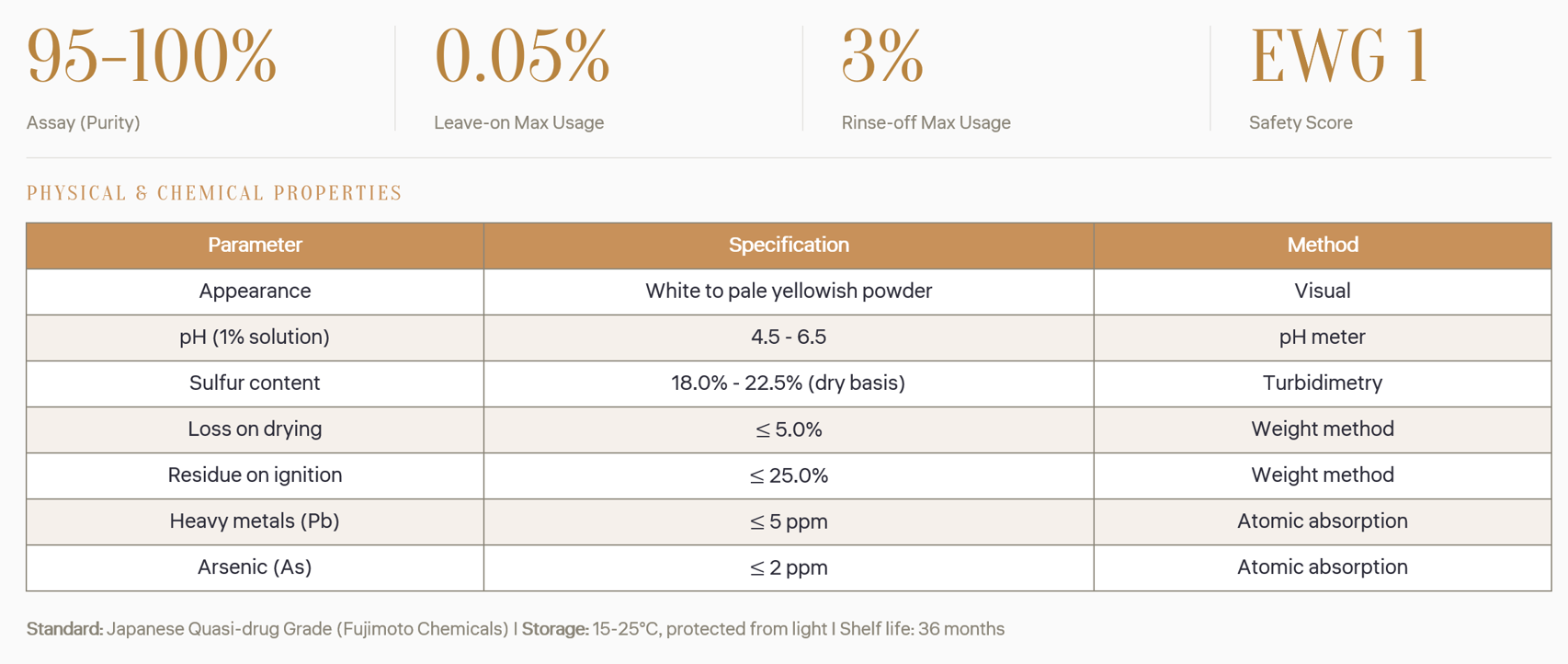
Use levels: maximum reported concentrations — 4.6% rinse-off (US industry survey, CIR 2025); 3% leave-on (China IECIC).

Within these reported use levels, PuriActives® SH50 is assessed as safe as used (CIR, Int. J. Toxicol., 2025) and is listed in China’s IECIC inventory.

12 · APPLICATIONS · 应用场景

Application Directions

Skincare

Hydrating serums & essences — fast-absorbing water-phase hydration forming the formula’s moisture backbone.

Daily moisturizers & barrier creams — sustained surface hydration and comfort in leave-on formulas.

Sheet & sleeping masks — high-dose water delivery in intensive-care concepts.

Facial mists & toners — light, non-sticky all-day water replenishment.

Sensitive-skin lines — gentle, sugar-based hydration with a well-documented safety record.

After-sun & post-procedure care — hydration support for stressed, dehydrated skin.

Men’s care — zero-burden hydration with no occlusive greasiness.

Body lotions & hand care — everyday barrier hydration at economical use levels.

Hair & Scalp Care

Moisturizing shampoos — surface-substantive hydration that remains after rinse-off.

Conditioners & hair masks — water-plasticized softness and improved combability.

Leave-in sprays & hair serums — lasting moisture balance and frizz management.

Scalp tonics & essences — scalp hydration is the foundation of comfort.

Curly & textured hair care — keeping moisture where it is needed most.

Anti-dryness repair lines — buffering the humidity swings that drive hygral fatigue.

13 · STARTING POINTS · 开发起点

Formulation Inspiration

Water-Barrier Hydrating SerumRole of SH50: 1–3% to build a multi-layer hydration backbone, within reported use levels.Pair with: hyaluronic acid, glycerin, panthenol.Positioning: a daily hydrating serum for all skin types. 24-Hour Moisturizing CreamRole of SH50: continuous water supply in the emulsion water phase.Pair with: ceramides, squalane, shea butter.Positioning: a barrier-comfort cream for day and night.
Scalp Comfort EssenceRole of SH50: scalp hydration and fermentable-sugar care in a leave-on water-based formula.Pair with: niacinamide, caffeine, gentle soothing agents.Positioning: a light, leave-on scalp treatment. Hydrating Repair Hair MaskRole of SH50: replenishing fiber moisture in an intensive rinse-off base.Pair with: cationic conditioners, hydrolyzed proteins, plant oils.Positioning: a weekly deep-hydration treatment.

These concepts are starting points for development discussions; suggested dosages remain within the reported cosmetic use concentrations for saccharide hydrolysate.

14 · SUMMARY · 核心总结

Why PuriActives® SH50

01 Advanced water management. A low-molecular-weight saccharide humectant system that binds water through dense hydroxyl chemistry and keeps it in the stratum corneum.

02 Barrier support. Hydration is structural: adequate water content supports desquamation, surface cohesion, and controlled water loss.

03 Consumer-perceivable comfort. Softer touch, smoother surface, less tightness — the sensory signature of hydrated skin and hair.

04 Skin + hair in one. One INCI, two categories: the same water-binding logic serves facial, body, scalp, and hair care.

05 Formulation-friendly. Simple water-phase addition, no format restrictions, globally compliant — CIR assessed safe as used, FDA GRAS background, listed in China IECIC.

What it is — a purified saccharide system · Why it matters — water defines skin and hair quality · Why choose it — simple, safe, versatile

15 · EVIDENCE BASE · 证据基础

Scientific References

[1] Johnson W Jr, Bergfeld WF, Belsito DV, et al. Safety Assessment of Anhydrogalactose, Anhydroglucitol, Anhydroxylitol, Arabinose, Psicose, Saccharide Hydrolysate, and Saccharide Isomerate as Used in Cosmetics. Int. J. Toxicol. 2025; 44(4_suppl): 93S–120S. DOI: 10.1177/10915818251384580

[2] Rawlings AV, Harding CR. Moisturization and skin barrier function. Dermatol. Ther. 2004; 17(Suppl. 1): 43–48. DOI: 10.1111/j.1396-0296.2004.04S1005.x

[3] Fowler JF Jr. Understanding the role of natural moisturizing factor in skin hydration. Pract. Dermatol. 2012; 9: 36–40.

[4] Verdier-Sévrain S, Bonté F. Skin hydration: a review on its molecular mechanisms. J. Cosmet. Dermatol. 2007; 6(2): 75–82. DOI: 10.1111/j.1473-2165.2007.00300.x

[5] Fluhr JW, Tfayli A, Darlenski R, et al. Glycerol and natural sugar-derived complex modulate differentially stratum corneum water-binding properties and structural parameters in an in vitro Raman-desorption model. J. Biophotonics 2023; 16(1): e202200201. DOI: 10.1002/jbio.202200201

[6] Gournay A, Navarro R, Mathieu J, Rivière M. Water retention of treated stratum corneum measured by a coupling method: thermal desorption–mass spectrometry. Int. J. Cosmet. Sci. 1995; 17(4): 165–172.

[7] Hong KB, et al. Changes in the diversity of human skin microbiota to cosmetic serum containing prebiotics: results from a randomized controlled trial. J. Pers. Med. 2020; 10(3): 91. DOI: 10.3390/jpm10030091

[8] Berardesca E, Abril E, Serio M, Cameli N. Effects of topical gluco-oligosaccharide and collagen tripeptide F in the treatment of sensitive atopic skin. Int. J. Cosmet. Sci. 2009; 31(4): 271–277. DOI: 10.1111/j.1468-2494.2009.00495.x

[9] Le Bourgot C, Meunier C, Gaio E, et al. Effects of short chain fructo-oligosaccharides on selected skin bacteria. Sci. Rep. 2022; 12: 9702. DOI: 10.1038/s41598-022-13093-5

[10] Petrov A, Ćorović M, Milivojević A, et al. Prebiotic effect of galacto-oligosaccharides on the skin microbiota and determination of their diffusion properties. Int. J. Cosmet. Sci. 2022; 44(3): 309–319. DOI: 10.1111/ics.12778

[11] Zeng M, Li Y, Cheng J, Wang J, Liu Q. Prebiotic oligosaccharides in skin health: benefits, mechanisms, and cosmetic applications. Antioxidants 2025; 14(6): 754. DOI: 10.3390/antiox14060754

[12] Yu Y, Yang W, Wang B, Meyers MA. Structure and mechanical behavior of human hair. Mater. Sci. Eng. C 2017; 73: 152–163. DOI: 10.1016/j.msec.2016.12.008

[13] Wortmann FJ, Stapels M, Chandra L. Humidity-dependent bending recovery and relaxation of human hair. J. Appl. Polym. Sci. 2009; 113(5): 3336–3344. DOI: 10.1002/app.30336

[14] Robbins CR. Chemical and Physical Behavior of Human Hair. 5th ed. Berlin: Springer; 2012.

[15] Kanlayavattanakul M, Lourith N. Biopolysaccharides for skin hydrating cosmetics. In: Polysaccharides. Cham: Springer; 2015. p. 1867–1892. DOI: 10.1007/978-3-319-16298-0_29

Disclaimer

This document is prepared by PuriPharm Co., Ltd. for technical communication on cosmetic ingredients only and does not constitute any drug or medical claim. Third-party literature data are cited as technical background; the cited studies evaluated saccharide systems of the same class as, but not identical with, this product. Customers should independently verify the suitability and regulatory compliance of their finished formulations. PuriActives® is a trademark of PuriPharm Co., Ltd.

PURIPHARM CO., LTD.

PuriActives® SH50

Smarter sugar science for modern beauty — skin & hair hydration, from molecule to market.

INCI — SACCHARIDE HYDROLYSATE · CAS 8013-17-0

PuriPharm Co., Ltd. — Technical Product Report

Clinical Evidence Review of the Dermatological Benefits of Retinal

CLINICAL EFFICACY EVIDENCE REVIEW

Clinical Evidence Review of Retinal (Retinaldehyde) for Skin Benefits

NanoActive® RAL nano-encapsulated retinal · Focus on pore improvement and anti-wrinkle efficacy · Peer-reviewed literature + proprietary Intertek human efficacy data

KEY NUMBERS

More than 30 years of clinical evidence focused on pores and wrinkles

Evidence base Randomized trials Wrinkle improvement Pore improvement
19 human clinical studies1994–2026 6+ RCTs −43.2%wrinkle-count improvement in 28 days with liposomal RAL +20%pore improvement after 8 weeks with a 0.1% retinal serum

Evidence focus

Required focus: pore appearance · wrinkle reductionAdditional benefits: skin texture · elasticity/firmness · pigment evenness · barrier/TEWL · redness · tolerability and safety

PuriPharm Co., Ltd. · Compiled from RCTs and international peer-reviewed journals, prioritizing US/global evidence · September 2026

EXECUTIVE SUMMARY

More than three decades of peer-reviewed evidence support the skin benefits of retinal

Retinal (retinaldehyde) is the immediate metabolic precursor of retinoic acid. More than 30 years of peer-reviewed human evidence span international journals including J Am Acad Dermatol, Dermatology, J Cosmet Dermatol, J Drugs Dermatol (US), and Dermatol Ther.

  • Wrinkles: ≥10 human studies of 0.05–0.1% RAL, ranging from a 7.6% reduction in crow’s-feet depth at 8 weeks (RCT; comparable with glycolic-acid peels) to 27–34% reductions in wrinkle scores at 90 days in the largest cohort (n=1,462).
  • Pores: A 2024 US JDD study reported a 20% improvement in pore appearance after 8 weeks with a 0.1% retinal serum (P<0.0001). A nanovesicular RAL study showed a 23.6% reduction in sebum after 4 weeks and significant reductions in open and closed comedones—the mechanistic basis for improved pore appearance.
  • Liposomal / nano-encapsulated delivery: Human studies across four delivery technologies—multilamellar vesicles, liposomes, niosomes, and exosomes—reported efficacy comparable or superior to non-encapsulated comparators with good tolerability. In a proprietary 4-week Intertek human test of NanoActive® RAL serum (n=30), crow’s-feet count decreased 31.0%, forehead-wrinkle count decreased 27.7%, and skin-tone ITA° increased 12.0% (all P<0.001), with no adverse events.

Concentration window

All pivotal human studies were conducted at 0.05–0.1%: Creidi 1998 (0.05%); Kwon 2018 (0.05% vs 0.1%); Rouvrais 2018 / JDD 2024 / liposomal 3RC (0.1%); and encapsulated-delivery trials (0.05% and 0.1%).

A 24-week split-face study in 2026 found significant wrinkle improvement with 0.1% in facial areas where 0.05% did not reach significance. In Kwon 2018, only the 0.1% group showed a significant decline in melanin index.

Formulation recommendation: 0.05% for sensitive-skin or daily-use positioning; 0.1% to maximize wrinkle and tone-evening benefits. NanoActive® RAL nano-encapsulated retinal covers this concentration window.

Sources: Creidi 1998 (PMID 9843009); Cordero 2011 (PMID 21649816); Rouvrais 2018 (PMID 30027612); JDD 2024 (PMID 39496127); Kim 2021 (PMID 34587353); Brown 2023 (Springer 10.1007/s13555-023-01004-z)

INGREDIENT POSITIONING

Where retinal sits in the retinoid metabolic pathway

Retinyl esters Retinol Retinaldehyde Retinoic acid
Retinyl esters Retinoltwo oxidation steps Retinaldehydeone oxidation step → active acid Retinoic acidreceptor-active

Retinal is only one enzymatic oxidation step from the receptor-active form, retinoic acid, whereas retinol requires two. Retinal therefore combines high biological activity with substantially better tolerability than retinoic acid—a position confirmed in head-to-head clinical studies and authoritative reviews.

Keratinocytes convert retinal to retinoic acid only at specific stages of differentiation, creating a more controlled, self-limiting supply of active acid. This is the biological basis of its lower irritation potential. Retinal also has direct activity against Cutibacterium acnes, attributable to its aldehyde group—an effect not shared by retinol or retinoic acid.

Sources: Saurat 1994 (PMID 7798613); Fluhr 1999 (PMID 10473963); Milosheska & Roškar 2022 (Adv Ther); Pechère 2002 (Dermatology)

EVIDENCE LANDSCAPE

1994–2026: an evidence base led by European, US, and international studies

Figure 1. Human clinical evidence landscape. Bubble size represents sample size on a logarithmic scale; color indicates study region. Two South Korean RCTs provide rare controlled evidence for encapsulated vesicular delivery.

Source: 19 human studies (1994–2026) summarized in Table 1 of the report

ANTI-WRINKLE · FOUNDATIONAL RCT

Creidi 1998: the foundational randomized trial of retinal for wrinkles

  • Design: randomized, double-blind, vehicle-controlled, full-face study; n=125 participants with facial photodamage; 44 weeks.
  • Groups: 0.05% retinaldehyde cream vs 0.05% retinoic-acid cream vs vehicle. Silicone replicas of crow’s feet were assessed by optical profilometry.
  • Results: At week 18, retinaldehyde and retinoic acid significantly reduced wrinkle and roughness features; the vehicle produced no statistically significant change. Benefits were maintained through week 44.
  • Tolerability: Retinaldehyde was well tolerated throughout; retinoic acid caused more local irritation and reduced adherence.

Why this study is foundational

It established the core positioning of retinaldehyde as providing efficacy comparable with retinoic acid but substantially better tolerability. Nearly all subsequent cosmetic-retinoid reviews cite this study, and its 18-week onset window became a benchmark for later study durations, including liposomal RAL programs. Objective endpoints—optical profilometry and silicone replicas—provide quantifiable, reproducible claim support.

Source: Creidi et al. 1998, J Am Acad Dermatol (PMID 9843009)

ANTI-WRINKLE · LARGE-SAMPLE AND LONG-TERM EVIDENCE

Large cohorts and long-duration studies confirm wrinkle and structural improvements

Study Design / sample Duration Key anti-wrinkle results
Cordero 2011J Cosmet Dermatol · international multicenter Open-label, n=1,462 90 days Crow’s feet −27%; perioral −34%; nasolabial folds −20%; forehead −19% (all P<0.001; profilometry confirmed); elasticity +32–33%
Deda 2026Poland · double-blind split-face n=56; age 30–58 24 weeks 0.1% RAL significantly improved wrinkle parameters (0.05% did not reach significance); dermal density by 50-MHz ultrasound improved comprehensively, suggesting neocollagenesis; elasticity R2 +11.6–12.8%
Rouvrais 2018France · RCT vs glycolic-acid peels n=55 8 weeks Crow’s-feet depth −7.61% (P=.0007), comparable with three professional peels (20%/50%/70%); texture improvement significantly favored RAL (between-group P=.0252); 12-fold fewer adverse signs

Cumulative long-term benefit

Deda 2026 is currently the longest split-face controlled retinal study. It provides instrument-based evidence of cumulative benefit, with dermal density continuing to rise between weeks 12 and 24.

Sources: Cordero 2011 (PMID 21649816); Deda 2026 (PMC12928007); Rouvrais 2018 (PMID 30027612)

ANTI-WRINKLE · ENCAPSULATED RETINAL

Human anti-wrinkle evidence for encapsulated delivery

−43.2%

28-day improvement in wrinkle count with liposomal RAL 0.1% + retinoid (P<0.001)

Brown 2023 · Dermatol Ther (Spain/Europe)Among 32 participants, including those with sensitive skin, crow’s-feet wrinkle count decreased in 100%; elasticity improved 13.9%, firmness 5.6%, and skin-tone evenness 7.0%, without a retinization period.

Kim 2021 · split-face RCT (South Korea; identified)Multilamellar-vesicle retinal (MLV-RAL) 0.05%/0.1% creams were compared with retinol at matched concentrations. After 8 weeks, wrinkle depth (Antera 3D), hydration, elasticity, and facial contour improved significantly; the MLV-RAL side outperformed the retinol side on every objective measure except dermal density. Neither side had adverse events.

Gold 2026 · J Cosmet Dermatol (US)Twenty women (Fitzpatrick I–VI) used exosome-encapsulated retinal for 12 weeks. Wrinkles/fine lines, erythema, tone, and texture improved significantly from week 2; 100% showed global facial aesthetic improvement at weeks 8 and 12, with no product-related adverse events.

Truchuelo-Díez 2026 · double-blind RCT (Spain)A combination of RAL 0.05% + retinol 0.3% significantly reduced wrinkle depth by day 28 and wrinkle amplitude at study end. Retinol 0.5% alone showed only a trend, indicating that low-dose retinal enabled efficacy approaching that of nearly twice the retinol concentration.

Sources: Brown 2023 (Springer 10.1007/s13555-023-01004-z); Kim 2021 (PMID 33569865); Gold 2026 (PMID 41735774); Truchuelo-Díez 2026 (MDPI 2079-9284/13/3/133)

PORE IMPROVEMENT · DIRECT ENDPOINT

A US clinical study directly documented improvement in pore appearance

+20%

Improvement in pore appearance after 8 weeks with a 0.1% retinal serum (P<0.0001)

JDD 2024 · J Drugs Dermatol (US)Thirty-two women—47% with skin of color and 57% with sensitive skin—applied the product to the face, neck, and chest three nights per week. Concurrent improvements were 12% for facial fine lines, 19% for chest fine lines, 19% for hyperpigmentation, and 5% for texture. Patch testing showed no sensitization or irritation.

Claim-use caveat

This was a single-arm, multicomponent finished-product study without a vehicle control. It therefore supports the statement that “a 0.1% retinal formulation improved pore appearance by 20% in 8 weeks,” not independent attribution to a single ingredient. In technical dossiers, it should be cited as third-party clinical background for the ingredient category and concentration.

Why it is useful for global marketing

The US setting, expert grading plus instrumental measurement, and inclusion of people with sensitive skin and skin of color make its demographics relevant to global markets.

Connection to mechanism

Visible enlarged pores are driven mainly by sebum output and follicular keratinization/plugging. The following nanovesicular RAL study provides mechanistic support for this direct endpoint.

This is the strongest single reference for a pore claim involving a 0.1% retinal product: US-based, peer reviewed, and inclusive of sensitive skin and skin of color.

Source: J Drugs Dermatol 2024 (PMID 39496127)

PORE IMPROVEMENT · MECHANISTIC BASIS

Nano-encapsulated RAL reduces sebum and comedones—the mechanistic chain for pore improvement

−23.6%

Decrease in sebum after 4 weeks with 0.05% RAL nanovesicles (Sebumeter)

Kim 2021 · J Cosmet Dermatol (South Korea; identified)Twenty-three participants with mild-to-moderate acne were studied for 4 weeks. Closed and open comedones decreased significantly at weeks 2 and 4 (P<0.05); sebum fell from 327.95 to 250.65 μg/cm²; scaling index declined; and no irritation occurred. Follicle-penetrating vesicles delivered RAL to the pilosebaceous unit—the anatomical site where comedones and enlarged pores arise.

International comedolytic evidence from France

Morel 1999 (Clin Exp Dermatol; multicenter RCT, n=74): 0.1% RAL gel + 4% erythromycin significantly improved comedones and microcysts (P=0.005), with excellent local tolerability.

Poli 2005 (Dermatology; double-blind, vehicle-controlled, multicenter): 0.1% RAL / 6% glycolic acid significantly reduced papules, pustules, and comedones from month 1; at month 3, overall improvement was about twice that with vehicle (86.1% vs 58.8%).

Retinoid-class corroboration: A tazarotene 0.1% RCT (n=563) showed significantly better pore-size outcomes than vehicle at week 12. A 2025 network meta-analysis of 23 RCTs / 3,905 participants confirmed that topical retinoids significantly improve fine lines, providing the highest evidence tier for the pathway.

Claim linkage: Comedone clearance and normalization of follicular keratinization are recognized routes to visibly smaller pores; the RAL-specific data above provide direct support.

Sources: Kim 2021 (PMID 34587353); Morel 1999 (PMID 10564319); Poli 2005 (PMID 15724103); Lin 2025 (PMID 40707570)

QUANTITATIVE SUMMARY

Magnitude of efficacy improvements reported across studies

Figure 2. Improvements from baseline reported in human clinical studies. Gold = pore/sebum endpoints (required focus); navy = wrinkle/texture/pigment/elasticity endpoints.

Sources: Brown 2023; Cordero 2011, Kim 2021, Kwon 2018, Rouvrais 2018 (J Cosmet Dermatol); J Drugs Dermatol 2024

ADDITIONAL EFFICACY EVIDENCE

Texture · elasticity · pigmentation · redness · tolerability

Skin texture and roughness

Kwon 2018 (double-blind RCT, South Korea): texture improved 13.7% with 0.1% and 12.6% with 0.05%, measured by Antera 3D. Rouvrais 2018: 0.1% RAL cream improved texture more than professional glycolic-acid peels (between-group P=.0252).

Elasticity / firmness / dermal density

Diridollou 1999: epidermal thickness and skin elasticity increased significantly (P<0.01). Deda 2026: comprehensive gains in dermal density and elasticity R2 +11.6–12.8% at 24 weeks. Brown 2023: elasticity +13.9% and firmness +5.6% in 28 days.

Hyperpigmentation and tone evenness

Kwon 2018: melanin index declined significantly only in the 0.1% group (−6.5%). JDD 2024 (US): hyperpigmentation improved 19% (P<0.0001; 47% skin of color). Cordero 2011: pigmentation scores decreased 31–34% over 90 days.

Redness and rosacea-prone skin

Vienne & Ochando 1999 (Dermatology): redness and swelling decreased in 75% of 23 participants with rosacea. Gold 2026: erythema improved significantly from week 2. Differentiated positioning: “a retinoid suitable for sensitive, redness-prone skin.”

Tolerability and safety

Fluhr 1999 (n≈355): retinoic acid caused significantly more erythema/scaling than retinaldehyde, whose irritation approached placebo levels. Sachsenberg-Studer 1999 (n=357) confirmed tolerability and absence of phototoxicity. Recent studies reported zero adverse events in the MLV-RAL RCT; Deda 2026 observed irritation in only 1/56 and no thinning of the stratum corneum.

Activity against C. acnes

Pechère 2002 (Dermatology): retinaldehyde showed direct antibacterial activity against C. acnes, attributable to its aldehyde group; retinol and retinoic acid did not. This provides supplementary mechanistic support for the pore/comedone narrative.
Sources: Kwon 2018; Diridollou 1999; JDD 2024; Vienne & Ochando 1999; Fluhr 1999 (PMID 10473963); Pechère 2002

DELIVERY-SYSTEM RATIONALE

Why retinal benefits from liposomal / nano-encapsulated delivery

Retinal is intrinsically photolabile and readily oxidized, making stability and controlled release central formulation challenges. Authoritative reviews state that nanoformulations—liposomes, multilamellar vesicles, niosomes, solid lipid nanoparticles, and nanostructured lipid carriers—can simultaneously improve retinoid stability, skin penetration, and irritation profiles.

Human evidence for encapsulated retinal spans four delivery technologies: multilamellar vesicles (Kim 2021), liposomes (Brown 2023), niosomes (Kim 2021), and biomimetic exosomes (Gold 2026). All reported efficacy comparable or superior to non-encapsulated comparators with good tolerability.

Preclinical delivery data

  • Pisetpackdeekul 2016 (Int J Nanomedicine): chitosan-grafted “pro-retinaldehyde” nanoparticles improved stability, enabled sustained release, and reduced irritation. In a split-face comparison, 0.025% retinaldehyde nanoparticle hydrogel outperformed 0.025% tretinoin hydrogel on texture parameters in aged skin.
  • Limcharoen 2020 (ACS Biomater Sci Eng): the same platform achieved sustained delivery, epidermal proliferation/differentiation activity, and follicular penetration.
  • Nayak 2018 (J Drug Targeting): a nanostructured lipid carrier co-loading coenzyme Q10 and 0.05% retinaldehyde produced significant in-vivo anti-wrinkle effects with a better safety profile.

Follicular penetration directly supports pore positioning: vesicular carriers deliver retinal to the pilosebaceous unit, where comedones and enlarged pores arise. PuriPharm NanoActive® RAL was developed using this nano-encapsulated retinal approach and directly builds on the human and preclinical delivery evidence above.

Sources: Milosheska & Roškar 2022 (Adv Ther); Zhong 2024 (J Cosmet Dermatol 10.1111/jocd.16415); Pisetpackdeekul 2016; Limcharoen 2020; Nayak 2018

PROPRIETARY EFFICACY VALIDATION

Four-week human efficacy test of NanoActive® RAL serum

Sponsor: Huzhou PuriPharm Biomedical Technology Co., Ltd. · Testing laboratory: Intertek (Shanghai; report CRS-2020-PR-01) · Product: nano-encapsulated retinal serum · Single-center, open-label, before-and-after study · All 30 participants completed (Chinese women; mean age 49.0, range 38–55) · Whole-face use twice daily for 4 weeks · Instruments: PRIMOS 3D wrinkle analysis and Skin-Colorimeter CL400 · No adverse events
Instrumental results (baseline W0 → week 4 W4)

Site / instrument Parameter W0 mean W4 mean Improvement P value
Crow’s feet (PRIMOS) Count 273.87 188.83 −31.05% <0.001***
Area (%) 18.16 15.90 −12.45% <0.001***
Length (μm) 218.20 191.77 −12.11% <0.001***
Forehead wrinkles (PRIMOS) Count 360.87 261.00 −27.67% <0.001***
Area (%) 18.54 16.32 −11.98% <0.001***
Length (μm) 311.90 288.07 −7.64% <0.001***
Skin tone (CL400) L* value 59.10 60.63 +2.59% <0.001***
ITA° value 31.35 35.11 +12.02% <0.001***

Participant self-assessment (n=30)

  • Overall satisfaction 96.7%
  • Firmer, more elastic skin 93.3%
  • Brighter tone / improved radiance 93.3%
  • Gentle and non-irritating 93.3%
  • Finer, smoother skin 90.0%
  • Improved under-eye fine lines 90.0%
  • Whitening effect 83.3%

Source: Intertek test report CRS-2020-PR-01 (2020-10-30); all instrumental improvements P<0.001 (***); sponsor: Huzhou PuriPharm Biomedical Technology Co., Ltd.

CORE EVIDENCE TABLE

Core human clinical evidence table (selected studies; full version in report Table 1)

Study (journal) Design n Region RAL concentration Key efficacy result
Creidi 1998, JAAD Double-blind RCT 125 France 0.05% Significant improvement in wrinkles/roughness by profilometry from week 18; better tolerability than retinoic acid
Cordero 2011, J Cosmet Dermatol Open multicenter 1,462 International 0.05% Crow’s feet −27%; perioral −34%; elasticity +32–33% at 90 days
Rouvrais 2018, J Cosmet Dermatol RCT vs peels 55 France 0.1% Crow’s-feet depth −7.61% at 8 weeks; comparable with glycolic peels; superior texture outcome
Brown 2023, Dermatol Ther Clinical + in vitro 32 Spain/EU Liposomal 0.1% Wrinkle count −43.2% at 28 days; crow’s feet decreased in 100%
JDD 2024, J Drugs Dermatol Open instrumental 32 US 0.1% Pores +20% (P<0.0001) at 8 weeks; fine lines +12%; pigmentation +19%
Deda 2026, J Cosmet Dermatol-indexed Double-blind split-face 56 Poland 0.1% vs 0.05% Significant wrinkle improvement with 0.1%; comprehensive rise in dermal density at 24 weeks

Six representative studies are shown. The complete 19-study evidence table—including labels for Korean studies, multicomponent finished products (†), and tolerability—appears in Section 7 of the report.

All studies were published in peer-reviewed international journals; PMID / DOI links are provided in the report.

CLAIM RECOMMENDATIONS

Evidence-supported cosmetic claim language

Claim area Suggested cosmetic-compliant wording Supporting evidence
Anti-wrinkle Helps reduce the appearance of fine lines and wrinkles ≥10 human studies, including 4+ RCTs; Creidi 1998, Rouvrais 2018, Brown 2023; proprietary 4-week Intertek study (crow’s feet −31.0%)
Pore refinement Visibly improves the appearance of pores; helps reduce excess sebum and unclog pores JDD 2024 (direct endpoint); Kim 2021 niosome; Morel 1999 / Poli 2005 (comedones)
Texture / elasticity / even tone Improves skin texture and firmness; helps promote a more even-looking skin tone Kwon 2018, Diridollou 1999, Cordero 2011, JDD 2024
Redness / sensitive skin Suitable for sensitive and redness-prone skin Vienne & Ochando 1999; Gold 2026; Fluhr 1999 (tolerability)

Application note

All studies used finished products containing 0.05–0.1% retinal. NanoActive® RAL falls within this window. Claim validation should reuse instrumental endpoints from the cited trials, such as Antera 3D and Sebumeter.

Full sources and qualifying conditions for each claim are provided in Section 8 of the report.

COMPLIANCE AND LIMITATIONS

Considerations when using this evidence package

  • Multicomponent finished-product studies (marked † in the report): Some high-value studies tested multicomponent finished products. Their results support the ingredient category and concentration, not independent attribution to a specific raw material. Cite them as third-party technical background and state that in-vitro data do not represent finished-product clinical efficacy.
  • Acne-treatment language: Treatment claims in trials by Morel, Poli, Dréno, and others must be softened in cosmetic jurisdictions to language such as “blemish-prone skin” and “helps unclog pores.”
  • South Korean studies: Two Korean studies are clearly identified. If a client requires non-Asian evidence only, French, Polish, Spanish, and US studies still form a complete anti-wrinkle and pore narrative in the core evidence table.
  • Positioning of proprietary data: The 4-week Intertek test of NanoActive® RAL serum (n=30) was a single-center, open-label, before-and-after study and can serve as proof of concept for finished-product efficacy. For a higher evidence grade, upgrade to a randomized, controlled, 8–12-week instrumental study using Antera 3D + Sebumeter + Cutometer. The Deda 2026 and JDD 2024 protocols provide publication-grade templates that can be reused.

Detailed compliance language and disclaimers are provided in Section 8 and in the final statement of the report.

CONCLUSION

Retinal: more than 30 years of clinical evidence focused on pore improvement and anti-wrinkle efficacy

  • Anti-wrinkle: ≥10 human studies and 4+ RCTs, fully covering the 0.05–0.1% concentration window.
  • Pores: A direct US JDD 2024 endpoint (+20% at 8 weeks), supported by mechanistic evidence for reduced sebum and comedones with nanovesicles.
  • Encapsulated delivery: Human studies across four carrier technologies show comparable or superior efficacy with good tolerability.
  • Proprietary validation: In a 4-week Intertek test of NanoActive® RAL serum (n=30), crow’s-feet count fell 31.0%, forehead-wrinkle count 27.7%, and ITA° increased 12.0% (all P<0.001), with no adverse events.

PuriPharm Co., Ltd. · NanoActive® RAL nano-encapsulated retinal · PuriActives® efficacy ingredient seriesThis material is a scientific literature compilation supporting cosmetic-ingredient development. It summarizes third-party published research for technical reference only and does not constitute proprietary clinical data, medical advice, or evidence for medicinal claims. Clients should verify the applicability of every claim and citation under the regulations of their target markets.

© 2026 PuriPharm Co., Ltd. · Retinal Clinical Efficacy Evidence Review

NanoActive™Retinal – Bakuchiol 纳米包裹视黄醛-补骨脂酚

NanoActive™Retinal – Bakuchiol

Nano-Encapsulated Retinal–Bakuchiol

Dual-Pathway Retinoid Renewal · Nano-Delivery Technology

INCI NAME — RETINAL, BAKUCHIOL

PuriPharm Co. Ltd. · Technical Marketing Presentation

02 · RETINOID CARE — THE NEXT CHAPTER

Retinoid Care Is Entering Its Next Stage

Retinoids remain the most evidence-supported active family for managing skin photoaging. The questions facing brands and formulators have moved beyond whether a formula contains a retinoid to four more fundamental issues: Can the active be converted efficiently? Can it remain stable? Can consumers sustain long-term use? Does the formula provide sufficient design freedom?

Core question Explanation
01 Efficacy Retinoids must be converted to retinoic acid to act; the conversion pathway determines the speed and intensity of activity.
02 Stability High activity comes with sensitivity to light and oxygen; active retention during shelf life and in-formula is essential.
03 Tolerance Irritation determines adherence, and adherence determines whether long-term benefits can be realized.
04 Formulation Dosage form, sensory profile and system compatibility define the space for product differentiation.

The next-stage answer: advanced actives × complementary mechanisms × nano delivery.

03 · PRODUCT OVERVIEW

NanoActive™ Retinal-Bakuchiol

Identity Information
Product name Nano-Encapsulated Retinal–Bakuchiol
INCI name Retinal, Bakuchiol
Technology platform NanoActive™ nano-encapsulation and delivery system
Application settings Dual use across skin care and scalp care
01 Biology: Retinal is the direct precursor of retinoic acid; one oxidation step drives advanced retinoid biology.
02 Synergy: Bakuchiol supports retinol-like gene expression, antioxidant defense, inflammatory modulation, extracellular-matrix biology and skin homeostasis.
03 Delivery: NanoActive™ improves protection, dispersion, formulation suitability and delivery performance for sensitive actives.

This is not a simple ingredient blend. It is a next-generation dual-pathway renewal platform integrating high-efficiency renewal, complementary mechanisms, nano delivery and both skin and scalp applications.

04 · 01 · BIOLOGY — RETINAL

Why Retinal: Closer to the Active EndpointRetinyl esters → Retinol → Retinal → Retinoic acid

Metabolic node Description
Retinyl esters Storage form; hydrolyzed to retinol.
Retinol Requires a rate-limiting oxidation step to form retinal.
Retinal An advanced cosmetic retinoid that requires only one oxidation step to form retinoic acid.
Retinoic acid The active retinoid endpoint; a drug active not permitted as a cosmetic ingredient.
Key advantage Data and significance
Approximately 3× biological activity Bypassing retinol’s first rate-limiting oxidation step gives retinal approximately three times the retinoid biological activity of retinol.
At least 11× faster conversion Conversion of retinal to retinoic acid is estimated to be more than 11 times faster than the retinol pathway and occurs in both differentiated and undifferentiated keratinocytes.

Retinal is the direct precursor of retinoic acid—an advanced retinoid positioned closer to the active endpoint.

Siegenthaler G, Saurat JH, Ponec M. Biochem J. 1990;268(2):371–378. | Brown A, et al. Dermatol Ther (Heidelb). 2023;13(10):2299–2317.

05 · 01 · BIOLOGY — ADVANCED RETINOID BIOLOGY

One Oxidation Step Directly Drives Classical Retinoid SignalingRetinal → one-step oxidation → retinoic acid → RAR/RXR nuclear receptors → target-gene transcription → visible epidermal and dermal renewal

01 Retinal undergoes one oxidation step inside keratinocytes to form retinoic acid.
02 Retinoic acid binds nuclear RAR receptors and forms heterodimers with RXR.
03 RAR-RXR binds promoter regions and regulates target genes involved in skin biology.
04 The result is visible renewal across both the epidermis and dermis.
Level Biological effects
Epidermis Accelerated epidermal renewal; regulation of keratinocyte differentiation; increased epidermal thickness; upregulation of RA-activity markers such as CRABP-II; regulation of barrier- and hydration-related genes; improved desquamation, texture refinement and tone uniformity.
Dermis Support for fibroblast function and extracellular-matrix remodeling; new collagen deposition; inhibition of UV-induced MMP-related matrix degradation; restoration of the elastic-fiber network; visible outcomes in wrinkles, texture, laxity and photoaging pigmentation.

A complete retinoid-biology pathway drives systematic renewal from the epidermis to the dermis.

Saurat JH, et al. J Invest Dermatol. 1994;103(6):770–774. | Fisher GJ, et al. Nature. 1996;379(6563):335–339. | Xiao JH, et al. J Biol Chem. 1995;270(7):3001–3010.

06 · 01 · BIOLOGY — EPIDERMIS TO DERMIS

Retinal: From Epidermal Renewal to Dermal RemodelingEpidermis: renewal, differentiation, thickness and texture; Dermis: fibroblasts, collagen, elastic fibers, ECM and MMP management

Evidence Finding
Human study: epidermis and elasticity After one year of 0.05% retinaldehyde, high-resolution ultrasound and rheological measurements showed significant increases in epidermal thickness and skin elasticity (p < 0.01), with a trend toward increased dermal thickness.
Ex vivo: repair of UVA damage In a UVA-photodamaged human skin model, two weeks of 0.05% retinaldehyde restored elastic fibers and collagen to levels close to non-photodamaged skin.
Biological effects in human skin Topical retinaldehyde induced typical retinoid effects, including epidermal thickening and CRABP-II expression, while maintaining good tolerance.

Metabolic position → retinoid biology → epidermal renewal → ECM/collagen/elastin support → visible human outcomes: one complete evidence chain.

Diridollou S, et al. Dermatology. 1999;199(Suppl 1):37–41. | Boisnic S, et al. Dermatology. 1999;199(Suppl 1):43–48. | Saurat JH, et al. J Invest Dermatol. 1994;103(6):770–774.

07 · 01 · CLINICAL EVIDENCE — PHOTOAGING

Human Photoaging: Improvement Comparable to Retinoic Acid

Study design Details
Randomized controlled study n=125; 18 weeks; optical profilometry; 0.05% retinaldehyde (n=40) versus 0.05% retinoic acid (n=40) versus vehicle (n=45).
Dimension Result
Efficacy: comparable Both actives significantly reduced wrinkles and skin roughness; no statistically significant efficacy difference was observed between retinaldehyde and retinoic acid. An open study (n=32, four months) also found clear reductions in surface roughness and coarse wrinkles.
Tolerance: better Local irritation was more frequent with retinoic acid and affected adherence. Retinaldehyde caused fewer local adverse reactions and supported better long-term adherence. Comparable efficacy plus better tolerance forms retinal’s core value proposition.

In photoaged human skin, 0.05% retinaldehyde delivered wrinkle and roughness improvements comparable to 0.05% retinoic acid while maintaining significantly better local tolerance.

Creidi P, et al. J Am Acad Dermatol. 1998;39(6):960–965. | Creidi P, Humbert P. Dermatology. 1999;199(Suppl 1):49–52. | Mukherjee S, et al. Clin Interv Aging. 2006;1(4):327–348.

08 · 01 · CLINICAL EVIDENCE — LONG-TERM

Elasticity, Skin Thickness and Long-Term Performance

One-Year Instrumental Study: 0.05% Retinaldehyde

n=21 in the retinaldehyde group versus n=19 in the emollient-control group; high-resolution ultrasound plus echorheometry; measurements at baseline and one year.

01 Temporal epidermal thickness increased significantly versus control (p < 0.01).
02 Skin elasticity improved significantly versus control using suction rheology (p < 0.01).
03 Dermal thickness showed an increasing trend, while skin stiffness showed a decreasing trend.
04 Tolerance remained good throughout, supporting long-term daily use.

Increase in Dermal Thickness with a Non-Ablative Laser Regimen

Randomized double-blind study (n=16); 0.05% retinaldehyde versus vehicle for three months.

Diridollou S, et al. Dermatology. 1999;199(Suppl 1):37–41. | Mordon data cited in Mukherjee S, et al. Clin Interv Aging. 2006;1(4):327–348.

09 · 01 · TOLERANCE PROFILE

High Activity Does Not Have to Mean High Irritation

In long-term clinical use, all three reaction rates were significantly lower with retinaldehyde; between-group analysis p < 0.0001.

Setting Finding
Maximized conditions Retinol and retinaldehyde showed similarly low irritation potential, while retinoic acid was significantly more irritating (p < 0.05). Laser Doppler confirmed an irritant effect for RA but not for ROL/RAL (p = 0.001).
Long-term clinical conditions Retinaldehyde demonstrated clear retinoid biological activity, while rates of erythema, scaling and burning/pruritus were significantly lower than with retinoic acid.
Product implication Efficacy and user experience can coexist, supporting sustained use and repurchase in premium retinoid products.

Fluhr JW, et al. Dermatology. 1999;199(Suppl 1):57–60. | Sachsenberg-Studer EM. Dermatology. 1999;199(Suppl 1):61–63.

10 · 02 · SYNERGY — BAKUCHIOL

Why Bakuchiol

Bakuchiol is a plant-derived molecule with retinol-like gene-expression effects and multi-pathway skin activity. It is more than a natural retinol alternative; it represents an independent multi-pathway biology.

Feature Description
Source and class Derived from the seeds and leaves of Psoralea corylifolia; a meroterpene phenol.
Structure and function Chemically dissimilar to retinoids but functionally analogous to retinol.
Mechanism Does not directly engage the RAR receptor pathway, helping explain its gentler tolerance profile.
Use pattern No reported photosensitivity; suitable for morning and evening use.

Retinol-like gene expression, collagen and ECM support, antioxidant defense, inflammatory-signal modulation, skin homeostasis and barrier support, and pigment management

Antioxidant defense × inflammatory modulation × ECM support × homeostasis maintenance form a second renewal pathway beyond retinal.

Chaudhuri RK, Bojanowski K. Int J Cosmet Sci. 2014;36(3):221–230.

11 · 02 · SYNERGY — GENE EXPRESSION & COLLAGEN

Bakuchiol: Retinol-Like Gene Expression × ECM Support

Evidence dimension Finding
Collagen expression Human dermal fibroblast model; ELISA; untreated control set at 100%; 10 μg/mL. Bakuchiol exceeded retinol for Collagen I and IV expression and was comparable for Collagen III.
Gene-expression profile DNA microarray analysis in a full-thickness reconstructed skin model showed highly similar overall regulation by bakuchiol and retinol, including upregulation of COL1A2, COL4A6, COL9A2, COL17A1, HAS3 and hydration-related AQP3.
Non-classical RA pathway No effect on RA receptor genes such as RARB and RARG, suggesting action through non-classical retinoic-acid signaling and supporting a gentler irritation profile.
12-week human study 0.5% bakuchiol significantly improved fine lines and wrinkles, pigmentation, elasticity, firmness and overall photodamage without the adverse effects commonly associated with retinol therapy.

Chaudhuri RK, Bojanowski K. Int J Cosmet Sci. 2014;36(3):221–230. | Brown A, et al. Dermatol Ther (Heidelb). 2023;13(10):2299–2317.

12 · 02 · BAKUCHIOL — HUMAN EVIDENCE

Comparable Efficacy to 0.5% Retinol with Better Tolerance

Study design: prospective, randomized, double-blind study; n=44; 12 weeks; 0.5% bakuchiol twice daily versus 0.5% retinol once daily; high-resolution facial imaging plus blinded dermatologist grading.

Tolerance difference Description
Retinol More facial scaling and stinging were reported.
Bakuchiol Suitable for morning and evening use, with no reported photosensitivity; offers wider design space for sensitive skin and higher-frequency use.

Head-to-head human evidence shows that bakuchiol was comparable to 0.5% retinol for both wrinkles and pigmentation, with better tolerance.

Dhaliwal S, et al. Br J Dermatol. 2019;180(2):289–296. | Draelos ZD, et al. J Drugs Dermatol. 2020;19(12):1181–1183.

13 · 03 · COMPLEMENTARY BIOLOGY

Two Actives, Two Complementary Biological Systems

Dimension Retinal Bakuchiol Complementary value
Core pathway Direct precursor of retinoic acid → classical RAR retinoid signaling Retinol-like transcriptional response via a non-classical RA pathway Dual-pathway coverage without full overlap
Epidermal action Epidermal renewal, keratinocyte differentiation and epidermal thickness Barrier and homeostasis support; enhancement of differentiation-related genes Renewal plus homeostasis
ECM/collagen Fibroblast function, new collagen deposition and MMP inhibition Collagen I/III/IV expression and ECM support Synthesis promotion × degradation management
Oxidation/inflammation Management of photoaging-related matrix degradation ROS defense and inflammatory-signal modulation A protective environment for high-efficiency activity
Pigment/blemish-prone skin Depigmenting activity, keratinization renewal and C. acnes inhibition Pigmentation improvement and blemish-prone skin support Multi-target clarity and tone management
Tolerance Significantly better than retinoic acid Better than 0.5% retinol in a head-to-head study Long-term-use friendliness for premium products

One pathway is a high-efficiency engine operating through classical RAR signaling; the other is a multi-pathway support system for homeostasis—Retinal × Bakuchiol complementary biology.

14 · 03 · DUAL-PATHWAY RENEWAL

Dual-Pathway Renewal: A More Complete Renewal LogicClassical RAR signaling from retinal plus multi-pathway homeostasis support from bakuchiol

Retinal pathway Bakuchiol pathway
One-step oxidation to retinoic acid Plant-derived meroterpene phenol
RAR-RXR heterodimer and target-gene transcription Retinol-like transcriptional response plus antioxidant and inflammatory modulation; non-classical RA pathway, NF-κB and ROS defense
Epidermal renewal, keratinocyte differentiation, ECM remodeling, collagen homeostasis and MMP management Skin homeostasis, barrier support, ECM support, photoaging defense and pigment management

Dual-pathway retinoid renewal: epidermal renewal · ECM support · oxidative defense · homeostasis maintenance.

15 · 03 · RETINAL + BAKUCHIOL — COMBINED HUMAN EVIDENCE

Combined-System Human Study: Multidimensional Signals in 28 Days

Study design: open-label proof of concept; n=32 women, 65.6% with sensitive skin; once nightly for 28 days; a complex containing 0.1% liposomal retinal plus bakuchiol, with Vigna aconitifolia extract, niacinamide and melatonin.

01 100% of subjects showed a reduction in crow’s-feet count; all 32 of 32 participants improved.
02 Good tolerance: no significant changes in erythema or burning/stinging; no participant, including those with sensitive skin, needed to alter the once-daily regimen.
03 Methods: Cutometer® for firmness R0 and elasticity R2, Primos®-CR for wrinkles and VISIA®-CR for tone; D0–D28 change from baseline; *p<0.05, ***p<0.001.

Note: These data describe the complete active system containing retinal plus bakuchiol and do not isolate the individual contribution of either ingredient.

Brown A, et al. Dermatol Ther (Heidelb). 2023;13(10):2299–2317.

16 · 03 · FROM EFFICACY TO MECHANISM

From Human Efficacy to Molecular Mechanism

01 Enhanced gene expression: In a full-thickness reconstructed human skin model, adding bakuchiol to 0.1% retinal further enhanced retinal’s regulation of keratinocyte-differentiation genes CASP14, KRT14 and TP63 and barrier genes FLG, CDSN and CLDN1. Several changes exceeded the 0.05% retinoic-acid control.
02 No increase in irritation potential: In a reconstructed human epidermis model, ET50 remained >24 hours for both 0.1% retinal alone and retinal + bakuchiol + Vigna aconitifolia extract, maintaining gentleness while improving performance.
03 Mechanistic interpretation: Bakuchiol upregulated CRABP-II and genes related to retinol metabolism, supporting efficient RA signaling and providing a complementary mechanistic explanation for combined-system efficacy.

Ex Vivo UV-Photodamaged Skin Model: Combined System

Marker Change
CRABP-II expression +68%
Hyaluronic acid +71% versus UV-exposed skin
Procollagen I +33%
Degraded collagen −46% by CHP staining
MMP-1 expression −36%
Total collagen +16%, fully preventing UV-induced loss

Scientific boundary: the evidence demonstrates multidimensional efficacy and complementary mechanisms for the combined system; it does not prove strict pharmacological synergy between the two ingredients.

Brown A, et al. Dermatol Ther (Heidelb). 2023;13(10):2299–2317.

17 · 04 · DELIVERY — THE FORMULATION CHALLENGE

Why Nano Delivery Is Needed

Retinal: high activity, high sensitivity Bakuchiol: the dispersion challenge of a lipophilic molecule
Oxidation-sensitive aldehyde structure Lipophilic and naturally incompatible with high-water systems
Light-sensitive, with activity loss under illumination Application and dispersion challenges in high-water systems
Storage-stability challenges Formula uniformity requires technical support
Free active is vulnerable to the formulation environment System compatibility requires optimization

High activity does not automatically equal high performance. An active must be protected, dispersed and delivered before efficacy can be realized in a formula. NanoActive™ encapsulation is designed for sensitive actives.

18 · 04 · DELIVERY — NANOACTIVE™ TECHNOLOGY

Nano-Encapsulation Converts High Activity into High PerformanceNano-carriers encapsulate retinal and bakuchiol across protection, dispersion, delivery and formulation performance

01 Protection: Isolates and protects sensitive actives, reducing direct exposure to light, oxygen and the formulation environment.
02 Dispersion: Improves the dispersion and uniformity of lipophilic actives in high-water systems and optimizes compatibility.
03 Delivery: Supports even delivery and distribution of actives on the skin.
04 Performance: Improves development flexibility across serums, emulsions, gels and other modern formats—converting high activity into high formulation performance.

19 · 04 · FREE ACTIVE vs NANO-ENCAPSULATED

Free Active vs Nano-Encapsulated

Free active NanoActive™ encapsulation system
Light/oxygen/formulation environment: direct exposure to degradation factors Active encapsulation: retinal and bakuchiol loaded into nano-carriers
Activity loss during storage and shelf life Protection from light, oxygen and the formulation environment
Dispersion challenge and limited uniformity in high-water systems Stable and uniform distribution in high-water systems
Restricted delivery, reduced performance and narrower dosage-form choice Uniform delivery and greater design freedom across serums, emulsions, gels and other modern formats

Specific technical parameters such as particle size, encapsulation efficiency, release profile and stability are subject to the PuriPharm product technical documents (TDS/COA).

20 · 05 · APPLICATION — SKIN PERFORMANCE

Wrinkles · Firmness · Elasticity · Renewal

01 Wrinkles and photoaging: RAR-driven epidermal renewal and dermal remodeling; a retinal + bakuchiol system reduced wrinkle count by 43.2% in 28 days (p<0.001); retinaldehyde produced wrinkle and roughness improvement comparable to retinoic acid in an n=125 randomized trial.
02 Firmness and elasticity: Support for Collagen I/III, elastin, ECM and MMP management; after 28 days, elasticity increased 13.9% (p<0.001) and firmness increased 5.6% (p<0.05); one year of 0.05% retinaldehyde significantly improved skin elasticity (p<0.01).
03 Epidermal renewal: Regulation of keratinocyte differentiation and renewal, increased epidermal thickness (p<0.01), and improved texture and radiance—the mechanistic basis for night renewal and Skin Longevity products.
04 Tone improvement: Retinal depigmenting activity and epidermal renewal plus bakuchiol-associated pigment improvement in 59% of subjects; tone uniformity increased 7.0% after 28 days (p<0.05).

Brown A, et al. Dermatol Ther (Heidelb). 2023;13(10):2299–2317. | Diridollou S, et al. Dermatology. 1999;199(Suppl 1):37–41. | Sorg O, et al. Dermatology. 2013;227(3):231–237. | Dhaliwal S, et al. Br J Dermatol. 2019;180(2):289–296.

21 · 05 · APPLICATION — ANTIOXIDANT · BLEMISH-PRONE SKIN

Antioxidant Defense and Blemish-Prone Skin Microenvironment ManagementUV/pollution → ROS → oxidative stress → inflammatory signaling → increased MMP → collagen degradation; bakuchiol supports ROS defense, inflammatory modulation and MMP management

A Distinct Antibacterial Dimension of Retinal

01 In vivo: daily 0.05% retinaldehyde reduced median viable C. acnes density by 10² log/cm² after two weeks; vehicle had no effect.
02 Comedolytic and keratinization-renewal activity was observed in an animal model.
03 Bakuchiol antioxidant and inflammatory-modulating activity supports blemish-prone skin care.
04 Cosmetic language: clarity, balance, keratin renewal, blemish-prone skin care and microenvironment management.

Pechère M, et al. Dermatology. 1999;199(Suppl 1):29–31. | Fort-Lacoste L, et al. Dermatology. 1999;199(Suppl 1):33–35. | Chaudhuri RK, Bojanowski K. Int J Cosmet Sci. 2014;36(3):221–230.

22 · 06 · SKIN & SCALP LONGEVITY

From Skin Longevity to Scalp Longevity

The scalp is an extension of facial skin. The same biology that drives facial renewal—epidermal turnover, barrier homeostasis, oxidative-stress management and ECM support—also applies to the scalp and follicular microenvironment.

Skin Longevity → Scalp Longevity → Follicular Microenvironment

Setting Core biology
Facial skin Renewal, ECM, tone and homeostasis
Scalp Keratinization renewal, barrier, ROS and inflammatory microenvironment
Follicular microenvironment Epithelial homeostasis and perifollicular ECM
01 Scalp aging involves declining barrier function, accumulated oxidative stress and changes in the follicular microenvironment, sharing a mechanistic framework with facial photoaging.
02 The dual-pathway logic of retinoid biology and antioxidant support naturally extends to scalp-renewal applications.
03 The NanoActive™ delivery system supports dispersion and delivery in lightweight scalp-serum formats.

Positioning: Scalp Longevity Active System | Scalp Longevity Serum | Advanced Scalp Renewal | Skin & Scalp Longevity

23 · 06 · SCALP & FOLLICLE BIOLOGY

Scalp Renewal and Follicular Microenvironment SupportScalp epidermis, dermal/follicular zone and follicular microenvironment

Level Support direction
Scalp epidermis Keratinization renewal, scalp barrier and homeostasis
Dermal/follicular zone Follicular epithelium, perifollicular ECM and sebaceous glands
Follicular microenvironment ROS management, inflammatory signaling and environmental stress
01 Retinoid biology and the follicle: Retinoic-acid synthesis is localized to specific regions of the follicle and sebaceous gland, including the stem-cell microenvironment. Precisely regulated RA levels are essential to follicular epithelial homeostasis.
02 Oxidative stress and scalp aging: Oxidative stress is an important driver of scalp and hair aging. Bakuchiol’s antioxidant and inflammatory-modulating properties provide protective support for the perifollicular microenvironment.
03 Product positioning: Focuses on the scalp-care environment and biological support—scalp renewal, barrier maintenance and follicular microenvironment management—without drug-like hair-growth or anti-hair-loss claims.

Everts HB. Biochim Biophys Acta. 2012;1821(1):222–229. | Trüeb RM. Int J Trichology. 2009;1(1):6–14. | Trüeb RM. Int J Cosmet Sci. 2015;37(Suppl 2):25–30.

24 · 07 · APPLICATION MAP

Multi-Setting Applications

Face Eye Scalp & Hair
Advanced anti-aging serumsNight-renewal serumsLine-smoothing serumsFirming creamsSkin Longevity productsPhotoaging careTone-radiance careBlemish-prone skin care Eye serumsLine-smoothing eye creamsCrow’s-feet managementIn the combined-system study, 100% of subjects showed fewer crow’s feet after 28 days Scalp serumsAnti-aging scalp serumsScalp Longevity SerumHair Vitality SerumNight scalp careFollicular microenvironment care

Premium concepts: Retinoid Cycling | Skin Longevity | Scalp Longevity | Healthy Aging | Preventive Aging | Night Renewal

25 · THE PLATFORM

A Next-Generation Dual-Pathway Retinoid Renewal PlatformAdvanced retinal biology + complementary multi-pathway bakuchiol activity + NanoActive™ nano delivery

Platform value Description
Performance One oxidation step to RAR signaling, supported by a complete human-efficacy evidence chain.
Complementary biology Retinol-like gene expression × antioxidant defense × homeostasis support.
Delivery Protection, dispersion and delivery convert high activity into high formulation performance.
Skin + scalp applications A platform spanning both Skin Longevity and Scalp Longevity.

NanoActive™ Retinal-Bakuchiol: Retinoid performance, redefined.

PuriActives® and NanoActive™ are trademarks of PuriPharm Co., Ltd. This material is intended solely for technical communication concerning cosmetic ingredients.

26 · SCIENTIFIC REFERENCES

Scientific References

01 Siegenthaler G, Saurat JH, Ponec M. Retinol and retinal metabolism. Relationship to the state of differentiation of cultured human keratinocytes. Biochem J. 1990;268(2):371–378.
02 Saurat JH, et al. Topical retinaldehyde on human skin: biologic effects and tolerance. J Invest Dermatol. 1994;103(6):770–774.
03 Creidi P, et al. Profilometric evaluation of photodamage after topical retinaldehyde and retinoic acid treatment. J Am Acad Dermatol. 1998;39(6):960–965.
04 Creidi P, Humbert P. Clinical use of topical retinaldehyde on photoaged skin. Dermatology. 1999;199(Suppl 1):49–52.
05 Diridollou S, et al. Efficacy of topical 0.05% retinaldehyde in skin aging by ultrasound and rheological techniques. Dermatology. 1999;199(Suppl 1):37–41.
06 Boisnic S, et al. Repair of UVA-induced elastic fiber and collagen damage by 0.05% retinaldehyde cream in an ex vivo human skin model. Dermatology. 1999;199(Suppl 1):43–48.
07 Pechère M, et al. Antibacterial activity of retinaldehyde against Propionibacterium acnes. Dermatology. 1999;199(Suppl 1):29–31.
08 Fort-Lacoste L, et al. Comedolytic effect of topical retinaldehyde in the rhino mouse model. Dermatology. 1999;199(Suppl 1):33–35.
09 Fluhr JW, et al. Tolerance profile of retinol, retinaldehyde and retinoic acid under maximized and long-term clinical conditions. Dermatology. 1999;199(Suppl 1):57–60.
10 Sachsenberg-Studer EM. Tolerance of topical retinaldehyde in humans. Dermatology. 1999;199(Suppl 1):61–63.
11 Mukherjee S, et al. Retinoids in the treatment of skin aging: an overview of clinical efficacy and safety. Clin Interv Aging. 2006;1(4):327–348.
12 Sorg O, et al. The potential depigmenting activity of retinaldehyde. Dermatology. 2013;227(3):231–237.
13 Kwon HS, et al. Efficacy and safety of retinaldehyde 0.1% and 0.05% creams used to treat photoaged skin: a randomized double-blind controlled trial. J Cosmet Dermatol. 2018;17(3):471–476.
14 Chaudhuri RK, Bojanowski K. Bakuchiol: a retinol-like functional compound revealed by gene expression profiling and clinically proven to have anti-aging effects. Int J Cosmet Sci. 2014;36(3):221–230.
15 Dhaliwal S, et al. Prospective, randomized, double-blind assessment of topical bakuchiol and retinol for facial photoageing. Br J Dermatol. 2019;180(2):289–296.
16 Brown A, et al. Natural retinol analogs potentiate the effects of retinal on aged and photodamaged skin: results from in vitro to clinical studies. Dermatol Ther (Heidelb). 2023;13(10):2299–2317.
17 Draelos ZD, et al. Clinical evaluation of a nature-based bakuchiol anti-aging moisturizer for sensitive skin. J Drugs Dermatol. 2020;19(12):1181–1183.
18 Fisher GJ, et al. Molecular basis of sun-induced premature skin ageing and retinoid antagonism. Nature. 1996;379(6563):335–339.
19 Everts HB. Endogenous retinoids in the hair follicle and sebaceous gland. Biochim Biophys Acta. 2012;1821(1):222–229.
20 Trüeb RM. Oxidative stress in ageing of hair. Int J Trichology. 2009;1(1):6–14.


NanoActive™ BatyCer™

PURIPHARM CO., LTD.

NanoActive™ BatyCer™

Batyl Alcohol Liposome

Advanced Biomimetic Skin Barrier Lipid Platform
Next-Generation Biomimetic Lipid Barrier Repair Technology

INCI NAME: BATYL ALCOHOL
SCIENTIFIC MARKETING DECK · INNOVATION FOR HEALTH & BEAUTY

02 · PARADIGM SHIFT

From Active Ingredients to Lipid Platform Innovation

Modern skincare is evolving from “hydration and moisturization” to skin-barrier lipid reconstruction.

From Hydration to Skin Barrier Lipid Reconstruction.

Core Trend

Replenish lipid structural units → Restore the skin lipid ecosystem
Keyword Meaning
Skin Barrier Science Understanding skincare through barrier structure and function
Biomimetic Lipid Mimicking the composition and environment of natural skin lipids
Lipid Architecture Focusing on lipid composition, arrangement, and organization

03 · SKIN BARRIER BIOLOGY

Stratum Corneum: The Body’s Natural Lipid Barrier System

The stratum corneum is composed of corneocytes and an intercellular lipid matrix, forming the classic brick-and-mortar structure. Corneocytes are the “bricks,” and intercellular lipids are the “mortar.” Lipid composition and organization directly determine barrier integrity and stability.

Key Lipids Barrier Functions
Ceramide Moisture retention
Cholesterol Protection against external stressors
Free fatty acid Maintenance of softness

Reference: van Smeden J, et al. Stratum Corneum Lipids: Their Role for the Skin Barrier. Biochim Biophys Acta.

04 · LIPID MATRIX SCIENCE

The Stratum Corneum Lipid Matrix: Synergy among Three Lipids

Lipid Structural Role
Ceramide NP Forms highly ordered lipid layers and the structural backbone of the barrier
Cholesterol Regulates lipid organization and fluidity to maintain dynamic matrix balance
Stearic Acid Enhances lamellar stability and reinforces lipid-matrix morphology

05 · HERO LIPID

Batyl Alcohol: Innovation through a Distinctive Ether-Lipid Structure

INCI Name: Batyl Alcohol

01 Glycerol ether-lipid backbone: a glycerol lipid structure connected by an ether bond
02 Long-chain hydrophobic structure: high affinity with skin lipids
03 High lipid compatibility: readily integrates into a biomimetic lipid matrix
04 Biomembrane-related structure: derived from natural membrane-lipid chemistry

Batyl Alcohol is not a conventional emollient lipid; it is a distinctive lipid with the potential to modulate membrane architecture.

Keywords: Ether Lipid · Membrane Architecture · Lipid Organization

06 · WHY BATYL ALCOHOL

Why Choose Batyl Alcohol?

Conventional Lipid Batyl Alcohol: Distinctive Ether Lipid
Provides an emollient skin feel; its effect remains at the sensory-modification level and does not participate in building the barrier-lipid structure. 1. Lipid organization2. Membrane stabilization3. Biomimetic lipid-environment construction

Core value: connecting natural membrane-lipid science with modern delivery technology.

07 · TECHNOLOGY ARCHITECTURE

How the NanoActive™ BatyCer™ Technology Is Built

Step 1: Lipid Composition

Batyl Alcoholether-lipid anchor → Ceramide NP → Cholesterol → Phospholipid → Stearic Acid

Step 2: Matrix Construction and Nano Delivery

Biomimetic Stratum-CorneumLipid Matrix → PURISOME® LiposomeDelivery System → Skin BarrierLipid Platform

Using Batyl Alcohol as the distinctive ether-lipid anchor, four classic barrier lipids are combined to build a biomimetic lipid matrix. The matrix is then delivered through the PURISOME® liposome system, forming a complete skin-barrier lipid platform.

08 · PURISOME® DELIVERY

PURISOME® Liposome Delivery Technology

01 Nanoscale lipid carrier: nanoscale particle size suited to the skin-lipid environment
02 Mimics natural membrane architecture: a phospholipid-bilayer structure homologous to biological membranes
03 Improves lipid dispersion stability: addresses formulation challenges associated with high-melting-point lipids
04 Optimizes the application value of actives: enables lipid actives to be incorporated into formulations in a more favorable state

Scientific Logic

Lipid Active → Nano Encapsulation → Enhanced Delivery

09 · BIOMIMETIC MECHANISM

Formation of the Biomimetic Lipid Matrix

Natural Stratum Corneum NanoActive™ BatyCer™
CeramideCholesterolFatty acid Batyl Alcohol (ether lipid)Ceramide NPCholesterolPhospholipidStearic Acid
The natural barrier-lipid combination provides the structural blueprint for biomimetic design. A five-component biomimetic lipid combination strengthens the natural lipid paradigm with a distinctive ether lipid.

NanoActive™ BatyCer™ mimics the natural lipid environment, using the lipid composition of the natural stratum corneum as a blueprint to reconstruct the structural order of a biomimetic lipid matrix.

10 · REPAIR MECHANISM

Four Mechanisms of Skin-Barrier Repair

01 Lipid Replenishment: supplies key lipid structural units required by the stratum corneum
02 Lipid Organization: supports ordered lamellar organization of intercellular lipids
03 Moisture Retention: a complete lipid matrix helps reduce transepidermal water loss
04 Skin Comfort: improves tightness and discomfort associated with dryness and roughness

The four mechanisms work together across the complete “replenish—organize—retain—comfort” pathway, intervening at the lipid-structure level rather than merely modifying surface feel.

11 · BEYOND HYDRATION

Beyond Hydration: From Hydration to Barrier Restoration

Conventional Hydration Barrier Lipid Care
Raises surface water content; the effect is concentrated in the upper stratum corneum and diminishes as water evaporates. Improves lipid architecture by rebuilding order in the intercellular lipid matrix.
Hydration is the starting point of barrier care, but it cannot replace improvement of the lipid structure. Reduces water loss because an intact lipid layer limits water escape.
— Improves long-term comfort as barrier homeostasis supports lasting comfort.

Moving from a temporary increase in water content to structural improvement of the barrier.

12 · CERAMIDE SCIENCE

The Scientific Value of Ceramide NP

01 A core stratum-corneum lipid: ceramides are the most abundant lipid class in the intercellular lipid matrix
02 Maintains barrier integrity: supports the lamellar organization of intercellular lipids and continuity of the barrier structure
03 Supports skin softness: adequate ceramide levels are directly associated with a soft and supple skin feel

Research indicates that a properly designed ceramide-delivery system can promote restoration of the skin-lipid structure.

Ceramide NP Structure

Ceramide NP consists of a sphingoid base linked to a fatty-acid chain through an amide bond. Its two long chains naturally suit the lamellar organization of intercellular lipids. In the BatyCer™ system, Ceramide NP works with Batyl Alcohol, cholesterol, phospholipid, and stearic acid to build a biomimetic lipid matrix.

Fatty Acid Chain → Amide Bond → Sphingoid Base

Reference: Coderch L, et al. Ceramides and Skin Function. American Journal of Clinical Dermatology.

13 · NANO DELIVERY VALUE

Nano Delivery Enhances the Application Value of Lipids

Traditional Route

Ceramide Raw Material → Dispersion Challenge

Ceramides have a high melting point and poor water solubility. Direct addition to a formula can cause crystallization and uneven dispersion, limiting the formulation window.

NanoActive™ Liposome Route

Ceramide NP → Liposome Encapsulation → Uniform Lipid Environment

PURISOME® liposomes encapsulate ceramides and other barrier lipids within a biomimetic phospholipid bilayer, creating a uniform and stable lipid-dispersion system in the formula and allowing barrier lipids to enter the development process in a more formulation-friendly form.

14 · EFFICACY MATRIX

Skincare Efficacy Matrix

Core Efficacy Applications
Barrier Strengthening Barrier Repair Cream
Deep Moisturization Barrier Serum
Skin Conditioning Sensitive Skin Care
Dryness Improvement Mature Skin Care
Skin Comfort Product-development scenarios addressing barrier damage, dryness, and roughness

15 · MATURE SKIN CARE

A Lipid-Care Direction for Mature Skin

Scientific Logic

Aging → Lipid Profile Shift → Barrier Decline → Dryness & Roughness

Barrier changes in mature skin are fundamentally changes in lipid composition and architecture—precisely where lipid care can intervene.

NanoActive™ BatyCer™ supports lipid care for mature skin by replenishing age-related lipid structural units through a biomimetic lipid matrix and pairing them with nano delivery to improve the application experience.

Keywords: Mature Skin · Lipid Replenishment · Barrier Care · Comfort

16 · SCALP SCIENCE

Scalp Barrier Science

The scalp is an extension of facial skin and likewise depends on an intact barrier system to maintain a healthy condition and comfortable feel.

01 Stratum-corneum structure: the scalp surface also contains corneocytes and intercellular lipids
02 Lipid barrier: the lipid matrix maintains the integrity and stability of the scalp barrier
03 Moisture-regulation system: scalp moisture balance is closely linked to the state of barrier lipids

Application Direction: Scalp Barrier Care—the extension of barrier-lipid science into scalp applications.

The scalp barrier shares its lipid environment with facial skin, so the biomimetic lipid-care logic can be transferred directly to scalp-care products.

17 · HAIR CARE VALUE

Value in Hair-Care Applications

Action Path

Hair Surface Lipid Conditioning

The lipid layer on the hair surface affects friction and fiber alignment. Conditioning this surface environment with biomimetic lipids can provide a smoother, glossier tactile and visual experience during hair care.

Outcome Application
Smoothness Premium Shampoo & Conditioner
Shine Hair Mask
Care Experience Scalp Essence

Extending barrier-lipid science from facial care to scalp and hair-fiber care.

18 · FORMULATION

Formulation Directions

Recommended Formats Synergistic Pairings
Barrier Cream Ceramide: reinforces the barrier-lipid combination
Serum Peptide: combines anti-aging and barrier care
Lotion Retinoid: pairs with barrier care to improve formulation tolerability
Mask Botanical Active: combines soothing action with barrier care
Scalp Essence —

The liposomal format is compatible with various aqueous and emulsified systems, giving formulation engineers flexibility in product development.

19 · TECHNICAL EDGE

Summary of Technical Advantages

01 Batyl Alcohol ether-lipid platform: anchors membrane-lipid science in an ether-lipid structure to create a differentiated lipid core
02 Biomimetic stratum-corneum lipid matrix: combines Ceramide NP, cholesterol, phospholipid, and stearic acid to mimic the natural lipid environment
03 Ceramide NP synergy: replenishes a core barrier lipid and supports structural integrity of the stratum corneum
04 PURISOME® nano delivery: liposome-carrier technology improves lipid-dispersion stability and application value
05 Skin Barrier Lipid Platform: a platform-based barrier-care solution spanning skincare, scalp care, and hair care

20 · INNOVATION VALUE

Scientific Innovation Value

Traditional Approach Upgraded Approach
Ingredient-Based Solution Platform-Based Solution
Single-ingredient thinking · single-point efficacy narrative Lipid-platform thinking · structured barrier solution

NanoActive™ BatyCer™ redefines barrier-care ingredients: moving from providing one ingredient to providing a reusable skin-barrier lipid platform.

21 · SCIENTIFIC FOUNDATION

Scientific Research Foundation

Research Pillars References
Stratum Corneum Lipid Organization [1] van Smeden J, et al. Stratum Corneum Lipids: Their Role for the Skin Barrier. Biochim Biophys Acta.
Ceramides & Skin Barrier Function [2] Coderch L, et al. Ceramides and Skin Function. American Journal of Clinical Dermatology.
Liposome Delivery Systems [3] Berkers T, et al. Lipid organization model studies. Langmuir.
Biomimetic Lipid Systems [4] Ceramide liposome delivery studies. Pharmaceutics.

The product-design logic is derived from the public skin-science literature. Complete bibliographic information can be provided separately.

22 · VALUE EQUATION

NanoActive™ BatyCer™ Technology Value Summary

Batyl AlcoholEther Lipid Innovation → Ceramide NPBarrier Lipid Reconstruction → PURISOME®Advanced Delivery

= Next-Generation Skin Barrier Lipid Platform

23 · MARKET LANDSCAPE

Application Markets

01 Luxury Skincare
02 Dermocosmetics
03 Sensitive Skin Care
04 Premium Hair Care
05 Scalp Care

One lipid platform spanning premium-care markets from face to scalp.

24 · COMPANY

PuriPharm Co., Ltd.

Innovation for Health & Beauty

Biotech · Dermocosmetics · Lipid Science · Nanotechnology

Website: www.puriactives.com

25 · CLOSING

NanoActive™ BatyCer™

The Future of Biomimetic Lipid Barrier Technology

PURIPHARM CO., LTD. · Innovation for Health & Beauty

PuriVitin® S100 The Moisture Magnet

SACCHARIDE ISOMERATE · MOISTURE MAGNET
72-Hour Long-Lasting Deep Hydration · High-Assay Powder · Preservative-Free · Skin-Identical Technology
PuriPharm Co. Ltd. · Huzhou, China · www.puriactives.com
CONTENTS
Agenda
PRODUCT PRESENTATION
01 Insight The unmet need in skin hydration
02 Science Magnet-like binding mechanism & proven efficacy
03 Advantage Why the powder format
04 Application & Specification Formulation guide · Technical specs · Quality assurance
 
CHAPTER 01 · INSIGHT Hydration, the First Principle of Skincare Among all skincare claims, hydration is the most fundamental — and the least perfectly solved. Water must not only be delivered, but retained.
01 · INSIGHT
Why Traditional Humectants Never Truly Stay
① Glycerin & Polyols Passive hygroscopicity depends on ambient humidity and drops sharply in dry air; higher doses turn sticky while water still escapes fast.
② Hyaluronic Acid High-MW molecules sit on the surface forming a film rather than penetrating the stratum corneum — largely removed by a single wash.
③ Ordinary Sugar Humectants Lacking skin affinity, they merely rest on the surface; in rinse-off formats they are flushed away almost completely.
The market needs not more water — but water that stays.HYDRATION THAT STAYS, NOT JUST HYDRATION
Sources: Flychem, Saccharide Isomerate Formulation Guide; public technical literature
PuriActives® PuriVitin S100 · The Moisture Magnet
A Small Sugar, Skin-Identical by Nature
INCI Name:Saccharide Isomerate
CAS No.:100843-69-4
Origin:Saccharide complex obtained by isomerization of plant-derived carbohydrates
Composition:A blend of mono- and disaccharides, similar in composition to the sugars of skin NMF
Mol. Weight:120 – 400 Da
Appearance:Pale yellow to white powder, characteristic odor
SKIN-IDENTICAL:Highly similar to the sugar complex of the skin’s own NMF — not a foreigner, but one of our own.
Skin identity means inherent biocompatibility and mildness — the structural basis of lasting hydration.
Sources: CIR Safety Assessment of Saccharide Humectants; PuriPharm PuriVitin S100 Product Specification
PuriActives® PuriVitin S100 · The Moisture Magnet
 
CHAPTER 02 · SCIENCE It Clings to Skin, Like a Magnet A unique binding mechanism turns hydration from a surface act into deep retention — bind, retain, stay: a three-step loop of lasting moisturization.
02 · MECHANISM
Magnet-Like Binding: A Three-Step Loop
01 · Magnetic Binding · BIND The sugar complex forms hydrogen bonds with the ε-amino groups of lysine in keratin, anchoring itself into skin rather than sitting on it.
02 · Water Reservoir · RESERVOIR Bound sugars continuously attract and lock in water, building a lasting moisture reservoir within the stratum corneum — instant and deep.
03 · Long-Term Stay · STAY The bond cannot be washed off; it is removed only by natural desquamation, keeping skin hydrated for 72 hours and beyond.
CANNOT BE WASHED OFF — REMOVED ONLY BY NATURAL DESQUAMATION
02 · EFFICACY
72 Hours of Deep, Long-Lasting Hydration
72h LONG-LASTING DEEP HYDRATION A single application creates a moisture reservoir for instant, deep hydration that persists for 72 hours — even through daily cleansing routines.
3h:Instant boost on extra-dry areas Perceptible hydration of the driest facial zones within 3 hours
28d:True hydration across all facial areas Daily use steadily improves hydration of every facial zone over 28 days
+275%:Skin moisture increase after one use In-vivo body-lotion study: +275% skin moisture after a single application
75%:Softer skin, no tightness — self-assessed 0.2–0.5% shower gel, skin still hydrated after 7 days of frequent washing
 
Beyond Hydration: Barrier Repair & Soothing
50%+Smoother Clinical scoring shows over 50% improvement in smoothness and softness after only 2 weeks, with flakiness and itch reduced by more than half.
2×:Faster barrier recovery vs control In-vivo study: more than 2× the barrier repair rate, 24 hours ahead of a leading benchmark
2×:Redness relief 2× the benchmark Significant soothing of dryness-induced redness and sensitivity — ideal for sensitive-skin formulas
24h:24-hour soothing for body skin Relieves dryness from frequent washing, sanitizers and daily cleansing stress
Strengthening the skin’s own defense, cutting water loss at the source — this is what moisture retention truly means.
 
Activating Skin’s Own Hydration Program
PuriVitinS100
Filaggrin ↑ NMF SYNTHESIS Elevates NMF levels, strengthening the water-holding power of the stratum corneum
Hyaluronan Synthase-3 (HAS-3) ↑ ENDOGENOUS HA Stimulates endogenous hyaluronic acid production — moisture from within
Loricrin ↑ BARRIER STRUCTURE Reinforces the cornified envelope for a more complete barrier architecture
Acid Sphingomyelinase (ASM) ↑ CERAMIDES Boosts ceramide synthesis, replenishing intercellular lipids to curb water loss
More than external hydration — it awakens the skin’s own moisture system, inside and out.
 
02 · COMPARISON
A Fundamental Difference from Classic Humectants
Dimension
PuriVitin S100
Glycerin
Hyaluronic Acid
Mechanism
Hydrogen-bonded to keratin — becomes part of the skin
Surface hygroscopicity, humidity-dependent
Surface film-forming occlusion
Wash Resistance
Cannot be washed off; removed only by natural desquamation
Easily rinsed away
Largely removed by washing
Longevity
72-hour continuous deep hydration
Hours only; needs reapplication
Short-term surface hydration
Barrier Care
Upregulates barrier genes, reduces TEWL
Indirect, limited
Mainly occlusive film
Glycerin and hyaluronic acid are water passing through; the Moisture Magnet is water that moves in.
Sources: CIR Safety Assessment; Flychem Formulation Guide
PuriActives® PuriVitin S100 · The Moisture Magnet
 
CHAPTER 03 · ADVANTAGE Why the Powder Format? The same magnet, in its purest form — higher assay, lighter load, and benefits that run from plant to formula.
03 · POWDER ADVANTAGES
S100 Powder: Five Core Advantages
01 · High Assay Dry powder with moisture ≤10% — actives far above a standard 50% aqueous grade, so less goes further
02 · Easy Logistics No water weight: far lighter and smaller shipments at ambient 4–25°C storage — lower freight and warehousing costs
03 · Easy Handling Precise weighing and dosing; fits aqueous, emulsion, anhydrous and powder formats alike
04 · Preservative-Free Low water activity naturally suppresses microbial growth — no preservatives needed in the raw material
05 · Proven Safety CIR safety assessment: low toxicological risk, non-sensitizing — decades of safe use worldwide
≤10% MOISTURE CONTENT · 36 SHELF LIFE (MONTHS) · 0 PRESERVATIVES ADDED
 
03 · POWDER VS LIQUID
Powder Grade vs Standard Aqueous Grade
Dimension
PuriVitin S100 Powder
Standard 50% Aqueous Grade
Active Content
High (moisture ≤10%)
Approx. 50%
Recommended Dose
0.2 – 1.0% (leave-on)
1 – 3%
Preservation
No preservatives required
Water-based: microbial control needed
Storage & Shipping
Ambient, lightweight, compact
Roughly 2× weight and volume
Microbial Risk
Low water activity, low risk
Relatively higher
Suitable Systems
Aqueous / emulsion / anhydrous / powder
Aqueous / emulsion
Note: Aqueous-grade figures are general references from public technical literature of the same INCI; please refer to each supplier’s TDS. Dosage conversion is based on active content.
Sources: Flychem, Saccharide Isomerate grade comparison guide; PuriPharm Product Specification
PuriActives® PuriVitin S100 · The Moisture Magnet
 
04 · APPLICATION
Formulation Guide
Solubility Readily water-soluble; add to the water phase — pre-dispersing in a little water avoids clumping
Process Suitable for cold and hot processing; keep heated stages below 60°C
pH Range Stable across a wide pH window (ref. 4–10), including high-pH soap bases
Dosage Leave-on 0.2 – 1.0%; rinse-off 0.2 – 0.5% (powder grade, active-adjusted)
Compatibility Synergistic with glycerin, hyaluronic acid, ceramides and niacinamide; works as a hydration booster for glycerin
APPLICATIONS Head-to-Toe Formats• Facial serums · ampoules · toners • Creams · lotions · eye care • Masks · lyophilized powders · anhydrous • Body lotion · hand cream · after-sun • Shampoo · conditioner · scalp care • Cleansers · shower gels · bar soaps
 
04 · SPECIFICATION
Technical Quality Standard
Category
Item
Specification
Unit
Physico-chemical
Color
Pale yellow to white
—
Odor
Characteristic
—
Aspect
Powder
—
Moisture
≤ 10
%
Refractive index (50% aq., 25°C)
1.42 – 1.43
—
Safety & Micro
Heavy Metals
≤ 20
ppm
Aerobic Plate Count
≤ 1000
CFU/g
Escherichia coli
Negative
—
Salmonella
Negative
—
Storage & Pack
Shelf Time
36
months
Storage Temperature
4 – 25
°C
Storage & Packaging
Cool, dry, sealed, protected from light; plastic container
—
Source: PuriPharm Co. Ltd., PuriActives® PuriVitin S100 Product Specification (revision date: 2024-12-02), approved by the Manager of Quality Control.
PuriActives® PuriVitin S100 · The Moisture Magnet
 
04 · QUALITY & COMPLIANCE
Global Compliance, Traceable Quality
Rigorous Quality Control Batch release testing with internal heavy-metal and microbial limits stricter than industry norms; COA supplied with every lot
Compliant in Major Global Markets INCI listed; compliant with EU Regulation (EC) No 1223/2009; hundreds of products reported in the US FDA VCRP; the same INCI holds quasi-drug additive status in Japan
Authoritative Safety Endorsement US CIR safety assessment: low toxicological risk, non-sensitizing; leave-on use recorded up to 2.8%, with decades of safe application
REFERENCES References & Data Sources1. CIR. Safety Assessment of Saccharide Humectants as Used in Cosmetics. 2021 2. DSM-Firmenich. PENTAVITIN® official product information (same INCI) 3. Happi. DSM Pentavitin Provides Deep Hydration for Skin and Hair Care. 2011 4. DSM. Rinse-off in-vivo efficacy studies. Personal Care, 2021 5. Flychem. Saccharide Isomerate formulation guide 6. PuriPharm Co. Ltd. PuriVitin S100 Product Specification, 2024 Note: Items 2–5 are public studies of the same INCI (Saccharide Isomerate). Efficacy claims should be validated in the final formulation.
PURIACTIVES® BY PURIPHARM Every gram of your formula, holding on to water. HYDRATION THAT STAYS — PURIVITIN S100 PuriPharm Co. Ltd. No. 1366 Hongfeng Road, Huzhou, Zhejiang, China Tel +86-572-2745768 · service@puripharm.com www.puriactives.com This document is provided in good faith for formulation reference only; suitability testing and regulatory compliance remain the user’s responsibility.

NanoActive®Curcumin

Market Background

Why Curcumin?

Conventional Curcumin Challenges

NanoActive® Nano-Delivery Platform

Product Concept

Core Benefits

Mechanism 1: Antioxidant Defense

Mechanism 2: Soothing & Skin Comfort

Mechanism 3: Photoaging Care

Mechanism 4: Skin Radiance & Even Tone

Nano-Encapsulation Advantages

Formulation Applications

Formulation Guidelines

Suggested Product Claims

Comparison with Common Antioxidants

Target Formulation Concepts

The PuriPharm Advantage

Safety & Compliance

Marketing Copy Suggestions

Scientific References

PURIACTIVES® SODIUM TREHALOSE SULFATE

Product Identity & Chemistry

PuriActives®SODIUM TREHALOSE SULFATE is a low-molecular-weight sulfated disaccharide derived from trehalose. Its unique sulfation and small size (<1000 Da) enable penetration of the healthy stratum corneum.

Key Specifications


Multi-Target Skin Barrier Repair


Clinical Evidence


Formulation Guidelines


Application Matrix & Concepts


Regulatory Status & Safety

NANOACTIVE ENOXOLONE PuriActives Core Molecule x NanoActive Delivery

PuriPharm: Dual Pillars of Innovation

Two Core Innovation Pillars

PuriActives: Enoxolone from Licorice Root

NanoActive NanoCarrier: Delivery Architecture

Application Challenges: Enoxolone Limitations

NanoActive System Solution

NanoActive Enoxolone = PuriActives Molecule + NanoActive Technology

Through nano-encapsulation, insoluble crystalline powder becomes a clear, transparent, stable bioactive liquid. We deliver precision-calculated efficacy.

NanoActive Parameters: Size Advantage

Product Technical Specifications

NanoActive Drives Deep Penetration

Multi-dimensional Efficacy

Anti-inflammatory Power: TSLP Inhibition

Clinical Evidence: Atopic Dermatitis Relief

NanoActive Antioxidant Defense Matrix

11β-HSD1 Inhibition: Correcting Steroid Skin

Antimicrobial Activity

Skin Barrier Repair & Soothing

Formulation Application Guide