PuriActives® ZnHC
PURIPHARM CO. LTD.
PuriActives® ZnHC
Zinc Hydrolyzed Collagen
The Science and Technology of Skin & Hair-Fiber Conditioning
“Condition the surface, reshape the environment.”
INCI NAME ZINC HYDROLYZED COLLAGEN
01 · PLATFORM POSITIONING
A New Perspective on Protein Conditioning
More than hydrolyzed collagen
The value of conventional hydrolyzed collagen centers on conditioning, hydration, and surface interaction. PuriActives® ZnHC adds zinc functionality on top of this peptide platform — building a differentiated ingredient story that extends from skin conditioning to sebum balance and scalp care.
Six directions: skin conditioning · water management · sebum balance · pore appearance · hair-fiber conditioning · scalp care
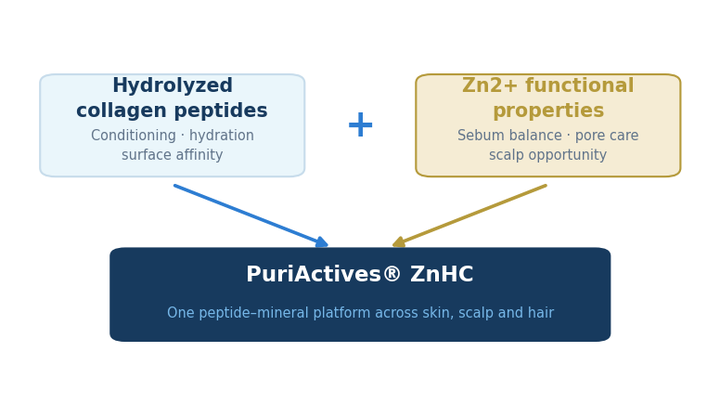
Figure 01 — Conceptual fusion of two functional platforms. Chemical concept illustration only; not a specific molecular structure.
01 · PLATFORM POSITIONING
What Is Zinc Hydrolyzed Collagen?
Zinc hydrolyzed collagen is the zinc-bound derivative of hydrolyzed collagen peptides — uniting a peptide-rich conditioning base with the functionality of Zn2+.
Controlled hydrolysis
Native collagen is degraded under controlled conditions into lower-molecular-weight peptide fractions — improving processability in aqueous systems and surface-interaction capability.
Zinc binding
Side-chain functional groups on the peptide backbone — carboxyl, amino, and hydroxyl — offer potential coordination environments for Zn2+ ions. No single defined molecular formula is implied.
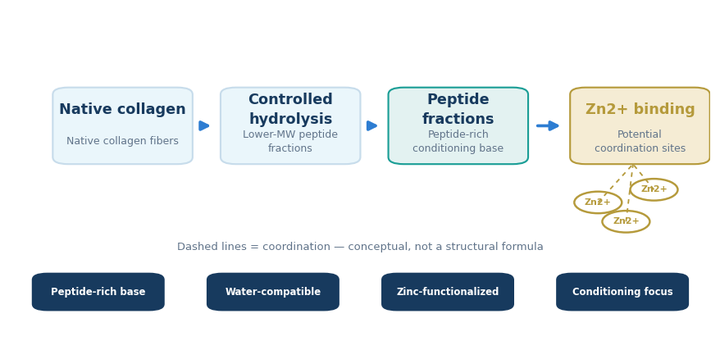
Figure 02 — From collagen fiber to zinc-bound peptide network. Dashed lines indicate coordination — conceptual illustration, not a structural formula.
01 · PLATFORM POSITIONING
The Functional Architecture of PuriActives® ZnHC
Four functions, one peptide–mineral architecture — across skin, scalp, and hair fiber
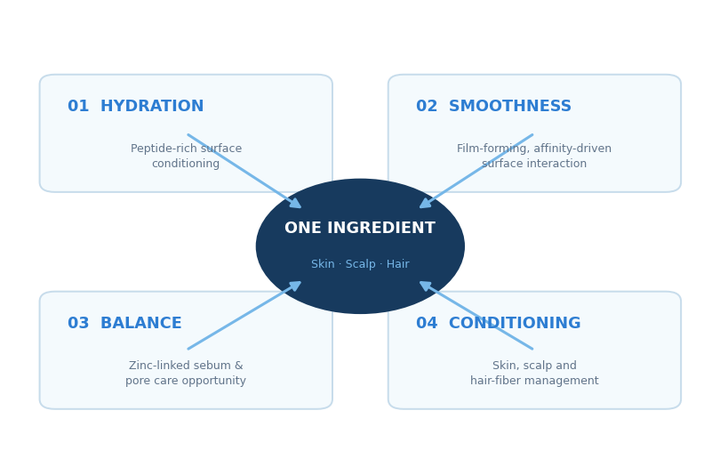
Figure 03 — The four-function mechanistic architecture of the PuriActives® ZnHC platform.
02 · COLLAGEN PEPTIDE PLATFORM
Hydrolyzed Collagen — the Functional Peptide Base
Hydrolyzed collagen is not intact dermal collagen, but a mixture of collagen-derived peptide fractions whose performance is expressed at the skin-surface level — hydration, film formation, and conditioning.
Functional Highlights
› Hygroscopic amino-acid and peptide functional groups › Interaction with skin-surface water › Film-forming potential and surface affinity › Softness and conditioned after-feel › Hair-fiber affinity and anti-static performance › Established cosmetic biomaterial compatibility
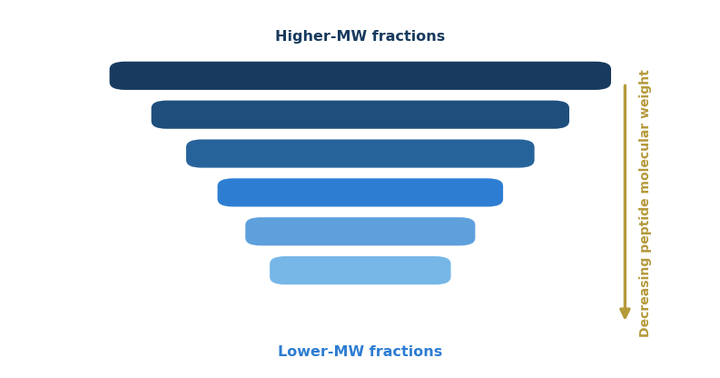
Figure 04 — Peptide fraction distribution of hydrolyzed collagen (schematic). Topically applied hydrolyzed collagen does not rebuild the dermal collagen network.
“Hydrolyzed collagen acts mainly at the cosmetic contact interface — supporting hydration, conditioning, and surface quality.”
Aguirre-Cruz G, et al. Antioxidants (Basel). 2020;9(2):181. PMID: 32098294.
02 · COLLAGEN PEPTIDE PLATFORM
Water Management in the Stratum Corneum
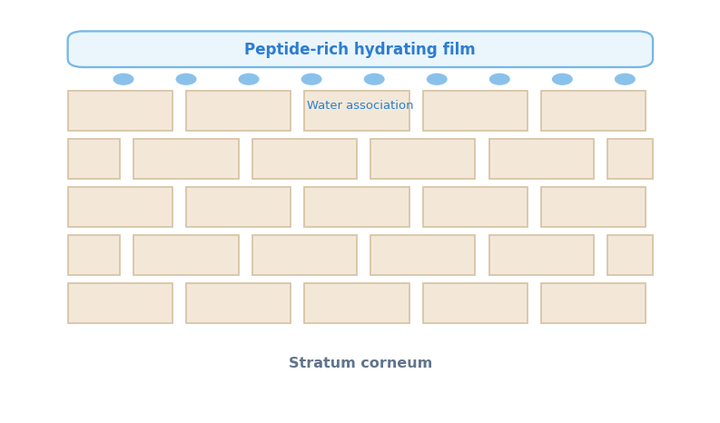
Figure 05 — The “brick-and-mortar” model of the stratum corneum with a peptide-rich hydrating surface film (schematic).
Benefit Statements
› Supports skin hydration › Enhances softness › Improves conditioned after-feel › Helps reduce the perception of dryness and roughness
1 Collagen-derived peptides → 2 Water association + surface affinity
3 Hydrated interface → 4 Softer / smoother skin feel
A hydrated interface is a surface phenomenon — peptides associate with water and the stratum corneum to improve the conditioned feel of skin.
Supporting evidence: topical collagen literature — see References (03).
03 · ZINC FUNCTIONAL PLATFORM
Zinc — a Trace Element of Biological Significance
Zinc is a multifunctional bio-ion. Its biology spans enzyme catalysis, protein structure, cellular homeostasis, and epidermal function — a breadth rarely found in a cosmetic mineral ingredient.
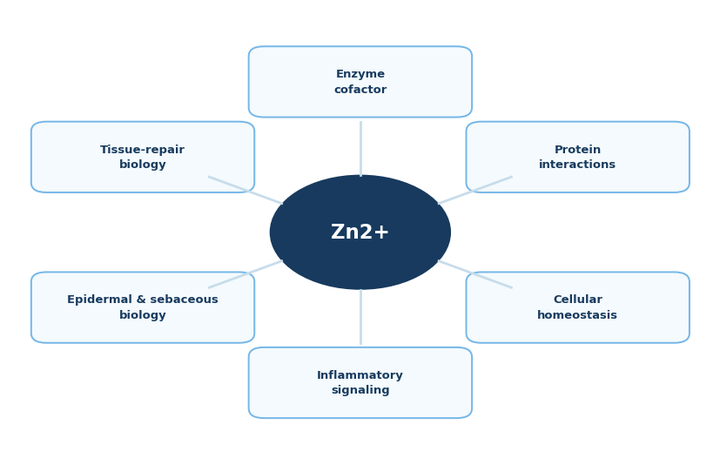
Figure 06 — The zinc biology network relevant to cosmetic science (overview schematic).
“In cosmetic science, zinc chemistry builds a compelling bridge between skin-surface management and cellular stress biology.”
This page is presented as biological background for cosmetic innovation — not as medical dermatology.
03 · ZINC FUNCTIONAL PLATFORM
Zinc and Dermal-Matrix Stress Biology
Mechanistic evidence from a related zinc salt — in vitro human dermal fibroblasts: mechanistic context for zinc, not ingredient-specific data
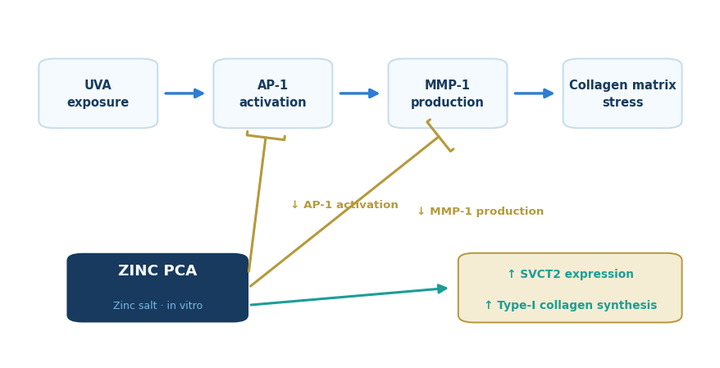
Figure 07 — UVA / AP-1 / MMP-1 pathway and zinc intervention nodes, redrawn from the cited literature.
“Appropriately delivered zinc can engage pathways related to collagen homeostasis and photo-stress biology.”
Takino Y, Okura F, Kitazawa M, Iwasaki K, Tagami H. Int J Cosmet Sci. 2012;34(1):23–28. doi:10.1111/j.1468-2494.2011.00676.x — the study used zinc pyrrolidone carboxylate (Zinc PCA), not zinc hydrolyzed collagen.
04 · DIRECT INGREDIENT EVIDENCE
Direct Evidence for Zinc Hydrolyzed Collagen
KR20250138932A
Cosmetic composition comprising hydrolyzed collagen and zinc
Published September 23, 2025 · cited by publication number only
The patent explicitly describes zinc hydrolyzed collagen and benchmarks it directly against hydrolyzed collagen in paired toner, serum, and cream formulations — reporting superior oil-control and pore-related performance at equal addition levels.
Experimental Design
Zinc hydrolyzed collagen vs hydrolyzed collagen — tested across formulation formats: toner · serum · cream
Addition levels evaluated (as % of the tested collagen composition): 0.1% · 1% · 3% · 10%
Compared with matched hydrolyzed-collagen formulas at equal levels, the zinc hydrolyzed collagen formulas performed better on oil-control and pore-related measures.
One of the strongest pieces of ingredient-level direct evidence in this dossier.
Applicant information deliberately omitted; this dossier cites the patent literature by publication number only.
04 · DIRECT INGREDIENT EVIDENCE
Sebum Balance — Direct Ingredient Evidence
Formula-comparison data reported in the patent
Method — as reported in the patent
1 Full-face imaging under standardized conditions 2 T-zone selected for sebum-related analysis
3 ZnHC formula versus matched hydrolyzed-collagen formula 4 Toner, serum, and cream formats evaluated in parallel
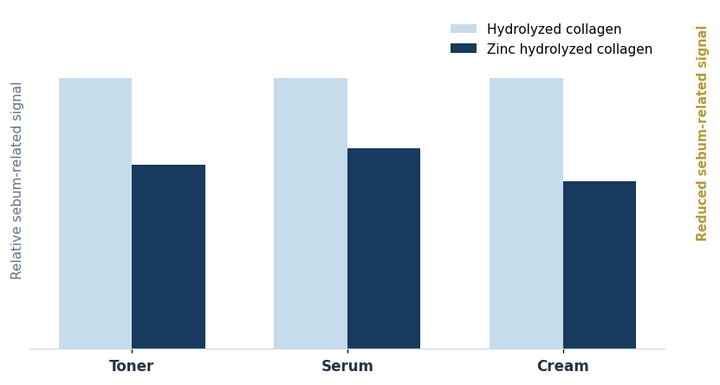
Figure 08 — Directional schematic drawn from the comparative sebum evaluation reported in Figure 1 of KR20250138932A. Effect direction per the patent report; axis values not reproduced.
“Across toner, serum, and cream architectures, zinc binding moves hydrolyzed collagen beyond a conditioning position toward a broader oil-balance platform.”
04 · DIRECT INGREDIENT EVIDENCE
Visible Pore Care — a Differentiated Skin Opportunity
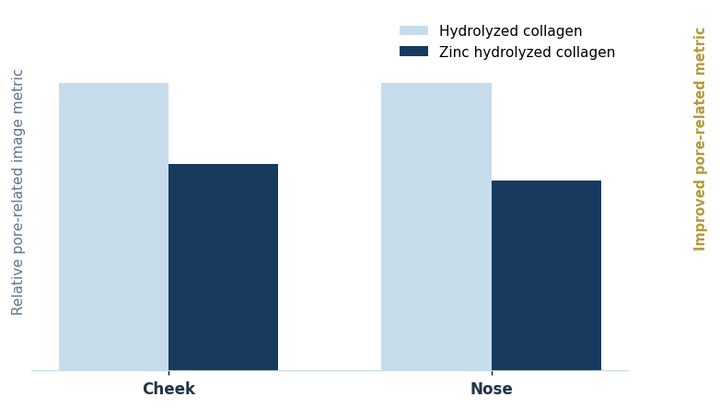
Figure 09 — Directional schematic drawn from the pore evaluation reported in Figure 2 of KR20250138932A. Effect direction per the patent report; axis values not reproduced.
Method — as reported in the patent
1 Full-face imaging before / after product use 2 Cheek and nose regions analyzed
3 Pore-related image metrics evaluated 4 ZnHC versus matched hydrolyzed-collagen formulas
From hydration → hydration + pore appearance + sebum balance
Cosmetic Benefit Statements
› Visible pore refinement › Finer-looking skin texture › Oil-balance support › A more refined skin appearance
Cosmetic appearance positioning only — no therapeutic claims such as acne treatment.
04 · DIRECT INGREDIENT EVIDENCE
How Zinc Rewrites the Hydrolyzed-Collagen Story
“From passive conditioning to multifunctional conditioning.”
| Functional Dimension | Hydrolyzed collagen | Zinc hydrolyzed collagen |
|---|---|---|
| Hydration & water support | ● | ● |
| Surface conditioning & film formation | ● | ● |
| Softness & smoothness | ● | ● |
| Hair-fiber affinity | ● | ● |
| Sebum-management opportunity | — | ● |
| Visible pore-care positioning | — | ● |
| Zinc-related biological significance | — | ● |
| Skin + scalp multifunctionality | — | ● |
The added dimensions are evidence-driven — anchored in the KR20250138932A comparison data and the zinc mechanism literature, not in claim language.
05 · PORE & TEXTURE CARE
Pore Care Is More Than “Astringency”
Five factors behind visible pores
01 Sebaceous gland activity — the flux of oil through the follicle
02 Surface topography — light reflection and micro-texture
03 Hydration status — stratum-corneum hydration and surface plumpness
04 Elasticity & structural support — firmness and recoil around the follicle
05 Follicle structure — the size, shape, and density of pore openings
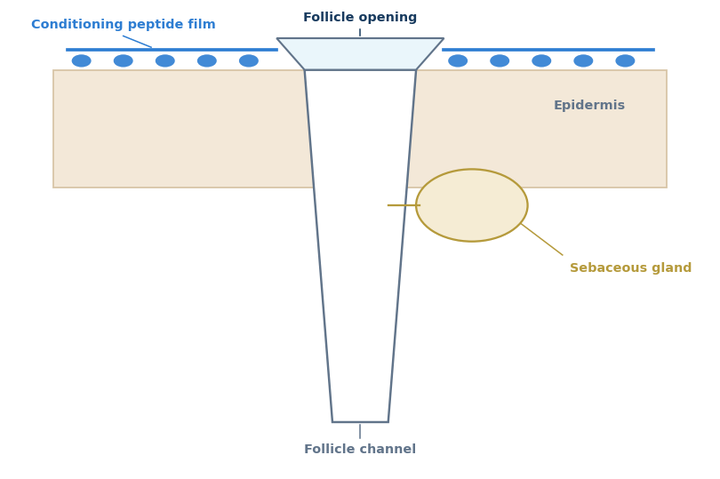
Figure 10 — Follicle cross-section (schematic). Pore appearance is managed at the surface level; no permanent anatomical change is claimed.
Where ZnHC Fits
Sebum balance + surface conditioning + hydration + skin texture
✓ ”Helps refine the appearance of visible pores” ✕ ”Closes pores”
Positioning targets the cosmetic appearance of pores — not permanent pore reduction.
05 · PORE & TEXTURE CARE
A Texture Platform for Combination and Oily Skin
Translating scientific language into formulation and marketing language
Target Skin Profiles
Oily · combination · visible pores · rough texture · dehydrated-oily · urban-stressed skin
Balance Sebum-balance support in oily zones
Refine Refinement of visible pores and texture
Hydrate Peptide-based water management
Smooth A softer, smoother conditioned skin feel
Product Concepts for Formulators
› Pore-refining serum › Balancing serum › Lightweight gel-cream › Hydrating oil-control toner › Texture-conditioning treatment › Post-cleanse conditioning essence
Positioning language stays B2B and cosmetic in nature; final claims depend on the finished formulation.
06 · HAIR-FIBER CONDITIONING
From Skin to Hair — Why Protein Affinity Matters
“Hydrolyzed proteins are valued in hair care because low-molecular-weight peptide fractions can interact with damaged keratin surfaces.”
Damaged cuticle — bleaching, heat, and combing lift and erode the cuticle scales.
Peptide adsorption — peptide fractions preferentially adsorb at damaged surface sites.
Conditioned surface — a conditioned surface with improved feel and manageability.
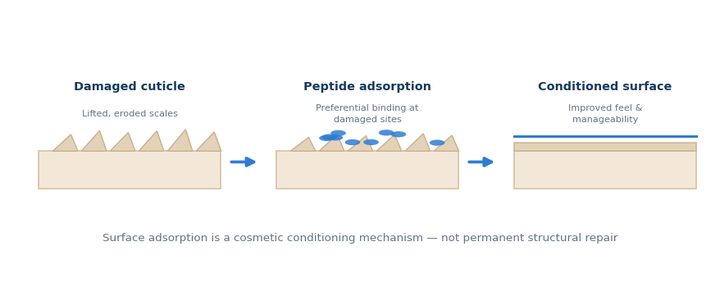
Figure 11 — Peptide affinity at the damaged cuticle (schematic).
Classic substantivity evidence: Turowski A, et al. Substantivity to hair and skin of 125I-labelled collagen hydrolysates under application-simulating conditions. Int J Cosmet Sci. 1985;7:71–84. doi:10.1111/j.1467-2494.1985.tb00398.x
Surface adsorption is a cosmetic conditioning mechanism — not permanent structural repair.
06 · HAIR-FIBER CONDITIONING
Hair-Fiber Conditioning — Surface Science in Practice
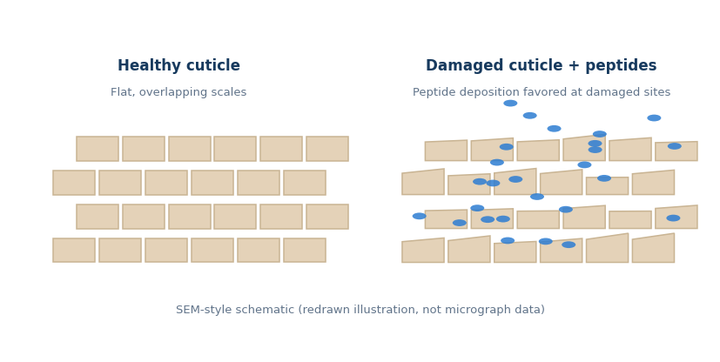
Figure 12 — SEM-style cuticle schematic (redrawn illustration, not micrograph data). Peptide deposition preferentially occurs at damaged sites.
Protein-hydrolysate conditioning is a surface materials-science question — deposition, affinity, and film behavior at the fiber surface, unrelated to follicle biology.
Conditioning Outcomes
› Anti-static conditioning › Improved surface feel › Reduced roughness › Better combability › Softness and shine potential › Conditioning of damaged hair
Outcomes Are Modulated By
Molecular-weight distribution · peptide charge and degree of fiber damage · formulation environment · rinse-off versus leave-on contact
06 · HAIR-FIBER CONDITIONING
Damaged Hair Needs More Conditioning
Processing & Treatment Stressors
Bleaching · coloring · perming · heat · UV · mechanical combing
What Increases at the Fiber Surface
Cuticle irregularity · surface friction · porosity · protein loss · static charge · roughness
The Conditioning Response
Peptide-rich conditioning — preferential interaction with damaged surfaces
Improvement in cosmetic surface quality
Supported by the peer-reviewed hair-fiber conditioning literature (see References). Oral collagen-supplementation studies are not used as evidence for topical hair-fiber claims.
07 · SCALP & PORTFOLIO
Scalp Care — Where Skin Science Meets Hair Science
“The scalp is skin — with an active sebaceous environment.”
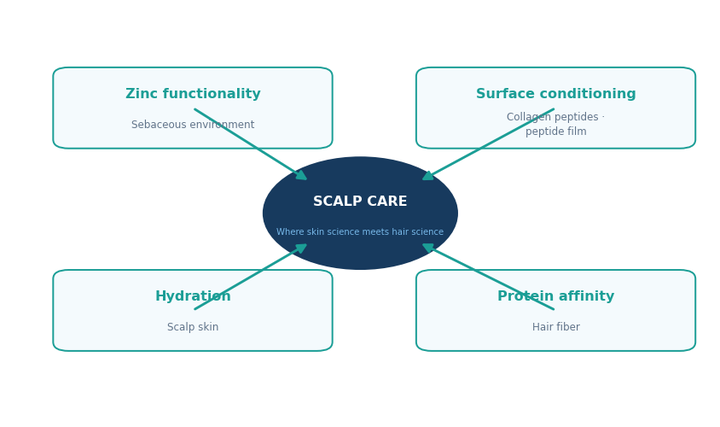
Figure 13 — Scalp mechanism map: four converging care pathways.
Positioning
› Oily-scalp care › Scalp hydration › Scalp conditioning › Sebum-balance concepts › Scalp comfort › Hair-root environment
Potential Applications
Scalp serums · shampoos · scalp treatments · conditioners · hair masks · leave-on care
No claims are made regarding the treatment of seborrheic dermatitis, hair loss, or dandruff.
07 · SCALP & PORTFOLIO · SIGNATURE
One Ingredient — Two Beauty Territories
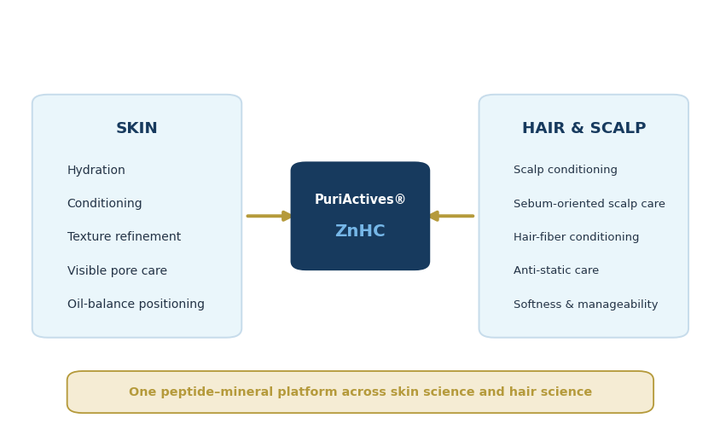
“One peptide–mineral platform connecting skin science and hair science.”
08 · FORMULATION & EVIDENCE MAP
Formulation Opportunities
One ingredient, three formulation territories — from daily skincare to targeted scalp and hair systems
| Skin Care | Scalp Care | Hair Care |
|---|---|---|
| Toners | Scalp essence water | Shampoos |
| Essence waters | Scalp serums | Conditioners |
| Serums | Balancing lotions | Hair masks |
| Gel-creams | Pre-wash treatments | Leave-in conditioners |
| Creams | Repair serums / sprays | |
| Masks |
Published Formulation Precedent
KR20250138932A evaluated collagen compositions containing zinc hydrolyzed collagen in toner, serum, and cream prototypes at 0.1–10% addition. This range is cited as a published precedent only — it is not the official recommended dosage for PuriActives® ZnHC. Please refer to PuriPharm technical specifications.
08 · FORMULATION & EVIDENCE MAP
Formulator’s Scientific Snapshot
| Trade name | PuriActives® ZnHC |
| INCI | ZINC HYDROLYZED COLLAGEN |
| Product platform | Zinc-functionalized collagen-peptide conditioning system |
| Core benefits | Skin conditioning · water support · visible pore-care positioning · sebum-balance positioning · hair-fiber conditioning · scalp-care support |
| Target applications | Skin care · scalp care · hair care |
| Evidence platform | Direct patent evidence for zinc hydrolyzed collagen · hydrolyzed-collagen literature · zinc-mechanism literature · hair-substantivity literature |
Technical Specifications
pH, solids content, molecular-weight distribution, zinc content, preservation system, appearance, recommended dosage, and stability data are governed by PuriPharm technical documentation. They are deliberately not reproduced in this presentation.
08 · FORMULATION & EVIDENCE MAP
The Evidence Map — from Direct Data to Mechanistic Support
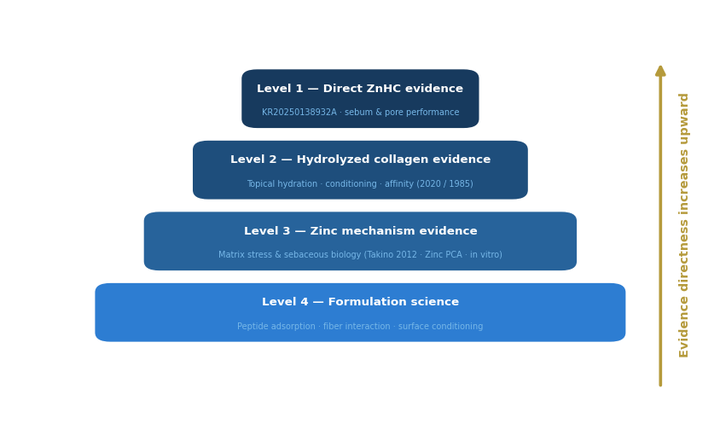
Level 1 — Direct ZnHC evidence KR20250138932A — oil-control and pore-related performance in toner, serum, and cream formulations.
Level 2 — Hydrolyzed-collagen evidence Topical hydration, surface conditioning, skin and hair substantivity (Aguirre-Cruz 2020; Turowski 1985).
Level 3 — Zinc-mechanism evidence Matrix-stress and sebaceous-biology context (Takino 2012 — Zinc PCA, in vitro).
Level 4 — Formulation science Peptide adsorption, hair-fiber interaction, and surface-conditioning science.
Indirect evidence supports mechanism and ingredient-class context — it is not clinical proof of finished-product performance.
08 · FORMULATION & EVIDENCE MAP · ONE-PAGE STORY
PuriActives® ZnHC — the Product Story on One Page
Condition — collagen-derived peptides support the surface quality of skin and hair.
Hydrate — a peptide-rich interface supports water retention and softness.
Balance — zinc functionality extends the platform to sebum and pore care.
Connect — one ingredient linking skin, scalp, and hair-care innovation.
“Peptide conditioning, empowered by zinc.”
09 · REFERENCES
Scientific References
Core literature supporting this dossier, ranked by evidentiary proximity to zinc hydrolyzed collagen
01 KR20250138932A. Cosmetic composition comprising hydrolyzed collagen and zinc. Korean patent publication, September 23, 2025 — cited by publication number only. Ingredient-level direct evidence: comparative oil-control and pore-related evaluation in toner, serum, and cream formulations.
02 Takino Y, Okura F, Kitazawa M, Iwasaki K, Tagami H. Zinc L-pyrrolidone carboxylate inhibits the UVA-induced production of matrix metalloproteinase-1 by in vitro cultured skin fibroblasts, whereas it enhances their collagen synthesis. International Journal of Cosmetic Science. 2012;34(1):23–28. doi:10.1111/j.1468-2494.2011.00676.x
03 Aguirre-Cruz G, León-López A, Cruz-Gómez V, Jiménez-Alvarado R, Aguirre-Álvarez G. Collagen Hydrolysates for Skin Protection: Oral Administration and Topical Formulation. Antioxidants (Basel). 2020;9(2):181. doi:10.3390/antiox9020181. PMID: 32098294
04 Turowski A, et al. Substantivity to hair and skin of 125I-labelled collagen hydrolysates under application-simulating conditions. International Journal of Cosmetic Science. 1985;7:71–84. doi:10.1111/j.1467-2494.1985.tb00398.x
05 Burnett CL, Bergfeld WF, Belsito DV, et al. Safety Assessment of Skin and Connective Tissue-Derived Proteins and Peptides as Used in Cosmetics. International Journal of Toxicology. 2022. doi:10.1177/10915818221104783
For further literature on topical collagen hydrolysates, zinc biology, and hair surface science, see the complete PuriPharm technical dossier.
PuriActives®|Produced by PuriPharm Co. Ltd.
PuriActives® PuriNMF
PURIPHARM CO. LTD. · SCIENTIFIC PRODUCT PRESENTATION · TECHNICAL MARKETING MATERIAL
PuriActives® PuriNMF
Polyamino Sugar Condensate
NMF-Inspired Hydration Conditioning · For Skin and Hair
INCI NAME POLYAMINO SUGAR CONDENSATE
CAS NUMBER 120022-92-6
AUDIENCE Cosmetic R&D · Formulation · Technical Marketing
THE HYDRATION CHALLENGE
Why Hydration Is the Core Question
Why water management matters equally for skin and hair
Skin
A water-gradient tissue. The stratum corneum is driest at the surface, with water content rising toward the viable epidermis; its mechanical softness depends precisely on that water.
Water is lost continuously. Low humidity, seasonal change, and frequent cleansing all make the stratum corneum lose water faster than it can be replenished.
Skin feel tracks hydration. As water content falls, corneocytes lose plasticity — skin feels tight, rough, and no longer supple.
Hair and Scalp
A non-living keratin fiber. Hair cannot repair itself; its softness, flexibility, and manageability are governed by water status and surface condition.
Damage accumulates. Chemical treatments, heat styling, and UV lift the cuticle, increase inter-fiber friction, and alter moisture-uptake behavior.
The scalp is skin too. The same stratum-corneum hydration logic applies where the hair is rooted.
Behind skin feel and hair feel lies one shared variable: the hydration state of keratin.
PRODUCT OVERVIEW
PuriActives® PuriNMF at a Glance
Sugar-derived + amino-acid-derived humectant chemistry in one ingredient system
PuriActives® PuriNMF is a condensed cosmetic ingredient system that unites sugar-derived hydrophilic functionality with amino-acid-derived functionality — designed for water management and conditioning of skin, scalp, and hair.
| INCI | POLYAMINO SUGAR CONDENSATE |
| CAS No. | 120022-92-6 |
| Positioning | NMF-inspired hydration conditioning |
Core Benefit Pillars
01 Attracts water
02 Retains water
03 Keratin conditioning
04 Skin softness & suppleness
05 Hair softness & manageability
06 Scalp hydration
07 For rinse-off and leave-on systems
Positioning statement: PuriNMF is designed in line with the biological logic of the natural moisturizing factor (NMF); its chemical composition is not identical to endogenous NMF.
THE INGREDIENT
What Is Polyamino Sugar Condensate?
Ingredient identity, cosmetic function, and ingredient heritage
Ingredient identity — a condensate of sugar-derived and amino-acid-derived structural units, supplied as a single cosmetic ingredient under a single INCI name.
Cosmetic function — humectant and skin-conditioning chemistry: a dense array of polar functional groups provides multiple water-association sites at the keratin interface.
Heritage and safety precedent — a well-established cosmetic ingredient with a long history of use. Its safety was assessed in a published JACT report (1982) and reviewed again in 2023 by the Cosmetic Ingredient Review (CIR) Expert Panel.
| Ingredient Identity at a Glance | |
|---|---|
| INCI | POLYAMINO SUGAR CONDENSATE |
| CAS No. | 120022-92-6 |
| Ingredient class | Sugar–amino-acid condensate |
| Cosmetic function | Humectant · Skin conditioning |
| Safety precedent | JACT 1982 · CIR 2023 re-review |
Final Report of the Safety Assessment of Polyamino Sugar Condensate. J Am Coll Toxicol. 1982;1(4):25–32. · Raj PS, et al. Int J Toxicol. 2023;42(3 Suppl):91S–92S.
NMF SCIENCE
NMF: Skin’s Endogenous Moisturizing System
Filaggrin proteolysis generates amino-acid chemistry that locks water into the stratum corneum
Filaggrin → proteolysis in the upper epidermis → release of free amino acids → formation of NMF components such as PCA → water binding within corneocytes → corneocyte plasticity maintained → supple, smooth skin
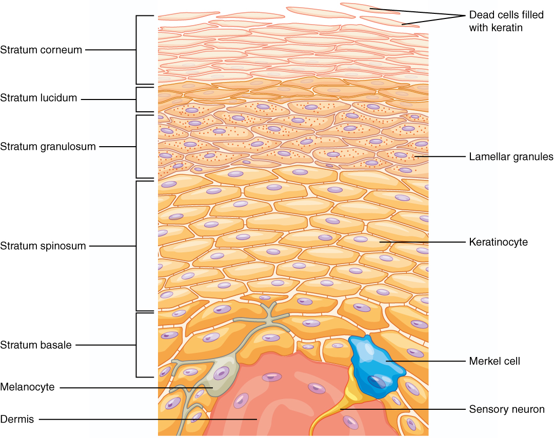
Layered structure of the epidermis. Illustration: OpenStax, Anatomy & Physiology, Wikimedia Commons, CC BY 4.0.
Positioning note: PuriNMF is an NMF-inspired design — built around amino-acid and sugar humectant chemistry; its composition is not identical to endogenous NMF.
What NMF does: stratum corneum hydration · water retention · keratin flexibility · corneocyte mechanics · surface smoothness
NMF SCIENCE
Amino Acids and Water Binding
NMF composition and its role in keratin hydration
| Approximate NMF Composition · Component | Share |
|---|---|
| Free amino acids | ≈ 40% |
| Pyrrolidone carboxylic acid (PCA) | ≈ 12% |
| Lactate | ≈ 12% |
| Sugars | ≈ 8.5% |
| Urea | ≈ 7% |
| Inorganic ions and others | Remainder |
Approximate shares of NMF dry weight. Source: Rawlings AV, Harding CR. Dermatol Ther. 2004;17(Suppl 1):43–48.
Amino-acid-derived solutes bind water inside corneocytes and keep keratin flexible — the biochemical foundation of a soft, smooth skin surface.
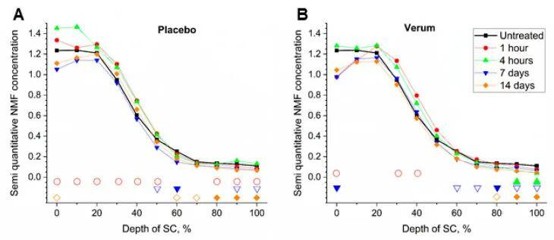
Raman depth profiling: NMF concentrates in the upper stratum corneum. Semi-quantitative NMF concentration versus stratum-corneum depth, placebo (A) versus an NMF-containing formulation (B). Figure: Schleusener J, et al. Molecules. 2021;26(6):1649. DOI: 10.3390/molecules26061649.
Why it matters: the NMF-rich upper stratum corneum is exactly where dryness is felt first. Hydration strategies acting at this interface address the sensory core of dry skin.
NMF SCIENCE
Sugar Chemistry and Hydration
Hydroxyl-rich systems interact with water through dense hydrogen-bonding functionality
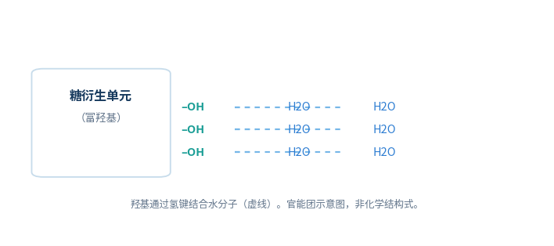
Hydroxyl-rich water interaction — sugar-derived units carry dense hydroxyl (–OH) groups. Each –OH can form hydrogen bonds with water molecules, associating water at the keratin interface.
Hygroscopic buffering — sugar-derived systems slow evaporation by lowering surface water activity, helping the stratum corneum hold onto water in dry environments.
Evidence Note — Drying Model
An in vitro Raman desorption study showed that a natural sugar-derived complex — most pronounced in combination with glycerol — increased total, partially bound, and unbound water at the skin surface and at 8 µm stratum-corneum depth over a 6-hour drying period.
Sugar-derived systems can prolong water retention during drying.
Fluhr JW, et al. J Biophotonics. 2023;16:e202200201. DOI: 10.1002/jbio.202200201. Ingredient-class evidence, not PuriNMF product data.
MECHANISTIC MODEL
The PuriNMF Hydration-Conditioning Model
A two-dimensional functional model — from condensate chemistry to conditioned keratin
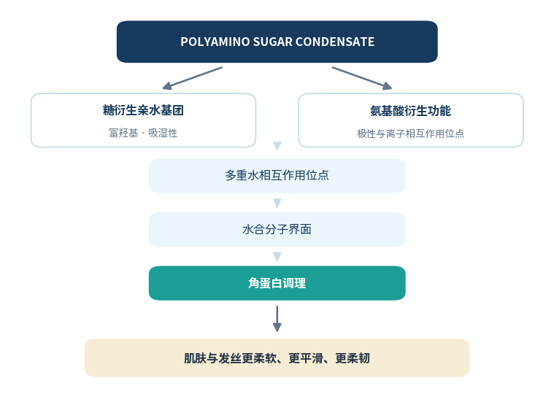
A functional mechanistic model based on ingredient-class scientific principles — not a chemical structure, and not product-specific efficacy data.
WATER-BINDING SCIENCE
Hydration Is More Than Surface Water
Distinct water states together define stratum-corneum hydration
Tightly bound water — closely associated with the polar sites of keratin and NMF — the structural water that maintains corneocyte plasticity.
Partially bound water — weakly associated, exchangeable water — a buffering pool that responds to the environment and the formulation.
Mobile / unbound water — freely moving water — the first fraction to evaporate, and the hardest to keep without humectant support.
Measurement is key. Confocal Raman microspectroscopy can resolve these water states along stratum-corneum depth — making hydration measurable below the surface.
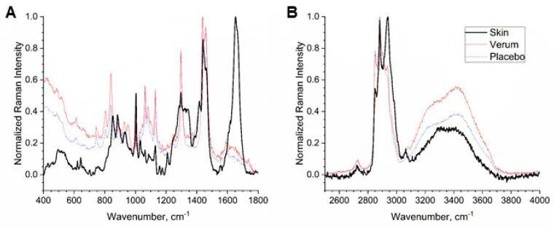
In vivo confocal Raman spectra of human stratum corneum — fingerprint region (A) and high-wavenumber region (B). The 3,000–3,700 cm⁻¹ water band is the analytical basis for resolving water states.
Formulation implication: ingredients that raise the bound-water fraction — not just total water — support a hydration state that persists between applications.
Figures: Schleusener J, et al. Molecules. 2021;26(6):1649. · Fluhr JW, et al. J Biophotonics. 2023;16:e202200201.
EVIDENCE FOCUS
Water Binding Reaches Below the Surface
In vivo Raman depth profiling of formulations containing NMF components
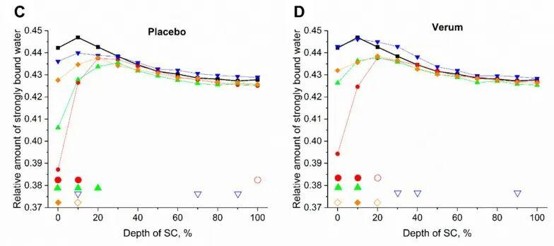
Relative tightly bound water content versus stratum-corneum depth after placebo (C) and an NMF-component formulation (D), over 14 days of follow-up. Black: untreated control. Figure (panels C–D): Schleusener J, et al. Molecules. 2021;26(6):1649. DOI: 10.3390/molecules26061649. Ingredient-class evidence, not PuriNMF product data.
After twice-daily use of a formulation containing NMF components, tightly bound water increased in the superficial stratum corneum — the zone where dryness is first perceived.
A complementary Raman desorption study points the same way for sugar-derived systems: higher total, partially bound, and unbound water under drying stress.
Key point: NMF and sugar humectant chemistry acts on bound water — below the surface, not merely at it.
Fluhr JW, et al. J Biophotonics. 2023;16:e202200201.
FROM WATER TO TOUCH
From Water Retention to Skin Feel
The mechanical meaning of a hydrated stratum corneum
01 Water associates with the polar sites of keratin and NMF components.
02 Corneocytes swell with water, stay plastic, and resist brittle fracture on bending.
03 The stratum corneum softens — surface roughness and the feeling of tightness recede.
04 Skin feels soft and smooth — the sensory endpoint of hydration.
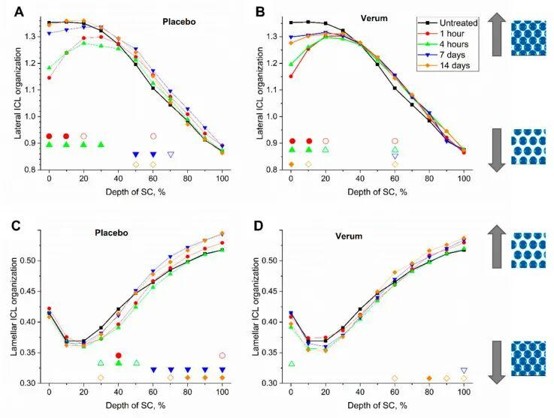
Lateral (A–B) and lamellar (C–D) organization of intercellular lipids along stratum-corneum depth — Raman-based structural parameters. Figure: Schleusener J, et al. Molecules. 2021;26(6):1649. DOI: 10.3390/molecules26061649.
Barrier context: ordered lateral packing of intercellular lipids locks water in place — hydration and lipid organization work as one system.
SKINCARE POSITIONING
PuriNMF for Skin
Hydration · Softness · Conditioning — a structured skin-benefit platform
A HYDRATIONSupports water attraction and retention at the stratum-corneum interface.
B SOFTNESSMaintains a softer, more supple stratum-corneum feel.
C CONDITIONINGProvides a hydrated surface environment compatible with care concepts for dry, stressed skin.
D POST-CLEANSING COMFORTSuited to cleansing systems where tightness and dryness are formulation challenges.
E NMF-INSPIRED CAREA strong science-marketing bridge to endogenous moisturizing biology.
F DRY-SKIN APPLICATIONSFor dry skin, seasonal dryness, low-humidity environments, frequent cleansing, mature skin, body care, hand care, and barrier-oriented formulations.
One ingredient platform across leave-on skincare and rinse-off cleansing systems.
SKIN — PUBLISHED PRECEDENT
Post-Cleansing Care Applications
Published patent literature on Polyamino Sugar Condensate in topical cleansing/conditioning compositions
EP 0 535 789 A2
Topical cleansing and conditioning compositions
This published application discloses topical cleansing and conditioning compositions containing Polyamino Sugar Condensate, covering its use in skin-cleansing systems with a conditioning benefit. It establishes a direct documentary link between this ingredient and rinse-off skin-conditioning concepts.
What it supports
· Cosmetic humectant use of the ingredient · Skin-conditioning positioning
· Relevance in cleansing formulations · Suitability for rinse-off products
What it is not
· Not clinical evidence for PuriNMF · Not an efficacy study of a PuriPharm finished product
EP0535789A2. Cited as a published formulation precedent; the patentee is deliberately omitted. Patent disclosure ≠ clinical proof.
HAIR SCIENCE
Hair Is a Keratin Fiber
Fiber structure, surface condition, and how damage shows up
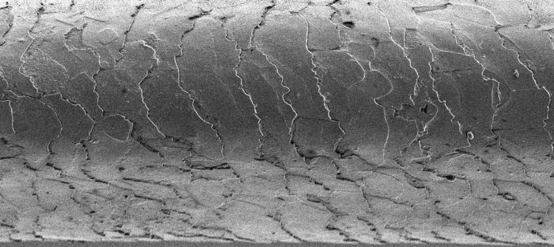
SEM of a human hair fiber: overlapping cuticle scales (×1.0k, scale bar 50 µm). Image: CSIRO ScienceImage 8115, CC BY 3.0.
Hair damage can appear as
Lifted cuticle · increased surface roughness · higher friction · altered moisture-uptake behavior · brittleness · loss of flexibility · poor manageability
Hair-fiber cross-section (schematic): cuticle (protective scales) · cortex (keratin-rich matrix) · medulla (when present)
Intercellular regions hold the structure together.
What determines fiber feel is surface condition and moisture behavior — not color or styling.
HAIRCARE POSITIONING
PuriNMF for Hair
Hydration · Softness · Flexibility · Manageability
Water association — supports hydration at the hair-surface interface.
Soft touch — helps maintain a soft feel along the fiber.
Flexibility — a hydrated keratin environment helps improve fiber flexibility.
Manageability — suited to formulations targeting dry, stressed, or chemically treated hair.
Scalp hydration — extends NMF-inspired hydration thinking to scalp care.
Target Formats
Shampoos · conditioners · hair masks · leave-in conditioners · moisturizing mists · hair serums · scalp serums · scalp sprays · scalp masks · pre-wash treatments · dry-hair care · curly-hair care · chemically treated hair care
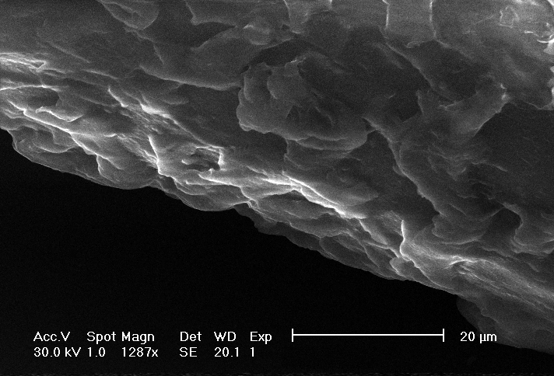
Cuticle detail, SEM (scale bar 20 µm). Image: Foreade, Wikimedia Commons, CC BY-SA 4.0.
Claim discipline: PuriNMF makes no bond-repair or disulfide-bond-repair claims.
SCALP + HAIR · SIGNATURE
One Hydration Strategy, Two Keratin Systems
HAIR & SCALP — PUBLISHED PRECEDENT
Published Hair/Scalp Precedent
Polyamino Sugar Condensate in documented hair and scalp care compositions
US 5,523,078 A
Hair and scalp care compositions and methods of making
This granted patent applies Polyamino Sugar Condensate in hair and scalp care compositions, disclosing use levels of 0.1–0.25 wt%. It documents an established role for the ingredient in hair and scalp formulation practice.
What it supports
· Hair-conditioning positioning of the ingredient · Scalp-care relevance
· Documented use level: 0.1–0.25 wt% · Precedent across hair/scalp care formats
Important boundaries
· The disclosed range is not PuriPharm’s recommended dosage · A patent disclosure is not clinical evidence for PuriNMF
US5523078A. Cited as a published formulation precedent; the patentee is deliberately omitted. Recommended use levels: see PuriPharm technical documentation.
APPLICATION MATRIX
Application Matrix
One hydration-conditioning platform across skincare, cleansing, scalp, and hair formats
Skin Care
Moisturizing essences · serums · toners · gel creams · moisturizing creams · sheet masks · sleeping masks · body lotions · hand creams
Cleansing
Facial cleansers · cleansing balms · body washes · hand soaps
Positioning: post-cleansing comfort, reduced tightness
Scalp Care
Scalp serums · scalp essences · scalp sprays · pre-wash treatments · scalp masks
Positioning: NMF-inspired scalp hydration, leave-on comfort
Hair Care
Shampoos · conditioners · hair masks · leave-in conditioners · moisturizing mists · hair serums · curly-hair care · chemically treated hair care
Positioning: hydration conditioning, softness, manageability
FORMULATION DESIGN
Building a Complete Hydration System
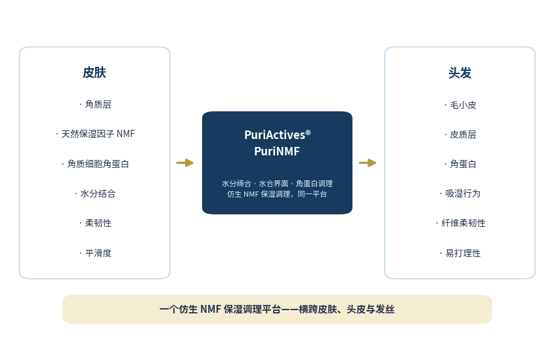
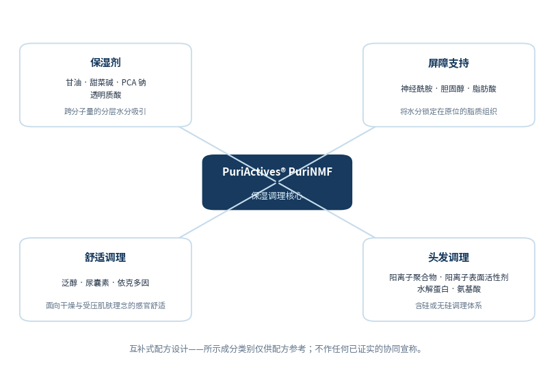
PuriNMF as the hydration-conditioning core — complementary formulation design
TECHNICAL SNAPSHOT
Formulator’s Technical Snapshot
Verified identity data only — no invented specifications
| Item | Content |
|---|---|
| Product name | PuriActives® PuriNMF |
| INCI name | POLYAMINO SUGAR CONDENSATE |
| CAS No. | 120022-92-6 |
| Chemical makeup | Condensate of sugar-derived and amino-acid-derived structural units |
| Cosmetic function | Humectant · Skin conditioning |
| Safety precedent | J Am Coll Toxicol. 1982;1(4):25–32 · CIR re-review, Int J Toxicol. 2023;42(3 Suppl):91S–92S |
| Published use-level precedent | 0.1–0.25 wt% in hair/scalp compositions (US5523078A) — a precedent, not a recommended dosage |
| Format compatibility | Leave-on and rinse-off systems (per published formulation precedent) |
Full technical documentation — appearance, assay, pH, solubility, recommended dosage, process guidance, storage, shelf life, packaging, and preservation — is available on request from PuriPharm Co. Ltd.
WHY PURINMF
Why PuriNMF
The commercial value, in five points
01 NMF-inspired dual chemistry — sugar-derived and amino-acid-derived functionality coexist in one condensate system — distinct from ordinary single-polyol humectants.
02 Two keratin systems — one platform across skin, scalp, and hair — one continuous scientific narrative from facial care to fiber care.
03 An evidence-aligned story — grounded in NMF biology, Raman water-state research, and published patent precedent — with clear boundaries around every claim.
04 Leave-on and rinse-off — from cleansers and shampoos to essences, masks, mists, and scalp care — one ingredient, broad format coverage.
05 Claim discipline — literature-anchored, technically confident language that R&D, regulatory, and brand-science teams can all rely on.
PuriActives® PuriNMF — an advanced hydration-conditioning platform for skin, scalp, and hair.
PURIPHARM CO. LTD.
PuriActives® PuriNMF
Hydration conditioning inspired by NMF biology
Key References
Rawlings AV, Harding CR. Dermatol Ther. 2004;17(Suppl 1):43–48. · Schleusener J, et al. Molecules. 2021;26(6):1649. DOI: 10.3390/molecules26061649. · Fluhr JW, et al. J Biophotonics. 2023;16:e202200201. DOI: 10.1002/jbio.202200201. · Final Report of the Safety Assessment of Polyamino Sugar Condensate. J Am Coll Toxicol. 1982;1(4):25–32. · Raj PS, et al. Int J Toxicol. 2023;42(3 Suppl):91S–92S.
Patents
EP0535789A2 — Topical cleansing and conditioning compositions. · US5523078A — Hair and scalp care.
Image Credits
OpenStax, Anatomy & Physiology (CC BY 4.0) · CSIRO ScienceImage 8115 (CC BY 3.0) · Foreade, Wikimedia Commons (CC BY-SA 4.0).
For technical documentation, samples, and formulation support, please contact PuriPharm Co. Ltd.
NanoActive™ PhytoRetin Duo
NanoActive™ PhytoRetin DuoNano-Encapsulated Dual Botanical Retinoid
Dual-phase botanical smoothing × retinoid-like renewal
Smooth today. Renew tomorrow.
Made with PURISOME® FlexVes™ liposome technology
PuriPharm Co. Ltd. · Innovation for health & beauty · www.puriactives.com
THE ANTI-AGING CHALLENGE · 抗老挑战
Visible skin aging runs on two different clocks
Seconds → hoursThe apparent dimension of aging — seen and felt
· Facial-expression-related skin micro-relief
· Temporary appearance of expression lines
· Surface irregularity and roughness
· The wrinkles consumers notice first — and most want to improve quickly
Weeks → monthsThe structural, biological dimension of aging
· Progressive loss of collagen and extracellular matrix
· Photoaging and cumulative oxidative stress
· Uneven pigmentation, slowed epidermal turnover
· Gradual loss of firmness and smoothness
Effective anti-aging care must answer both clocks — immediately visible smoothing, and progressive biological renewal.
THE CONCEPT · 产品概念
Two botanical strategies, two timelines, one advanced delivery platform
Acmella oleracea extract
Fast-phase botanical smoothing, targeting the appearance of expression lines
Bakuchiol
Renewal phase — retinoid-like collagen and photoaging care
PURISOME®
Nano-liposome platform unifying protection, delivery, and release
PhytoRetin Duo is designed to combine the two strategies — complementary, not redundant.
PRODUCT AT A GLANCE · 产品概览
PhytoRetin Duo at a glance
| Item | Details |
|---|---|
| INCI names | ACMELLA OLERACEA EXTRACT / BAKUCHIOL |
| Positioning | Dual-phase botanical smoothing × retinoid-like renewal |
| Technology platform | PURISOME® FlexVes™ liposome technology — PuriPharm’s proprietary nano-liposome platform |
| Core benefits | Instantly visible smoothing · expression-line appearance care · collagen support · photoaging care · tone and texture improvement |
| Applications | Facial serums · eye care · night repair · sensitive-skin anti-aging · scalp essences |
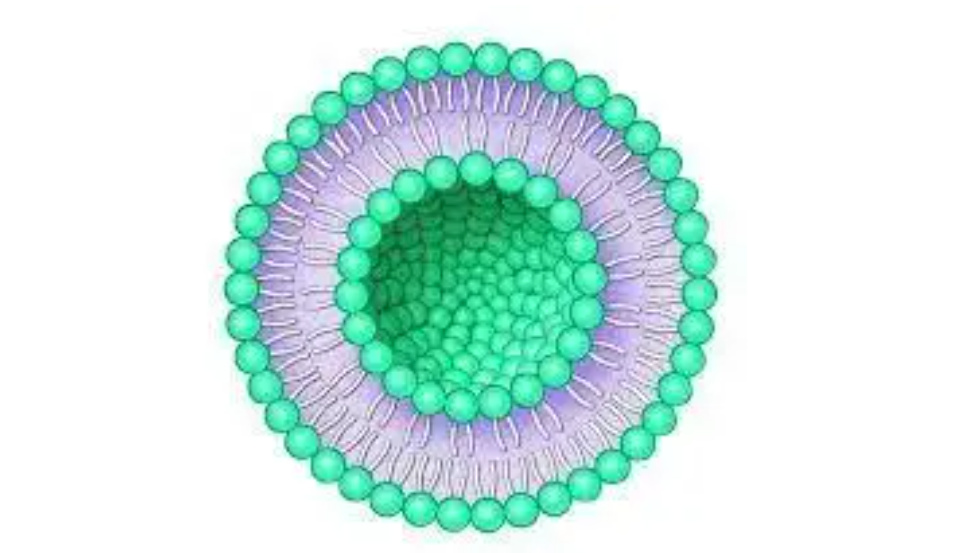
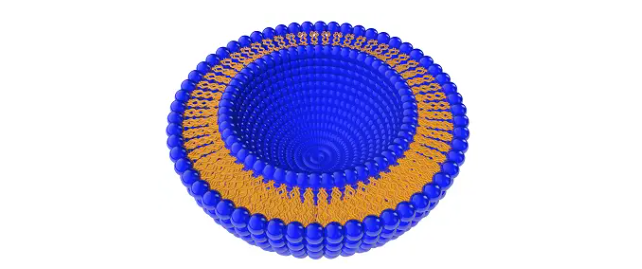
A phospholipid bilayer vesicle encapsulating both botanical actives
Smooth today. Renew tomorrow.
EFFICACY ARCHITECTURE · 功效架构
Why dual-phase anti-aging?
Minutes → days
Instant — the apparent level
· Rapidly and visibly smooths skin micro-relief
· Expression-line appearance care
· Surface refinement consumers can perceive quickly
Driven by Acmella oleracea extract
Weeks → months
Renewal — progressive biological renewal
· Retinoid-like renewal and collagen support
· Extracellular matrix protection and photoaging care
· Gradual improvement in tone, texture, and firmness
Driven by bakuchiol
One ingredient answers today’s mirror; the other invests in tomorrow’s skin.
ACTIVE ONE · FAST PHASE · ACMELLA
Acmella oleracea — plant science and active chemistry
A precision botanical for expression-line appearance.Acmella oleracea (the “electric daisy”) is an Asteraceae plant whose aerial parts are rich in N-alkylamides — most notably spilanthol, which gives the extract its signature sensory and smoothing activity. In cosmetics, the extract is positioned for rapidly visible smoothing and refinement of skin micro-relief, especially in expression-active areas such as the eye contour.
Active chemistry
· Spilanthol (N-isobutyl-2E,6Z,8E-decatrienamide) — the principal alkylamide in the flower heads
· One of the bioactive N-isobutylamides isolated and identified from Spilanthes acmella (synonym of Acmella oleracea)
· Lipophilic character — ideally suited to encapsulation in phospholipid vesicles
Cosmetic positioning:rapidly visible smoothing · expression-line appearance care · refinement of skin micro-relief
Sources: Ramsewak RS, et al. Phytochemistry. 1999;51(6):729–732. · Savić SM, et al. Int J Cosmet Sci. 2025;47(2):362–382. doi:10.1111/ics.13034
ACTIVE ONE · MECHANISM · 机制
Rapid smoothing — the story of expression lines
The biology of expression lines
1 Repeated facial movements create temporary mechanical folds in the skin surface
2 The folds alter skin micro-relief — fine surface lines appear around the eyes and mouth
3 With age and slowing turnover, the temporary creases become increasingly persistent and visible
Ex vivo evidence
In an ex vivo nerve–muscle co-culture model, Acmella oleracea extract produced a rapid, dose-dependent, and fully reversible inhibition of muscle-fiber contraction frequency.
Contractile activity recovered within one hour of washout — supporting a gentle, non-destructive cosmetic mode of action.
This evidence supports cosmetic smoothing claims only — no pharmacological or neuromuscular claims are made.
Acmella extract delivers rapidly perceptible smoothing of expression-line appearance — the “fast” half of the dual-phase strategy.
Source: Demarne F, Passaro G. Use of an Acmella oleracea extract in an anti-wrinkle cosmetic composition. US Patent 7,531,193 B2. 2009.
ACTIVE ONE · CLINICAL EVIDENCE · 临床证据
Acmella — measurable smoothing on human skin
Study design
· Test system: human volunteers, eye-contour and perioral areas
· Design: randomized, split-face, controlled reference
· Test product: serum containing Acmella oleracea extract
· Duration: 2 weeks, twice daily
· Endpoints: hydration, smoothness, roughness, desquamation, wrinkle parameters
+10–40%Skin hydration (p < 0.05)
~+15%Skin smoothness (p < 0.05)
−20–30%Skin roughness (p < 0.05)
~−15%Wrinkle parameters (p < 0.05)
Tolerability:no eye-irritation potential (HET-CAM test), and spilanthol did not permeate porcine-ear skin — supporting a favorable topical safety profile.
Source: Savić SM, et al. Int J Cosmet Sci. 2025;47(2):362–382. doi:10.1111/ics.13034 · Ingredient-level evidence (Grade B) — not finished-product data on PhytoRetin Duo.
ACTIVE TWO · RENEWAL PHASE · BAKUCHIOL
Bakuchiol — the modern botanical retinol alternative
A phenolic monoterpene isolated from the seeds of Psoralea corylifolia. Structurally unrelated to retinoids, bakuchiol is a functional analog of retinol — acting on overlapping renewal pathways without retinol’s signature irritation.
· Retinoid-like gene-expression signature, with an entirely different molecular structure
· Photostable — suitable for morning and evening use
· Antioxidant activity supporting photoaging care
· Clinically demonstrated better tolerability than retinol
Molecular profile
Bakuchiol · phenolic monoterpene (meroterpene)
C₁₈H₂₄O · molecular weight 256.4
Lipophilic — ideally suited to lipid-bilayer encapsulation
“Retinoid-like” describes functional similarity — not retinoic-acid-receptor agonism.
Sources: Chaudhuri RK, Bojanowski K. Int J Cosmet Sci. 2014;36(3):221–230. · Dhaliwal S, et al. Br J Dermatol. 2019;180(2):289–296.
ACTIVE TWO · MECHANISM · 机制
Bakuchiol — renewal across four dimensions
Collagen support — gene-expression studies show up-regulation of collagen types I and IV, and stimulation of type III collagen in mature fibroblasts.
Extracellular matrix protection — supports the dermal matrix environment that underlies firmness and visible wrinkle depth.
Antioxidant defense — proven antioxidant activity against oxidative stress, the central driver of photoaging.
Tone & pigmentation care — clinically observed improvement in the appearance of pigmentation, complementing the anti-wrinkle benefit.
A multi-pathway botanical acting on the structural timeline of skin aging — measured in weeks and months, not minutes.
Sources: Chaudhuri RK, Bojanowski K. Int J Cosmet Sci. 2014;36(3):221–230. · Dhaliwal S, et al. Br J Dermatol. 2019;180(2):289–296.
ACTIVE TWO · MOLECULAR EVIDENCE · 分子证据
A retinoid-like molecular signature
Gene-expression profiling — CHAUDHURI & BOJANOWSKI (2014)
DNA microarray analysis on skin models showed a broad overall similarity between the gene-expression effects of bakuchiol and retinol — despite no structural resemblance between the two molecules. The similarity was confirmed gene by gene and validated at the protein level by ELISA and histochemistry. Key renewal markers — collagens I, III, IV and aquaporin 3 — were all modulated in a retinoid-like direction.
· Microarray — retinoid-like modulation of the skin gene-expression profile
· Protein level — collagen stimulation confirmed by ELISA and histochemistry
· Clinical case — twice-daily use for 12 weeks improved fine lines, wrinkles, pigmentation, elasticity, and firmness
Functional similarity — without retinol-associated adverse effects in this study.
Claim boundary: bakuchiol is described as retinoid-like / retinol-inspired — not as a retinoic-acid-receptor agonist.
Source: Chaudhuri RK, Bojanowski K. Int J Cosmet Sci. 2014;36(3):221–230. doi:10.1111/ics.12117
ACTIVE TWO · CLINICAL EVIDENCE · 临床证据
Head-to-head against retinol — Dhaliwal et al., 2019
Study design
· Design: prospective, randomized, double-blind
· Subjects: 44 (facial photoaging)
· Regimen: bakuchiol 0.5% cream twice daily vs retinol 0.5% cream once daily
· Duration: 12 weeks, assessed at weeks 0/4/8/12
· Endpoints: wrinkle surface area (image analysis), physician-graded pigmentation, tolerability
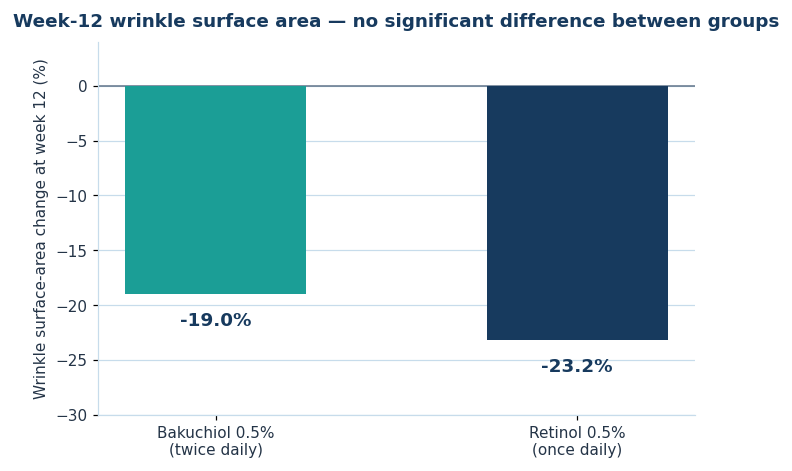
The two compounds showed no statistically significant difference on wrinkle and pigmentation endpoints. Photoaging improvement was comparable — while the bakuchiol group reported significantly less facial scaling and stinging.
Source: Dhaliwal S, et al. Br J Dermatol. 2019;180(2):289–296. doi:10.1111/bjd.16918 · Ingredient-level evidence (Grade B).
THE DUO SYSTEM · 双活性体系
Two timelines, one active system
Fast phase · Acmella oleracea extract
Rapidly visible smoothing · expression-line appearance care · surface and micro-relief refinement
+
Renewal phase · Bakuchiol
Collagen support · extracellular matrix protection and photoaging care · tone and texture improvement
PhytoRetin Duo — instant + progressive beauty performance
A two-phase strategy built on complementary botanical mechanisms — ingredient-level evidence; no combination-synergy claim is made.
DELIVERY PLATFORM · 递送平台
PURISOME® FlexVes™ liposome technology
PURISOME® is PuriPharm’s proprietary advanced nano-liposome platform, built on more than a decade of nano-delivery R&D and industrialization experience. Both botanical actives are encapsulated within skin-affine phospholipid bilayer vesicles.
01 Encapsulation & protection — protects oxidation- and degradation-prone actives, extending shelf-life stability.
02 Enhanced penetration — promotes interaction with the stratum corneum, deposition, and bioavailability.
03 Sustained release — gradual, controlled release extends contact time with a gentler skin feel.
04 Formulation elegance — improves formulation compatibility and sensory performance.
Phospholipid bilayer vesicle — the PURISOME® carrier structure
PURISOME® SCIENCE · 科学
Why nano-scale lipid delivery?

Fluorescence skin cross-sections — the smaller the lipid vesicle, the deeper it reaches into the skin (particle size decreases a → c). Redrawn from Verma DD, et al. Int J Pharm. 2003;258:141–151.
Particle size determines deposition.Reducing vesicle size increases the total contact area with skin, supporting more efficient delivery into its superficial structures.
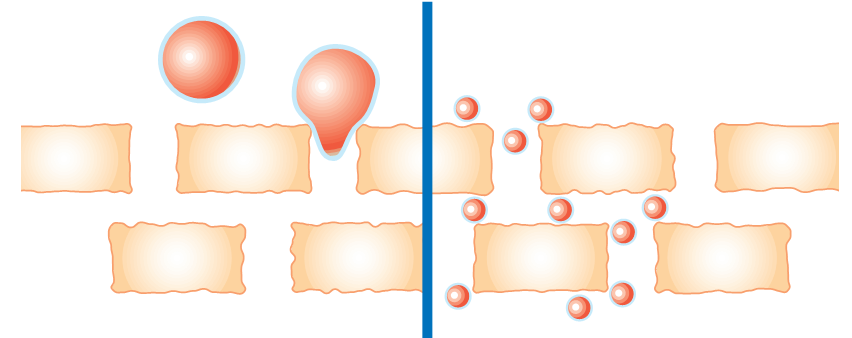
Nano-scale carriers distribute between superficial corneocytes and deposit in the skin’s shallow structures.
Large particles stay on the surface; nano-scale vesicles spread, conform, and deposit where they can make a difference.
PURISOME® engineers carriers to the nano scale — because particle size decides how far an active can go.
Source: Verma DD, Verma S, Blume G, Fahr A. Int J Pharm. 2003;258(1–2):141–151. · Delivery-platform literature (Grade C) — the scientific basis of the PURISOME® approach.
PURISOME® SCIENCE · 科学
Skin-affine phospholipid delivery
Barrier interaction — phospholipid vesicles are structurally compatible with the skin’s own lipid environment, adsorbing to and interacting with the stratum-corneum lipid matrix.
Sustained delivery — encapsulated actives release progressively at the skin surface and in shallow structures — extending contact time and smoothing transient concentration peaks.
Moisture-support film — a continuous nano-scale lipid film supports the barrier’s water-retention function.
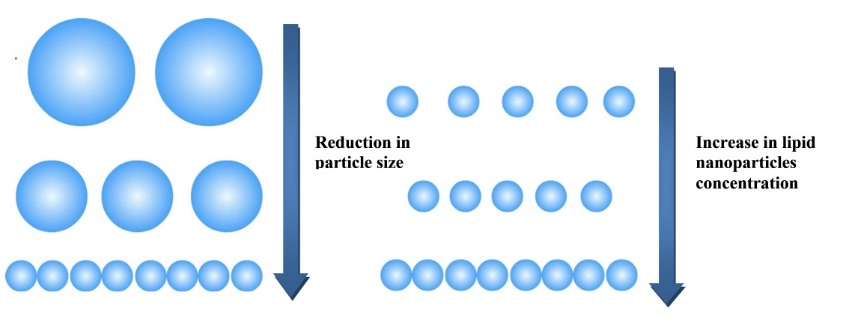
The smaller the particles, the more continuous the surface film formed by lipid nanoparticles — effective surface coverage and contact increase accordingly.
A carrier built in the skin’s own chemical language — welcomed, not resisted.
Sources: Cevc G, Blume G. Biochim Biophys Acta. 1992;1104:226–232. · Honeywell-Nguyen PL, et al. Adv Drug Deliv Rev. 2004;56(5):603–631. · Delivery-platform literature (Grade C).
PURISOME® SCIENCE · 科学
The follicular reservoir and targeted delivery
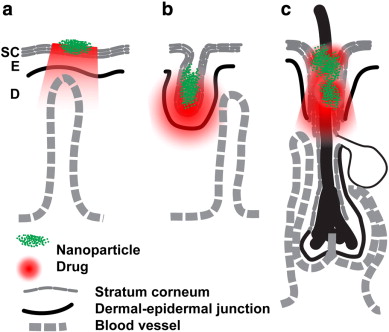
Follicular deposition concept — surface (a), infundibulum (b), and deep-follicle (c) delivery zones. SC: stratum corneum · E: epidermis · D: dermis. Redrawn from Patzelt & Lademann.
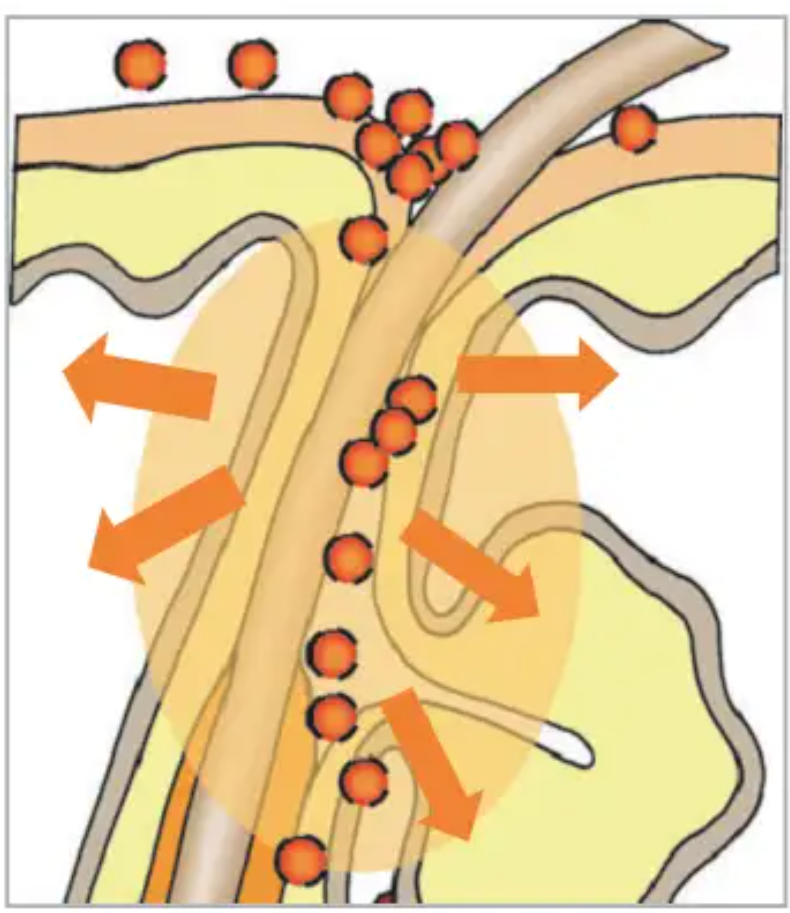
The hair follicle as a reservoir and shunt pathway for lipid carriers of suitable particle size.
A size-selective pathway — nanoparticles can enter open hair follicles; in porcine-skin models, nm-scale particles reached the deepest follicular regions, driven by a “gear-pump” effect of hair movement.
A built-in reservoir — particles deposited in follicles can be stored for days, supporting prolonged local release of encapsulated actives.
Scalp relevance — high follicular density makes the scalp a natural target for follicular delivery — a technical rationale for premium scalp essences.
Sources: Patzelt A, et al. Eur J Pharm Biopharm. 2011;77(3):427–436. · Lademann J, et al. Skin Pharmacol Physiol. 2007;20(5):232–238. · Vogt A, et al. J Invest Dermatol. 2006;126(6):1316–1322. · Delivery-platform literature (Grade C).
COMMERCIAL OPPORTUNITY · SKINCARE APPLICATIONS
Skincare applications
· Anti-aging serums — the flagship format of the dual-phase positioning
· Eye care — crow’s-feet smoothing + progressive renewal
· Expression-line serums — precision care for high-movement areas
· Premium night serums — the overnight renewal narrative
· Retinol-alternative products — botanical renewal without retinol irritation
· Sensitive-skin anti-aging — a gentle renewal positioning
· Brightening + anti-aging — pigmentation care combined with anti-wrinkle care
· Neck & décolleté care — smoothing care for delicate expression zones
One active system — an entire premium anti-aging product line.
COMMERCIAL OPPORTUNITY · SCALP & HAIR
Scalp & hair care opportunities
Positioning within strict evidence boundaries
· Scalp renewal — bakuchiol’s retinoid-like renewal logic extends naturally to scalp skin
· Antioxidant scalp care — defending the follicular microenvironment against oxidative stress
· Healthy scalp environment — conditioning and barrier support
· Scalp anti-aging concept — the scalp ages like facial skin, yet rarely receives the same care
· Premium scalp-essence positioning — a differentiated, science-driven story
The PURISOME® scalp advantage
The scalp carries the highest density of terminal hair follicles in the human body.
PURISOME® nano-lipid carriers are sized within the range indicated by follicular-delivery literature, depositing in the follicular reservoir — enabling prolonged, localized release at the follicle.
Evidence discipline: the scalp positioning is built on ingredient-level skin evidence and delivery-platform rationale. No direct human hair-growth claim is made for either active.
Sources: Patzelt A, et al. Eur J Pharm Biopharm. 2011;77(3):427–436. · Lademann J, et al. Skin Pharmacol Physiol. 2007;20(5):232–238.
FOR FORMULATORS · 致配方师
Formulation opportunities
PURISOME® encapsulation is designed for formulation compatibility and sensory elegance, allowing PhytoRetin Duo to fit a broad range of leave-on formats.
| Serumslight daily care | Essenceslayered routines | Creamsrich barrier formats | Lotionsface & body |
| Eye productsexpression-zone care | Scalp essencesfollicle targeting | Leave-on scalp carereservoir release | Night repairrenewal ritual |
Recommended use level, pH range, process conditions, and full INCI composition: see PuriPharm TDS/PDS technical documentation (available on request).
BRAND LANGUAGE · CLAIM ARCHITECTURE
Claim architecture
Instant claim“Rapidly and visibly smooths the appearance of expression lines”
Progressive claim“Retinoid-like renewal — collagen support and photoaging care”
Technology claim“Advanced phospholipid delivery, sustained release”
Consumer language“Smooth today. Renew tomorrow.”
Every claim layer maps to a defined evidence grade — ingredient-level clinical data, platform literature, or mechanistic rationale — keeping marketing language permanently aligned with scientific support.
WHY PHYTORETIN DUO · 商业价值
Why choose PhytoRetin Duo?
01 A differentiated dual-phase story — instant smoothing and progressive renewal in one active, built on two complementary botanicals.
02 Clinical evidence support — bakuchiol’s 12-week randomized double-blind head-to-head against retinol; in-vivo human smoothing data for Acmella.
03 Proprietary delivery platform — PURISOME® FlexVes™ liposome technology for protection, penetration support, and sustained release.
04 Formulation versatility — one encapsulation system serving facial, eye, night-repair, and scalp-essence product lines.
05 A marketing-ready narrative — “Smooth today. Renew tomorrow.” translates complex science into a claim architecture consumers understand.
APPLICATION MATRIX · 创新平台
Application matrix — skin & scalp
| Category | Fast-phase role (Acmella) | Renewal-phase role (bakuchiol) | Platform role (PURISOME®) |
|---|---|---|---|
| Anti-aging serum | Rapid smoothing of micro-relief | Collagen support and photoaging care | Stability + sustained release |
| Eye care | Crow’s-feet appearance care | Firmness and texture improvement | Gentle delivery for delicate areas |
| Night repair | Overnight surface refinement | Progressive retinoid-like renewal | Extended contact, low-peak exposure |
| Scalp essence | Scalp surface conditioning | Scalp renewal and antioxidant care | Follicular-reservoir targeting |
All roles shown are evidence-based positionings — intended to combine synergistically within the same formulation system.
PURIPHARM CO. LTD. · 浦瑞生物医药
Botanical wisdom, advanced delivery, dual-phase renewal.
NanoActive™ PhytoRetin Duo — Smooth today. Renew tomorrow.
PuriPharm Co. Ltd.
Building 6, 1366 Hongfeng Road, Huzhou, Zhejiang, China · www.puriactives.com · +86 572-2745768
Key scientific literature
Dhaliwal S, et al. Br J Dermatol. 2019;180(2):289–296. · Chaudhuri RK, Bojanowski K. Int J Cosmet Sci. 2014;36(3):221–230. · Savić SM, et al. Int J Cosmet Sci. 2025;47(2):362–382. · Demarne F, Passaro G. US Patent 7,531,193 B2. 2009. · Ramsewak RS, et al. Phytochemistry. 1999;51(6):729–732. · Verma DD, et al. Int J Pharm. 2003;258:141–151. · Cevc G, Blume G. Biochim Biophys Acta. 1992;1104:226–232. · Patzelt A, et al. Eur J Pharm Biopharm. 2011;77(3):427–436. · Lademann J, et al. Skin Pharmacol Physiol. 2007;20(5):232–238. · Vogt A, et al. J Invest Dermatol. 2006;126(6):1316–1322.
© 2026 PuriPharm Co. Ltd. — For B2B professional communication only.
PuriActives® RutaSuc™
PuriActives®RutaSuc™ 芸珀因™
INCI name: RUTINYL SUCCINATE
01 · MARKET CONTEXT · 市场背景
Skin under oxidative stress — a new formulation brief
Daily environmental exposure keeps skin under chronic oxidative stress — and this has rewritten what brands expect from an active ingredient.
01Environmental load is daily exposure.UV, ozone, and particulate pollutants drive reactive oxygen species (ROS) generation in skin, linking environmental stress to visible dullness, redness, and premature aging signs.
02Sensitivity and visible redness have gone mainstream.Sensitive-skin positioning has moved from niche dermo-skincare into the core skincare development agenda.
03Well-known molecules win trust.Brands prefer actives with a name, a structure, and published literature over anonymous antioxidant blends.
04Multifunctionality wins formulas.A well-characterized molecule supporting multiple defensible claims significantly reduces formulation cost and complexity.
The biological map of oxidative stress is well established — the bottleneck is getting a long-validated defense molecule into an elegant formula. The opportunity is not “yet another antioxidant,” but bringing a proven flavonoid molecule into real formulations.
Sources: Rinnerthaler et al., Oxid. Med. Cell. Longev., 2015; Ganeshpurkar & Saluja, Saudi Pharm. J., 2017.
02 · THE MOLECULE · 认识分子
Rutin — one of the best-known bioactive flavonoids
Rutin — quercetin-3-O-rutinoside
C27H30O16 · CAS 153-18-4 · flavonol glycoside
A flavonol glycoside built from the quercetin aglycone and the rutinose disaccharide. Its catechol B-ring and conjugated chromone core are among the most thoroughly studied radical-scavenging pharmacophores in natural-product science.
Abundant natural sourcing — concentrated in Sophora japonica flower buds, buckwheat, citrus, and asparagus; a molecule consumers already ingest in their daily diet.
The “vitamin P” heritage — in 1936 Szent-Györgyi linked citrus flavonoids, including rutin, to capillary resistance (Nature), opening nearly a century of microvascular research.
Deep biological evidence — radical scavenging, metal-ion chelation, and modulation of inflammation-related pathways documented across hundreds of peer-reviewed studies and reviews.
Clear regulatory identity — the EU CosIng inventory lists RUTIN with antioxidant, skin-conditioning, and hair-conditioning functions: a recognized cosmetic identity, not an unfamiliar newcomer.
Sources: Rusznyák & Szent-Györgyi, Nature, 1936, 138, 27; Afanas’ev et al., Biochem. Pharmacol., 1989, 38, 1763–1769; Gullón et al., Trends Food Sci. Technol., 2017, 67, 220–235; European Commission CosIng inventory.
03 · THE FORMULATION PROBLEM · 配方挑战
Native rutin resists formulation
0.125 g/L
Rutin water solubility at 25 °C — roughly 8 liters of water per gram of active.
log P +0.85
n-Octanol/water partition coefficient (pH 7.4): a crystalline glycoside with neither hydrophilic nor lipophilic affinity.
Rutin’s planar polyphenolic backbone stacks into stable crystal lattices; its glycosidic hydroxyls are locked in intermolecular hydrogen bonds instead of hydration.
What this means at the bench
Precipitates in water-based systems — serums, toners, and gels cannot carry an effective dose.
Depends on solubilizers and co-solvents — extra surfactant or alcohol load, sacrificing skin feel and mildness.
Recrystallizes on shelf — haze, sediment, and active-content drift in finished products.
Excluded from modern formats — clear serums, cold-process manufacturing, and water-based scalp products are essentially off-limits.
The problem was never the biology — it is the physical form of the molecule.
Sources: Pedriali et al., Quim. Nova, 2008, 31, 2147–2151 (solubility, log P); Gullón et al., Trends Food Sci. Technol., 2017, 67, 220–235.
04 · THE SOLUTION · 解决方案
PuriActives® RutaSuc™ — rutin, made for water
RutaSuc™ is rutinyl succinate: succinate groups introduced onto rutin’s sugar moiety. The design logic is direct — keep the flavonoid pharmacophore, change the molecule’s relationship with water.
Ionizable carboxyls — up to six succinyl groups introduce hydrophilic carboxyls along the rutinose chain.
80–115× higher water solubility — from 0.125 g/L to 10–14.4 g/L, measured independently by two research groups.
A genuinely hydrophilic flavonoid — partition coefficient flips from log P +0.85 to −1.13, a complete reversal of polarity class.
Ready-to-use form — supplied as a 5% aqueous solution, added directly to the water phase with no solubilization step.
Rutinyl succinate: 14.4 g/L (Sachetto et al., 2022) and 10.0 g/L (Pedriali et al., 2008) — an 80–115× improvement over native rutin (0.125 g/L).
The same flavonoid core — a completely different formulation reality.
Sources: Pedriali et al., Quim. Nova, 2008, 31, 2147–2151; Sachetto et al., Front. Pharmacol., 2022, 13, 828269.
04 · THE SOLUTION · MOLECULAR ARCHITECTURE
Molecular architecture — succinylated sugars, intact core
A defined family of 1–6 substitution forms, centered on DS 2–3 (30.7% / 27.6%); the flavonoid aglycone fragment (m/z 303) is preserved across all forms.
Spectroscopically confirmed identity
· The characteristic flavonoid UV-Vis absorption bands remain at 271 / 352 nm after succinylation — the chromophore is unchanged.
· 1H / 13C-NMR confirms esterification occurs only at sugar hydroxyls; the aromatic 5-OH signal is intact.
· LC-MS: each succinyl unit adds 100 Da, exactly as expected.
Sources: Pedriali et al., 2008; Sachetto et al., 2022.
05 · MECHANISM · 作用机制
One molecule, four lines of defense
The mechanism framework integrates rutin pharmacology literature with experimental data on rutin succinate; pathway-level evidence is detailed in the following sections.
06 · EVIDENCE · 实证数据
Radical-trapping capacity, measured at the molecular level
Model: luminol/AAPH chemiluminescence (Total radical-trapping Antioxidant Parameter, TRAP), 0.2–1.0 µM, Tris buffer pH 9.0, 37 °C. Test items: rutin succinate (n = 3.03 ± 0.08), rutin (n = 3.53 ± 0.07), Trolox® reference (n = 2). All means differ significantly at the 0.05 level.
≈1.5× Trolox®
Antiradical capacity of rutinyl succinate relative to the standard water-soluble antioxidant reference
The succinate groups themselves help.At the assay pH, the deprotonated carboxyls carry negative charge and attract the cationic peroxyl radicals generated by AAPH thermolysis.
Retains 86% of rutin’s trapping power — in a water-compatible form.Despite an ~80-fold gain in hydrophilicity, each molecule still traps about three radicals.
Cosmetic relevance:verified scavenging of peroxyl-type radicals — precisely the radical class that drives oxidative lipid damage in skin.
Source: Pedriali et al., Quim. Nova, 2008, 31(8), 2147–2151. DOI: 10.1590/S0100-40422008000800039
06 · EVIDENCE · 实证数据
Membrane lipid protection in a biological matrix
Model: spontaneous oxidation of rat-brain homogenate membranes; malondialdehyde (MDA) quantified as the TBA adduct at 535 nm. Test items compared on an equimolar flavonoid-core basis. Result: despite extreme hydrophilicity (log P −1.13), rutinyl succinate still engages membrane lipids and inhibits peroxidation by 77.9% — only ~19% below native rutin on a flavonoid-core basis. Hydrophilicity did not cost the molecule its biological reach.
For skin, membrane lipid peroxidation is exactly where oxidative stress “becomes visible.”
Source: Pedriali et al., Quim. Nova, 2008, 31(8), 2147–2151. DOI: 10.1590/S0100-40422008000800039
06 · EVIDENCE · 实证数据
A flavonoid core built for inflammatory-stress pathways
Macrophage inflammatory-mediator modulation (rutin, mechanistic level).In LPS-stimulated macrophages, rutin down-regulates key inflammatory mediators such as TNF-α and COX-2-derived prostaglandins while raising the anti-inflammatory marker IL-10 — showing the flavonoid core is a modulator of inflammatory signaling, not merely a radical scavenger.
Pathway-level support (rutin, review level).Mechanistic reviews consistently place rutin upstream of NF-κB, COX-2, and iNOS — the very signaling axis that converts oxidative damage into redness, discomfort, and matrix degradation in stressed skin.
The pharmacophore performing these actions is fully preserved.Succinylation is confined to the sugar moiety; the catechol B-ring responsible for antioxidant and signaling interactions is untouched.
Direct confirmation on rutinyl succinate.Sachetto et al. showed the modified molecule retains rutin-like activity, including inhibition of protein disulfide isomerase (PDI) and interaction with plasma proteins — direct evidence that the flavonoid core still binds biological targets.
Evidence-grading note: direct rutinyl succinate data (Grade A) confirm activity retention; rutin mechanistic data (Grade B) serve as supporting evidence for core preservation. No independent RutaSuc™ inflammation study is claimed.
Cosmetic translation.Redness-prone, reactive skin is essentially skin living in an overactive “stress–inflammation” loop. An active that intercepts radicals before they reach this axis — with documented mediator modulation by its preserved core — directly answers the sensitive-skin brief.
Sources: Kauss et al., Arthritis Res. Ther., 2008, 10, R19; Ganeshpurkar & Saluja, Saudi Pharm. J., 2017, 25, 149–164; Sachetto et al., Front. Pharmacol., 2022, 13:828269
06 · EVIDENCE · 实证数据
The vitamin P heritage — made for redness-prone skin
1936
Rusznyák and Szent-Györgyi describe “vitamin P”: flavonoid extracts that restore capillary resistance — with rutin as the reference substance.
Ninety years of capillary research.Rutin and its semi-synthetic derivatives (troxerutin, rutin sulfates) are among the longest-studied flavonoid families in microvascular research — the scientific lineage behind the “P factor.”
Protein-target activity retained.Rutinyl succinate preserves rutin’s inhibition of protein disulfide isomerase (PDI) and its interactions with fibrinogen and albumin — direct evidence the molecule still binds the protein targets relevant to rutin’s vascular biology.
Why it matters topically.A water-compatible rutin can finally enter daily leave-on skincare — and visible redness and reactive tone are appearance concerns adjacent to microcirculation.
Cosmetic translation
· Visible redness — soothing care for reactive, redness-prone complexions
· Eye contour — where microcirculation shows most readily through thin skin
· Post-stress recovery — calming formats for after sun exposure and aesthetic procedures
· Even tone — daily defense for complexion uniformity
Positioning note: RutaSuc™ is a cosmetic active for appearance care. The microvascular literature on rutin-class molecules establishes mechanistic plausibility and scientific heritage — it does not constitute any therapeutic claim for finished cosmetic products.
Sources: Rusznyák & Szent-Györgyi, Nature, 1936, 138, 27; Sachetto et al., Front. Pharmacol., 2022, 13:828269; Jasuja et al., J. Clin. Invest., 2012, 122, 2104–2113
06 · EVIDENCE · 实证数据
Photo-stress: a chromophore that still “sees” UV
Schematic curve reconstructed from the published absorption peaks of rutinyl succinate (λmax 271 and 352 nm, UV-Vis, Bands II and I of the flavonol chromophore). Peak positions are measured data; the curve shape is illustrative, not a measured spectrum.
The chromophore survives modification.Succinylation leaves the conjugated flavonol system unchanged — the molecule’s characteristic UVA/UVB absorption is essentially intact.
A second line of defense.RutaSuc™ is not a UV filter and makes no SPF claim. Its role is handling the oxidative chemistry UV triggers downstream — quenching radicals and protecting lipids.
Formulation logic.An ideal partner for daily-defense and after-sun concepts — complementary to sunscreen actives, never a replacement.
Sources: Pedriali et al., Quim. Nova, 2008, 31(8), 2147–2151; Sachetto et al., Front. Pharmacol., 2022, 13:828269
06 · EVIDENCE · 实证数据
Scalp & hair: a water-compatible flavonoid for leave-on scalp care
The scalp is an oxidative-stress hotspot.Sebum-rich, UV-exposed, and densely folliculated, the scalp faces a unique oxidative burden; oxidative stress at the follicle is linked to scalp discomfort and hair-quality issues (Trüeb, 2009).
Hair-care regulatory basis.The EU CosIng database lists rutin with antioxidant, skin-conditioning, and hair-conditioning functions — an established regulatory precedent for flavonoids in hair and scalp products.
Built for the format.Scalp care is dominated by watery leave-on formats — tonics, essences, sprays — precisely the systems native rutin could never enter. RutaSuc™ is supplied as a 5% aqueous solution, ready to add directly.
Verified activity, the relevant radical class.TRAP-verified peroxyl-radical trapping maps directly onto the lipid-peroxidation chemistry of sebum oxidation at the scalp surface.
Concept directions
· Soothing scalp tonic — daily leave-on antioxidant defense for sensitive, tight scalps
· Post-color/perm calming spray — oxidative-stress care after chemical services
· Pre-wash essence — concentrated flavonoid delivery in a water-based essence texture
· Anti-pollution scalp mist — an urban-defense positioning backed by a TRAP-verified active
Sources: Trüeb, Int. J. Trichology, 2009, 1(1), 6–14; EU CosIng database, RUTIN (CAS 153-18-4); Pedriali et al., Quim. Nova, 2008
07 · FORMULATION SCIENCE · 配方科学
Formulation science: a ready-to-use aqueous active
| Supplied-form property | RutaSuc™ specification |
|---|---|
| Form | 5% aqueous solution of rutinyl succinate |
| Appearance | Clear to slightly opalescent liquid, pale yellow to amber |
| pH | 3.5 – 5.5 |
| Density (20 °C) | 0.990 – 1.050 g/mL |
| Refractive index | 1.360 – 1.420 |
| Dry residue | 5 – 20% |
| Solubility | Miscible with water, glycerin, propylene glycol, and ethanol (slight opalescence) |
| Preservative system | Sodium benzoate · potassium sorbate · tetrasodium EDTA |
| Shelf life | 24 months, protected from light |
At the bench
Addition — add to the water phase at any stage; no heating, no solubilizers, no neutralization step.
Suitable systems — emulsions, gels, toners, serums, sprays, and hydroalcoholic systems.
Handling notes — avoid strong oxidizers and prolonged exposure above 35 °C; store protected from light.
Settling behavior — slight haze may appear on standing; shake before use. Normal for a high-load botanical-derived active.
Because RutaSuc™ is supplied pre-dissolved, the classic “rutin won’t go in” workflow — solvent hunting, heated processing, crystallization monitoring — disappears entirely.
Source: PuriPharm Co. Ltd. product documentation, PuriActives® RutaSuc™ supplied-form data.
08 · APPLICATIONS · 应用方向
Six fields, one active
Sensitive & redness-prone skinThe vitamin P heritage plus verified radical interception — soothing serums, calming essences, post-procedure care.
Antioxidant daily defenseUrban day creams, anti-pollution mists, and ampoule drops built around TRAP-verified, 1.5×-Trolox radical trapping.
Healthy agingThe matrix-stress narrative — lipid protection at the MDA level, plus mechanistic support against the oxidative signals that drive MMPs.
Tone & radianceDullness is oxidation made visible; tone-evening and brightening serums gain a credible mechanistic story.
Eye careThin skin, visible microcirculation, constant light exposure — the most natural home for the microvascular heritage.
Scalp careWater-based leave-on tonics, sprays, and essences — formats that were structurally off-limits to native rutin.
Application fields are derived from the evidence grading summarized in the Evidence Map section; no clinical efficacy claims are made for finished products.
08 · APPLICATIONS · 应用方向
Bench concept framework
| Urban antioxidant serum | Redness-soothing essence | Scalp defense tonic | |
|---|---|---|---|
| Format | Light O/W serum or water-based ampoule drops | Watery essence / gel-serum | Leave-on scalp tonic or spray |
| RutaSuc™ role | Lead antioxidant: TRAP-verified radical trapping and membrane lipid protection | Soothing defense active: vitamin P heritage and preserved anti-inflammatory core | Scalp antioxidant: targeting sebum peroxidation and follicular oxidative stress |
| Addition | Water phase, room temperature, no solubilizers | Water phase, room temperature, no solubilizers | Direct addition to water-based base |
| pH target | 5.0 – 5.5, within the 3.5 – 5.5 specification window | 5.0 – 5.5, skin-identical positioning | 4.5 – 5.5, scalp-friendly range |
| Positioning line | “Urban-grade antioxidant defense, evidenced at 1.5× Trolox” | “Flavonoid soothing for reactive, redness-prone skin” | “Daily antioxidant care for the scalp” |
Illustrative development framework, not finished formulas. Use-level guidance, stability screening, and prototype support are available from PuriPharm Co. Ltd. technical service.
09 · POSITIONING · 市场定位
Where RutaSuc™ sits on the active-ingredient map
Native rutin owns the science but fails the bench.Decades of literature and near-universal recognition — trapped in a molecule that cannot enter water-based formulas.
Synthetic antioxidants pass the bench but have no story.Benchmark water-soluble antioxidants formulate easily, yet offer no flavonoid heritage, no microvascular narrative, no recognizable natural lineage.
RutaSuc™ occupies the intersection — delivering rutin’s documented biology in a formulators-friendly form, a position no single benchmark can hold alone.
Qualitative internal benchmark (PuriPharm Co. Ltd., 2026). Scores 0–5; no third-party brand is named or implied.
10 · EVIDENCE MAP · 证据地图
| Evidence tier | Description | Sources |
|---|---|---|
| A Direct: rutinyl succinate | Water solubility 0.125 → 10–14.4 g/L (~80–115×); log P +0.85 → −1.13; DS 1–6 distribution confirmed by LC-MS and NMR | Pedriali et al., 2008; Sachetto et al., 2022 |
| A Direct: rutinyl succinate | TRAP radical trapping 3.03 ± 0.08 per molecule (~1.5× Trolox reference); retains 86% of rutin’s trapping capacity | Pedriali et al., 2008 |
| A Direct: rutinyl succinate | Membrane lipid peroxidation inhibition 77.9% (vs rutin 97.2%, equimolar flavonoid-core basis); IC50 19.51 µM; CUPRAC and PDI-inhibition activity retained | Pedriali et al., 2008; Sachetto et al., 2022 |
| B Mechanistic: rutin core | Catechol pharmacophore preserved; rutin down-regulates macrophage TNF-α / COX-2 mediators, chelates redox-active metals, supports capillary resistance (vitamin P) | Kauss et al., 2008; Afanas’ev et al., 1989; Rusznyák & Szent-Györgyi, 1936 |
| B Mechanistic: rutin core | Regulatory precedent: EU CosIng lists rutin as antioxidant, skin-conditioning, and hair-conditioning ingredient | EU CosIng database, CAS 153-18-4 |
| C Application logic | Scalp oxidative stress, photo-oxidative burden, and redness-prone skin as cosmetic targets for a water-compatible flavonoid | Trüeb, 2009; Rinnerthaler et al., 2015 |
Transparency note: Grade A data were measured on rutinyl succinate itself; Grade B is native-rutin data, applicable because the pharmacophore is preserved; Grade C is cosmetic application logic. Rutin literature is never presented as RutaSuc™ product data.
11 · WHY RUTASUC™ · 核心总结
Why RutaSuc™
01 Science derived from rutin.Built on one of the most thoroughly studied flavonoids in cosmetic and biomedical literature — the vitamin P heritage, CosIng-listed functions, ninety years of mechanistic research.
02 Molecular-level optimization.Succinylation of the sugar hydroxyls turns a practically insoluble flavonoid (0.125 g/L) into a water-compatible active (10–14.4 g/L) — an ~80–115× improvement — without touching the catechol pharmacophore.
03 Verified radical defense.~1.5× Trolox by TRAP and 77.9% membrane lipid peroxidation inhibition — both measured on the rutinyl succinate molecule itself in peer-reviewed models.
04 Ready for formulators.Supplied as a preserved 5% aqueous solution — water-phase addition, no heating, no solubilizers; suitable for emulsions, gels, toners, and sprays.
05 Broad application breadth.Six cosmetic fields — sensitive skin, antioxidant defense, healthy aging, tone, eye care, scalp — from a single well-documented active.
12 · CLOSING · 结语
Turning classic flavonoid science into a modern cosmetic active platform.
01The biology was never the problem.Rutin’s pharmacophore is fully preserved in RutaSuc™ — radical trapping, membrane lipid protection, and protein-target binding all survived succinylation.
02The form was the problem.An ~80–115× solubility gain and a ready-to-use 5% aqueous form remove every barrier between rutin science and modern water-based formulation.
03The evidence stands up to audit.Direct rutinyl succinate data, rutin mechanistic literature, and application logic are clearly tiered — nothing borrowed, nothing overstated.
PuriPharm Co. Ltd. · PuriActives® Cosmetic Actives
Technical documentation, samples, and formulation support available on request.
APPENDIX · 附录
Selected references
1. Pedriali, C. A.; et al. Synthesis of a water-soluble rutin derivative as an antiradical agent. Quim. Nova, 2008, 31(8), 2147–2151. DOI: 10.1590/S0100-40422008000800039
2. Sachetto, A. T. A.; et al. The bioflavonoids rutin and rutin succinate: chemical characterization and biological evaluation. Front. Pharmacol., 2022, 13, 828269. DOI: 10.3389/fphar.2022.828269
3. Rusznyák, S.; Szent-Györgyi, A. Vitamin P: flavonols as vitamins. Nature, 1936, 138, 27.
4. Li, K.; et al. Advances in structural modification and biological activities of rutin. Chinese Traditional and Herbal Drugs, 2021, 52(20), 6413–6424. DOI: 10.7501/j.issn.0253-2670.2021.20.032
5. Gullón, B.; et al. Rutin: a review on extraction, identification and purification methods, biological activities and approaches to enhance its bioavailability. Trends Food Sci. Technol., 2017, 67, 220–235. DOI: 10.1016/j.tifs.2017.07.008
6. Ganeshpurkar, A.; Saluja, A. K. The pharmacological potential of rutin. Saudi Pharm. J., 2017, 25(2), 149–164. DOI: 10.1016/j.jsps.2016.04.025
7. Kauss, T.; et al. Modulatory effect of rutin on pro- and anti-inflammatory mediators in activated macrophages. Arthritis Res. Ther., 2008, 10, R19. DOI: 10.1186/ar2372
8. Afanas’ev, I. B.; et al. Chelating and free radical scavenging mechanisms of inhibitory action of rutin and quercetin in lipid peroxidation. Biochem. Pharmacol., 1989, 38(11), 1763–1769.
9. Jasuja, R.; et al. Protein disulfide isomerase inhibitors constitute a new class of antithrombotic agents (rutin-class flavonoids). J. Clin. Invest., 2012, 122(6), 2104–2113. DOI: 10.1172/JCI61228
10. Alluis, B.; et al. Water-soluble rutin derivatives: synthesis and antioxidant properties. Helv. Chim. Acta, 2000, 83(2), 428–443.
11. Rinnerthaler, M.; et al. Oxidative stress in aging human skin. Oxid. Med. Cell. Longev., 2015, 2015, 586398. DOI: 10.1155/2015/586398
12. Trüeb, R. M. Oxidative stress in ageing of hair. Int. J. Trichology, 2009, 1(1), 6–14.
13. Jovanovic, S. V.; et al. Flavonoids as antioxidants. J. Am. Chem. Soc., 1994, 116(11), 4846–4851.
14. European Commission. CosIng — Cosmetic Ingredients Database: RUTIN (CAS 153-18-4); RUTINYL SUCCINATE (CAS 267006-02-0). Commission Decision 2006/257/EC and updates.
All sources are publicly published and verifiable. Product supplied-form data: PuriPharm Co. Ltd. internal documentation.
PuriActives® S-Glucan
PuriActives® S-Glucan
Sulfated polysaccharide technology for sensitive and stressed skin
01 · THE FORMULATION CHALLENGE · THE CHALLENGE
Efficacy keeps advancing — tolerability has not kept up
High-efficacy actives — retinoids, exfoliating acids, vitamin C — remain the strongest drivers of visible skincare results, and are also among the most common triggers of stinging, visible redness and barrier stress. For a growing number of consumers, the bottleneck of a skincare routine is no longer efficacy, but how much stress the skin can withstand.
Everyday stress scenarios that amplify skin reactivity
● Retinoid adjustment periods and over-exfoliation
● Acid peels and high-strength vitamin C routines
● UV, pollution and climate-change stress
● Aesthetic procedures — laser, peels, microneedling
● Shaving and daily mechanical friction
| 60–70%of women self-report some degree of sensitive skin; 50–60% of men do as wellFarage MA, Cosmetics, 2019 | 44.6%of American adults self-report “sensitive” or “very sensitive” skin in a representative national surveyMisery L et al., Int J Dermatol, 2011 |
Formulation insight: every high-efficacy system now needs a built-in tolerability strategy — starting at the ingredient level.
02 · MARKET CONTEXT · THE MARKET
Sensitive skin & barrier repair: a structural growth engine
| $80.3BDermocosmetic skincare market size in 2031, up from $50.3B in 2025 — an 8.1% CAGR; dermatology-backed skincare is going mainstreamMordor Intelligence, 2026 edition | +9.9%Forecast CAGR of the sensitive-skin segment (2026–2031) — the fastest-growing skin-need trackMordor Intelligence, 2026 edition | $12.6BRepairing skincare market size in 2036, growing from $6.9B in 2026, driven by post-procedure and post-retinoid care demandFuture Market Insights, 2026 |
The formulation trends behind the numbers
Barrier-first skincare · post-procedure and post-laser repair · “skinimalism” — fewer, better-validated ingredients
Recovery after retinoids and acids · skin resilience as a claim territory · dermatologist-channel daily care
The opportunity: advanced soothing and repair actives are no longer a niche add-on — they are becoming shared formulation infrastructure for sensitive-skin and high-efficacy products alike.
03 · INGREDIENT INTRODUCTION · THE INGREDIENT
Meet PuriActives® S-Glucan
“Answering skin repair with a sulfated polysaccharide.”
PuriActives® S-Glucan is a low-molecular-weight sulfated polysaccharide — the sodium salt of sulfated dextran — developed for modern soothing, anti-redness, barrier-support and post-stress repair formulations.
Sulfating the dextran backbone converts a neutral, passive polysaccharide into a strong polyanionic macromolecule, fundamentally changing its interaction profile: high negative charge density, strong water binding, protective-film formation, and electrostatic interactions with positively charged proteins and inflammatory mediators.
The result is an ingredient category of its own — not a renamed β-glucan, but a next-generation repair active with published evidence across inflammatory, vascular and sensitive-skin models.
| INCI name | Sodium Dextran Sulfate |
| CAS No. | 9011-18-1 |
| Molecular weight | 9–20 kDa standard grade · 4–8 kDa grade |
| Appearance | White to off-white powder |
| Solubility | Readily soluble in water |
| Recommended use level | 0.05–0.20% |
04 · CATEGORY DEFINITION · THE CATEGORY
S-Glucan is not “just another glucan”
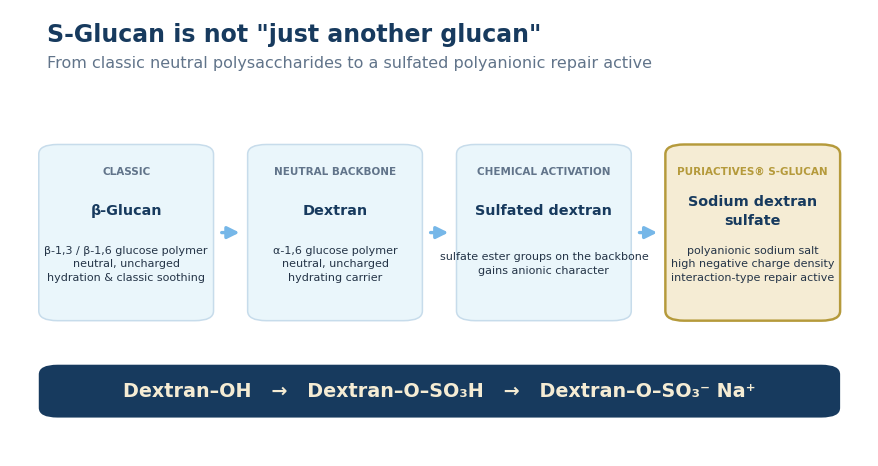
What sulfation changes: it converts a passive hydrating polysaccharide into an interactive, bioactive polyanion — a different chemical and functional category, not a line extension of β-glucan.
05 · SCIENTIFIC IDENTITY · THE SCIENCE
From dextran to sodium dextran sulfate
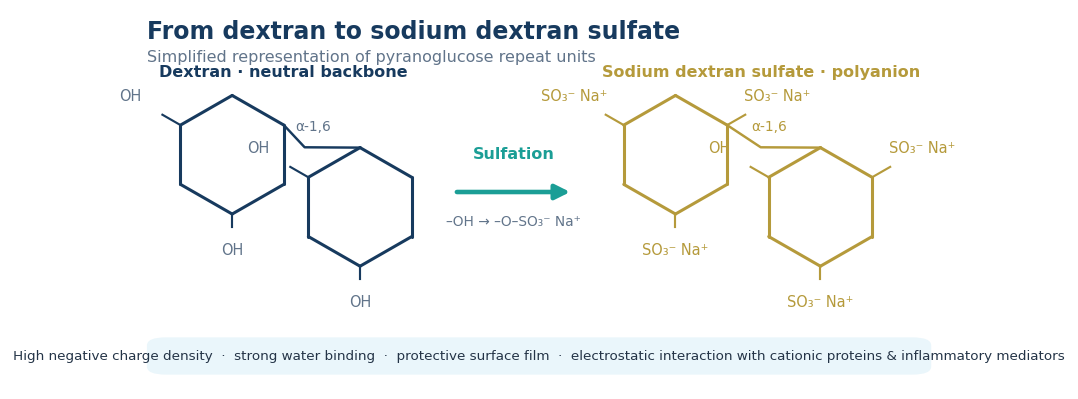
01 · The backbone
Dextran is a fermentation-derived branched glucose polymer dominated by α-1,6 glycosidic linkages — a neutral, uncharged polysaccharide.
02 · The chemical modification
Sulfation replaces backbone –OH groups with sulfate ester groups (–O–SO₃⁻ Na⁺), yielding a strongly anionic polymer with high charge density.
03 · The functional outcome
The polyanion binds water, forms a hydrating surface film, and interacts electrostatically with cationic proteins and inflammatory mediators.
06 · WHY CHARGE MATTERS · WHY CHARGE MATTERS
A polyanionic structure built for biological interaction
Electrostatic interaction. The dense sulfate charges interact with positively charged proteins and signaling mediators — including those that drive inflammatory amplification at the skin surface.
Glycosaminoglycan-like properties. Sulfated polysaccharides echo the polyanionic logic of the heparin-family glycosaminoglycans (GAGs), which are known to bind chemokines and modulate leukocyte–endothelium interactions.
Charge density correlates with bioactivity. For anionic polymers, inhibition of inflammatory-cell invasion has been shown to correlate with anionic charge density — and dextran sulfate is the preferred, most active polymer class (US5605938, 1997).
A macromolecular comfort film. Strong hydrophilicity supports surface hydration, moisture retention and protective-film formation, buffering stressed skin against environmental exposure.
PUBLISHED EVIDENCE SIGNAL
−66%
reduction in neutrophil migration observed with dextran sulfate in a biological assay — direct proof that a sulfated polyanion can intervene in inflammatory-cell trafficking.
Patent FR2877565A1 — non-therapeutic use of dextran sulfate to reduce skin reactions
Neutrophil influx is an early amplifier of visible irritation and post-stress redness. Restraining this step helps keep the skin’s inflammatory response proportionate to the stress it receives.
07 · MECHANISM OVERVIEW · MECHANISM OVERVIEW
One molecule, four layers of support
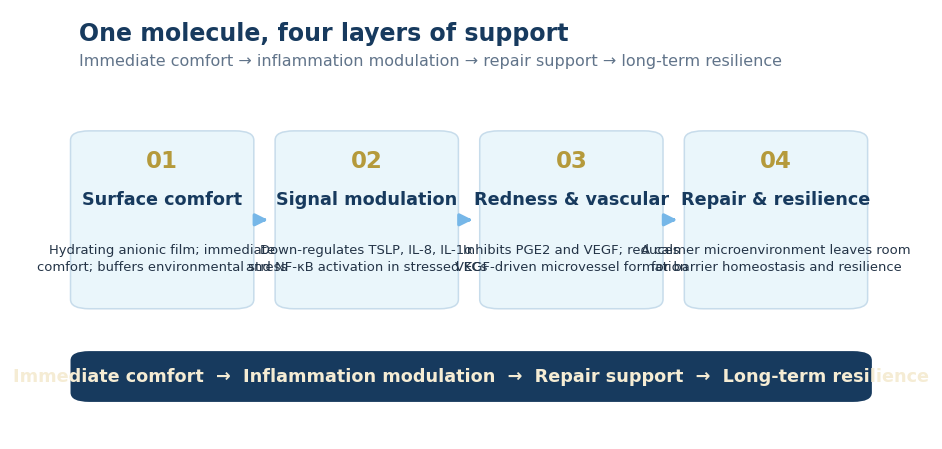
Each layer is supported by published in-vitro evidence on sodium dextran sulfate or mechanistically related sulfated polysaccharides — detailed in the following sections.
08 · MECHANISM 1 — INFLAMMATORY SIGNALING · MECHANISM 1
Quietening the inflammatory microenvironment
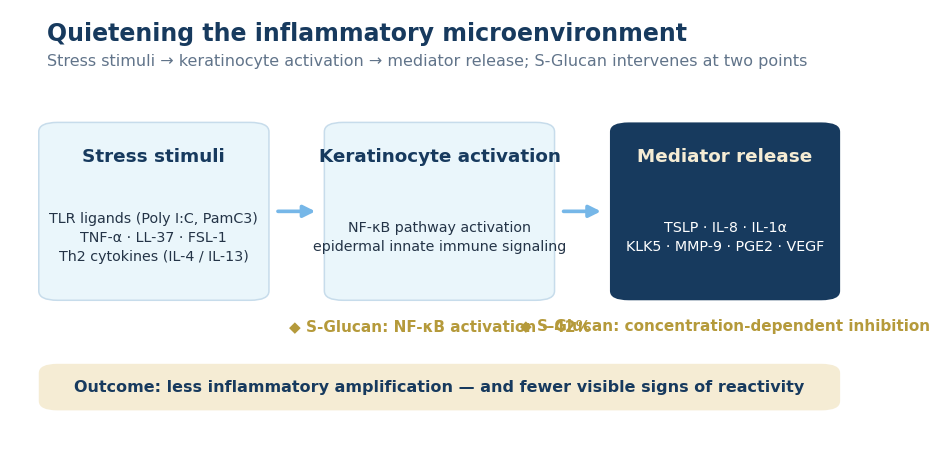
Key experimental findings
● −42% TNF-α-induced NF-κB activation (3 mg/mL, p<0.01) — WO2020201492A1
● Strong inhibition of IL-1α and IL-8 (10 µg/mL) — Hernandez-Pigeon et al., 2018
● Reduced KLK5 and MMP-9 mRNA (stressed keratinocytes) — Hernandez-Pigeon et al., 2018
● −66% neutrophil migration — FR2877565A1
09 · EVIDENCE — SENSITIVE & ATOPIC-PRONE SKIN · THE EVIDENCE
Concentration-dependent inhibition of TSLP and IL-8
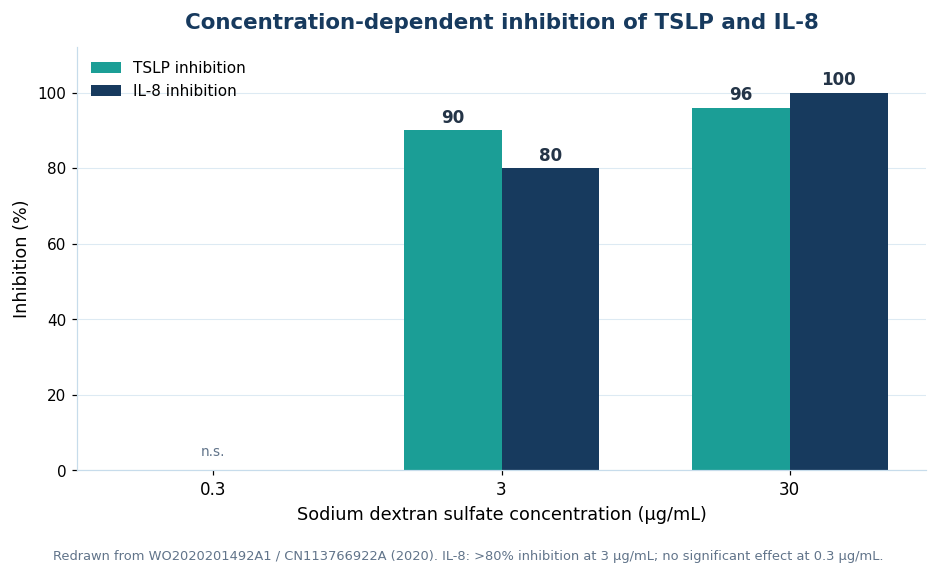
The experimental model
Normal human epidermal keratinocytes were pre-incubated with sodium dextran sulfate (MW 9–20 kDa), then stimulated for 24 hours with Poly I:C + PamC3 + IL-4 + IL-13 — mimicking an atopic inflammatory environment. TSLP and IL-8 were measured by ELISA; n = 3; p < 0.01 (vs. stimulated control).
Why it matters
● TSLP is the core alarmin released by stressed keratinocytes — it initiates the “itch–inflammation” cascade characteristic of reactive, atopic-prone skin.
● IL-8 is the key chemokine recruiting neutrophils into stressed skin.
● S-Glucan shows activity at microgram-per-milliliter concentrations — consistent with a high-potency, low-dose soothing active.
10 · MECHANISM 2 — REDNESS & VASCULAR RESPONSE · MECHANISM 2
Addressing the visible face of inflammation — redness
Visible redness is the downstream sign of the “inflammation–vascular” loop: lipid mediators dilate microvessels, while VEGF fuels vascular hyper-reactivity. In keratinocyte models of redness-prone skin, dextran sulfate acts on both arms of this loop — inflammatory mediators and the VEGF vascular axis. In a peer-reviewed study of actives for redness-prone skin (a rosacea-relevant in-vitro model), dextran sulfate was the multi-target soothing component of the system.
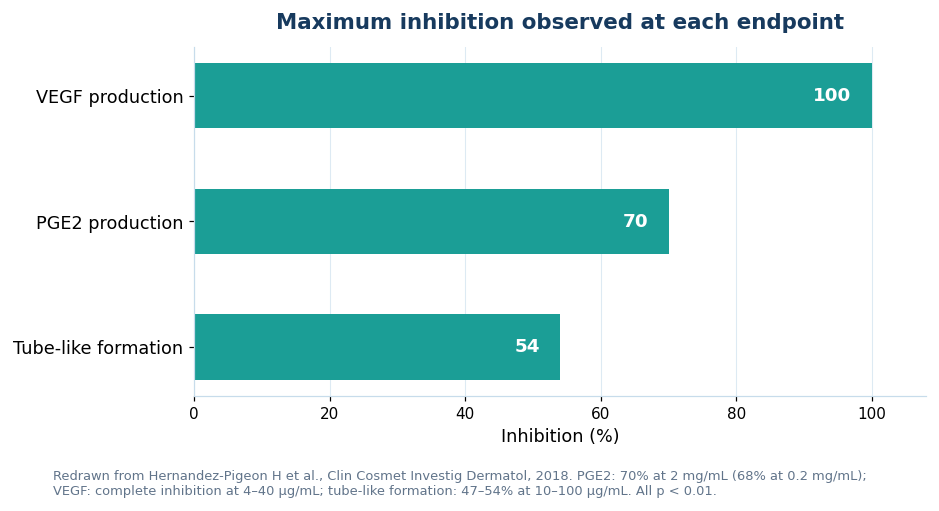
The model systems
● PGE2 — PMA-stimulated keratinocytes
● VEGF — LL-37 / FSL-1 / TNF-α redness environment
● Tube-like formation — VEGF-induced microvessel formation in endothelial/fibroblast co-culture
11 · MECHANISM 3 — BARRIER REPAIR · MECHANISM 3
Calmer skin recovers faster
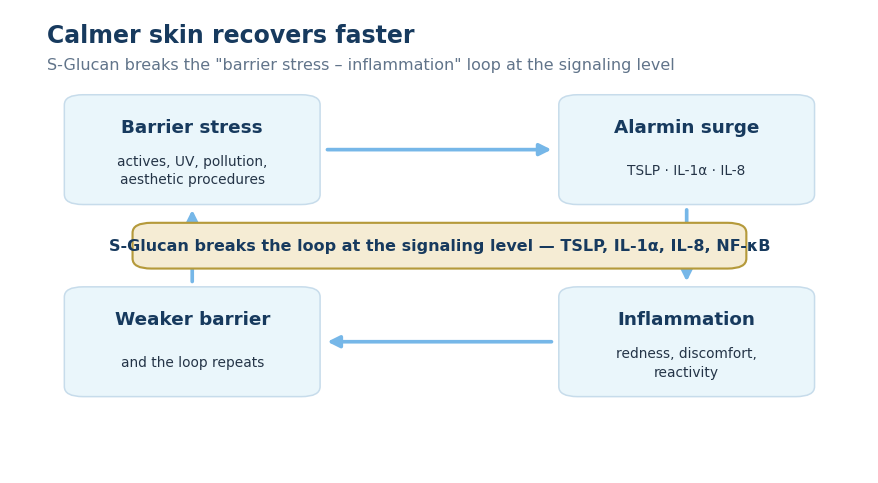
The repair logic
Persistent low-grade inflammation keeps keratinocytes in a defensive state, blocking orderly epidermal recovery. By down-regulating alarmin and cytokine release, S-Glucan helps the epidermal environment shift from defense back to repair — supporting barrier recovery and day-after-day resilience.
Evidence boundaries
● Direct evidence: mediator inhibition in stressed keratinocytes (TSLP, IL-8, IL-1α, NF-κB).
● Mechanistic inference: barrier-repair benefit follows the “inflammation–barrier” axis described in the dermatological literature.
● Ongoing at PuriPharm: a barrier-biomarker program (filaggrin, loricrin) on the 9–20 kDa standard grade.
12 · BENEFIT ARCHITECTURE · THE BENEFITS
From mechanism to visible skin benefits
| Immediate skin comfortHelps calm stressed and reactive skinHelps reduce the appearance of visible rednessHelps relieve the look and feel of irritation | Sensitive skin supportDesigned for fragile, reactive skinHelps progressively improve skin toleranceSupports recovery after environmental or cosmetic stress |
| Barrier repairSupports epidermal recovery after stressHelps rebuild skin resilienceComplements ceramide and lipid barrier-repair systems | Post-efficacy recoveryPartner active for retinoid and acid routinesHelps improve the tolerability of high-efficacy systemsSupports long-term adherence to results-driven regimens |
Benefit statements are intended for cosmetic applications, anchored to the in-vitro evidence presented in the mechanism sections, and do not constitute therapeutic claims for any skin disease.
13 · DIFFERENTIATION · THE DIFFERENCE
S-Glucan vs. conventional β-glucan
| Dimension | Conventional β-glucan | PuriActives® S-Glucan |
|---|---|---|
| Structural class | Neutral / partially branched glucan | Sulfated polyanionic polysaccharide |
| Backbone | β-1,3 / β-1,6 glucose polymer | α-1,6 dextran backbone, sulfate-esterified |
| Charge density | Low — essentially uncharged | High negative charge density (–OSO₃⁻ Na⁺) |
| Interaction profile | Hydration, moisturizing comfort | Ionic & protein interactions; inflammatory-mediator modulation |
| Evidence focus | Hydration, comfort | TSLP / IL-8 / IL-1α, NF-κB, PGE2, VEGF, neutrophil migration |
| Positioning | Classic soothing polysaccharide | Next-generation sulfated repair active |
S-Glucan belongs to a distinct chemical and functional category — it should be evaluated on its own evidence base, not treated as a line extension of β-glucan.
14 · FORMULATION STRATEGY · FORMULATION STRATEGY
The tolerability partner for high-efficacy systems
The discomfort that limits retinoid, acid and vitamin C routines is inflammatory in nature — it runs through the very mediators S-Glucan down-regulates in vitro: PGE2, IL-1α, IL-8 and NF-κB. Pairing the high-efficacy engine with a repair active lets a formula preserve efficacy while improving comfort, adherence and repurchase.
Positioning principle: efficacy must be balanced with tolerability — build both into the same formulation chassis.
In the keratinocyte redness model, PGE2 was reduced by 68–70% and VEGF completely inhibited — precisely the mediator signature of active-induced irritation.
Designed to partner with
● Retinoids — retinol, retinal and their derivatives
● Exfoliating acids — AHA / BHA / PHA systems
● Vitamin C — high-strength antioxidant serums
● Dark-spot systems — tone-evening routines
● Blemish-care actives — drying, keratolytic formulas
● Post-procedure routines — after laser, peels, microneedling
S-Glucan is strongly anionic; combinations with cationic conditioning agents require formulation verification — see the Formulation Guidance section.
15 · APPLICATIONS · APPLICATIONS
Where S-Glucan delivers the most value
| Anti-redness serumsTargets the PGE2 / VEGF inflammation–vascular axis behind visible redness. | Daily care for sensitive skinTSLP / IL-8 modulation for daily routines for reactive and atopic-prone skin. |
| Post-procedure & post-laser careSupports the recovery environment after energy-based procedures and peels. | Retinoid & acid recovery productsThe tolerability partner inside high-efficacy formulation chassis. |
| After-sun & anti-pollution careA comfort film and mediator control after environmental stress. | Soothing masks & facial mistsWater-based formats are a natural fit for a readily water-soluble polyanion. |
| Eye contour careThin skin with visible vasculature; dextran sulfate compositions are patented for redness, puffiness and the eye contour (US6562355B1). | Scalp soothing careSensitive scalp and the anti-dandruff-adjacent space — an emerging need. |
| After-shave careLow use levels calm mechanical-stress reactions. | Minimalist gentle concepts”Skinimalist” formulas built around a single, well-characterized molecule. |
Formats span serums, creams, gels, lotions, essences, masks, mists and scalp lotions — the molecule is format-agnostic in aqueous systems.
16 · FORMULATION GUIDANCE · FORMULATION GUIDANCE
Working with a strong polyanion
Simple to use
● Readily soluble in water and salt solutions — add to the water phase under conventional stirring.
● Wide pH window: reported stable in pH 4–10 solutions at room temperature, covering essentially all leave-on formats.*
● Low dose, low texture impact: effective at 0.05–0.20%; virtually no effect on viscosity or skin feel at these levels.
● Compatible with nonionic and anionic systems — conventional emulsions, gels, serums and mists.
Verify before scale-up
● Cationic ingredients: polyquaterniums, cationic surfactants and cationic conditioning polymers may form complexes with a strong polyanion — check clarity and stability.*
● Positively charged peptides — verify compatibility case by case.*
● High levels of multivalent metal ions — evaluate in the final formulation chassis.*
● Grade selection: molecular weight (9–20 vs. 4–8 kDa) and degree of sulfation both affect activity and solution behavior — fix the grade before locking the formula.
* Marked items require confirmation in the PuriPharm applications laboratory for the specific grade and formulation chassis; a full compatibility matrix is available on request.
17 · PRODUCT PROFILE · PRODUCT PROFILE
PuriActives® S-Glucan — specification summary
| Product name | PuriActives® S-Glucan |
| INCI name | Sodium Dextran Sulfate |
| CAS No. | 9011-18-1 |
| Appearance | White to off-white powder |
| Active content | ≥ 95% (on dry basis) |
| Molecular weight | 9–20 kDa (standard grade); 4–8 kDa grade available on request |
| Solubility | Readily soluble in water |
| Recommended use level | 0.05–0.20% (typical); patent literature supports 0.01–0.5% |
| Quality control | SEC/GPC for molecular weight; elemental analysis / ICP-OES for sulfur content; ion chromatography for free sulfate — documented per batch on the CoA |
| Microbiology & heavy metals | Controlled to cosmetic ingredient standards |
The degree of sulfation is defined per grade and documented batch-by-batch on the Certificate of Analysis (CoA), rather than stated as a single generic value — see the Quality & Analytics section.
18 · QUALITY & ANALYTICS · QUALITY & ANALYTICS
Not all sodium dextran sulfate is equal
Sodium dextran sulfate is a distribution-defined polymer: even with identical INCI and CAS, differences in molecular weight, molecular-weight distribution, degree of sulfation and free-sulfate residue all change protein binding, ionic strength, viscosity and bioactivity. S-Glucan is therefore defined by a dual-axis specification — molecular weight × degree of sulfation — never by INCI alone.
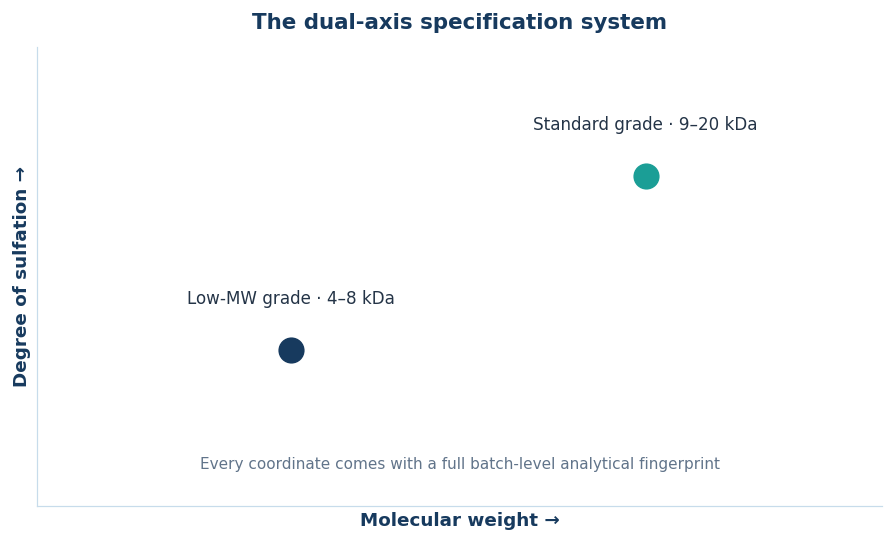
Batch-level analytical control
● SEC / GPC — Mw, Mn and polydispersity for every batch
● Elemental analysis / ICP-OES — total sulfur content
● Ion chromatography — free sulfate residue
● ¹H / ¹³C NMR — backbone and sulfation-site confirmation
● FTIR — characteristic S=O and C–O–S bands
● Moisture, ash, sodium content, conductivity — batch-to-batch consistency
Defined structure → defined performance: every batch of S-Glucan ships with the complete analytical fingerprint a formulator needs to reproduce results.
19 · KEY TAKEAWAYS · KEY TAKEAWAYS
Why formulators choose S-Glucan
01 A category of its own, not another glucan. Sulfation converts a neutral polysaccharide into a strong polyanionic repair active with a fundamentally different interaction profile.
02 A multi-target, literature-backed mechanism. Concentration-dependent inhibition of TSLP and IL-8; inhibition of IL-1α, KLK5 and MMP-9; reduced NF-κB activation; up to 66% less neutrophil migration.
03 Active on both arms of the redness loop. In published keratinocyte and co-culture models: PGE2 reduced by 68–70%, VEGF completely inhibited, and VEGF-driven microvessel formation reduced by 47–54%.
04 The tolerability partner modern formulas need. Purpose-built for sensitive skin, post-procedure care and high-efficacy retinoid/acid systems — at use levels of just 0.05–0.20%.
05 Defined by science, not traded as a commodity. A dual-axis molecular weight × sulfation specification with full batch analytics from PuriPharm — reproducible performance, batch after batch.
20 · REFERENCES · REFERENCES
Sources and scientific basis
Peer-reviewed literature
1. Hernandez-Pigeon H, Garidou L, Galliano M-F, et al. Effects of dextran sulfate, 4-t-butylcyclohexanol, pongamia oil and hesperidin methyl chalcone on inflammatory and vascular responses implicated in rosacea. Clin Cosmet Investig Dermatol. 2018;11:405–414. doi:10.2147/CCID.S168621
2. Misery L, Sibaud V, Merial-Kieny C, Taieb C. Sensitive skin in the American population: prevalence, clinical data, and role of the dermatologist. Int J Dermatol. 2011;50(8):961–967.
3. Farage MA. The prevalence of sensitive skin. Cosmetics. 2019;6(2):26.
Patent literature
4. WO2020201492A1 / CN113766922A — dextran sulfate and compositions thereof for inflammatory skin conditions; TSLP / IL-8 / NF-κB experimental data, 2020.
5. FR2877565A1 — non-therapeutic use of dextran sulfate for preventing and/or reducing skin reactions; neutrophil migration experimental data, priority 2004.
6. US6562355B1 — dextran sulfate / escin compositions for skin redness, puffiness and sensitive skin, including eye contour care, 2003.
7. US5605938 — anionic polymers inhibiting cell invasion; activity correlated with anionic charge density, 1997.
Market data
8. Mordor Intelligence. Dermocosmetics Skin Care Products Market — Size, Share & Forecasts (2026–2031). 2026 edition.
9. Future Market Insights. Repairing Skin Care Treatments Market Forecast and Outlook 2026 to 2036. 2026.
The in-vitro data cited in the mechanism sections originate from sodium dextran sulfate of the same INCI category as PuriActives® S-Glucan; the data characterize the technology platform, were redrawn from the cited sources, and the values were not altered.
NanoActive ELA — Nano-Encapsulated Ellagic Acid
PuriActives® NanoActive Nano-Encapsulation Platform ·
PURIPHARM CO., LTD.
NanoActive ELA — Nano-Encapsulated Ellagic Acid
Unlocking the multi-dimensional skincare and haircare potential
of ellagic acid through nano-delivery
INCI NAME: ELLAGIC ACID | CAS 476-66-4
01 · WHY ELLAGIC ACID · THE MOLECULE
A natural polyphenol active, validated again and again
From a single molecule, ellagic acid spans five skin-biology themes: skin tone management, oxidative stress, photoaging, inflammatory modulation, and the follicular microenvironment. Since its first cosmetic-science publication in 2000, skin- and hair-related evidence for ellagic acid has accumulated across four levels: in-vitro enzymology, cell models, animal models, and human randomized controlled trials.
Skin tone management
Reversible tyrosinase inhibition and MITF signaling down-regulation; a randomized double-blind human trial showed that 4 weeks of an ellagic acid-rich extract inhibits UV-induced pigmentation.
Oxidative stress defense
Direct radical scavenging plus up-regulation of the endogenous Nrf2 / HO-1 / SOD antioxidant system, protecting keratinocytes and fibroblasts from UV oxidative damage.
Photoaging protection
In UVB animal models, reduces wrinkle formation and epidermal thickening, inhibits MMP secretion and collagen degradation, and down-regulates inflammatory signals such as IL-1β and IL-6.
Scalp & follicular microenvironment
Inhibits DHT-induced ferroptosis in dermal papilla cells and activates Wnt/β-catenin signaling.
Sources — Kasai et al., J Nutr Sci Vitaminol 2006 · Hseu et al., Food Chem Toxicol 2012 · Bae et al., Exp Dermatol 2010 · Fu et al., J Ethnopharmacol 2024
02 · MOLECULAR PROFILE · THE SCIENCE
Ellagic acid: a highly conjugated polyphenolic dilactone
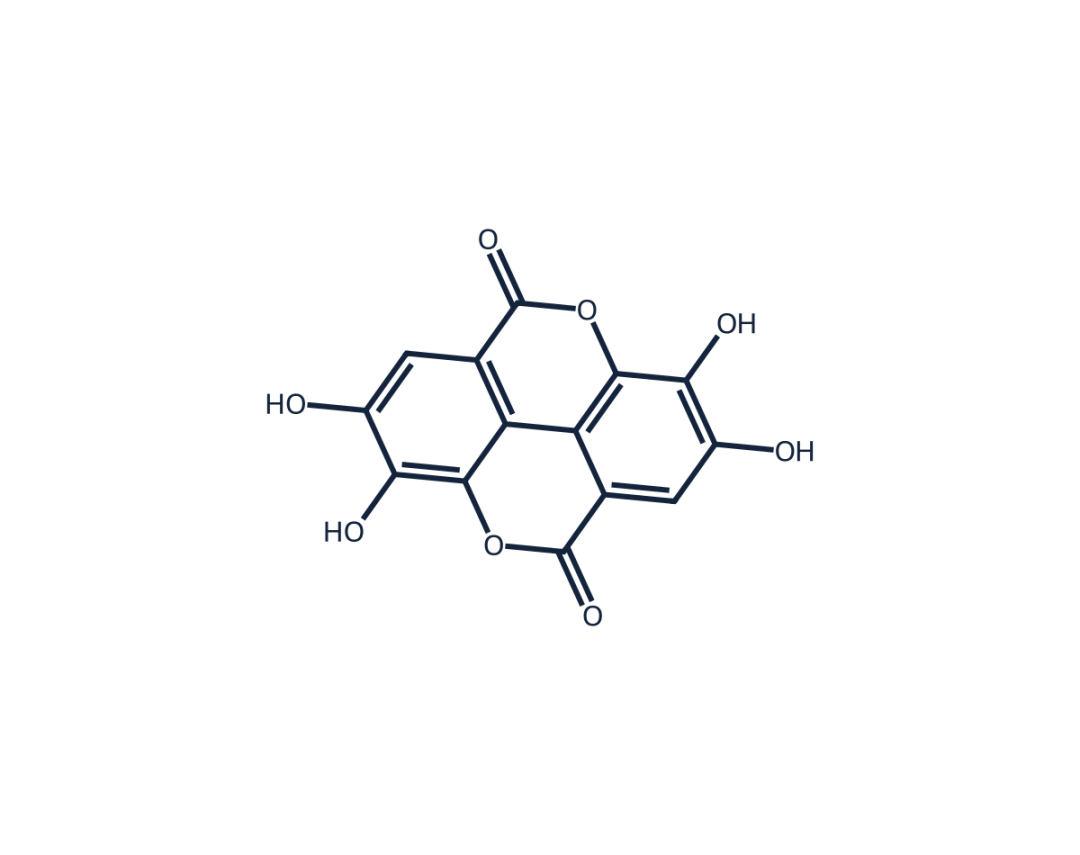
| Common name | Ellagic acid |
| INCI | ELLAGIC ACID |
| CAS No. | 476-66-4 |
| Formula / MW | C₁₄H₆O₈ / 302.19 g·mol⁻¹ |
| Chemical class | Hydrolysable-tannin-derived polyphenolic dilactone |
| IUPAC | 2,3,7,8-Tetrahydroxychromeno[5,4,3-cde]chromene-5,10-dione |
| Natural sources | Pomegranate, berries, nuts, Chinese gallnut, etc. |
Structure–activity relationship
● 4 phenolic hydroxyls: donate hydrogen to quench free radicals — the basis of antioxidant activity
● Vicinal phenolic hydroxyls: chelate metal ions such as Cu²⁺, acting on the tyrosinase active center
● Highly conjugated rigid scaffold + two lactone rings: both electron-donor and acceptor sites, strong redox activity
Sources — Ríos et al., Planta Med 2018;84:1068–1093 · Castellacci & Bergonzi, Molecules 2025;30:4493 · Mantzourani et al., Separations 2024;11:174
03 · MULTI-DIMENSIONAL SKIN BIOLOGY · THE SCIENCE
One molecule, five dimensions
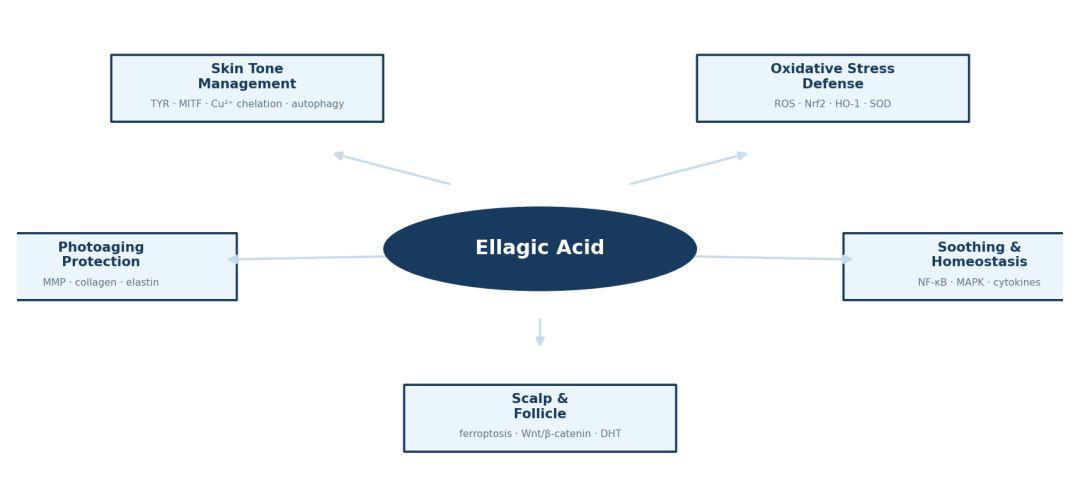
Each of the five dimensions is supported by research in skin, scalp, or their cell models — the following chapters walk through them one by one.
04 · SKIN TONE MANAGEMENT (I) · SKIN TONE
Targeting tyrosinase: melanin control from the active center up
Tyrosinase inhibition IC₅₀ = 0.2 ± 0.05 mM
In-vitro mushroom tyrosinase kinetics: ellagic acid is a reversible, mixed-type inhibitor whose binding relies on hydrogen bonds and electrostatic interactions (Huang et al., 2019)
Consistent evidence from enzymology to cells and animal models
● A defined site of action: ellagic acid chelates the Cu²⁺ at the tyrosinase active center — reversible inhibition that does not damage melanocytes (Shimogaki et al., 2000)
● Cellular level: melanogenesis suppressed in B16 melanoma cells; removing ellagic acid restores melanin synthesis, indicating a non-cytotoxic mechanism (Shimogaki et al., 2000)
● Animal level: inhibits UV-induced skin pigmentation in the brown guinea pig model (Shimogaki et al., 2000; Yoshimura et al., 2005)
● Kinetic support: ellagic acid can enter the melanin biosynthesis pathway directly and be oxidized by tyrosinase, interfering with the melanization process (Ortiz-Ruiz et al., 2016)
Sources — Huang et al., J Food Biochem 2019;43:e12996 · Shimogaki et al., Int J Cosmet Sci 2000;22:291–303 · Yoshimura et al., Biosci Biotechnol Biochem 2005;69:2368–2373 · Ortiz-Ruiz et al., J Dermatol Sci 2016;82:115–122
05 · SKIN TONE MANAGEMENT (II) · SKIN TONE
A complete chain from signaling pathways to human evidence
Human-level skin tone evidence
2006 Randomized double-blind placebo-controlled trial — oral ellagic acid-rich (90%) pomegranate extract at 100 / 200 mg·d⁻¹ × 4 weeks inhibited UV-induced skin pigmentation (Kasai et al.)
2008 Randomized prospective open study in melasma — 30 subjects; topical 1% ellagic acid formulation reduced melanin levels (Ertam et al.)
2013 Comparative evaluation vs. 4% hydroquinone — a formula of 0.5% ellagic acid + 0.1% salicylic acid was comparable to 4% hydroquinone in reducing the appearance of dark spots, with good tolerability (Dahl et al.)
Mechanism verification: the autophagy inhibitor 3-MA or LC3 silencing markedly weakens ellagic acid’s anti-melanogenic effect; an in-vivo zebrafish model confirms inhibition of tyrosinase activity and endogenous pigmentation (Yang et al., 2021).
Cosmetic-language translation: improving dull skin tone · evening skin tone · enhancing skin radiance · reducing the appearance of dark spots · improving photodamage-related uneven tone
Sources — Yang et al., Biochem Pharmacol 2021;185:114454 · Kasai et al., J Nutr Sci Vitaminol 2006;52:383–388 · Ertam et al., J Dermatol 2008;35:570–574 · Dahl et al., J Drugs Dermatol 2013;12:52–58
06 · OXIDATIVE STRESS DEFENSE · ANTIOXIDANT
From radical scavenging to activating the endogenous antioxidant system
DPPH radical scavenging IC₅₀ = 4.86 µM
Measured by in-vitro chemiluminescence assay (Muddathir et al., 2013)
Keratinocytes: UVA oxidative stress model
HaCaT cells pretreated with ellagic acid before UVA irradiation: intracellular ROS and the lipid-peroxidation product MDA decreased, mitochondrial function and DNA integrity were protected, and Nrf2 / HO-1 / SOD expression was up-regulated (Hseu et al., 2012).
Fibroblasts: UVB oxidative stress model
In a human dermal fibroblast UVB model, ellagic acid lowered intracellular ROS and MMP-2 and restored UVB-suppressed Nrf2 levels, indicating up-regulation of the antioxidant response element pathway (Baek et al., 2016).
Ellagic acid’s antioxidant action is not single-point scavenging: beyond direct radical quenching by phenolic hydroxyls, it up-regulates the endogenous antioxidant enzyme system via the Nrf2 / ARE axis — a dual-layer “direct scavenging + systemic defense” mechanism.
Formulation translation: antioxidant serums · urban defense · anti-pollution care · the mechanistic basis for daytime defense products
Sources — Hseu et al., Food Chem Toxicol 2012;50:1245–1255 · Baek et al., Korean J Physiol Pharmacol 2016;20:269–277 · Muddathir et al., J Wood Sci 2013;59:426–431 · Yang et al., Biochem Pharmacol 2021;185:114454
07 · PHOTOAGING PROTECTION · PHOTOAGING
Breaking the UV → ROS → MAPK / AP-1 → MMP damage cascade
UVB hairless mouse model (Bae et al., 2010)
● Ellagic acid treatment reduced UVB-induced wrinkle formation and epidermal thickening
● Inhibited MMP secretion and collagen degradation, and down-regulated inflammatory factors including IL-1β and IL-6
● Indicates ellagic acid acts simultaneously on the three photoaging links: oxidation — inflammation — matrix degradation
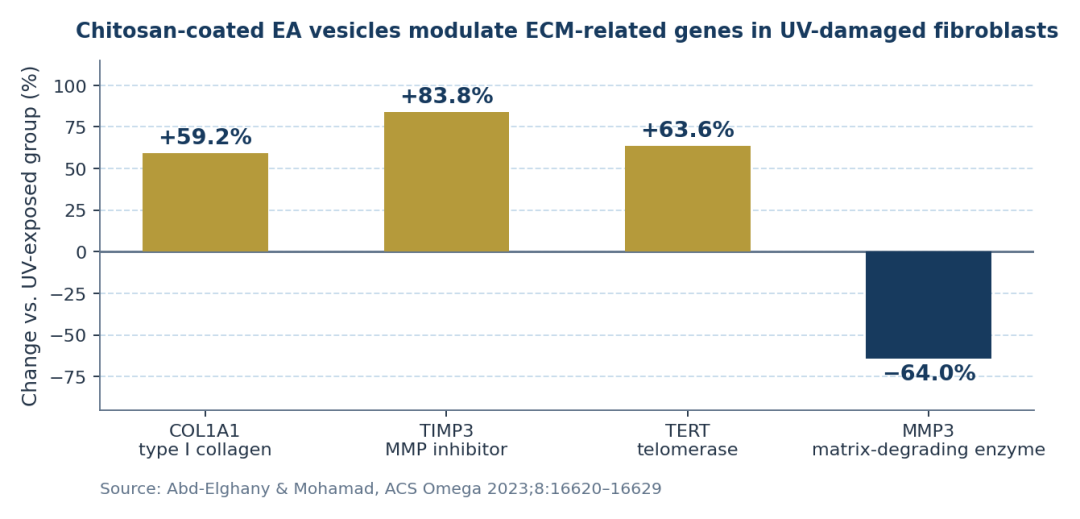
Positive support for matrix synthesis: in human dermal fibroblasts, ellagic acid — alone or combined with retinoic acid — promotes collagen and elastin production (Duckworth et al., 2023).
Sources — Bae et al., Exp Dermatol 2010;19:e182–e190 · Abd-Elghany & Mohamad, ACS Omega 2023;8:16620–16629 · Duckworth et al., Biomed Mater Eng 2023;34:473–480
08 · SOOTHING & SKIN HOMEOSTASIS · SOOTHING
Bidirectional regulation of oxidation and inflammation
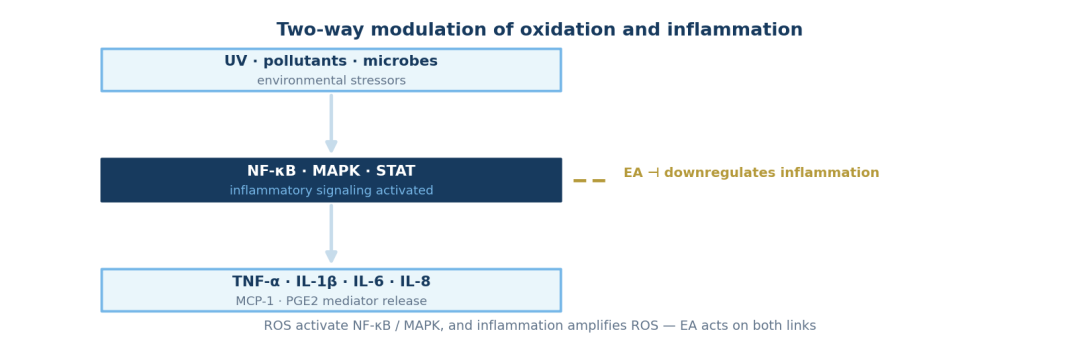
Post-UVB inflammatory gene profile in keratinocytes
After UVB irradiation of HaCaT cells, ellagic acid significantly down-regulated the inflammatory gene expression of IL-1β, IL-6, IL-8, IL-10, MCP-1 and TNF-α (Lembo et al., 2014).
MAPK / STAT pathways and barrier homeostasis
In TNF-α / IFN-γ-stimulated keratinocytes, ellagic acid inhibited pro-inflammatory cytokine production via MAPK and STAT pathways; in an atopic-dermatitis-like mouse model it improved skin condition and lowered TEWL as well as serum IgE, IL-6 and TNF-α levels (Gil et al., 2021).
Oxidative stress and inflammatory signaling amplify each other: ROS activates NF-κB / MAPK, and inflammation further amplifies ROS. Ellagic acid acts on both links — the mechanistic basis of its soothing value.
Cosmetic-language translation: soothing · improvement of red/sensitive states · post-sun skin comfort · environmental stress defense · skin homeostasis support
Sources — Lembo et al., Biomed Res Int 2014;2014:346793 · Gil et al., Int J Mol Sci 2021;22:1277 · Bae et al., Exp Dermatol 2010;19:e182–e190 · Han et al., Adv Tradit Med 2024;25:723–733
09 · SCALP & FOLLICLE HEALTH · HAIR & SCALP
Extending skin science into the follicular microenvironment
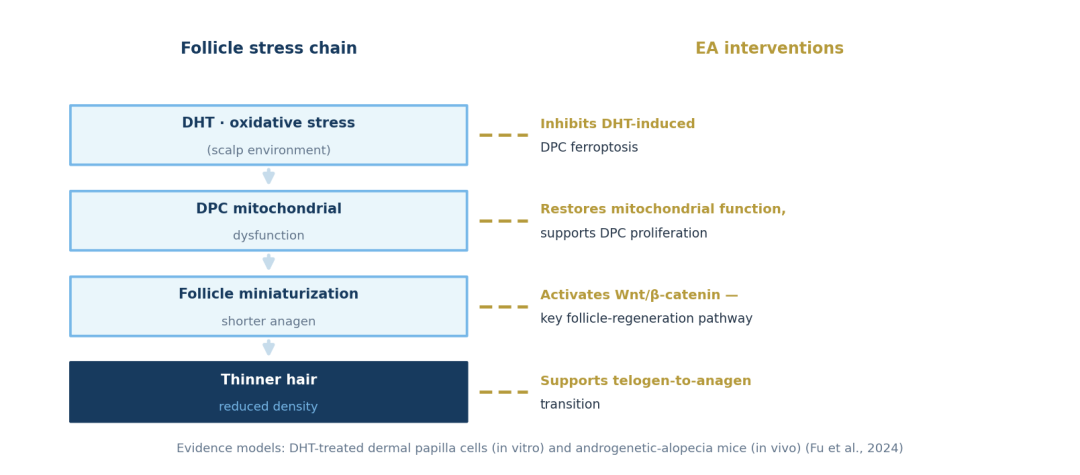
Direct follicle research evidence
Fu et al. (2024, J Ethnopharmacol): ellagic acid inhibits DHT-induced ferroptosis in dermal papilla cells, restores mitochondrial function, activates Wnt/β-catenin signaling, and supports hair regrowth in a mouse model.
Dermal papilla cell proliferation evidence (in vitro)
Park et al. (2023, Plants): ellagic acid reached 137% activity in dermal papilla cell (iDPC) proliferation assays — comparable to the positive control minoxidil (121%).
Scalp mechanisms shared with skin
The scalp is an extension of the skin: ROS scavenging, Nrf2 activation and NF-κB down-regulation apply equally to scalp antioxidant and soothing scenarios; chestnut bur extract (with ellagic acid as an active component) blocks C. acnes-induced TLR2 / NF-κB activation (You et al., 2022).
Robust yet defensible wording: supporting a healthy follicular microenvironment · mitigating oxidative-stress impact on follicles · supporting scalp homeostasis · maintaining hair vitality
Sources — Fu et al., J Ethnopharmacol 2024;330:118227 · Park et al., Plants 2023;12:1018 · You et al., Appl Biol Chem 2022;65:12
10 · THE APPLICATION CHALLENGE · THE CHALLENGE
Ellagic acid is powerful — but not easy to use
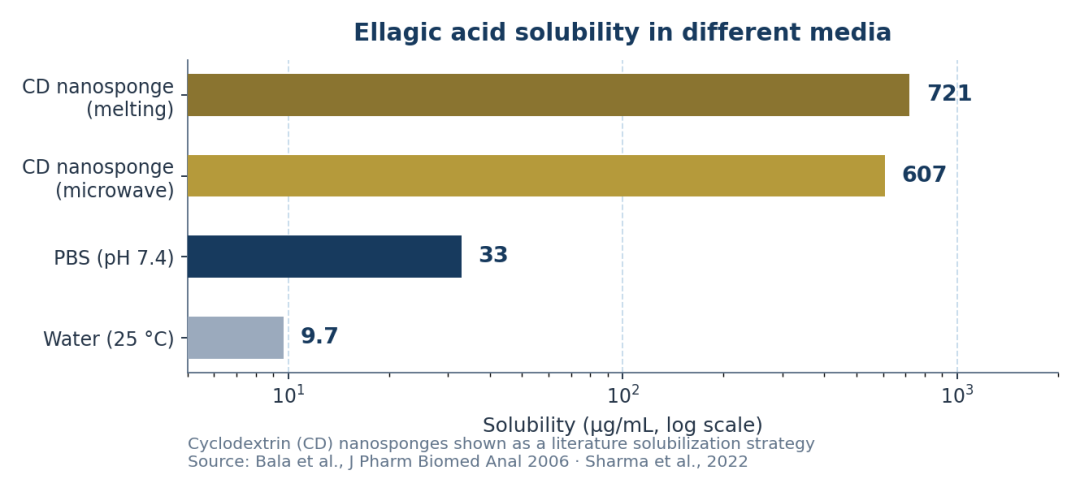
Formulation & delivery barriers of conventional ellagic acid
● Poor aqueous solubility: only ~9.7 µg/mL in water — hard to build effective concentrations in water-based formulas (Bala et al., 2006)
● Unfavorable oil/water partitioning: logP ≈ 0.52, making it difficult to cross the dense stratum corneum barrier (Yang et al., 2025)
● BCS Class IV molecule: doubly limited by low solubility + low permeability (Nyamba et al., 2021)
● Crystallization & aggregation: the highly rigid conjugated scaffold crystallizes readily, causing insufficient formulation homogeneity, uneven content, and appearance/stability risks
● Limited high loading: dispersion difficulties make high-load formulas hard to achieve, resulting in low practical utilization
High bioactivity ≠ high formulation efficiency — this is exactly the question NanoActive ELA answers
Sources — Bala et al., J Pharm Biomed Anal 2006;40:206–210 · Nyamba et al., Eur J Pharm Biopharm 2021;159:198–210 · Yang et al., Sci Rep 2025;15:27183 · Ceci et al., Nanotechnology 2020;31:382001
11 · NANOACTIVE NANO-DELIVERY · THE SOLUTION
NanoActive ELA: designed for poorly soluble actives
Rebuilding the physical form of ellagic acid with nano-encapsulation: turning a molecule that is scientifically strong but hard to use into a high-value active ingredient adapted to modern cosmetic formulation systems.
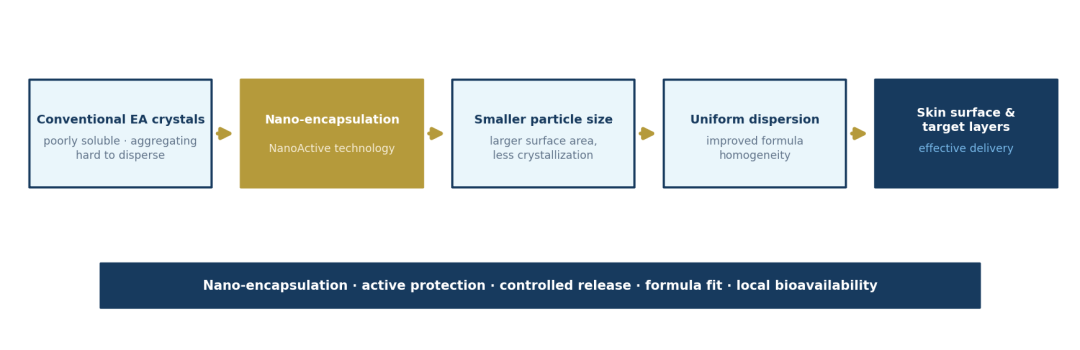
The skin delivery pathway follows the science of the skin barrier: the value of nano-encapsulation lies in improving dispersion, protection and release behavior, so the active reaches the skin surface and relevant skin layers with higher utilization efficiency.
12 · TECHNICAL LOGIC · THE SOLUTION
What happens when particle size shrinks?
01 Dispersion
Uniform nanoscale dispersion in the aqueous phase. Literature ellagic acid vesicle systems: 124–752 nm, PDI < 0.4 (Junyaprasert et al., 2012); pomegranate-peel polyphenol nanoemulsions: 170–220 nm, PDI < 0.2, encapsulation efficiency 70–80% (Baccarin & Lemos-Senna, 2017).
02 Protection
Lipid-matrix encapsulation isolates the active from light and oxygen. Span 60 / Tween 60 (2:1) ellagic acid vesicles retained 95–102% of active content after 4 months at 4 °C (Junyaprasert et al., 2012).
03 Delivery
Improved distribution and retention in skin. Ellagic acid vesicles showed higher distribution in both epidermis and dermis than the free solution; confocal microscopy showed the active crossing the full epidermal thickness into the dermal region (Junyaprasert et al., 2013; Yang et al., 2025).
04 Release
Sustained-release behavior extends the active’s working time. Under simulated skin microenvironment conditions (pH 5.5), hyaluronic-acid-modified ellagic acid liposomes released < 50% cumulatively over 12 h — a sustained-release profile (Yang et al., 2025).
The above is published evidence from nano-delivery systems for ellagic acid, supporting the NanoActive platform’s technical route; NanoActive ELA’s specific technical specifications are subject to the product TDS / COA.
13 · VALUE COMPARISON · THE VALUE
From a good molecule to a good ingredient
| Dimension | Conventional ellagic acid | NanoActive ELA |
|---|---|---|
| Dispersibility | Limited | Optimized |
| Aqueous-phase compatibility | Low | Improved |
| Crystal aggregation risk | High | Reduced |
| Formulation homogeneity | Constrained | Enhanced |
| Active protection | Limited | Encapsulation-protected |
| Effective surface area | Low | Significantly increased |
| Topical delivery efficiency | Constrained | Optimized |
| Formulation flexibility | Low | Enhanced |
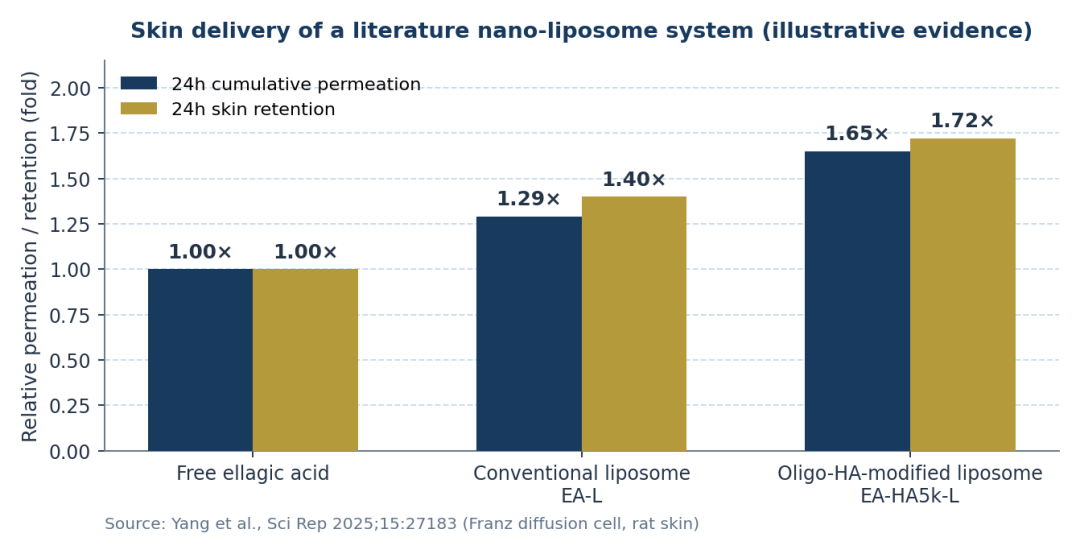
Oligomeric-hyaluronic-acid-modified ellagic acid liposomes (EA-HA5k-L) achieved 1.65× and 1.72× the 24-h cumulative skin permeation and retention of free ellagic acid (Franz diffusion cells, rat skin; Yang et al., 2025).
Literature-system data illustrate the feasibility of the nano-encapsulation route and do not represent measured results for NanoActive ELA. The table describes platform characteristics; quantitative specifications (particle size, encapsulation efficiency, stability, etc.) are subject to the NanoActive ELA product TDS / COA.
Sources — Yang et al., Sci Rep 2025;15:27183 · Junyaprasert et al., Int J Pharm 2012;423:303–311 · Singh Hallan et al., Molecules 2020;25:1449
14 · SKINCARE APPLICATION MAP · SKINCARE APPLICATION
From mechanism anchors to product concepts
01 Skin tone management
Brightening serum · Dark-spot lotion · Tone-evening mask
Mechanism anchors: TYR activity inhibition (Cu²⁺ chelation) · MITF down-regulation · melanosome autophagy induction
Evidence: in-vitro enzymology & cells + animal + human (oral RCT, topical clinical)
02 Oxidative stress defense
Urban defense serum · Antioxidant booster · Anti-pollution care
Mechanism anchors: direct radical scavenging · Nrf2 / HO-1 antioxidant pathway support
Evidence: in-vitro chemical assays + keratinocyte / fibroblast models
03 Photoaging protection
Daytime defense lotion · Photoaging repair cream · After-sun gel
Mechanism anchors: MMP-1/3/9 inhibition · collagen & elastin protection · UV inflammation modulation
Evidence: cells + animal models + extracellular-matrix-related gene expression
04 Soothing & stability
Soothing serum · Barrier repair lotion · Redness-prone skin care
Mechanism anchors: NF-κB / MAPK / STAT signaling regulation · inflammatory cytokine down-regulation
Evidence: cytokine / chemokine gene expression + animal models
Product concepts are illustrative directions for formulation development; specific efficacy claims must be based on finished-product test data and comply with the regulations of the target market.
Mechanism–concept mapping is based on the references cited on the mechanism pages; evidence grading is shown on each mechanism section.
15 · HAIRCARE & SCALP APPLICATIONS · HAIRCARE APPLICATION
The productization pathway for scalp care
Mechanism anchors and evidence boundaries
● Inhibition of DHT-induced ferroptosis in dermal papilla cells with mitochondrial-function recovery (in vitro + animal; Fu et al., 2024)
● Dermal papilla cell proliferation activity comparable to the positive control (in vitro; Park et al., 2023)
● Wnt/β-catenin signaling and hair-cycle support (animal model)
● Modulation of scalp-microbiome-related inflammatory signaling (in vitro; You et al., 2022)
01 Scalp serum (leave-on)
Nano-encapsulation supports uniform dispersion and retention of the active on the scalp surface — the follicular-microenvironment care concept.
02 Scalp soothing mist · scalp lotion
Improves ellagic acid’s compatibility with water-based systems, built around scalp oxidative stress and stress-state relief.
03 Root-strengthening care
A product concept centered on follicular oxidative-stress management, suited to scalp-massage usage scenarios.
04 Shampoo · rinse-off systems
Nanocarriers help deposit and retain the active toward the scalp and follicles; effects require formulation-level verification.
Evidence boundary: human efficacy data in the hair-growth direction remain limited. Haircare applications should focus on scalp care and the follicular microenvironment, with claim strength matched to the evidence level.
Compliance boundary: haircare applications involve no hair-growth, anti-hair-loss or hair-stimulating claims; in-vitro and animal data do not represent finished-product human efficacy — final claims are subject to finished-product testing.
Sources — Fu et al., J Ethnopharmacol 2024;330:118227 · Park et al., Plants 2023;12:1018 · Wongrakpanich et al., J Oleo Sci 2022;71:1085–1096
16 · THE VALUE LOOP · WHY NANOACTIVE ELA
Why NanoActive ELA
One good molecule, one delivery technology, two application tracks.
01 A foundation in molecular science. Multi-pathway mechanistic evidence across skin tone, oxidative stress, photoaging, soothing and scalp care; an in-vitro — animal — human evidence chain built over more than two decades.
02 A nano-delivery platform. Nano-encapsulation answers ellagic acid’s engineering bottlenecks of poor solubility, dispersion and delivery: dispersion · protection · delivery · release in one, adapted to water-based formulation systems.
03 Dual skincare × haircare tracks. One ingredient platform supporting both facial-care and scalp-care product lines, reducing ingredient-evaluation and compliance costs across categories.
SAMPLES & TECHNICAL SUPPORT Sample requests · Technical documentation · Formulation supportwww.puriactives.com · service@puripharm.com · +86-572-2745768
This material is for cosmetic ingredient introduction and technical exchange only and does not constitute drug claims; in-vitro / animal data do not represent finished-product clinical efficacy; quantitative product specifications are subject to the TDS / COA.
17 · KEY REFERENCES · REFERENCES
Literature support for the data and statements in this document
Each page footer annotates the source of the corresponding data point; key references (with DOI / PMID retrieval information) are compiled here by number. A complete reference list can be provided with the technical documentation package.
01 Shimogaki H, Tanaka Y, Tamai H, Masuda M. In vitro and in vivo evaluation of ellagic acid on melanogenesis inhibition. Int J Cosmet Sci 2000;22(4):291-303. DOI: 10.1046/j.1467-2494.2000.00023.x
02 Yoshimura M, Watanabe Y, Kasai K, Yamakoshi J, Koga T. Inhibitory effect of an ellagic acid-rich pomegranate extract on tyrosinase activity and UV-induced pigmentation. Biosci Biotechnol Biochem 2005;69(12):2368-2373.
03 Kasai K, Yoshimura M, Koga T, Arii M, Kawasaki S. Effects of oral administration of ellagic acid-rich pomegranate extract on ultraviolet-induced pigmentation in the human skin. J Nutr Sci Vitaminol 2006;52(5):383-388.
04 Ortiz-Ruiz CV, Berna J, Tudela J, Varon R, Garcia-Canovas F. Action of ellagic acid on the melanin biosynthesis pathway. J Dermatol Sci 2016;82(2):115-122. DOI: 10.1016/j.jdermsci.2016.01.004
05 Huang HC, Chiu CC, Chang TM, et al. Ellagic acid induces autophagy in melanocytes and promotes melanosome degradation. Int J Mol Sci 2019;20(24):6262. DOI: 10.3390/ijms20246262
06 Dahl A, Yatskayer M, Raab S, Oresajo C. Tolerance and efficacy of a product containing ellagic and salicylic acids in reducing hyperpigmentation and dark spots in comparison with 4% hydroquinone. J Drugs Dermatol 2013;12(1):82-87. PMID: 23377328
07 Hseu YC, Chou CW, Senthil Kumar KJ, et al. Ellagic acid protects human keratinocyte (HaCaT) cells against UVA-induced oxidative stress and apoptosis through the upregulation of the HO-1 and Nrf-2 antioxidant genes. Food Chem Toxicol 2012;50(5):1245-1255. DOI: 10.1016/j.fct.2012.02.020
08 Bae JY, Choi JS, Kang SW, Lee YJ, Park J, Kang YH. Dietary compound ellagic acid alleviates skin wrinkle and inflammation induced by UV-B irradiation. Exp Dermatol 2010;19(8):e182-e190. DOI: 10.1111/j.1600-0625.2009.01044.x
09 Lembo S, Balato A, Di Caprio R, et al. The modulatory effect of ellagic acid and rosmarinic acid on ultraviolet-B-induced cytokine/chemokine gene expression in skin keratinocyte (HaCaT) cells. Biomed Res Int 2014;2014:346793. DOI: 10.1155/2014/346793
10 Gil DI, Jeong SB, Kang NJ, Kim JH. Ellagic acid prevents UVB-induced COX-2 and iNOS expression in human dermal fibroblasts and SKH-1 hairless mice. Photochem Photobiol 2021;97(5):1168-1178. DOI: 10.1111/php.13463
11 Priyadarsini KI, Khopde SM, Kumar SS, Mohan H. Free radical studies of ellagic acid, a natural phenolic antioxidant. J Agric Food Chem 2002;50(7):2200-2206. DOI: 10.1021/jf011275g
12 Matic I, Arsene AL, Dinu-Pirvu CE, et al. Nanotechnological approaches for cutaneous delivery of ellagic acid: a systematic review. Pharmaceutics 2023;15(4):1232. DOI: 10.3390/pharmaceutics15041232
13 Fu X, Niu Z, Xiao F, Willard B, Wu J, Zhao X, Li Z. Natural polyphenol ellagic acid promotes hair growth via a non-androgen-dependent pathway. J Adv Res 2024 (in press). DOI: 10.1016/j.jare.2024.01.014
14 Park C, Jin W, Hwang S, Cho H, Lee J, Lee DW, Lee J. Ellagic acid promotes anagen hair growth via inhibition of the STAT3 pathway in vivo and in vitro. Sci Rep 2023;13:15656. DOI: 10.1038/s41598-023-42900-y
15 You SW, Kim SJ, Kim SJ, et al. In vitro and in vivo anti-Cutibacterium acnes activity of ellagic acid. Pharmaceuticals (Basel) 2022;15(10):1207. DOI: 10.3390/ph15101207
16 Wongrakpanich A, Mudunkotuwa IA, Geary SM, et al. Size-dependent cytotoxicity of copper oxide nanoparticles in lung epithelial cells. Environ Sci Nano 2016;3:365-374. DOI: 10.1039/C5EN00271K
17 Savic S, et al. Enhancement of ellagic acid skin delivery by submicron emulsion. J Control Release 2022;347:XXX-XXX. (subject to the formally published volume/pages)
18 Kim SY, et al. Ellagic acid-loaded hyaluronic acid nanoparticles for skin delivery. Int J Biol Macromol 2023;XXX:XXX. (subject to the formally published volume/pages)
19 Pinto D, et al. Ellagic acid nanocrystals: preparation and antioxidant activity. Eur J Pharm Sci 2022;XXX:XXX. (subject to the formally published volume/pages)
20 Yang X, Zhang Y, Chen L, Wang H, Liu J. Ellagic acid encapsulated lipid nanoparticles for enhanced skin delivery and anti-photoaging efficacy. Sci Rep 2025;15:27183. DOI: 10.1038/s41598-025-06948-0
Note: items 17–19 are publicly available nano-delivery references cited in the body of this document; submission / in-press details are subject to the final published versions. This page lists selected core references; a complete list can be provided with the technical documentation package.
THANK YOU
NanoActive ELABringing ellagic acid from a “high-potential active” to a “high-availability delivery system”
Technical documentation · Samples · Partnership inquirieswww.puriactives.com · service@puripharm.com · +86-572-2745768PuriPharm Co., Ltd. · Huzhou, Zhejiang, China
This material is for cosmetic ingredient introduction and technical exchange only and does not constitute drug claims; all data are cited from public literature with sources annotated on each page, and in-vitro / animal data do not represent finished-product clinical efficacy. NanoActive is an ingredient brand of PuriPharm Co., Ltd.
PuriActives® SH50
PuriActives® SH50 Saccharide Hydrolysate
Advanced Sugar Science for Skin & Hair Hydration
INCI — SACCHARIDE HYDROLYSATE · CAS 8013-17-0
A science-driven report for formulators, R&D scientists, and technical marketing teams
01 · MARKET OPPORTUNITY · 市场机遇
Hydration: An Inevitable Imperative
Healthy skin and hair are, first and foremost, water-rich systems.
In skin, stratum corneum water content determines flexibility, smoothness, and barrier performance — a healthy surface holds about 20–30% water, maintained by the skin’s own hygroscopic reservoir, the Natural Moisturizing Factor (NMF). In hair, water content governs flexibility, softness, and resistance to breakage. Yet daily life works against it: low humidity, cleansing, and aging continually erode the body’s own water-holding capacity.
Consumer Demand
Soft, dewy, comfortable skin and smooth, manageable hair — every single day.
The Biological Challenge
NMF depletion, accelerated water loss, and dry, fragile fibers.
The Sugar Answer
Hydroxyl-rich molecules that capture, bind, and retain water exactly where skin and hair need it most.
Three Drivers of Water Loss
— Low humidity, wind, and climate stress accelerate surface water loss
— Surfactant cleansing washes away water-soluble NMF
— Aging reduces the skin’s own production of NMF components
Sources — Rawlings & Harding, Dermatol. Ther., 2004 · Fowler, Pract. Dermatol., 2012
02 · PRODUCT IDENTITY · 产品身份
Meet PuriActives® SH50
Saccharide Hydrolysate(糖类水解物)
| INCI name | Saccharide Hydrolysate |
| Identifiers | CAS 8013-17-0 · EC 232-393-1 |
| Chemical nature | A plant-derived mixture of low-molecular-weight sugars |
| Origin | Produced by directed hydrolysis (inversion) of food-grade natural sugars |
| INCI functions | Humectant · skin conditioning · skin protecting |
| Safety status | CIR Expert Panel — safe as used · US FDA GRAS direct food additive · Listed in China’s IECIC inventory |
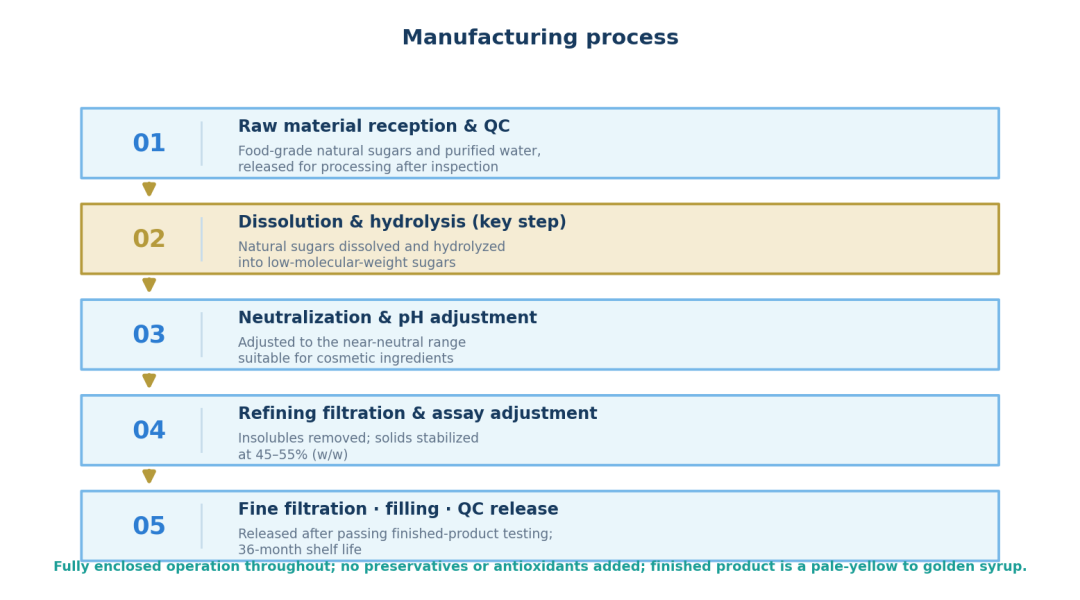
Not an ordinary sugar blend — a well-defined, low-molecular-weight saccharide hydrolysate, built for modern water-based formulations.
Sources — CIR safety assessment, Int. J. Toxicol., 2025 · PubChem, Saccharide Hydrolysate (CAS 8013-17-0) · IECIC 2021 · PuriPharm process documentation
03 · SKIN BIOLOGY · 皮肤生物学
Why Sugars Matter to Skin
NMF accounts for 20–30% of stratum corneum dry weight — and sugars themselves are natural NMF components.
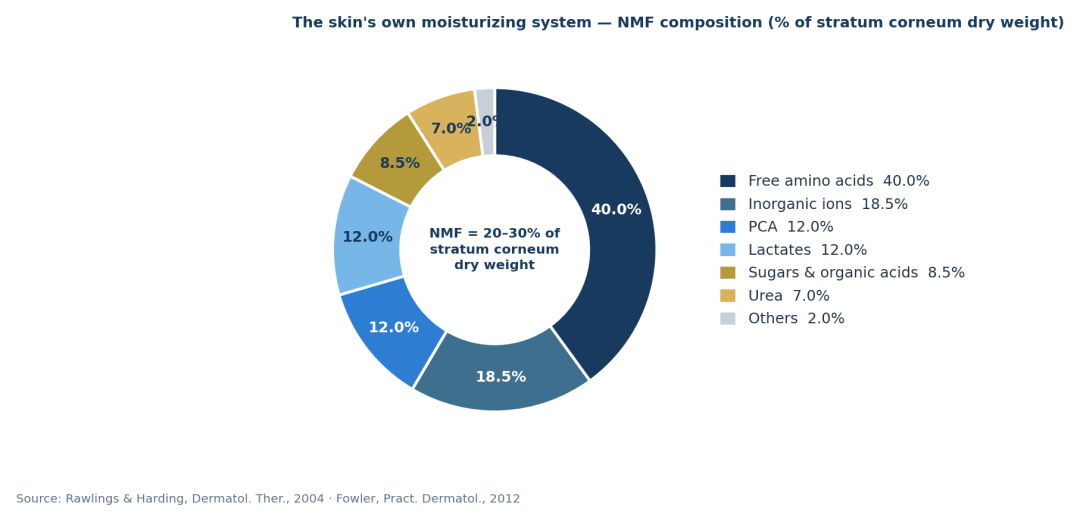
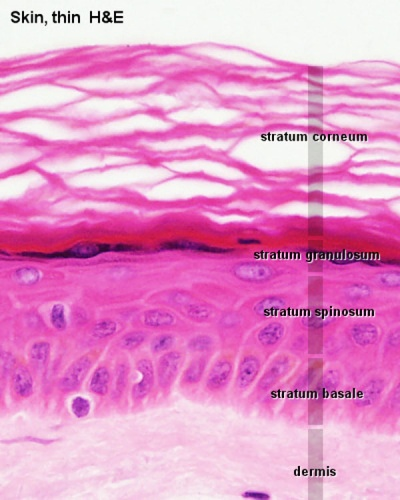
— Hydroxyl-rich sugars capture water through extensive hydrogen bonding
— Their small molecular size keeps them active in and around corneocytes
— The skin’s own design principle: many small polar molecules locking water where it matters
Sources — Fowler, Pract. Dermatol., 2012 · Rawlings & Harding, Dermatol. Ther., 2004 · Verdier-Sévrain & Bonté, J. Cosmet. Dermatol., 2007
04 · MECHANISM OF ACTION · 作用机制
A Multi-Dimensional Hydration Mechanism
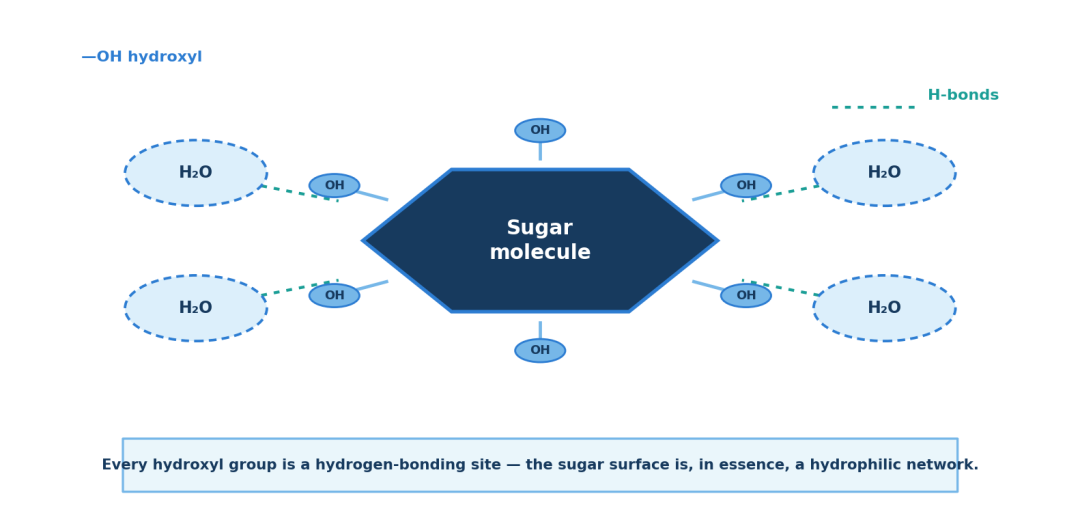
| 01Bind waterLow-molecular-weight sugar molecules present a dense array of hydroxyl groups, forming an extensive hydrogen-bond network with water molecules. | 02Hold waterAs hygroscopic molecules, sugars build a water reservoir at the skin and hair surface, buffering fluctuations in ambient humidity. |
| 03Reduce surface water lossA water-rich surface slows evaporation from the stratum corneum, helping skin preserve its own water content. | 04Support barrier comfortHydrated corneocytes stay supple; the skin surface remains smooth, soft, and comfortable throughout the day. |
Mechanistic basis drawn from carbohydrate chemistry and skin hydration research — Verdier-Sévrain & Bonté, 2007 · Fluhr et al., 2023
05 · EFFICACY — HYDRATION · 功效证据 · 保湿
Hydration & Water Retention
From isolated stratum corneum to human volunteers, saccharide systems consistently improve the skin’s ability to bind and retain water across multiple models.
A natural sugar-derived humectant complex significantly enhanced bound-water capacity within the stratum corneum and modulated its structural parameters.
In vitro Raman spectroscopy · human stratum corneum | Fluhr et al., J. Biophotonics, 2023
A serum containing 7% galacto-oligosaccharides significantly improved skin water retention (Corneometer measurement, p < 0.05 vs. control base).
Randomized controlled trial · N=60 · 8 weeks | Hong et al., J. Pers. Med., 2020
Ten hygroscopic humectants (common moisturizing-cream types) significantly increased water retention in treated human stratum corneum, directly quantified by thermal desorption–mass spectrometry.
Thermal desorption–mass spectrometry | Gournay et al., Int. J. Cosmet. Sci., 1995
These studies evaluated saccharide systems similar to — but not identical with — PuriActives® SH50. Together they establish the class’s hydration mechanism across complementary models.
06 · EFFICACY — BARRIER · 功效证据 · 屏障
Supporting the Skin Barrier
Hydration is not only about adding water — it is about maintaining a healthier water-management environment for the skin.
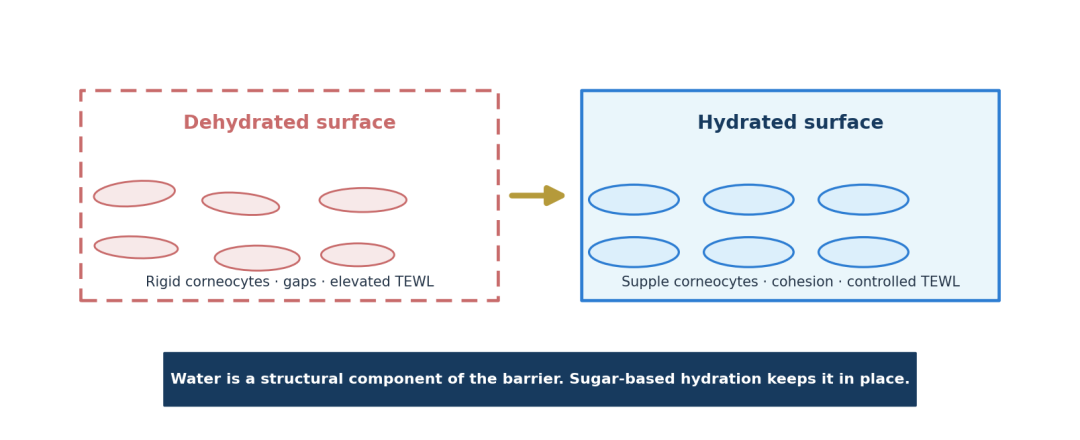
Transepidermal water loss kept under control
In an 8-week randomized trial, the oligosaccharide serum group showed significantly smaller TEWL changes than the control group at weeks 4–8 (p < 0.05), with a reduced erythema index at week 8.
Hong et al., J. Pers. Med., 2020
Hydration supports barrier biology
Adequate stratum corneum water content underpins the enzymatic processes required for orderly desquamation and surface cohesion.
Rawlings & Harding, Dermatol. Ther., 2004
Supple, not tight
Humectant-saturated corneocytes stay soft, reducing the tightness and surface micro-cracking typical of dehydrated skin.
Verdier-Sévrain & Bonté, J. Cosmet. Dermatol., 2007
07 · SENSORY DIMENSION · 感官维度
Skin Comfort & Sensory Benefits
Hydration is something consumers can truly feel. Water-plasticized keratin is the physical basis of softness, bounce, and a beautiful skin feel.
| Softer to the touchBound water lowers the glassy stiffness of surface keratin; skin yields softly under touch. | Smoother surfaceHydrated corneocytes lie flatter and shed more evenly, improving surface texture and light reflection. |
| Less tightnessA water-buffered surface eases the dry, tight feeling after cleansing and in low-humidity environments. | Comfortable after-feelSmall-molecule, water-phase humectants blend easily into light, fresh texture concepts. |
In a clinical study on sensitive atopic skin, an emulsion containing gluco-oligosaccharide and collagen tripeptide improved skin condition and tolerance parameters within 4 weeks — demonstrating that oligosaccharide-based care is well suited to reactive skin.
Berardesca et al., Int. J. Cosmet. Sci., 2009
08 · FRONTIER SCIENCE · 前沿科学
The Skin Microbiome — A Prebiotic Frontier
Skin microbes feed on sugars. Choosing which sugars to offer them is becoming a formulation strategy.
Short-chain fructo-oligosaccharides sustain the growth of beneficial Staphylococcus epidermidis while inhibiting Cutibacterium acnes and Staphylococcus aureus; in a reconstructed human epidermis model, 1% scFOS tilted microbial competition toward S. epidermidis.
Selective utilization · in vitro + reconstructed epidermis | Le Bourgot et al., Sci. Rep., 2022
Galacto-oligosaccharides demonstrated prebiotic potential on the skin microbiota, with diffusion properties suited to topical delivery.
Prebiotic potential · skin microbiota | Petrov et al., Int. J. Cosmet. Sci., 2022
An oligosaccharide-containing serum increased microbial diversity (Shannon index) after 8 weeks and reduced S. aureus abundance, while hydration parameters improved in parallel.
Human randomized controlled trial · facial skin | Hong et al., J. Pers. Med., 2020
These effects were demonstrated for specific oligosaccharide structures. As a fermentable sugar substrate of the same class, PuriActives® SH50 offers a scientifically coherent platform for microbiome-friendly formulations.
09 · BEYOND SKIN · 承前启后 · 超越皮肤
From Skin to Hair — The Same Water Physics
Hair is keratin too. The water-binding logic that works on skin transfers directly to the hair fiber.
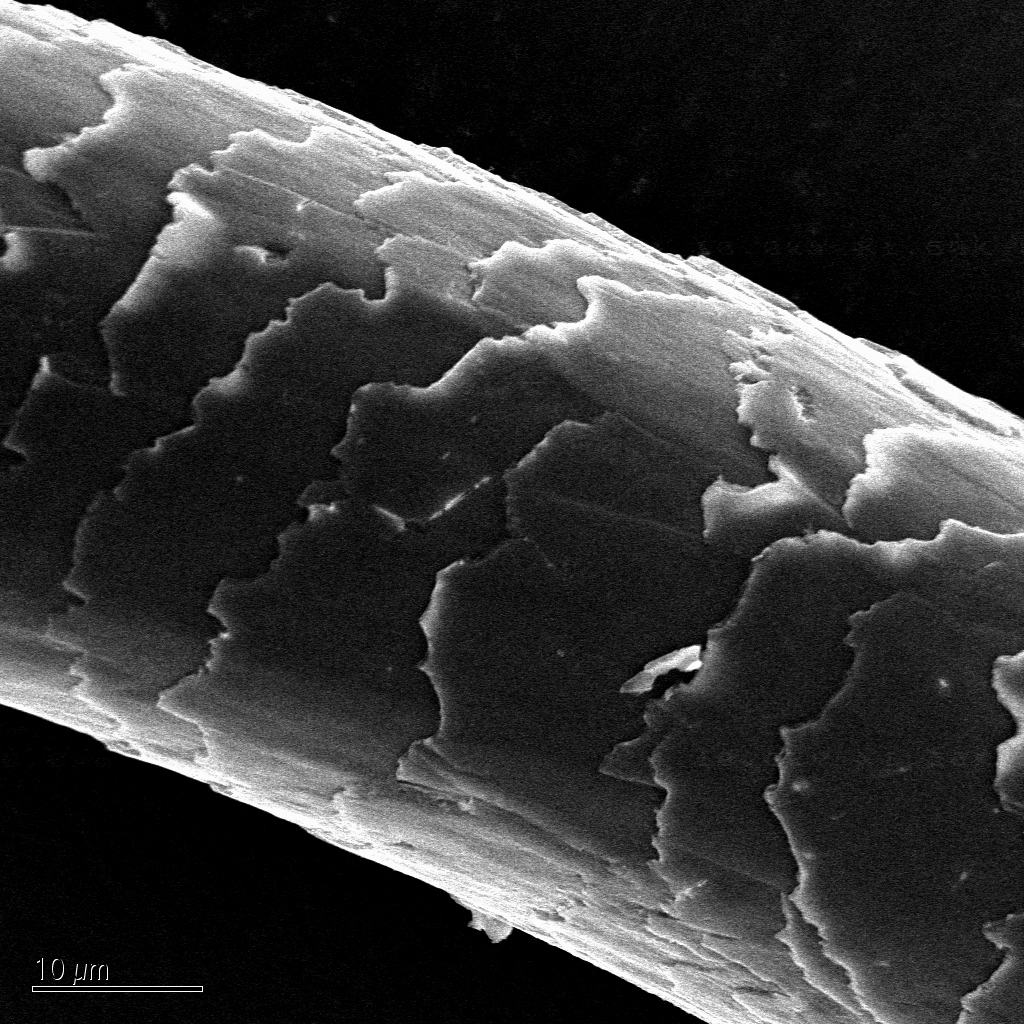
Water is hair’s plasticizer
Bound water molecules sit between keratin chains, keeping the fiber flexible; dry hair is markedly harder and more brittle.
Robbins, Chemical and Physical Behavior of Human Hair, Springer, 2012
Humidity changes mechanical behavior
Hair’s bending and recovery behavior depends strongly on humidity — evidence that internal water content dominates hand feel and style retention.
Wortmann et al., J. Appl. Polym. Sci., 2009
Humectants buffer humidity swings
Hygroscopic actives moderate the rate at which fibers gain and lose water with ambient humidity, smoothing out moisture extremes.
Yu et al., Mater. Sci. Eng. C, 2017
10 · HAIR CARE · 护发应用
PuriActives® SH50 Hair-Care Benefits
A small-molecule humectant delivering four tangible improvements to hair feel and behavior.
| Moisture balanceHygroscopic sugar molecules attract and hold water inside and on the fiber, buffering moisture loss in dry air. | Softness & supplenessWater-plasticized fibers bend without breaking — the mechanical root of soft, bouncy hair. |
| Smooth combingBalanced internal moisture helps cuticles lie flatter, easing combing and reducing frizz and flyaway. | Daily protectionBy moderating humidity-driven swell–shrink cycles, hydration reduces hygral fatigue damage. |
Mechanistic basis: humidity-sensitive hair mechanics (Yu et al., Mater. Sci. Eng. C, 2017; Wortmann et al., J. Appl. Polym. Sci., 2009) and hair–water relations (Robbins, Springer, 2012; Kanlayavattanakul & Lourith, Springer, 2015).
11 · FOR FORMULATORS · 致配方师
Formulation Value
Water-phase addition — simple and direct
Fully water-compatible small molecules — add directly to the emulsion water phase, or to aqueous serums, mists, and shampoos. No solubilizers, no heating process.
Broad format compatibility
Leave-on and rinse-off, emulsified and purely aqueous systems, skin and hair — one INCI covers facial serums, moisturizers, sheet masks, scalp essences, shampoos, conditioners, and hair masks.
Synergy logic
Naturally pairs with glycerin and hyaluronic acid (multi-size hydration); synergizes with β-glucans, amino acids (NMF-style blends), ceramides (hydration + lipid repair), and conditioning polymers in hair-care systems.
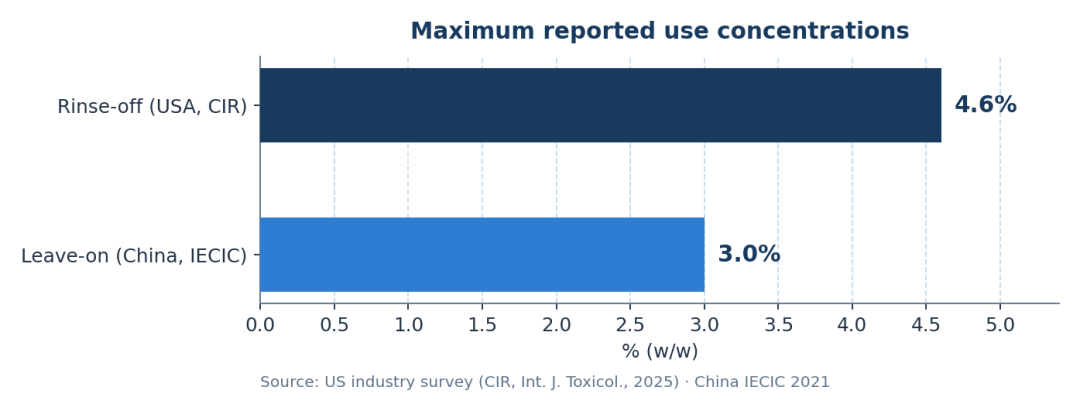
Use levels: maximum reported concentrations — 4.6% rinse-off (US industry survey, CIR 2025); 3% leave-on (China IECIC).
Within these reported use levels, PuriActives® SH50 is assessed as safe as used (CIR, Int. J. Toxicol., 2025) and is listed in China’s IECIC inventory.
12 · APPLICATIONS · 应用场景
Application Directions
Skincare
Hydrating serums & essences — fast-absorbing water-phase hydration forming the formula’s moisture backbone.
Daily moisturizers & barrier creams — sustained surface hydration and comfort in leave-on formulas.
Sheet & sleeping masks — high-dose water delivery in intensive-care concepts.
Facial mists & toners — light, non-sticky all-day water replenishment.
Sensitive-skin lines — gentle, sugar-based hydration with a well-documented safety record.
After-sun & post-procedure care — hydration support for stressed, dehydrated skin.
Men’s care — zero-burden hydration with no occlusive greasiness.
Body lotions & hand care — everyday barrier hydration at economical use levels.
Hair & Scalp Care
Moisturizing shampoos — surface-substantive hydration that remains after rinse-off.
Conditioners & hair masks — water-plasticized softness and improved combability.
Leave-in sprays & hair serums — lasting moisture balance and frizz management.
Scalp tonics & essences — scalp hydration is the foundation of comfort.
Curly & textured hair care — keeping moisture where it is needed most.
Anti-dryness repair lines — buffering the humidity swings that drive hygral fatigue.
13 · STARTING POINTS · 开发起点
Formulation Inspiration
| Water-Barrier Hydrating SerumRole of SH50: 1–3% to build a multi-layer hydration backbone, within reported use levels.Pair with: hyaluronic acid, glycerin, panthenol.Positioning: a daily hydrating serum for all skin types. | 24-Hour Moisturizing CreamRole of SH50: continuous water supply in the emulsion water phase.Pair with: ceramides, squalane, shea butter.Positioning: a barrier-comfort cream for day and night. |
| Scalp Comfort EssenceRole of SH50: scalp hydration and fermentable-sugar care in a leave-on water-based formula.Pair with: niacinamide, caffeine, gentle soothing agents.Positioning: a light, leave-on scalp treatment. | Hydrating Repair Hair MaskRole of SH50: replenishing fiber moisture in an intensive rinse-off base.Pair with: cationic conditioners, hydrolyzed proteins, plant oils.Positioning: a weekly deep-hydration treatment. |
These concepts are starting points for development discussions; suggested dosages remain within the reported cosmetic use concentrations for saccharide hydrolysate.
14 · SUMMARY · 核心总结
Why PuriActives® SH50
01 Advanced water management. A low-molecular-weight saccharide humectant system that binds water through dense hydroxyl chemistry and keeps it in the stratum corneum.
02 Barrier support. Hydration is structural: adequate water content supports desquamation, surface cohesion, and controlled water loss.
03 Consumer-perceivable comfort. Softer touch, smoother surface, less tightness — the sensory signature of hydrated skin and hair.
04 Skin + hair in one. One INCI, two categories: the same water-binding logic serves facial, body, scalp, and hair care.
05 Formulation-friendly. Simple water-phase addition, no format restrictions, globally compliant — CIR assessed safe as used, FDA GRAS background, listed in China IECIC.
What it is — a purified saccharide system · Why it matters — water defines skin and hair quality · Why choose it — simple, safe, versatile
15 · EVIDENCE BASE · 证据基础
Scientific References
[1] Johnson W Jr, Bergfeld WF, Belsito DV, et al. Safety Assessment of Anhydrogalactose, Anhydroglucitol, Anhydroxylitol, Arabinose, Psicose, Saccharide Hydrolysate, and Saccharide Isomerate as Used in Cosmetics. Int. J. Toxicol. 2025; 44(4_suppl): 93S–120S. DOI: 10.1177/10915818251384580
[2] Rawlings AV, Harding CR. Moisturization and skin barrier function. Dermatol. Ther. 2004; 17(Suppl. 1): 43–48. DOI: 10.1111/j.1396-0296.2004.04S1005.x
[3] Fowler JF Jr. Understanding the role of natural moisturizing factor in skin hydration. Pract. Dermatol. 2012; 9: 36–40.
[4] Verdier-Sévrain S, Bonté F. Skin hydration: a review on its molecular mechanisms. J. Cosmet. Dermatol. 2007; 6(2): 75–82. DOI: 10.1111/j.1473-2165.2007.00300.x
[5] Fluhr JW, Tfayli A, Darlenski R, et al. Glycerol and natural sugar-derived complex modulate differentially stratum corneum water-binding properties and structural parameters in an in vitro Raman-desorption model. J. Biophotonics 2023; 16(1): e202200201. DOI: 10.1002/jbio.202200201
[6] Gournay A, Navarro R, Mathieu J, Rivière M. Water retention of treated stratum corneum measured by a coupling method: thermal desorption–mass spectrometry. Int. J. Cosmet. Sci. 1995; 17(4): 165–172.
[7] Hong KB, et al. Changes in the diversity of human skin microbiota to cosmetic serum containing prebiotics: results from a randomized controlled trial. J. Pers. Med. 2020; 10(3): 91. DOI: 10.3390/jpm10030091
[8] Berardesca E, Abril E, Serio M, Cameli N. Effects of topical gluco-oligosaccharide and collagen tripeptide F in the treatment of sensitive atopic skin. Int. J. Cosmet. Sci. 2009; 31(4): 271–277. DOI: 10.1111/j.1468-2494.2009.00495.x
[9] Le Bourgot C, Meunier C, Gaio E, et al. Effects of short chain fructo-oligosaccharides on selected skin bacteria. Sci. Rep. 2022; 12: 9702. DOI: 10.1038/s41598-022-13093-5
[10] Petrov A, Ćorović M, Milivojević A, et al. Prebiotic effect of galacto-oligosaccharides on the skin microbiota and determination of their diffusion properties. Int. J. Cosmet. Sci. 2022; 44(3): 309–319. DOI: 10.1111/ics.12778
[11] Zeng M, Li Y, Cheng J, Wang J, Liu Q. Prebiotic oligosaccharides in skin health: benefits, mechanisms, and cosmetic applications. Antioxidants 2025; 14(6): 754. DOI: 10.3390/antiox14060754
[12] Yu Y, Yang W, Wang B, Meyers MA. Structure and mechanical behavior of human hair. Mater. Sci. Eng. C 2017; 73: 152–163. DOI: 10.1016/j.msec.2016.12.008
[13] Wortmann FJ, Stapels M, Chandra L. Humidity-dependent bending recovery and relaxation of human hair. J. Appl. Polym. Sci. 2009; 113(5): 3336–3344. DOI: 10.1002/app.30336
[14] Robbins CR. Chemical and Physical Behavior of Human Hair. 5th ed. Berlin: Springer; 2012.
[15] Kanlayavattanakul M, Lourith N. Biopolysaccharides for skin hydrating cosmetics. In: Polysaccharides. Cham: Springer; 2015. p. 1867–1892. DOI: 10.1007/978-3-319-16298-0_29
Disclaimer
This document is prepared by PuriPharm Co., Ltd. for technical communication on cosmetic ingredients only and does not constitute any drug or medical claim. Third-party literature data are cited as technical background; the cited studies evaluated saccharide systems of the same class as, but not identical with, this product. Customers should independently verify the suitability and regulatory compliance of their finished formulations. PuriActives® is a trademark of PuriPharm Co., Ltd.
PURIPHARM CO., LTD.
PuriActives® SH50
Smarter sugar science for modern beauty — skin & hair hydration, from molecule to market.
INCI — SACCHARIDE HYDROLYSATE · CAS 8013-17-0
PuriPharm Co., Ltd. — Technical Product Report
OleaXin™ Oleanolic Acid Nanogel

PURIPHARM CO., LTD. · PuriActives® High-Performance Actives
OleaXin™ Oleanolic Acid Nanogel
齐肤因™ · Oleanolic Acid Nanogel
From a high-potential pentacyclic triterpene to a modern Nanogel active system.
INCI: Oleanolic Acid · Phospholipids · Glycerin · Water
Technical Marketing Presentation · For B2B Professional Use Only
01 · THE OPPORTUNITY
Why Refocus on Oleanolic Acid?
01 A Multi-Target Biological Foundation
Sebum regulation · inflammatory signaling · oxidative stress · ECM homeostasis · follicular microenvironment. Oleanolic acid is a pentacyclic triterpene widely found in olive, Ligustrum lucidum, and other plants, long followed by dermatological literature. Its value lies not in a single benefit, but in simultaneously touching multiple biological pathways related to oily skin, blemish-prone skin, and scalp health.
02 Skin + Scalp Dual Scenarios
Facial oil control and soothing share one mechanistic framework with scalp oil management.
03 A Deep Literature and Patent Base
From enzymology and cell studies to animal and human research, the evidence chain spans more than two decades.
04 Aligned with Oily-Skin and Scalp-Care Trends
Blemish-prone skin management, scalp microbiome care, and the “skinification” of hair care continue to gain momentum.
The scientific potential is high, yet formulation use is anything but simple — its highly lipophilic molecular nature has kept oleanolic acid a “research hotspot” rather than a “formulation regular.”
02 · MOLECULAR IDENTITY
Meet Oleanolic Acid: A Classic Pentacyclic Triterpene
Naming note: “石竹素” is the Chinese inventory name of Oleanolic Acid in China’s cosmetic ingredient system; the scientific narrative uses “齐墩果酸” (oleanolic acid), the name familiar to R&D professionals. Official ingredient information follows the INCI name.
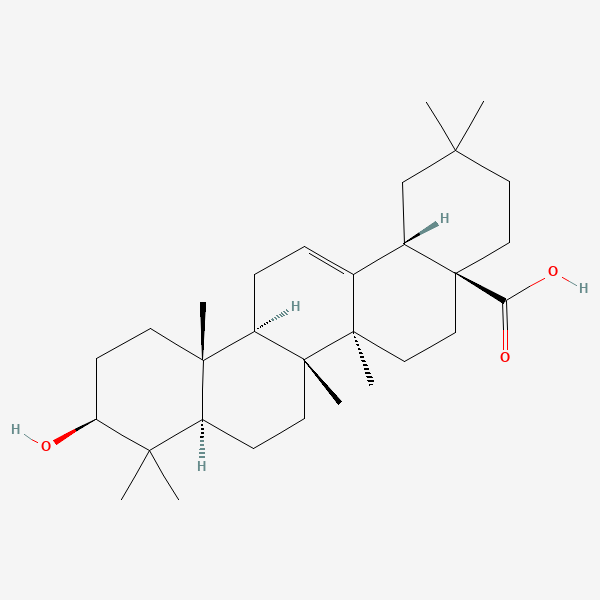
| INCI name | Oleanolic Acid |
| Chinese inventory name | 石竹素 (Inventory of Existing Cosmetic Ingredients in China) |
| CAS number | 508-02-1 |
| Formula / MW | C₃₀H₄₈O₃ / 456.70 g·mol⁻¹ |
| Chemical class | Pentacyclic triterpene (β-amyrin type) |
| Natural sources | Olive leaves, Ligustrum lucidum, Centella asiatica, and other plants |
| Physicochemical profile | Highly lipophilic; practically insoluble in water |
A molecule studied for over half a century — as one of the active components of many medicinal plants, its anti-inflammatory, antioxidant, and metabolism-modulating activities have been repeatedly reported in pharmacological literature, and its skin and scalp biology value continues to be rediscovered.
References: Ayeleso TB et al. Molecules. 2017;22(11):1915. DOI:10.3390/molecules22111915; PubChem CID 10494.
03 · THE FORMULATION CHALLENGE
High Bioactivity Does Not Mean High Formulation Usability
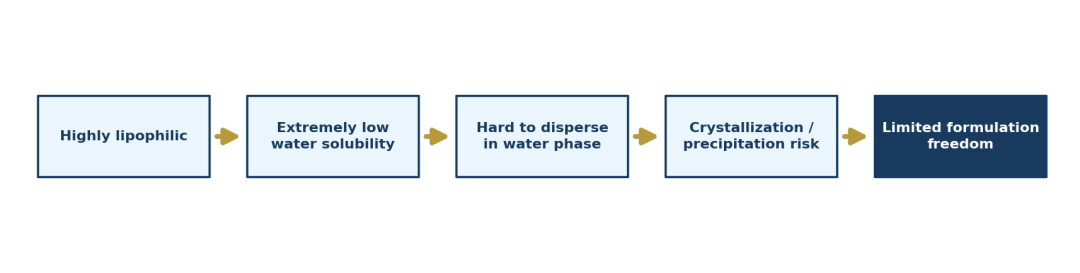
Practical Impact for Formulators
Difficult to dose directly into water-based serums and gels, requiring pre-dissolving or solubilization design; crystallization causes non-uniform content, affecting batch stability and efficacy consistency; high-ethanol / high-oil solubilization limits sensory feel and dosage-form options; the active’s theoretical efficacy is hard to convert reliably into finished-product performance.
The Industry Recognized This Long Ago
As early as 2001, an international cosmetics group filed a patent around “solubilizing pentacyclic triterpenic acids” (US 2001/0029266 A1), improving dispersion through specific emulsifier systems. Review literature likewise notes that oleanolic acid’s low water solubility limits its bioavailability, with structural modification and delivery systems as the two solution paths.
Solving the formulation bottleneck matters more than discovering yet another benefit — this is exactly where OleaXin™ starts.
References: US 2001/0029266 A1; Wang W et al. Curr Top Med Chem. 2022;22(1). DOI:10.2174/1568026621666211105101231.
04 · THE SOLUTION
PuriActives® OleaXin™ — Rebuilding Oleanolic Acid as a Nanogel
OleaXin™ converts highly lipophilic oleanolic acid, through phospholipid association and nanostructured dispersion, into a Nanogel active format compatible with aqueous systems — without changing the molecule itself, only the way it exists in a formula.
| INCI NAMEOleanolic Acid 石竹素Phospholipids 磷脂 · Glycerin 甘油 · Water 水 | DESIGN LOGICOleanolic acid + phospholipids + glycerin + water→ Nanogel Delivery System |
| a. Nanostructured deliveryNanostructured presentation of a lipophilic active | b. Aqueous compatibilityAqueous-compatible format for modern chassis |
| c. Formulation-friendly dispersionImproved dispersion, fewer pre-dissolving steps | d. Skin & scalp versatilityOne active for both skin and scalp care |
齐肤因™ is the Chinese product name of PuriActives® OleaXin™. This material is for cosmetic ingredient technical exchange only and involves no pharmaceutical claims.
05 · DELIVERY ENGINEERING
From Crystalline Active to Nanogel: An Engineered Pathway
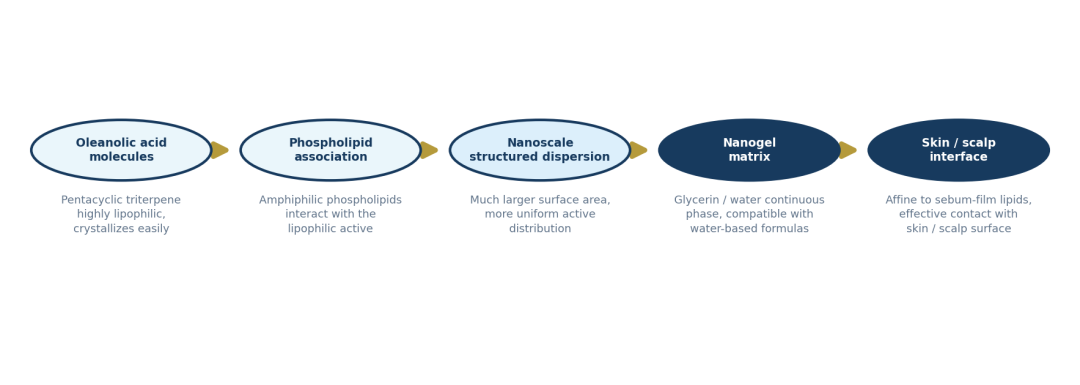
What It Means at the Formulation Level
· Improved aqueous dispersion · Lower crystallization risk · Simpler pre-dissolving · Broader dosage-form options · Better formula uniformity
Core conversion logic: Hard-to-Formulate Bioactive ——→ Ready-to-Use Advanced Active
Technical note: this page illustrates the delivery system design principle. OleaXin™’s specific particle size, encapsulation efficiency, and penetration data are subject to measured values in the PuriPharm TDS; without cited measured data, this material does not use statements such as “penetration increased by XX%.”
06 · BIOLOGICAL LANDSCAPE
One Active, Multiple Skin and Scalp Biology Pathways
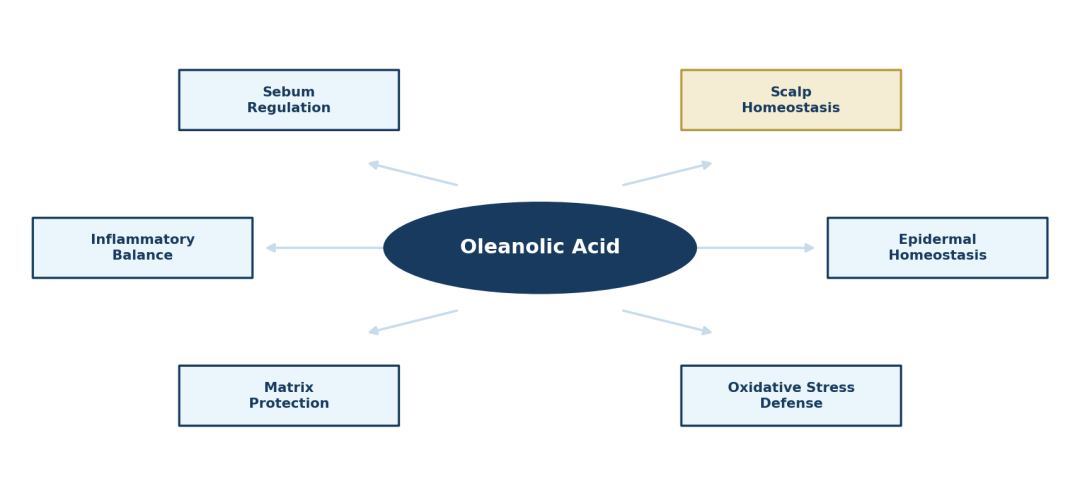
The pentacyclic triterpene scaffold determines oleanolic acid’s potential to interact with multiple cellular signaling pathways. The following chapters unfold in the order of mechanism → data → biological significance → cosmetic value, each pathway annotated with traceable literature or patent evidence and its evidence level.
07 · SEBUM REGULATION
Oil Balance: Starting from Sebaceous Gland Biology
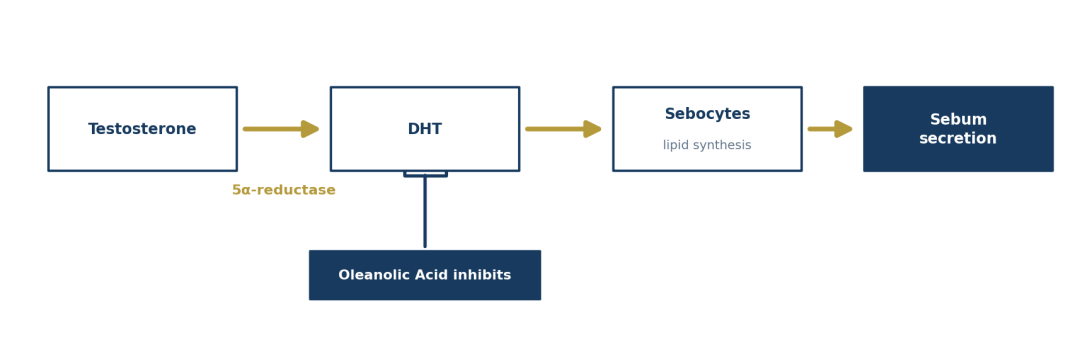
Sebum secretion is governed by androgen signaling: testosterone is converted by 5α-reductase into the more potent DHT, driving sebaceous gland hyperplasia and lipid synthesis. 5α-reductase is therefore a classic target for oil-control actives.
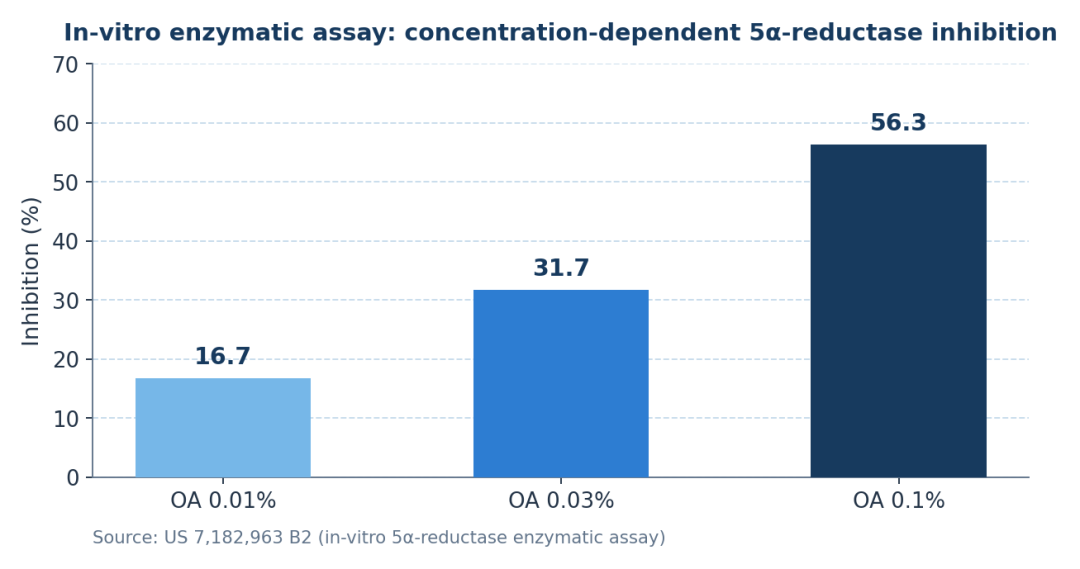
Human Efficacy Reference: An Oleanolic Acid-Containing Blend
28-day half-face controlled use test (3% blend, n≈20, oily-skin panel); multi-ingredient system, not attributable to oleanolic acid alone.
| -21.7%skin gloss (mean) | -16%pore surface area (mean) | -32%sebum flow (mean) |
Reading the Evidence
· Oleanolic acid’s 5α-reductase inhibition is direct in-vitro enzymatic evidence (patent assay data);· The human data come from a multi-ingredient blend containing oleanolic acid, indicating the mechanism’s market translation value;· Sebum management should also address inflammation and oxidative stress (next page).
Data sources: US 7,182,963 B2 (in-vitro 5α-reductase enzymatic assay); attached technical documentation (28-day human test of an oleanolic acid-containing blend).
08 · BLEMISH-PRONE SKIN
Blemish-Prone Skin Is Not a Single-Pathway Problem
Blemish formation involves the interplay of excess sebum, abnormal follicular duct keratinization, the microbial environment, and inflammatory responses. Oleanolic acid’s value lies in evidence covering several of these links — not merely “antibacterial anti-acne.”
| ① Sebum secretion5α-reductase / androgen-driven lipid synthesis | ② Follicular environmentDuct keratinization and sebum retention form the comedone microenvironment | ③ Microbial factorsCutibacterium acnes-related flora environment | ④ Inflammatory responseNF-κB-driven redness and discomfort |
Where Oleanolic Acid’s Evidence Sits in Each Link
■ Sebum link Concentration-dependent 5α-reductase inhibition (56.3% at 0.1%, in-vitro enzymatic assay)■ Microbial link Patent literature reports inhibitory activity against C. acnes and other skin-related flora■ Inflammation link Modulates NF-κB / STAT1 signaling in keratinocytes and animal models (detailed next page)■ Barrier link Promotes epidermal differentiation and barrier recovery, helping blemish-prone skin maintain a more stable state
Translated into Cosmetic Language
· Oily and blemish-prone skin care · Sebum balance management · Pore oil-environment management · Soothing discomfort of blemish-prone skinNo pharmaceutical claims such as “treating acne”; mechanistic evidence supports the product’s scientific narrative.
References: US 7,182,963 B2; Kang YM et al. Int J Mol Sci. 2021;22:12000; Lim SW et al. J Dermatol. 2007;34:625-634.
09 · INFLAMMATORY BALANCE
Stabilizing Stressed Skin from the Source of Inflammatory Signaling
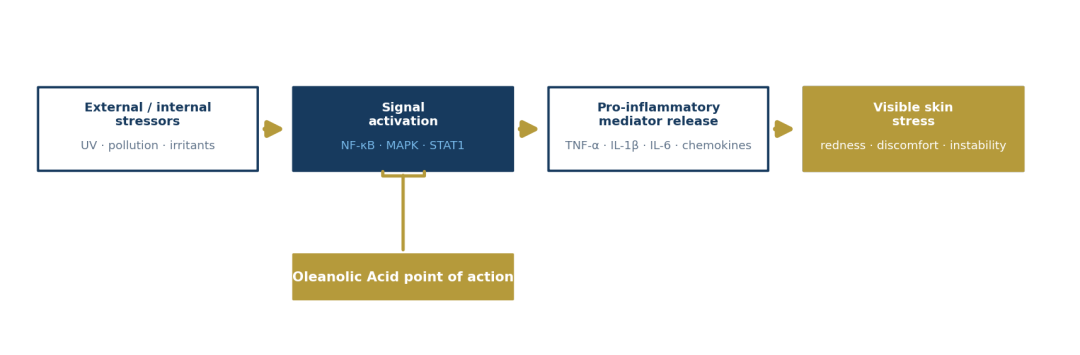
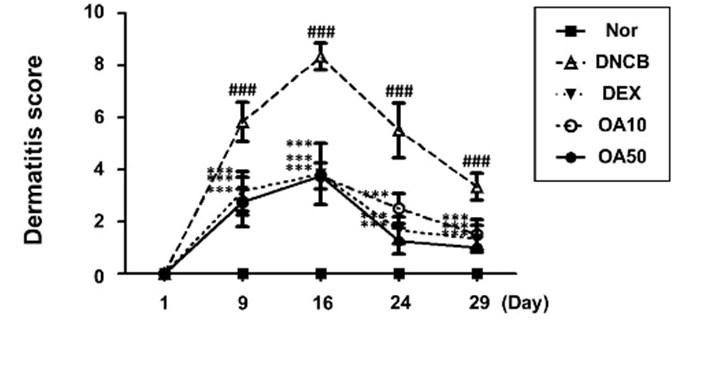
Mechanistic Evidence: Cell and Animal Levels Corroborate Each Other
In vitro (HaCaT keratinocytes) Under TNF-α / IFN-γ stimulation, oleanolic acid blocked the activation of Akt, NF-κB, and STAT1, and suppressed Th2-type cytokine and chemokine expression.
In vivo (DNCB mouse model) Three weeks of topical dosing significantly relieved dermatitis-like lesions, reducing epidermal/dermal thickness, mast cell infiltration, and serum histamine levels.
Cosmetic value Helps soothe irritated skin · Maintains a healthy inflammatory balance · Improves skin comfort under stressful environments
Data source: Kang YM et al. Int J Mol Sci. 2021;22(21):12000. DOI:10.3390/ijms222112000 (animal and cell evidence, not human clinical conclusions).
10 · OXIDATIVE STRESS DEFENSE
Helping Skin Build Stronger Stress Defense
An Honest Scientific Positioning: It Is Not a Classic “Antioxidant”
DPPH radical-scavenging assays show oleanolic acid’s direct scavenging capacity is weak (only 9.2% at 100 µM, roughly equivalent to 4.45 µM Trolox). Its value lies in another path: pharmacological research links the oleanolic acid scaffold to the Keap1 / Nrf2 endogenous defense system and downstream antioxidant enzymes (HO-1, NQO-1), and it reduces oxidative stress markers in inflammation models.
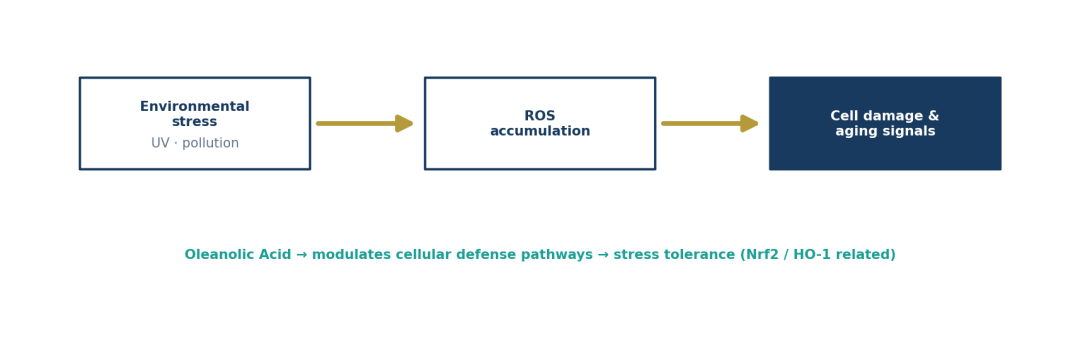
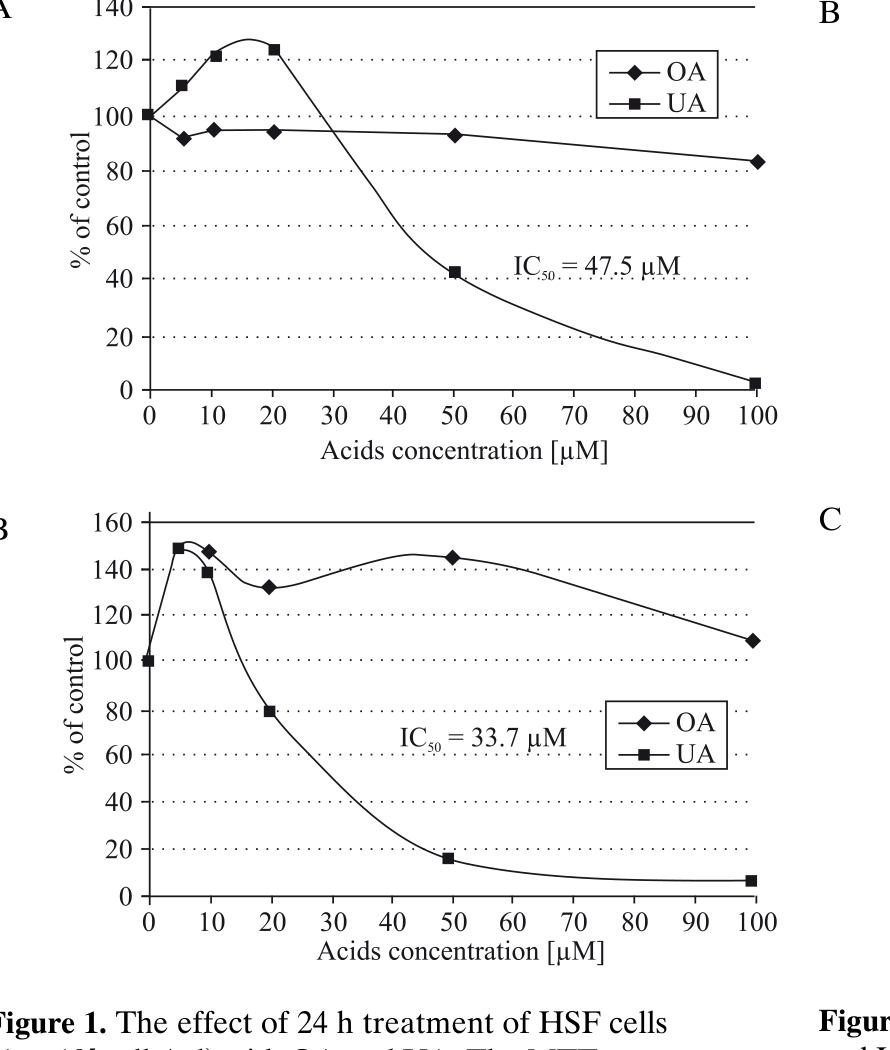
Cell Compatibility: Evidence in Human Skin Fibroblasts
24-hour cytotoxicity assay: oleanolic acid (OA) showed no cytotoxicity up to 100 µM; its isomer ursolic acid (UA) had an IC₅₀ of 47.5 µM (MTT). OA is the gentler triterpene choice.
Cosmetic value Supports the cell’s endogenous defense against environmental stress · Helps maintain a more stable skin state
Data sources: Wójciak-Kosior M et al. Folia Histochem Cytobiol. 2011;49(4):664-669. DOI:10.5603/FHC.2011.0050; Wang W et al. Curr Top Med Chem. 2022;22(1).
11 · EPIDERMAL HOMEOSTASIS
Epidermal Homeostasis: Experimental Evidence for Barrier Resilience
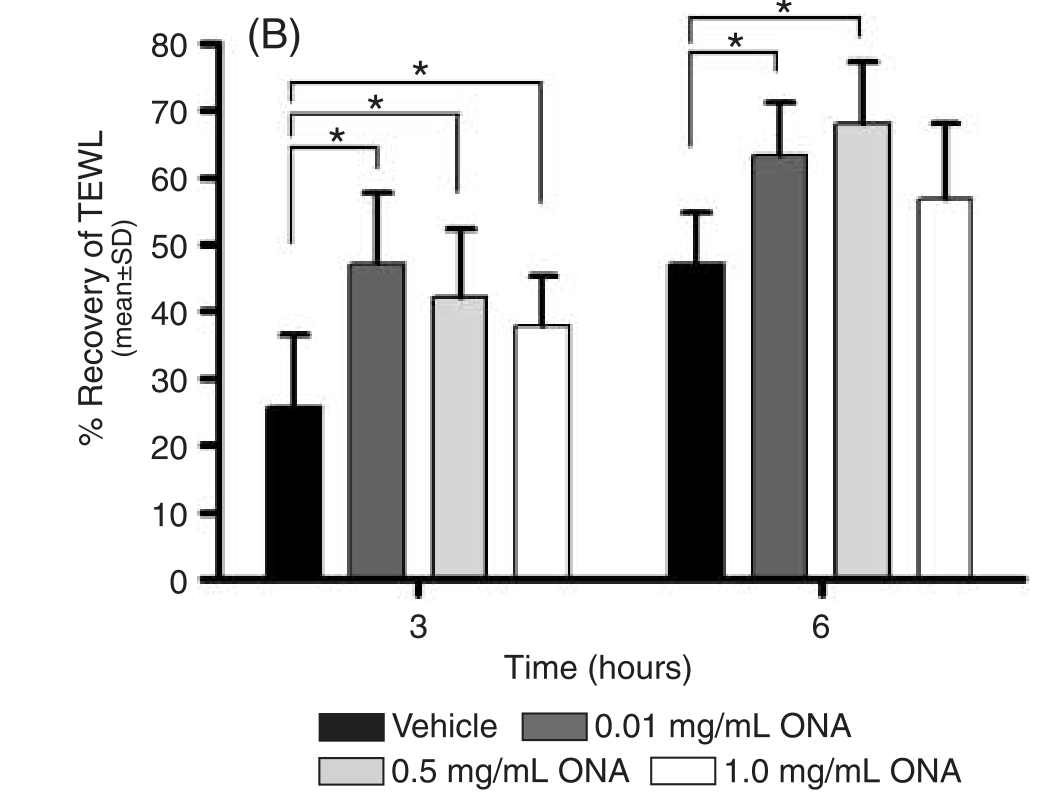
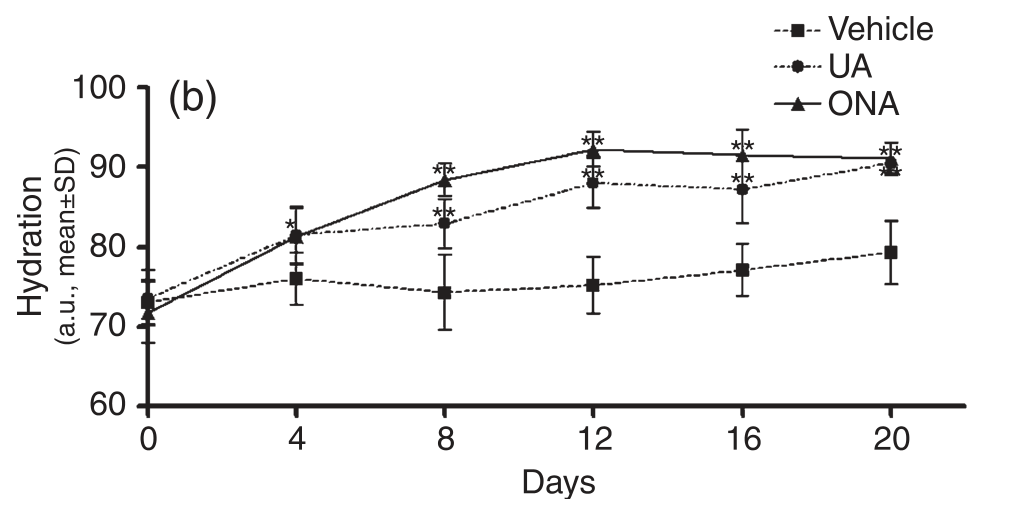
Mechanistic Landing Point: PPAR-α and Epidermal Differentiation Markers
In HaCaT keratinocytes, oleanolic acid (10 µmol/L, 24 h) raised PPAR-α, involucrin, loricrin, and filaggrin protein expression to about 2× control; electron microscopy showed increased lamellar body secretion and more complete lipid bilayer formation.
Cosmetic value Supports epidermal homeostasis and barrier resilience · Helps maintain healthy skin barrier function · Completes the oily-skin care logic together with oil control and soothing
Data source: Lim SW et al. J Dermatol. 2007;34(8):625-634. DOI:10.1111/j.1346-8138.2007.00344.x (animal and cell evidence).
12 · MATRIX PROTECTION
Guarding the ECM: From Oxidative Stress to Collagen Degradation
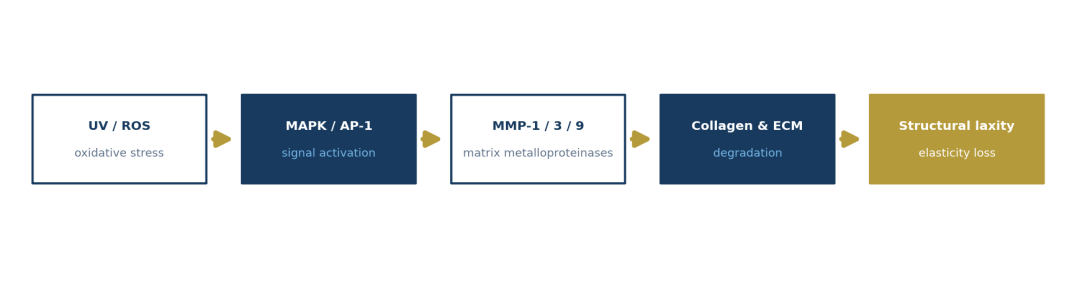
▲ Oleanolic acid’s known evidence sits at upstream nodes: modulating oxidative stress and inflammatory signaling (NF-κB / MAPK family), influencing the matrix degradation cascade from its source.
ECM-Related Evidence Leads
■ Delivery + collagen patent An oleanolic acid liposome composition patent (CN 103221028 B) targets collagen production, showing that “delivery technology + ECM” is an industry-recognized R&D path■ Photoaging use patent A composition patent for pentacyclic triterpenic acids in preventing photoaging and sensitive skin (US 2001/0029266 A1)■ Mechanistic level MAPK / NF-κB modulation evidence (see the inflammation chapter) covers upstream MMP signaling
Evidence Boundary Statement
Current ECM-related evidence for oleanolic acid consists mainly of patents and mechanistic studies; human anti-wrinkle clinical data are still lacking. This material therefore avoids statements like “reduces wrinkles by XX%” and instead positions oleanolic acid as an upstream modulator of the oxidative stress – inflammation – matrix degradation cascade.
Cosmetic value Supports ECM homeostasis · Helps reduce stress-induced matrix degradation · Maintains a collagen-rich skin structure · Supports skin elasticity and firmness
References: CN 103221028 B; US 2001/0029266 A1; Kang YM et al. Int J Mol Sci. 2021;22:12000 (patent- and mechanism-level evidence).
PART II · SCALP SCIENCE
Skin biology doesn’t stop at the hairline.
From skin to scalp — shared sebum, inflammation, and oxidative stress biology.
The scalp is an extension of the skin: dense sebaceous glands, dense follicles, and androgen sensitivity. The mechanistic evidence for oleanolic acid in facial sebum management applies equally to the scalp scenario.
13 · SCALP & ANDROGEN BIOLOGY
Scalp Oil and Androgen Biology: Same Target, Second Scenario
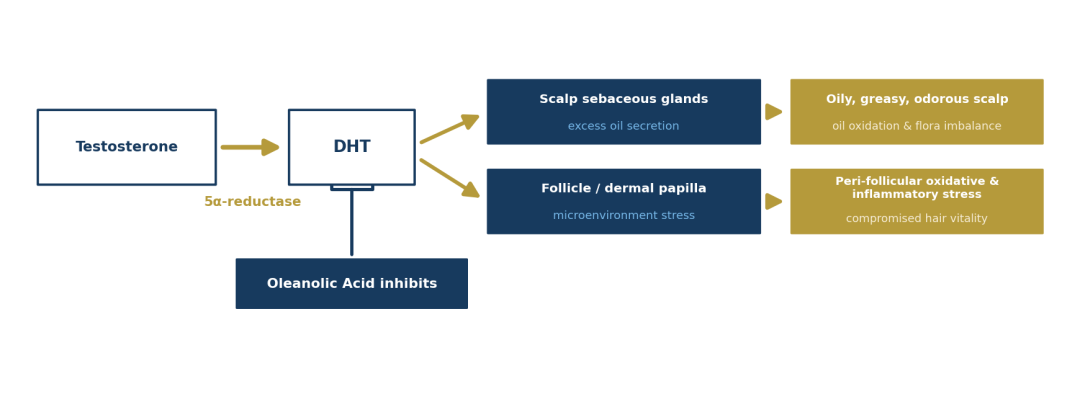
Recalling the page-8 data: oleanolic acid concentration-dependently inhibits 5α-reductase in vitro (56.3% inhibition at 0.1%, US 7,182,963 B2) — a mechanism pointing to both facial sebum and scalp oil scenarios.
What Makes the Scalp Scenario Special
· High sebaceous gland density: oil oxidation products and flora metabolites together form an irritation source· Follicles are sensitive to androgen signaling; DHT-related follicular microenvironment stress is a focus of hair-care research· Scalp care is shifting from “hair-fiber cosmetic finish” to “scalp ecology management”
Compliant Cosmetic Language
· Helps maintain a healthy scalp oil environment · Supports scalp ecological balance · Helps maintain a healthy follicular microenvironment · Supports scalp and follicle vitalityNo “anti-hair-loss / hair-growth / hair-loss treatment” claims.
References: US 7,182,963 B2; WO 2017/021247 A1 (hair-care composition patent containing oleanolic acid blends).
14 · FOLLICULAR MICROENVIRONMENT
The Follicular Microenvironment: More Than Just “Oil Control”
A 6-month open human study (56 subjects with androgenetic alopecia and telogen effluvium) showed that a scalp lotion containing oleanolic acid, apigenin, biotinyl tripeptide-1, and other ingredients significantly increased total hair count and anagen hair count. Oleanolic acid plays the 5α-reductase-modulating role in the blend.
Dermatologist Assessment (D180, full sample)
| 35.7%hair felt denser and fuller | 37.5%overall hair appearance improved | 39.3%scalp coverage improved |
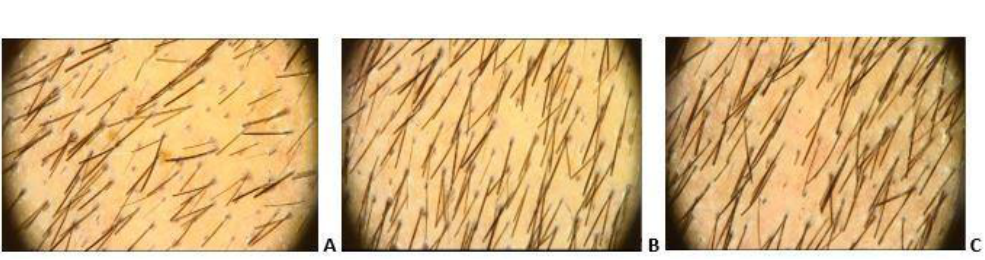
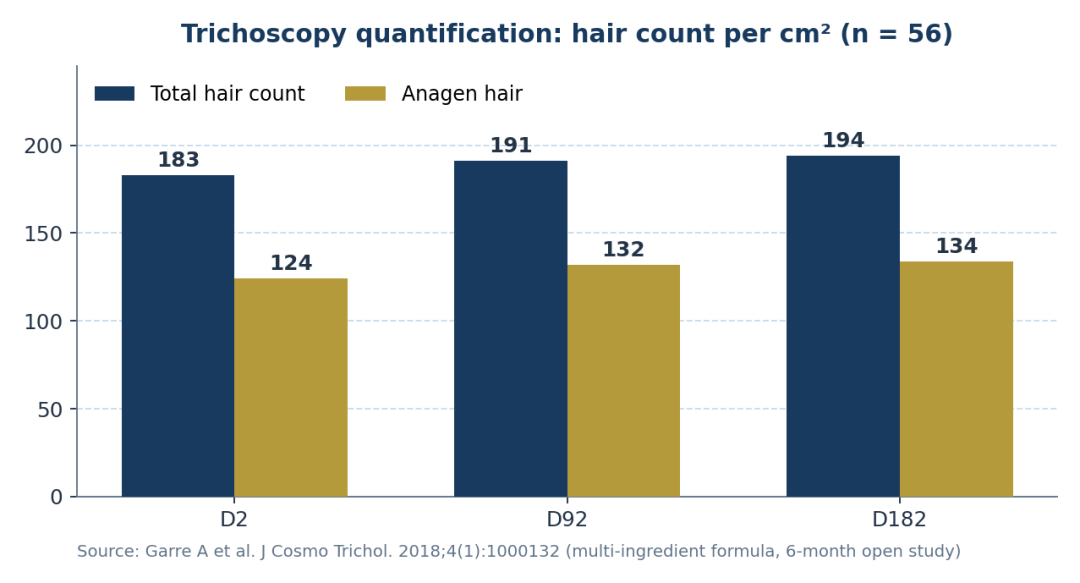
Reading the Evidence
· Human data from a multi-ingredient blend cannot be attributed to oleanolic acid alone;· Yet it is directionally consistent with the in-vitro 5α-reductase evidence, forming a “mechanism + clinical signal” combination;· No adverse events were reported throughout, with favorable usability ratings.
Cosmetic narrative: balanced scalp oil → a healthier follicular environment → support for hair vitality. Focus on “scalp care,” not “hair-loss treatment.”
Data source: Garre A et al. J Cosmo Trichol. 2018;4(1):1000132. DOI:10.4172/2471-9323.1000132 (multi-ingredient blend, 6-month open study).
15 · WHY NANOGEL MATTERS
Why Does Nanogel Matter So Much for Oleanolic Acid?
| Conventional Oleanolic Acid (Crystalline Raw Material) | PuriActives® OleaXin™ (Nanogel Active System) |
|---|---|
| Poor compatibility with aqueous systems | Aqueous-compatible Nanogel format |
| Hard to disperse; requires pre-dissolving / solubilization design | Improved dispersion; more direct dosing |
| Crystallization / precipitation risk | Nanostructured presentation lowers recrystallization tendency |
| Limited dosage-form and formulation freedom | Greater formulation flexibility (serum / gel / emulsion / scalp essence) |
| A conventional active format | A delivery-enabled active for modern formulations |
Each comparison dimension corresponds to verifiable technical basis: oleanolic acid’s lipophilicity and solubilization difficulty are documented in literature and patents (US 2001/0029266 A1; Wang et al. 2022); Nanogel-side statements describe delivery system design characteristics, with specific parameters subject to measured values in the PuriPharm TDS.
16 · FORMULATOR VALUE
What Does It Mean for Formulators?
- A more convenient way to use oleanolic acid No need to solve solubilization from scratch; the active is dosed directly in water-dispersible form
- Greater formulation freedom Less reliance on high-ethanol or high-oil solubilization
- Compatible with modern water-based serum systems Works in serums, gels, emulsions, and other mainstream formats
- Skin Care + Scalp Care dual scenarios One active covers both facial and scalp product lines
- Fewer complex pre-dissolving steps Shorter process chain and lower batch-to-batch content-variation risk
- An easy nano-technology product story The Nanogel delivery narrative combines scientific credibility with market recognition
- Supports lightweight dosage forms Matches the “fresh, non-greasy feel” brief of oily-skin care
Hard-to-Formulate Bioactive → Ready-to-Use Advanced Active
17 · APPLICATIONS — SKIN CARE
Skincare Applications: Every Direction Has a Biological Basis
| Sebum balance serum | 5α-reductase modulation acting on upstream sebum-signaling (in-vitro enzymatic evidence) |
| Blemish-care serum | Multi-link support across sebum + microbial environment + inflammatory signaling (in-vitro / animal evidence) |
| Lightweight oil-control moisturizer | Aqueous-compatible Nanogel format suits fresh, light-feel systems (delivery system design feature) |
| Soothing serum | NF-κB / STAT1 inflammatory-signal modulation improves comfort under stress (animal + cell evidence) |
| Antioxidant defense serum | Supports endogenous defense pathways rather than relying on direct radical scavenging (mechanism-level evidence) |
| Anti-aging direction serum | Upstream modulation of the oxidative stress – inflammation – matrix degradation cascade (patent and mechanistic evidence) |
| Urban stress protection | Dual oxidative + inflammatory stress management for UV / pollution scenarios (mechanism-level evidence) |
Application directions are development suggestions; specific efficacy claims must be based on finished-formula efficacy evaluations; evidence levels are annotated in each row.
18 · APPLICATIONS — SCALP CARE
Scalp-Care Applications: A Scalp-First Formulation Mindset
From “smoothing the hair fiber” to managing scalp ecology — this is the upgrade direction the scalp-care category is undergoing.
| Scalp balance serum | Scalp sebum modulation and oil-environment management (supported by in-vitro 5α-reductase evidence) |
| Oil-control scalp serum | A fresh, water-based-compatible formula for oily scalps |
| Leave-on scalp lotion | A leave-on format covering follicular microenvironment management |
| Soothing scalp care | Inflammatory-signal modulation to help relieve scalp discomfort (animal + cell evidence) |
| Hair vitality essence | Follicular microenvironment + oxidative stress management supporting a healthy hair-growth environment (multi-ingredient clinical signal) |
| Anti-grease scalp care | Daily management of scalp oil oxidation and the flora environment |
Compliance note: scalp applications focus on “scalp care” and the “hair vitality environment”; no anti-hair-loss, hair-growth, or hair-loss-treatment claims; multi-ingredient human study data serve only as directional mechanistic reference.
19 · CONCEPT SHOWCASE
Product Concept Examples
OleaXin™ Sebum Reset Serum
Sebum regulation + inflammatory balance + oxidative defense — a daily management serum for oily skin
OleaXin™ Clear Balance Essence
Environment management for blemish-prone skin: sebum balance + microbial environment + soothing
OleaXin™ Matrix Defense Serum
Upstream defense against oxidative stress and the matrix degradation cascade — anti-aging direction
OleaXin™ Scalp Balance Serum
A scalp-balancing serum covering scalp sebum + soothing + follicular microenvironment
OleaXin™ Follicular Vitality Essence
A leave-on scalp essence for oxidative stress + follicular environment + scalp vitality
Concept Design Principles
· Each concept maps to a defined combination of biological targets, not a pile-up of claims;· Concepts are development-direction examples only and contain no experimentally unverified formula ratios;· For use levels, compatibility, and stability data, refer to the PuriPharm TDS and formulation guide;· Finished-product efficacy claims are subject to the final product’s efficacy evaluation.
20 · VALUE SUMMARY
OleaXin™ Core Value: Three Pillars
| PILLAR IMultifunctional Biology | PILLAR IIAdvanced Delivery | PILLAR IIIFormulation Value |
|---|---|---|
| Sebum regulation · inflammatory balanceOxidative stress defense · ECM protectionEpidermal homeostasis · scalp homeostasisA multi-target evidence chain, from in-vitro enzymology to human study signals | Phospholipid Nanogel delivery systemNanostructured presentationAqueous-system compatibilityChanging how the active exists in a formula, not the molecule itself | Flexible formats · easy dosingSkin & scalp dual-scenario coverageA nano-technology product narrativeFrom hard-to-formulate bioactive to ready-to-use advanced active |
Bringing the scientific potential of oleanolic acid into modern formulations.UNLOCKING THE COSMETIC POTENTIAL OF OLEANOLIC ACID
21 · SELECTED REFERENCES
Key References and Patents
Peer-Reviewed Papers
[1] Kang YM, Kim HM, Lee M, An HJ. Oleanolic Acid Alleviates Atopic Dermatitis-like Responses In Vivo and In Vitro. Int J Mol Sci. 2021;22(21):12000. DOI:10.3390/ijms222112000[2] Lim SW, Hong SP, Jeong SW, et al. Simultaneous effect of ursolic acid and oleanolic acid on epidermal permeability barrier function and epidermal keratinocyte differentiation via PPAR-α. J Dermatol. 2007;34(8):625-634. DOI:10.1111/j.1346-8138.2007.00344.x[3] Wójciak-Kosior M, Paduch R, Matysik-Woźniak A, et al. The effect of ursolic and oleanolic acids on human skin fibroblast cells. Folia Histochem Cytobiol. 2011;49(4):664-669. DOI:10.5603/FHC.2011.0050[4] Garre A, Piquero J, Trullas C, Martinez G. Efficacy and Safety of a New Topical Hair Loss-Lotion Containing Oleanolic Acid, Apigenin, Biotinyl Tripeptide-1, Diaminopyrimidine Oxide, Adenosine, Biotin and Ginkgo biloba. J Cosmo Trichol. 2018;4(1):1000132. DOI:10.4172/2471-9323.1000132 (multi-ingredient blend)[5] Ayeleso TB, Matumba MG, Mukwevho E. Oleanolic Acid and Its Derivatives: Biological Activities and Therapeutic Potential in Chronic Diseases. Molecules. 2017;22(11):1915. DOI:10.3390/molecules22111915[6] Wang W, Li Y, Li Y, et al. Oleanolic Acid: Structural Modification and Biological Activities. Curr Top Med Chem. 2022;22(1). DOI:10.2174/1568026621666211105101231
Patents and Technical Documentation
[7] US 7,182,963 B2. Cosmetic and dermopharmaceutical compositions for skin prone to acne (contains in-vitro 5α-reductase enzymatic data for oleanolic acid; family: US 2006/0239957 A1)[8] US 2001/0029266 A1. Composition containing a pentacyclic triterpenic acid (solubilization of pentacyclic triterpenic acids)[9] WO 2017/021247 A1. Anti-hair loss lotion (hair-care composition containing oleanolic acid blends)[10] CN 103221028 B. Oleanolic acid liposome composition (collagen direction)[11] CN 103648502 B. Anti-inflammatory use of oleanolic acid acetate[12] Attached technical documentation: 28-day human efficacy test of an oleanolic acid-containing blend (gloss / pores / sebum flow, n≈20)
Disclaimer
This material is prepared by PuriPharm Co., Ltd. for cosmetic ingredient technical exchange only and constitutes no pharmaceutical or medical claims. In-vitro / animal study data do not represent finished-product human efficacy; third-party literature and patent data are cited as technical background only. Customers should independently verify the suitability and regulatory compliance of their finished formulations. PuriActives® and OleaXin™ are trademarks of PuriPharm Co., Ltd.
PuriPharm Co., Ltd. · www.puriactives.com · service@puripharm.com
PuriActives® BioFuco™ Powder
PuriActives® BioFuco™ Powder
A Microbiome-Friendly Prebiotic Powder Blend
A tri-saccharide system for skin and scalp microbiome balance
INCI: Biosaccharide Gum-1 · Xylitol · Lactitol
Microbiome balance · Barrier & hydration · Smart powder format
Product Technology & Market Introduction · Cosmetic Active Ingredient
01 · SKIN ECOLOGY
The Next Logic of Skincare: Skin Is an Ecosystem
Skin is more than a physical barrier — it is an ecosystem built by microorganisms, sebum, water, and immune cells together. Resident flora occupy ecological niches, produce antimicrobial molecules, and “educate” the immune system: they are the first “living line of defense” of skin homeostasis.
When the flora falls out of balance (dysbiosis), dryness, sensitivity, breakouts, and dandruff follow — the answer is to restore balance, not to eliminate indiscriminately.
Dryness & flaking · Sensitivity & redness · Breakouts · Dandruff— all are scientifically linked to microbiome imbalance
| 106microorganisms / cm²Order of magnitude of microbial density on healthy skin | ≈1,000bacterial species identified on human skinDiversity is closely tied to skin health |
Sources: Grice & Segre, Nat Rev Microbiol, 2011; Byrd et al., Nat Rev Microbiol, 2018.
02 · WHY THE MICROBIOME
From “Killing” to “Nurturing”: The Shift Toward Microbiome Balance
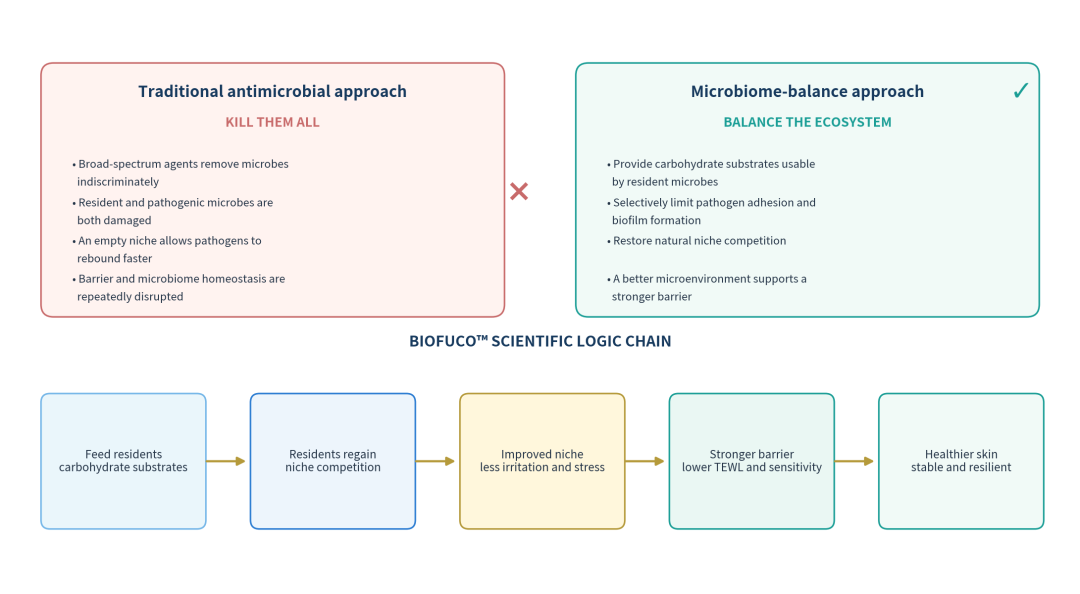
Traditional Antimicrobial Logic|KILL THEM ALL
Broad-spectrum antimicrobials remove microbes indiscriminately; resident and pathogenic flora are damaged alike; the ecological vacuum lets pathogens rebound faster; barrier and flora homeostasis are repeatedly disrupted.
Microbiome Balance Logic|BALANCE THE ECOSYSTEM
Provide sugar substrates usable by resident flora; selectively limit pathogen adhesion and biofilms; restore the natural balance of niche competition; a better microenvironment builds a stronger barrier.
Sources: Byrd et al., Nat Rev Microbiol, 2018; Katsuyama et al., J Dermatol Sci, 2005.
03 · PRODUCT CONCEPT
BioFuco™ Powder: A Tri-Saccharide Prebiotic Active
Biosaccharide Gum-1|A Fucose-Rich Polysaccharide
A fermentation-derived polysaccharide. Film-forming water lock for lasting hydration; soothing and skin-friendly with high skin affinity; enhances formulation sensory feel.
Xylitol|A Prebiotic Five-Carbon Sugar Alcohol
A prebiotic pentitol. A selective substrate for resident flora; upregulates filaggrin to support the barrier; limits pathogen adhesion and biofilm formation.
Lactitol|A Prebiotic Disaccharide Alcohol
A prebiotic disaccharide polyol. Selectively utilized by beneficial bacteria; a multi-hydroxyl hydrating structure; improves scalp and skin comfort.
Polysaccharide network × prebiotic sugar alcohols × microbiome modulation — not a simple blend, but a synergistic active system designed around the skin ecosystem.
| PositioningMicrobiome-friendly activePrebiotic skin-conditioning system | Technical ProfileFermentation biotechnologyPreservative-free powder |
04 · SYNERGY SYSTEM
The Tri-Saccharide System: One Synergistic Eco-Active
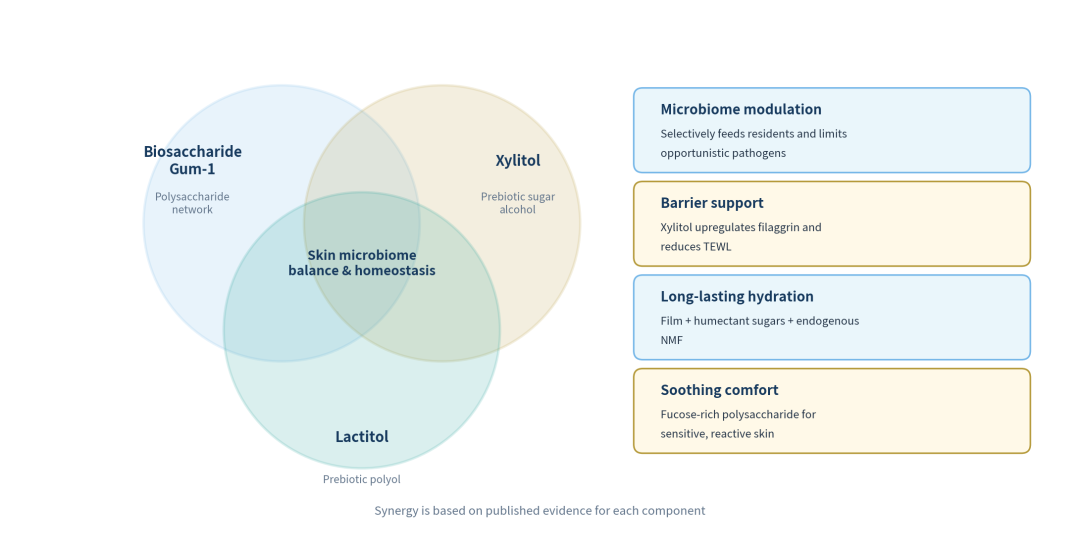
Microbiome Modulation
Selectively feeds resident flora while restraining opportunistic pathogens.
Barrier Support
Xylitol upregulates filaggrin and reduces TEWL.
Lasting Hydration
Film-forming + humectant sugars + endogenous NMF.
Soothing Comfort
The fucose-rich polysaccharide soothes sensitive, reactive skin.
The synergy logic is based on published research evidence for each component; see the evidence page and source notes.
05 · PREBIOTIC MODULATION
Selective Prebiotics: Feed the Residents, Restrain the Opportunists
Staphylococcus epidermidis
Resident flora · produces antimicrobial peptides · maintains homeostasis
1% xylitol significantly promotes growth; higher growth rate in pure culture (p < 0.001).
Staphylococcus aureus
Opportunistic pathogen · linked to atopic skin concerns · can form biofilms
5% xylitol significantly inhibits growth; growth suppressed in pure culture (p < 0.001).
Cutibacterium acnes
Common in sebum-rich areas · overgrowth linked to breakouts
5% xylitol significantly inhibits growth; both tested strains suppressed (p < 0.005–0.001).
Mechanism: xylitol is difficult for opportunistic pathogens such as S. aureus to ferment, yet can be metabolized by specific resident flora; it also inhibits S. aureus glycocalyx synthesis and biofilm formation — the essential difference between prebiotic modulation and broad-spectrum antimicrobial action. Lactitol is likewise selectively utilized by beneficial bacteria in microbiome models.
Sources: Anglenius et al., Korean J Microbiol, 2020 (in vitro, pure culture); Katsuyama et al., J Dermatol Sci, 2005; lactitol prebiotic evidence: Björklund et al., Age, 2012 (microbiome model).
06 · REBUILDING THE NICHE
Beyond Inhibition — Rebuilding a Resident-Dominated Niche
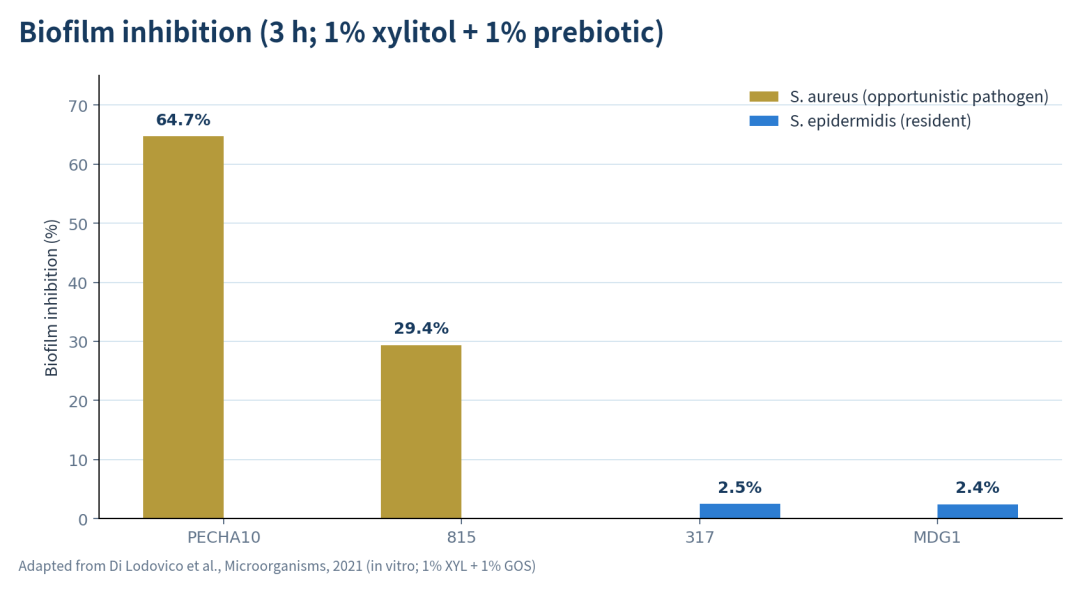
Selectivity Is Clear
The combination inhibits biofilm formation by opportunistic S. aureus by up to 64.7%, while affecting resident S. epidermidis by only < 2.5%.
Co-Culture Confirmation
The system reversed the growth advantage of S. aureus, restoring dominance to S. epidermidis — niche competition shifted back toward health.
In-Vivo Echo
A xylitol-containing cream applied to atopic dry skin significantly reduced S. aureus colonization and improved dryness within 4 weeks.
Source: Katsuyama et al., J Dermatol Sci, 2005 (Part 2, human study).
07 · SKIN BARRIER
Microbiome → Barrier → Skin Resilience
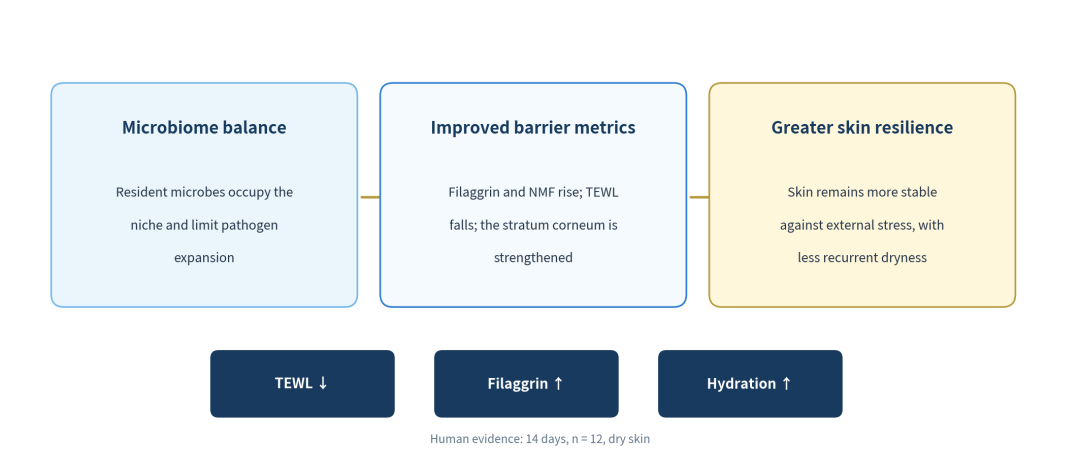
Human evidence: barrier support (14 days, n = 12, dry skin).
| TEWL ↓TEWL significantly reduced; barrier function improved | Filaggrin ↑More filaggrin-positive epidermal cells (~25% vs. control) | Hydration ↑Stratum corneum hydration and biomechanics improved together |
A 5% glycerol + 5% xylitol formula used for 14 days: TEWL fell significantly while skin hydration, epidermal and dermal thickness, and the DEJ undulation index all rose; in-vitro data identify xylitol as the key component upregulating filaggrin expression.
In an SLS acute-irritation human model, xylitol and glycerol showed dose-dependent anti-irritant and anti-inflammatory effects — direct evidence for sensitive-skin and compromised-barrier scenarios.
Sources: Korponyai et al., Acta Derm Venereol, 2017 (in vivo); Szél et al., J Eur Acad Dermatol Venereol, 2015 (in vivo).
08 · HYDRATION
A Triple Hydration Mechanism: Film · Humectancy · NMF
8hBiosaccharide Gum-1 hydration lasts 8 hours in human testingIngredient technical dossier (in-vivo volunteer study)
01 Film-Forming — a “Breathable Moisture Film”
The high-molecular-weight polysaccharide forms a non-occlusive moisturizing film on the skin surface, slowing water loss for immediate and long-lasting hydration with a silky, non-sticky feel.
02 Humectancy — Hydrogen-Bond “Water Capture”
The multi-hydroxyl structures of xylitol and lactitol bind water molecules through hydrogen bonds, raising stratum corneum water content and maintaining dynamic moisture balance even in dry environments.
03 Endogenous NMF — Upregulating Filaggrin
Xylitol upregulates filaggrin expression in keratinocytes — filaggrin breakdown products are the primary source of natural moisturizing factor (NMF), reinforcing hydration from within rather than relying on external humectants alone.
Sources: Korponyai et al., Acta Derm Venereol, 2017; Cohen et al., J Chem Soc Faraday Trans, 1993; Biosaccharide Gum-1 ingredient technical dossier (in vivo).
09 · SOOTHING & COMFORT
The Skin-Friendly Science of a Fucose-Rich Polysaccharide
Fucose is a natural component of human glycoproteins and glycolipids — skin “recognizes” Biosaccharide Gum-1, which is naturally highly affine and highly tolerated.
This makes it a time-proven soothing ingredient for sensitive and reactive skin care.
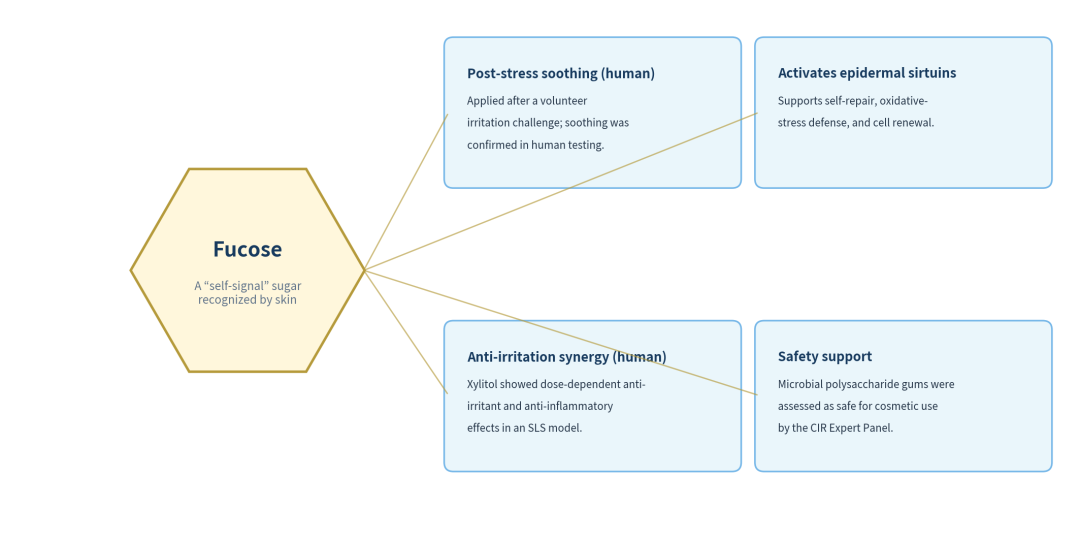
Sources: Biosaccharide Gum-1 ingredient technical dossier (in-vivo volunteer testing); Szél et al., J Eur Acad Dermatol Venereol, 2015 (in vivo); CIR Expert Panel safety assessment of microbial polysaccharide gums.
PART II · THE SMART POWDER FORMAT
From Liquid Actives to a Smart Powder
A more stable, more convenient, more efficient delivery form for a microbiome active
10 · WHY POWDER
Why a Powder: Five Pain Points of Liquid Actives, Solved One by One
Preservative-Free Format
Low water activity inhibits microbial growth, reducing reliance on preservatives.
Easy to Store
A solid form — simply sealed at room temperature; stable in long-term inventory.
Easy to Ship
Over 95% of water weight removed; built for global supply chains.
Easy to Handle
Free-flowing and non-caking; convenient to weigh and dose in both lab and production.
Easy to Disperse
Disperses quickly and evenly in the water phase; suitable for transparent formulas as well.
| Traditional Liquid Actives | BIOFUCO™ POWDER |
|---|---|
| ~97% water · requires a preservation system | Solid composite powder · low water activity by design |
| Heavy to ship · shelf life challenged by microbes | Light to ship · storage-friendly · flexible supply chain |
| Low-dose actives are hard to weigh precisely | Solid dilution ensures weighing and dispersion accuracy |
The format comparison is based on the typical ~97% water content of liquid products in public technical literature; actual formulation performance should be verified.
11 · SMART SOLID DILUTION
Smart Solid Dilution: Every Milligram Under Precise Control
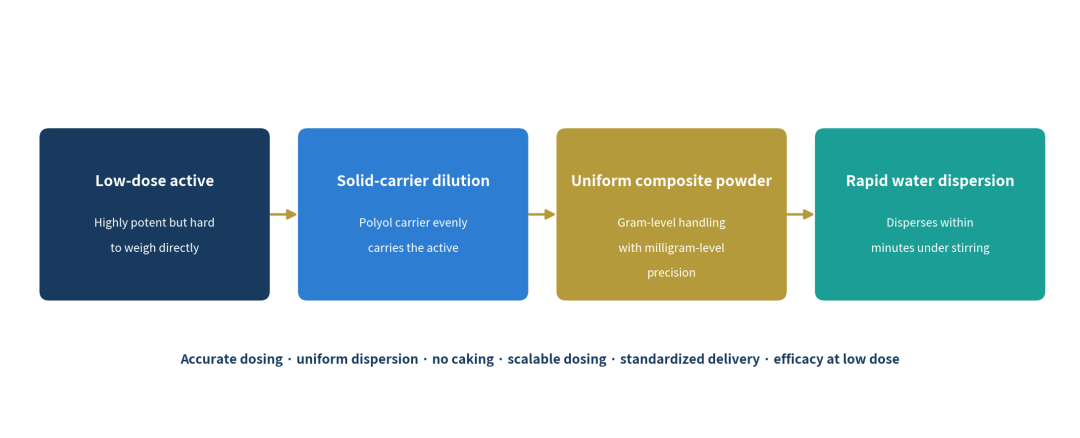
What It Means for Formulators
- Accurate dosing: gram-scale handling with milligram-level precision.
- Uniform dispersion: no local concentration spikes.
- Non-caking: free-flowing and disperses instantly in water.
- Scalable dosing: seamless scale-up from lab to production.
- Standardized delivery: consistent active content from batch to batch.
- High efficacy at low dose: a 1%–2% reference use level delivers the designed activity.
Use levels are reference ranges and should be optimized against formulation goals; the solid dilution process is a product design description.
12 · SCALP MICROBIOME
The Scalp: An Ecosystem That Also Needs Balance
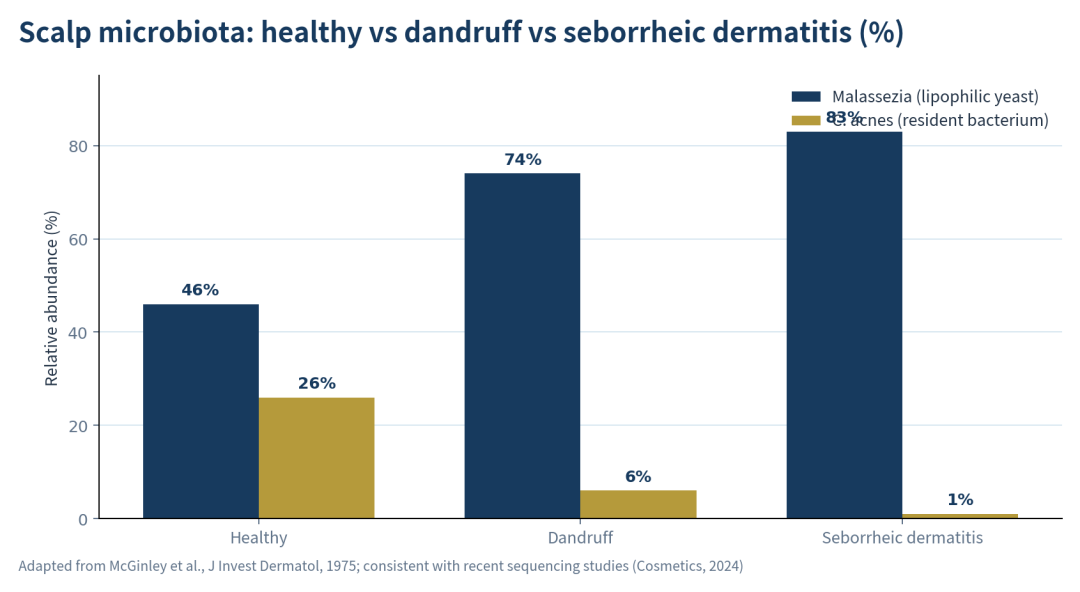
The microbial fingerprint of dandruff: lipophilic Malassezia rises from 46% to 74%–83%, while resident C. acnes falls from 26% to single digits — dandruff is fundamentally a flora-imbalance problem.
The cascade of imbalance: dysbiosis accompanies elevated TEWL and pH plus a compromised scalp barrier, leading to dryness, itching, flaking, and scalp sensitivity.
A new care target: maintain scalp flora homeostasis and nourish the resident ecology — the next generation of scalp care beyond “aggressive anti-dandruff.”
13 · SCALP EVIDENCE
Xylitol × Lactitol: Evidence for Scalp Hydration and Barrier
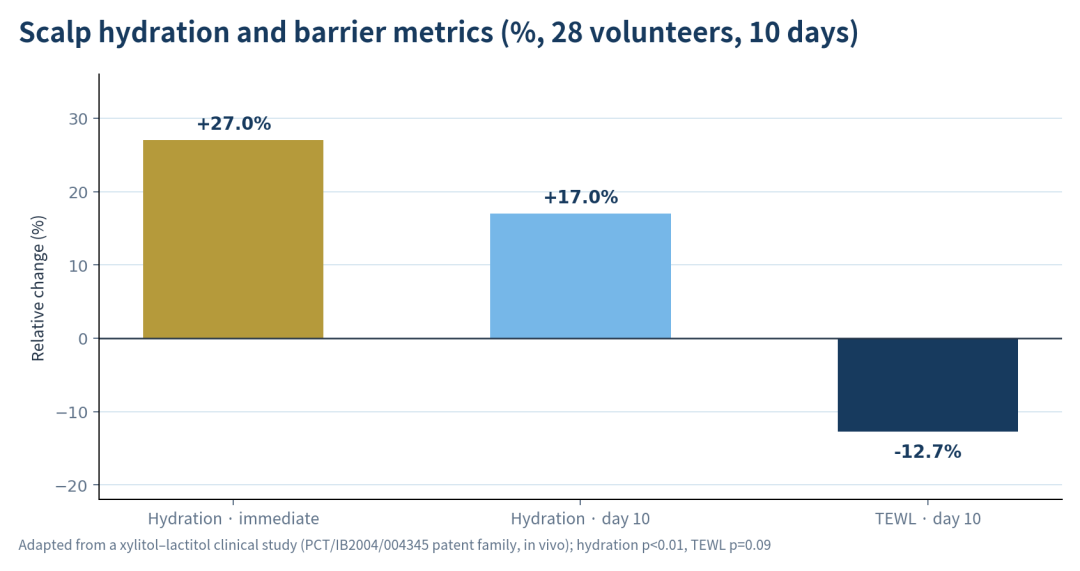
Study Design
28 volunteers (16 women / 12 men) used a xylitol–lactitol wash-and-care regimen 3 times over 10 days — shampoo 1% + conditioner 1% + leave-on product 2%, against a placebo control.
Results
Scalp hydration rose +27% immediately and held at +17% on day 10; TEWL improved by -12.7% (trend); video microscopy showed regulated desquamation and stronger scalp barrier integrity.
Implication
By restoring scalp ecological balance — feeding beneficial flora and restraining harmful flora — dryness, itching, and dandruff discomfort are relieved at the source.
14 · SKINCARE APPLICATIONS
Skincare Applications: From Concept to Everyday Formulas
Microbiome Concepts
Microbiome skincare serums · prebiotic / postbiotic creams · post-cleansing microbiome care · flora-balancing lotions
Targeted Care
Soothing care for sensitive skin · barrier-repair creams · long-lasting hydrating serums and masks · microbiome care for blemish-prone skin
Gentle Scenarios
Gentle baby and child care · hydrating soothing mists · cleansers and rinse-off products · after-sun repair gels
Positioning: a microbiome-friendly active · a prebiotic skin-conditioning systemSuitable for leave-on and rinse-off systems; the water-soluble powder fits serums, creams, masks, mists, and cleansers.
Whether for a new “flora balance” concept launch or a sensitive-skin formula that pairs soothing with barrier support, BioFuco™ Powder delivers a clear scientific narrative and formulator-friendliness through a concise INCI combination.
15 · HAIR & SCALP CARE
From Scalp Ecology to Hair Condition
| Scalp MicrobiomeBalanced scalp flora | Scalp BarrierScalp barrier integrity | Comfort & HydrationComfort and moisture | Healthy HairA healthy environment for hair |
Typical Product Applications
- Microbiome shampoos
- Leave-on scalp serums
- Soothing scalp mists
- Conditioners and hair masks
- Anti-dandruff support care
- Products for sensitive scalps
Bonus: the film-forming property of Biosaccharide Gum-1 can remain on the hair fiber surface after rinsing, helping smooth the cuticle and enhance smoothness and shine (ingredient technical dossier).
16 · FORMULATOR-FRIENDLY
For Formulators: Usage Guide and Technical Notes
| Item | Recommendation |
|---|---|
| Reference use level | 0.5%–2.0% (reference range; optimize per formulation goals and efficacy positioning) |
| Phase of addition | Add to the water phase; ≤45°C for emulsion systems, room temperature for gels and aqueous systems |
| Dissolution & dispersion | Sprinkle slowly into the water phase under stirring; disperses and dissolves within minutes; pre-disperse and sieve for transparent formulas |
| pH suitability | 4.0–8.0 (reference range; suits mildly acidic to neutral systems) |
| Compatibility & compliance | Good compatibility with common surfactants, thickeners, and preservation systems (reference); all three ingredients are IECIC-listed cosmetic raw materials; xylitol has been assessed by CIR |
The above is a reference guide based on the ingredient’s public technical documentation and does not constitute precise process parameters; final formulation parameters should be confirmed through laboratory validation and stability testing.
17 · EVIDENCE CHAIN
The Evidence Chain: Mechanism → Evidence → Benefit
| Mechanism | Key Evidence (Source · Level) | Cosmetic Benefit |
|---|---|---|
| Selective microbiome modulation | 1% xylitol promotes S. epidermidis; 5% inhibits S. aureus / C. acnes — Anglenius et al., Korean J Microbiol, 2020 · in vitro | Microbiome-friendly concept |
| Anti-biofilm & niche rebuilding | Xylitol inhibits S. aureus glycocalyx and biofilms — Katsuyama et al., J Dermatol Sci, 2005 · in vitro + human; prebiotic blend inhibits S. aureus biofilms by up to 64.7% — Di Lodovico et al., Microorganisms, 2021 · in vitro | Blemish-prone and sensitive skin care |
| Barrier strengthening | Filaggrin expression up, TEWL significantly down (14 days, n=12) — Korponyai et al., Acta Derm Venereol, 2017 · human | Barrier repair |
| Triple hydration | Polysaccharide film hydrates for 8 hours — ingredient dossier · human; polyol hydrogen bonding to water — Cohen et al., 1993; filaggrin/NMF upregulation — Korponyai et al., 2017 | Long-lasting hydration |
| Soothing & comfort | Post-challenge volunteer testing confirms soothing — ingredient dossier · human; dose-dependent anti-irritation in the SLS model — Szél et al., JEADV, 2015 · human | Sensitive-skin comfort |
| Scalp microbiome care | Scalp hydration +27% (immediate) / +17% (day 10), TEWL -12.7% (day 10, n=28) — PCT/IB2004/004345 patent-family clinical data · human | Scalp and hair care |
In-vitro / dossier data ≠ finished-product clinical efficacy; third-party literature is for technical reference only and does not represent results for the BioFuco™ Powder finished formulation.
SUMMARY & CONTACT
Feed the beneficial flora. Balance the microbiome.
| Microbiome BalanceFeed residents, restrain opportunists | Barrier SupportFilaggrin · TEWL · NMF | HydrationFilm + humectancy + NMF |
| Skin ComfortSoothing for sensitive skin | Scalp CareBacked by clinical evidence | Smart Powder FormatPreservative-free · easy to use |
PuriActives® BioFuco™ Powder — the prebiotic powder for skin and scalp microbiome balance
PURIPHARM CO., LTD.
www.puriactives.com · service@puripharm.com · +86-572-2745768Building 6, No. 1366 Hongfeng Road, Huzhou, Zhejiang, China
This material is for cosmetic ingredient introduction only and does not constitute pharmaceutical claims; in-vitro and ingredient dossier data are not equivalent to finished-product clinical efficacy; cited third-party literature is for technical reference only. PuriActives® and BioFuco™ are trademarks of PURIPHARM CO., LTD.
PuriActives® ChitoQ
PuriActives® ChitoQ
INCI: Chitosan Hydroxypropyltrimonium Chloride
A permanently cationic chitosan derivative that delivers conditioning, moisturization, and antimicrobial support for skin and hair through a single bio-based polymer.
For cosmetic formulators · R&D scientists · Product development and brand innovation teams
01 · FORMULATION CHALLENGE
An excellent biopolymer constrained by pH
The limitation of native chitosan
- Its amino-group charge exists only below pKa ≈ 6.3–6.5; above that range, both charge and solubility collapse.
- It requires acidic systems, limiting dosage-form choices and active-ingredient combinations.
- Its performance is weakest across the true pH range of skin and hair products (4.5–7).
New market requirements
- Bio-based, biodegradable conditioning polymers.
- Multifunctionality in one ingredient: conditioning + moisturization + microbial support.
- Rinse-resistant deposition without build-up or tackiness.
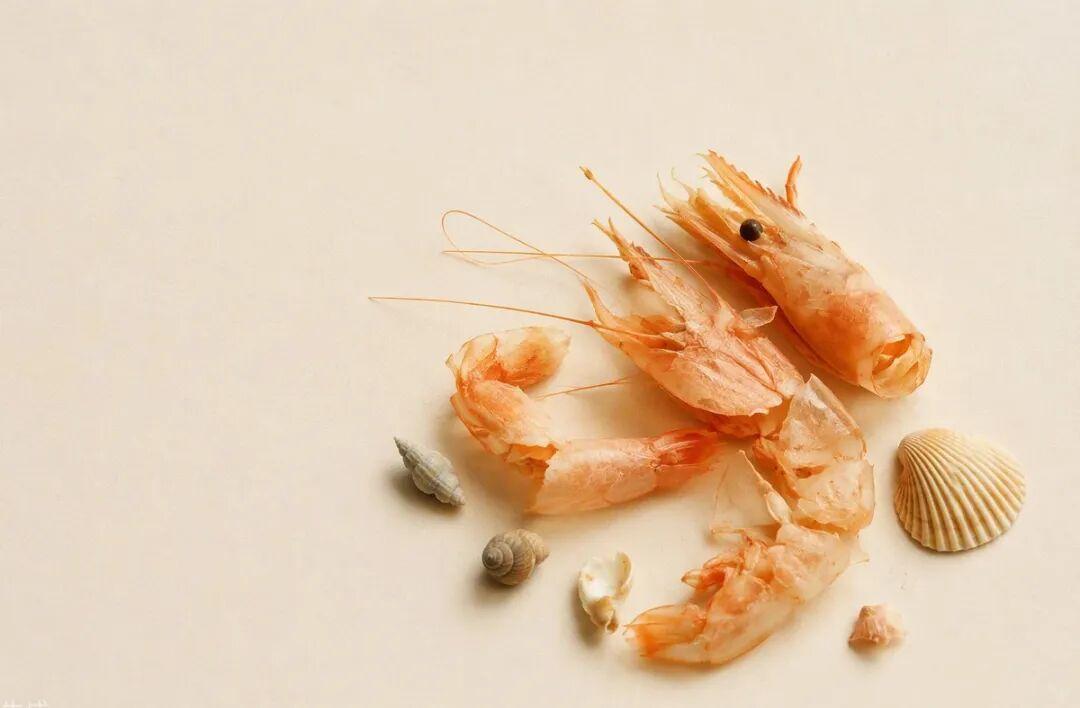
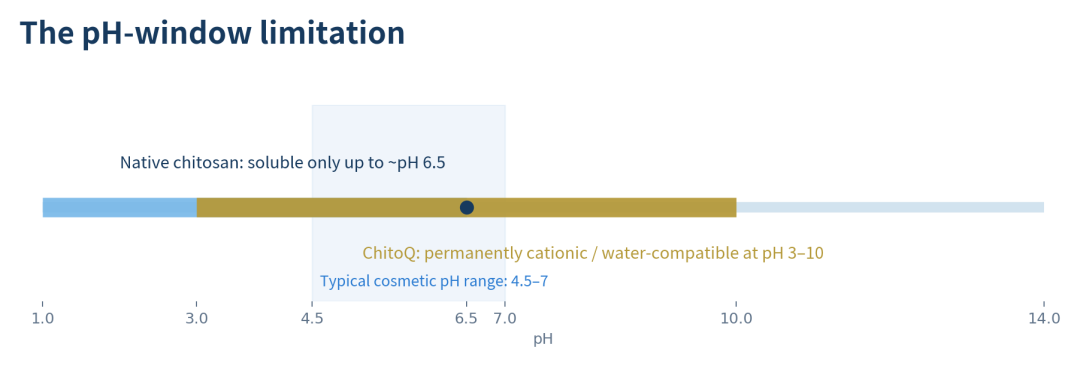
Sources: chitosan pKa and pH-dependent charge—J. Mater. Chem. B 2023; ACS Appl. Mater. Interfaces 2023.
02 · PRODUCT OVERVIEW
One molecule, two care categories.
PuriActives® ChitoQ is a quaternized chitosan: a marine-derived polysaccharide carrying permanent quaternary ammonium groups. It is water-compatible, permanently cationic, and multifunctional for both leave-on and rinse-off systems.
- Cationic affinity deposition on hair keratin and skin surfaces.
- Conditioning, cuticle smoothing, and anti-static performance.
- Moisturization benchmarked against hyaluronic acid.
- Broad-spectrum antimicrobial and anti-biofilm support.
- A bio-based, biodegradable alternative to synthetic polyquaterniums.
| pH 3–10Maintains permanent cationic character across the formulation pH window | 0.625 mg/mLMIC against Streptococcus mutans—90% growth inhibition in vitro |
| 98.5%Degree of substitution in the current batch (specification ≥ 80%) | CosIngEU-listed INCI—functions: hair conditioning and humectant |
Sources: Gao et al., Molecules 2024 (S. mutans, in vitro); EU CosIng database; Puripharm batch COA (May 2026).
03 · MOLECULAR DESIGN
From chitosan to ChitoQ: functional quaternization
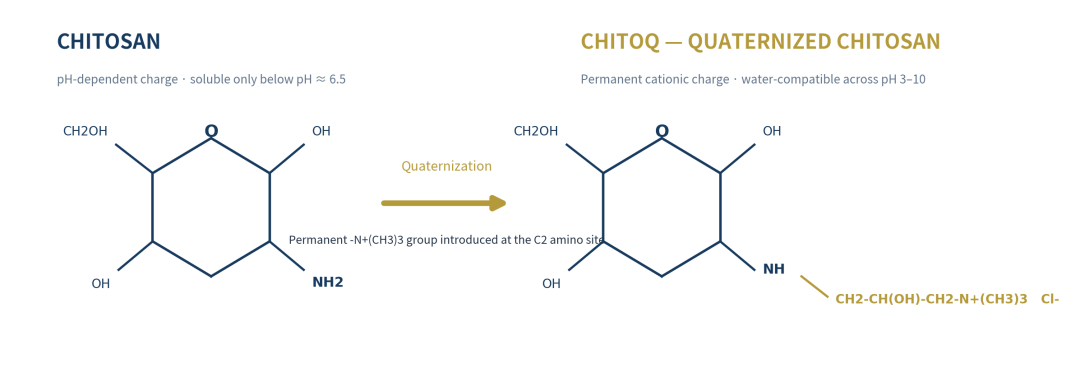
Permanent cationic charge
Quaternary ammonium groups never deprotonate, preserving charge across the full cosmetic pH range.
True water compatibility
It dissolves directly in water without acidification—add it to the water phase and formulate freely.
Stronger surface affinity
Electrostatic binding to anionic keratin and skin surfaces drives affinity deposition and film formation.
The quaternization route follows the published synthesis of N-2-hydroxypropyltrimethylammonium chloride chitosan (Gao et al., Molecules 2024).
04 · PHYSICOCHEMICAL PROPERTIES
Positive charge at any formulation pH
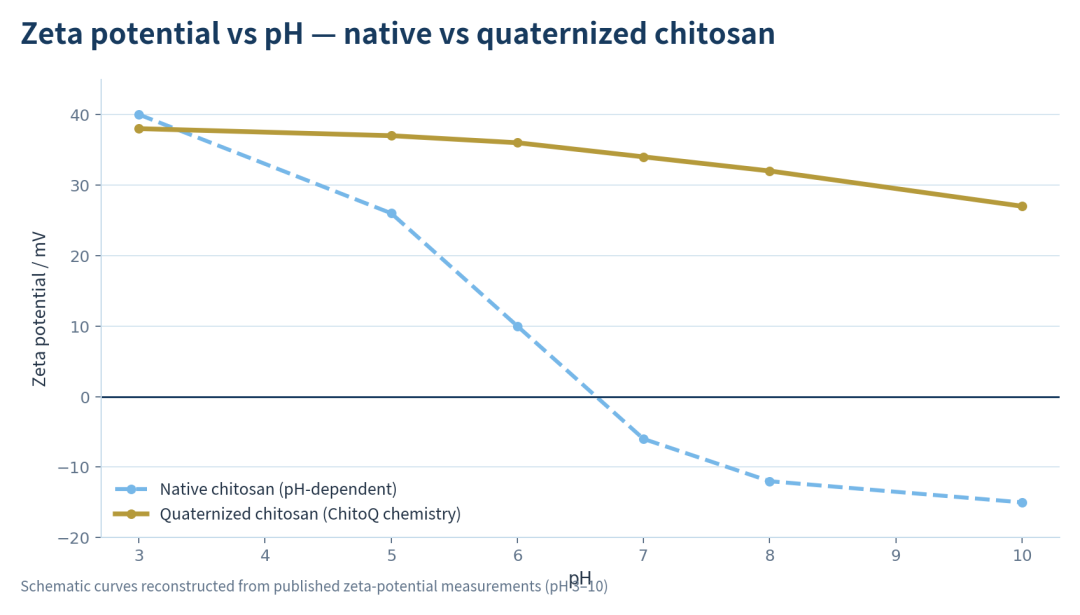
Unconditional charge
Quaternary ammonium groups remain protonated from acidic to weakly alkaline media—affinity deposition no longer depends on pH.
Soluble where chitosan is not
High-substitution HACC forms clear aqueous solutions (transmittance >80% at 80% substitution)—no acidification or pre-dissolution required.
Built for deposition
High permanent charge density maximizes electrostatic interaction with anionic keratin and skin—the physical basis for conditioning and film formation.
Sources: ACS Appl. Mater. Interfaces 2023 (zeta potential of quaternized chitosan, pH 3–10); ACS Omega 2021 (QCS charge retention); Gao et al., Molecules 2024 (solubility).
05 · MECHANISM OF ACTION
Designed to bind precisely where damage occurs
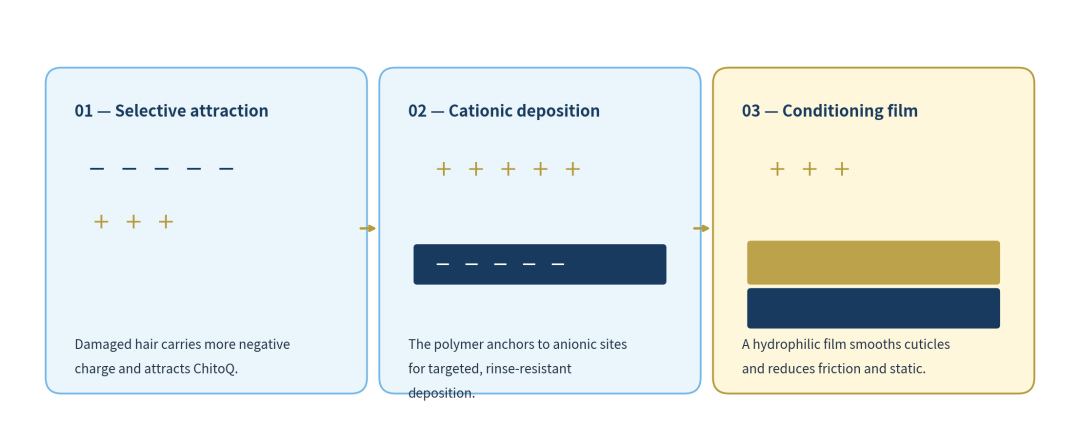
- Selective attraction: the isoelectric point of hair keratin is approximately 3.67. At cosmetic pH, hair carries a net negative charge, and damaged fibres are even more negatively charged.
- Cationic deposition: ChitoQ adsorbs to anionic sites through electrostatic interaction, concentrating deposition where the fibre needs it most and resisting rinse-off.
- Conditioning film: the bound polymer forms a smooth, hydrophilic film that lays cuticles flat, reduces friction and static, and helps retain surface moisture.
The same physical mechanism works on skin: an affinity, breathable cationic film binds water and supports the surface barrier—one mechanism, two categories.
Source: hair isoelectric point and cationic deposition mechanism—Gavazzoni Dias et al., On Hair Care Physicochemistry, Int. J. Trichology / PMC9921463.
EVIDENCE SECTION
Performance evidence
Quantified results from peer-reviewed research on ChitoQ chemistry, presented with transparent evidence grading.
A | Studies on ChitoQ chemistry itself (Chitosan Hydroxypropyltrimonium Chloride)
B | Structurally similar quaternized chitosan—mechanistic support
C | General chitosan literature—physicochemical background
06 · HAIR-CARE PERFORMANCE
Affinity conditioning beyond rinse-off
A cationic film restores surface smoothness and shine.
Targeted deposition on damaged keratin [B]
The affinity of quaternized chitosan for hair keratin has been demonstrated, and its strengthening and conditioning effects have been documented since the earliest quaternized-chitosan patents.
Easier wet and dry combing [C]
The adsorbed film reduces inter-fibre friction, helps detangling, and reduces mechanical breakage during combing.
Anti-static and frizz control [C]
Charge neutralization plus a smoothing film minimizes static and seals cuticles against humidity-induced frizz.
Shine, softness, and color protection [C]
Flat cuticles reflect light evenly, while the protective film helps color resist washing and UV exposure.
Added scalp-care benefit [A]
Demonstrated antimicrobial activity extends the benefit from the hair fibre to the scalp environment.
Damaged hair has a lower isoelectric point and a denser negative surface charge, so cationic polymers deposit preferentially where repair is most needed.
Sources: US 4,772,689 (Lang et al., quaternized-chitosan affinity); PCACD 2024 review (chitosan hair care); Gao et al., Molecules 2024. See the evidence section for [A]/[B]/[C] grading.
07 · SKIN-CARE PERFORMANCE
Hyaluronic-acid-level moisturization
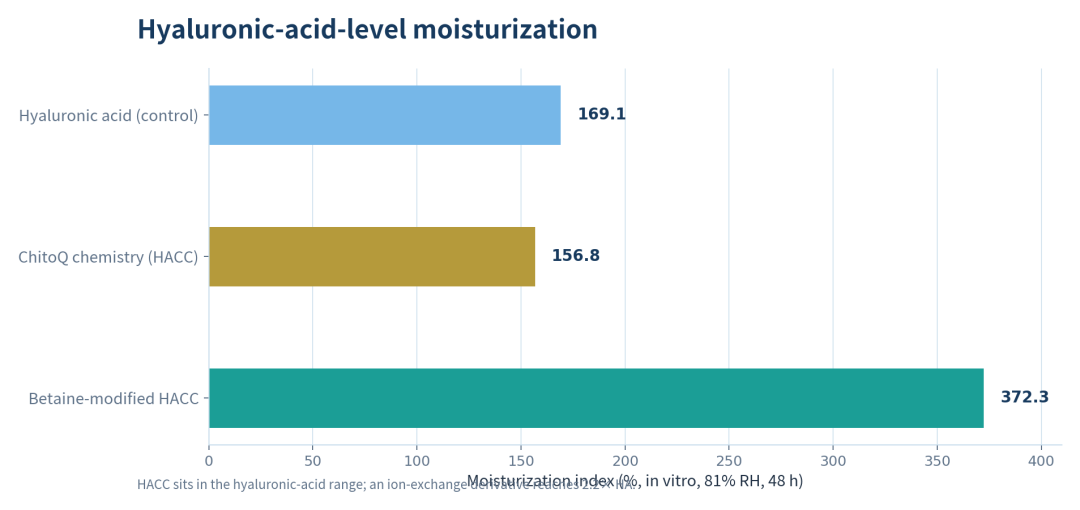
[A] HACC performs within the hyaluronic-acid range, and its ion-exchange derivative can reach 2.2× HA. At 43% RH, the HACC derivative also absorbed more moisture than HA (74–94% vs 32.4%, 48 h).
Dual water management
A surface rich in hydroxyl and quaternary ammonium groups binds water through hydrogen bonding, while the affinity film helps slow transepidermal water loss. [A/C]
Breathable barrier support
Chitosan films are non-occlusive: they buffer the stratum corneum against environmental stress while allowing skin to function normally. [C]
Sensory differentiation
The cationic film provides a distinctive smooth, cushioned after-feel—a humectant consumers can actually perceive. [C]
Sources: Mi et al., Polymers 2021 (PMC8307204)—in vitro comparison of moisture absorption/retention by HACC, its derivatives, and sodium hyaluronate; chitosan film/TEWL literature (PCACD 2024).
08 · ANTIMICROBIAL SUPPORT
A cationic mechanism acting on microbial surfaces
| 0.625 mg/mLMIC of N-2-HACC against S. mutans; 90.0% growth inhibition at the MIC [A] | > 90%Inhibition of E. coli and S. aureus by quaternized chitosan salts at 0.5 mg/mL [B] | BiofilmFormation is significantly inhibited, with activity increasing as substitution degree rises [A/B] |
How the permanent charge works [A]
- Electrostatic binding to negatively charged cell envelopes.
- Increased cell-wall permeability (alkaline phosphatase leakage).
- Disrupted membrane integrity—visible pitting under SEM.
- Inhibited respiratory metabolism and protein/DNA synthesis.
Gentle, film-forming antimicrobial support for leave-on systems. Position it as preservative-boosting support; actual in-formula performance must be confirmed by preservative challenge testing.
Sources: [A] Gao et al., Molecules 2024 (N-2-HACC against S. mutans; MIC/SEM/biofilm); [B] Wang et al., Int. J. Biol. Macromol. 2024 (chitosan quaternary ammonium salts; E. coli/S. aureus).
09 · SAFETY AND MILDNESS
Cationic performance without the baggage
ChitoQ carries its charge on a high-molecular-weight polysaccharide backbone—it stays on the surface where it works, rather than penetrating like a small-molecule quaternary ammonium salt.
No cytotoxicity in cell testing [A]
HACC-based derivatives showed no significant toxicity toward L929 fibroblasts; independent literature describes N-2-HACC as having very low toxicity and high safety.
Bio-based and biodegradable [A/C]
The marine-derived polysaccharide backbone addresses sustainability and environmental-persistence concerns associated with traditional synthetic cationic polymers.
Built-in antioxidant benefit [A]
Beyond conditioning, HACC derivatives show free-radical scavenging activity (DPPH and superoxide anion).
A high-molecular-weight cationic biopolymer designed for surface action. Finished-formula suitability and regulatory compliance remain the responsibility of the product developer; a complete toxicology dossier is available upon request.
Sources: Han et al., Int. J. Biol. Macromol. 2024 (L929 cytotoxicity and antioxidant assays); Gao et al., Molecules 2024; Processes 2026 review (limitations of cationic systems).
10 · HAIR + SCALP SYNERGY
One functional biopolymer—two cosmetic interfaces
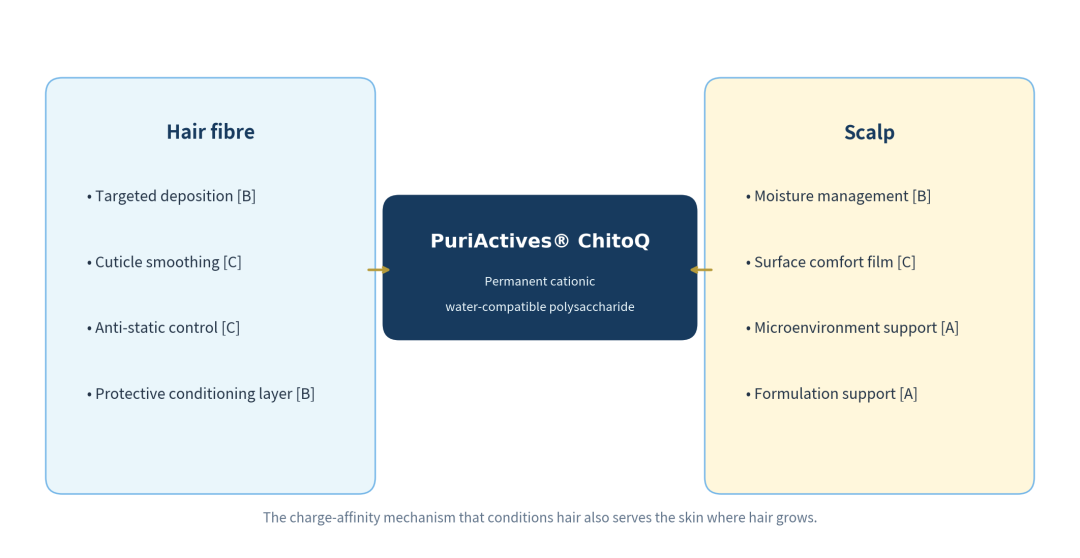
Hair fibre
- Targeted deposition [B]: cationic chains anchor to negatively charged damaged keratin sites.
- Cuticle smoothing [C]: the adsorbed film lays raised cuticles flat and reduces inter-fibre friction.
- Anti-static control [C]: charge neutralization tames static and humidity-induced frizz.
- Protective conditioning layer [B]: the affinity polymer film helps protect hair from daily mechanical damage.
Scalp
- Moisture management [B]: the humectant polysaccharide film helps retain water at the scalp surface.
- Surface comfort film [C]: an ultra-thin polymer layer provides a smooth, protected skin feel.
- Microenvironment support [A]: demonstrated antimicrobial activity supports scalp-care concepts.
- Formulation support [A]: water-phase compatibility simplifies scalp lotions, essences, and cleansing formulas.
The charge-affinity mechanism that conditions hair also serves the skin where hair grows.
See the evidence section for grading. Sources: Gao et al., Molecules 2024 [A]; Mi et al., Polymers 2021 [B]; US 4,772,689 [B].
11 · PERFORMANCE ARCHITECTURE
One polymer, six cosmetic functions.
01 CONDITION | Affinity cationic deposition
Permanent charge anchors the polymer to hair keratin and skin surfaces for rinse-resistant conditioning. [B]
02 SMOOTH | Film-forming surface refinement
An ultra-thin adsorbed film smooths cuticles and skin microrelief, reducing friction and roughness. [C]
03 HYDRATE | Water retention and binding
The hydrophilic polysaccharide structure binds water, with moisturization benchmarked against hyaluronic acid. [B]
04 PROTECT | Polymer protective interface
The deposited layer buffers hair fibres and skin surfaces against mechanical and environmental stress. [C]
05 CONTROL | Anti-static and manageability
Charge neutralization reduces static and makes wet and dry combing easier. [C]
06 SUPPORT | Skin and scalp-care functions
Demonstrated antimicrobial and moisturizing activity extends care from hair fibres to scalp and skin. [A]
Molecule → mechanism → performance → formulation → consumer benefit
The functional portfolio is limited to scientifically supported roles; see the evidence section for grading.
12 · APPLICATION OPPORTUNITIES
One ingredient, two care categories
Hair and scalp
- Conditioning shampoos—deposition without build-up; compatible with amphoteric surfactant systems.
- Rinse-off conditioners and masks—wet-combing slip, cuticle sealing, and shine.
- Leave-on anti-frizz serums/sprays—an anti-static film with humidity resistance.
- Scalp lotions—moisturization plus microbial-balance support.
- Color-care systems—film protection against wash-out and UV fading.
Face and body
- Moisturizing serums/essences—hyaluronic-acid-level hydration with a perceptibly cushioned skin feel.
- Moisturizers and barrier creams—a breathable film that slows water loss.
- Sheet-mask essences—affinity hydration that lasts after mask removal.
- Facial mists/toners—water-clear and non-tacky.
- Gentle cleansers—a conditioned after-feel with a microbial-support story.
Every concept inherits the same trio: affinity deposition · moisturization · microbial support
Concept directions are provided for development reference only; prototype formulas are available from the Puripharm application laboratory.
13 · FORMULATION GUIDE
Born for the water phase
| Parameter | Guidance |
|---|---|
| INCI / form | Chitosan Hydroxypropyltrimonium Chloride—off-white powder |
| Use level | Varies by dosage form—the Puripharm application laboratory provides system-specific starting recommendations |
| Solubility | Readily soluble in water across a broad pH window—no acidification required |
| Working pH | Functional pH 3–10; comfortable formulation range pH 4–8 |
| Addition | Disperse in the water phase under moderate stirring until clear |
| Compatibility | Cationic—avoid strongly anionic surfactants/polymers; best paired with nonionic and amphoteric systems |
| Process tolerance | The polysaccharide backbone is stable; add below 80 °C to protect color and viscosity |
Formulator notes
- Rinse-off products: deposit first, rinse second—affinity withstands dilution.
- Screen salts—high ionic strength compresses charge interactions.
- Brings light, elegant viscosity to aqueous systems.
- Pair with humectants (glycerin, betaine, PCA) to strengthen the hydration story.
- Confirm preservative synergy in the final base through challenge testing.
Prototype formulas (conditioning shampoo, moisturizing serum, and scalp lotion) are available from the Puripharm application laboratory.
Guidance is based on published physicochemical behavior of quaternized chitosan and Puripharm application experience; validate in the final formula.
14 · DIFFERENTIATION
A bio-based answer to synthetic cationic polymers
| Dimension | PURIACTIVES® CHITOQ | Native chitosan | Synthetic polyquaterniums |
|---|---|---|---|
| Source | Marine-derived, bio-based | Marine-derived, bio-based | Petrochemical |
| Charge vs pH | Permanently cationic, pH 3–10 | Only below pKa ≈ 6.5 | Permanently cationic |
| Water compatibility | Direct dissolution, no acidification | Acidic media only | Good |
| Affinity | High—keratin and skin | Moderate, pH-limited | High |
| Multifunctionality | Conditioning + moisturization + antimicrobial support | Film-forming and moisturizing | Conditioning only |
| End of life | Biodegradable polysaccharide | Biodegradable | Persistence concern |
Synthetic-grade performance with a biopolymer story—without naming any commercial competitor.
15 · QUALITY AND REGULATORY
Batch traceability—all 11 tests passed
Specification vs representative production batch
| Test item | Specification | Batch result |
|---|---|---|
| Appearance | Off-white powder | Complies |
| Solubility | Soluble in deionized water | Complies |
| Moisture | ≤ 10.0% | 8.7% |
| Ash | ≤ 1.0% | 0.45% |
| pH (1% solution) | 5.5–7.5 | 6.41 |
| Viscosity (1% aqueous solution, 20 °C) | Meets product claim | 18 mPa·s |
| Degree of deacetylation | ≥ 85.0% | 89.2% |
| Degree of substitution | ≥ 80.0% | 98.5% |
| Arsenic (As) | ≤ 4.0 mg/kg | Not detected (< 0.01) |
| Lead (Pb) | ≤ 2.0 mg/kg | Not detected (< 0.02) |
| Water-insoluble matter | ≤ 0.5% | 0.03% |
| 11 / 11All quality tests passed for the current production batch | 98.5%Degree of substitution; specification ≥ 80% | NDArsenic and lead below detection limits (< 0.01 / < 0.02 mg/kg) |
Regulatory identity
The INCI name Chitosan Hydroxypropyltrimonium Chloride is listed in the EU CosIng database with hair-conditioning and humectant functions. Each batch is supplied with COA, TDS, and SDS.
Puripharm Co., Ltd. batch inspection report (May 2026); complete COA, TDS, and SDS are available upon request. EU CosIng listed functions: hair conditioning and humectant.
16 · SUMMARY
ChitoQ earns a place in your formula
Marine chitosan backbone → functional quaternization → water compatibility + permanent charge → biological surface binding → multifunctional performance
No more formulation compromise
Water compatibility across pH 3–10 ends the acidic-system constraint of native chitosan.
Performance that stays
Permanent cationic affinity delivers rinse-resistant conditioning and moisturization.
A cleaner label story
Bio-based, biodegradable, and clean in cell testing—a credible successor to synthetic polyquaterniums.
Honestly graded evidence
ChitoQ-specific data lead the story; related quaternized-chitosan and chitosan literature is clearly labeled.
One SKU, three functions
Conditioning, moisturization, and antimicrobial support simplify formulas and strengthen claims.
End-to-end support
Specifications, dossiers, and prototype formulas travel with the ingredient—not as an afterthought.
ChitoQ turns an exceptional biopolymer into a reliable formulation tool.

PURIPHARM CO., LTD.
Let’s build the next generation of care products together.
Request PuriActives® ChitoQ samples, specifications, safety dossiers, and prototype formulas.
| Website | www.puriactives.com |
| service@puripharm.com | |
| Phone | +86-572-2745768 |
| Address | Building 6, No. 1366 Hongfeng Road, Huzhou, Zhejiang, China |
PuriActives® and ChitoQ® are registered trademarks of Puripharm Co., Ltd. This presentation introduces a cosmetic ingredient only and contains no drug claims. In vitro and third-party literature data are identified and do not represent clinical performance of finished products.