PuriActives® AlgiSulf
PURIPHARM CO., LTD.
Sodium Algin Sulfate · INCI: SODIUM ALGIN SULFATE
Marine sulfated polysaccharide technology for premium skin and scalp care
For cosmetic formulators, R&D scientists, innovation teams and brand developers · www.puriactives.com
OVERVIEW
From marine chemistry to skin and scalp applications
PuriActives® AlgiSulf (INCI: Sodium Algin Sulfate) is a marine-derived sulfated polysaccharide built on a brown-algal alginate backbone.
This article reviews alginate sulfation chemistry, structure–activity relationships and published evidence relevant to moisturization, barrier support, soothing, antioxidant activity and extracellular matrix care, with extensions to scalp health and hair conditioning.
Research findings are integrated into the mechanisms described below. Source notes accompany each section, with the reference list at the end.
I · SCIENTIFIC FOUNDATIONS
Marine polysaccharide science
Product introduction and INCI identity
Alginate structure and sulfation
Structure–activity relationships
Integrated mechanisms
II · SKIN APPLICATIONS
Skin moisturization and conditioning
Skin barrier support
Soothing and inflammatory pathways
Antioxidant protection
Skin aging and the extracellular matrix
Key scientific evidence
III · SCALP AND HAIR
Rationale for scalp care
Scalp hydration and comfort
Scalp oxidative stress
Hair conditioning
Skin–scalp synergy
IV · APPLICATIONS
Technical properties
Formulation and processing
Application areas
Evidence matrix
Value proposition and references
01 · MARINE SCIENCE
Brown-algal chemistry refined through sulfation
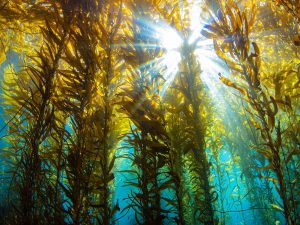
Kelp forests: source ecosystems for brown-algal polysaccharides
Marine algae produce structurally distinctive carbohydrates. Brown algae (Phaeophyceae) use alginate in cell walls and intercellular matrices. This linear polyuronide provides both strength and flexibility in moving seawater.
Marine sulfated polysaccharides, including fucoidan, carrageenan and ulvan, have been widely studied for skin-related benefits. Associations between sulfate content and biological activity are frequently reported.
MARINE CARBOHYDRATE LANDSCAPE
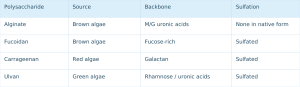
Sodium Algin Sulfate combines an alginate backbone with sulfation characteristic of marine polysaccharides.
Sources: Ngo & Kim, Int. J. Biol. Macromol. 2013; Kim et al., Mar. Drugs 2018.
02 · PRODUCT IDENTITY
One ingredient for skin and scalp care
PuriActives® AlgiSulf is the sodium salt of sulfated alginic acid: a water-soluble anionic polysaccharide produced by controlled sulfation of brown-algal alginate.
Sulfate half-esters introduced onto the uronic-acid backbone increase anionic charge density, giving the structural polymer glycosaminoglycan-like and heparin-like biological interaction properties.
FUNCTIONAL PROFILE
● Moisturization and film formation: the hydroxyl-rich polyuronide binds water at the skin surface.
● Soothing and antioxidant properties: chemokine affinity and sulfation-associated radical scavenging.
● ECM biomimetic support: heparin-like affinity for matrix-related proteins.
● Skin and scalp versatility: one INCI for facial, scalp and hair applications.
PRODUCT IDENTIFICATION
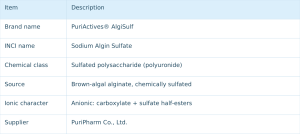
Distinct from unmodified alginate (INCI: Algin / Sodium Alginate), which contains no sulfate groups.
Source: Arlov & Skjåk-Bræk. Molecules 2017;22:778.
03 · MOLECULAR STRUCTURE
The alginate backbone and what sulfation changes
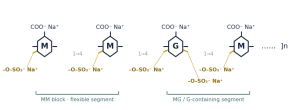
Schematic: (1→4)-linked β-D-mannuronic acid (M) and α-L-guluronic acid (G) residues. Gold bonds indicate sulfate half-esters at C2/C3 hydroxyl groups.
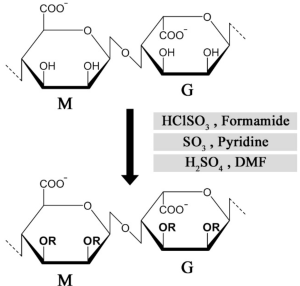
Published figure: chemical sulfation routes for alginate M/G residues (HClSO₃/formamide; SO₃/pyridine; H₂SO₄/DMF). Arlov & Skjåk-Bræk. Molecules 2017;22:778 (CC BY).
BACKBONE STRUCTURE
Alginate is a linear copolymer of M and G units arranged in MM, GG and alternating MG blocks. Block composition affects chain flexibility and ion binding. G blocks associate around Ca²⁺ to form the classic “egg-box” gel structure.
SULFATION CHEMISTRY
Chemical sulfation converts C2/C3 hydroxyl groups into sulfate half-esters (–O–SO₃⁻Na⁺), introducing additional anionic groups on the residues and producing a strongly acidic polyelectrolyte with a heparin-like spatial charge distribution.
Sources: Arlov & Skjåk-Bræk. Molecules 2017. DOI: 10.3390/molecules22050778; Mutch et al. 2024.
04 · STRUCTURE–ACTIVITY RELATIONSHIPS
Degree of sulfation shapes biological properties
Charge density influences protein affinity. Greater sulfation increases anionic charge along the chain and strengthens interactions with heparin-binding proteins, including growth factors, chemokines and coagulation factors (Biomacromolecules 2014).
Radical scavenging increases with sulfation. In human chondrocyte and macrophage models, superoxide scavenging by sulfated alginate correlates directly with the degree of substitution: more sulfate groups produce a stronger antioxidant response (Biomater. Sci. 2017).
Sequence and molecular weight regulate performance. M/G composition, block length and molecular weight shape chain conformation, flexibility and binding geometry. Sequence-defined samples show measurable differences in heparin-like behavior (Molecules 2017).
SODIUM ALGIN SULFATE VS UNMODIFIED SODIUM ALGINATE

Sources: Arlov et al. Biomacromolecules 2014; Kerschenmeyer et al. Biomater. Sci. 2017.
05 · MECHANISMS
Integrated mechanisms of action
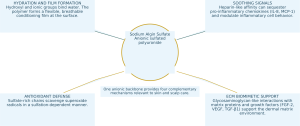
Sodium Algin Sulfate
Anionic sulfated polyuronide
HYDRATION AND FILM FORMATION
Hydroxyl and ionic groups bind water. The polymer forms a flexible, breathable conditioning film at the surface.
SOOTHING SIGNALS
Heparin-like affinity can sequester pro-inflammatory chemokines (IL-8, MCP-1) and modulate inflammatory cell behavior.
ANTIOXIDANT DEFENSE
Sulfate-rich chains scavenge superoxide radicals in a sulfation-dependent manner.
ECM BIOMIMETIC SUPPORT
Glycosaminoglycan-like interactions with matrix proteins and growth factors (FGF-2, VEGF, TGF-β1) support the dermal matrix environment.
One anionic backbone provides four complementary mechanisms relevant to skin and scalp care.
Sources: Huang et al. J. Nanobiotechnol. 2023; Freeman et al. Biomaterials 2008.
06 · SKIN APPLICATIONS: HYDRATION
Skin moisturization and conditioning
The structure of sulfated polyuronides supports water management. Dense hydroxyl, carboxylate and sulfate groups form hydrogen-bonding and ion–dipole interactions with water at the skin surface.
MOLECULAR WATER BINDING
Each residue carries hydroxyl groups, a carboxylate group and up to two sulfate half-esters. The source positions this as a high charge density among cosmetic polysaccharides, supporting hydrophilicity and moisture retention.
SURFACE FILM
Alginate materials have long been used in wound dressings for their ability to maintain a moist interface. As a topical film former, the polymer can reduce water loss and smooth surface roughness.
SENSORY CONDITIONING
Reviews of marine carbohydrates report moisturizing, soothing and anti-aging benefits of algal polysaccharides. Alginate-family materials are known for moisture-retaining protective films.
FORMULATION IMPLICATIONS
AlgiSulf can serve as a moisturizing framework in water-based serums, concentrates, gel masks and scalp treatments, providing hydration, slip and a soft-focus film without a heavy occlusive feel. Its anionic character also supports pairing with cationic conditioning complexes in rinse-off products.
Sources: Kim et al. Mar. Drugs 2018;16:459; Yao & Xu. Polysaccharides 2022.
07 · SKIN APPLICATIONS: BARRIER
Skin barrier support
Barrier care begins at the surface. A coherent, hydrated polymer film protects the compromised stratum corneum, while related chemical interactions may modulate inflammatory and oxidative signals that interfere with recovery.
Moist protective interface. Alginate dressings maintain a moist, protected wound environment. Sulfated alginate hydrogels extend this platform in deep partial-thickness burn models, reducing excessive inflammation and supporting organized repair (preclinical).
Fibroblast compatibility. Alginate sulfate showed no cytotoxicity in mouse and human fibroblasts at 0.5–2% w/v, while reducing inflammatory mediator levels in the same cells. This provides a rationale for barrier-care development for reactive skin (in vitro).
Bioadhesive residence. Alginate-family polymers exhibit mucoadhesion and bioadhesion, potentially extending surface film residence, a useful property for leave-on barrier products and overnight masks (material-class evidence).
Barrier support through signaling. By binding IL-8 and MCP-1 and promoting a shift from M1 toward M2 macrophage phenotypes, sulfated alginate acts upstream of low-grade inflammation associated with disrupted barrier homeostasis (preclinical).
Sources: Huang et al. J. Nanobiotechnol. 2023; Balde & Nazeer. Colloids Surf. B 2025.
08 · SKIN APPLICATIONS: SOOTHING
Soothing and inflammatory pathways
Sulfated alginate mimics heparan sulfate. Its negative charge distribution attracts positively charged chemokine domains, potentially intercepting signals before inflammatory cells are recruited into tissue.
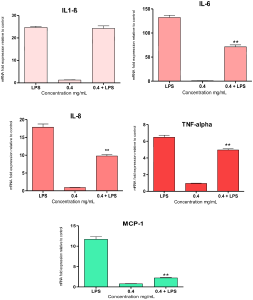
Published figure: unmodified sodium alginate from E. amentacea suppresses LPS-induced IL-1β, IL-6, IL-8, TNF-α and MCP-1 in THP-1 macrophages. Mar. Drugs 2026;24:41 (CC BY). DOI: 10.3390/md24010041.
CHEMOKINE SEQUESTRATION
● Sulfated alginate hydrogel platforms have high affinity for IL-8 and MCP-1 and reduce inflammatory cell infiltration (preclinical).
● Macrophage phenotypes shift from M1 toward M2, favoring resolution rather than escalation (preclinical).
INFLAMMATORY MEDIATOR MODULATION
● Alginate sulfate (0.5–2% w/v) reduces inflammatory mediators in mouse and human fibroblasts and inhibits protein denaturation (in vitro).
● Sulfated alginate hydrogels suppress IL-1β-induced inflammatory responses in human chondrocytes (in vitro).
BACKBONE EVIDENCE: UNMODIFIED SODIUM ALGINATE
For unmodified E. amentacea sodium alginate, reductions in THP-1 macrophages were IL-6: 46%; IL-8: 46%; MCP-1: 81%; TNF-α: 23%. iNOS inhibition in RAW 264.7 cells was 70–83%. These data describe the unsulfated backbone. The source separately proposes further enhancement through sulfation.
Sources: Huang 2023; Balde 2025; Arlov 2017; Mar. Drugs 2026;24:41.
09 · SKIN APPLICATIONS: ANTIOXIDANT ACTIVITY
Antioxidant protection
Reactive oxygen species contribute to skin aging and inflammation. Sulfation adds radical-scavenging activity to the alginate film platform, with activity increasing as sulfate content rises.
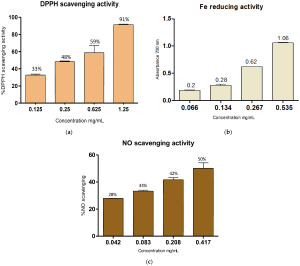
Published figure: DPPH scavenging (a), ferric reducing power (b) and NO scavenging (c) of unmodified E. amentacea sodium alginate. Mar. Drugs 2026;24:41 (CC BY). DOI: 10.3390/md24010041.
SULFATION-DEPENDENT SCAVENGING
Across sulfated alginate derivatives tested with human chondrocytes and macrophages, superoxide scavenging correlated directly with degree of sulfation, demonstrating a structure–activity relationship (in vitro).
The same study reported immunomodulatory effects, linking antioxidant activity with modulation of inflammatory signaling.
MARINE SULFATED POLYSACCHARIDES AS RADICAL SCAVENGERS
Sulfated polysaccharides from Laminaria japonica showed greater reducing power and radical scavenging at higher sulfate content and lower molecular weight. These are structural variables relevant to alginate sulfation (chemical assays).
QUANTITATIVE BACKBONE DATA: SODIUM ALGINATE
For the unsulfated backbone, DPPH scavenging reached 91% at 1.25 mg/mL (IC₅₀ ≈ 0.410 mg/mL). NO scavenging IC₅₀ was approximately 0.417 mg/mL. Ferric reducing power increased with dose to A₇₀₀ = 1.06. The source cites sulfation literature as a rationale for exceeding this baseline; the plotted data concern unsulfated alginate (chemical assays).
Sources: Kerschenmeyer 2017; Zhao et al. 2008; Mar. Drugs 2026;24:41.
10 · SKIN APPLICATIONS: AGING AND ECM
Skin aging and the extracellular matrix
Sulfated glycosaminoglycans participate in dermal matrix functions. Sulfated alginate uses related sulfate-patterned protein interactions and was originally developed for tissue repair applications.
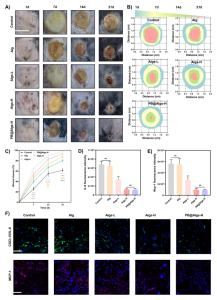
Published figure: in vivo closure of deep partial-thickness burn wounds over days 0–21 using a tunable sulfated alginate hydrogel platform. Huang et al. J. Nanobiotechnol. 2023;21:305 (CC BY). DOI: 10.1186/s12951-023-02144-2.
GROWTH FACTOR AFFINITY
Sulfated alginate hydrogels bind heparin-binding growth factors, including FGF-2, VEGF and TGF-β1, with high affinity and provide sustained release, mimicking the ECM’s storage of regenerative signals (in vitro).
REPAIR KINETICS
Connective tissue growth factor-loaded alginate sulfate nanoparticles achieved 79.49% wound closure at 72 hours with 5 µg/mL CTGF, the fastest among the tested groups (in vitro scratch assay).
ENZYME-RELATED PROTECTION: RELATED SULFATED POLYSACCHARIDES
Marine sulfated polysaccharides from green and red algae inhibit elastase, collagenase and hyaluronidase in vitro, enzymes relevant to wrinkle formation and loss of firmness. The source uses this material-class behavior as a rationale for AlgiSulf’s sulfate-rich surface.
Sources: Freeman 2008; Karam 2024; Huang 2023; Falcao 2020.
11 · EVIDENCE REVIEW
Key scientific evidence and quantitative findings

These studies used research-grade sulfated alginate or related sulfated polysaccharides. The findings characterize the material class and support the mechanistic rationale for PuriActives® AlgiSulf.
SCALP & HAIR SCIENCE
PART II · SCALP AND HAIR SCIENCE
The scalp is skin.
The hair shaft is keratin.
Hydration, soothing and antioxidant mechanisms relevant to facial skin also inform scalp microenvironment care, with further applications based on the electrostatics of the keratin hair surface.
12 · RATIONALE FOR SCALP CARE
The scientific rationale for scalp care
The scalp has dense follicles, greater sebum production and a resident microbiota, all relevant to hair condition. Common concerns, including tightness, itching, flaking and oiliness, involve hydration, barrier function and inflammation, areas relevant to sulfated polysaccharide research.
SCALP STRESSORS
● Sebum oxidation and UV exposure create oxidative stress in scalp skin and hair.
● Malassezia metabolites, such as oleic acid, disrupt barrier homeostasis and promote flaking.
● Surfactant cleansing and styling remove surface lipids and water.
WHERE ALGISULF FITS
● A moisturizing film addresses scalp dehydration and tightness.
● Chemokine affinity provides a rationale for targeting the itch–inflammation axis.
● Sulfation-related radical scavenging may buffer oxidative stress.
● A non-biocidal polymer approach is positioned for ongoing scalp care.
PATENT PRECEDENT
A patent claims sulfated polysaccharides as non-irritating anti-dandruff actives to prevent Malassezia-associated excessive flaking. Reconstructed skin data show complete suppression of oleic-acid-induced desquamation (EP2794012B1).
This provides a cosmetic application precedent for sulfated polysaccharides in scalp care.

Patent figure: the first page of EP2794012B1, claiming sulfated polysaccharides as cosmetic anti-dandruff actives (international classifications A61Q 5/00 and A61K 8/73).
Sources: Trüeb. Int. J. Trichology 2009; EP2794012B1; DeAngelis et al. 2005.
13 · SCALP HYDRATION
Scalp hydration and comfort
A dehydrated scalp can feel tight or itchy and show fine flaking after frequent washing. AlgiSulf’s polymer-based rationale is to bind water, maintain a film and modulate associated signals.
A surface water reservoir. The sulfate–carboxylate–hydroxyl network binds water without relying on heavy emollients, an important consideration for scalp products that should not weigh down hair.
Comfort through chemokine modulation. IL-8 and MCP-1 help recruit inflammatory cells in irritated skin. Demonstrated sulfated alginate affinity for these chemokines provides a mechanistic route relevant to scalp comfort (preclinical).
A non-stripping approach to flaking. In a patent model, sulfated polysaccharides prevented oleic-acid-induced desquamation in reconstructed skin, reducing the score from 3 to 0. The approach addresses flaking pathways rather than killing scalp microorganisms (patent, ex vivo).
Gentle wash-day feel. A smooth anionic film can reduce friction during massage and rinsing, supporting comfort in shampoos, scalp treatments and pre-wash products for sensitive scalps.
Sources: Huang et al. 2023; EP2794012B1.
14 · SCALP MICROENVIRONMENT
Scalp oxidative stress and the microenvironment
Oxidative stress is a documented contributor to scalp and hair aging. UV exposure and sebum lipid peroxidation increase ROS at the follicular environment, affecting scalp condition and the quality of emerging hair.
THE SCALP OXIDATIVE CASCADE

UV + SEBUM
Light exposure and sebum peroxidation generate ROS at the scalp surface and follicular openings.
OXIDATIVE STRESS
ROS irritate scalp skin, contribute to microinflammation and oxidize hair surface lipids.
VISIBLE EFFECTS
Scalp sensitivity, dull hair and progressive loss of hair quality.
ALGISULF BUFFERING CONCEPT
Sulfation-associated radical scavenging is proposed to interrupt the cascade at the surface.
MICROBIOME-FRIENDLY POSITIONING
Dandruff-associated dysbiosis involves Malassezia and Staphylococcus overgrowth. The source describes recurrence after stopping conventional antifungal treatment. Sulfated polysaccharides offer a proposed complementary, non-biocidal pathway: limiting metabolite-triggered flaking while preserving the resident ecosystem.
Sources: Trüeb. Int. J. Trichology 2009; Kerschenmeyer 2017; EP2794012B1.
15 · HAIR SHAFT
Hair conditioning through electrostatic interactions
Hair keratin has a net negative charge at cosmetic pH. Anionic polysaccharides can reach the hair surface through association with cationic conditioning polymers, which promote deposition and retention.
COMPLEXATION IMPROVES SUBSTANTIVITY
Complexing anionic glycosaminoglycan-like polysaccharides with cationic cellulose (polyquaternium-type polymers) increased keratin-bound polymer after rinsing by up to tenfold, with zeta-potential evidence of deposition (in vitro, hair tresses). The source proposes the same architecture for anionic sulfated polyuronides.
FILM-BASED CONDITIONING
After deposition, the sulfated film provides the conditioning functions associated with hair-care polysaccharides: cuticle smoothing, improved combability, moisture retention and slip, without the heavy feel associated with silicone oils.
The water-binding network helps maintain hair hydration between washes.
FORMULATION TIP
Pair AlgiSulf with cationic conditioners in conditioners and hair masks to engineer deposition. In leave-on scalp serums, the anionic film may function independently. One ingredient supports two delivery approaches.
Source: Pavlichko et al. Int. J. Cosmet. Sci. 1994; PMID 19250478.
16 · SYNERGY
Skin–scalp synergy: one INCI across facial, scalp and hair care
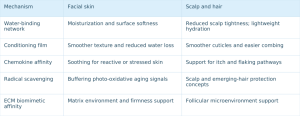
For brand developers, this alignment supports a consistent ingredient story across facial care, scalp care and hair care product lines.
17 · TECHNICAL PROPERTIES
Documented technical properties
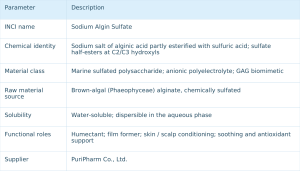
Full specifications, including appearance, content, viscosity and microbial limits, are provided in the product COA/TDS and can be requested from PuriPharm technical support. The spectra shown characterize the alginate backbone in a related material.
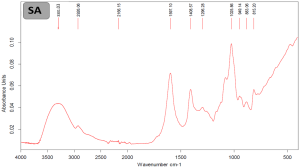
Published figure: FTIR fingerprint of the brown-algal sodium alginate backbone. Mar. Drugs 2026;24:41 (CC BY). DOI: 10.3390/md24010041.
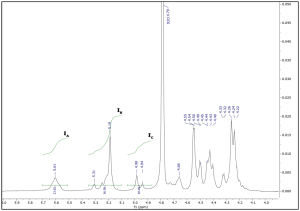
Published figure: ¹H NMR anomeric-region spectrum used to resolve alginate M/G composition (same source). The presentation states that comparable COA-level characterization supports each AlgiSulf batch.
18 · FORMULATION
Formulation compatibility and processing
The following guidance is based on established polyelectrolyte chemistry of alginate-family polymers. Confirm specific parameters in pilot batches with PuriPharm technical support.
COMPATIBLE SYSTEMS
● Water-based and hydrogel systems: serums, concentrates, masks and scalp treatments.
● Nonionic and anionic ingredients: polyols, humectants and anionic surfactant bases.
● Oil-in-water emulsions: add to the aqueous phase for a light structural contribution.
● Cationic conditioners, when deliberately designed: controlled complexation for hair deposition.
● Near-neutral pH: a typical range for leave-on skin and scalp products.
HANDLE WITH CARE
● Strongly cationic ingredients: spontaneous polyelectrolyte complexation can be useful in hair care but should be avoided in clear gels.
● Low pH: uronic-acid protonation reduces charge and solubility; avoid strongly acidic systems.
● High electrolyte loading: charge screening can reduce viscosity and film quality.
● Multivalent cations, such as Ca²⁺: G-block “egg-box” gelation can be used deliberately as a texture tool.
PROCESSING
Add to the aqueous phase under moderate stirring and hydrate fully. A pre-dissolved solution may suit cold processing. Use levels depend on formulation goals; contact PuriPharm technical support.
19 · APPLICATIONS: SKINCARE
Skincare formulation opportunities
MOISTURIZING SERUMS / CONCENTRATES
A water-binding polyuronide film for a hydrated, plump feel with non-sticky slip.
SOOTHING GELS FOR SENSITIVE SKIN
Chemokine-affinity positioning for reactive, redness-prone or stressed skin in a lightweight hydrogel format.
BARRIER REPAIR CREAMS
Film-forming support inspired by dressings for compromised-barrier care and overnight repair masks.
ANTIOXIDANT DAY CARE
Sulfation-related radical scavenging as a concept for daily urban and photo-oxidative stress care.
FIRMING / ECM CARE CREAMS
GAG biomimetic positioning for matrix-care concepts in anti-aging and firming products.
SHEET MASKS AND ESSENCE SYSTEMS
A marine polysaccharide story with immediate surface smoothing and a soft after-feel.
CLAIM FRAMEWORK
Hydration · Barrier comfort · Soothing · Antioxidant defense · Matrix support. Each concept links to the mechanisms reviewed above.
20 · APPLICATIONS: SCALP AND HAIR
Hair and scalp formulation opportunities
SOOTHING SCALP SERUMS / TREATMENTS
Leave-on aqueous formats address tightness and itching through hydration and chemokine-affinity concepts.
FLAKING-CONTROL SCALP TREATMENTS
Patent precedent for sulfated polysaccharides supports a non-biocidal approach to flaking in daily scalp care.
SCALP HYDRATION MASKS
Pre-wash or overnight hydration for dry, tight scalps, with a light lotion texture and fresh feel.
CONDITIONERS / HAIR MASKS
Cationic complexation and deposition for cuticle smoothing, combability and sustained hair hydration.
AFTER-SUN SCALP SPRAYS
Antioxidant and soothing support for UV-exposed scalp partings, positioned as an emerging product opportunity.
GENTLE DAILY SHAMPOOS
Compatibility with anionic surfactants adds slip and post-wash comfort to mild, sulfate-free cleansing systems.
CLAIM FRAMEWORK
Scalp hydration and comfort · Flaking-control support · Oxidative stress defense · Hair conditioning.
Sources: EP2794012B1; Pavlichko et al. 1994; Trüeb 2009.
21 · EVIDENCE LANDSCAPE
Scientific evidence and application matrix
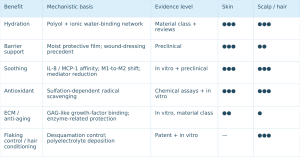
●●● Primary application area · ●● Strong supporting fit · ● Emerging rationale. These symbols reflect the depth of public evidence reviewed in the source presentation.
22 · VALUE PROPOSITION
What differentiates AlgiSulf
Beyond sodium alginate. Sulfation transforms a commodity texture polymer into a material with biological affinity, higher charge density, chemokine interactions and radical-scavenging properties, with a distinct INCI identity.
Characterized heparin-like chemistry. Two decades of peer-reviewed work on sulfated alginate, covering synthesis, sequence characterization, protein binding and cellular models, provide a substantial mechanistic literature for formulation concepts.
Continuity from skin to scalp. One ingredient carries a consistent marine polysaccharide story across facial, scalp and hair products, simplifying ingredient selection, claims development and supply chains.
Marine sourcing with contemporary relevance. Renewable brown-algal biomass, biodegradable polymer chemistry and a non-biocidal scalp-care concept align with responsible formulation goals.
PuriActives® AlgiSulf: marine sulfation science for formulation development.
23 · CONCLUSION AND REFERENCES
PuriActives® AlgiSulf: ready for your next formulation
A marine sulfated polysaccharide with a defined INCI identity, mechanistic literature and a combined skin–scalp application rationale. Technical support, samples and documentation are available from PuriPharm.
SELECTED REFERENCES
1. Arlov Ø, Skjåk-Bræk G. Sulfated alginates as heparin analogues: chemical and functional properties. Molecules 2017, 22(5), 778. DOI 10.3390/molecules22050778
2. Arlov Ø et al. Heparin-like properties of sulfated alginates with defined sequences and sulfation degrees. Biomacromolecules 2014, 15(7). DOI 10.1021/bm500602w
3. Kerschenmeyer A et al. Anti-oxidant and immune-modulatory properties of sulfated alginate derivatives on human chondrocytes and macrophages. Biomater. Sci. 2017, 5, 1756–1764. DOI 10.1039/C7BM00341B
4. Freeman I, Kedem A, Cohen S. Sulfation of alginate hydrogels: specific binding and controlled release of heparin-binding proteins. Biomaterials 2008, 29(22).
5. Huang C et al. Tunable sulfated alginate-based hydrogel platform for burn wound repair. J. Nanobiotechnology 2023, 21, 305. DOI 10.1186/s12951-023-02144-2
6. Balde A, Nazeer RA. In vitro anti-inflammatory effects of alginate sulfate; AlgS/PVA/CA microneedle system. Colloids Surf. B Biointerfaces 2025.
7. Karam M et al. Alginate and alginate sulfate/PCL nanoparticles for growth-factor delivery in wound healing. Biomed. Pharmacother. 2024.
8. Zhao X, Xue CH, Li BF. Antioxidant activities of sulfated polysaccharides from Laminaria japonica. J. Appl. Phycol. 2008. DOI 10.1007/s10811-007-9282-4
9. Mutch AL et al. Sulfated alginate for biomedical applications. Macromol. Biosci. 2024. DOI 10.1002/mabi.202400237
10. Kim JH et al. Beneficial effects of marine algae-derived carbohydrates for skin health. Mar. Drugs 2018, 16(11), 459. DOI 10.3390/md16110459
11. Ngo DH, Kim SK. Sulfated polysaccharides as bioactive agents from marine algae. Int. J. Biol. Macromol. 2013, 62.
12. Trüeb RM. Oxidative stress in ageing of hair. Int. J. Trichology 2009, 1(1), 6–14.
13. Pavlichko JP et al. Enhanced substantivity of hyaluronic acid on keratin substrates via polymer complexation. Int. J. Cosmet. Sci. 1994, 16(6). PMID 19250478
14. Use of sulphated polysaccharides as antidandruff agent. EP2794012B1 / WO2013093307A1 · Sodium alginate from E. amentacea: characterization & anti-inflammatory profile. Mar. Drugs 2026, 24(1), 41. DOI 10.3390/md24010041
PURIPHARM CO., LTD.
www.puriactives.com · service@puripharm.com · +86-572-2745768
Building 6, No. 1366 Hongfeng Road, Huzhou, Zhejiang, China
PuriActives® is a registered trademark of PuriPharm Co., Ltd.