NanoActive EGCGLiposomal Epigallocatechin Gallate
PRODUCT & BRAND
NanoActive EGCG · Nanoliposomes

Powered by PURISOME® FlexVes™ Liposome Technology
PuriPharm Co., Ltd. · NanoActive platform ingredient
PRODUCT PLATFORM
One catechin platform, multiple formulation opportunities
EGCG is one of the most studied polyphenols in skin biology, but its practical formulation value depends on protection and delivery.
NanoActive EGCG combines this multifunctional active with liposomal delivery across five evidence-informed skin and scalp development areas.
SKIN
ANTIOXIDANT DEFENSE
Resilience under UV and urban environmental stress.
PHOTOAGING-RELATED MATRIX PROTECTION
Support for collagen-matrix signaling and youthful skin texture.
SEBUM BALANCE AND BLEMISH-PRONE SKIN
Sebocyte lipid biology supported by clinical lesion-count evidence.
A MORE EVEN-TONED APPEARANCE
Melanogenesis signaling rationale from cell studies.
SCALP AND FOLLICLES
SCALP COMFORT AND FOLLICULAR VITALITY
Evidence from dermal papilla cells and human follicle organ culture.
Each development area is based on the scientific literature cited in its corresponding section.
KEY ACTIVE
The active behind the platform
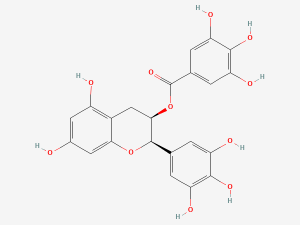
Epigallocatechin gallate (EGCG): 2D structure, PubChem CID 65064.
ACTIVE INCI
EPIGALLOCATECHIN GALLATE
MOLECULAR FORMULA: C22H18O11 · MOLAR MASS: 458.37 g/mol
BOTANICAL SOURCE: the principal catechin in green tea (Camellia sinensis), formed by esterification of a flavan-3-ol with gallic acid.
STRUCTURE–ACTIVITY RELATIONSHIP: eight phenolic hydroxyl groups support radical scavenging but also confer oxidation sensitivity.
PRODUCT POSITIONING
NanoActive EGCG presents the catechin in a liposomal format built on PuriPharm’s PURISOME® platform to protect the active and support delivery to skin.
The INCI shown identifies the active ingredient. Refer to product technical documentation for the complete composition of the liposomal dispersion.
Structure source: PubChem CID 65064, NIH National Library of Medicine.
FORMULATION RATIONALE
Formulation determines EGCG performance
EGCG IN SOLUTION
DEGRADATION DRIVERS
Oxygen and light
Higher temperature
Neutral to alkaline pH
Vehicle and ionic environment
Oxidation and degradation of catechins in solution
IMPLICATIONS FOR FORMULATORS
Protect the active from oxygen, light and heat during processing and storage.
Design the vehicle and pH carefully.
Consider encapsulation to protect the catechin before use.
Design a delivery route to relevant skin compartments.
EGCG is valuable but chemically vulnerable. Solution studies show that pH, temperature and vehicle affect how much intact EGCG remains available, providing the rationale for protection and delivery engineering.
Proniuk S, Liederer BM, Blanchard J. J Pharm Sci. 2002;91(1):111–116. DOI: 10.1002/jps.10009. PMID: 11782902.
DELIVERY TECHNOLOGY
Powered by PURISOME® FlexVes™ Liposome Technology
EGCG
Skin-compatible phospholipid bilayer vesicles
Schematic, not to scale. Refer to PuriPharm technical documentation for the actual structure.
1 PROTECT VULNERABLE ACTIVES
Protect oxidation- and degradation-sensitive ingredients such as EGCG to support shelf-life quality.
2 SUPPORT LOCAL SKIN DELIVERY
Enhance stratum corneum penetration and the bioavailability of encapsulated actives.
3 SUSTAINED AND CONTROLLED RELEASE
Extend release, with a design rationale for reducing irritation risk.
4 FORMULATION COMPATIBILITY
Support compatibility and skin feel in leave-on and rinse-off systems.
All NanoActive products use the PURISOME® platform, drawing on PuriPharm’s more than ten years of nanodelivery R&D and industrial production experience.
PURISOME® platform source: PuriPharm Co., Ltd. brand documentation, V1.0 (2026).
DELIVERY RATIONALE: PUBLISHED RESEARCH
Delivery research informs formulation design
PUBLISHED FIGURE: SKIN DEPOSITION OF EGCG (µg/cm²)
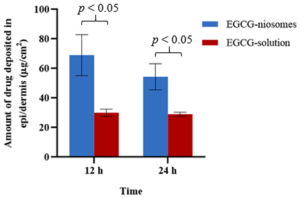
Reproduced from Li et al. 2022, Figure 5 (CC BY 4.0). Mean ± SD, n = 3. EGCG-loaded niosomes are surfactant vesicles. This study informs delivery design and did not measure PURISOME® performance.
PUBLISHED FIGURE: CUMULATIVE EGCG RELEASE (%)
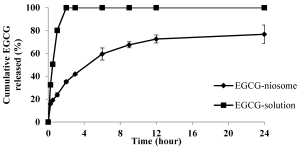
Compared with a simple solution, vesicular encapsulation approximately doubled EGCG deposition in human skin and provided sustained release over 24 hours.
Vesicle engineering can support surface residence, time-dependent release and delivery into viable skin. These findings inform the design rationale for the PURISOME® liposome platform.
Li D et al. Pharmaceutics. 2022;14(4):726. DOI: 10.3390/pharmaceutics14040726. PMID: 35456560.
ADDITIONAL DATA FROM THE SOURCE SPEAKER NOTES
Ex vivo human skin deposition at 12 hours was 69.0 ± 13.87 µg/cm² with niosomes versus 30.02 ± 2.45 µg/cm² with solution. At 24 hours, values were 54.38 ± 8.86 versus 29.00 ± 1.36 µg/cm² (mean ± SD, n = 3). Niosomes showed biphasic release, approximately 35% at 3 hours and 73% at 24 hours; Korsmeyer–Peppas fit r² = 0.996. These are Li et al.’s niosome results, not PURISOME® measurements.
MECHANISM OVERVIEW
From molecular activity to skin appearance
EGCG
One active, five pathways
INFLAMMATORY SIGNALING
Sebocytes and PM10-exposed keratinocytes. Yoon 2013; Seok 2018.
REDOX DEFENSE
Human UV-challenged skin and oxidative endpoints in fibroblasts. Katiyar 2001; Jia 2023.
SEBOCYTE LIPID BIOLOGY
AMPK / SREBP-1 in human sebocytes. Yoon 2013.
MATRIX PROTECTION
MMP-1/3/10, TIMP-1 and TGF-β1 expression. Jia 2023.
MELANOGENESIS SIGNALING
cAMP / CREB / MITF in B16F10 cells. Zhang 2020.
These experimentally studied pathways inform formulation concepts for resilience, clarity, even tone and follicular vitality.
Pathway overview based on Katiyar 2001; Yoon 2013; Seok 2018; Zhang 2020; Jia 2023. Full references appear at the end.
SKIN SCIENCE: ANTIOXIDANT DEFENSE
Antioxidant evidence in human skin
HYDROGEN PEROXIDE GENERATION IN UV-CHALLENGED SKIN
−68%
−90%
0 25 50 75 100 — Reduction versus UV-only control (%)
EPIDERMAL LIPID PEROXIDATION
−41%
−84%
0 25 50 75 100 — Reduction versus UV-only control (%)
STUDY CONTEXT
EGCG was applied topically to human skin before a single UV challenge of four minimal erythema doses. The ranges cover post-exposure assessment time points. EGCG also helped preserve glutathione-related antioxidant defenses.
These are biological stress-defense endpoints, not SPF values or evidence of UV filtering.
FORMULATION RATIONALE
UV exposure can generate ROS faster than endogenous defenses can clear them.
The reduced oxidative burden observed in human skin supports antioxidant and resilience-oriented daily-care concepts.
Katiyar SK et al. Carcinogenesis. 2001;22(2):287–294. DOI: 10.1093/carcin/22.2.287. PMID: 11181450.
SKIN SCIENCE: PHOTOAGING
Matrix support under photoaging stress
PUBLISHED FIGURE: MATRIX MARKERS IN UVA-STRESSED FIBROBLASTS
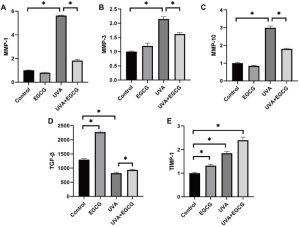
Reproduced from Jia et al. 2023, Figure 6, panels A–E. Human dermal fibroblasts, UVA model, EGCG 25 µg/mL.
REPORTED FINDINGS
MMP-1 / MMP-3 / MMP-10 expression decreased versus UVA alone (panels A–C).
TGF-β1 secretion increased (panel D; matrix-building signal).
TIMP-1 mRNA increased (panel E; metalloproteinase inhibitor).
Degradation-associated signals decreased as matrix-supporting signals recovered.
ENDPOINTS
MMP-1/3/10 and TIMP-1 mRNA were measured by RT-PCR. Secreted TGF-β1 protein was measured in culture supernatants (*p < 0.05).
Photoaging involves an imbalance between matrix degradation and renewal. EGCG modulated this balance in cultured human fibroblasts, providing a mechanistic basis for photoaging-oriented formulations.
Jia Y et al. Clin Cosmet Investig Dermatol. 2023;16. DOI: 10.2147/CCID.S398547. PMID: 36704608.
SKIN SCIENCE: CELLULAR SENESCENCE
Reducing the cellular burden of UVA stress
Repeated UVA exposure can promote cellular senescence, with loss of cell division and altered tissue signaling.
Senescence-associated β-galactosidase (SA-β-gal) staining identifies blue-stained cells, quantified as a percentage.
In human fibroblasts, EGCG nearly halved the senescent-cell proportion after UVA exposure.
MODEL
Human dermal fibroblasts; EGCG 25 µg/mL for 24 hours. Mean ± SD from three independent experiments (*p < 0.05).
PUBLISHED FIGURE: SA-β-GAL STAINING AND QUANTIFICATION
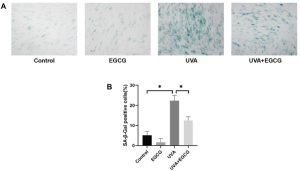
Approximately 45% lower senescent-cell proportion relative to UVA alone.
Reproduced from Jia et al. 2023, Figure 2. (A) SA-β-gal staining. (B) Quantification: 23.07% with UVA versus 12.75% with UVA + EGCG.
Jia Y et al. Clin Cosmet Investig Dermatol. 2023;16. DOI: 10.2147/CCID.S398547. PMID: 36704608.
SKIN SCIENCE: URBAN ENVIRONMENTAL STRESS
A scientific rationale for urban skin care
AIRBORNE PARTICULATE MATTER: PM10
Particles that contact facial skin and the scalp during everyday exposure.
KERATINOCYTE STRESS RESPONSE
Oxidative stress and inflammatory signaling increase in exposed cells.
EGCG AT 3–10 µM
Attenuation of oxidative and inflammatory responses in PM10-exposed cells.
Urban exposure places an ongoing particulate burden on skin and scalp. Micromolar EGCG attenuated exposure-related stress in primary human keratinocytes.
These findings support a mechanistic rationale for antioxidant day creams, serums and leave-on scalp products focused on environmental resilience.
MODEL
Primary human keratinocytes exposed to PM10; EGCG tested at 3–10 µM.
Mechanistic evidence only: the study did not measure a pollution-blocking percentage for a finished product.
Seok JK et al. Skin Pharmacol Physiol. 2018;31(3):134–143. DOI: 10.1159/000487400. PMID: 29566388.
SKIN SCIENCE: TONE
Supporting a more even-toned appearance
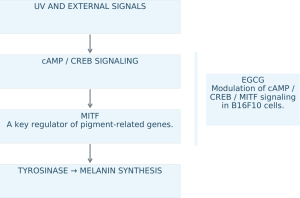
PUBLISHED FIGURES: ZHANG ET AL. 2020, B16F10 CELLS
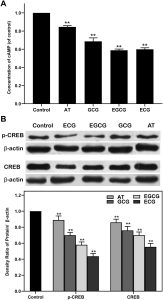
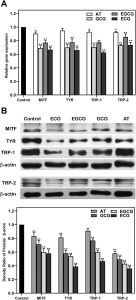
Figure 4: cellular tyrosinase activity (A) and melanin content (B). Figure 5: MITF / TYR / TRP-1 / TRP-2 proteins (B) and cAMP (C).
Melanogenesis follows a signaling cascade: increased cAMP, CREB activation and MITF-driven tyrosinase expression and melanin synthesis. EGCG modulated this cascade in B16F10 cells, supporting a mechanistic rationale for even-tone and targeted-care concepts. These are cell-level findings, not clinical age-spot results.
CELL CONTEXT
B16F10 melanocyte model. The schematic presents the pathway, while the published figures show experimental data.
Zhang X et al. Fitoterapia. 2020;145:104634. DOI: 10.1016/j.fitote.2020.104634. PMID: 32454171.
SKIN SCIENCE: SEBUM BIOLOGY
Addressing excess lipid production at the cellular level

AMPK: AMP-activated protein kinase, a cellular energy sensor that suppresses anabolic processes.
SREBP-1: sterol regulatory element-binding protein 1, a transcription factor that activates sebocyte lipid-synthesis genes.
Sebum synthesis in sebocytes is regulated by SREBP-1. In cultured human sebocytes, EGCG activated AMPK and reduced this lipogenic program.
This provides cellular evidence relevant to oil-balancing and blemish-prone-skin concepts.
MODEL
Cultured human sebocytes. Clinical evidence from the same study is presented below.
PUBLISHED FIGURE: YOON ET AL. 2013, FIGURE 1
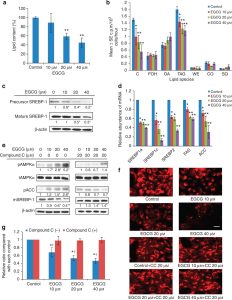
Sebum, AMPK and SREBP-1 measurements in human sebocytes.
Yoon JY et al. J Invest Dermatol. 2013;133(2):429–440. DOI: 10.1038/jid.2012.292. PMID: 23096708.
SKIN SCIENCE: CLINICAL EVIDENCE
Clinical evidence in blemish-prone skin
−89%
Reported reduction in inflammatory lesion count versus baseline in the 1% EGCG group.
PUBLISHED FIGURES: YOON ET AL. 2013, SPLIT-FACE CONTROLLED TRIAL
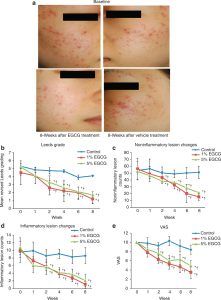
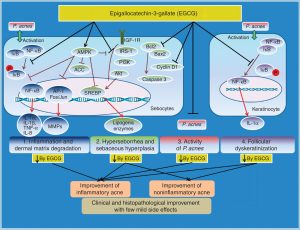
Figure 4 presents clinical photographs, Leeds scores and lesion-count changes. The other supplied image is a mechanistic summary schematic, rather than a split-face photograph.
STUDY DESIGN
Split-face, vehicle-controlled study; the contralateral side received vehicle.
1% or 5% EGCG, twice daily for 8 weeks.
35 of 37 participants completed: 17 in the 1% group and 18 in the 5% group.
Endpoints: inflammatory and non-inflammatory lesion counts.
This controlled human study connects sebocyte biology with visible changes in blemish-prone skin, providing a clinical anchor within the evidence base.
Yoon JY et al. J Invest Dermatol. 2013;133(2):429–440. DOI: 10.1038/jid.2012.292. PMID: 23096708.
SKIN SCIENCE: SEBUM, MICROBIAL INTERACTIONS AND COMFORT
Linking sebum, microbial interactions and skin comfort
1 · LIPID ENVIRONMENT
Excess sebum contributes to blemish-prone conditions.
2 · MICROBIAL INTERACTIONS
Cutibacterium acnes proliferates in lipid-rich follicles.
3 · INFLAMMATION AND DISCOMFORT
Inflammatory signaling contributes to visible blemishes.
EXPERIMENTALLY STUDIED EGCG EFFECTS
GROWTH INHIBITION
EGCG showed in vitro inhibition of C. acnes, tested under its historical name Propionibacterium acnes ATCC 6919.
INFLAMMATORY SIGNALING
EGCG attenuated NF-κB-related responses in human sebocytes.
Together with effects on sebocyte lipids, these findings provide a multi-level rationale for blemish-care formulation: less lipid substrate, measured microbial inhibition and reduced inflammatory signaling.
PUBLISHED FIGURE: YOON 2013, FIGURE 2
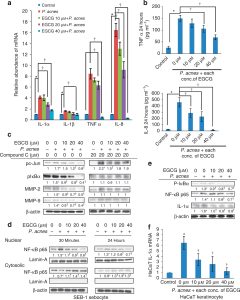
Sebocyte NF-κB / AP-1 inflammatory measurements.
Yoon JY et al. J Invest Dermatol. 2013;133:429–440. Widyaningrum N et al. Asian J Biol Sci. 2015;8(2):93–101. DOI: 10.3923/ajbs.2015.93.101.
APPLICATION CONCEPTS: SKIN
Skin application concepts
Targets and scientific rationale
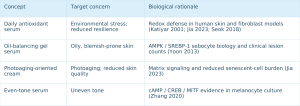
Formats and formulation focus
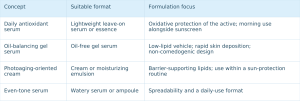
These are formulation-development concepts, not tested finished products. Confirm performance at the product level.
Evidence sources are cited in the skin-science sections; full references appear at the end.
SCALP AND FOLLICLE SCIENCE
Bringing skincare science to scalp care
The scalp faces oxidative and inflammatory challenges similar to facial skin, alongside a distinctive structure: the follicle, a living mini-organ that produces hair.
SCALP ENVIRONMENT
Surface skin exposed to UV, pollution and sebum oxidation.
FOLLICLE
Living cells that drive the hair cycle, including dermal papilla signaling cells.
HAIR SHAFT
A non-living fiber whose surface can be conditioned but whose structure is produced by the follicle.
Scalp and follicle anatomy: conceptual illustration from PuriPharm’s asset collection.
Anatomical schematic for structural reference only.
SCALP AND FOLLICLE SCIENCE
A rationale for a more resilient scalp environment
EVERYDAY SCALP STRESSORS
UV, airborne particles, sebum oxidation and styling stress also challenge the scalp.
OXIDATIVE AND INFLAMMATORY LOAD
Redox and inflammatory pathways documented in skin are relevant to perifollicular scalp tissue.
EGCG DEVELOPMENT RATIONALE
Antioxidant defense and inflammatory modulation formulated for the scalp surface.
A resilient scalp surface provides a basis for follicle-focused care.
NanoActive EGCG brings documented redox and inflammatory biology to leave-on scalp concepts, where longer contact supports local availability.
This is a mechanistic extension from skin studies to scalp-care development. Specific cell and follicle evidence follows.
Rationale based on Katiyar 2001; Seok 2018; Jia 2023. Full references appear at the end.
SCALP AND FOLLICLE SCIENCE: DERMAL PAPILLA
Activity in human dermal papilla cells
Dermal papilla cells (DPCs), located at the follicle base, are signaling cells involved in the hair cycle.
In cultured human DPCs, EGCG at 0.01–0.5 µM produced a significant, dose-dependent proliferative response by MTT assay (p < 0.05).
These micromolar responses provide a cellular basis for follicular-vitality concepts.
EXPERIMENT
MTT proliferation assay in cultured human DPCs; Kwon et al. 2007, Figure 1. This is a cellular response, not a clinical hair-density measurement.
PUBLISHED FIGURE: KWON ET AL. 2007, FIGURE 1, MTT ASSAY
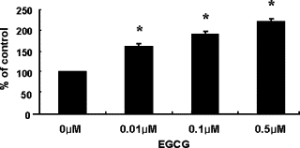
DPC proliferation increased with dose versus control at 0.01–0.5 µM (*p < 0.05). The source figure has low resolution.
Kwon OS et al. Phytomedicine. 2007;14(7–8):551–555. DOI: 10.1016/j.phymed.2006.09.009. PMID: 17092697.
SCALP AND FOLLICLE SCIENCE: SIGNALING
Signals associated with follicular vitality
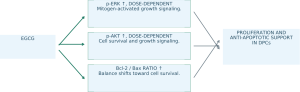
EGCG
p-ERK ↑, DOSE-DEPENDENT
Mitogen-activated growth signaling.
p-AKT ↑, DOSE-DEPENDENT
Cell survival and growth signaling.
Bcl-2 / Bax RATIO ↑
Balance shifts toward cell survival.
PROLIFERATION AND ANTI-APOPTOTIC SUPPORT IN DPCs
INTERPRETING THE RESULTS
Directional summary of Kwon et al. 2007, Figures 2–4, in cultured human DPCs.
This differs from the sebocyte apoptosis reported with EGCG: different cell types can have different outcomes.
PUBLISHED FIGURES: KWON ET AL. 2007, FIGURES 2–4
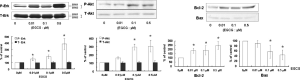
Responses of p-ERK, p-AKT and Bcl-2/Bax to EGCG in human DPCs. The source figures have low resolution.
EGCG modulated growth (ERK), survival (Akt) and apoptotic balance (Bcl-2/Bax) signals, providing complementary mechanisms relevant to follicular formulation concepts.
Kwon OS et al. Phytomedicine. 2007;14(7–8):551–555. DOI: 10.1016/j.phymed.2006.09.009. PMID: 17092697.
SCALP AND FOLLICLE SCIENCE: ORGAN CULTURE
Evidence from human follicle organ culture
FOLLICLE ELONGATION AFTER 10 DAYS, AS A PERCENTAGE OF VEHICLE CONTROL
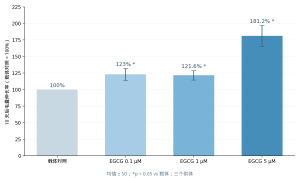
Redrawn from Kwon et al. 2007. Mean ± SD: the three EGCG groups had SDs of 9.0, 7.1 and 15.8 percentage points, respectively; p < 0.05 versus vehicle. Human follicles came from three donors and were cultured for 10 days.
Beyond isolated cells, EGCG increased elongation of whole human follicles over 10 days in organ culture.
This model bridges cellular experiments and clinical research and provides preclinical support for follicular-vitality concepts in leave-on scalp care.
EX VIVO HUMAN FOLLICLE MODEL
The same paper also reports a separate, small scalp-biomarker experiment, summarized in the source speaker notes. Neither constitutes a clinical hair-growth outcome.
Kwon OS et al. Phytomedicine. 2007;14(7–8):551–555. DOI: 10.1016/j.phymed.2006.09.009. PMID: 17092697.
ADDITIONAL CONTEXT FROM THE SOURCE SPEAKER NOTES
The paper separately reports a 4-day scalp-biomarker experiment in three volunteers using 10% EGCG in ethanol, with increased dermal papilla p-Erk/p-Akt and Bcl-2/Bax. This small experiment is distinct from ex vivo follicle elongation, is not a clinical hair-growth outcome and is not a product use-level recommendation.
SCALP AND FOLLICLE SCIENCE: DELIVERY DESIGN
Designing local skin and follicular delivery
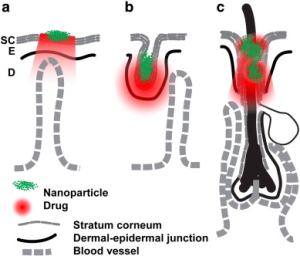
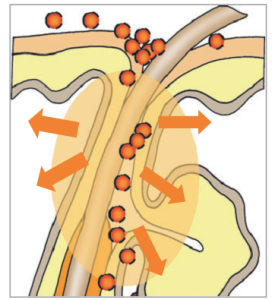
Conceptual schematic of follicular accumulation of nanocarriers, from PuriPharm’s asset collection.
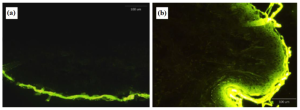
Published figure: Li et al. 2022, Figure 6. FITC-loaded vesicles concentrated at follicular openings in ex vivo human skin.
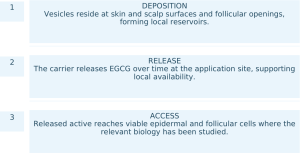
This delivery-design concept is consistent with published vesicle research (Li 2022). The image does not establish transport of intact vesicles to the dermal papilla, and smaller particle size does not automatically mean deeper penetration.
Delivery reference: Li D et al. Pharmaceutics. 2022;14(4):726. DOI: 10.3390/pharmaceutics14040726.
APPLICATION CONCEPTS: HAIR AND SCALP
Hair and scalp formulation concepts
Targets and formulation focus
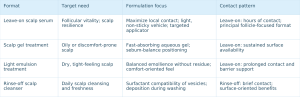
Formats and contact patterns

These are development concepts. Follicle-focused positioning centers on leave-on formats, where contact duration supports local activity.
Evidence sources are cited in the scalp and follicle sections. Full references appear at the end.
FORMULATION DESIGN
Targeted active combinations
NanoActive EGCG provides the core active, while complementary ingredients refine the concept. These are formulation choices; confirm compatibility in the final vehicle.
+ NIACINAMIDE
OIL-BALANCING CONCEPT
EGCG addresses sebocyte lipid biology, while niacinamide adds barrier and tone support. Complementary pathways inform oily- and blemish-prone-skin positioning.
+ PANTHENOL
COMFORT AND SOOTHING CONCEPT
EGCG modulates stress signaling, while panthenol supports hydration and comfort. This pairing is proposed for sensitive-skin and scalp formats.
+ CAFFEINE
SCALP-VITALITY CONCEPT
EGCG dermal papilla biology complements the established use of caffeine in leave-on scalp tonics and serums.
Check vehicle pH, ionic environment, oxidation drivers and preservation together. Factors governing EGCG stability (Proniuk 2002) also apply to multi-active formulations.
Combination concepts: PuriPharm. Stability principles: Proniuk 2002, discussed in the formulation-rationale section.
FORMULATION PRACTICE
Practical formulation integration
ADDITION AND HANDLING
Evaluate cool-down addition to reduce heat exposure.
Review shear exposure during homogenization and pumping.
Minimize residence at high temperature.
BASE ENVIRONMENT
Set pH deliberately; EGCG is more stable in acidic conditions.
Control ionic conditions that may challenge vesicle integrity.
Manage dissolved oxygen, light and pro-oxidant metals.
COMPATIBILITY
Screen surfactants for vesicle compatibility; high levels may disrupt lipid vesicles.
Check interactions with other actives, electrolytes and thickeners.
Confirm preservative-system compatibility.
These are development considerations, not validated processing limits. Refer to PuriPharm’s NanoActive EGCG technical documentation for product-specific addition stage, temperature and use-level guidance.
Stability principles: Proniuk 2002. Product instructions follow PuriPharm technical documentation.
FORMULATION PRACTICE
Protecting active quality through formulation and packaging
FORMULATION
Liposomal encapsulation protects EGCG from bulk-phase oxidation.
Design pH and antioxidant support around catechin chemistry.
Assess metal interactions and use chelation where appropriate.
PACKAGING
Limit light using opaque or UV-protective packaging.
Limit oxygen ingress using airless or low-headspace formats.
Match the pack to application and dose control.
MONITORING
Track color and EGCG content during stability studies.
Characterize carrier integrity, vesicle structure and size.
Use sensory changes as early-warning signals.
Active quality is a system property involving chemistry, packaging and monitoring. Finished-product shelf life and stability claims require product-level testing.
Framework based on EGCG solution chemistry (Proniuk 2002) and vesicular delivery research (Li 2022).
FROM SCIENCE TO BRAND
Translating science into brand value
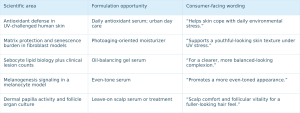
Consumer wording is limited to cosmetic positioning and anchored to the cited skin and follicle studies.
Evidence anchors: Katiyar 2001; Jia 2023; Yoon 2013; Zhang 2020; Kwon 2007.
CONCLUSION
NanoActive EGCG: from catechin science to formulation opportunity
1 MULTIFUNCTIONAL ACTIVE
Published biological evidence covers antioxidant defense, photoaging, sebum balance, tone and follicular vitality.
2 PURPOSEFUL DELIVERY
PURISOME® liposome technology is designed to protect the catechin and support local, sustained delivery.
3 SKIN AND SCALP OPPORTUNITIES
One platform spans serums, gels, moisturizers, essences, treatments and scalp-care products.
Powered by PURISOME® FlexVes™ Liposome Technology
PuriPharm Co., Ltd.
www.puriactives.com
REFERENCES · SKIN BIOLOGY
Key scientific references: skin biology
Katiyar SK et al. Green tea polyphenol (−)-epigallocatechin-3-gallate treatment of human skin inhibits UV-induced oxidative stress. Carcinogenesis. 2001;22(2):287–294. DOI: 10.1093/carcin/22.2.287. PMID: 11181450.
Jia Y et al. (−)-Epigallocatechin-3-gallate protects human skin fibroblasts from ultraviolet A induced photoaging. Clinical, Cosmetic and Investigational Dermatology. 2023;16. DOI: 10.2147/CCID.S398547. PMID: 36704608. PMCID: PMC9871046.
Seok JK, Lee JW, Kim YM, Boo YC. Punicalagin and (−)-epigallocatechin-3-gallate rescue cell viability and attenuate inflammatory responses of human epidermal keratinocytes exposed to airborne particulate matter PM10. Skin Pharmacology and Physiology. 2018;31(3):134–143. DOI: 10.1159/000487400. PMID: 29566388.
Yoon JY et al. Epigallocatechin-3-gallate improves acne in humans by modulating intracellular molecular targets and inhibiting P. acnes. Journal of Investigative Dermatology. 2013;133(2):429–440. DOI: 10.1038/jid.2012.292. PMID: 23096708.
Zhang X et al. Anti-melanogenic effects of epigallocatechin-3-gallate (EGCG), epicatechin-3-gallate (ECG) and gallocatechin-3-gallate (GCG) via down-regulation of cAMP/CREB/MITF signaling pathway in B16F10 melanoma cells. Fitoterapia. 2020;145:104634. DOI: 10.1016/j.fitote.2020.104634. PMID: 32454171.
Widyaningrum N, Fudholi A, Sudarsono, Setyowati EP. Stability of epigallocatechin gallate (EGCG) from green tea (Camellia sinensis) and its antibacterial activity against Staphylococcus epidermidis ATCC 35984 and Propionibacterium acnes ATCC 6919. Asian Journal of Biological Sciences. 2015;8(2):93–101. DOI: 10.3923/ajbs.2015.93.101.
Only literature cited in the presentation is listed. Microbial names retain the historical terminology used at publication.
Skin biology references. Hair, delivery and formulation references follow.
REFERENCES · HAIR, DELIVERY AND FORMULATION
Key scientific references: hair, delivery and formulation
HAIR AND SCALP
Kwon OS, Han JH, Yoo HG, Chung JH, Cho KH, Eun HC, Kim KH. Human hair growth enhancement in vitro by green tea epigallocatechin-3-gallate (EGCG). Phytomedicine. 2007;14(7–8):551–555. DOI: 10.1016/j.phymed.2006.09.009. PMID: 17092697.
DELIVERY AND FORMULATION
Li D et al. Niosomal nanocarriers for enhanced dermal delivery of epigallocatechin gallate for protection against oxidative stress of the skin. Pharmaceutics. 2022;14(4):726. DOI: 10.3390/pharmaceutics14040726. PMID: 35456560. PMCID: PMC9029719.
Proniuk S, Liederer BM, Blanchard J. Preformulation study of epigallocatechin gallate, a promising antioxidant for topical skin care products. Journal of Pharmaceutical Sciences. 2002;91(1):111–116. DOI: 10.1002/jps.10009. PMID: 11782902.
Structure reference: Epigallocatechin gallate, PubChem CID 65064, NIH National Library of Medicine (active-identity section).
Only literature cited in the presentation is listed. PURISOME® platform descriptions are based on PuriPharm Co., Ltd. brand documentation.
NanoActive EGCG nanoliposomes: scientific marketing report. PuriPharm Co., Ltd.