NanoActive Oleu™
PuriPharm Co., Ltd. · Technical Report
Liposomal Oleuropein
Mediterranean polyphenol defense
Enhanced by delivery science
INCI: OLEA EUROPAEA (OLIVE) LEAF EXTRACT
Powered by PURISOME® FlexVes™ Liposome Technology
01 · INGREDIENT OVERVIEW
NanoActive Oleu™ at a glance
PRODUCT NAME:NanoActive Oleu™ Liposomal Oleuropein
INCI NAME:Olea Europaea (Olive) Leaf Extract
BOTANICAL SOURCE:Leaves of Olea europaea L.
KEY PHYTOCHEMICAL:Oleuropein, a secoiridoid polyphenol
DELIVERY PLATFORM:PURISOME® FlexVes™ Liposome Technology
PHYSICAL FORM:Liposomal dispersion for aqueous and emulsified systems
APPLICATION AREAS:Skincare · Oral care · Hair and scalp care
PRODUCT POSITIONING:An oleuropein-rich olive leaf extract encapsulated in flexible liposomal vesicles. NanoActive Oleu™ brings Mediterranean polyphenol science to formulation-ready skin, oral and scalp care concepts, informed by human, in vivo and mechanistic research.
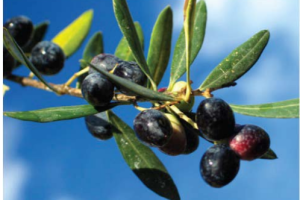
Young olive leaves (Olea europaea L.), the botanical source of the actives.
02 · BOTANICAL ORIGIN
Olive leaves: a concentrated source of polyphenols
Olive branch with young leaves and fruit. Leaves are the tree’s richest source of phenolic compounds.
60–90 mg oleuropein per g of dry leaves
The olive tree concentrates its defensive chemistry in its leaves. Oleuropein, the predominant secoiridoid polyphenol, can reach 60–90 mg/g of dry leaves, alongside hydroxytyrosol, verbascoside and flavonoid glycosides.
This phytochemical system evolved under sunlight, microbial and oxidative stress, providing a botanical rationale relevant to daily challenges faced by skin, oral mucosa and scalp.
Nediani C, et al. Antioxidants. 2019;8(12):578. doi:10.3390/antiox8120578
Omar SH. Sci Pharm. 2010;78(2):133–154.
03 · KEY ACTIVE MOLECULE
Oleuropein: secoiridoid chemistry for redox activity
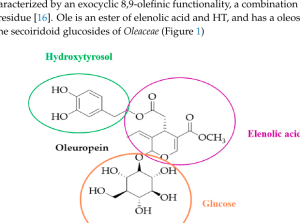
Oleuropein (molecular weight 540.5): hydroxytyrosol + elenolic acid + glucose. Nediani C, et al. Antioxidants. 2019;8:578.
CATECHOL CORE
The catechol hydroxyls of the hydroxytyrosol moiety donate hydrogen atoms to neutralize free radicals.
ACTIVE PRODUCTS OF HYDROLYSIS
Ester hydrolysis releases hydroxytyrosol and elenolic acid, extending the molecule’s functional profile.
NATURAL HYDROPHILICITY
A water-soluble glycoside with biological activity, but limited passage through lipid-rich barriers without delivery support.
This chemistry provides the rationale for complementary delivery engineering.
04 · DELIVERY CHALLENGES
Active polyphenols face practical delivery challenges
CHEMICAL INSTABILITY
Oleuropein’s ester bonds and catechol groups are susceptible to hydrolysis and oxidation, potentially reducing activity during shelf life.
BARRIER MISMATCH
Hydrophilic glycosides partition poorly into lipid-rich stratum corneum and mucosal surfaces, limiting local bioavailability.
SHORT RESIDENCE TIME
Unencapsulated polyphenols can be diluted, metabolized or washed away quickly, particularly in the oral environment.
FORMULATION CONSTRAINTS
Oxidation-sensitive polyphenols constrain pH, processing, packaging and preservative-system design.
DELIVERY APPROACH
Delivery science aims to turn a fragile molecule into a robust, formulation-ready ingredient.
PURISOME® FlexVes™ Liposome Technology
The proprietary liposomal platform behind the NanoActive™ ingredient range is introduced below.
Stability reference: Perugini P, et al. Int J Cosmet Sci. 2008;30(2):113–120.
05 · DELIVERY PLATFORM
PURISOME® FlexVes™ Liposome Technology
Flexible phospholipid vesicles: PuriPharm’s delivery architecture.
PuriPharm’s proprietary platform encapsulates oxidation-sensitive polyphenols in flexible liposomal vesicles, with four proposed formulation benefits.
01 · PROTECTION
Protect actives vulnerable to oxidation and degradation to support shelf life.
02 · PENETRATION
Promote stratum corneum penetration and improve bioavailability.
03 · RELEASE
Provide sustained, controlled release to reduce irritation risk.
04 · COMPATIBILITY
Improve formulation compatibility and skin feel.
PuriPharm Co., Ltd. has more than ten years of liposome R&D experience.
06 · INTEGRATED VALUE
One ingredient, a complete value framework
01
OLIVE LEAVES
BOTANICAL SOURCE
Olea europaea L. leaves, the tree’s most polyphenol-rich plant part.
02
PHYTOCHEMISTRY
ACTIVE FOUNDATION
An oleuropein-rich polyphenol system with published evidence across multiple pathways.
03
PURISOME®
DELIVERY ENGINEERING
FlexVes™ liposomal protection, penetration and controlled release.
04
FORMULATION FIT
FLEXIBLE USE
Dispersion for incorporation into emulsions, gels, serums and oral-care bases.
05
SKIN · ORAL · SCALP
APPLICATION AREAS
Three care areas, each with its own relevant evidence base.
Botanical chemistry informs delivery engineering, delivery supports formulation design, and formulations translate the concept into three care areas.
07 · MECHANISM OVERVIEW
Five pillars of cellular defense
WHY FIVE PILLARS?
UV exposure, pollution, microorganisms and mechanical stress can occur together and converge on shared cellular mechanisms.
Oleuropein research addresses this network from radical scavenging to cellular quality control.
Mechanisms and supporting evidence are reviewed below.
REDOX DEFENSE
Direct radical scavenging and support for endogenous antioxidant systems.
INFLAMMATORY MODULATION
Modulation of NF-κB-related signaling and key inflammatory mediators.
CELLULAR QUALITY CONTROL
Autophagy and proteostasis pathways involving AMPK, mTORC1, SIRT1 and TFEB.
TISSUE REPAIR
Support for re-epithelialization, collagen deposition and VEGF signaling.
MICROBIAL BALANCE
Published inhibitory activity against biofilm-forming, cariogenic oral bacteria.
Mechanistic framework: Nediani C, et al. Antioxidants. 2019;8(12):578.
07 · MECHANISM: REDOX DEFENSE
Quantifying radical-scavenging activity
IN VITRO EVIDENCE
Oleuropein scavenges DPPH radicals in a concentration-dependent manner, with a curve approaching that of the reference antioxidant ascorbic acid. Complementary ABTS assays also support anti-radical activity.
CHEMICAL RATIONALE
· Catechol hydroxyl groups donate hydrogen atoms to neutralize radicals.
· The resulting ortho-quinone structure is resonance-stabilized.
· Hydrolysis releases hydroxytyrosol, contributing further activity.
In vitro radical-scavenging activity provides a rationale for using PURISOME® delivery to improve contact with sites of UV- and pollution-related oxidative stress.
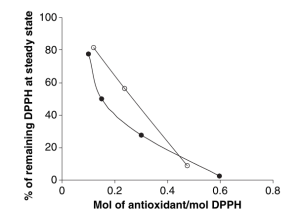
DPPH radical-scavenging activity: oleuropein (●) versus ascorbic acid (○, reference). Perugini P, et al. Int J Cosmet Sci. 2008;30(2):113–120.
Dose-dependent radical scavenging is the first mechanistic step, upstream of inflammation, barrier damage and visible aging.
07 · MECHANISM: INFLAMMATORY MODULATION
Interrupting the oxidative stress–inflammation cycle
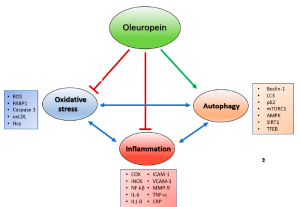
Oxidative stress–autophagy–inflammation network. The indicated molecular markers are discussed in the oleuropein literature. Adapted from Nediani C, et al. Antioxidants. 2019;8(12):578.
NF-κB SIGNALING
Modulated upstream of cytokine-cascade amplification.
COX-2 AND iNOS
These inflammatory enzymes are downregulated in experimental models.
IL-6 · TNF-α · IL-1β
Key inflammatory mediators are reduced in cellular and tissue studies.
ICAM-1 · VCAM-1
Reduced adhesion-molecule expression is associated with less immune-cell recruitment and inflammation.
Oleuropein acts at the oxidative entry point of the cycle, providing an upstream intervention rationale.
07 · MECHANISM: CELLULAR QUALITY CONTROL
Autophagy as a quality-control mechanism
Autophagy is the cellular recycling system that identifies and clears damaged proteins and organelles. Oleuropein has been reported as an autophagy inducer in several experimental models.
01
STRESS SENSING
AMPK activation increases, while the mTORC1 brake on autophagy is reduced.
AMPK ↑ · mTORC1 ↓
02
AUTOPHAGY INITIATION
Beclin-1 participates; LC3-I converts to LC3-II as autophagosomes form.
Beclin-1 · LC3-II ↑
03
SUBSTRATE CLEARANCE
p62 directs damaged proteins and organelles toward lysosomal degradation.
p62 turnover ↑
04
CELLULAR RENEWAL
SIRT1 and TFEB support lysosomal biogenesis and cellular renewal.
SIRT1 · TFEB ↑
This cellular clearance mechanism provides a distinctive basis for botanical active development.
Autophagy markers: Nediani C, et al. Antioxidants. 2019;8(12):578. doi:10.3390/antiox8120578
07 · MECHANISM: PROTEOSTASIS
Proteostasis support for lasting skin quality
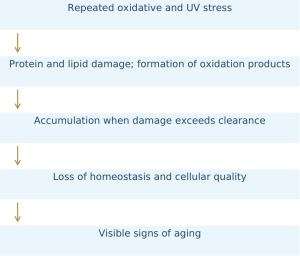
THE PROTEOSTASIS PERSPECTIVE
The proteostasis network, including synthesis, folding, repair and degradation, maintains functional proteins. Under chronic environmental stress, damaged material can accumulate faster than cells can clear it.
Oleuropein is positioned on both sides of this balance: antioxidant defense slows damage formation, while autophagy induction supports clearance.
Formulation implication: ingredients that support cellular quality control provide a rationale for long-term skin resilience as well as repair.
Proteostasis and autophagy framework: Nediani C, et al. Antioxidants. 2019;8(12):578.
08 · SKINCARE: HUMAN EVIDENCE
Human evidence under UVB stress
STUDY DESIGN
MODEL
UVB-induced erythema in human volunteers, a controlled photobiology challenge model.
TEST FORMULATIONS
Topical oleuropein emulsions and emulgels applied after UVB exposure.
REFERENCE
Vitamin E, a topical antioxidant benchmark.
OBJECTIVE ENDPOINTS
· Erythema index: reflectance colorimetry
· TEWL: transepidermal water loss
· Skin blood flow: laser Doppler flowmetry
WHY THE DESIGN MATTERS
The controlled UVB challenge uses objective biophysical measurements in human volunteers rather than self-assessment.
It evaluates whether the test formulations can help limit redness and preserve barrier function after a defined oxidative challenge.
Perugini P, et al. Int J Cosmet Sci. 2008;30(2):113–120. doi:10.1111/j.1468-2494.2007.00416.x
08 · SKINCARE: HUMAN EVIDENCE
Approximately 35% lower TEWL after UVB exposure
–35%
TEWL: measurable preservation of barrier function
–22%
Erythema index: reduced visible redness
–30%
Skin blood flow: reduced hyperemic response
Approximate mean reductions versus the UVB-exposed control, for oleuropein emulsions and emulgels. Perugini P, et al. Int J Cosmet Sci. 2008;30(2):113–120.
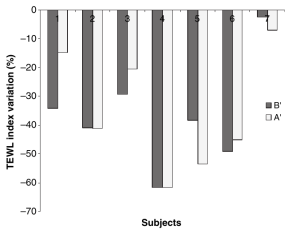
Transepidermal water loss (TEWL)
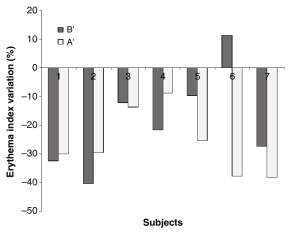
Erythema index (colorimetry)
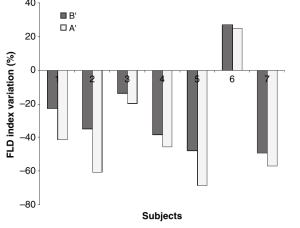
Blood flow (laser Doppler)
Three instrumental endpoints support reduced redness, barrier disruption and vascular response under the tested conditions.
08 · SKINCARE: HUMAN EVIDENCE
From acute photostress to photoaging care
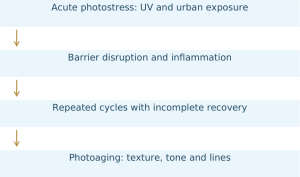
The controlled UVB study provides a rationale for daily photoaging care. Longer-term human data on an olive leaf extract cream extend the evidence beyond an acute challenge.
LONGER-TERM HUMAN DATA: OLIVE LEAF EXTRACT CREAM
36 female volunteers; twice daily for 2 months:
· TEWL decreased significantly (p = 0.007), with the effect maintained 1 month after discontinuation.
· Skin hydration increased (p = 0.004).
· Wrinkle parameters improved (p < 0.001).
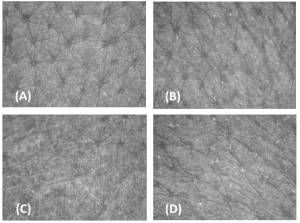
Visioscan® skin surface images: baseline (A), 1 month (B), 2 months (C), and 1 month after discontinuation (D).
Wanitphakdeedecha R, et al. J Cosmet Dermatol. 2020. doi:10.1111/jocd.13457
08 · SKINCARE: PRECLINICAL EVIDENCE
Tissue repair and matrix renewal
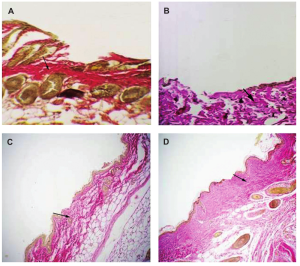
Van Gieson staining of collagen deposition in healing skin: oleuropein-treated versus control groups. Mehraein F, et al. Cell J. 2014;16(1):25–30.
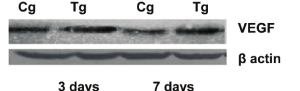
VEGF protein expression by Western blot: oleuropein group (Tg) versus control group (Cg).
Increased VEGF supports microvascular supply to repairing tissue and provides a mechanistic link with matrix renewal.
RESULTS IN AN AGED-SKIN MODEL
Wound closure at day 3: 29.0% versus 19.2% in controls.
At day 7: 55.3% versus 45.3% in controls.
Re-epithelialization was complete by day 7 in treated skin.
Collagen deposition increased; VEGF increased (p < 0.05).
Patent support: EP2570124A1 covers oleuropein compositions for repair of aged and fragile skin.
Intradermal model in aged mice: preclinical evidence, not a human efficacy claim.
08 · SKINCARE: HUMAN AND IN VITRO EVIDENCE
Even skin tone: observations in melanin biology
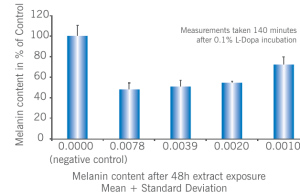
Melanin content in primary human melanocytes (in vitro).
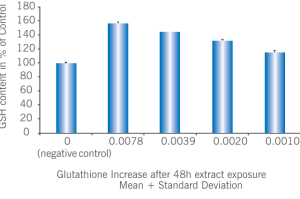
Intracellular glutathione (in vitro).
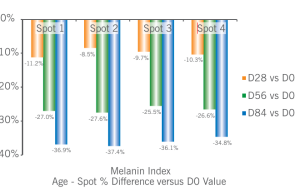
Age-spot melanin index versus baseline (D0) in a 12-week human study.
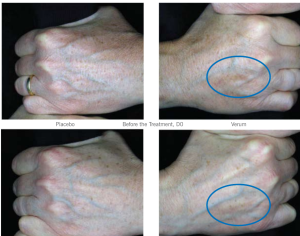
Placebo versus test product at week 12.
IN VITRO: HUMAN MELANOCYTES
Melanin content decreased by up to approximately 65%, while intracellular glutathione increased by 55%, supporting the cellular redox-buffering system.
HUMAN STUDY: AGE SPOTS
In a 12-week double-blind, placebo-controlled study of 12 women aged 46–72 years, the age-spot melanin index decreased by 34.8% at week 12 versus baseline, with visible lightening.
The source connects skin-tone care with the redox rationale used for barrier defense.
Standardized olive polyphenol extract. Lueder M. Cosmet Sci Technol. 2011.
09 · ORAL CARE
The mouth: a redox–microbial ecosystem
Biofilms reform within hours, saliva continuously dilutes actives, and soft tissues face daily mechanical, chemical and microbial stress. Oral care therefore requires both suitable chemistry and effective delivery.
BIOFILM AND PLAQUE
Bacterial biofilms drive plaque accumulation and acid challenges. Daily biofilm control provides an application opportunity for polyphenols.
GINGIVAL ENVIRONMENT
The gingival margin lies at the intersection of microbial and oxidative stress. Redox support and inflammatory modulation provide relevant development pathways.
SOFT-TISSUE REPAIR
Mucosal tissues face daily irritation and discomfort after care procedures. Repair support is a relevant consumer-care concept.
Three application opportunities share the same polyphenol rationale: antioxidant activity, inflammatory modulation and microbial inhibition.
09 · ORAL CARE: IN VITRO EVIDENCE
Published activity against key oral bacteria
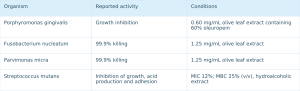
In vitro data support a biofilm-management concept and do not constitute therapeutic claims.
Karygianni L, et al. Biomed Res Int. 2014;2014:839019. doi:10.1155/2014/839019.
S. mutans: Golestannejad Z, et al. Dent Res J (Isfahan). 2020;17(3):179–185. doi:10.4103/1735-3327.284730 (acid production and adhesion: p < 0.001).
09 · ORAL CARE: HUMAN EVIDENCE
Biofilm management beyond disinfection
PLAQUE REGROWTH: CROSSOVER CONTROLLED STUDY, N = 17
36% lower plaque index versus water rinsing
After rinsing with a virgin olive oil preparation containing oleuropein, the plaque index was 1.48 ± 0.36 versus 2.30 ± 0.39 with water (p < 0.001), measured in a plaque-regrowth crossover design.
Volunteers suspended oral hygiene and underwent objective plaque-regrowth scoring, providing a direct measure of biofilm management under the study conditions.
Math MV, et al. Int J Dent Health Sci. 2017;4(4).
THE POLYPHENOL RATIONALE FOR BIOFILM CARE
INTERFERING WITH ADHESION
Olive leaf polyphenols reduce S. mutans surface adhesion (p < 0.001).
MODULATING ACID PRODUCTION
Reduced acid production by cariogenic bacteria supports a daily-care rationale relevant to enamel.
REDOX SUPPORT AT THE GINGIVAL MARGIN
Antioxidant activity at the biofilm–gingiva interface provides a rationale for comfort-oriented care.
Golestannejad Z, et al. Dent Res J (Isfahan). 2020;17(3):179–185.
09 · ORAL CARE: CLINICAL AND PRECLINICAL EVIDENCE
Oral soft-tissue defense: cytokines and comfort
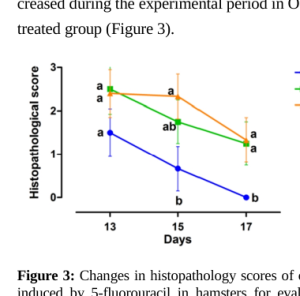
Mucosal histopathology scores over time: oleuropein versus controls in a mucositis model.
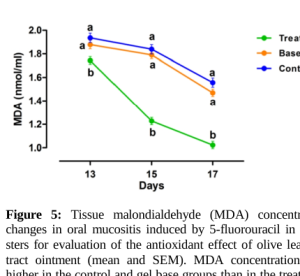
Tissue MDA, a marker of oxidative damage: oleuropein versus controls (reported p = 0.000).
CLINICAL: RANDOMIZED CROSSOVER TRIAL, 25 PATIENTS
Olive leaf extract mouthwash reduced salivary IL-1β and TNF-α and was associated with lower mucositis severity scores in chemotherapy patients.
PRECLINICAL: MUCOSITIS MODEL
Oleuropein ointment reduced histopathology scores and tissue MDA (reported p = 0.000), indicating less tissue damage and oxidative stress in the experimental mucosal challenge.
Positioning: supportive oral care and comfort. Use adjunctive wording rather than therapeutic claims.
Ahmed KM. Saudi Dent J. 2013;25(4):141–147. doi:10.1016/j.sdentj.2013.09.001.
Showraki N, et al. J Dent (Shiraz). 2016;17(4):334–342.
09 · ORAL CARE: DELIVERY SCIENCE
Why delivery matters in oral care
FOUR ORAL-ENVIRONMENT CHALLENGES
Continuous dilution: saliva washes actives away.
Short contact time: rinsing lasts minutes rather than hours.
Oxidative exposure: polyphenols are vulnerable to degradation in aqueous systems.
Dosage-form constraints: clear rinses, gels and pastes have different formulation requirements.
THE PURISOME® APPROACH
· Vesicles protect polyphenols within the formulation.
· Controlled release aims to extend availability after use.
· The dispersion format suits rinses, gels and pastes.
SUPPORTING LITERATURE
Liposomal encapsulation of olive leaf polyphenols preserved, and under some conditions enhanced, antibacterial activity against S. aureus, including MRSA (MIC 140–240 µg/mL). Vesicles remained stable for up to 90 days at 4 °C.
Prevete G, et al. ACS Appl Mater Interfaces. 2024;16(50):68850–68863. doi:10.1021/acsami.4c13302
10 · HAIR AND SCALP CARE
The scalp: a stressed follicular environment
The scalp is skin with approximately 100,000 follicles, abundant sebum and direct UV exposure, creating a concentrated set of environmental challenges.
PHOTOSTRESS
UV exposure is particularly relevant at partings and areas of thinning hair.
SEBUM OXIDATION
Lipid peroxidation at follicular openings increases the oxidative load.
MICROBIAL PRESSURE
A dense, sebum-supported microbial community contributes to ongoing surface challenges.
FOLLICULAR CYCLE
Transition into anagen is sensitive to oxidative and inflammatory signaling.
Scalp care can draw on the same defensive mechanisms relevant to skin care.
10 · HAIR AND SCALP CARE
Oleuropein as a rationale for scalp resilience
REDOX DEFENSE
Radical scavenging at the scalp surface, where sebum oxidation and UV exposure converge.
Supporting evidence: in vitro and human skin data.
INFLAMMATORY MODULATION
A rationale for perifollicular comfort through modulation of inflammatory mediators.
Supporting evidence: mechanistic studies and human oral-care data.
MICROBIAL BALANCE
Published antibacterial activity against biofilm-forming organisms.
Supporting evidence: in vitro MIC data.
QUALITY CONTROL
Autophagy support as a concept for rapidly dividing cells in the follicular environment.
Supporting evidence: mechanistic literature.
FOLLICULAR SIGNALING
Wnt/β-catenin activation in dermal papilla cells, detailed below.
Supporting evidence: preclinical data.
Each scalp-care pillar is presented with its supporting evidence type.
10 · HAIR AND SCALP: PRECLINICAL EVIDENCE
Follicular biology: Wnt/β-catenin activation
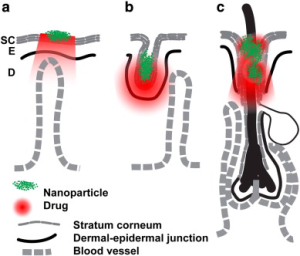
Nanovesicle enrichment through the follicular route: a PURISOME® delivery concept.
HUMAN DERMAL PAPILLA CELLS: IN VITRO
Oleuropein promoted dermal papilla cell proliferation, increased LEF1 and Cyclin D1, and drove nuclear β-catenin accumulation, consistent with Wnt pathway activation.
TELOGEN MOUSE MODEL: TOPICAL APPLICATION FOR 28 DAYS
Anagen entry accelerated, with larger and more numerous follicles. Wnt10b, FzdR1, LRP5, IGF-1, KGF, HGF and VEGF increased in skin tissue.
Evidence level: preclinical. These findings support scalp-care positioning and further development, not a human hair-growth claim.
Tong T, Kim N, Park T. PLoS ONE. 2015;10(6):e0129578. doi:10.1371/journal.pone.0129578
11 · APPLICATIONS
Three application areas, one technology platform
SKINCARE
DEFENSE AND REPAIR
· Human UVB study: TEWL –35%; erythema –22%.
· Photoaging care: TEWL p = 0.007; wrinkles p < 0.001.
· Even tone: age-spot melanin index –34.8%.
· Tissue repair: preclinical wound models.
ORAL CARE
BIOFILM AND SOFT-TISSUE BALANCE
· Antibacterial activity: published MIC/MBC values.
· Human crossover study: plaque regrowth –36%.
· Clinical rinse study: reduced salivary IL-1β and TNF-α.
· Mucosal comfort: preclinical mucositis model.
HAIR AND SCALP
RESILIENCE AND FOLLICULAR SUPPORT
· Wnt/β-catenin activation: preclinical.
· Follicular delivery: PURISOME® concept.
· Redox and microbial rationale: evidence from skin and oral studies.
One ingredient concept connects three care areas through a shared scientific rationale.
11 · APPLICATIONS
From ingredient to formulation: product concepts
SKINCARE
Daily defense serum
After-sun repair emulgel
Even-tone concentrate
Barrier-support lotion
Informed by human UVB, photoaging and skin-tone studies.
ORAL CARE
Daily defense mouthwash
Gingival-care gel
Biofilm-management toothpaste
Soothing rinse after care procedures
Informed by antibacterial, plaque and cytokine evidence.
HAIR AND SCALP
Pre-wash scalp concentrate
Leave-on scalp serum
Clarifying antioxidant shampoo
Informed by preclinical follicular data and the scalp-stress rationale.
These are concepts for joint development. Final product claims require testing of the finished formulation.
11 · APPLICATIONS
NanoActive Oleu™ formulation guidance
HANDLING PRINCIPLES
Supplied as an aqueous liposomal dispersion, with no reconstitution required.
Add during cool-down. Avoid prolonged high shear to protect vesicle integrity.
Suitable formulation areas include emulsions, serums, gels and oral-care systems.
Use mild temperatures and pH conditions; validate the preservative system in the complete formulation.
Detailed specifications, recommended use levels and starter formulations are available from PuriPharm technical services.
WORKING WITH PURIPHARM
Ingredient supply with joint development support.
PuriPharm provides application expertise, formulation guidance and supporting evidence documentation, from the first prototype to market-registration materials.
Contact PuriPharm Co., Ltd. for technical services and joint development.
NANOACTIVE OLEU™ LIPOSOMAL OLEUROPEIN
Protect · Balance · Renew
PHYTOCHEMISTRY: oleuropein-rich Mediterranean polyphenols
DELIVERY: PURISOME® FlexVes™ Liposome Technology
EVIDENCE: published human, in vivo and mechanistic studies
PARTNERSHIP: joint development with PuriPharm Co., Ltd.
NanoActive Oleu™
Powered by PURISOME® FlexVes™ Liposome Technology
PuriPharm Co., Ltd.
REFERENCES
Key references
01 Perugini P, et al. Lenitive effect of oleuropein on UVB-induced erythema. Int J Cosmet Sci. 2008;30(2):113–120. doi:10.1111/j.1468-2494.2007.00416.x
02 Nediani C, et al. Oleuropein, autophagy and oxidative stress–inflammation interplay. Antioxidants. 2019;8(12):578. doi:10.3390/antiox8120578
03 Wanitphakdeedecha R, et al. Olive leaf extract cream: TEWL, hydration and wrinkle outcomes. J Cosmet Dermatol. 2020. doi:10.1111/jocd.13457
04 Mehraein F, et al. Oleuropein and skin tissue recovery in an aged-mouse model. Cell J. 2014;16(1):25–30.
05 Lueder M. Standardized olive polyphenol extract: melanin, glutathione and age-spot studies. Cosmet Sci Technol. 2011.
06 Karygianni L, et al. Olive leaf extract against oral pathogens. Biomed Res Int. 2014;2014:839019. doi:10.1155/2014/839019
07 Golestannejad Z, et al. Olive leaf extract vs Streptococcus mutans. Dent Res J (Isfahan). 2020;17(3):179–185. doi:10.4103/1735-3327.284730
08 Math MV, et al. Plaque regrowth crossover with virgin olive oil rinse. Int J Dent Health Sci. 2017;4(4).
09 Ahmed KM. Olive leaf extract mouth rinse: IL-1β, TNF-α and mucositis severity. Saudi Dent J. 2013;25(4):141–147. doi:10.1016/j.sdentj.2013.09.001
10 Showraki N, et al. Oleuropein in a chemotherapy-induced mucositis model. J Dent (Shiraz). 2016;17(4):334–342.
11 Tong T, Kim N, Park T. Oleuropein and hair-follicle Wnt/β-catenin signaling. PLoS ONE. 2015;10(6):e0129578. doi:10.1371/journal.pone.0129578
12 Prevete G, et al. Liposomal encapsulation of olive leaf polyphenols. ACS Appl Mater Interfaces. 2024;16(50):68850–68863. doi:10.1021/acsami.4c13302
13 Omar SH. Oleuropein in olive and its pharmacological effects. Sci Pharm. 2010;78(2):133–154.
14 EP2570124A1. Oleuropein compositions for healing wounds and ulcers in elderly people and/or diabetics.
These references concern oleuropein or olive leaf preparations in published studies and patent documents. Evidence types are identified in the relevant sections. PURISOME®, FlexVes™, NanoActive™ and Oleu™ are trademarks of PuriPharm Co., Ltd.