NanoActive ArteOlea™Artemisia annua Oil Nanoliposomes
Ingredient overview
NanoActive ArteOlea™
PURIPHARM CO. LTD. · Cosmetic Active Ingredients
Artemisia annua Oil Nanoliposomes
Water-compatible Artemisia.
Broader botanical performance.
INCI name: ARTEMISIA ANNUA EXTRACT
A new botanical active platform that brings the rich phytochemistry of Artemisia annua into aqueous skin, scalp and hair-care formulations.
Powered by PURISOME® FlexVes™ Liposome Technology
Ingredient Innovation Profile · 2026
Botanical platform
A phytochemical resource with centuries of use
Artemisia annua L. (Asteraceae) has centuries of traditional medicinal use and is now among the most extensively studied medicinal plants. Surface glandular trichomes act as microscopic reservoirs, synthesizing and storing diverse lipophilic secondary metabolites.
A living chemical factory. Ten-cell glandular secretory trichomes cover the leaves and flowers, accumulating sesquiterpenes and volatile oils in subcuticular storage spaces.
Chemical breadth. Sesquiterpenes, flavonoids, phenolic acids, coumarins and volatile terpenes coexist in complementary proportions, creating a botanical platform beyond any single compound.
Cosmetic relevance. These classes relate to skin pathways involving oxidative stress, inflammatory signaling and barrier function.
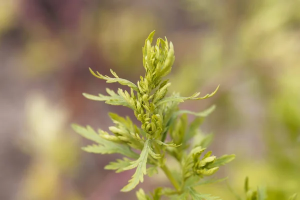
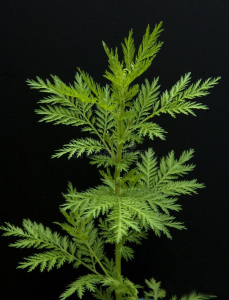
Artemisia annua L., with finely divided, aromatic leaves. Aerial parts are richest in phytochemicals during flowering.
Sesquiterpenes · Flavonoids · Phenolic acids · Coumarins · Volatile terpenes
Ekiert H et al. Planta Med. 2021;87(8):584–599. DOI: 10.1055/a-1345-9528. PMID: 33482666. · Duke MV, Paul RN. Int J Plant Sci. 1993;154(1):107–118. DOI: 10.1086/297094.
Botanical platform
Beyond artemisinin: a spectrum of phytochemical classes
The cosmetic value of Artemisia annua extends beyond one molecule. Its extracts combine complementary phytochemical classes that act on interconnected biological pathways.
| Phytochemical class | Sesquiterpenes |
| Representative constituents | Artemisinin · Dihydroartemisinin · Artemisinic acid |
| Skin-related functions | Inflammatory modulation; oxidative-stress signaling |
| Phytochemical class | Flavonoids |
| Representative constituents | Quercetin · Luteolin · Casticin · Artemetin |
| Skin-related functions | Free-radical scavenging; soothing; environmental defense |
| Phytochemical class | Phenolic acids |
| Representative constituents | Chlorogenic acid · Caffeic acid |
| Skin-related functions | Antioxidant-network support; ROS modulation |
| Phytochemical class | Coumarins |
| Representative constituents | Scopoletin · Scopolin |
| Skin-related functions | Oxidative and skin-tone-related pathways |
| Phytochemical class | Volatile terpenes |
| Representative constituents | Camphor · 1,8-Cineole · β-Caryophyllene |
| Skin-related functions | Sensory characteristics; skin comfort |
Ferreira JF et al. Molecules. 2010;15(5):3135–3170. DOI: 10.3390/molecules15053135. PMID: 20657468. · Bhakuni RS et al. Curr Sci. 2001;80(1):35–49.
Formulation challenge
Valuable chemistry with limited water compatibility
Many valuable Artemisia annua constituents are inherently lipophilic. Conventional aqueous formats struggle to accommodate them, creating a physical bottleneck between phytochemistry and cosmetic performance.
Limited water solubility. Lipophilic constituents precipitate in aqueous systems rather than dispersing uniformly.
Crystallization risk. Dissolved constituents may precipitate again during storage and temperature cycling.
Restricted formats. Clear toners, serums and gels are difficult to achieve, limiting conventional options to opaque emulsions.
Uneven dispersion. Poor distribution reduces contact between actives and the skin interface.
Oxidative exposure. Unprotected constituents degrade faster when exposed to oxygen and light.
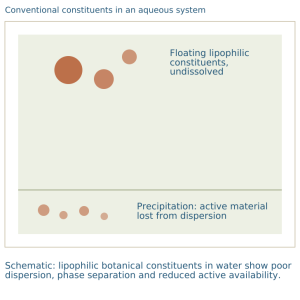
Diagram text follows in the original order for mobile reading.
Conventional constituents in an aqueous system
Floating lipophilic constituents, undissolved
Precipitation: active material lost from dispersion
Schematic: lipophilic botanical constituents in water show poor dispersion, phase separation and reduced active availability.
The formulation barrier is physical rather than biological: the chemistry has value, but the solvent environment is unsuitable.
Delivery technology
PURISOME® FlexVes™ Liposome Technology
Skin-compatible phospholipid bilayer vesicles bring lipophilic botanical actives into aqueous formulation formats.
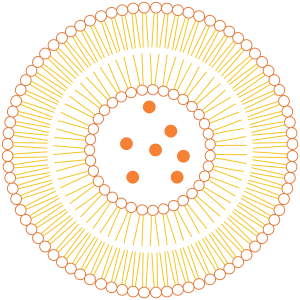
Phospholipid bilayer vesicle: lipophilic actives reside in the membrane, with a water-compatible colloidal exterior.
Encapsulation. Lipophilic sesquiterpenes and flavonoids reside in the phospholipid bilayer, physically separated from the water in which they cannot dissolve.
Water compatibility. Vesicles disperse as stable colloids, converting oil-soluble phytochemistry into a form compatible with aqueous ingredients.
Interfacial delivery. Skin-compatible phospholipids support close contact with the stratum corneum and follicular openings, improving active presentation at biological interfaces.
Protection. The vesicular environment protects sensitive constituents from oxygen, light, aggregation and precipitation during processing and storage.
Powered by PURISOME® Liposome Technology, PuriPharm Co. Ltd.’s proprietary nanoliposomal delivery platform.
Delivery technology
From lipophilic potential to aqueous formulation flexibility
Lipophilic botanical constituents
An extract rich in sesquiterpenes and flavonoids: biologically active, yet oil-affine and water-repellent.
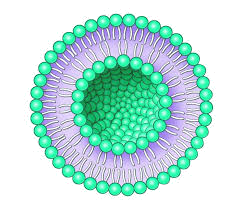
PURISOME® encapsulation
Actives are loaded into phospholipid bilayer vesicles, forming NanoActive ArteOlea™.
Uniform aqueous dispersion
A stable colloid carries the same active dose in each milliliter of formulation.
Broader formulation options
Toners, serums, gels, ampoules, masks and scalp tonics become accessible formulation categories.

Skin cross-section fluorescence images: carrier size influences distribution depth (a → c).
Smaller carriers can travel farther.
Reducing carrier size increases the effective concentration of particles at the skin surface and promotes distribution along skin pathways, providing a physical basis for delivery efficiency.
NanoActive ArteOlea™ applies this principle in aqueous formulations.
Fluorescence microscopy of skin cross-sections: PuriPharm Co. Ltd. Application Laboratory.
Delivery technology
Phytochemistry × delivery science
What the plant provides
Sesquiterpenes: stress-signaling modulation
Flavonoids: antioxidant-network chemistry
Phenolic acids: free-radical scavenging
Coumarins: skin-tone pathway support
Volatile terpenes: sensory comfort
What the technology enables
Water compatibility: aqueous and clear formats
Colloidal dispersion: uniform active distribution
Interfacial delivery: improved skin and scalp contact
Encapsulation: support for formulation stability
Format flexibility: from serums to scalp tonics
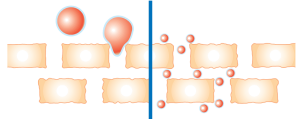
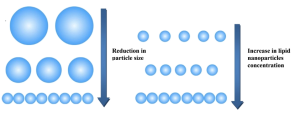
Figure labels: reduction in particle size; increase in lipid nanoparticle concentration.
Nanocarrier mechanisms: small vesicles distribute uniformly across the stratum corneum; vesicle membranes support surface hydration. PuriPharm Co. Ltd. Application Laboratory.
Efficacy platform
One botanical platform, four skin-related pathways
NanoActive
ArteOlea™
Artemisia annua Oil Nanoliposomes
Oxidative stress
Free-radical scavenging by flavonoids and phenolic acids; modulation of ROS-driven signaling at the skin surface.
Inflammatory signaling
Reduced TSLP, IL-6 and IL-8; regulation of MAPK phosphorylation in stressed epidermis.
Barrier function
Restoration of filaggrin, loricrin and desmoglein-1 expression; normalization of epidermal structure.
ECM · Skin tone · Follicles
Type I collagen support in fibroblasts; melanin modulation in melanocytes; VEGF/DKK1 signaling in dermal papilla cells.
Pathway evidence: Tian Y et al. J Exp Pharmacol. 2025. PMID: 41116869. · Zhao Y et al. Molecules. 2026. PMID: 41599277.
Efficacy platform: soothing
Calming inflammatory signals at their source
In stressed and sensitive skin, TSLP and downstream interleukins contribute to visible redness and discomfort. Artemisia annua chemistry acts on upstream signaling.
Cytokine regulation. In a 3D epidermal model of atopic inflammation, Artemisia annua extract (AAE) significantly reduced TSLP, IL-6 and IL-8, mediators linking barrier stress to visible irritation.
Upstream signaling. Phosphorylation of p38, JNK and ERK, key MAPK stress modules, decreased, indicating regulation at the signaling source.
Supporting in vivo evidence. Artemisia annua water extract alleviated DNCB-induced dermatitis in an animal model by restraining Th2-mediated responses, adding convergent evidence for a soothing platform.
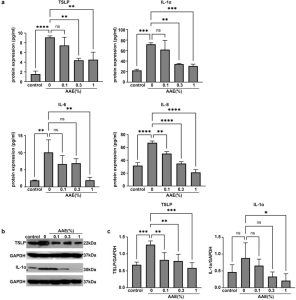
Figure labels: control; AAE (%); protein expression (pg/mL); TSLP; IL-1α, IL-6 and IL-8; GAPDH normalization. Original error bars, comparison brackets, ns and asterisks are retained.
Cytokine expression (TSLP, IL-6, IL-8) after AAE treatment in an AD-like epidermal model.
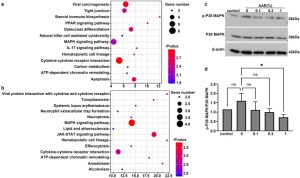
Figure labels: gene number; P-value; p-p38 MAPK/p38 MAPK ratio. Original GO/KEGG pathway names and statistical marks are retained.
AAE reduces MAPK phosphorylation (p38, JNK, ERK). Reproduced from Tian Y et al., 2025.
Tian Y et al. J Exp Pharmacol. 2025;17:707–720. DOI: 10.2147/JEP.S550568. PMID: 41116869. · Han X et al. J Ethnopharmacol. 2022;291:115160. PMID: 35245629.
Efficacy platform: antioxidant defense
Botanical antioxidant defense built on flavonoid chemistry
Artemisia annua flavonoids, including quercetin, luteolin and casticin, are documented free-radical scavengers that act alongside the plant’s phenolic acids.
A network of constituents. Purified Artemisia annua flavonoids show strong antioxidant activity in biochemical assays. The overall flavonoid fraction outperforms isolated compounds, supporting a synergistic defense system.
System-level evidence. Transcriptomic analysis of an AD-like epidermal model shows enrichment of AAE-responsive genes in oxidative-stress, MAPK and inflammatory-response pathways, consistent with a botanical acting on multiple targets.
Positioning. Daily antioxidant defense for urban skin, supporting skin quality before oxidative stress becomes visible.
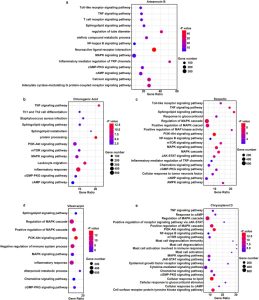
Figure labels: gene number and P-value. All original GO/KEGG pathway names and groups are preserved in the figure.
GO/KEGG enrichment of AAE-responsive genes, with prominent oxidative-stress and MAPK-related pathways. Reproduced from Tian Y et al., 2025.
Ferreira JF et al. Molecules. 2010;15(5):3135–3170. PMID: 20657468. · Tian Y et al. J Exp Pharmacol. 2025;17:707–720. PMID: 41116869.
Efficacy platform: environmental defense
Antioxidant biology for urban skin defense
Modern skin encounters continual oxidative challenges. NanoActive ArteOlea™ brings botanical defense chemistry into daily cosmetic care.
Environmental stressors
UV radiation · Particulate matter · Ozone
ROS surge at the skin surface
Lipid peroxidation · Barrier stress · Amplified inflammation
Flavonoid + phenolic acid antioxidant network
NanoActive ArteOlea™
Visible outcomes
· Barrier integrity
· Even skin tone
· Lasting resilience
· Youthful skin quality
Positioning areas
Anti-pollution skin care: daily defense against urban oxidative challenges
Environmental-stress protection: ROS management at the skin surface
Prevention of premature aging: early interruption of the stress–aging cascade
Skin resilience: maintaining barrier quality under daily exposure
Mechanistic basis: Ferreira JF et al. Molecules. 2010. PMID: 20657468. · Tian Y et al. J Exp Pharmacol. 2025. PMID: 41116869.
Efficacy platform: repair
Soothing → protection → repair: supporting barrier resilience
Barrier damage makes inflammatory stress visible. Repair evidence positions AAE as an active for building skin resilience as well as soothing.
Tissue-level repair. In an AD-like 3D epidermal model, AAE restored normal epidermal morphology, reversing disrupted differentiation under inflammatory challenge.
Barrier-gene recovery. Expression of filaggrin (FLG), loricrin (LOR) and desmoglein-1 (DSG1) returned toward control levels, providing molecular evidence of structural repair.
Cosmetic application. Support recovery after environmental and inflammatory stress and reinforce daily barrier resilience in sensitive or stressed skin.
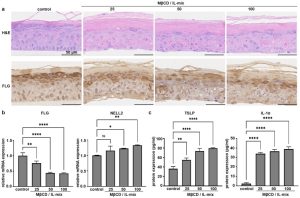
Figure labels: control; H&E; FLG; MC903 / IL-mix treatment conditions; μg/mL; relative mRNA expression; NELL2, TSLP and IL-1α. Original labels and statistics are retained.
3D epidermal model: restoration of H&E-stained morphology following AAE treatment.
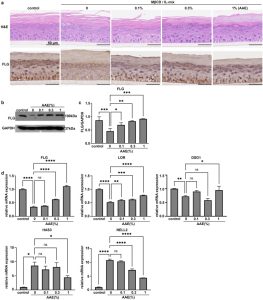
Figure labels: control; AAE (%); H&E; FLG, LOR and DSG1; relative mRNA expression; HAS3 and NELL2; 50 μm scale bar. Original labels and statistics are retained.
Barrier proteins FLG, LOR and DSG1 return toward control levels. Reproduced from Tian Y et al., 2025.
Tian Y et al. J Exp Pharmacol. 2025;17:707–720. DOI: 10.2147/JEP.S550568. PMID: 41116869.
Efficacy platform: healthy aging
Protecting the extracellular matrix against stress-related aging
Oxidative and inflammatory stress accelerate collagen loss, contributing to visible loss of firmness. Artemisia annua sesquiterpene chemistry offers a line of defense.
Type I collagen support. Dihydroartemisinin (DHA), a characteristic Artemisia annua sesquiterpene derivative, increases type I collagen in human dermal fibroblasts in a dose-dependent manner, providing direct matrix-level evidence.
A cell-compatible activity window. Fibroblast viability is maintained across effective concentrations, a favorable cellular profile for leave-on cosmetic development.
Cosmetic application. Support skin density, visible firmness and a smooth appearance through matrix protection for healthy aging.
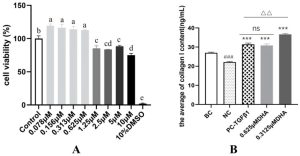
Figure labels: cell viability (%); average collagen I content (ng/mL); control; DHA; DMSO; BC/NC/PC group abbreviations. Original concentrations, error bars and significance marks are retained.
Fibroblast viability (A) and type I collagen content (B) following DHA treatment. Reproduced from Zhao Y et al., 2026.
Zhao Y et al. Molecules. 2026;31(2):228. DOI: 10.3390/molecules31020228. PMID: 41599277.
Efficacy platform: skin tone
Toward a more even skin tone
Pigmentation is closely intertwined with oxidative and inflammatory signaling, pathways relevant to Artemisia annua chemistry.
Melanin modulation. DHA reduces melanin content in melanocytes at tested concentrations while maintaining cell viability, indicating controlled modulation of melanogenesis within the cell-compatible range.
Complementary coumarins. Scopoletin and related Artemisia annua coumarins provide additional antioxidant support along oxidative pathways associated with skin tone.
Positioning. Brightening support and even skin tone within a broader antioxidant and soothing approach.
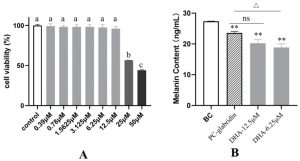
Figure labels: cell viability (%); melanin content (ng/mL); control; PC-glabridin; DHA; μM; BC. Original dose labels and statistics are retained.
Melanocyte viability (A) and melanin content (B) following DHA treatment. Reproduced from Zhao Y et al., 2026.
Zhao Y et al. Molecules. 2026;31(2):228. PMID: 41599277. · Ekiert H et al. Planta Med. 2021;87(8):584–599. PMID: 33482666.
Scalp and hair-care platform
One botanical platform. Two beauty ecosystems.
Skin and scalp share inflammatory signaling, oxidative stress and barrier biology. NanoActive ArteOlea™ addresses both application areas.
Skin
Soothing and sensitive-skin support
Antioxidant environmental defense
Barrier repair and resilience
Healthy aging and skin-tone support
Shared biology
Scalp and hair
Scalp comfort and homeostasis
Follicular oxidative-stress management
A balanced scalp microenvironment
Support for healthy hair
Scalp and hair-care platform: comfort
A calmer scalp creates a better environment for hair
Scalp sensitivity and seborrheic dermatitis involve inflammatory signaling, including pathways modulated by Artemisia annua chemistry in skin.
Clinical direction. A controlled clinical study reported significant anti-inflammatory efficacy in seborrheic dermatitis with a functional shampoo containing 0.063% artemether, an Artemisia annua sesquiterpene derivative.
Mechanistic continuity. The epidermal-model evidence involving TSLP, IL-6, IL-8 and MAPK regulation is relevant to inflammatory biology shared by the scalp.
Cosmetic application. Scalp comfort, reduced visible redness and daily support for sensitive scalp care, creating a calmer foundation for healthy hair.
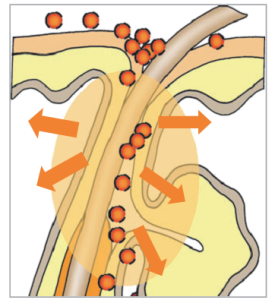
Follicular openings provide a preferred entry route for nanocarriers into the scalp, bringing delivery to the target area.
Pei Q et al. J Cosmet Dermatol. 2025;24(10):e70461. DOI: 10.1111/jocd.70461. PMID: 40980936.
Scalp and hair-care platform: oxidative stress
Protecting the follicular microenvironment
Sebum oxidation, UV radiation and pollution converge at the follicular opening, where hair growth begins. Oxidative stress here affects scalp and hair quality.
Antioxidant defense at the root. The Artemisia annua flavonoid network brings documented free-radical-scavenging chemistry to the scalp surface, addressing oxidative pressure before it disrupts the follicular environment.
Follicular delivery. PURISOME® vesicles accumulate along follicular pathways. The nanocarrier mechanism supporting skin distribution also applies to scalp delivery.
Outcome positioning. Scalp resilience, homeostasis and a balanced microenvironment provide conditions for healthy hair.
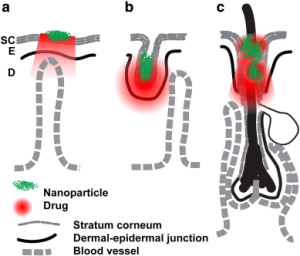
Figure labels: nanoparticle; drug; SC = stratum corneum; E = epidermis; D = dermis; dermal–epidermal junction; blood vessel.
Nanocarrier distribution along follicular pathways, from the stratum corneum to the dermal–epidermal junction (a → c).
Antioxidant basis: Ferreira JF et al. Molecules. 2010. PMID: 20657468. · Follicular targeting schematic: PuriPharm Co. Ltd. Application Laboratory.
Scalp and hair-care platform: hair care
From scalp biology to healthy hair
Dermal papilla signaling governs the hair cycle. VEGF supports follicular vitality, while DKK1 is associated with catagen signaling.
Follicular signaling support. In human dermal papilla cells, DHA increases VEGF expression and reduces DKK1, two mechanistically consistent effects on the follicular signaling environment.
Aqueous scalp formats. Water compatibility allows NanoActive ArteOlea™ to enter scalp tonics and leave-on formulations previously difficult for lipophilic botanical constituents, with potential for daily, non-greasy, low-residue formats.
Concept areas. Scalp tonics · Leave-on scalp serums · Anti-pollution hair care · Antioxidant defense from scalp to hair shaft
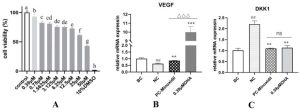
Figure labels: cell viability (%); relative VEGF/DKK1 mRNA expression; BC/NC/PC group abbreviations; DHA. All original concentrations, controls, error bars and significance marks are retained.
Increased VEGF and decreased DKK1 in human dermal papilla cells. Reproduced from Zhao Y et al., 2026.
Zhao Y et al. Molecules. 2026;31(2):228. DOI: 10.3390/molecules31020228. PMID: 41599277.
Formulation and applications
One active, a full formulation landscape
Water compatibility turns a botanical extract into a platform ingredient compatible with the formats used by modern beauty brands.
Toner: a water-clear botanical revitalizing step
Essence: a lightweight daily antioxidant layer
Serum: concentrated soothing and defense
Clear gel: clarity without compromise
Ampoule: intensive post-stress repair
Sheet mask: soothing with extensive skin contact
Light emulsion: daily barrier support
Scalp tonic: targeted comfort at the roots
Leave-on scalp serum: a focus on follicular vitality
Hair serum: antioxidant defense from scalp to shaft
The water-compatible form enables clear, low-viscosity systems across skin, scalp and hair-care categories.
Formulation and applications
Why water compatibility matters
01
Easier incorporation. Direct dispersion in the aqueous phase avoids heavy solubilizer workarounds or corrective heat-processing steps.
02
Uniform dispersion. Colloidal vesicles distribute actives evenly through the bulk, supporting consistency across doses and bottles.
03
Greater interfacial availability. Phospholipid carriers present lipophilic actives directly at skin and scalp surfaces.
04
Precipitation control. Encapsulation prevents lipophilic constituents from crystallizing during shelf life and temperature cycling.
05
Broader format compatibility. From clear toners to emulsions and scalp tonics, one active spans a full range of categories.
06
Formulation robustness. Improved tolerance of processing, pH adjustment and storage stress throughout the product lifecycle.
Technical value of the PURISOME® Liposome Technology platform, separate from and complementary to the extract’s biological activity.
Formulation and applications
Five application concepts for the market
Soothing Defense Essence
Daily essence · Sensitive skin
A daily soothing layer informed by TSLP and interleukin-modulation evidence, designed as lightweight care for irritation-prone, redness-prone skin.
Urban Botanical Antioxidant Serum
Defense serum · Anti-pollution
A flavonoid antioxidant network in a rapidly absorbing aqueous serum for daily defense against pollution-driven oxidative stress and its visible consequences.
Post-Stress Repair Ampoule
Intensive ampoule · Barrier repair
A concentrated repair concept informed by FLG/LOR/DSG1 recovery evidence, designed for skin after environmental or inflammatory stress.
Scalp Comfort Tonic
Scalp leave-on · Daily comfort
A water-light leave-on formula applying the platform’s anti-inflammatory direction to sensitive, tight or visibly red scalps, for daily comfort at the roots.
Botanical Defense Hair Serum
Scalp and hair · Scalp to shaft
Follicular signaling support (VEGF/DKK1) combined with antioxidant hair-shaft defense, linking scalp vitality with healthy hair in one serum.
Concept directions for customer formulation development with NanoActive ArteOlea™.
Summary
NanoActive ArteOlea™ at a glance
Botanical chemistry
The multiple phytochemical classes of Artemisia annua, including sesquiterpenes, flavonoids, phenolic acids and coumarins, map to skin-related biology.
Water-compatible delivery
PURISOME® FlexVes™ Liposome Technology converts lipophilic botanical constituents into colloidally stable, water-dispersible actives.
Skin resilience
Soothing, antioxidant defense, barrier repair, collagen support and skin-tone modulation provide evidence-informed directions for modern skin care.
Scalp defense
Scalp comfort, follicular oxidative-stress management and VEGF/DKK1 signaling support form a second application platform.
| Trade name | NanoActive ArteOlea™ Artemisia annua Oil Nanoliposomes |
| INCI name | ARTEMISIA ANNUA EXTRACT |
| Technology | PURISOME® FlexVes™ Liposome Technology |
| Positioning | A water-compatible botanical active for skin, scalp and hair care |
From lipophilic botanical actives to water-compatible performance.
NanoActive ArteOlea™, developed and manufactured by PuriPharm Co. Ltd.
References
Scientific references
1. Tian Y et al. Artemisia annua Extract Ameliorates Atopic Dermatitis: Evidence from 3D Epidermal Model and Complementary in vitro Assays. J Exp Pharmacol. 2025;17:707–720. DOI: 10.2147/JEP.S550568. PMID: 41116869.
2. Zhao Y et al. Potential Cosmetic Applications of Dihydroartemisinin. Molecules. 2026;31(2):228. DOI: 10.3390/molecules31020228. PMID: 41599277.
3. Pei Q et al. Anti-Inflammatory Efficacy of a Functional Shampoo Mixed With 0.063% Artemether for Seborrheic Dermatitis. J Cosmet Dermatol. 2025;24(10):e70461. DOI: 10.1111/jocd.70461. PMID: 40980936.
4. Han X et al. Artemisia annua water extract attenuates DNCB-induced atopic dermatitis by restraining Th2 cell-mediated responses. J Ethnopharmacol. 2022;291:115160. DOI: 10.1016/j.jep.2022.115160. PMID: 35245629.
5. Ekiert H et al. Artemisia annua — Importance in Traditional Medicine and Current State of Knowledge on the Chemistry, Biological Activity and Possible Applications. Planta Med. 2021;87(8):584–599. DOI: 10.1055/a-1345-9528. PMID: 33482666.
6. Ferreira JF et al. Flavonoids from Artemisia annua L. as Antioxidants and Their Potential Synergism with Artemisinin. Molecules. 2010;15(5):3135–3170. DOI: 10.3390/molecules15053135. PMID: 20657468.
7. Duke MV, Paul RN. Development and Fine Structure of the Glandular Trichomes of Artemisia annua L. Int J Plant Sci. 1993;154(1):107–118. DOI: 10.1086/297094.
8. Bhakuni RS et al. Secondary metabolites of Artemisia annua and their biological activity. Curr Sci. 2001;80(1):35–49.
Experimental figures reproduced from open-access publications, as cited on the relevant pages. Delivery-system images: PuriPharm Co. Ltd. Application Laboratory.
Closing perspective
Artemisia bioactivity × water-compatible delivery × modern cosmetic formulation
NanoActive ArteOlea™ translates the phytochemical potential of Artemisia annua into a water-compatible active platform for modern skin, scalp and hair-care formulations.
PuriPharm Co. Ltd.
Powered by PURISOME® FlexVes™ Liposome Technology
NANOACTIVE ARTEOLEA™ Artemisia annua Oil Nanoliposomes
INCI: ARTEMISIA ANNUA EXTRACT