NanoActive 4-TERPINEOL 20%Terpinen-4-ol Nanoliposomes
Product overview
NanoActive 4-TERPINEOL 20% Terpinen-4-ol Nanoliposomes
Terpinen-4-ol science: skin, eyelid, scalp and oral care
PuriPharm Co. Ltd.
PURISOME® FlexVes™ Liposome Technology
Product and value
One defined active, four formulation-development areas
Hart et al. Inflamm Res. 2000. DOI: 10.1007/s000110050639. Tighe et al. Transl Vis Sci Technol. 2013. DOI: 10.1167/tvst.2.7.2. Francisconi et al. Braz Oral Res. 2020. DOI: 10.1590/1807-3107bor-2020.vol34.0050.
Biological evidence for the active
Terpinen-4-ol research covers inflammatory-mediator regulation, microbial inhibition and biofilm effects.
A lipid-carrier formulation strategy
PURISOME® FlexVes™ Liposome Technology provides a platform design for active encapsulation.
Skin care
Blemish-prone skin and skin comfort
Eyelid and periocular care
External cleansing and lash-root care
Scalp and hair care
Scalp cleansing and dandruff-related care
Oral care
Formulation development targeting biofilms
Product and value
Product information and commercial specification
PuriPharm Co. Ltd. PURISOME technology brand document, v1.0, July 17, 2026. PubChem CID 11230; NIST Chemistry WebBook, CAS 562-74-3.
| Product information | PuriPharm product |
| Product name | NanoActive 4-TERPINEOL 20% Terpinen-4-ol Nanoliposomes |
| Core active INCI | 4-TERPINEOL |
| Molecular name in the literature | Terpinen-4-ol |
| CAS number | 562-74-3 |
| Delivery platform | PURISOME® FlexVes™ Liposome Technology |
20% is the designated commercial specification. The basis for measuring active content and the full ingredient INCI list must follow the official product specifications.
Product and value
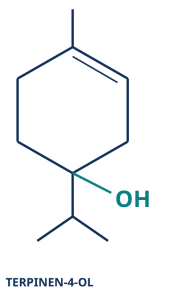
A monoterpene alcohol with lipophilic properties
PubChem CID 11230; NIST Chemistry WebBook, CAS 562-74-3. Akbarzadeh et al. Nanoscale Res Lett. 2013. DOI: 10.1186/1556-276X-8-102.
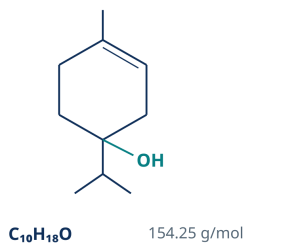
A defined molecular identity
A cyclic carbon skeleton carries one hydroxyl group. Terpinen-4-ol differs from α-terpineol and other terpineol isomers.
Relevance to formulation design
The molecular structure provides a rationale for active–lipid association strategies in phospholipid delivery systems.
Biological evidence
Three categories of biological evidence support application development
Hart et al. Inflamm Res. 2000. DOI: 10.1007/s000110050639. Tighe et al. Transl Vis Sci Technol. 2013. DOI: 10.1167/tvst.2.7.2. Francisconi et al. Braz Oral Res. 2020. DOI: 10.1590/1807-3107bor-2020.vol34.0050.
Inflammatory mediators
Human monocyte and mouse macrophage studies connect terpinen-4-ol with inflammatory-mediator production and cellular signaling.
Contact-dependent activity
Bacterial, fungal and Demodex experiments show concentration and contact-time responses in specific models.
Surface-associated biofilms
Studies separately assess biofilm formation, mature biomass, metabolic activity and adhesion-related gene expression.
The test material, model and endpoint determine how a result informs formulation development.
Biological evidence
Terpinen-4-ol reduces inflammatory-mediator production
Original Figure 3A, B and E. LPS-stimulated human monocytes, cultured for 40 h.
Hart et al. Inflamm Res. 2000. DOI: 10.1007/s000110050639.
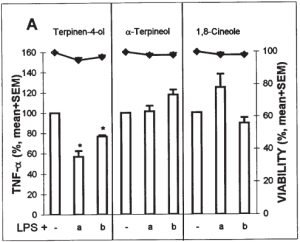
Figure labels: terpinen-4-ol; α-terpineol; 1,8-cineole; viability. Concentrations a/b and LPS conditions are specified in the text.
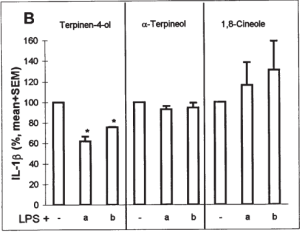
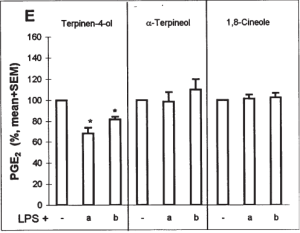
Terpinen-4-ol: a = 0.052%, b = 0.026% (v/v). LPS = 500 ng/mL. Three donors, triplicate wells. Mean + SEM; *P < 0.05.
Biological evidence
Inflammatory-mediator responses depend on material and exposure time
Original Table 3. Pure terpinen-4-ol and water-soluble tea tree oil components.
Hart et al. Inflamm Res. 2000. DOI: 10.1007/s000110050639.
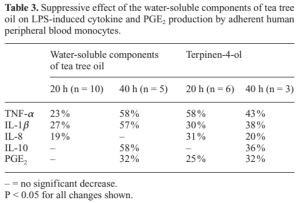
Adherent human peripheral blood monocytes, LPS-induced. – = no significant decrease; P<0.05 for all changes shown.
Pure terpinen-4-ol
At 0.052% v/v, TNF-α, IL-1β, IL-8 and PGE₂ all decreased.
IL-10 is an anti-inflammatory cytokine, so its reduction has a different biological meaning.
Biological evidence
Reduced IL-6 and TNF-α transcription in macrophages
Original Figure 1. RAW264.7 cell viability and LPS-induced cytokine gene expression.
Liu et al. Foods. 2024. DOI: 10.3390/foods13121842.

Figure labels: cell viability; relative mRNA expression; control; T-4-O = terpinen-4-ol.
IL-6 and TNF-α vary with tested concentration
This gene-expression study adds evidence from another cell model to the human-monocyte inflammatory-mediator findings.
Biological evidence
Immunoblots show changes in mTOR and NF-κB signaling
Original Figure 7A, shown in two parts with the same lane order.
Liu et al. Foods. 2024. DOI: 10.3390/foods13121842.
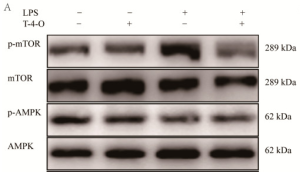
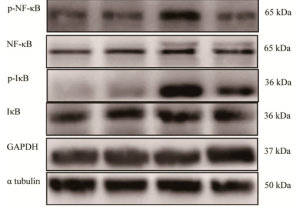
Lane order: control, T-4-O, LPS, LPS + T-4-O.
Biological evidence
Lower phosphorylation ratios versus LPS alone
Original Figure 7B. RAW264.7 cells pretreated with terpinen-4-ol 100 µmol/L before LPS stimulation.
Liu et al. Foods. 2024. DOI: 10.3390/foods13121842.
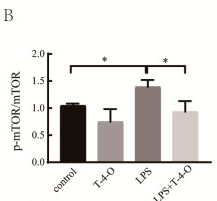
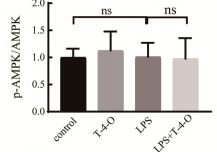
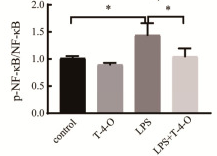
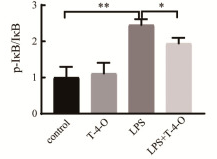
mTOR, NF-κB and IκB phosphorylation ratios were lower than in the LPS group. The corresponding AMPK comparison was not significant.
Biological evidence
Lower ECAR/OCR ratio after terpinen-4-ol treatment
Original Figure 2. Terpinen-4-ol 100 µmol/L for 2 h, followed by LPS 1 µg/mL for 6 h.
Liu et al. Foods. 2024. DOI: 10.3390/foods13121842.
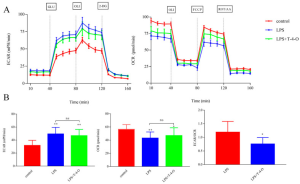
Figure labels: ECAR; OCR; time (min); ns. Original individual measurements and ratios retained.
An altered energy-metabolism ratio
The ECAR/OCR ratio decreased versus LPS alone. The corresponding comparisons for ECAR and OCR individually were not significant in the original figure.
Biological evidence
Selective responses of glutamine-metabolism genes
Original Figure 6. Four metabolism-related genes in RAW264.7 macrophages.
Liu et al. Foods. 2024. DOI: 10.3390/foods13121842.
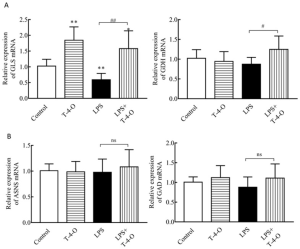
Gene responses differ
Versus LPS, GLS and GDH expression increased; ASNS and GAD showed no significant change in the same comparison.
Biological evidence
A proposed mechanism linking metabolism and inflammation
Original Figure 8. A mechanistic model proposed by the authors from cell experiments.
Liu et al. Foods. 2024. DOI: 10.3390/foods13121842.
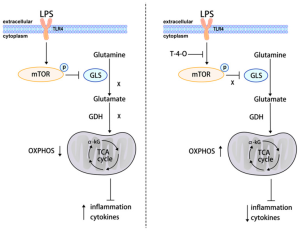
Figure labels: extracellular/cytoplasm; glutamine/glutamate; TCA cycle; OXPHOS; inflammatory cytokines.
Integrating cell-level mechanisms
Glutamine metabolism, mTOR and NF-κB are linked to inflammatory signaling. The figure presents the authors’ mechanistic interpretation of their results.
Biological evidence
Concentration-dependent bactericidal activity
Original Figure 1. Methicillin-resistant Staphylococcus aureus (MRSA) ATCC 43300; viable plate counts.
Cheng et al. BMC Microbiol. 2021. DOI: 10.1186/s12866-021-02348-2.
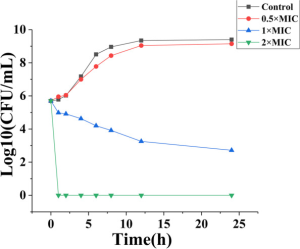
Figure labels: control; MIC; time (h); log10(CFU/mL).
Inhibitory and bactericidal concentrations differ
MIC: 0.16% v/v
MBC: 0.32% v/v
The authors report no recoverable viable bacteria within 2 h at 0.32%.
Biological evidence
Different responses in biofilm formation and mature biomass
Original Figure 2. Crystal violet assay, MRSA ATCC 43300.
Cheng et al. BMC Microbiol. 2021. DOI: 10.1186/s12866-021-02348-2.
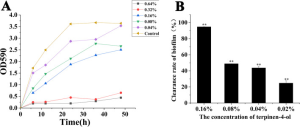
Figure labels: time (h); clearance of biofilm; OD590 crystal-violet absorbance.
Formation inhibition and biomass removal are different endpoints
At 0.16% v/v: 24 h biofilm-formation inhibition was 48.09 ± 0.97%; mature-biofilm biomass removal was 93.90 ± 3.33%.
Biological evidence
Confocal imaging shows altered biofilm viability
Original Figure 3. Preformed MRSA biofilm; LIVE/DEAD staining.
Cheng et al. BMC Microbiol. 2021. DOI: 10.1186/s12866-021-02348-2.
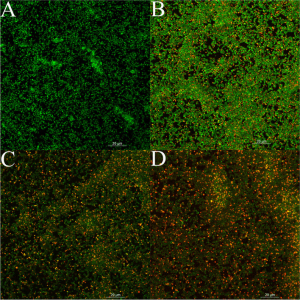
Images show a concentration response
A: untreated
B: 0.04% v/v
C: 0.08% v/v
D: 0.16% v/v
Green: viable cells
Red: membrane-compromised cells
Biological evidence
Reduced extracellular DNA in treated biofilms
Original Figure 9. eDNA normalized to relative biofilm biomass.
Cheng et al. BMC Microbiol. 2021. DOI: 10.1186/s12866-021-02348-2.
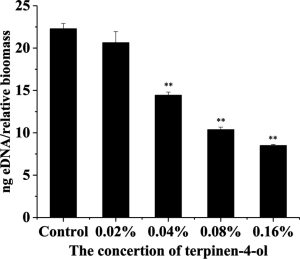
Figure labels: ng eDNA/relative biomass; control; concentration of terpinen-4-ol.
An effect related to the biofilm matrix
At 0.16% v/v, eDNA decreased by 61.88 ± 0.58% versus control, informing research on microbial growth and biofilm structure.
Biological evidence
An animal infection model provides antifungal evidence
Original Figure 1. Candida albicans SA-40; experimental vaginal candidiasis.
Mondello et al. BMC Infect Dis. 2006. DOI: 10.1186/1471-2334-6-158.
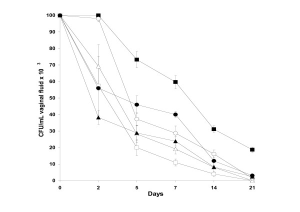
Original treatment groups
▲ Terpinen-4-ol 1% v/v
■ Vehicle control
● Fluconazole 100 µg
□ Tea tree oil 5% v/v
○ Tea tree oil 1% v/v
△ Tea tree oil 2.5% v/v
Five rats per group. Intravaginal dosing at 1, 24 and 48 h after infection, 0.1 mL per dose. Mean ± SE.
Biological evidence
Antifungal activity also observed against an azole-resistant strain
Original Figure 2. C. albicans AIDS-68; experimental vaginal candidiasis in rats.
Mondello et al. BMC Infect Dis. 2006. DOI: 10.1186/1471-2334-6-158.
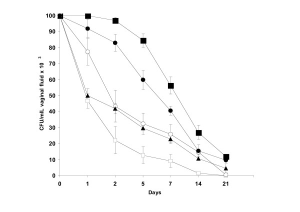
Original treatment groups
▲ Terpinen-4-ol 1% v/v
■ Vehicle control
● Fluconazole 100 µg
□ Tea tree oil 5% v/v
○ Tea tree oil 1% v/v
Five rats per group. Terpinen-4-ol 1% v/v. Administration was vaginal in this animal model.
Delivery design
PURISOME® provides a phospholipid delivery structure
PuriPharm Co. Ltd. PURISOME technology brand document, v1.0, July 17, 2026. Akbarzadeh et al. Nanoscale Res Lett. 2013. DOI: 10.1186/1556-276X-8-102.
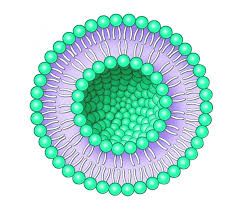
Phospholipid bilayer
Polar heads face the internal and external aqueous phases; hydrophobic tails form the bilayer interior.
Active–lipid association
Lipid-associated actives can disperse into formulations with the vesicular system. Their distribution depends on carrier composition.
Structural schematic, not a measurement of particle size or active localization in this product.
Delivery design
Encapsulation links formulation dispersion to local contact
Akbarzadeh et al. Nanoscale Res Lett. 2013. DOI: 10.1186/1556-276X-8-102. PuriPharm Co. Ltd. PURISOME technology brand document, v1.0, July 17, 2026.
Dispersion
Dispersed carriers organize the lipophilic active, providing a design route for incorporation into aqueous formulations.
Local contact
The base, carrier and use method jointly determine contact at the target surface and the available fraction of active.
User experience
Odor, appearance, spreading and residue, alongside active retention, are measurable development variables.
Design goal: consistent surface delivery and appropriate finished-product experience.
Skin care
Clarifying care draws on microbial and inflammatory-mediator evidence
Lee et al. J Food Drug Anal. 2013. DOI: 10.1016/j.jfda.2013.05.007. Hart et al. Inflamm Res. 2000. DOI: 10.1007/s000110050639.
Blemish-prone skin
Microbial evidence
Growth-inhibition results support evaluation of clarifying formulations under actual contact conditions.
Inflammatory-mediator evidence
Human-monocyte findings support further assessment of skin comfort and visible redness in finished products.
Development focus: surface cleansing, skin appearance and perceived comfort.
Skin care
In vitro inhibition of bacteria associated with blemish-prone skin
The experiment distinguished individual components, whole tea tree oil and reconstituted mixtures.
Lee et al. J Food Drug Anal. 2013. DOI: 10.1016/j.jfda.2013.05.007.
Cutibacterium acnes
Cutibacterium acnes; the paper uses the former name Propionibacterium acnes.
Staphylococcus aureus
Staphylococcus aureus
Terpinen-4-ol inhibited both microorganisms.
Active-component selection matters
In reconstituted tea tree oil mixtures, the terpinen-4-ol proportion correlated positively with activity against C. acnes.
A defined active identity helps focus formulation development for blemish-prone skin.
Skin care
A tea tree oil gel trial provides human skin-care context
5% tea tree oil gel versus placebo; 60 participants; 45 days.
Enshaieh et al. Indian J Dermatol Venereol Leprol. 2007. DOI: 10.4103/0378-6323.30646.
| Study element | Reported information |
| Design | Randomized, double-blind, placebo-controlled |
| Groups | Tea tree oil gel: n = 30; placebo: n = 30 |
| Assessments | Total lesion count and acne severity index, assessed every 15 days |
| Endpoints | Both improved significantly versus placebo |
This human evidence applies to a gel containing whole tea tree oil.
Skin care
Skin-care concepts: translating evidence into formulation roles
Lee et al. J Food Drug Anal. 2013. DOI: 10.1016/j.jfda.2013.05.007. Hart et al. Inflamm Res. 2000. DOI: 10.1007/s000110050639.
Clarifying serum or gel
Need: localized care for blemish-prone skin. Role: incorporate a defined active and evaluate dispersion and sensory properties.
Comfort-care lotion
Need: comfortable daily care. Role: combine with an appropriate moisturizing base and measure perceived comfort.
Facial cleanser
Need: daily surface cleansing. Role: assess active availability after surfactant mixing and under actual rinsing conditions.
Eyelid and periocular care
External eyelid, lash-root and periocular care involve different sites
Fromstein et al. Clin Optom. 2018. DOI: 10.2147/OPTO.S142708. Wang et al. Transl Vis Sci Technol. 2024. DOI: 10.1167/tvst.13.11.22.
External care-area schematic and published in vivo confocal images of eyelash follicles.

Periocular skin
Cosmetic care of the skin around the eyes
External eyelid and lash roots
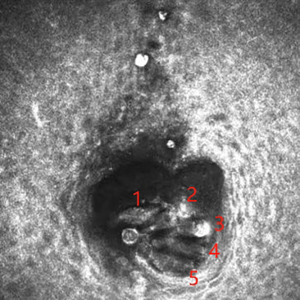
Original Figure 6
Demodex within follicles
Demodex can inhabit eyelash follicles. Numbers in the original image mark mite positions within the same follicle.
Development focus: external surface cleansing and controlled contact at lash roots.
Eyelid and periocular care
Terpinen-4-ol leads in a tea tree oil component comparison
Upper half of original Table 2. Adult Demodex mites; mineral-oil dilution; observation for up to 150 min.
Tighe et al. Transl Vis Sci Technol. 2013. DOI: 10.1167/tvst.2.7.2.
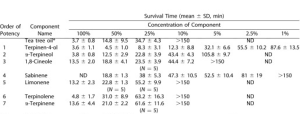
Survival time: mean ± SD, min; potency order as in the source. N=6 unless stated. *TTO values from Gao et al. (2005). ND and original blank areas are retained; blanks are not converted to 0 or ND.
Mean ± SD; n = 6 unless otherwise indicated. * Tea tree oil data are from Gao et al. (2005).
ND: not determined; reasons follow in the next section.
Eyelid and periocular care
Other tea tree oil constituents show different activity
Lower half of original Table 2, with column headers repeated for readability.
Tighe et al. Transl Vis Sci Technol. 2013. DOI: 10.1167/tvst.2.7.2.
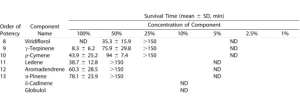
Survival time: mean ± SD, min; N=6 unless stated. ND means not determined; reasons and solubility limits are explained in the original and this section. Blank and spanning blank areas retain their source positions without inferred results.
ND: not determined. Reasons include survival beyond 150 min, unavailability of δ-cadinene/globulol, or insolubility of sabinene/viridiflorol at the relevant concentration. n = 6 unless otherwise indicated.
Eyelid and periocular care
An external-cleansing case documents changes in the lid margin and mites
Original Figure 1. One patient aged 61; eyelid cleansing twice daily for 8 weeks.
Tighe et al. Transl Vis Sci Technol. 2013. DOI: 10.1167/tvst.2.7.2.
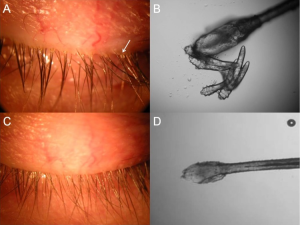
Lash-root appearance and mite counts
A–B: baseline
C–D: after 8 weeks
Mites on 8 sampled eyelashes decreased from 22 to 0. This was an uncontrolled single-case observation.
Eyelid and periocular care
Combined eyelid care sustained the reduction in mite counts
Wang et al. Transl Vis Sci Technol. 2024. DOI: 10.1167/tvst.13.11.22.
Randomized, open-label trial, n = 40. Month 3 was one month after intervention stopped.
Original Figure 2 and selected data from original Table 2.
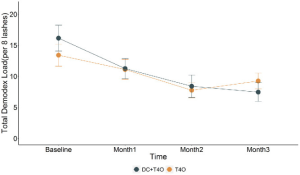
Figure labels: total Demodex; baseline; months 1/2/3; T4O wipes; DC+T4O deep cleaning plus wipes.
Two care regimens
Both groups used terpinen-4-ol cleansing wipes twice daily for 2 months.
The combination group also received deep cleaning with 0.01% hypochlorous acid at baseline and months 1 and 2.
| Mite-count change, mean ± SD | Month 2 |
| Wipes | −5.65 ± 6.03 |
| Wipes + deep cleaning | −7.75 ± 6.91 |
| Between-group P | 0.312 |
| Mite-count change, mean ± SD | Month 3 |
| Wipes | −4.15 ± 6.91 |
| Wipes + deep cleaning | −8.70 ± 6.81 |
| Between-group P | 0.043 |
Eyelid and periocular care
Mite-count changes vary across follow-up visits
Original Figure 3. Within-group comparisons; month 3 was one month after intervention stopped.
Wang et al. Transl Vis Sci Technol. 2024. DOI: 10.1167/tvst.13.11.22.
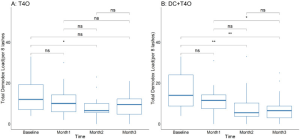
Figure labels: T4O; DC+T4O; baseline; month; ns.
Persistence during follow-up
Counts decreased significantly at month 2 in the wipes group and at months 2 and 3 in the combination group. Comparisons are against each group’s own baseline.
Eyelid and periocular care
Between-group symptom-score differences were not significant
Original Figure 4. Ocular Surface Disease Index (OSDI).
Wang et al. Transl Vis Sci Technol. 2024. DOI: 10.1167/tvst.13.11.22.
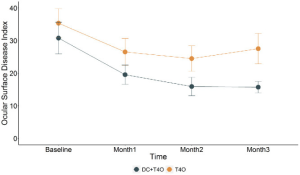
Figure labels: Ocular Surface Disease Index; baseline; month; T4O and DC+T4O regimens.
Additional patient-reported symptom evidence
OSDI trended downward in both groups. The combination group improved significantly from baseline at months 2 and 3, but between-group differences were not statistically significant.
Eyelid and periocular care
Another wipes trial reported greater symptom improvement
Terpinen-4-ol + hyaluronate wipes versus diluted baby shampoo; 24 participants per group.
Arici et al. Eye. 2022. DOI: 10.1038/s41433-021-01642-7.
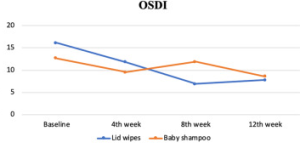
Figure labels: lid wipes; baby shampoo; baseline; weeks 4/8/12; OSDI.
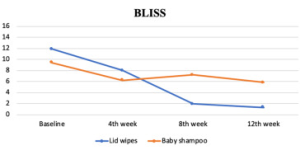
Figure labels: BLISS; lid wipes; baby shampoo; original follow-up times.
Week-8 OSDI change: −9.2 ± 9.8 with wipes versus −0.8 ± 9.9 with shampoo (P = 0.024).
Eyelid and periocular care
Both care methods reduced measured mite counts
Selected and rearranged data from original Table 3. Mites per sampled eyelash; mean ± SD.
Arici et al. Eye. 2022. DOI: 10.1038/s41433-021-01642-7.
| Group / comparison | T4O + hyaluronate wipes |
| Baseline | 1.52 ± 1.54 |
| Week 4 | 0.07 ± 0.16 |
| Week 8 | 0 |
| Week 12 | 0.01 ± 0.05 |
| Group / comparison | Diluted baby shampoo |
| Baseline | 1.21 ± 0.95 |
| Week 4 | 0.17 ± 0.32 |
| Week 8 | 0.01 ± 0.05 |
| Week 12 | 0 |
| Group / comparison | Between-group P |
| Baseline | 0.868 |
| Week 4 | 0.415 |
| Week 8 | 0.317 |
| Week 12 | 0.317 |
Both groups declined from baseline. Between-group patterns differed for symptom improvement and mite counts.
Eyelid and periocular care
External eyelid products require controlled contact conditions
Tighe et al. Transl Vis Sci Technol. 2013. DOI: 10.1167/tvst.2.7.2. Wang et al. Transl Vis Sci Technol. 2024. DOI: 10.1167/tvst.13.11.22.
Cleansing wipes
Need: controlled lash-root cleansing. Role: define delivered amount, wetness, contact method and residue.
Cleansing foam
Need: convenient external eyelid cleansing. Role: evaluate foam performance, rinsing and migration toward the eye.
Periocular skin-care formulation
Need: comfortable care around the eyes. Role: select an appropriate base and validate repeated-use tolerance at the intended site.
Scalp and hair care
Whole tea tree oil inhibits multiple Malassezia species
Whole tea tree oil; 54 isolates from 5 species. Agar dilution; incubation at 32°C for 7 days.
Hammer et al. Antimicrob Agents Chemother. 2000. DOI: 10.1128/AAC.44.2.467-469.2000.
| Malassezia species | Isolates, n | Tea tree oil MIC range, % v/v |
| M. furfur | 12 | 0.12–0.25 |
| M. sympodialis | 32 | 0.016–0.25 |
| M. slooffiae | 3 | 0.12–0.25 |
| M. globosa | 5 | 0.03–0.12 |
| M. obtusa | 2 | 0.12 |
Species and culture conditions affect results. These data provide context for scalp-related activity testing in target formulations.
Scalp and hair care
Terpinen-4-ol inhibits canine Malassezia isolates
Original Table 2. M. pachydermatis from canine clinical samples and a reference strain.
Čonková et al. Vet Res Commun. 2024. DOI: 10.1007/s11259-024-10446-5.
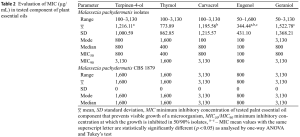
Isolates and reference strain CBS 1879 are shown separately. x̄ = mean; SD = standard deviation; MIC prevents visible growth; MIC₅₀/MIC₉₀ inhibit 50%/90% of isolates. The source footnote states that means with the same superscript letter differ significantly (p<0.05; one-way ANOVA and Tukey’s test); its wording is retained without reinterpretation.
Direct data on the single constituent
Terpinen-4-ol MIC₅₀: 800 µg/mL
MIC₉₀: 3,130 µg/mL
The species and isolate source differ from those in human scalp Malassezia research.
Scalp and hair care
Phospholipase phenotypes change after exposure
Original Figure 2. M. pachydermatis isolates treated at each isolate’s corresponding MIC.
Čonková et al. Vet Res Commun. 2024. DOI: 10.1007/s11259-024-10446-5.
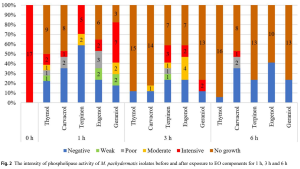
Figure legend: negative, weak, poor, moderate and intensive phospholipase activity; no growth. Exposure times: 1, 3 and 6 h.
Growth and enzyme activity require separate interpretation
The original classification distinguishes phospholipase activity from no growth. “Terpinen” in the figure denotes terpinen-4-ol.
Scalp and hair care
A shampoo trial provides evidence for dandruff-related care
5% tea tree oil shampoo, daily for 4 weeks. Randomized, single-blind, parallel-group trial, n = 126.
Satchell et al. J Am Acad Dermatol. 2002. DOI: 10.1067/mjd.2002.122734.
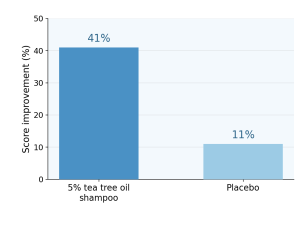
41% versus 11%
Improvement in the quadrant-area–severity score
P < 0.001
This composite endpoint includes both affected area and severity.
Redrawn from values in the original abstract. Percentages describe score improvement, not a reduction in dandruff particle counts.
Scalp and hair care
Scalp concepts balance cleansing, contact and comfort
Hammer et al. Antimicrob Agents Chemother. 2000. DOI: 10.1128/AAC.44.2.467-469.2000. Satchell et al. J Am Acad Dermatol. 2002. DOI: 10.1067/mjd.2002.122734. Hart et al. Inflamm Res. 2000. DOI: 10.1007/s000110050639.
Dandruff-care shampoo
Need: scalp cleansing and visible-dandruff management. Role: test activity in the surfactant system at actual in-use dilution.
Scalp cleanser
Need: removal of surface buildup. Role: combine microbial endpoints with coverage, rinsing and scalp-experience assessments.
Scalp serum
Need: localized leave-on care. Role: study residence, residue and comfort, with dedicated tolerability testing.
Oral care
Oral-cleansing research distinguishes three laboratory endpoints
Bordini et al. Biofouling. 2018. DOI: 10.1080/08927014.2018.1504926. Francisconi et al. Braz Oral Res. 2020. DOI: 10.1590/1807-3107bor-2020.vol34.0050.
01
Planktonic inhibition
Microbial growth in suspension
02
Surface-associated biofilms
Metabolic activity on material surfaces
03
Adhesion-related responses
Expression changes in specific genes
Bordini et al. reported reduced gbpA and slpA expression after terpinen-4-ol treatment.
Oral care
Candida reference strains respond to a concentration series
Original Figure 1A–B. C. albicans SC5314 and ATCC90028; XTT metabolic activity.
Francisconi et al. Braz Oral Res. 2020. DOI: 10.1590/1807-3107bor-2020.vol34.0050.
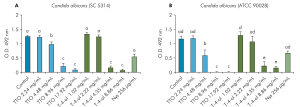
Figure labels: TTO; T-4-ol; nystatin; control; O.D.492 nm XTT absorbance.
Test exposure: 24 h. Different letters indicate statistically significant differences between groups.
Oral care
Clinical Candida isolates show differing responses
Original Figure 1C–D. Clinical genotypes A and B; XTT metabolic activity.
Francisconi et al. Braz Oral Res. 2020. DOI: 10.1590/1807-3107bor-2020.vol34.0050.
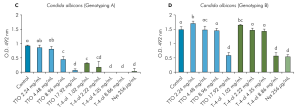
Figure labels: genotypes A/B; TTO; T-4-ol; nystatin.
Strain differences indicate the need to assess a panel of relevant microorganisms in the target formulation.
Oral care
Strain-dependent biofilm responses on denture resin
Original Figure 2. Biofilm grown on denture resin for 72 h, then treated for 60 s.
Francisconi et al. Braz Oral Res. 2020. DOI: 10.1590/1807-3107bor-2020.vol34.0050.
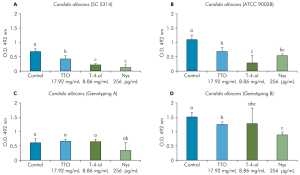
Figure labels: control; TTO; T-4-ol; Nys; original statistical letters and concentrations retained.
8.86 mg/mL
Terpinen-4-ol treatment concentration
Reference strains
XTT signals decreased, with statistical letters differing from control.
For clinical genotypes A and B, the terpinen-4-ol and control groups shared statistical letters.
Oral care
Confocal imaging shows altered Candida biofilm structure
Original Figure 3. A: ATCC 90028; B: SC 5314. Denture-resin biofilms grown for 72 h and treated for 60 s.
Francisconi et al. Braz Oral Res. 2020. DOI: 10.1590/1807-3107bor-2020.vol34.0050.
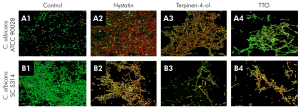
Figure labels: control; nystatin; terpinen-4-ol; TTO. A/B correspond to the strains specified in the text.
Oral care
Mouthrinse performance depends on clinical study design
Randomized, double-blind, 4 × 4 crossover trial. Twenty participants; 5-day plaque-regrowth model.
Rahman et al. Contemp Clin Dent. 2014. DOI: 10.4103/0976-237X.142813.
| Study element | Results and interpretation |
| Test formulation | 1.5% tea tree oil mouthrinse, twice daily |
| Comparators | 0.12% chlorhexidine, 0.05% CPC and colored-water placebo |
| Plaque index | No significant difference between tea tree oil and placebo |
| Gingival bleeding | No significant difference among rinses after 5 days |
Mechanical oral hygiene stopped during each test period, with a 2-week washout between periods.
Oral care
An adjunctive mouthrinse trial assesses plaque and gingival indices
1% v/v tea tree oil mouthrinse versus 0.12% chlorhexidine; 14 participants per group; 15 days.
Menat et al. Front Oral Health. 2026. DOI: 10.3389/froh.2026.1727735.
| Endpoint | Plaque index |
| Tea tree oil: baseline → day 15 | 0.94 ± 0.33 → 0.45 ± 0.13 |
| Chlorhexidine: baseline → day 15 | 0.69 ± 0.37 → 0.19 ± 0.16 |
| Between-group P for change | 0.889 |
| Endpoint | Gingival index |
| Tea tree oil: baseline → day 15 | 0.54 ± 0.19 → 0.19 ± 0.07 |
| Chlorhexidine: baseline → day 15 | 0.49 ± 0.13 → 0.18 ± 0.11 |
| Between-group P for change | 0.560 |
Both groups improved from baseline (P < 0.001). All participants also received scaling and oral-hygiene instruction.
Oral care
Bacterial counts yield a different comparison
Selected data from original Table 1 and microbiology results; mean log(CFU/mL) ± SD.
Menat et al. Front Oral Health. 2026. DOI: 10.3389/froh.2026.1727735.
| Microbial category | Streptococcus spp. |
| Tea tree oil: baseline → day 15 | 5.45 ± 1.07 → 4.71 ± 1.16 |
| Chlorhexidine: baseline → day 15 | 5.08 ± 1.17 → 3.45 ± 1.50 |
| Between-group P | 0.006 |
| Microbial category | Total anaerobes |
| Tea tree oil: baseline → day 15 | 5.90 ± 0.83 → 5.42 ± 0.82 |
| Chlorhexidine: baseline → day 15 | 5.50 ± 1.18 → 4.39 ± 1.22 |
| Between-group P | < 0.001 |
Bacterial counts fell more with chlorhexidine. Clinical indices and microbiological endpoints answer different questions.
Oral care
Participant-reported taste informs oral formulation design
Original Figure 2. Experiences reported after 15 days; n = 14 per group.
Menat et al. Front Oral Health. 2026. DOI: 10.3389/froh.2026.1727735.
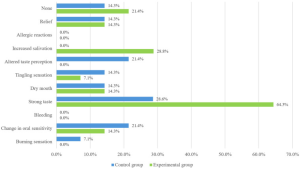
Figure labels: none; relief; allergic reactions; increased salivation; altered taste perception; tingling; dry mouth; strong taste; bleeding; change in oral sensitivity; burning. Control and experimental groups retained.
Taste is an important formulation variable
Test: 1% tea tree oil mouthrinse.
Control: 0.12% chlorhexidine.
“Strong taste” was reported by 64.3% and 28.6%, respectively.
Oral care
Oral concepts focus on surface contact and biofilms
Bordini et al. Biofouling. 2018. DOI: 10.1080/08927014.2018.1504926. Francisconi et al. Braz Oral Res. 2020. DOI: 10.1590/1807-3107bor-2020.vol34.0050.
Toothpaste
Need: daily surface cleansing. Role: evaluate activity in abrasive/surfactant bases, accounting for saliva dilution and brief contact.
Mouthrinse
Need: broader surface contact. Role: assess dispersion, taste, exposure time and residual biofilm activity in a rinsing model.
Localized oral-care formulation
Need: care of a target surface. Role: assess residence and material interactions alongside oral-mucosal tolerability.
Formulation development
Four application areas define formulation priorities
| Application | Skin care |
| Target need | Clarifying and comfort care |
| Evidence focus | Bacterial studies + monocyte-mediator research |
| Formats | Serums, gels, lotions, cleansers |
| Application | Eyelid and periocular care |
| Target need | External cleansing |
| Evidence focus | Mite-contact experiments + clinical care regimens |
| Formats | Wipes, foams, skin-care formulations |
| Application | Scalp and hair care |
| Target need | Scalp cleansing and dandruff-related concerns |
| Evidence focus | Malassezia experiments + tea tree oil shampoo trial |
| Formats | Shampoos, cleansers, scalp serums |
| Application | Oral care |
| Target need | Cleansing of surface biofilms |
| Evidence focus | Biofilm metabolism + adhesion-related genes |
| Formats | Toothpastes, rinses, localized oral care |
These roles and formats are development concepts. Validation should account for each study’s material and model.
Formulation development
An active-content calculation example
Conditional calculation: assume 4-TERPINEOL active content of 20% w/w in the ingredient.
Calculation basis: active content assumed at 20% w/w, with ingredient addition also expressed as % w/w.
| Ingredient addition, % w/w | Calculated finished-product 4-TERPINEOL, % w/w |
| 0.50% | 0.10% |
| 1.00% | 0.20% |
| 2.00% | 0.40% |
Finished-product active content (%) = ingredient addition (%) × 0.20
The 20% mass-fraction basis requires confirmation in the specification. This table is arithmetic only, not a recommended use-level range.
Formulation development
Formulation testing should connect delivery design and use conditions
Akbarzadeh et al. Nanoscale Res Lett. 2013. DOI: 10.1186/1556-276X-8-102.
| Development question | Formulation assessment |
| Does the active remain uniformly dispersed? | Appearance, phase behavior and uniformity of active content after incorporation |
| Can the formulation maintain target performance? | Active content, physical stability and packaging compatibility over the intended shelf life |
| Do contact conditions match use? | Rinse dilution, contact time, wipe delivery or leave-on coverage |
| Is the finished product appropriate for the intended site? | Skin, eyelid or oral tolerance, with endpoints matching the intended cosmetic claim |
Processing temperature, pH, shear and addition stage should follow the technical documentation for this product.
PuriPharm Co. Ltd.
Developing targeted care with a defined active
PuriPharm Co. Ltd. PURISOME technology brand document, v1.0, July 17, 2026.
NanoActive 4-TERPINEOL 20%
Terpinen-4-ol Nanoliposomes
Biological research on terpinen-4-ol
PURISOME® phospholipid delivery design
Skin, eyelid, scalp and oral-care development
Develop care products
with PuriPharm
Discuss sample evaluation, formulation fit and efficacy-evidence plans for the intended application.
Supported by PURISOME® Liposome Technology