Skin and scalp care applications
Azelaic acid informs development for skin tone, blemish-prone skin, and redness, with preclinical leads for scalp applications.
01 · Even skin tone and post-acne marks
Pigment-related enzyme mechanisms and randomized studies of melasma and post-inflammatory hyperpigmentation.
02 · Blemish-prone skin
Keratinization, microbial, and inflammatory mechanisms, supported by vehicle-controlled clinical evidence.
03 · Redness and skin comfort
KLK5/cathelicidin mechanisms and rosacea studies inform formulations that prioritize tolerability.
04 · Scalp and follicle research
5α-reductase, catalase, and Gli/Shh findings provide preclinical research leads.
20 rosacea / 16 acne / 7 melasma trials
[1] Todea et al., Polymers, 2021, DOI 10.3390/polym13234091 • [2] King et al., J Cosmet Dermatol, 2023, DOI 10.1111/jocd.15923
PuriPharm Co. Ltd.
Azelaic acid ingredient profile
Azelaic acid is a saturated nine-carbon dicarboxylic acid.
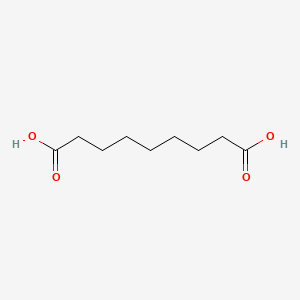
Original 2D chemical structure / PubChem CID 2266
|
|
|
|---|---|
|
|
|
|
|
|
|
|
|
|
|
|
Salts and derivatives require separate assessment of identity, solubility, and efficacy. Their data are not directly interchangeable with azelaic acid data.
[13] PubChem CID 2266, Azelaic Acid • Structure source: PubChem 2D conformer
PuriPharm Co. Ltd.
Biotechnological production
PuriActives® BioAzelaic is azelaic acid produced by a biotechnological process.
Published research includes enzymatic and chemoenzymatic conversion of oleic-acid-derived intermediates. Production origin alone does not establish biological efficacy.
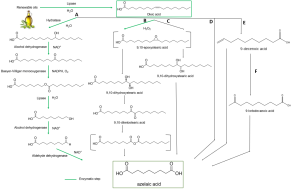
Published literature routes, rather than PuriPharm’s proprietary production process.
Published azelaic acid production routes; green arrows indicate enzymatic steps
[1] Todea et al., Polymers, 2021, DOI 10.3390/polym13234091 • Original Figure 1.
The original scheme retains routes A–F, enzyme names, intermediates, chemical structures, and cofactors H₂O, H₂O₂, NAD⁺, NADPH, and O₂. Green arrows identify enzymatic steps.
PuriPharm Co. Ltd.
Mechanisms relevant to skin care
Azelaic acid: multiple biological pathways
Finished-product claims require efficacy evidence for the relevant formulation.
[3] Schallreuter and Wood, 1990, PMID 2114832 • [5] Blaskovich et al., 2019, DOI 10.1038/s41598-019-50746-4 • [6] Coda et al., 2013, PMID 23871720 • [12] Feng et al., 2024, DOI 10.2147/CCID.S485237
PuriPharm Co. Ltd.
Pigment-related enzyme targets
Research reports that azelaic acid acts on tyrosinase and thioredoxin reductase.
Targets
Melanin production
Tyrosinase regulates melanin synthesis. Ki describes the interaction in an isolated-enzyme assay.
Ki for competitive inhibition of tyrosinase
Epidermal redox biology
Thioredoxin reductase participates in epidermal redox processes. Visible skin tone and pigmentation benefits still require product evaluation.
Ki for inhibition of membrane-associated thioredoxin reductase
Enzyme inhibition constants do not directly demonstrate finished-product efficacy.
[3] Schallreuter and Wood, Arch Dermatol Res, 1990, DOI 10.1007/BF00372617; PMID 2114832
PuriPharm Co. Ltd.
Clinical research in melasma
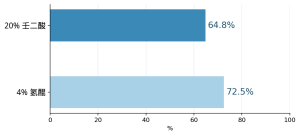
Seven randomized studies found that 20% azelaic acid outperformed vehicle for melasma severity and overall assessment.
Proportion with good/excellent improvement in one 24-week study
|
|
|
|---|---|
|
|
|
|
|
|
Comparisons with 4% hydroquinone did not show a consistent significant difference. Interpret findings in the context of vehicle, duration, and outcome definitions.
Results from a single controlled study. The systematic review found no consistent advantage of either treatment.
[2] King et al., J Cosmet Dermatol, 2023, DOI 10.1111/jocd.15923 • Systematic review including 7 melasma RCTs.
PuriPharm Co. Ltd.
A 12-week randomized study shows improvement in post-acne hyperpigmentation
60 participants / 20% azelaic acid cream / Twice daily / 12 weeks
Within-group time effect: P < 0.001
Mean PAHI in the azelaic acid group: baseline to week 12
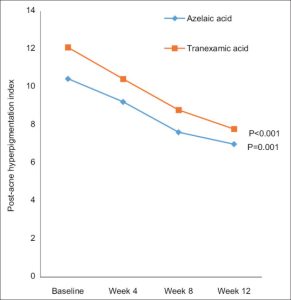
Post-acne hyperpigmentation index over time
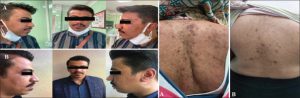
Representative azelaic acid participant photographs before and after treatment
[4] Sobhan et al., J Res Med Sci, 2023, DOI 10.4103/jrms.jrms_443_22 • Original Figures 2 and 3.
Figure key: PAHI = post-acne hyperpigmentation index. The original azelaic acid and tranexamic acid curves and statistical annotations are retained.
PuriPharm Co. Ltd.
Mechanisms relevant to blemish-prone skin
01 · Keratinization
Modulation of keratinocyte differentiation informs research on comedones and skin surface condition.
02 · Microbial environment
In vitro activity requires relatively high concentrations and varies with assay conditions and pH.
03 · Inflammatory signaling
Reactive oxygen species and inflammatory mediators are relevant targets in blemish-prone skin and redness research.
In vitro broth microdilution assay
In vitro antibacterial activity is weaker than that of antibiotics. Reported activity was greater at pH 5.6 than at pH 7.0.
Evaluate microbial activity and cosmetic performance at the intended pH and under actual use conditions.
[5] Blaskovich et al., Sci Rep, 2019, DOI 10.1038/s41598-019-50746-4 • [12] Feng et al., 2024, DOI 10.2147/CCID.S485237
PuriPharm Co. Ltd.
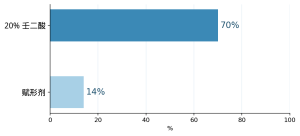
Comedone reduction in controlled studies
Four of 5 randomized studies reporting comedone outcomes found a clear difference between azelaic acid and vehicle.
Mean comedone reduction
|
|
|
|---|---|
|
|
|
|
|
|

Good/excellent overall improvement: 20% azelaic acid versus oral tetracycline, RR 0.97 [0.89–1.05], n = 594
[2] King et al., J Cosmet Dermatol, 2023, DOI 10.1111/jocd.15923 • Comedone analysis and original Figure 7.
The forest plot retains events, sample sizes, weights, random-effects risk ratios, and 95% CIs. Left favors tetracycline; right favors azelaic acid.
PuriPharm Co. Ltd.
Innate immunity and redness
|
|
|
|---|---|
|
|
|
|
|
|
|
|
|
Formulation evaluation
Visible redness, comfort, and tolerability require evaluation of the finished formula.
In a 16-week open-label study, 15% azelaic acid gel was associated with reduced KLK5/cathelicidin-related expression.
Supporting models included cultured keratinocytes and mouse skin. Serine protease activity fell significantly in the subgroup with high baseline activity.
[6] Coda et al., J Am Acad Dermatol, 2013, DOI 10.1016/j.jaad.2013.05.019; PMID 23871720
PuriPharm Co. Ltd.
Clinical findings in rosacea
Inflammatory lesion reduction at 12 weeks: azelaic acid versus vehicle
Pooled mean difference in inflammatory lesions [−3.64, −2.00]
Treatment success with 15% azelaic acid [1.19–1.48]; I² = 0%
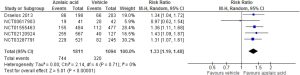
Treatment success, 5 RCTs, n = 2,905
[2] King et al., J Cosmet Dermatol, 2023, DOI 10.1111/jocd.15923 • Original Figure 6 and pooled lesion analysis.
The forest plot retains all five trials and the pooled result. Left favors vehicle; right favors azelaic acid.
PuriPharm Co. Ltd.
Tolerability and formulation design
Application reactions in clinical studies
Early use may cause itching, burning, or stinging. Dryness and erythema can affect comfort during repeated use. In the PAHI study, early erythema and burning were reported more often in the azelaic acid group.
Formulation priorities
Screen vehicle, pH, and physical form together. Assess stinging, dryness, and after-feel during early and repeated use. Address both barrier support and comfort.
[2] King et al., 2023, DOI 10.1111/jocd.15923 • [4] Sobhan et al., 2023, DOI 10.4103/jrms.jrms_443_22
PuriPharm Co. Ltd.
In vitro inhibition of 5α-reductase
An in vitro human skin study found concentration-dependent inhibition of 5α-reductase activity by azelaic acid.
Experimental system
In vitro human skin preparation; 1,2-[³H]-testosterone substrate; 5α-reductase activity outcome; azelaic acid concentration series.
Concentration at which inhibition was detectable
Concentration producing complete inhibition in the assay
Application validation
In vitro enzyme inhibition does not establish hair-growth or anti-hair-loss efficacy in humans.
Validate follicular models before assessing predefined human scalp outcomes.
[8] Stamatiadis et al., Br J Dermatol, 1988, DOI 10.1111/j.1365-2133.1988.tb03474.x; PMID 3207614
PuriPharm Co. Ltd.
Catalase responses in follicular cells
The catalase response to azelaic acid was cell-type-specific in mouse follicular cells.
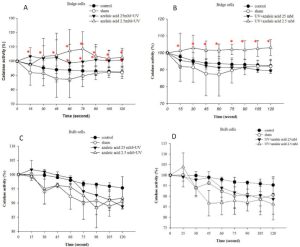
A: bulge cells; B: bulge cells; C: bulb cells; D: bulb cells
Bulge cells: significantly higher catalase activity. Bulb cells: no significant change. Azelaic acid 2.5 or 25 mM; UVB 20 mJ/cm². Mouse vibrissa follicular cell system.
Preclinical findings do not directly establish cosmetic efficacy in humans.
Catalase activity in follicle-derived cells / Original Figure 1.
[7] Amirfakhryan et al., Avicenna J Phytomed, 2020;10:460–471; PMID 32995324 • Original Figure 1.
Original axes: catalase activity (%) and time (seconds). Control, UVB, azelaic acid concentrations, combined conditions, error bars, and statistical annotations are retained.
PuriPharm Co. Ltd.
Gli and Shh responses in follicular models
Azelaic acid upregulated Gli transcripts, while the Shh protein response depended on the presence of minoxidil.
Gli1 mRNA after 25 mM azelaic acid
Gli2 mRNA after 25 mM azelaic acid
Single-agent transcription findings / Mouse follicle-derived cells
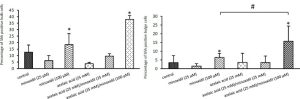
Shh-positive bulb and bulge cells / Quantification panels from original Figure 2.
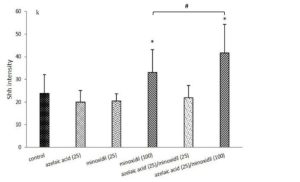
Shh intensity in follicular organ culture / Quantification panel from original Figure 3.
[7] Amirfakhryan et al., 2020, PMID 32995324 • Quantification panels from original Figures 2 and 3.
The original concentration labels, single and combination treatments, Shh-positive cell percentages, Shh intensity, and statistical symbols are retained.
PuriPharm Co. Ltd.
Scalp product development and validation
|
|
|
|
|---|---|---|
|
|
|
|
|
|
|
|
|
|
|
|
|
|
|
|
Human hair-growth claims and hair-fiber care benefits require separate, targeted validation.
[7] Amirfakhryan et al., 2020, PMID 32995324 • [11] Salimi et al., 2020, DOI 10.34172/apb.2020.028
PuriPharm Co. Ltd.
Solubility and physical form
Reported pKa values for the two carboxyl groups
Upper water-solubility value reported in the patent background
Two formulation routes
Dissolved systems
Screen glycol–water ratios, ionization, and recrystallization risk at the target pH and over the intended storage range.
Solid dispersions
Control particle size, sedimentation, redispersibility, grittiness, and release. Confirm that the rheology stabilizes the chosen physical form.
Ionization, solvent composition, and solid-state behavior affect delivery and user experience.
After selecting a dissolved or dispersed system, optimize rheology, sensory properties, and packaging.
[9] US5925679, 1999 • [12] Feng et al., 2024, DOI 10.2147/CCID.S485237 • [14] Li et al., 2012, PMID 22111946
PuriPharm Co. Ltd.
Glycol–water ratios for solubilization
|
|
|
|
|
|---|---|---|---|
|
|
|
|
|
|
|
|
|
|
|
|
|
|
|
|
|
|
|
|
|
|
|
|
|
|
|
|
|
|
Formulation priorities
Solubilizing capacity varies among glycols. Adding water may lower azelaic acid solubility in these systems. Screen glycol–water ratios experimentally.
Map solubility and verify recrystallization risk and storage stability.
Selected patent combinations, each containing 1.10% azelaic acid / Data from Table 1.
[9] US5925679, Topical vehicles containing solubilized and stabilized azelaic acid, 1999 • Data from Table 1.
PuriPharm Co. Ltd.
Controlled clinical study of a nanocrystal hydrogel
In an 8-week randomized study, one specific 10% azelaic acid nanocrystal hydrogel had similar efficacy to a 20% cream.
Lesion reduction at week 8
|
|
|
|
|---|---|---|
|
|
|
|
|
|
|
|
39.15% vs 33.76%
10% nanocrystal gel / 20% cream
34.58% vs 27.96%
Both groups improved over time, p < 0.001; efficacy was similar between groups.
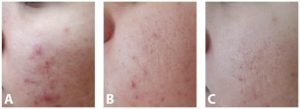
10% azelaic acid nanocrystal hydrogel: baseline, week 4, and week 8 / Original Figure 3.
[10] Tomić et al., Pharmaceutics, 2021, DOI 10.3390/pharmaceutics13040567 • Original Figure 3.
PuriPharm Co. Ltd.
Microemulsions and follicular delivery
Droplet-size range across 8 systems
Cumulative release at 24 hours
Ex vivo guinea pig skin: all 8 microemulsions increased flux relative to an aqueous solution.
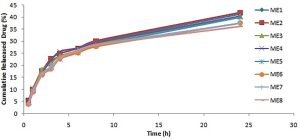
Cumulative release from 8 microemulsions containing 1% azelaic acid / Original release plot.
Carrier composition affects azelaic acid release and skin transport.
[11] Salimi et al., Adv Pharm Bull, 2020, DOI 10.34172/apb.2020.028 • Original release plot.
PuriPharm Co. Ltd.
Product application options
|
|
|
|
|
|---|---|---|---|
|
|
|
|
|
|
|
|
|
|
|
|
|
|
|
|
|
|
|
|
[2], [4], [6]–[12] • Each formula requires stability, compatibility, and efficacy validation.
PuriPharm Co. Ltd.
References and technical sources
[1] Todea A et al. Azelaic Acid: A Bio-Based Building Block for Biodegradable Polymers. Polymers. 2021;13:4091. doi:10.3390/polym13234091
[2] King S et al. A systematic review to evaluate the efficacy of azelaic acid in the management of acne, rosacea, melasma and skin aging. J Cosmet Dermatol. 2023;22:2650–2662. doi:10.1111/jocd.15923
[3] Schallreuter KU, Wood JM. A possible mechanism of action for azelaic acid in the human epidermis. Arch Dermatol Res. 1990;282:168–171. doi:10.1007/BF00372617
[4] Sobhan M et al. A comparative study of 20% azelaic acid cream versus 5% tranexamic acid solution for postinflammatory hyperpigmentation. J Res Med Sci. 2023;28:18. doi:10.4103/jrms.jrms_443_22
[5] Blaskovich MAT et al. In vitro Antimicrobial Activity of Acne Drugs Against Skin-Associated Bacteria. Sci Rep. 2019;9:14658. doi:10.1038/s41598-019-50746-4
[6] Coda AB et al. Cathelicidin, kallikrein 5, and serine protease activity is inhibited during treatment of rosacea with azelaic acid 15% gel. J Am Acad Dermatol. 2013;69:570–577. doi:10.1016/j.jaad.2013.05.019
[7] Amirfakhryan E et al. Azelaic acid stimulates catalase activation and promotes hair growth through upregulation of Gli1 and Gli2 mRNA and Shh protein. Avicenna J Phytomed. 2020;10:460–471. PMID:32995324
[8] Stamatiadis D et al. Inhibition of 5 alpha-reductase activity in human skin by zinc and azelaic acid. Br J Dermatol. 1988;119:627–632. doi:10.1111/j.1365-2133.1988.tb03474.x
[9] Mather K, Stahl CR. Topical vehicles containing solubilized and stabilized azelaic acid. US5925679. 1999. Table 1 and specification.
[10] Tomić I et al. Efficacy and Safety of Azelaic Acid Nanocrystal-Loaded In Situ Hydrogel in the Treatment of Acne Vulgaris. Pharmaceutics. 2021;13:567. doi:10.3390/pharmaceutics13040567
[11] Salimi A et al. Development and Evaluation of Azelaic Acid-Loaded Microemulsion for Transfollicular Drug Delivery Through Guinea Pig Skin. Adv Pharm Bull. 2020;10:239–246. doi:10.34172/apb.2020.028
[12] Feng X et al. Azelaic Acid: Mechanisms of Action and Clinical Applications. Clin Cosmet Investig Dermatol. 2024. doi:10.2147/CCID.S485237
[13] PubChem. Azelaic Acid, CID 2266. Molecular formula, molecular weight, IUPAC name and 2D chemical structure. National Library of Medicine.
[14] Li N et al. Effect of ionization and vehicle on skin absorption and penetration of azelaic acid. Drug Dev Ind Pharm. 2012. doi:10.3109/03639045.2011.635376
PuriPharm Co. Ltd.