Nano Organic Acid Preservative (Bioactive NanoGuard)

Bioactive NanoGuard is a new type of organic acid preservative nano liposome preparation (NanoLiposomal NanoGuard).
Product Name: Nano Liposomal Bioactive NanoGuard; Nanoactive Bioactive NanoGuard; Bioactive NanoGuard

CAS: 65-85-0, 110-44-1

This product is a new safe and mild organic acid preservative prepared by specific nano-encapsulation technology with organic acids such as benzoic acid and sorbic acid as active materials. It can be used for anti-corrosion of organic certified products and natural cosmetics. The unique nanotechnology overcomes the high pH dependence of organic acid preservatives, with an applicable pH up to 7.0. Benzoic acid and sorbic acid are both recognised by ECOCERT as preservatives for organic certified cosmetics. Europe – Up to 2% used in rinse-off and leave-on products, US – benzoic acid can be used in both rinse-off and leave-on products. Japan – In finished products, the maximum allowable amount of benzoic acid and its sodium salt is 1%. It can be used in eye serum and other products with high irritability as it is non-irritating.

Chemical structure:

benzoic acid


Sorbic acid

Sorbic acid and benzoic acid have long been widely used as preservatives in food, pharmaceutical and daily chemical products. Although their safety and effectiveness are fully recognized, they are highly dependent on the pH of the system. When the pH is higher than 4.0, its antibacterial effect was significantly lowered; when the pH is higher than 6.0, it almost loses its antibacterial activity. The new preservative developed by nano-encapsulation technology effectively solves the problem of pH dependence of benzoic acid and sorbic acid. It works effectively as an antiseptic within the range of pH 1.0-7.0, and can be widely applied to various products. The product has good solubility (the solubility in water is 20-30 times that of benzoic acid and sorbic acid, both oil-soluble and water-soluble), good thermal, pH stability and compatibility, and can be widely applied to various products.


This product effectively overcomes pH dependence

NanoActive Lutein

NanoActive Lutein is a new lutein nano liposome preparation (NanoLiposomal Lutein).
Product Name: Nano Liposomal Lutein; Nanoactive Lutein; BioaActive Lutein; Soluble Lutein CAS: 127-40-2

Description: Lutein, also known as plant lutein, coexists with zeaxanthin in nature. It is the main pigment that forms the macular area of the human eye. Human eyes contain high amounts of lutein which can only be supplemented by the intake of lutein as human body can not produce this element by itself. Without lutein, human will lose eyesight. A natural carotenoid found in vegetables and fruits, Lutein is a good antioxidant that protects cells in human body from the damage of free radical. Lutein is good for vision health as it can resist sunlight, blue light in computer and cellphone screens, relieve eye fatigue, sore eyes, tears, myopia, and prevent eye diseases such as cataracts and maculopathy. The skin is the only barrier between internal and external environment for human body. Lutein also plays a role in filtering blue light and strong anti-oxidation for the skin, greatly avoiding the damage of light to skin cells and preventing various kinds of skin disease caused by intense light stimulation. The high-energy blue light from electronic screen inhibits the generation of melatonin, penetrates deep into the skin layer, damages collagen, hyaluronic acid and elastin, accelerating skin aging, and may cause bad skin conditions such as enlarged pores, dark circles and hemorrhoids. Functioning as blue light filter and anti-oxidation agent, Lutein is the most effective biological actives that protects the skin from high-energy blue light. NanoActive Lutein developed by new nano-transfer technology solves lutein’s problems including low solubility, low stability and tendency to lose or change color, which make it hard to apply in skin care products. It is a multi-effect skincare actives that is anti-blue light, anti-oxidation and anti-aging. Lutein also performs well in skincare products, eliminating ubiquitous blue light and free radicals.

  • Effectively inhibits the formation of harmful free radicals, slows down skin aging, and facilitates bright and elastic skin;
  • Absorbs large amounts of daylight, computer light, and office lighting to protect skin against damage caused by UVA/UVB and blue light.

A type of carotenoid, Lutein is a natural colorant or pigment. It is found in dark green leafy plants such as spinach, various fruits and corn. The egg yolk also contains lutein. Lutein nutritionally supports human eyes and skin. The eye is the only organ in our body that receives external light stimuli, while the skin is the only one that is directly exposed to the external environment. As an antioxidant, Lutein can eliminate free radicals in human body or reduce its damage. Excessive free radicals can cause various chronic diseases. Lutein can improve vision and also ensure the health of the eye by reducing the risk of macular degeneration. Lutein can increase the skin’s antioxidant capacity and help prevent free radical damage.

Lutein structure


Mobile phones and computers are now indispensable in urbanites’ lives. Smartphones and computers can cause the same damage to our skin as ultraviolet rays from the sun because the blue light emitted by the screen can inhibit melatonin generation and penetrate deep into the skin layer, damaging collagen, hyaluronic acid and elastin, and accelerating skin aging. It can also cause skin problems such as enlarged pores, dark circles, and hemorrhoids.

Lutein is the most effective active against blue light damage. It can filter out up to 90% of high-energy blue light from the visible spectrum. Blue light is different from the commonly known ultraviolet A and ultraviolet B in the invisible light spectrum. Blue light can trigger oxidation reactions and cause potential free radical damage for human organs such as eyes and the skin that are exposed to both indoor light as well as sunlight.

Lutein mechanism

The antioxidant activity of natural lutein can protect skin cells, by preventing oxidation and free radicals from the very beginning, and working effectively to whiten the skin, remove freckle and wrinkle, moisturize, increase skin elasticity, glossiness and smoothness, and delay skin aging.

As it is a fat-soluble compound, Lutein is hard to be absorbed by the skin with ordinary emulsions. The lutein nanoactive material with a particle size of less than 30 nm developed by the nano-transport system (NDS)completelysolves the solubility and stability problems of lutein, allowing lutein to be stably encapsulated in the nanocarrier so that it hugely improves absorption efficiencyandbio-availability and becomes suitable for aqueous agent system.


Product features :

  • NanoActive Lutein uses FDA GRAS grade materials for higher safety
  • NanoActive Lutein is stable to heat, pH, and cuts, so it is convenient to use
  • NanoActive Lutein greatly enhances the stability and bioavailability of lutein
  • NanoActive Lutein improves the stability and absorption of other actives in the product
  • NanoActive Lutein is 100% water soluble and has a wide range of applications

Product Effects:

  • NanoActive Lutein protects the skin from blue light, increases the antioxidant effect of skin cells, and reduces the damage of free radicals to the skin;
  • NanoActive Lutein is an active ingredient that works well to remove wrinkles, whiten the skin, anti-aging, moisturize and increase skin elasticity.

Product use: Add under low temperature; recommended dosage: 1-5%.

Product storage: keep away from light at a temperature below 25°C.

Nano Liposomal Vitamin E (NanoActive E)

NanoActive E is a new type of vitamin E nanoliposome preparation (NanoLiposomal E).
Product Name: Nano Liposomal Vitamin E; Nanoactive Vitamin E; BioaActive Vitamin E; BioActive E; Nano Active E; Soluble Vitamin E CAS: 10191-41-0, 7695-91-2, 59-02-9

Description: Vitamin E is a fat-soluble vitamin, widely found in leaves, cereal oil and milk. It is a famous antioxidant and moisturizing ingredient and one of the essential components in the epidermis. Vitamin E can reduce the aging of tissue cells and the production of streak tissue, improve the effect of vitamin A, and prevent the oxidation of vitamin A and vitamin C. The external use of vitamin E has been proven to be effective in supplying vitamin E to the skin. However, pure vitamin E in cosmetic formulations is easily to be oxidized and is only oil soluble. Vitamin E wrapped in NanoActive is highly stable and soluble in water.

Features

  • NanoActive E is 100% water soluble and 100% oil soluble (amphiphilic) for a wide range of application.
  • NanoActive E greatly improves the stability and bioavailability of vitamin E
  • NanoActive E has good heat, pH and shear stability and is easy to use
  • NanoActive E is rich in active substance, which can be up to 20%
  • NanoActive E uses FDA GRAS grade materials for high safety
  • NanoActive E can increase the amount of vitamin E infiltrated into the depth of the epidermis while traditional oil-in-water emulsion loose vitamin E can only stay on the skin surface.

Efficacy:

  • NanoActive E effectively neutralizes free radicals, improves skin texture and reduces the appearance of wrinkles
  • NanoActive E can improve the stability of other active substances such as vitamin C in the product and promote the absorption of active substances by the skin.

Scope of application:

Eye care products, anti-aging products such as serum, eye mask, facial mask, skin care, etc.

Use: Add it at room temperature. You may heat it to above 40℃ to speed up the dissolution. Recommended dosage: 1-5%. Better effect with products containing NanoActive Q10.

Storage: Recommended to store it at 2-8°C

Packing specifications: 1kg, 5kg, 10kg

Recommended dosage: 0.5-5.0%

NanoActive C

Nanoactive C is a novel vitamin C nanoliposome formulation (NanoLiposomal C).
Product Name: Nano Liposomal Vitamin C; Nanoactive Vitamin C; BioaActive Vitamin C; BioActive VC; NanoActive VC; Oil Soluble Vitamin C; Fat Oil Soluble Vitamin C; Water Soluble Vitamin C; CAS: 50-81-7

Description: Vitamin C (Ascorbic Acid), also known as L-ascorbic acid, is a water-soluble vitamin.” Vitamin C is an important antioxidant, involved in multiple reactions in vivo which has functions such as promoting collagen production, blocking melanin synthesis, scavenging free radicals, and preventing skin aging. It is one of the most classic and active actives in cosmetics. Vitamin C is insoluble in fat-soluble systems and extremely unstable in aqueous solution, which limits its use greatly. Although a variety of vitamin C derivatives have been developed and used, they must be converted into a prototype vitamin C into the body to function, and their activity is greatly reduced. L-Vitamin C (“Left C”) is the only form of vitamin C that can be directly absorbed by human skin. NanoActive C is a L-Vitamin C nano-active material developed by Nano Transmission System (NDS) and with an average particle size of less than 30 nm. It also solves the problem of solubility and stability of vitamin C, allowing vitamin C to be stably encapsulated in nano-carriers. It can greatly increase the absorption rate and bioavailability, and greatly expand its application range.

Vitamin C


Vitamin C physiological activity

  • Ascorbic activity (promotes collagen synthesis)
  • Resistance to oxidation
  • Inhibition to melanin synthesis
  • Improvement in immune system


Features

  • NanoActive C is a non-chemically modified stable L-C nano product that works directly and efficiently without the need of vivo transformation.
  • NanoActive C uses GRAS (Recognized Safety) grade materials for high safety and non-irritation
  • NanoActive C is 100% water soluble and 100% oil soluble (amphiphilic), allowing a wide range of uses.
  • NanoActive C greatly improves the stability and bioavailability of vitamin C
  • NanoActive C is stable to heat, pH and shearing, so it is convenient to use.

Distribution map of NanoActive C particle size

Efficacy:

  • NanoActive C inhibits melanin formation and reduces melanin by inhibiting tyrosinase activity. It also diminishes formed spots, eliminates pigmentation, and reduces sunburn and freckles caused by sunlight.
  • It protects the skin from lesions caused by UV rays, such as the skin lines acquired.
  • L-Vitamin C is an essential ingredient in the manufacture of collagen, and collagen is the main component of the dermis. NanoActive C promotes collagen synthesis to reduce fine lines.
  • NanoActive C can effectively neutralize free radicals, promote skin metabolism, accelerate skin rejuvenation, improve skin texture, restore damaged skin, and make skin firm and elastic
  • NanoActive C can improve the stability of other active matters in the product and facilitate absorption

Melanocytes


Whitening mechanism of NanoActive C

Vitamin C inhibits UV-induced skin damage


Vitamin C inhibits melanin production in B16 melanocytes


Vitamin C promotes collagen synthesis in human fibroblasts


Potential use of NanoActive

  1. Maintanance of skin elasticity

– Enhance collagen synthesis

  1. Whitening effect

– Antioxidant (reduction)

– Inhibition to tyrosinase activity

  1. Prevent skin inflammation and photoaging

– Antioxidant (eliminating hydroxyl radicals)

Use:add it at ordinary temperature. You may heat it to over 40℃ to speed up the dissolution. Recommended dosage: 1-5%. Better effect with products containing vitamin E and ferulic acid.

Storage: keep it away from light at a temperature below 25℃.


Nano Liposomal Vitamin A (NanoActive A)

NanoActive A is a novel vitamin A nanoliposome preparation (NanoLiposomal A).
Product Name: Nano Liposomal Vitamin A: Nanoactive Vitamin A; BioaActive Vitamin A; BioActive VA; NanoActive VA; Soluble Vitamin A CAS: 79-81-2

Description: Vitamin A palmitate is a vitamin A derivative and a fat-soluble antioxidant. NanoActive A is water-soluble, transparent,highly effective and non-irritating vitamin A, which can repair cells and protect against UV-induced skin aging, promote the metabolism of epidermis and keratinocytes, facilitate and strengthen the exfoliation of keratinocytes and the growth of new cells, as well as the production of collagen and elastic fibers, while helping to maintain the normal metabolic cycle of cells.

Chemical structure of Vitamin A

Mechanism

 Features

  • NanoActive A uses FDA GRAS grade materials for high safety
  • NanoActive A is stable to heat, pH and shearing, so it is convenient to use.
  • NanoActive A is 100% water soluble and 100% oil soluble (amphiphilic), allowing a wide range of uses.
  • NanoActive A greatly improves the stability and bioavailability of vitamin A


Efficacy:

  • NanoActive A has the ability to regulate the metabolism of the epidermis and stratum corneum, which can resist aging and wrinkle
  • NanoActive A relieves seborrhea and makes skin elastic, while diminishing spots and softening skin
  • NanoActive A helps protect the epidermis and mucous membranes from bacteria in order to maintain skin health
  • NanoActive A can improve the stability of other active matters in the product and facilitate absorption

Effectively increase skin elasticity


Use:Add it at room temperature. You may heat it to over 40℃ to speed up the dissolution. Recommended dosage: 1-5%. Metal ions such as iron ions must be avoided in the system. Better effect with products such as vitamin C and vitamin E.

Storage: Keep it away from light at a temperature below 25℃.

NanoActive THC

NanoActive THC is a novel tetrahydrocurcumin nanoliposome preparation (NanoLiposomal THC).
Product Name: Nano Liposomal THC; Nanoactive THC; BioaActive THC; BioActive Tetrahydrocurcuminoids; NanoActive Tetrahydrocurcuminoids; Water Soluble Tetrahydrocurcuminoids; Fat Soluble Tetrahydrocurcuminoids

CAS: 36062-04-1

Description:Tetrahydrocurcumin (ultra pure whitening element) is a natural functional whitening ingredient extracted from the roots of Ginger Curcuma longa.Thanks to its potent activity against tyrosinase, the whitening effect of this product is better than that of arbutin; it can effectively inhibit the formation of oxygen free radicals as well as eliminate the formed free radicals. Featured with significant antioxidant effects, such as anti-aging of human skin, skin repair, lightening pigments, clearing freckles, etc., it is widely applied in various skincare products for whitening, freckle eliminating, and anti-oxidation. Tetrahydrocurcumin is hardly soluble in water while easy to be oxidized and discolored, which limits its application in cosmetics. Nano actives with a particle size of less than 30 nm developed by nano-transmission system (NDS) enable tetrahydrocurcumin to be steadily wrapped in nano-carriers, greatly improving the absorption efficiency and bioavailability. This overcomes the original defects and maintain the advantages with a more convenient and wider range of uses.

Tetrahydrocurcumin

Skincare Effect

Tetrahydrocurcumin (ultra pure whitening element) is a perfect comprehensive natural ingredient for whitening and a high-purity turmeric extract that can inhibit tyrosinase at a extremely low concentration. Its whitening effect is several times that of common whitening active ingredients such as arbutin, licorice and vitamin C. It also has a unique bio-protective function, which can provide skin with double anti-oxidation protection, helping the skin to resist the damage of UV rays and inflammation. Safety tests show that it has no side effects of any irritation or sensitization on human skin, and can safely and effectively perform the function of natural whitening and skin brightening. Compared with the western medicine phenylbutazone, ultra-pure whitening element can achieve the same effect with half of its dose. Compared with curcumin and its analogues, ultra-pure whitening element is more effective for acute and subacute inflammation. The inhibition of ultra-pure whitening element against lipoxygenase, collagenase and hyaluronidase reduces the formation of skin inflammation including erythema, while also reducing wrinkles, maintaining skin elasticity and anti-aging.While whitening the skin, it can also improve the skin texture, increase the gloss, and make the skin look healthy and bright. Therefore, ultra-pure whitening element is a comprehensive natural extract for whitening. It is a natural whitening material with comprehensive functions such as resisting UV, anti-oxidation, inhibiting inflammation and tyrosinase, lightening melanin, etc. In comparison with similar products in the market, its whitening effect of lightening melanin is excellent, and it also has many other skin bioprotective effects, which is an advantage that other raw materials cannot match. Widely applied, it is a whitening additive recognized by famous cosmetics companies around the world.


Tetrahydrocurcumin can effectively eliminate oxygen free radical

Tetrahydrocurcumin has significant anti-inflammatory effects

Experiments showed tetrahydrocurcumin’s excellent whitening effect


Features

  • NanoActive THC solves the problem of tetrahydrocurcumin’s tendency to be oxidized and discolored.
  • NanoActive THC uses FDA GRAS materials for high safety.
  • NanoActive THC has a good stability towards heat, pH and shearing and is easy to use.
  • NanoActive THC greatly improves the stability and bioavailability of tetrahydrocurcumin.
  • NanoActive THC improves the stability of other actives in the product and promotes absorption.
  • NanoActive THC is 100% water soluble and 100% oil soluble (amphiphilic), allowing a wide range of uses.


Applications

  • Inhibit melanin synthesis, reduce pigmentation and whiten your skin
  • Eliminate free radicals and confront skin aging
  • Promote collagen synthesis, improve skin thickness and elasticity, remove wrinkles, and firm your skin
  • Help wound healing and reduce scars
  • Anti-glycosylation
  • Cure acne and reduce acne marks.
  • Anti-bacteria, diminish inflammation and sensitization, and provide analgesic effects
  • Prevent scarring and fibrosis

  Use: Add it at room temperature. You may heat it to over 40℃ to speed up the dissolution. Recommended dosage: 1-5%. The optimum pH range of the system is 3.0-6.5, and the finished product should be protected from direct exposure to sunlight (using opaque packaging). It is recommended that UV absorber be added to day care products.

Storage : keep it away from light at a temperature below 25℃.


NanoActive SA

Nanoactive SA is a novel salicylic acid nanoliposome preparation (NanoLiposomal SA).
Product Name: Nano Liposomal SA; Nanoactive SA; Nano Active Salicylic Acid; Water Soluble Salicylic Acid; Fat Soluble Salicylic Acid; BioActive Salicylic Acid CAS: 69-72-7

Description: Salicylic acid is Beta Hydroxy Acid, also known as BHA or B softening fruit acid, which is found in willow barks, wintergreen leaves and sweet birches in nature. Salicylic acid has an excellent ability to clear acne, exfoliate, and clean pores with high safety. Salicylic acid can also lighten pigment spots, shrink pores, remove fine wrinkles and improve aging caused by sun exposure, thus becoming the new favor of skincare products. However, salicylic acid is hardly soluble in water and is highly irritating, which limits its application. The Nano SA actives, developed with the nano-transmission system (NDS), has a particle size of less than 30nm, which enables salicylic acid to be steadily encapsulated in nano-carriers, greatly improves the absorption efficiency and bio-availability. This overcomes the original defects and maintain the advantages with a more convenient and wider range of uses.


White willow                                                      Salicylic acid


Features:

  • NanoActive SA uses FDA GRAS grade materials for high safety
  • NanoActive SA is stable to heat, pH and shearing, so it is convenient to use.
  • NanoActive SA overcomes the original shortcomings of salicylic acid while maintaining the advantages, and improves bioavailability
  • NanoActive SA can improve the stability of other active matters in the product and facilitate absorption


Efficacy:

  • It increases the absorption of your skin. When combined with other skincare ingredients, salicylic acid increases the absorption of actives by the skin.
  • It clears pore blockage. This gentle acid can decomposes blackheads and whiteheads by strip the outer layers of your skin.
  • Exfoliate and cleanse. Salicylic acid is a keratolytic agent that not only has exfoliating effect, but also has anti-bacterial effect. At the same time, it can remove dead cells from the skin and prevent the acne caused after the mix between dirt and sebum.
  • It resists dryness. Salicylic acid softens keratin and helps protect skin from dryness.


Use: Add it at room temperature. You may heat it to over 40℃ to speed up the dissolution. Recommended dosage: 1-5%. Divalent or trivalent metal ions such as iron must be avoided in the system.


Storage: Keep it away from light at a temperature below 25℃.


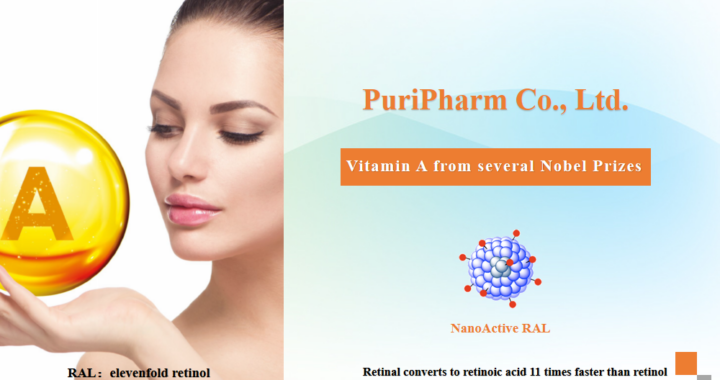
NanoActive RAL

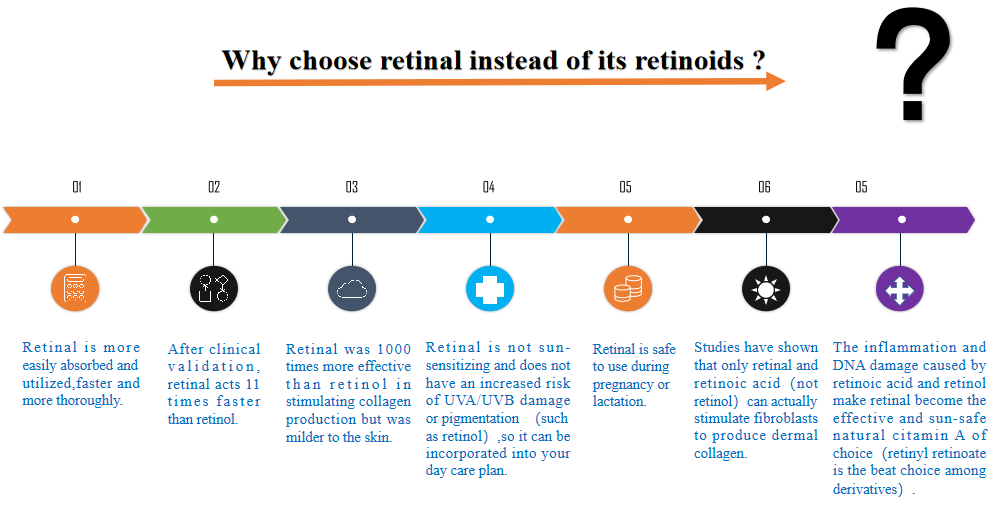
Nanoactive RAL, INCI name: Retinal, CAS: 116-31-4.

Product Name: Nanoactive RAL, BioaActive Retinaldehyde; BioActive Retinal; Soluble Retinal; Soluble Retinaldehyde;Nano Liposomal

Nanoactive RAL is a novel retinal nanoliposome formulation (NanoLiposomal RAL).

A new liposome preparation. RAL has the characteristics of retinoic acid in the skin, and is better tolerated than retinoic acid. It directly interacts with protein receptors in cells, stimulates epidermis to accelerate regeneration, increases the thickness of the stratum corneum, and makes the skin tighter and more orderly. It also accelerates the production of collagen in the dermis layer, prevents the damage of UV to collagen, inhibits the increase of MMP caused by UV, and makes the skin more elastic; the unique aldehyde-based structure has a very good effect on P. acnes, etc., and effectively improves acne skin. Large amounts of retinal, retinol, retinol retinate (15498-86-9), HPR(893412-73-2) and other Vitamin A kind products of pharmaceutical grade are available.


Description:

Retinaldehyde (RAL), also known as vitamin A aldehyde, is a derivative of retinol after oxidation. It is formed by oxidative cleavage of β-carotene. If  reduced, retinol can be attained; If oxidized, retinoic acid can be attained.Retinoic acid。”. The role of retinoic acid (Vitamin A) in skin diseaseis very extensive, but due to local irritation, its clinical application is limited to some extent.Retinaldehyde is an intermediate metabolite of natural retinoic acid and has similar biological activity as retinoic acid. But the skin is significantly more tolerant to retinoic acid.

The main forms of vitamin A and their interconversion

Retinal has many target on the skin. It can be used as a skin care product to produce a variety of effects such as anti-aging, skin rejuvenation, whitening, anti-wrinkle, acne, keratin, etc. It is an emerging high-efficiency natural active substance. Retinal is hardly soluble in water while easy to be oxidized and discolored, which limits its application in cosmetics. Nano actives with a particle size of less than 30 nm developed by nano-transmission system (NDS) enable retinals to be steadily wrapped in nano-carriers, greatly improving the absorption efficiency and bioavailability. This overcomes the original defects and maintain the advantages and enables a more convenient and wider range of uses.

Skin care effect

The large use of non-physiological doses of exogenous retinoic acid can cause an overload of the retinoic acid-dependent pathway in the skin, causing adverse reactions such as skin irritation. RAL is a natural metabolite of retinol and a direct precursor of retinoic acid, and it also has similar biological activity to retinoic acid. The advantage of RAL compared with retinoic acid is its multi-directional metabolism, that is, the excess RAL can be rapidly reduced to retinol, then stored and inactivated in the form of retinol, and this “reverse metabolism” is not present in retinoic acid. After it is absorbed by the skin, most of it is converted to retinol vinegar stored for slow release, and a small amount of RAL is oxidized to retinoic acid by keratinocytes in differentiation-dependent manner, while a very small amount of retinoic acid is can exert significant biological effects in cells. This can avoid skin adverse reactions caused by high doses of retinoic acid. Clinical observations also show that topical RAL creams are well tolerated compared with retinoic acid and can be applied to sensitive areas. The topical RAL cannot absorbed by human blood. The levels of various vitamin A acids in the blood also cannot be affected.

RAL needs to be activated by the conversion of enzymes in keratinocytes to retinoic acid, so RAL has similar biological activity as retinoic acid. One of the indicators of retinoic acid activity is to induce the expression of retinoic acid binding protein (CRABP-2) in cells. External RAL can evidently induce the expression of CRABP-2 mRNA and protein. The topical natural retinoic acidcan also induce the expression of nuclear receptor in retinoic acid . Like retinoic acid, RAL also functions to regulate cell proliferation and differentiation. It can increase epidermal DNA synthesis, increase epidermis thickness, induce 50kD keratin, and reduce 7OkD keratin mRNA expression. Inducing positive keratinization, reducing 65kD keratin mRNA expression, and increasing filaggrin and loricin mRNA expression. In addition, RAL is also involved in the regulation of neovascularization in the skin, inhibiting the production of vascular endothelial growth factor by keratinocytes. It can repair the elastic fibers and collagen damage induced by UVA. RAL is also capable of dissolving acne and the direct sterilizing effect towards propionibacterium acnes. Natural retinoic acid play an important role in epidermal differentiation, dermal remodeling and curing skin inflammation. Retinaldehyde as an important intermediate metabolite of natural retinoic acid has both biological activity similar to that of retinoic acid and is well tolerated by the skin, thus it is given wider application in cosmetics.

Retinaldehyde can repair elastic fiber and collagen loss caused by UV:

Retinaldehyde prevents skin aging caused by ultrasound and fluid

technology:


Retinaldehyde can effectively improve skin photoaging symptoms:


Retinaldehyde and retinal are well tolerated, while retinoic acid is more irritating

Retinaldehyde can effectively inhibit epidermal melanin

Features

  • NanoActive Retinaldehyde uses FDA GRAS grade materials for high safety
  • NanoActive Retinaldehyde has good heat, pH and sheer stability and is easy to use.
  • NanoActive Retinaldehydegreatly enhances the stability and bioavailability of retinal
  • NanoActive Retinaldehyde can improve the stability of other active matters in the product and facilitate absorption
  • NanoActive Retinaldehyde is 100% water soluble and 100% oil soluble, allowing a wide range of uses.


Applications

  • Wrinkle repairing: promote collagen and hyaluronic acid synthesis, increase skin thickness and elasticity, repair the wrinkle and firm the skin.
  • Whitening and freckle removing: inhibit melanin synthesis, reduce pigmentation, whiten the skin and remove the freckle.
  • Anti-aging: anti-oxidation, anti-skin-aging
  • Skin-refreshing: renewal of keratin, refresh the skin.
  • Acne Treatment: sterilizing propionibacterium acnes and streptococcus, etc., treating acne and removing acne marks
  • Curing of skin photoaging


 Use: Add it at room temperature; recommended dosage: 1-5% The optimum pH range of the system is 3.0-6.5, and the finished product should avoid direct exposure to sunlight (using opaque packaging). It is recommended to add UV absorber to day care products.


Storage: keep it away from light at a temperature below 25℃.