NanoActive™ Oryzanol

01 · NanoActive™ Oryzanol: Oryzanol Nanoliposomes

Cosmetic active ingredient product introduction. INCI: ORYZANOL. Rice-derived antioxidant defense, reinvented by liposomal delivery.

Powered by PURISOME® FlexVes™ Liposome Technology. PuriPharm Co. Ltd.
02 · From Rice-Bran Active to Nano-Delivered Antioxidant

γ-Oryzanol is a group of phytosterol/triterpene alcohol ferulate esters naturally found in rice bran oil. Sterol lipids provide lipid affinity, while ferulate groups provide radical-defense potential.

Antioxidant: radicals/lipid peroxidation. Photoaging care: light-induced oxidative stress. Aging care: collagen/elastic-network concepts. Skin + Hair: skin, scalp, and hair.

NanoActive™ uses lipid vesicles to improve practical cosmetic formulation design.

03 · γ-Oryzanol Ingredient Science

A mixture of ferulate esters in the unsaponifiable fraction of rice bran oil. Representative components: Cycloartenyl Ferulate, 24-Methylene Cycloartanyl Ferulate, Campesteryl Ferulate, and Sitosteryl Ferulate.

An ester bond links the phenolic antioxidant ferulic-acid moiety with a lipid-affine phytosterol/triterpene-alcohol moiety.

Sources: Lerma-García et al. Food Chem. 2009;115:389–404; Ramazani et al. Curr Pharm Des. 2021;27(19):2299–2316. DOI: 10.2174/1381612826666201102101428.

Source link: https://doi.org/10.2174/1381612826666201102101428

References: Lerma-García JM, et al. Food Chemistry. 2009;115:389–404. | Ramazani E, et al. Curr Pharm Des. 2021;27(19):2299–2316. DOI: 10.2174/1381612826666201102101428
04 · Plant Antioxidant and Skin Lipid Science

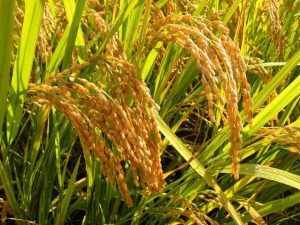
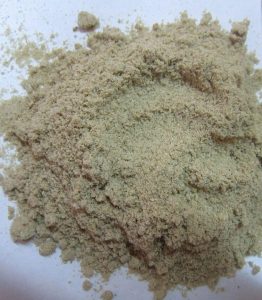
Image: rice bran, the natural source.

01 Radical defense and oxidative-chain inhibition. 02 Lipid antioxidant activity in lipid-rich environments. 03 Ferulate UV-absorption/antioxidant properties as a basis for photostress care. 04 Research on collagenase, elastase, hyaluronidase, and tyrosinase.
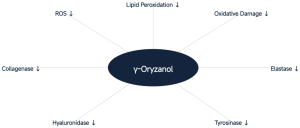
05 · Multiple Antioxidant and Aging-Care Pathways

The mechanism map includes lower ROS, lipid peroxidation, oxidative damage, collagenase, elastase, hyaluronidase, and tyrosinase.

Concepts: antioxidant/photoaging care, elasticity, hydration-related structures, even tone, soothing defense, and scalp/hair antioxidants. These summarize in vitro/model literature and do not establish finished-product clinical efficacy.
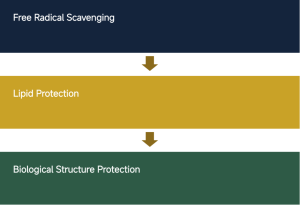
06 · Radical-Chain Management and Lipid Protection

Ferulate esters participate in radical scavenging and reduced radical-induced lipid peroxidation. Relevant lipid environments include stratum-corneum lipids, sebum, cellular membranes, hair surface lipids, and oxidizable formulation oils.

Pathway: radical scavenging, lipid protection, and biological-structure protection.

Juliano C, Cossu M, Alamanni MC, Piu L. Int J Pharm. 2005;299:146–154. DOI: 10.1016/j.ijpharm.2005.05.018.

Source link: https://doi.org/10.1016/j.ijpharm.2005.05.018

Juliano C, Cossu M, Alamanni MC, Piu L. Antioxidant activity of gamma-oryzanol: mechanism of action and its effect on oxidative stability of pharmaceutical oils. Int J Pharm. 2005;299:146–154. DOI: 10.1016/j.ijpharm.2005.05.018
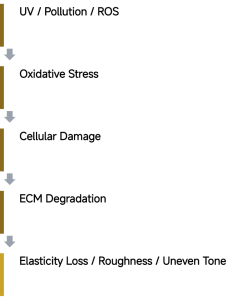
07 · Oxidative Stress Connects Exposure and Skin Aging

UV/pollution/ROS, oxidative stress, cellular damage, ECM degradation, and loss of elasticity/roughness/uneven tone form the schematic pathway.

NanoActive™ Oryzanol uses antioxidant design for daily aging-care concepts. This does not replace sunscreen and provides no SPF/PA claims.
08 · 2026 Nanoencapsulated γ-Oryzanol Research

Literature nanoemulsion, H₂O₂-induced NIH/3T3 mouse fibroblast aging model: reduced intracellular ROS, supported survival/migration, and inhibition of collagenase, elastase, hyaluronidase, and tyrosinase.

Reported parameters: approximately 162 nm particle size, PDI 0.2, and zeta potential −51 mV. These are Yadav’s independent nanoemulsion values, not NanoActive™ product parameters.

Yadav P, Sankar J, Mora C, et al. Nanoencapsulated gamma-oryzanol enhances fibroblast proliferation, migration, and reduces oxidative stress in H₂O₂-induced cellular aging model. J Funct Foods. 2026;136:107130. DOI: 10.1016/j.jff.2025.107130.

Source link: https://doi.org/10.1016/j.jff.2025.107130

Yadav P, Sankar J, Mora C, et al. Nanoencapsulated gamma-oryzanol enhances fibroblast proliferation, migration, and reduces oxidative stress in H₂O₂-induced cellular aging model. J Funct Foods. 2026;136:107130. DOI: 10.1016/j.jff.2025.107130

09 · Protecting Collagen, Elastin, and Hyaluronic-Acid Networks

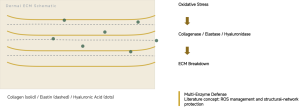
The dermal ECM schematic shows collagen, elastin, and hyaluronic acid. Oxidative stress and collagenase/elastase/hyaluronidase activity can contribute to network breakdown.

Multi-enzyme defense extends the literature concept from ROS management to structural-network preservation.
10 · Fibroblast Vitality

Dermal fibroblasts maintain collagen, elastin, and ECM. Oxidative pressure can reduce vitality/migration and accelerate structural decline.

Yadav’s 2026 nanoemulsion study reported ROS reduction, viability support, and migration in an oxidative model, informing cellular vitality, matrix defense, and resilience concepts.

J Funct Foods. 2026;136:107130. DOI: 10.1016/j.jff.2025.107130. Independent formulation evidence.

Source link: https://doi.org/10.1016/j.jff.2025.107130

Source: Yadav P, et al. J Funct Foods. 2026;136:107130 (literature nanoemulsion, not this product)。DOI: 10.1016/j.jff.2025.107130

11 · Tone and Brightening Research

2025 in vitro B16F10 mouse melanoma research: DPPH/FRAP antioxidant activity, lower cellular ROS, mushroom tyrosinase inhibition, reduced cellular melanin, and melanogenesis-related inhibition.

Concepts: antioxidant brightening, tyrosinase modulation, and even tone. In vitro potential does not establish clinical brightening or product efficacy.

Emami SA, Hadipour E, Boozari M, et al. Comparison of Antioxidant and Anti-Melanogenic Activity of γ-Oryzanol and Gallic Acid by Inhibiting Tyrosinase Activity in B16F10 Mouse Melanoma Cells. Food Sci Nutr. 2025;13:e70946. DOI: 10.1002/fsn3.70946.

Source link: https://doi.org/10.1002/fsn3.70946

Emami SA, Hadipour E, Boozari M, et al. Comparison of Antioxidant and Anti-Melanogenic Activity of γ-Oryzanol and Gallic Acid by Inhibiting Tyrosinase Activity in B16F10 Mouse Melanoma Cells. Food Sci Nutr. 2025;13:e70946. DOI: 10.1002/fsn3.70946

12 · UV-Associated Antioxidant Defense

Schematic: UV exposure, ROS generation, lipid peroxidation, inflammatory stress, and ECM damage.

Cosmetic language: helps defend against UV-induced oxidative stress; supports daily photostress protection; helps protect skin lipids from oxidative challenge.

No SPF/PA values, sunscreen replacement, or core regulatory claim of a natural sunscreen.

13 · Nanoethosome Delivery Evidence

2021 γ-oryzanol nanoethosomes improved delivery/cellular uptake, offered long-term storage protection, and showed protection in UVB-related models.

The original mouse work involved UV-induced skin cancer; this article retains it as delivery/photostress research, without disease-prevention/treatment claims.

Zeinali M, et al. Prevention of UV-induced skin cancer in mice by gamma oryzanol-loaded nanoethosomes. Life Sci. 2021;283:119759. DOI: 10.1016/j.lfs.2021.119759.

Source link: https://doi.org/10.1016/j.lfs.2021.119759

Zeinali M, et al. Prevention of UV-induced skin cancer in mice by gamma oryzanol-loaded nanoethosomes. Life Sciences. 2021;283:119759. DOI: 10.1016/j.lfs.2021.119759

14 · Formulation Challenges

Low water dispersibility; crystallization/precipitation with system or temperature changes; reliance on oils, emulsions, or solubilizers; limited effective delivery of free active; and prolonged environmental exposure.

Published approaches include solubilization, dispersion, emulsification, phospholipid complexes, and nanodelivery.

Patent examples: JP6803732B2, Cosmetics containing γ-oryzanol; WO2012110303A2, Aqueous cosmetic composition containing composite material particles and gamma-oryzanol; EP1957041B1, Oil-in-water emulsion and its use for delivery of functionality.

Patent examples (publication number and title): JP6803732B2 · Cosmetics containing γ-oryzanol;WO2012110303A2 · Aqueous cosmetic composition containing composite material particles and gamma-oryzanol;EP1957041B1 · Oil-in-water emulsion and its use for delivery of functionality。

15 · From Lipophilic Active to Formulation-Ready Nano Active

Oryzanol, PURISOME® FlexVes™, and NanoActive™ Oryzanol form the design pathway.

Protection: a phospholipid microenvironment. Dispersion: an adapted form for cosmetics. Delivery: effective skin-surface contact potential. Flexibility: serums, lotions, creams, scalp, and hair products.

The design changes incorporation and contact rather than merely adding free Oryzanol.

16 · Biomimetic Lipid Vesicle Architecture

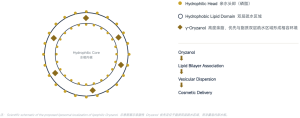
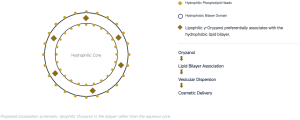
The scientific schematic labels a hydrophilic aqueous core, phospholipid hydrophilic heads, and a hydrophobic bilayer domain. Highly lipophilic γ-Oryzanol is proposed to associate preferentially with the bilayer rather than the inner aqueous core.

Oryzanol, lipid-bilayer association, vesicular dispersion, and cosmetic delivery. The localization drawing is proposed architecture rather than a direct measurement.
17 · More Than 15 Years of Liposome Research

2009 topical γ-oryzanol liposomes: phosphatidylcholine, cholesterol, CHAPS, and sodium taurocholate. Initial loading levels 3%, 5%, and 10%.

Endpoints: size, zeta potential, entrapment, release, antioxidant activity, and cellular compatibility. Antioxidant activity remained after loading; some systems showed enhanced cellular antioxidant activity.

Viriyaroj A, Ngawhirunpat T, Sukma M, et al. Physicochemical properties and antioxidant activity of gamma-oryzanol-loaded liposome formulations for topical use. Pharm Dev Technol. 2009;14(6):665–671. DOI: 10.3109/10837450902911937. Literature formulation, not product data.

Source link: https://doi.org/10.3109/10837450902911937

Viriyaroj A, Ngawhirunpat T, Sukma M, et al. Physicochemical properties and antioxidant activity of gamma-oryzanol-loaded liposome formulations for topical use. Pharm Dev Technol. 2009;14(6):665–671. DOI: 10.3109/10837450902911937 —literature formulation supporting NanoActive™ design, not product data.

18 · Research from Liposomes to Lipid Nanocarriers

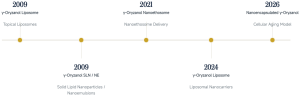
2009 topical liposomes; 2009 solid lipid nanoparticles/nanoemulsions (SLN/NE); 2021 nanoethosomes; 2024 liposomal nanocarriers; 2026 cellular-aging nanoencapsulation.

Independent teams use these strategies for stability, dispersion, and delivery, providing continuity for NanoActive™ design.

Ruktanonchai U, et al. J Microencapsul. 2009;26(7):614–626. DOI: 10.3109/02652040802586571; Jasim AJ, et al. ACS Omega. 2024;9:3554–3564. DOI: 10.1021/acsomega.3c07339. Other sources appear in their sections.

Source link: https://doi.org/10.3109/02652040802586571

Source link: https://doi.org/10.1021/acsomega.3c07339

Ruktanonchai U, et al. J Microencapsul. 2009;26(7):614–626. DOI: 10.3109/02652040802586571 | Jasim AJ, et al. ACS Omega. 2024;9:3554–3564. DOI: 10.1021/acsomega.3c07339 (see other research sections)
19 · Human Evidence from Composite Rice-Bran Vesicles

Composite system: Ferulic Acid + γ-Oryzanol + Phytic Acid + Niosomes. 30 volunteers, 28 days.

Endpoints: hydration, elasticity, thickness, roughness, and pigmentation. Gels/creams containing the composite vesicles improved multiple aging-related indicators.

All human effects cannot be attributed to γ-oryzanol alone. The study supports composite rice-bran actives and vesicular delivery, not direct NanoActive™ efficacy.

Manosroi A, Chutoprapat R, Abe M, Manosroi W, Manosroi J. Pharm Biol. 2012;50(2):208–224. DOI: 10.3109/13880209.2011.596206.

Source link: https://doi.org/10.3109/13880209.2011.596206

Manosroi A, Chutoprapat R, Abe M, Manosroi W, Manosroi J. Anti-aging efficacy of topical formulations containing niosomes entrapped with rice bran bioactive compounds. Pharm Biol. 2012;50(2):208–224. DOI: 10.3109/13880209.2011.596206

20 · Antioxidant Defense and Inflammatory Stress

Non-skin models suggest effects on NF-κB-associated inflammatory signaling. These provide research clues for oxidative/inflammatory-stress care.

Cosmetic concepts: comfort support, environmental defense, and reduced oxidative burden in sensitive/tired/stressed skin. No medicinal anti-inflammatory or disease-treatment claims.

Ramazani E, Akaberi M, Emami SA, Tayarani-Najaran Z. Curr Pharm Des. 2021;27(19):2299–2316. DOI: 10.2174/1381612826666201102101428.

Source link: https://doi.org/10.2174/1381612826666201102101428

Ramazani E, Akaberi M, Emami SA, Tayarani-Najaran Z. Biological and Pharmacological Effects of Gamma-oryzanol: An Updated Review of the Molecular Mechanisms. Curr Pharm Des. 2021;27(19):2299–2316. DOI: 10.2174/1381612826666201102101428

21 · From Skin Lipids to Hair Lipids

Hair surface lipids face oxidative/environmental stress. Concepts: scalp antioxidant defense; hair lipid protection; sun/pollution/heat-styling care; and phospholipid conditioning support.

Patents: EP0945122A1, Haircare composition containing gamma-oryzanol and calcium salts; WO2012110303A2, skin/hair photoprotection context.

Claims stay within antioxidants, lipid care, and smoothness, excluding hair growth or hair-loss prevention.

EP0945122A1 — Haircare composition containing gamma-oryzanol and calcium salts WO2012110303A2 — relates to skin and/or hair photoprotection against ultraviolet radiation
22 · One Platform, Skin and Hair

Skin: antioxidants, photoaging-related stress, collagen/elastic matrix, hyaluronic-acid-related structures, tone, and environmental comfort.

Scalp/hair: antioxidants, fiber oxidation protection, photostress, lipids, and conditioning. Hair-growth/hair-loss claims are excluded.

23 · Modern Formulation Applications

Skin: antioxidant/aging/day-defense serums, photoaging-care lotion, recovery cream, brightening serum, urban protection, after-sun care, eye-aging care, and premium rice-bran concepts.

Scalp: antioxidant serum, comfort care, post-sun care, and urban-pollution care. Hair: conditioner, mask, leave-on serum, oil/emulsion, sun-exposure care, post-color/perming care, and heat-styling care.

The source cites commercial approximately 5% γ-oryzanol emulsion ingredients for soap/facial wash, lotion, shampoo, and conditioner as market context, not this product’s active content or recommended use level.

24 · A Formulation-Friendly Oryzanol Design

Free active challenges: hydrophobicity, poor aqueous dispersion, crystallization, oil/solubilizer dependence, complex processing, restricted formats, and delivery limitations.

NanoActive™ design: lipid-vesicle organization, aqueous dispersion, handling convenience, a lipid-compatible microenvironment, serum/emulsion use, and skin/hair applications.

This is qualitative dosage-form/process comparison, without unverified fold-improvement claims. Actual performance requires formulation validation.

25 · Rice Antioxidant, Reinvented

Rice-derived science; radical/lipid-peroxidation defense; ECM protection concepts; antioxidant tone support; skin/scalp/hair use; and PURISOME® FlexVes™ liposomal delivery.

NanoActive™ Oryzanol brings a classic rice-bran antioxidant into precision lipid-delivery design.

PuriActives® SLL

01 · PuriActives® SLL: Sodium Lauroyl Lactylate

Technical product presentation. INCI: SODIUM LAUROYL LACTYLATE. Formula C18H31NaO6, MW approximately 366.4 g/mol.

Multifunctional lactylate interface technology for skin and hair care. More Than an Emulsifier. PuriPharm Co., Ltd.

02 · More Than an Emulsifier

Positioning: a multifunctional interface ingredient.

01 Emulsification: uniform oil/water dispersion and O/W interface stability. 02 Mild cleansing: an anionic structure supporting mild-system design. 03 Lipid compatibility: a C12 chain and lactylated headgroup for complex lipid formulations. 04 Skin/hair sensory properties: softer, refined cleansing and care experiences.

Its amphiphilic structure participates in oil/water interfaces, surfactant assemblies, and lipid formulations across skin and hair applications.

03 · From Strong Cleansing to Cleansing Quality

Traditional focus: strong cleansing, high foam, and simple emulsions. Modern needs: mild cleansing, barrier-conscious design, lipid compatibility, refined sensory properties, multifunctionality, and skin/scalp-friendly concepts.

SLL offers an interface-chemistry approach to these formulation needs.

04 · Product Identity

The product information table and molecular structure are retained below.

Class: acyl lactylate, anionic surfactant. CosIng function: Surfactant–Emulsifying.

Sources in the presentation: PubChem—Sodium Lauroyl Lactylate; EU CosIng; Johnson et al. Int J Toxicol. 2024.

Source link: https://pubchem.ncbi.nlm.nih.gov/compound/Sodium-lauroyl-lactylate

Source link: https://ec.europa.eu/growth/tools-databases/cosing/

Item Information
Product PuriActives® SLL
INCI SODIUM LAUROYL LACTYLATE
Chinese INCI 月桂酰乳酰乳酸钠 (Sodium Lauroyl Lactylate)
CAS No. 13557-75-0
EC No. 236-942-6
Molecular Formula C18H31NaO6
Molecular Weight Approximately 366.4 g/mol
Ingredient Class Acyl Lactylate · Anionic Surfactant
CosIng Function Surfactant – Emulsifying

05 · Fatty Acid × Lactic Acid Chemistry

Lauric acid, a C12 fatty acid, combines with lactic-acid/lactylate chemistry. The schematic shows esterification followed by neutralization to the sodium salt.

Fatty-acid-derived lipophilicity and lactylate-derived hydrophilicity produce a balanced amphiphilic architecture: a molecular bridge between water and lipids.

06 · How SLL Works at the Interface

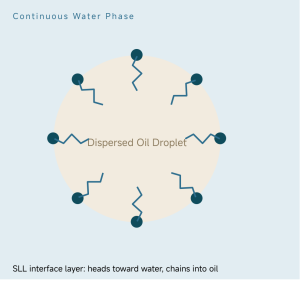
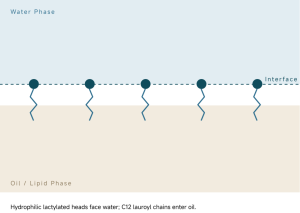
The hydrophilic lactylated head faces water; the hydrophobic C12 lauroyl chain enters the oil/lipid phase.

01 Adsorption: molecules migrate to the oil/water interface. 02 Organization: the chain anchors in oil and the head faces water. 03 Dispersion support: interface organization provides a structural basis for stability.

This amphiphilic architecture supports emulsions, cleansing systems, and lipid formulations.

07 · Emulsification and Interface Management

The schematic shows an oil droplet in a continuous water phase, surrounded by SLL with heads toward water and chains into oil.

Supports uniform dispersion, O/W emulsions, homogeneity/stability, combined emulsifier systems, and a refined feel in creams, lotions, and serum emulsions.

The presentation cites EU CosIng: SURFACTANT–EMULSIFYING.

Source link: https://ec.europa.eu/growth/tools-databases/cosing/

08 · Interface Engineering Across Formulation Structures

Oil/water interfaces: stabilization of emulsions and dispersions. Surfactant assemblies: complex cleansing structures, foam, and after-feel. Lipid-rich systems: dispersion and organization of ceramides, cholesterol, and other lipids.

SLL participates at multiple structural levels from adsorption to system organization.

09 · Mild Cleansing System Design

SLL’s anionic surfactant structure supports soil/sebum removal in combined systems, balancing cleansing with after-feel.

Formats: facial cleansers, body/hand washes, bathing products, and mild-cleansing concepts.

Patent context: cleansing, moisturization, lather, and skin feel. WO1998027193A1, Personal cleansing bar composition containing sodium lauroyl lactylate (1998); WO2007100784A2, Acyl lactylate compositions for rinse-out and leave-on applications for skin and hair (2007).

10 · From Clean to Comfortable Clean

The source compares conventional clean/tight/dry after-feel with an SLL formulation concept of clean/soft/comfortable/refined after-feel.

Published formulation goals: skin softness, moisturization, creamy lather, and improved after-feel. These reflect combined formulations, not effects attributable entirely to one ingredient.

Patent sources: WO1998027193A1; WO2007100784A2.

11 · An Interface Partner for Barrier Lipid Formulations

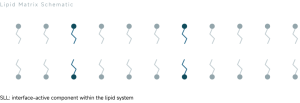
Ceramides + Cholesterol + Fatty Acids + SLL interface support.

Roles: dispersion, interface activity, co-emulsification, and lipid-delivery design. The lipid matrix is schematic.
US20240000681A1 (2024) includes SLL in designs containing Ceramide NP/AP/EOP, cholesterol, and free fatty acids/precursors. This is a patent disclosure, not PuriActives® SLL clinical data.

Patent title: Chemical compositions providing long-lasting skin pH control for improving skin-barrier function and treatment of skin-barrier disorders.

12 · Barrier-Friendly Formulation Architecture

SLL supports the architecture of lipid-based barrier-care products.

Combination logic: SLL interface support + Ceramides + Cholesterol + Phytosphingosine + Fatty Acids + Humectants.

Formats: barrier cream, ceramide lotion, sensitive/dry skin care, post-cleansing care, and lipid-rich serum. This formulation rationale does not by itself demonstrate clinical barrier repair.

13 · Moisturization Starts at the Interface

Hydration involves humectancy, occlusion, lipid organization, cleansing mildness, and emulsion quality.

SLL primarily supports interface, lipid, and cleansing dimensions of comfortable moisturization systems.

Patent context: skin softness, moisturization, cleansing, and foaming. WO2007100784A2 (2007); WO1998027193A1 (1998).

14 · From Skin to Hair

One molecule supports skin/hair formulation contexts. Published directions include shampoo, mild shampoo, scalp cleansing, rinse-off care, leave-on hair/scalp concepts, and hair grooming products.

15 · From Foam Quantity to Foam Quality

EP0562720A1, Hair shampoo (1993), examines acyl lactylates with alkyl polyglucosides (APG), including Sodium Lauroyl Lactylate-related systems, to address coarse APG foam.

Patent example range: acyl lactylates 3–15%, preferred 4–8%. These are patent-system ranges, not PuriActives® SLL recommendations.

Fine-Tune the Foam. Elevate the Cleansing Experience.

16 · Published Shampoo Formulation Examples

WO2007100784A2 (2007): approximately 3.0% SLL in a clear mild shampoo example concerned with cleansing, foam, viscosity, and pH stability; approximately 2.0% in another shampoo example for mild cleansing/sensory performance.

These are published examples, not recommended use levels. SLL has a documented hair-cleansing formulation history. Relevant attributes: cleansing, foaming, viscosity, pH stability, and sensory properties.

17 · Hair Fiber and Scalp Interface

Scalp: cleansing-system design, sebum/soil removal, freshness, mild formulations, and lipid-compatible care.

Hair: cleansing sensory properties, softer after-feel concepts, creamy foam, lipid-containing formulations, and conditioner/mask support.

Cosmetic scope excludes hair growth, anti-hair-loss, follicle repair, and hair-thickening claims.

18 · SLL and Modern Hair-Care Concepts

Reduced-sulfate cleansing, APG shampoos, scalp barrier care, ceramide hair care, lipid-replenishing shampoos, sensitive-scalp cleansing, premium cream shampoos, and scalp/hair serum emulsions.

An interface ingredient bridging cleansing technology and lipid care.

19 · SLL Interactions with Model Lipid Membranes

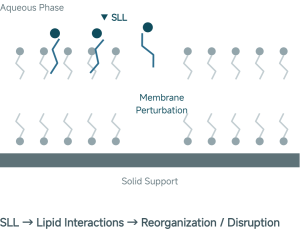
Gooran N, Tan SW, Yoon BK, Jackman JA. Int J Mol Sci. 2023;24(11):9283. DOI: 10.3390/ijms24119283.

Methods: QCM-D, quartz crystal microbalance with dissipation monitoring; EIS, electrochemical impedance spectroscopy; SLB, supported lipid bilayer; tBLM, tethered bilayer lipid membrane.

The study tracked SLL insertion, reorganization, and disruption of model membranes. The schematic shows aqueous phase, SLL, membrane perturbation, and solid support. Model lipid membranes are not equivalent to the human stratum corneum.

Source link: https://doi.org/10.3390/ijms24119283

20 · Research Possibilities Beyond Emulsification

Lactylate membrane-interactive behavior offers research perspectives for cleansing and lipid-care design.

Directions: advanced cleansing, scalp hygiene, personal cleansing, microbial membrane research, and functional surfactant systems. These are research concepts without therapeutic claims.

Source: Gooran et al. 2023.

21 · Application Matrix

Skin: facial cleanser, cream cleanser, body wash, hand wash, moisturizing lotion, barrier cream, ceramide cream, facial emulsion, sensitive-skin care, lipid-rich serum, body lotion, and post-cleansing care.

Hair: shampoo, mild/cream shampoo, scalp cleanser/care, conditioner, mask, hair milk, leave-on emulsion, ceramide hair care, and lipid-replenishing care.

22 · Combination Design

Surfactants: APG, amphoteric, anionic, and nonionic systems. Lipids: ceramides, cholesterol, fatty acids, vegetable oils, and esters. Conditioning: glycerin, panthenol, hyaluronic acid, phytosphingosine, niacinamide, proteins, and amino acids.

Formulation versatility requires experimental compatibility testing; not every combination is presumed compatible.

23 · pH and Formulation Window

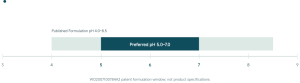
Published patent window: pH 4.0–8.5; preferred pH 5.0–7.0. The scale shown spans 3–9.

These are WO2007100784A2 acyl-lactylate skin/hair formulation windows, not product specifications.

pH 5–7 informs mildly acidic skin-care, gentle scalp-care, and hair-cleansing concepts.

24 · Reported Cosmetic Use

2024 CIR safety-assessment reported maximum use concentrations: 10% in rinse-off skin cleansing; 6.1% in leave-on body/hand products. These are reported concentrations, not product recommendations.

Chinese historical-use references in the PPT: approximately 10% rinse-off and 1.25% leave-on. Historical use is not a recommended level; the latest official inventory/public information governs interpretation.

The source describes peer-reviewed assessment, multiple categories/concentrations, Chinese use records, and rinse-off/leave-on applications.

Sources: Johnson et al. Int J Toxicol. 2024; Chinese ingredient-inventory public-use information. Regulatory/database statements are retained from the supplied PPT and have not been independently updated for this conversion.

25 · Safety Assessment Foundation

Johnson W Jr, Bergfeld WF, Belsito DV, et al. Safety Assessment of Alkanoyl Lactyl Lactate Salts as Used in Cosmetics. Int J Toxicol. 2024;43(4 Suppl). DOI: 10.1177/10915818241259694.

The source summarizes the Expert Panel conclusion as safe under current uses/concentrations when formulated to be nonirritating and nonsensitizing. This assessment includes the family containing Sodium Lauroyl Lactylate.

Foundation: established use, peer-reviewed assessment, rinse-off/leave-on contexts, and INCI recognition. This is a formulation-safety framework.

Source link: https://doi.org/10.1177/10915818241259694

26 · One Ingredient, Multiple Formulation Advantages

Emulsify: oil/water interface management. Cleanse: mild-system design. Stabilize: uniform dispersions. Condition: skin/hair sensory properties. Lipid compatibility: support for barrier-lipid formulations. Skin + Hair: dual application.

PuriActives® SLL integrates emulsifier, surfactant, and lipid-system support functions in a lactylated amphiphilic molecule.

27 · More Than an Emulsifier

Smarter interface management. Better cleansing/care sensory experience. Broader possibilities from skin to hair.

PuriActives® SLL: The Lactylate Interface for Modern Skin & Hair Care.

PuriPharm Co., Ltd. INCI: SODIUM LAUROYL LACTYLATE.

28 · Scientific References

Peer-reviewed literature, patent publications, databases, and regulatory sources from the presentation are retained below. Patents list publication numbers, titles, and years; applicant information is outside the source material.

Source link: https://doi.org/10.3390/ijms24119283

Source link: https://doi.org/10.1177/10915818241259694

Source link: https://pubchem.ncbi.nlm.nih.gov/compound/Sodium-lauroyl-lactylate

Source link: https://ec.europa.eu/growth/tools-databases/cosing/

PEER-REVIEWED LITERATURE

1. Gooran N, Tan SW, Yoon BK, Jackman JA. Unraveling Membrane-Disruptive Properties of Sodium Lauroyl Lactylate and Its Hydrolytic Products: A QCM-D and EIS Study. International Journal of Molecular Sciences. 2023;24(11):9283. DOI: 10.3390/ijms24119283

2. Johnson W Jr, Bergfeld WF, Belsito DV, et al. Safety Assessment of Alkanoyl Lactyl Lactate Salts as Used in Cosmetics. International Journal of Toxicology. 2024;43(4 Suppl). DOI: 10.1177/10915818241259694

PATENTS

WO2007100784A2 (2007)— Acyl lactylate compositions for rinse-out and leave-on applications for skin and hair.

EP0562720A1 (1993)— Hair shampoo.

WO1998027193A1 (1998)— Personal cleansing bar composition containing sodium lauroyl lactylate.

US20240000681A1 (2024)— Chemical compositions providing long-lasting skin pH control for improving skin-barrier function and treatment of skin-barrier disorders.

DATABASES & REGULATORY SOURCES

PubChem — Sodium Lauroyl Lactylate

EU CosIng — Sodium Lauroyl Lactylate

Cosmetic Ingredient Review / Expert Panel for Cosmetic Ingredient Safety

Current Chinese Inventory of Existing Cosmetic Ingredients and official public ingredient-use information

Patents list publication numbers, titles, and years; applicant information is outside this material.

NanoActive™ 10-HDA

01 · NanoActive™ 10-HDA: Nano-Encapsulated Royal Jelly Acid

Advanced liposomal active ingredient. Powered by PURISOME® FlexVes™ flexible-vesicle liposome technology. Royal Jelly, Re-Engineered. PuriPharm Co., Ltd.

02 · The Royal Jelly Signature Molecule

Royal jelly contains proteins, sugars, lipids, amino acids, and trace components. 10-HDA is a characteristic fatty acid and a marker in research and quality evaluation. It provides a defined molecular active beyond the traditional natural-ingredient concept.

Identity: 10-Hydroxy-2-Decenoic Acid; 10-HDA/10-H2DA; Queen Bee Acid; Royal Jelly Acid; a medium-chain ω-hydroxy unsaturated fatty acid and characteristic royal jelly lipid.

10-HDA is a multifunctional bioactive lipid. Whole-royal-jelly effects cannot all be attributed to it; this presentation focuses on the lipid’s evidence.

03 · From Royal Jelly to 10-HDA

Traditional natural origin, molecular precision, and nano delivery.

1 Royal jelly, a traditional natural ingredient. 2 Identify the signature bioactive lipid. 3 Define molecular 10-HDA. 4 Study multiple skin biological pathways. 5 NanoActive™ liposomal delivery.

Applications: premium skin and scalp care. Defined. Studied. Delivered.

04 · 10-HDA Molecular Science

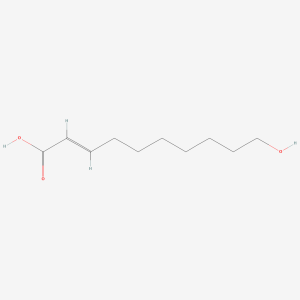
2D structure source: PubChem CID 5312738.

Formula C10H18O3; molecular weight approximately 186.25. Structure: α,β-unsaturated carboxylic acid, terminal hydroxyl, and a medium-chain fatty acid backbone. Class: medium-chain ω-hydroxy unsaturated fatty acid.

Potential: lipid interactions with skin lipids; hydroxyl-mediated hydrogen bonding; amphiphilic biofilm interactions; and a structural basis for epidermal biology research.

05 · One Royal Jelly Lipid, Multiple Skin Pathways

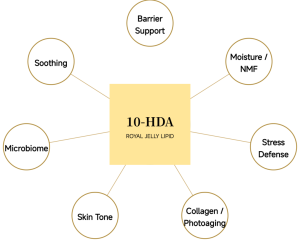
Seven research directions: barrier support, moisture/NMF, environmental stress defense, collagen/photoaging, skin tone, microbiome support, and soothing.

The presentation organizes an evidence network around one defined bioactive lipid. This mechanism map does not establish finished-product clinical efficacy.

06 · Filaggrin: From 10-HDA to Natural Moisturizing Factors

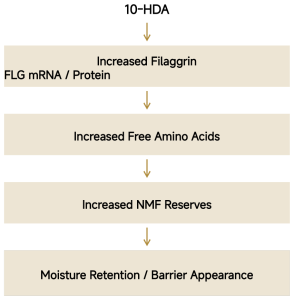
Gu, Zeng, and Maeda (2017) found induction of filaggrin and free amino acids in cultured 3D human epidermis. This extends hydration concepts into cornification and NMF biology.

Key findings: increased filaggrin expression, FLG mRNA/protein, stratum-corneum free amino acids, and support for NMF formation.

Pathway: 10-HDA, increased filaggrin, free amino acids, NMF reserves, and moisture-retention/barrier appearance concepts.

Source: Cosmetics. 2017;4(4):48. DOI: 10.3390/cosmetics4040048. In vitro 3D epidermis.

07 · Barrier Mechanism Map

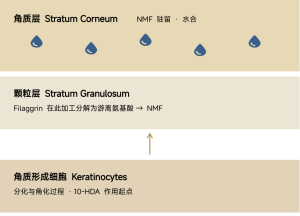
From keratinocytes to the stratum corneum: differentiation support, increased granular-layer filaggrin, amino acid release, NMF reserves, hydration, and a stronger-looking barrier.

Layer schematic: stratum corneum, NMF/hydration; stratum granulosum, filaggrin processing and amino acids/NMF; keratinocytes, differentiation/cornification and the proposed 10-HDA starting point.

Source: Gu et al. Cosmetics. 2017;4(4):48. DOI: 10.3390/cosmetics4040048. The diagram illustrates mechanisms and does not establish product penetration depth.

08 · NQO1: Supporting Epidermal Stress Defense

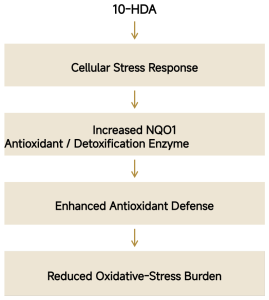
Okumura et al. (2021) identified 10-HDA as an important royal jelly fatty acid inducing NQO1, an antioxidant/detoxification enzyme.

Care contexts: UV oxidative stress, ROS accumulation, pollution/environmental stress, and early oxidative-aging signs. The positioning is defense support, without sunscreen or medicinal claims.

Pathway: 10-HDA, cellular stress-response signals, increased NQO1, enhanced antioxidant defense, and reduced oxidative-stress burden.

Source: Int J Mol Sci. 2021;22(23):12973. DOI: 10.3390/ijms222312973. In vitro cellular/epidermal models.

09 · 10-HDA and UVA-Induced Dermal Damage

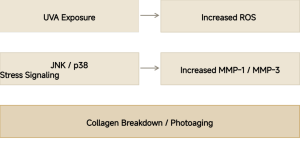
Human dermal fibroblast pathway: UVA, increased ROS, JNK/p38 signaling, increased MMP-1/MMP-3, and collagen breakdown/photoaging.

10-HDA findings: lower ROS and senescence-related changes, modulated MMP-1/MMP-3, supported type I collagen expression, and protection against UVA cellular damage.

Zheng et al. (2013) connect ROS management with downstream MMP modulation and collagen protection.

Source: J Eur Acad Dermatol Venereol. 2013;27:1269–1277. DOI: 10.1111/j.1468-3083.2012.04707.x. In vitro human fibroblasts.

10 · Royal Jelly Biology and Collagen Science

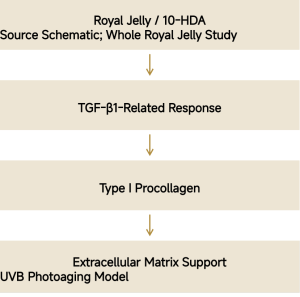
This section concerns whole royal jelly, separate from purified 10-HDA.

Park et al. (2011), human skin fibroblast UVB model: royal jelly enhanced collagen production, with TGF-β1-related responses, type I procollagen, and extracellular-matrix support.

Concept: protect and preserve youthful-looking skin. Whole royal jelly and 10-HDA findings inform complementary collagen narratives, but whole-royal-jelly results cannot be fully attributed to 10-HDA. The source schematic includes Royal Jelly/10-HDA; the experiment itself tested whole royal jelly.

Source: J Med Food. 2011;14(9):899–906. DOI: 10.1089/jmf.2010.1363. In vitro.

11 · 10-HDA and Melanogenesis

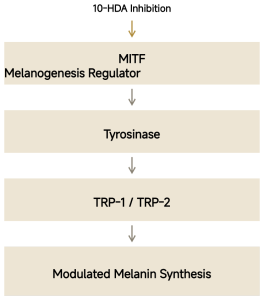
Peng et al. (2017) studied B16F1 melanoma cells and topical mouse skin, showing melanogenesis inhibition involving MITF, Tyrosinase, and TRP pathways.

Models assessed melanin/tyrosinase and topical tone-related indicators. Multi-target concepts support clearer-looking tone and appearance; no pigment-disease treatment claims.

Pathway: 10-HDA inhibition, MITF modulation, Tyrosinase, TRP-1/TRP-2, and melanin synthesis.

Source: BMC Complement Altern Med. 2017;17:392. DOI: 10.1186/s12906-017-1888-8.

12 · Staphylococcus aureus Biofilm Research

In vitro findings: reduced biofilm formation, EPS production, adhesion, aggregation, and mature-biofilm viability.

Genes: reduced sarA, agrA, and hla, associated with biofilm regulation, quorum signaling, and α-hemolysin virulence.

Positioning: a microbiome-friendly skin-purifying strategy managing unfavorable biofilms and environments. Care concepts include oily/blemish-prone skin, sensitive-skin microbiome care, scalp care, skin cleansing care, and fragile barriers. These findings do not establish selective support for all beneficial species.

Gao et al. Molecules. 2022;27(5):1485. DOI: 10.3390/molecules27051485.

13 · The Delivery Challenge

01 Poor aqueous solubility limits direct water-based use. 02 Limited oil solubility constrains conventional oil delivery. 03 Free-state penetration depends on dosage-form design. 04 Direct addition can be difficult to disperse and restrict formulation options.

Biological activity does not by itself establish bioavailability at the intended interface.

14 · PURISOME® FlexVes™: Why Liposomes

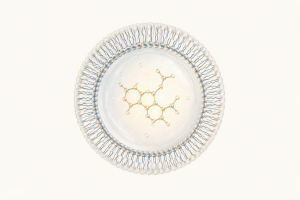
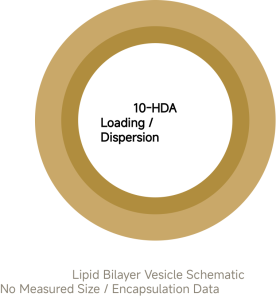
A lipid-bilayer vesicle is a membrane-related carrier architecture for loading/dispersing 10-HDA. It aims to improve aqueous dispersion, compatibility with stratum-corneum lipids, and delivery/deposition potential.

Values: nanoscale delivery, lipid compatibility, dispersion, skin-deposition potential, controlled skin interactions, and formulation flexibility.

The vesicle image is a mechanism schematic, not measured particle-size or encapsulation-efficiency data.

15 · 2026 Independent Nano-Delivery Evidence

Gao et al. (2026) studied Hyalurosomes encapsulating a 10-HDA/matrine deep eutectic solvent, using ex vivo skin and cellular models.

Formulation/delivery: improved dissolution/dispersion and stability, with increased deposition in stratum corneum, viable epidermis, and dermis.

Cells: reduced HaCaT ROS, IL-1α/IL-6/TNF-α; increased HaCaT migration; reduced HFF-1 senescence phenotype.

The formulation is distinct from NanoActive™ 10-HDA. It supports the delivery strategy and does not constitute direct product evidence.

Int J Pharm. 2026;701:127150. DOI: 10.1016/j.ijpharm.2026.127150.

16 · Free and Nano-Encapsulated 10-HDA

Free 10-HDA: limited solubility, dispersion, penetration, and formulation choices.

NanoActive™ 10-HDA with PURISOME® FlexVes™: liposomal dispersion, a skin-compatible lipid carrier, improved delivery potential, greater formulation versatility, and modern skin-care design.

Better delivery offers greater opportunity for biological activity; product performance still requires direct testing.

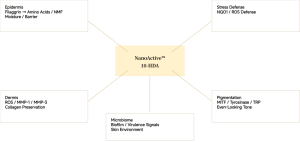
17 · Integrated Mechanism Network

Epidermis: filaggrin, amino acids/NMF, moisture/barrier. Dermis: lower ROS/MMP-1/MMP-3, collagen preservation. Stress defense: NQO1 and oxidative-defense support. Pigmentation: MITF/Tyrosinase/TRP and even-looking tone. Microbiome: biofilm/virulence modulation and skin-environment concepts.

One bioactive lipid, multiple pathways. The network combines Gu 2017, Okumura 2021, Zheng 2013, Peng 2017, and Gao 2022, retaining their original model-level attribution.

18 · Five Core Skincare Values

01 Barrier recovery: filaggrin/NMF and hydration foundations. 02 Anti-stress defense: NQO1-related epidermal defenses. 03 Photoaging care: ROS/MMP and collagen protection. 04 Tone: MITF/Tyrosinase-related pathways for dull/uneven appearance. 05 Microbiome: unfavorable-biofilm management and skin-environment support.

Barrier × Defense × Collagen × Tone × Microbiome connects mechanisms to formulation concepts.

19 · Scalp Is Skin

Scalp pressures: fragile barrier/moisture loss, oxidative stress, microbial imbalance, inflammatory environments, and sebum/pollution.

Skin mechanisms inform scalp concepts: Filaggrin/NMF for hydration; NQO1 for stress defense; biofilm management for microbial care; soothing pathways for comfort. These concepts require scalp-specific validation.

Healthy scalp, a better environment for beautiful hair. The positioning does not claim direct hair growth.

20 · Royal Jelly and Scalp Research Clues

A 2024 clinical observation of a medicated hair tonic containing royal jelly extract associated the combination product with improved scalp moisture/condition and hair condition. Dermal papilla experiments reported changes in some growth-related genes.

Other actives were present; results cannot all be attributed to royal jelly extract or 10-HDA.

NanoActive™ positioning: scalp barrier, moisture, soothing, antioxidant defense, and microbiome care. Skin health guides scalp ecological concepts.

J Soc Cosmet Chem Jpn. 2024;58(1):55–64. DOI: 10.5107/sccj.58.55. Combination-product clinical observation and cell experiments.

21 · Skincare Applications

Anti-aging serum, repair serum, barrier cream, sensitive-skin serum, overnight recovery, tone-care serum, blemish-prone care, microbiome products, urban-defense serum, eye-contour care, premium royal jelly concepts, and post-treatment-inspired care.

Royal Jelly Renewal Serum: photoaging/collagen concept. Barrier Defense Cream: Filaggrin–NMF hydration concept. Bio-Balance Repair Essence: biofilm-management concept.

22 · Scalp and Hair Applications

Scalp serum, ampoule, shampoo, soothing mist, dry-scalp lotion, oily-scalp essence, post-color/perming scalp care, anti-pollution serum, and premium aging scalp care.

Royal Scalp Defense Serum: antioxidant/environmental defense. Scalp Barrier Booster: daily barrier/hydration care. Nano Royal Jelly Scalp Essence: premium nano-delivery and microbiome concepts.

23 · Value for Formulators

01 Easier incorporation addresses free-active solubility, dispersion, and penetration challenges. 02 Lipid-compatible delivery. 03 Water-based formulation design for serums/lotions. 04 Multiple barrier, antioxidant, aging, tone, and microbiome concepts. 05 Premium storytelling: Royal Jelly × Molecular Science × Nano Delivery.

Nature × Molecule × Nanotechnology combines natural-origin narrative, molecular evidence, and delivery design.
24 · Royal Jelly, Re-Engineered

01 A signature royal jelly lipid. 02 Filaggrin/NMF hydration. 03 Epidermal defense and collagen-protection research. 04 Microbiome/tone concepts. 05 Advanced liposomal design to address practical delivery barriers.

NanoActive™ 10-HDA, powered by PURISOME® FlexVes™.

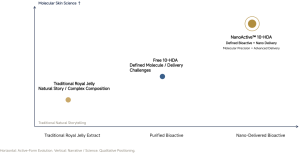
25 · Positioning Matrix

Traditional royal jelly: a strong natural narrative with complex composition. Free 10-HDA: a defined molecule with formulation/delivery challenges. NanoActive™ 10-HDA: Defined Bioactive + Nano Delivery; Molecular Precision + Advanced Delivery.

Horizontal axis: evolution of active form. Vertical axis: narrative/scientific level. The schematic positions the product at molecular precision and advanced delivery; it is a qualitative positioning map, not quantitative comparative data.

26 · References

All ten references from the presentation are retained below.

Molecular-structure source: PubChem CID 5312738. The science concerns 10-HDA (10-Hydroxy-2-Decenoic Acid, C10H18O3), distinct from 10-Hydroxydecanoic Acid (10-HDAA). Final INCI follows the formal PuriPharm Co., Ltd. TDS/SPEC.

PuriPharm Co., Ltd. Royal Jelly, Re-Engineered.

1. Gu L, Zeng H, Maeda K. 10-Hydroxy-2-Decenoic Acid in Royal Jelly Extract Induced Both Filaggrin and Amino Acid in a Cultured Human Three-Dimensional Epidermis Model. Cosmetics. 2017;4(4):48. DOI: 10.3390/cosmetics4040048.

2. Zheng J, Lai W, Zhu G, et al. 10-Hydroxy-2-Decenoic Acid Prevents Ultraviolet A-Induced Damage and Matrix Metalloproteinases Expression in Human Dermal Fibroblasts. J Eur Acad Dermatol Venereol. 2013;27:1269–1277. DOI: 10.1111/j.1468-3083.2012.04707.x.

3. Park HM, Hwang E, Lee KG, et al. Royal Jelly Protects Against Ultraviolet B-Induced Photoaging in Human Skin Fibroblasts via Enhancing Collagen Production. J Med Food. 2011;14(9):899–906. DOI: 10.1089/jmf.2010.1363.

4. Peng CC, Sun HT, Lin IP, et al. The Functional Property of Royal Jelly 10-Hydroxy-2-Decenoic Acid as a Melanogenesis Inhibitor. BMC Complement Altern Med. 2017;17:392. DOI: 10.1186/s12906-017-1888-8.

5. Okumura N, Ito T, Degawa T, et al. Royal Jelly Protects against Epidermal Stress through Upregulation of the NQO1 Expression. Int J Mol Sci. 2021;22(23):12973. DOI: 10.3390/ijms222312973.

6. Gao K, Su B, Dai J, et al. Anti-Biofilm and Anti-Hemolysis Activities of 10-Hydroxy-2-Decenoic Acid against Staphylococcus aureus. Molecules. 2022;27(5):1485. DOI: 10.3390/molecules27051485.

7. Perminaite K, Fadda AM, Sinico C, Ramanauskiene K. Formulation of Liposomes Containing Royal Jelly and Their Quality Assessment. DOI: 10.1166/jnn.2021.19053.

8. Gao C, Liu F, Yang S, Wang Q, Yang C, Liang R. 10-Hydroxy-2-Decenoic Acid/Matrine Deep Eutectic Solvent Encapsulated in Hyalurosomes for Enhanced Transdermal Delivery and Antioxidant Efficacy. Int J Pharm. 2026;701:127150. DOI: 10.1016/j.ijpharm.2026.127150.

9. Enhanced Skin Penetration of 10-Hydroxy-2-Decenoic Acid via Anionic Polymer Formulations and Skin Hydration Modulation. J Dermatologic Sci Cosmet Technol. 2026;3(1):100144. DOI: 10.1016/j.jdsct.2025.100144.

10. The Effectiveness of Medicated Hair Tonic Containing Royal Jelly Extract. J Soc Cosmet Chem Jpn. 2024;58(1):55–64. DOI: 10.5107/sccj.58.55.

PuriActives® SupraHDA™

01 · PuriActives® SupraHDA™: Supramolecular Royal Jelly Lipid Care

Multicomponent supramolecular complex. Royal jelly lipid intelligence. Four-dimensional balance.

Four complementary dimensions support skin and scalp homeostasis. Components: Zinc PCA, 10-HDAA, Xyloglucan, and Alpha-Glucan Oligosaccharide.

PuriPharm Co. Ltd.

02 · From One Active to Four-Dimensional Homeostasis

Oily, fragile, and fluctuating skin can combine excess sebum, barrier instability, environmental stress, and microbiome imbalance. SupraHDA™ organizes four functional ingredients into a supramolecular system for sebum, barrier, interface, and microbiome management.

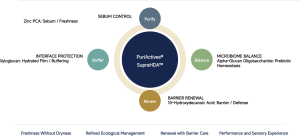
Purify, Renew, Buffer, Balance: four components, four pathways, and three application areas—skin, scalp, and hair. Designed for next-generation skin and scalp care. The presentation describes complementary design roles, which do not themselves establish measured product synergy.

03 · Next-Generation Sebum Care: Managing Homeostasis

01 Oily skin: move from degreasing toward oil/water balance and freshness without dryness.

02 Blemish-prone skin: support microbial diversity and balance.

03 Aging care: extend collagen care to barrier homeostasis and oxidative-stress defense.

04 Scalp skinification: apply skin-care science to sebum, microbes, the barrier, and comfort.

Long-term stability, comfort, and microbial balance extend the goals of sebum care.

04 · Product Identity

Product: PuriActives® SupraHDA™. Chinese name: supramolecular royal jelly acid. Type: multicomponent supramolecular active complex.

Positioning: oily, combination, fluctuating, barrier-fragile skin and scalp sebum imbalance care.

Final INCI follows formal TDS/SPEC. If Royal Jelly Extract (CAS 91081-56-0) is confirmed, include it fully in actual formulation order.

Zinc PCA: sebum/freshness and the stratum-corneum moisture environment.

10-Hydroxydecanoic Acid (CAS 1679-53-4): a royal-jelly-lipid-inspired hydroxy fatty acid.

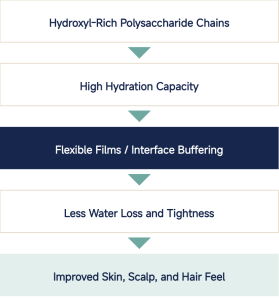
Xyloglucan: a flexible hydrated polysaccharide network for interface buffering and dispersion.

Alpha-Glucan Oligosaccharide: prebiotic microbiome care.

05 · Purify, Renew, Buffer, Balance

01 Purify—Zinc PCA: sebum, freshness, and environmental management; PCA supports stratum-corneum hydration and zinc-related aging-care concepts.

02 Renew—10-Hydroxydecanoic Acid (10-HDAA): epidermal renewal, NMF-related pathways, environmental antioxidant/aging care, and skin/scalp comfort.

03 Buffer—Xyloglucan: hydrated films, interface buffering, dispersion, sensory properties, and smoother/flexible hair feel.

04 Balance—Alpha-Glucan Oligosaccharide: prebiotic ecology, diversity, and homeostasis, supporting scalp microbiome concepts.

The presentation integrates these roles as supramolecular synergy.

06 · High-Value Actives Need Effective Formulation Design

Challenges: limited aqueous dispersion; crystallization/cloudiness; compatibility between ions and polymers; uneven skin-interface distribution; sensory effects at high use levels; and lack of synergy from simple ingredient addition.

Hydroxy fatty acids and combinations require systematic dispersion, compatibility, interface, and sensory design. SupraHDA™ uses ionic, hydrogen-bonding, hydrophobic, and polysaccharide-network interactions to organize actives and support molecular cooperation.

07 · Multiple Noncovalent Interactions Form a Dynamic Network

Zinc PCA supplies ionic/polar sites. 10-Hydroxydecanoic Acid supplies hydroxyl/carboxyl groups and a hydrophobic chain. Xyloglucan provides a hydroxyl-rich hydrated network. Alpha-Glucan Oligosaccharide provides oligosaccharide hydrogen bonding and microbiome functions.

Hydrogen bonds dynamically associate hydroxyl/polar groups. Ionic association links zinc with carboxyl/hydroxyl groups reversibly. Hydrophobic interactions organize medium-length chains. The Xyloglucan network supports dispersion/structure, while hydration maintains a moist interface.

The design uses reversible, dynamic, cooperative molecular organization.

08 · Five Steps from Formulation to Interface Performance

01 Association: noncovalent interactions dynamically associate four components.

02 Dispersion: polysaccharide networks support uniform aqueous dispersion.

03 Compatibility: adapt to multiple formats and reduce precipitation/cloudiness risk.

04 Retention: hydrated films support interface residence and uniform contact.

05 Performance: express Purify, Renew, Buffer, and Balance pathways.

Design goals: easier formulation, uniform contact, better sensory properties, and multifunctionality.

09 · Zinc PCA: Sebum and Skin Environment Management

Zinc signal: supports sebum management, less shine/stickiness, and control of unfavorable microbial conditions.

PCA moisture logic: PCA is associated with natural moisturizing factors, supporting stratum-corneum softness/moisture and less tightness after sebum removal.

Photoaging support: cellular research reported reduced UVA-induced AP-1 activation/MMP-1 production and supported collagen synthesis.

The zinc/PCA combination links freshness with moisture, barrier, and photoaging-care concepts. The source’s priority wording does not establish historical novelty.

Ingredient-level cellular evidence: Takino et al. Int J Cosmet Sci. 2012;34(1):23–28. DOI: 10.1111/j.1468-2494.2011.00676.x.

Source link from the presentation: https://doi.org/10.1111/j.1468-2494.2011.00676.x

10 · PCA and the Stratum-Corneum Moisture Environment

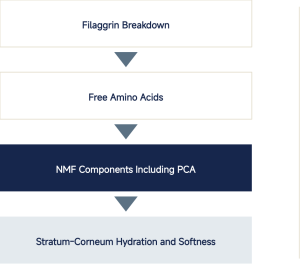
Pathway: filaggrin breakdown produces free amino acids and NMF components including PCA, supporting hygroscopicity and softness.

Zinc PCA combines zinc-related care with PCA’s hydration rationale. NMF is the stratum corneum’s own moisture-retention system, and PCA is an important component. Sebum care can preserve hydration.

Ingredient-level physiology: Clar EJ, Fourtanier A. Int J Cosmet Sci. 1981;3(3):101–113. DOI: 10.1111/j.1467-2494.1981.tb00275.x.

Source link from the presentation: https://doi.org/10.1111/j.1467-2494.1981.tb00275.x

11 · Royal Jelly Lipids: Distinct Hydroxy Fatty Acids

10-Hydroxydecanoic Acid (CAS 1679-53-4): saturated ω-hydroxy fatty acid and a core SupraHDA™ INCI; terminal hydroxyl, carboxylic acid, and medium-length hydrophobic chain. Product claims should rely on this molecule and direct finished-product data.

10-Hydroxy-2-Decenoic Acid (10-H2DA / 10-HDA): representative unsaturated royal jelly fatty acid with more extensive published skin research and an amphiphilic structure. Its literature provides family background and mechanism directions.

The molecules have related structures but are distinct. Shared amphiphilic features support biological and assembly concepts. 10-H2DA literature is not direct test data for 10-Hydroxydecanoic Acid or SupraHDA™.

12 · Epidermal Differentiation and Barrier Maturation

Path A: PPARα, IVL/LOR/FLG/TGM1, terminal keratinocyte differentiation, cornified-envelope formation, and barrier integrity.

Path B: SPT/GBA/ACACA, epidermal lipid production, and intercellular lipid support.

The concept concerns the skin’s own barrier-building programs, epidermal renewal, and cornification.

Royal jelly lipid in vitro mechanism research: Yuan et al. J Funct Foods. 2024;122:106505. DOI: 10.1016/j.jff.2024.106505.

Source link from the presentation: https://doi.org/10.1016/j.jff.2024.10650

13 · NMF Hydration: Supporting Endogenous Moisture Retention

3D human epidermis study of 10-H2DA at 10/20/40 μmol/L. At 40 μmol/L, total stratum-corneum free amino acids increased approximately 70%.

FLG mRNA, filaggrin protein, and free amino acids increased. AQP3 did not show similarly significant changes.

The proposed route promotes cornification and NMF formation rather than only external humectancy. The source’s “endogenous water creation” phrase is presented here as endogenous moisture retention.

These are 10-H2DA model data, not SupraHDA™ finished-product tests.

Gu et al. Cosmetics. 2017;4(4):48. DOI: 10.3390/cosmetics4040048.

Source link from the presentation: https://doi.org/10.3390/cosmetics4040048

14 · Published Human Hydration Study

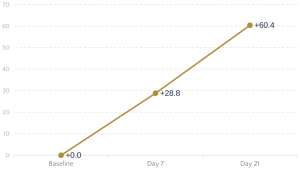
10 healthy volunteers; UV-induced dry skin; a cream containing 0.01% of a synthetic 10-H2DA counterpart; hydration index assessed on days 7 and 21.

Chart change from baseline: baseline 0.0%, day 7 +28.8%, day 21 +60.4%.

The literature supports sustained-hydration potential in dry/barrier-fragile skin formulations. This is royal jelly lipid literature on a 10-H2DA counterpart, not SupraHDA™ product data.

Duplan et al. Eur J Dermatol. 2011;21(6):906–915. DOI: 10.1684/ejd.2011.1531.

Source link from the presentation: https://doi.org/10.1684/ejd.2011.1531

Published human hydration data for a 10-H2DA counterpart: change from baseline (%)

15 · Supporting Cellular Antioxidant Defense

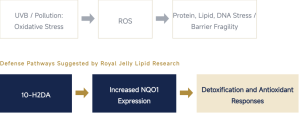
Stress chain: UVB/pollution, ROS, protein/lipid/DNA stress, and barrier fragility.

10-H2DA research: increased NQO1 expression and detoxification/antioxidant responses. Nrf2- and AhR-related signals may participate, with reduced UVB/oxidant-induced cellular damage.

The concept extends radical scavenging to endogenous environmental defense.

Cellular 10-H2DA evidence: Okumura et al. Int J Mol Sci. 2021;22(23):12973. DOI: 10.3390/ijms222312973.

Source link from the presentation: https://doi.org/10.3390/ijms222312973

16 · Two Research Pathways for Collagen Preservation

Zinc PCA pathway: UVA, AP-1, and MMP-1. Research reports inhibition of UVA-induced AP-1, reduced MMP-1, and supported collagen synthesis.

Royal jelly lipid pathway: UVA, ROS, JNK/p38 MAPK, and MMP-1/3. 10-H2DA research reports reduced ROS/MMP-1/MMP-3, supported collagen production, and less cellular senescence.

The design links oxidative-stress and collagen-degradation pathways to firmness, resilience, and youthful radiance concepts.

Ingredient-level Zinc PCA and 10-H2DA literature: Takino 2012, DOI: 10.1111/j.1468-2494.2011.00676.x; Zheng 2013;27(10):1269–1277, DOI: 10.1111/j.1468-3083.2012.04707.x.

Source link from the presentation: https://doi.org/10.1111/j.1468-2494.2011.00676.x

Source link from the presentation: https://doi.org/10.1111/j.1468-3083.2012.04707.x

17 · Microbiome and Biofilm Research

In vitro Staphylococcus aureus study with sub-inhibitory 10-H2DA: MIC 2.25 mg/mL; biofilm quantity decreased 41.9–72.9%; biofilm cellular metabolic activity decreased 73.6% at 1/2 MIC.

Other observations: less EPS formation, adhesion and aggregation, downregulated sarA/agrA/hla, and reduced hemolysis-related virulence.

These findings inform refined ecological-care concepts for oily/fluctuating skin and scalp, without establishing direct product efficacy.

Gao K et al. Molecules. 2022;27(5):1485. DOI: 10.3390/molecules27051485.

Source link from the presentation: https://doi.org/10.3390/molecules27051485

18 · Alpha-Glucan Oligosaccharide: Selective Balance

Ingredient-level human study: an α-glucan oligosaccharide gel, whole-face application twice daily for 2 weeks, and metagenomic/DNA sequence analysis.

Results: improved Simpson Index in initially low-diversity participants; trends toward more S. epidermidis and less S. aureus; C. acnes moving toward a more suitable proportion; support for balance/diversity.

Prebiotic care offers selective nutrition for beneficial microbes and supports ecology rather than sterile skin. Face/body/scalp care concepts extend from these ingredient-level findings.

Duan et al. J Soc Cosmet Chem Jpn. 2021;55(2):176–181. DOI: 10.5107/sccj.55.176.

Source link from the presentation: https://doi.org/10.5107/sccj.55.176

19 · Xyloglucan: Active Delivery, Interface, and Comfort

Hydroxyl-rich polysaccharide chains support hydration, flexible films/interface buffering, reduced water-loss/tightness concepts, and improved skin/scalp/hair feel.

Materials research: film-forming Xyloglucan hydrogels, cellular compatibility, maintenance of a moist microenvironment, and platforms for active carriage, protection, and controlled-release research.

Three roles: active carriage, interface protection, and sensory comfort.

Picone et al. Int J Biol Macromol. 2019;121:784–795. DOI: 10.1016/j.ijbiomac.2018.10.078; Infante et al. AAPS PharmSciTech. 2023;24(1):29. DOI: 10.1208/s12249-022-02472-w (skin/hair film-evaluation methods).

Source link from the presentation: https://doi.org/10.1016/j.ijbiomac.2018.10.078

Source link from the presentation: https://doi.org/10.1208/s12249-022-02472-w

20 · Four-Dimensional Integration

Purify: Zinc PCA for sebum and freshness. Renew: 10-Hydroxydecanoic Acid for barrier/environmental-defense concepts. Buffer: Xyloglucan for hydrated films/interface buffering. Balance: Alpha-Glucan Oligosaccharide for prebiotic homeostasis.

Design goals: freshness without dryness, refined ecological management, renewal with barrier care, and performance with a comfortable formulation experience.

21 · Multiple Pathways for Complex Skin Needs

The table retains the presentation’s proposed ingredient, mechanism, and consumer-value mapping. Contributions derive from ingredient/literature research; the mapping does not substitute for direct product validation. In particular, 10-H2DA literature should not be treated as direct 10-Hydroxydecanoic Acid measurements.

Skin need Key components Pathway Consumer value
Visible shine Zinc PCA Sebum-related signals and a fresh environment Lasting freshness / less recurring shine
Pores and blemishes Zinc PCA + 10-Hydroxydecanoic Acid Environmental care / biofilm and blemish-trigger concepts Finer-looking pores / more even texture
Dryness and tightness Xyloglucan + 10-Hydroxydecanoic Acid Hydrated films / NMF formation concepts Softness, hydration, and comfort
Fragile barrier 10-Hydroxydecanoic Acid + Xyloglucan Cornification, lipid synthesis, and buffering concepts Barrier stability / tolerance
Microbiome imbalance Alpha-Glucan Oligosaccharide Selective prebiotic support for beneficial microbes Microbial balance / stable condition
Environmental aging Zinc PCA + 10-Hydroxydecanoic Acid Antioxidant defense / less MMP-related degradation Firmness, resilience, and photoaging-care concepts

22 · Scalp Skinification: Homeostasis Science

Scalp sebum balance: freshness/stability and less recurring oiliness. Scalp microbiome: prebiotic diversity/homeostasis. Scalp barrier: cornification and lipid-environment concepts. Scalp comfort: polysaccharide films buffer interfaces and dryness/tightness. Hair surface care: smoother feel, shine, and combability.

Market language: scalp freshness/balance, microbiome care, barrier care, comfort/hydration, and light smooth hair.

Claims remain cosmetic. No treatment claims for alopecia, medicinal hair growth, seborrheic dermatitis, fungal infections, or permanent dandruff elimination.

The scalp is an extension of skin; the platform supports scalp and hair-care concepts.

23 · Eight Concept Product Directions

Facial: 1 Oil-Balance Serum for oily/combination skin, Zinc PCA with Niacinamide/Panthenol. 2 Microbiome Essence for fluctuating skin, α-glucan oligosaccharide with Ectoin/Betaine. 3 Barrier Comfort Cream for dry/fragile skin, 10-Hydroxydecanoic Acid/Xyloglucan with Ceramides/Cholesterol. 4 Pore Refining Gel for visible pores/blemish-prone skin, gentle-acid alternative strategies and soothing ingredients.

Scalp/hair: 5 Scalp Balance Essence, sebum/microbiome care with water-soluble polysaccharides/peptides. 6 Fresh Scalp Shampoo, mild surfactants for comfort/light roots. 7 Scalp Comfort Mask for dryness/tightness, polysaccharides with Panthenol/Phytosterols. 8 Lightweight Conditioner for smoothness without flatness, amino-acid conditioners.

Suggested partners: Niacinamide, Panthenol, Betaine, Ectoin, Ceramides, Cholesterol, amino acids, mild surfactants, water-soluble polysaccharides, peptides, and phytosterols. Formulation experiments must confirm compatibility.

24 · Formulation Guidance for Multiple Formats

Predisperse in water or add later; avoid prolonged heat; assess electrolyte/anionic/cationic-polymer compatibility; test clarity and long-term stability across pH conditions; verify centrifugation, freeze–thaw, thermal cycling, and light stability; calculate addition from actual active content. Exact specifications, use levels, and conditions follow formal TDS/SPEC.

Facial formats: serums, lotions, creams, hydrogels, sprays, masks. Cleansing/body: facial cleanser, body lotion. Scalp/hair: scalp serum, shampoo, conditioner, hair mask.

Evaluate aqueous and emulsion systems across these applications.

25 · Product Data Roadmap

A Formulation/assembly characterization: aqueous dispersion comparison, turbidity, centrifugation, thermal cycling, FTIR hydrogen-bond shifts, DSC, rheology, and particle size only where applicable.

B In vitro efficacy: FLG, IVL, LOR, TGM1, NQO1, ROS, MMP-1, collagen-related indicators, inflammatory factors.

C Microbiome: S. epidermidis, C. acnes, S. aureus, selective utilization, biofilms, 16S/metagenomics.

D Human skin: sebum, pores, shine, hydration, TEWL, redness, roughness, comfort.

E Scalp/hair: scalp sebum, root freshness, hydration, tightness/itch, visible flakes, combing force, friction, shine, static control, and volume.

Future completed tests will be labeled SupraHDA™ Product Data, clearly separate from ingredient/literature evidence. Build the finished-product evidence chain progressively from A to E.

26 · Conclusion: Modern Royal Jelly Lipid Care

Purify: sebum clarity. Renew: barrier renewal. Buffer: interface protection. Balance: microbiome balance. Skin + Scalp: dual application.

SupraHDA™ combines royal jelly lipid science, zinc functions, polysaccharide interfaces, and prebiotic concepts into a forward-looking homeostasis-care platform.

Royal jelly lipid intelligence. Four-dimensional balance.

27 · References and Related Patents

The references, publication numbers, years, and technical directions supplied in the presentation are retained below. Patents support technical routes/application contexts and are not SupraHDA™ finished-product efficacy data.

1. Takino Y et al. Int J Cosmet Sci. 2012;34(1):23–28. DOI: 10.1111/j.1468-2494.2011.00676.x

2. Clar EJ, Fourtanier A. Int J Cosmet Sci. 1981;3(3):101–113. DOI: 10.1111/j.1467-2494.1981.tb00275.x

3. Duplan H et al. Eur J Dermatol. 2011;21(6):906–915. DOI: 10.1684/ejd.2011.1531

4. Zheng J et al. J Eur Acad Dermatol Venereol. 2013;27(10):1269–1277. DOI: 10.1111/j.1468-3083.2012.04707.x

5. Gu L et al. Cosmetics. 2017;4(4):48. DOI: 10.3390/cosmetics4040048

6. Okumura N et al. Int J Mol Sci. 2021;22(23):12973. DOI: 10.3390/ijms222312973

7. Gao K et al. Molecules. 2022;27(5):1485. DOI: 10.3390/molecules27051485

8. Yuan C-Y et al. J Funct Foods. 2024;122:106505. DOI: 10.1016/j.jff.2024.106505

9. Duan Z et al. J Soc Cosmet Chem Jpn. 2021;55(2):176–181. DOI: 10.5107/sccj.55.176

10. Picone P et al. Int J Biol Macromol. 2019;121:784–795. DOI: 10.1016/j.ijbiomac.2018.10.078

11. Infante VHP et al. AAPS PharmSciTech. 2023;24(1):29. DOI: 10.1208/s12249-022-02472-w

12. Gao C et al. Int J Pharm. 2026;701:127150. DOI: 10.1016/j.ijpharm.2026.127150  (supramolecular formulation trend reference only)

Related patents (publication number, year, and technical direction)

US6514507B2|2002|hydroxy-acid lipid use in skin care

JPH10147514A|1998|preparation and use of royal-jelly-derived hydroxydecanoic acid

US20120237494A1|2012|hydroxy fatty acids for skin barrier care

GB2498543A|2013|hydroxydecanoic acid compositions and skin applications

US10993900B2/EP3041585A2|supramolecular carriers and active delivery

US20230372218A1|2023|polysaccharide–active complexes and personal care

Patents support technical routes and application contexts, not SupraHDA™ finished-product efficacy data.

PuriActives® SupraCaffix™

01 · PuriActives® SupraCaffix™: Supramolecular Caffeic Acid

PuriPharm Active Platform. Caffeic acid enters the supramolecular era.

Supramolecular antioxidant intelligence for skin and scalp.

INCI name: Caffeic Acid. Caffeic Acid × Zinc PCA × Xyloglucan × Alpha-Glucan Oligosaccharide: a multicomponent supramolecular active system.

PuriPharm Co. Ltd.

02 · One Ingredient, Five Skin and Scalp Care Pathways

01 Antioxidant: catechol-driven radical scavenging and oxidative cascade management.

02 Photoaging: modulation of ROS–MMP-related signals and support for structural protein protection.

03 Clarity: antioxidant, cellular signaling, and melanogenesis pathways for more even-looking skin.

04 Balance: Zinc PCA supports sebum balance, skin comfort, and scalp freshness.

05 Microbiome: prebiotic care supports beneficial microbial ecology and skin/scalp balance.

SupraCaffix™ is a supramolecular composite active platform for multiple skin and scalp applications.

03 · Combined Environmental Stress on Modern Skin and Scalp

Skin: UV- and visible-light-related oxidative stress, urban pollution and particle deposition, sebum oxidation and recurring shine, a fragile barrier and discomfort, and dull or uneven tone.

Scalp: oiliness, odor, visible flakes and discomfort, oxidized sebum and a greasy appearance, microbiome fluctuations with frequent cleansing, and increased oxidative stress around follicles.

An integrated active system addresses oxidation, sebum, the barrier, and microbial ecology.

04 · Caffeic Acid: A Compact, Reactive Natural Hydroxycinnamic Acid

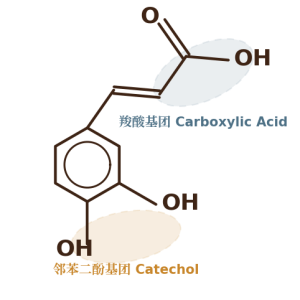
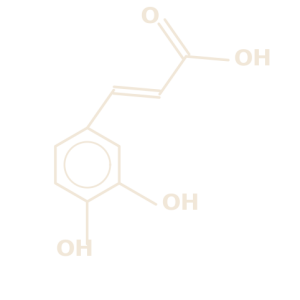
Chemical name: 3,4-Dihydroxycinnamic Acid. Molecular formula: C9H8O4.

Structural features: a catechol group, conjugated double bond, and carboxylic acid. Naturally occurs in plants, coffee, propolis, and plant metabolites.

Caffeic Acid and Caffeine are entirely different molecules.

The catechol group participates in electron or hydrogen-atom transfer, supporting radical scavenging, termination of oxidative chain reactions, and metal-ion interactions.

Source: structure drawn from public chemical data, PubChem—Caffeic Acid.

05 · Formulation Barriers Behind the Activity

1 Limited aqueous solubility and dispersion: low solubility in pure water limits high-loading aqueous formulations.

2 Sensitivity to light, oxygen, and formulation conditions: free caffeic acid can degrade rapidly under light.

3 Color changes after oxidation: phenolic oxidation can affect appearance stability.

4 Limited distribution and availability in complex emulsions: micelle, gel, and microparticle delivery research addresses this need.

5 Skin and follicular contact requires optimization: distribution and follicular deposition depend on delivery design.

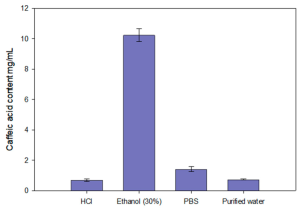
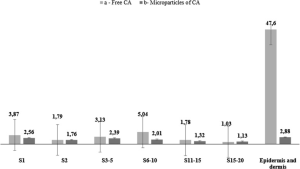
Literature solubility data: in vitro measurements (n = 3, mean ± SD) show solubility below 1 mg/mL in pure water, markedly lower than in 30% ethanol. Aqueous use requires systematic solubilization and protection.
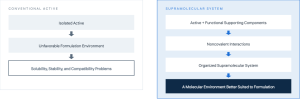
The technical objective is a molecular microenvironment better suited to cosmetic use.

Sources: Jokubaite et al. Gels. 2024;10(12):794; Mazzotta et al. Molecules. 2024;29(14):3329; dos Santos et al. Saudi Pharm J. 2019;27:791–797.

06 · Four Components, One Integrated System

Caffeic Acid, antioxidant core: radical scavenging, photoaging defense, even-looking tone, and a research basis for sebum/blemish care.

Zinc PCA, balance core: sebum management, skin comfort, a research basis for MMP-1/collagen protection, and scalp freshness.

Xyloglucan, interface core: polysaccharide film formation, a hydrated interface, contact with skin/hair surfaces, and comfortable sensory properties.

Alpha-Glucan Oligosaccharide, microbiome core: prebiotic design, beneficial microbial ecology, and skin/scalp balance.

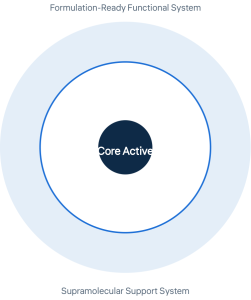
The presentation describes a dynamic, multisite composite system formed through noncovalent supramolecular interactions.

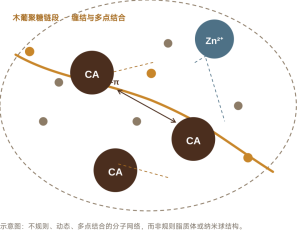
07 · From Four Components to a Dynamic Microenvironment

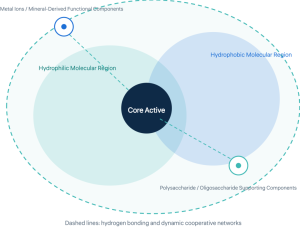
Hydrogen bonding: caffeic acid phenolic hydroxyls and polysaccharide hydroxyls.

Dynamic coordination/ionic interactions: caffeic acid carboxyl and phenolic hydroxyl groups with Zn²⁺.

π–π interactions: caffeic acid aromatic rings.

Chain entanglement and multipoint binding: the Xyloglucan polymer network.

Hydrophilic microenvironment: Alpha-Glucan Oligosaccharide contributes.

Dynamic self-assembly: multicomponent noncovalent assembly.

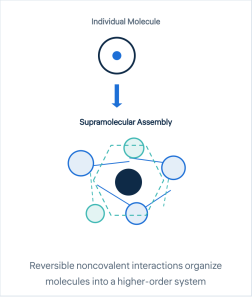
The schematic represents an irregular, dynamic, multipoint molecular network, rather than a regular liposome or nanosphere. Reversible interactions incorporate active small molecules into a hydrophilic polysaccharide/zinc network.

08 · Reducing Practical Barriers to Caffeic Acid

Disperse: supports aqueous use and dispersion in toners, gels, and other water-based formats.

Protect: a protective environment aims to reduce direct exposure to light, oxygen, and environmental factors.

Interface: polysaccharide networks support contact with skin, scalp, and hair surfaces.

Multifunction: combines antioxidant, sebum, barrier, and microbiome care concepts.

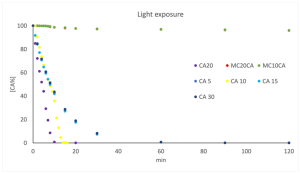
Literature accelerated-light experiment: free caffeic acid solutions (CA 5–30 μg/mL) degraded substantially over 20–120 min, while polymeric micelles MC10CA/MC20CA largely retained initial concentrations through 120 min. These carrier findings support protective-environment design and are not direct SupraCaffix™ test results.

Source: Mazzotta et al. Formulation of Polymeric Micelles to Increase the Solubility and Photostability of Caffeic Acid. Molecules. 2024;29(14):3329.

09 · Catechol-Driven Antioxidant Defense

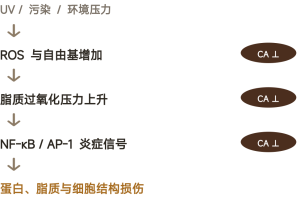
Pathway: UV/pollution/environmental stress increases ROS and radicals, lipid peroxidation, NF-κB/AP-1 inflammatory signaling, and damage to proteins, lipids, and cellular structures. The diagram marks CA intervention at multiple points.

Caffeic acid scavenges radicals, terminates oxidative chain reactions, donates electrons or hydrogen atoms, reduces lipid peroxidation pressure, and modulates oxidative-stress-related NF-κB/AP-1 signals.

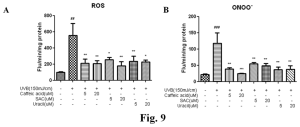
Literature mouse skin model with UVB 150 mJ/cm²: caffeic acid at 5 and 20 μM reduced ROS and ONOO⁻ generation in a concentration-dependent manner. Figure symbols: ##/### vs control; */**/*** vs UVB.

Source: Kim et al. Anti-Wrinkle and Anti-Inflammatory Effects of Active Garlic Components and the Inhibition of MMPs via NF-κB Signaling. PLoS ONE. 2013;8(9):e73877.

The concept extends from radical scavenging to oxidative cascade management.

10 · From ROS to MMPs: Photoaging Defense

Pathway: UVB/UVA or environmental stress increases ROS, activates NF-κB/AP-1, increases MMP expression, and promotes collagen degradation, associated with visible fine lines, laxity, and roughness. CA and Zn²⁺ interventions are shown schematically.

Caffeic acid research: protection of UVB-treated human fibroblasts, reduced oxidative stress, supported viability, and modulation of MMP-related photoaging signals.

Zinc PCA research: inhibition of UVA-induced AP-1 activation, reduced MMP-1 production, and supported type I collagen synthesis.

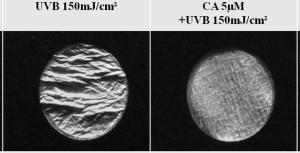
Literature skin-replica images: caffeic acid 5 μM reduced wrinkle formation compared with UVB 150 mJ/cm².

Sources: Jeon et al. J Food Biochem. 2019;43:e12701; Takino et al. Int J Cosmet Sci. 2012;34(1):23–28; Kim et al. PLoS ONE. 2013;8(9):e73877.

11 · Caffeic Acid × Zinc PCA: Structural Protein Protection

Caffeic acid: antioxidant reduction of upstream ROS stress, NF-κB/AP-1 modulation, reduced MMP-related collagen damage, and support for post-light cellular homeostasis.

Zinc PCA: UVA-related MMP-1 modulation, a supportive collagen-synthesis environment, and zinc involvement in skin enzymes and cellular defense.

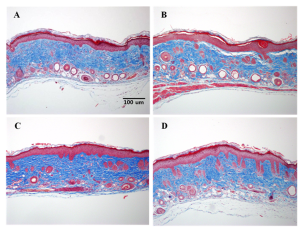
Literature Masson trichrome images of UVB-exposed mouse skin (collagen blue): A, no-UVB control; B, UVB 150 mJ/cm²; C and D, UVB plus caffeic acid 5/20 μM. Collagen fibers were better preserved with caffeic acid (Kim 2013).

The combined design links oxidative/inflammatory signal management with collagen protection and cellular homeostasis.

Sources: Kim 2013; Takino 2012.

12 · Skin Tone Clarity Beyond a Single Tyrosinase Pathway

The concept addresses oxidative pressure and pigmentation, post-inflammatory uneven tone, and UV-related pigment signaling. The diagram links CA, MITF, and TYR/melanogenesis.

Caffeic acid supports a multidimensional concept through antioxidant activity, cellular signaling, and melanogenesis-related pathways.

01 Antioxidant pathway: less oxidative pressure on pigment signals.

02 Cellular signaling: modulation of MITF-related transcription.

03 Melanogenesis: regulation observed in B16 cells.

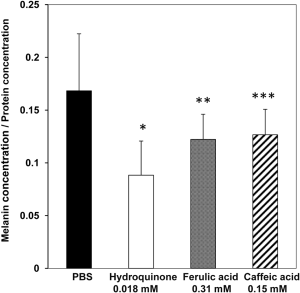
Literature B16 melanoma cell model: caffeic acid 0.15 mM significantly reduced melanin (*** vs PBS). Reference groups were ferulic acid 0.31 mM (**) and hydroquinone 0.018 mM (*).

Concept: reduce sources of dullness for clearer, more even-looking radiance.

Source: Maruyama et al. Biol Pharm Bull. 2018;41(5):806–810.

13 · Managing Sebum Oxidation and Visible Blemishes

Pathway: excess sebum, sebum oxidation, shine/pores/unstable skin condition, and visible blemishes/redness.

Caffeic acid: patent research on sebocytes, acne-associated microorganisms, and pro-inflammatory factors. Zinc PCA: oily skin/scalp use and sebum balance. Polyphenol antioxidants: reduced sebum oxidation pressure. Alpha-Glucan Oligosaccharide: microbiome-friendly balance.

Cosmetic language: shine management, fresh-feeling pores, care for recurring blemish-prone skin, visible redness/discomfort management, and a clear skin feel. Therapeutic claims are excluded.

The concept manages sebum oxidation and skin fluctuations.

Source: KR101409111B1. Composition for treating or preventing acne comprising caffeic acid or its derivative as an active ingredient. Published 2014 (patent title).

14 · Zinc PCA: More Than Sebum Management

Sebum: balanced sebum and a fresh skin feel. Photoaging: modulation of UVA-induced AP-1/MMP-1. Collagen: support for type I collagen synthesis. Scalp: oily or stuffy scalp requiring freshness.

Mechanism schematic from in vitro human dermal fibroblasts (Takino 2012): UVA activates AP-1; Zinc PCA inhibits this pathway, reducing MMP-1 and collagen-degradation pressure. The study also observed increased type I collagen synthesis. Original numerical data should be consulted in the paper.

SupraCaffix™ assigns Zinc PCA roles in sebum balance, photoaging defense, and scalp freshness.

Source: Takino et al. Zinc L-pyrrolidone carboxylate inhibits the UVA-induced production of matrix metalloproteinase-1 by in vitro cultured skin fibroblasts, whereas it enhances their collagen synthesis. Int J Cosmet Sci. 2012;34(1):23–28.

15 · Xyloglucan: A Light, Flexible Polysaccharide Interface

A plant-derived hydrophilic polysaccharide with multipoint hydrogen bonding and chain entanglement. It supports a flexible continuous surface film, contact with skin/scalp/hair, hydration, smoothness, and comfort, while organizing the structural network and interface.

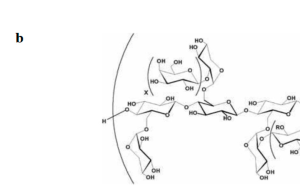
The open-access repeating-unit image shows backbone and side chains underlying hydrogen bonding and entanglement. Mucosal models support barrier protection and adhesion concepts, which do not directly establish human skin efficacy.

Concept: natural active residence and a gentler skin/hair feel.

Source: Piqué, Gómez-Guillén, Montero. Int J Mol Sci. 2018;19(3):673.

16 · Alpha-Glucan Oligosaccharide: Supporting Microbial Ecology

A prebiotic oligosaccharide supports beneficial microorganisms through selective nutrition. It suits skin/scalp care under frequent cleansing, sebum fluctuations, and environmental stress.

The design supports modern microbiome care and concepts of barrier comfort, microbial balance, and reduced recurring fluctuations.

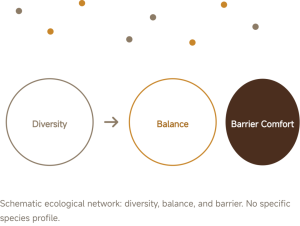
The schematic expresses diversity, balance, and barrier comfort as an ecological network, without representing a specific species profile.

Source: Phan et al. Topical Prebiotics and Microbiome Metabolites—A Systematic Review of the Effects of Altering the Skin Microbiome. J Integr Dermatol.

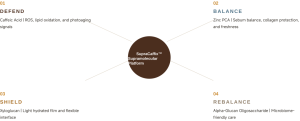
17 · Integrated Mechanism: Defense, Balance, Barrier, and Microbiome

01 Defend: caffeic acid manages ROS, lipid oxidation, and photoaging signals.

02 Balance: Zinc PCA supports sebum balance, collagen protection, and scalp freshness.

03 Shield: Xyloglucan establishes a light hydrated film and flexible contact interface.

04 Rebalance: Alpha-Glucan Oligosaccharide supports a microbiome-friendly skin/scalp environment.

The platform integrates active phenolic acid, zinc homeostasis, polysaccharide protection, and prebiotic concepts. These complementary design roles do not by themselves verify product-level synergy.

18 · Skincare Application Map

Daytime antioxidant serum; nighttime recovery serum; urban environmental-stress care; photoaging-defense lotion; brightening/even-tone serum; oily/combination skin care; post-blemish tone care; sensitive oily skin balance; fresh-feeling pore serum; microbiome-friendly cream; and body roughness/pigmentation care.

One platform supports antioxidant, even-tone, sebum, barrier, and microbiome development pathways.

19 · Scalp Care: Antioxidant, Sebum, and Microbiome Management

Scalp chain: increased sebum, oxidation, microbiome fluctuations, odor/stuffiness/visible flakes/discomfort, and increased stress around follicles.

Corresponding roles: caffeic acid for antioxidant/sebum oxidation management; Zinc PCA for balance/freshness; Xyloglucan for a comfortable hydrated film; Alpha-Glucan Oligosaccharide for microbiome-friendly care.

Key message: extend cleansing into scalp ecological management.

20 · Follicle and Root Care: An Antioxidant Interface Design

Follicles are skin appendages and local interfaces for actives. Caffeic acid microparticle research shows that carrier design can increase follicular deposition. Oxidative stress relates to follicular cellular homeostasis and the hair-cycle environment. Propolis research associated with caffeic acid observed hair-matrix keratinocyte proliferation and anagen-related phenomena.

Positioning: support a follicular vitality environment, healthy-looking roots, and scalp antioxidant care in scalp serums/root-care products.

Differential stripping data: microparticle formulations deposited more caffeic acid in follicles and epidermis/dermis than free caffeic acid.

S1–S20 stratum-corneum fractions and epidermis/dermis distribution: carrier formulations significantly increased retention in epidermal/dermal layers. These are published carrier results, not direct SupraCaffix™ delivery measurements.

Sources: dos Santos et al. Saudi Pharm J. 2019;27:791–797; Miyata et al. J Agric Food Chem. 2014 (Brazilian propolis study).

21 · Hair Fiber Care: Polyphenols and Polysaccharide Films

Sunlight, heat styling, coloring/perming, and pollution can increase oxidative stress and roughness. Caffeic acid provides an antioxidant concept; Xyloglucan supplies a light flexible surface film.

Formulation concepts address dryness, frizz, combability, and shine, including leave-on care, scalp/hair dual serums, and pollution-protection sprays.

Suggested formats: 01 leave-on spray; 02 hair antioxidant serum; 03 post-color care; 04 heat-damage care; 05 dual scalp/hair serum; 06 light conditioner/mask.

One platform supports integrated scalp-to-hair care.

Source: Effects of Natural Polyphenols on Skin and Hair Health—A Review. 2022 (background review).

22 · One Platform, Multiple Formats

01 Antioxidant water/toner. 02 Water-based antioxidant serum. 03 Even-tone serum emulsion. 04 Sebum-balancing gel serum. 05 Microbiome-friendly lotion. 06 Scalp serum/tonic. 07 Fresh-feeling sebum-care shampoo. 08 Leave-on hair spray.

Combination directions: Niacinamide, Panthenol, Ectoin, Hyaluronic Acid, Ceramides, Amino Acids, Tocopherol, Ferulic Acid (combined polyphenol antioxidant concept), and Caffeine (scalp products, distinct from Caffeic Acid).

Actual compatibility and stability testing are required. These directions do not imply complete compatibility.

23 · Formulator’s Technical Guidance

Addition: preferably at a lower-temperature stage, avoiding prolonged heat. Consult PuriPharm technical documentation for exact temperature.

pH: consider mildly acidic to near-neutral systems and avoid prolonged distinctly alkaline conditions. Consult product stability information for the applicable range.

Formats: evaluate aqueous products, serums, gels, lotions, scalp tonics, and shampoos; adjust dispersion and addition processes accordingly.

Stability: reduce prolonged strong-light/air exposure, consider light-protective/low-oxygen-permeability packaging, assess antioxidant/preservative compatibility, and avoid strong oxidants.

Metals and chelators: the product contains Zinc PCA. High levels of strong chelators may affect zinc-related interactions; EDTA use requires formulation testing.

Exact temperature, pH range, and recommended use level follow PuriPharm Co. Ltd. TDS. No unconfirmed fixed values are provided.

24 · References

The complete references and molecular-structure source from the presentation are retained below.

1 Jeon J, et al. Protective activity of caffeic acid and sinapic acid against UVB-induced photoaging in human fibroblasts. J Food Biochem. 2019;43:e12701. DOI: 10.1111/jfbc.12701.

2 Takino Y, et al. Zinc L-pyrrolidone carboxylate inhibits the UVA-induced production of matrix metalloproteinase-1 by in vitro cultured skin fibroblasts, whereas it enhances their collagen synthesis. Int J Cosmet Sci. 2012;34(1):23–28. DOI: 10.1111/j.1468-2494.2011.00676.x.

3 dos Santos LCO, et al. Caffeic acid skin absorption: Delivery of microparticles to hair follicles. Saudi Pharm J. 2019;27:791–797. DOI: 10.1016/j.jsps.2019.04.015.

4 Maruyama H, Kawakami F, Lwin TT, Imai M, Shamsa F. Biochemical Characterization of Ferulic Acid and Caffeic Acid Which Effectively Inhibit Melanin Synthesis via Different Mechanisms in B16 Melanoma Cells. Biol Pharm Bull. 2018;41(5):806–810. DOI: 10.1248/bpb.b17-00892.

5 Kim SR, et al. Anti-Wrinkle and Anti-Inflammatory Effects of Active Garlic Components and the Inhibition of MMPs via NF-κB Signaling. PLoS ONE. 2013;8(9):e73877. DOI: 10.1371/journal.pone.0073877.

6 Miyata S, et al. Stimulatory Effect of Brazilian Propolis on Hair Growth through Proliferation of Keratinocytes in Mice. J Agric Food Chem. 2014. DOI: 10.1021/jf503184s.

7 Mazzotta E, et al. Formulation of Polymeric Micelles to Increase the Solubility and Photostability of Caffeic Acid. Molecules. 2024;29(14):3329. DOI: 10.3390/molecules29143329.

8 Jokubaite M, et al. Potential Unlocking of Biological Activity of Caffeic Acid by Incorporation into Hydrophilic Gels. Gels. 2024;10(12):794.

9 Piqué N, Gómez-Guillén MC, Montero MP. Xyloglucan, a Plant Polymer with Barrier Protective Properties over the Mucous Membranes: An Overview. Int J Mol Sci. 2018;19(3):673. DOI: 10.3390/ijms19030673.

10 Phan S, et al. Topical Prebiotics and Microbiome Metabolites: A Systematic Review of the Effects of Altering the Skin Microbiome. J Integr Dermatol. DOI: 10.64550/joid.d9xw9z64.

11 Effects of Natural Polyphenols on Skin and Hair Health: A Review. 2022.

12 Korean Patent KR101409111B1. Composition for treating or preventing acne comprising caffeic acid or its derivative as an active ingredient. Published 2014.

分子结构参考:PubChem, Caffeic Acid(公开化学数据)。

25 · Built on Published Science, Designed for Modern Formulation

Evidence pyramid: patent evidence for caffeic acid sebum/blemish/cosmetic applications; delivery/formulation science on caffeic acid and follicles; ingredient science on Caffeic Acid, Zinc PCA, Xyloglucan, and Alpha-Glucan Oligosaccharide; and a product-specific physicochemical, stability, and efficacy data framework for SupraCaffix™.

The final category is presented as a data framework: this deck does not supply numerical product-specific validation. Published ingredient/carrier results should retain their original attribution.

Caffeic acid supplies the antioxidant core, Zinc PCA supports balance, Xyloglucan creates a flexible interface, and Alpha-Glucan Oligosaccharide connects microbiome care. From facial antioxidant care to scalp balance, the platform supports multifunctional formulation development.

PuriPharm Co. Ltd.

PuriActives® Supra Series

01 · PuriActives® Supra Series

From difficult-to-use actives to formulation-ready performance.

PuriPharm Co., Ltd. Cosmetic Active Ingredients. Technical Presentation.

02 · Why Supramolecular Technology: Active Value and Formulation Challenges

High-value ingredients with biological activity or efficacy potential can still face 11 common challenges in real cosmetic formulations.

Solubility and dispersion: insufficient water solubility, difficult dispersion, crystallization or precipitation, and uneven distribution.

Stability: limited oxidative stability, limited light stability, and pH sensitivity.

Compatibility and application: limited formulation compatibility, dependence on organic solvents, difficult development, and incomplete translation of molecular activity into finished-product performance.

Core conclusion: scientific value becomes product value when an active can be incorporated successfully, remain stable, distribute uniformly, and perform effectively.

03 · Supramolecular Chemistry: Recognition, Organization, and Cooperation

Conventional chemistry examines how atoms form molecules through covalent bonds. Supramolecular chemistry examines how molecules recognize, bind, arrange, and cooperate through reversible noncovalent interactions to form higher-order organized systems.

Definition: the science of ordered molecular assemblies formed through noncovalent interactions.

Key interactions: hydrogen bonding, electrostatic and hydrophobic interactions, van der Waals forces, π–π interactions, host–guest interactions, molecular recognition, and metal-ion coordination.

Individual molecules organize into supramolecular assemblies through reversible noncovalent interactions.

Sources: Lehn J.-M. Supramolecular Chemistry. Science 1993, 260, 1762–1763. DOI: 10.1126/science.8511582; Supramolecular Chemistry—Scope and Perspectives (Nobel Lecture). Angew. Chem. Int. Ed. 1988, 27, 89–112.

04 · Understanding the System: Optimizing the Molecular Environment

Conventional active performance depends on the aqueous and oil phases, pH, salts, temperature, and other ingredients. Functional components in a supramolecular system create a cooperative molecular environment around the active.

The presentation compares this to a molecular team supporting an active facing formulation challenges.

Conventional pathway: an isolated active encounters an unfavorable environment and solubility, stability, and compatibility problems.

Supramolecular pathway: the active and functional supporting components form an organized system through noncovalent interactions, creating an environment better suited to formulation.

05 · System Formation: From Separate Components to a Dynamic Network

An active, functional supporting components, and an aqueous phase or specific formulation environment organize into a dynamic supramolecular network through reversible noncovalent interactions.

These include hydrogen bonding, electrostatic interactions, hydrophobic association, molecular recognition, and coordination. The reversible, dynamic, cooperative network creates a functional molecular environment.

A supramolecular system does not necessarily create a new covalent chemical substance. Its function arises from component organization, interactions, and cooperative behavior.

06 · Conventional Actives and Supramolecular Systems

Conventional actives primarily rely on individual molecules. Performance depends strongly on solvent conditions, with potential solubility and dispersion problems. Stability and compatibility require separate solutions, while actives and supporting systems remain relatively independent.

Supramolecular systems combine functional components and tailor the molecular environment. They can support compatibility and uniform distribution, reduce some application barriers, and provide complementary functions, with emphasis on finished-product performance.

Purposeful organization offers the possibility of synergistic value greater than the sum of its parts. This describes a platform design objective rather than verified synergy for every product.

07 · From Formulation Challenges to Solutions

The table maps formulation challenges to molecular strategies and practical value for formulators. Development starts from a formulation problem and uses molecular strategies to create actionable formulation value.

Formulation challenge Supramolecular strategy Formulation value
Insufficient water solubility Create a hydrophilic molecular environment Easier incorporation into water-based systems
Crystallization or precipitation Intermolecular interactions and organized assembly Improved dispersion and storage performance
Insufficient stability Create a supportive microenvironment Improved formulation robustness
Limited system compatibility A cooperative multicomponent molecular system Greater formulation flexibility
Uneven distribution Improve molecular-level dispersion More uniform active distribution
Limited active functionality Combine with functional supporting components Multidimensional formulation value

08 · Supra Series: A Platform for Real Formulations

PuriActives® Supra Series comprises multifunctional supramolecular active systems. Each combines a high-value cosmetic active with designed functional supporting components according to its molecular properties. Noncovalent interactions create a cooperative environment intended to improve ease of use, compatibility, and overall functional value.

The platform can expand to different actives.

Three layers: the core active, a supramolecular support system, and a formulation-ready functional system.

09 · Development Purpose: Bridging Scientific Potential and Commercial Formulations

A molecule with scientific potential is not automatically a formulation-ready commercial cosmetic ingredient.

01 Improve the practical value of high-value actives.

02 Make difficult actives easier to formulate.

03 Improve use in water-based systems.

04 Support stability and uniform distribution.

05 Reduce development barriers.

06 Create multifunctional cooperative systems through supporting components.

07 Translate scientific potential into commercially feasible ingredients.

08 Bring active concepts closer to finished-product development.

10 · Core Objective: Connecting Molecular Potential and Real Performance

To make high-value active ingredients easier to use and more effective in real cosmetic formulations through supramolecular organization.

The pathway connects molecular potential, supramolecular organization, formulation performance, and perceptible product value.

11 · Four Development Principles

01 Formulation readiness: turn difficult actives into convenient ingredient systems.

02 Molecular compatibility: create a suitable physicochemical environment.

03 Synergistic functionality: combine complementary functions of the core active and supporting components.

04 Real formulation performance: consider experimental molecular activity alongside the actual state of use in finished cosmetics.

Supra applies supramolecular science to real formulation needs.

12 · Typical Architecture of a Supra System

A system may include a core active, metal ions or mineral-derived functional components, polysaccharide or oligosaccharide supporting components, and hydrophilic and hydrophobic regions.

Hydrogen-bond networks, electrostatic interactions, and coordination contribute to a dynamic cooperative supramolecular network. Dashed lines illustrate hydrogen bonding and dynamic cooperation.

The diagram presents the platform’s general design logic. Specific components and organization depend on the core active’s physicochemical properties and intended use.

13 · Representative Products

S1 PuriActives® SupraFerulix™: a supramolecular ferulic acid system. Ferulic acid offers antioxidant and photoaging-care potential but faces solubility, stability, and compatibility challenges in aqueous formulations.

S2 PuriActives® SupraSalix: a supramolecular salicylic acid system. Salicylic acid supports pore cleansing, exfoliation, and oily/acne-prone skin care, with limitations in water solubility and pH compatibility.

S3 PuriActives® SupraHDA™: a supramolecular 10-HDA system. This characteristic royal-jelly-related functional molecule has skin and scalp care potential but presents practical formulation challenges.

S4 PuriActives® SupraCaffix™: a supramolecular caffeic acid system. Caffeic acid offers polyphenol antioxidant value, with aqueous solubility, oxidative stability, and compatibility requiring optimization.

Sources: Srinivasan et al. 2007; Saija et al. 2000; Arif 2015; Zhang et al. 2022; Sugiyama et al. 2012; Yang et al. 2018. Original bibliographic details appear in the final section.

14 · Supramolecular Organization and Conventional Delivery

Supramolecular technology is defined by purposeful molecular organization and functional cooperation through reversible noncovalent interactions. Its definition does not depend on nanoscale size or physical encapsulation.

It can combine with liposomes, nanodelivery, and other technologies, with a distinct design rationale. The table summarizes the main features.

Technology Main features
Solubilization Primarily improves dissolution or dispersion in a solvent.
Microcapsules / encapsulation Primarily encloses actives within physical wall materials.
Liposomes Primarily carries actives in lipid bilayers or vesicles.
Nanodelivery Typically focuses on particle size, surface area, dispersion, and delivery performance.
Supramolecular technology Organizes molecules into cooperative systems through reversible noncovalent interactions.

15 · Value for Formulators: Practical Molecular Science

Ease of use: easier incorporation, reduced reliance on strong solvents, and support for water-based development.

Formulation performance: supports uniform distribution, design flexibility, and formats including serums, gels, and lotions.

Development value: opportunities for multifunctional concepts, simpler development steps, new scalp-serum and cleansing/conditioning applications, and translation of high-value molecules into commercial products.

Advanced molecular science made practical for formulators. The image illustrates development across serum, gel, and lotion formats.

16 · Skin, Hair, and Scalp Care Directions

Skin care: antioxidant care, aging and photoaging care, skin brightening, oily/acne-prone skin care, exfoliation, soothing, barrier support, sensitive-skin formulations, protection from external stressors, serums, and functional lotions.

Hair and scalp care: scalp sebum management, soothing, antioxidant care, microenvironment management, pollution protection, scalp serums, functional shampoos and conditioners, and comprehensive hair/scalp care.

Specific directions for each Supra product should follow its core active and actual test data.

17 · Key Questions, Answered

Q1 What is supramolecular technology? It purposefully organizes molecules into cooperative functional systems through noncovalent interactions such as hydrogen bonding, electrostatic and hydrophobic interactions, and molecular recognition, creating a suitable environment for actives.

Q2 Why develop Supra Series? To address limitations in solubility, stability, dispersion, compatibility, and practical use, bridging molecular potential and real formulation performance.

18 · Molecular Organization. Formulation Freedom. Active Performance.

Building the molecular environment where actives perform better.

PuriPharm Co., Ltd.

Selected references below retain the bibliographic information supplied in the presentation.

Lehn J.-M. Science 1993, 260, 1762–1763. DOI: 10.1126/science.8511582

Lehn J.-M. Angew. Chem. Int. Ed. 1988, 27, 89–112. DOI: 10.1002/anie.198800891

Cram D. J. Angew. Chem. Int. Ed. 1988, 27, 1009–1020.

Pedersen C. J. Angew. Chem. Int. Ed. 1988, 27, 1021–1027.

Lehn J.-M. Proc. Natl. Acad. Sci. USA 2002, 99, 4763–4768.

Lehn J.-M. Chem. Soc. Rev. 2007, 36, 151–160. DOI: 10.1039/b616752g

Aida T., Meijer E. W., Stupp S. I. Science 2012, 335, 813–817.

Webber M. J., Langer R. Chem. Soc. Rev. 2017, 46, 6600–6620.

Srinivasan M. et al. J. Clin. Biochem. Nutr. 2007, 40, 92–100.

Saija A. et al. Int. J. Pharm. 2000, 199, 39–47.

Arif T. Clin. Cosmet. Investig. Dermatol. 2015, 8, 455–461. DOI: 10.2147/CCID.S84765

Zhang L. et al. J. Cosmet. Dermatol. 2022, 21, 3398–3405.

Sugiyama T. et al. Endocr. Metab. Immune Disord. Drug Targets 2012.

Yang Y.-C. et al. BMC Complement. Altern. Med. 2018, 18.

PuriActives® Supra-Allantoin

01 · PuriActives® Supra-Allantoin

Beyond soothing: from skin barrier care to skin and scalp microbiome balance.

PuriActives® Supramolecular Care System. PuriPharm Co. Ltd.

02 · Contents: From Molecule to Application

03 · Product Concept: From Soothing to Integrated Care

PuriActives® Supra-Allantoin combines Zinc PCA, Allantoin, Xyloglucan, and Alpha-Glucan Oligosaccharide. The presentation describes an integrated supramolecular care system in which four components cooperate within a hydrophilic network to address sebum management, soothing and recovery, flexible film formation, and microbiome balance across skin, scalp, and hair care.

Purify: Zinc PCA for sebum and scalp environment management.

Soothe: Allantoin for soothing and recovery.

Protect: Xyloglucan for a flexible film and barrier interface.

Balance: Alpha-Glucan Oligosaccharide for microbiome balance.

One active system addresses oiliness, irritation, barrier stress, and microbial balance in sensitive oily skin and scalp.

Source: PuriPharm public supramolecular product platform, puriactives.com (platform narrative).

Source link from the presentation: https://www.puriactives.com/en/?p=1281

04 · Supra-Architecture: Four Components, One Integrated System

Zinc PCA (INCI: Zinc PCA): sebum balance, freshness, and scalp environment management. Functional Zn²⁺ ions and the skin-compatible PCA carrier form a small functional node.

Allantoin (INCI: Allantoin): soothing, recovery, and support for stressed skin. This polar ureide molecule forms the soothing and recovery core.

Xyloglucan (INCI: Xyloglucan): flexible film formation, a biomimetic interface, and support for skin cell recovery. A hydroxyl-rich polysaccharide backbone creates a flexible hydrophilic network.

Alpha-Glucan Oligosaccharide (INCI: Alpha-Glucan Oligosaccharide; α-GOS): prebiotic microbiome balance and barrier support. These short-chain sugars can be selectively utilized by skin commensals.

Sources: Allantoin—Araújo et al. 2010; Xyloglucan—Nie & Deters 2013; α-GOS—Duan et al. 2021; Zinc PCA—public international supplier technical information. Full references appear in the final section.

Source link from the presentation: https://ajiaminoscience.eu/personalcare/produit/ajidew-zn-100/

05 · Supra-Architecture: Dynamic Multipoint Interactions

The presentation proposes a dynamic hydrophilic network in which Zn²⁺/Zinc PCA functional nodes interact with Allantoin polar sites and polysaccharide hydroxyl groups through coordination, hydrogen bonding, electrostatic interactions, and hydrophilic associations.

Structural modules comprise Zinc PCA functional nodes, a hydroxyl-rich flexible Xyloglucan backbone, Allantoin carbonyl/ureide polar sites, and an α-GOS short-chain sugar ecological module. The architecture integrates four care functions in one system.

06 · Molecular Mechanisms: Four Complementary Functions

Zinc PCA: functional zinc ions and the skin-compatible PCA carrier support sebum and microbial environment management.

Allantoin: a ureide molecule provides the soothing and recovery core.

Xyloglucan: a dense hydroxyl-rich polysaccharide network creates a flexible hydrophilic interface.

α-GOS: prebiotic sugars can be selectively utilized by skin commensals.

Small molecules deliver activity, polysaccharides organize the interface, and prebiotic sugars extend care into the microbial ecosystem. A dynamic supramolecular network forms the center.

Sources: Zinc PCA sebum, freshness, and dandruff-care applications—public international supplier information; XG film formation—Kochumalayil et al. 2010, DOI: 10.1039/C0JM00367K.

Source link from the presentation: https://ajiaminoscience.eu/personalcare/produit/ajidew-zn-100/

07 · From Cell Recovery to Barrier Homeostasis

Surface ecosystem (α-GOS/Zinc PCA): an ingredient-level human α-GOS study reported improved Simpson index in the low-diversity group, with trends toward increased S. epidermidis and decreased S. aureus.

Stratum corneum (α-GOS): patent ex vivo/cellular experiments observed changes in the barrier-associated proteins filaggrin and involucrin (NL2037619A).

Epidermis (Xyloglucan): in vitro work supports proliferation and migration of human keratinocytes and fibroblasts, involving pro-proliferative signaling (Nie & Deters 2013).

Dermis/recovery layer (Allantoin): an animal open-wound model suggested inflammatory modulation, fibroblast proliferation, and extracellular matrix (ECM) synthesis (Araújo 2010; preclinical evidence).

Repair the tissue interface, support the barrier, and rebalance the ecosystem. The layer diagram illustrates mechanisms and does not establish product delivery depth.

Sources: Duan 2021, 10.5107/sccj.55.176; NL2037619A; Nie & Deters 2013, 10.1155/2013/359756; Araújo 2010, 10.1590/S0102-86502010000500014.

Source link from the presentation: https://doi.org/10.1590/S0102-86502010000500014

08 · Skin Benefits: Sensitive, Oily, and Barrier-Stressed Skin

Calm without heaviness. Balance without stripping. Protect beyond the surface.

Soothing and recovery: Allantoin + Xyloglucan combine a soothing core with a biomimetic interface to support stressed skin recovery.

Shine and sebum balance: Zinc PCA supports management of visible sebum and a fresh feel.

Barrier and moisture environment: Xyloglucan + α-GOS combine flexible hydrophilic film formation and prebiotic support.

Microbiome balance: α-GOS + Zinc PCA integrate prebiotic microbial management with sebum environment management.

Applications: sensitive oily skin serums, post-procedure/post-exfoliation care concepts, sebum-balancing soothing lotions, complementary care for acne-prone skin, and fresh-feeling men’s care.

Source: a case series of 11 participants using a Zinc PCA-containing facial cream reported improvement in all participants after 8 weeks (Piquero-Casals et al. 2020). This is evidence from a multi-ingredient formulation.

Source link from the presentation: https://pubmed.ncbi.nlm.nih.gov/32574015/

09 · Scalp Is Skin: Extending Barrier and Microbiome Science

Oil balance, scalp comfort, the microbiome, and hair surface care.

Zinc PCA: freshness and use in dandruff-care formulations. Allantoin: soothing and sensitive scalp care concepts. α-GOS: microbiome-friendly scalp care concepts. Xyloglucan: flexible film formation and deposition-interface concepts for hair care.

Formats: sebum-balancing shampoos, scalp serums, complementary dandruff-care products, sensitive scalp cleansing and conditioning, oily-root sprays, and leave-on scalp care.

Image: illustrative macro photography of scalp and hair roots.

Source: a prospective cohort of 20 participants reported improvement with a salicylic acid/piroctone olamine/Zinc PCA scalp regimen (PMID 39778065, 2025). These results relate to a multi-ingredient regimen.

Source link from the presentation: https://pubmed.ncbi.nlm.nih.gov/39778065/

10 · Evidence Architecture: Clarifying Evidence Strength

The presentation organizes its system narrative using human, ex vivo, cellular, materials, and patent evidence. The diagram lists, from top to bottom, the Supra-Allantoin system, human/clinical evidence, ex vivo/cellular evidence, preclinical/materials evidence, and patent/supplier data.

Human/clinical: facial flora research on α-GOS and multi-ingredient facial/scalp formulations containing Zinc PCA.

Ex vivo/cellular: α-GOS-associated filaggrin/involucrin findings and XG skin cell proliferation/migration.

Preclinical/materials: Allantoin animal wound models and XG film properties.

Patent/supplier: allantoin–metal complexes and public Zinc PCA technical data.

Communication follows the evidence and its limits. Ingredient, combination-formulation, patent, and materials studies do not establish direct human efficacy of the complete Supra-Allantoin system. Details follow in the next three sections and references.

Source link from the presentation: https://www.jstage.jst.go.jp/article/sccj/55/2/55_176/_article/-char/en

11 · Human α-GOS Evidence: Two-Week Microbiome Observations

Study design: an α-GOS-containing gel was applied to the whole face twice daily for 2 weeks. Wet-swab sampling and DNA metagenomic analysis assessed facial flora.

Result 1: microbial diversity improved in the group with a low initial Simpson Index (SI). C. acnes abundance moved toward a more appropriate level in that group.

Result 2: the overall population showed trends toward increased S. epidermidis and decreased S. aureus.

Prebiotic care supports ecological balance. This is ingredient-level human evidence for α-GOS, and trend findings retain the source wording.

Source: Duan Z, Yokota M, Eda Y. The Effect of Alpha-Glucan Oligosaccharide on Facial Skin Flora. J Soc Cosmet Chem Jpn. 2021;55(2):176–181. DOI: 10.5107/sccj.55.176.

Source link from the presentation: https://www.jstage.jst.go.jp/article/sccj/55/2/55_176/_article/-char/en

12 · Recovery Evidence: Allantoin and a Biomimetic Polysaccharide Interface

Allantoin (preclinical animal model): histological findings in the open-wound model of Araújo et al. 2010 involved inflammatory modulation, fibroblast proliferation, and ECM synthesis, providing a preclinical basis for soothing and recovery mechanisms.

Xyloglucan (human skin cells in vitro): Nie & Deters 2013 reported that tamarind Xyloglucan promoted proliferation, cell-cycle progression, and migration, involving pro-proliferative signaling.

Materials research by Kochumalayil et al. 2010 showed that water-cast XG films combined stiffness, strength, and ductile toughness, supporting a flexible biomimetic protective interface.

A soothing core and a biomimetic interface supporting recovery.

Sources: Araújo, Acta Cir Bras. 2010;25(5):460–466, 10.1590/S0102-86502010000500014; Nie & Deters, 10.1155/2013/359756; Kochumalayil, 10.1039/C0JM00367K.

Source link from the presentation: https://doi.org/10.1590/S0102-86502010000500014

13 · Zinc PCA: Sebum and Scalp Balance

Public supplier information describes reduction of excess visible sebum, freshness of skin and hair, mild antimicrobial activity against yeasts and molds, and use in dandruff-care shampoo formulations.

Patent support: technical data on 5α-reductase and MIC support the sebum-management rationale (CN107126379B).

Clinical context from a combination cream: 11 patients with mild-to-moderate facial seborrheic dermatitis used a multi-ingredient Zinc PCA-containing cream for 8 weeks. All improved: 81.8% received an excellent rating and 18.1% a good rating, with 0 recorded adverse reactions. Percentages are retained exactly as supplied.

Sources: public international supplier Zinc PCA information; Piquero-Casals J et al. J Drugs Dermatol. 2020;19(6), DOI: 10.36849/JDD.2020.5121; CN107126379B.

Source link from the presentation: https://ajiaminoscience.eu/personalcare/produit/ajidew-zn-100/

Source link from the presentation: https://patents.google.com/patent/CN107126379B/en

14 · Formulation Guide: Multiple Skin & Scalp Formats

Five-point addition gradient: 0.5%, 1%, 2%, 3%, and 5%. Evaluate clarity, viscosity, pH, electrolyte stability, centrifugation/thermal cycling, and performance. The presentation recommends 1–3%, with up to 5% for enhanced formulations.

Processing: preferably add to the aqueous phase or at a later stage. Evaluate the effects of pH, strong chelators, anionic surfactants, and electrolytes on Zn²⁺ and the supramolecular network.

Sources: NL2037619A (α-GOS barrier proteins and formulation-range context); JP6995791B2 (XG cleansing/conditioning formats); WO2014027120A2 (XG hair deposition).

Source link from the presentation: https://patents.google.com/patent/NL2037619A/en

Format Application
Soothing sebum-balancing serum Daily care for sensitive oily skin
Gel cream / lotion Sebum balance, soothing, and moisturization
Mask Intensive soothing care
Scalp serum Scalp barrier and microbiome
Shampoo Fresh-feeling sebum-balancing cleansing system
Scalp spray Leave-on scalp care

15 · Regulatory & Safety Readiness: Established Ingredient Foundations

China: the PuriPharm ingredient database records XYLOGLUCAN in the 2025 and 2021 Inventory of Existing Cosmetic Ingredients, with a highest historical leave-on use level of 1.989%.

USA: the presentation cites 21 CFR §347.10 for Allantoin as an OTC skin protectant at 0.5–2%. Its history of topical use and CIR safety assessment provide an established foundation.

International: public α-GOS supplier information addresses use in the EU, USA, China, and Japan and COSMOS-related natural-origin information.

The presentation positions all four components as established cosmetic ingredients for global development. These regulatory/database statements reproduce the supplied presentation and do not imply approval or certification of this complex or finished products. They have not been independently updated for this conversion.

Sources: PuriPharm Xyloglucan database; 21 CFR §347.10; Becker et al. 2010, CIR Allantoin safety assessment; public international α-GOS supplier information.

Source link from the presentation: https://www.puriactives.com/db/public/index.php/materials/detail/22408

Source link from the presentation: https://www.ecfr.gov/current/title-21/chapter-I/subchapter-D/part-347/subpart-B/section-347.10

Source link from the presentation: https://www.solabia.com/cosmetics/product/bioecolia/

16 · Market Positioning: From Soothing to Integrated Balance

A supramolecular care system built around Allantoin.

Traditional Allantoin solutions: a single soothing position, established recovery care with a limited mechanism narrative, and substantial similarity between offerings.

Supra-Allantoin positioning: soothing/recovery and sebum balance, flexible film formation and microbiome care, and dual skin/scalp applications.

Four-in-One architecture: an integrated four-component supramolecular system.

Mechanism chain: a three-layer narrative from molecule to microbiome.

Dual applications: one active story for skin and scalp care.

Expandable evidence framework: literature, patents, human, cellular, and materials evidence.

17 · Application Markets: Formulations with Multiple Care Functions

Functional sensitive-skin brands: sensitive oily skin serums, soothing masks, and barrier care concepts.

Oily/acne-prone skin brands: sebum-balancing recovery lotions and complementary acne care products.

Professional scalp care brands: oily scalp serums, sebum-balancing shampoos, complementary dandruff-care products, and leave-on scalp sprays.

International ODM/OEM innovation centers: platform development of multiple formats across skin and scalp formulation libraries.

Target contexts: sensitive/oily skin, barrier stress, and scalp imbalance. One active story spans facial, scalp, and hair-care innovation.

Image: illustrative photography of a translucent serum texture.

18 · Communication System

Primary: Calm. Balance. Protect.

Alternatives: Beyond Soothing. From Molecule to Microbiome. One Supra-System. Skin & Scalp in Balance. Four Components. One Intelligent Interface.

19 · Scientific Evidence Sources: Six Core Evidence Streams

Six evidence dimensions address the human microbiome, skin cells, recovery mechanisms, clinical contexts, supramolecular chemistry, and barrier proteins. Original slide references in the table are retained for evidence navigation.

Evidence dimension Professional source Supporting content
① Human microbiome Duan et al. 2021, J Soc Cosmet Chem Jpn. DOI: 10.5107/sccj.55.176 α-GOS: human flora changes over 2 weeks (slide 11)
② Skin cells Nie & Deters 2013. DOI: 10.1155/2013/359756 Xyloglucan: human skin cell proliferation and migration (slide 12)
③ Recovery mechanisms Araújo et al. 2010, Acta Cir Bras. DOI: 10.1590/S0102-86502010000500014 Allantoin: inflammatory modulation / fibroblasts / ECM (slide 12)
④ Clinical use contexts Piquero-Casals et al. 2020, J Drugs Dermatol. DOI: 10.36849/JDD.2020.5121 Zinc PCA-containing facial care: improvement over 8 weeks (slide 13)
⑤ Supramolecular chemistry WO1995026194A1 (allantoin–metal complexes) Precedent for allantoin–zinc coordination structures (slide 5)
⑥ Barrier proteins NL2037619A (filaggrin / involucrin ex vivo) α-GOS: barrier-associated protein support (slide 7)

20 · Scientific References & Patents

The following retains the full journal, human study, patent, supplier, and platform references from the presentation. Source hyperlinks are retained from the presentation. No additional URLs have been invented.

Source link from the presentation: https://doi.org/10.1590/S0102-86502010000500014

Source link from the presentation: https://doi.org/10.1155/2013/359756

Source link from the presentation: https://doi.org/10.1039/C0JM00367K

Source link from the presentation: https://doi.org/10.1016/j.ijbiomac.2018.10.078

Source link from the presentation: https://www.jstage.jst.go.jp/article/sccj/55/2/55_176/_article/-char/en

Source link from the presentation: https://pubmed.ncbi.nlm.nih.gov/32574015/

Source link from the presentation: https://pubmed.ncbi.nlm.nih.gov/39778065/

Source link from the presentation: https://www.cir-safety.org/ingredient/allantoin

Source link from the presentation: https://patents.google.com/patent/WO1995026194A1/en

Source link from the presentation: https://patents.google.com/patent/NL2037619A/en

JOURNALS & HUMAN STUDIES

Araújo LU, Grabe-Guimarães A, Mosqueira VCF, et al. Profile of wound healing process induced by allantoin. Acta Cir Bras. 2010;25(5):460–466. DOI: 10.1590/S0102-86502010000500014

Nie W, Deters AM. Tamarind seed xyloglucans promote proliferation and migration of human skin cells. Dermatol Res Pract. 2013:359756. DOI: 10.1155/2013/359756

Kochumalayil J, Sehaqui H, Zhou Q, Berglund LA. Tamarind seed xyloglucan — a thermostable high-performance biopolymer. J Mater Chem. 2010;20:4321–4327. DOI: 10.1039/C0JM00367K

Picone P, et al. Biocompatibility, hemocompatibility and antimicrobial properties of xyloglucan-based hydrogel film. Int J Biol Macromol. 2019;121:784–795. DOI: 10.1016/j.ijbiomac.2018.10.078

Duan Z, Yokota M, Eda Y. The effect of alpha-glucan oligosaccharide on facial skin flora. J Soc Cosmet Chem Jpn. 2021;55(2):176–181. DOI: 10.5107/sccj.55.176

Piquero-Casals J, et al. Non-steroidal topical therapy for facial seborrheic dermatitis. J Drugs Dermatol. 2020;19(6). DOI: 10.36849/JDD.2020.5121 (combination-formulation context evidence)

A cohort clinical study on topical salicylic acid / piroctone olamine / Zinc PCA regimens in scalp seborrheic dermatitis. J Cosmet Dermatol. 2025. PMID 39778065 (combination-formulation context evidence)

Becker LC, et al. Final report of the safety assessment of allantoin and its related complexes. Int J Toxicol. 2010. DOI: 10.1177/1091581810362805

PATENTS

WO1995026194A1 Allantoin-metal complexes for skin and hair (1995)

NL2037619A Active ingredients capable of increasing skin barrier-associated protein differentiation

CN107126379B Oil-control acne-removing composition and application thereof

WO2014027120A2 Cosmetic and household care compositions (2014)

JP6995791B2 Xyloglucan-containing gel composition

SUPPLIER & PLATFORM DATA

Zinc PCA technical product information — public international supplier technical information

Alpha-Glucan Oligosaccharide technical information — public international supplier technical information

PuriActives® public supramolecular platform information — puriactives.com (platform narrative)

XYLOGLUCAN Xyloglucan ingredient information — PuriPharm ingredient database;21 CFR §347.10

PuriActives® RhamnoCalm™

01 · PuriActives® RhamnoCalm™: Rhamnose-Rich Soothing Polysaccharide

A rhamnose-rich biofunctional polysaccharide linking glycobiology with skin and scalp soothing. Recognizing cellular signals for targeted soothing.

Key active: Biosaccharide Gum-2. A functional cosmetic active based on glycobiological cell recognition.

PuriPharm Co. Ltd. (浦瑞生物医药技术有限公司).

02 · Product at a Glance: Biotechnology in the Language of Skin

Trade name: PuriActives® RhamnoCalm™. Key active: Biosaccharide Gum-2.

Category: a biotechnology-derived functional polysaccharide active for soothing cosmetic formulations.

Positioning: sensitive skin soothing, rapid redness reduction, anti-irritant care, neuro-comfort, inflammatory signal modulation, support for tolerance of potent actives, healthy aging, and scalp soothing and stress management.

Central idea: rhamnose-rich polysaccharides interact with biological recognition mechanisms in keratinocytes to soothe stressed skin and scalp and support lasting resilience. Rhamnose-powered biological soothing.

Image: illustrative textures for serums, gels, and creams.

03 · Why Skin Becomes Sensitive: The Biological Pathway of Discomfort

Before redness becomes visible, daily stressors can already trigger alarm signals in epidermal cells.

Stressors include UV and pollution, surfactant cleansing, retinol and exfoliating acids, chemical hair coloring or perming, heat, friction and shaving, dryness and barrier stress, and lifestyle or urban stress.

Pathway: environmental and chemical stress on facial or scalp epidermis → keratinocyte activation → IL-1α release and initiation of inflammation → neutrophil recruitment and adhesion → the PLA2, arachidonic acid, and PGE2 cascade → erythema, warmth, and visible discomfort.

04 · Key Active: A Rhamnose-Rich Branched Biosaccharide

Biosaccharide Gum-2 is a biotechnology-derived extracellular polysaccharide produced through modern fermentation, with a branched structure rich in rhamnose residues.

Its biofunctional concept centers on skin–glycan interactions, with sugar units recognized at the keratinocyte surface.

L-rhamnose (Rha): a recognition unit interacting with lectin-like carbohydrate recognition sites.

D-galactose (Gal): a structural unit of the branched glycan backbone.

Glucuronic acid (GlcA): an acidic sugar unit contributing to the glycan’s biological properties.

These related sugar units together define the interaction profile. The branched structure is schematic, with darker units indicating rhamnose-rich recognition motifs.

05 · Glycobiological Cell Recognition

Human keratinocytes have membrane-associated lectins and carbohydrate recognition systems that can interact with rhamnose-containing glycans.

Rhamnose-rich Biosaccharide Gum-2 → interaction with cell-surface lectin/carbohydrate recognition sites → modulation of intercellular communication → reduced spread of irritation responses → less redness and discomfort, with restored comfort and resilience.

This is a recognition-based glycobiological concept, not a pharmacological receptor claim.

Image: fluorescence microscopy of human skin cells.

06 · Rhamnose–Keratinocyte Communication

Cell affinity encoded in glycans: the schematic shows rhamnose-containing units in dark blue interacting with lectin-like carbohydrate recognition sites in gold.

Image: a 3D model of epidermal keratinocyte layers.

Scientific basis: Condaminet et al., Experimental Cell Research, 1997, supports the basis for recognition of α-L-rhamnosyl structures by surface lectins on keratinocytes. DOI: 10.1006/excr.1997.3518. [1]

07 · Inflammatory Signal Network: Five Intervention Points

External stress (UV, surfactants, coloring or perming) → keratinocyte activation → IL-1α/TNF-α release → inflammatory cell recruitment → neutrophil adhesion → PLA2 activation → membrane phospholipid and arachidonic acid pathways → COX → PGE2 → erythema and warmth.

Five intervention points: modulate the initiating IL-1α signal, reduce neutrophil adhesion, inhibit PLA2 activity, modulate PGE2 signaling, and promote β-endorphin release for neuro-comfort.

Signals amplify from external stress to visible redness, and RhamnoCalm™ is positioned for soothing at several nodes.

08 · Multi-Target Soothing: Five Mechanisms

Main pathway: cellular stress → keratinocyte activation → IL-1α → neutrophil adhesion → the PLA2/arachidonic acid cascade → PGE2 → erythema, warmth, and discomfort.

1. Modulate initiation by reducing keratinocyte IL-1α signaling.

2. Reduce neutrophil adhesion and further signal propagation.

3. Inhibit PLA2 to modulate the arachidonic acid cascade upstream.

4. Modulate PGE2 to help reduce redness, warmth, and discomfort.

5. A parallel neuro-comfort pathway promotes keratinocyte β-endorphin release to support comfort beyond inflammatory signaling.

The concept covers a cascade at multiple levels rather than a single inflammatory endpoint.

09 · In Vitro Reference Data: IL-1α

Model: reconstructed human epidermis stimulated with 0.025% tretinoin cream.

The rhamnose-rich polysaccharide reference system reduced induced IL-1α by approximately 11% at 0.66% and 28% at 2%.

This relates to modulation of sensitivity signals at the onset of inflammation.

Source: in vitro reference research on rhamnose-rich Biosaccharide Gum-2. In vitro data do not represent clinical efficacy of finished products.

10 · In Vitro Reference Data: Neutrophil Adhesion

Keratinocytes were stimulated with LPS, then fluorescence-labeled human neutrophils were added to measure adhesion.

The reference system reduced adhesion by approximately 22% at 1% and 40% at 2%. Reduced adhesion can help limit continued inflammatory signal propagation.

Image: a reference light microscopy image of keratinocytes.

Source: in vitro reference research on rhamnose-rich Biosaccharide Gum-2.

11 · In Vitro Reference Data: Upstream PLA2 Modulation

Phospholipase A2 (PLA2) is a key upstream enzyme in the arachidonic acid inflammatory cascade: cell membrane phospholipids → PLA2 → arachidonic acid → COX → PGE2 → visible erythema, warmth, and discomfort.

At approximately 0.5%, the reference system reduced PLA2 activity by about 38%–40%, with relatively stable inhibition over the 0.5%–2% test range.

RhamnoCalm™ is positioned for upstream intervention in the visible redness cascade.

Source: reference in vitro enzyme research on rhamnose-rich Biosaccharide Gum-2.

12 · In Vitro Reference Data: PGE2

Prostaglandin E2 (PGE2) is an important mediator of skin erythema, warmth, irritation, and inflammatory discomfort.

Model A, human neutrophils: a 1% reference system reduced PGE2 synthesis by approximately 32%.

Model B, keratinocytes: another reference system at a higher test concentration reported a maximum decrease of approximately 69% in PGE2 release.

These are independent models and must not be combined into a single dose–response curve. Modulation occurs at several levels from enzymes to mediators.

Source: in vitro reference research on rhamnose-rich Biosaccharide Gum-2.

13 · Neuro-Comfort: β-Endorphin Release

Keratinocytes participate in the skin’s neuroimmune and endocrine network. Rhamnose-rich polysaccharide signaling promotes β-endorphin release, which is associated with comfort and modulation of pain signaling.

Reference data after 36 hours of in vitro keratinocyte culture: release increased approximately 46% with the 1% system and 55% with the 5% system. The presentation reports statistical significance without a specific p-value.

Conceptual pathway: keratinocytes → β-endorphin release → greater comfort and fewer discomfort signals.

Patent WO2004078789A1 describes rhamnose-containing branched polysaccharides with high keratinocyte affinity that can promote β-endorphin release, together with cosmetic compositions and uses. [4]

14 · Human Reference Data: Redness Reduction at 2 Hours

UV-induced erythema reference study: 20 volunteers, UV-induced redness on the back, and a cream containing 5% of the test system compared with placebo.

Instrumental measurement of the a* erythema parameter at 2 hours showed an average decrease of approximately 44% in visible redness among the relevant participants.

Source: a human reference study of rhamnose-rich Biosaccharide Gum-2, not direct clinical data for a finished product.

15 · Sensitive and Active Skin Care: Soothing and Tolerance Support

The IL-1α study in tretinoin-stimulated reconstructed epidermis provides a formulation rationale for pairing rhamnose-rich soothing polysaccharides with potent actives. The source positions the product to preserve active performance while improving irritation, tightness, redness, and overall comfort.

Concepts include retinol/retinal, AHA/BHA/PHA exfoliation, high-concentration vitamin C, brightening actives, acne-prone skin care, and soothing cosmetics after irritating care procedures.

Other opportunities include post-sun, post-shave and depilation aftercare, daily redness care, compromised barriers, and sensitive skin care. Comfort is part of formulation strategy.

Image: soothing care after sun exposure and UV stress.

16 · Healthy Aging: Soothing and Skin Resilience

Inflammation, cellular senescence, ECM damage, and skin aging are interconnected.

Rhamnose research: in vitro and in vivo evidence relates to epidermal and dermal benefits, collagen IV, and procollagen I. Pageon et al., 2019, doi:10.1111/ics.12523. [2]

Rhamnose-rich oligosaccharide/polysaccharide research: these materials can counter increases in the senescence marker SA-β-gal induced by advanced glycation end products (AGEs) in human skin fibroblasts. Ravelojaona et al., 2009, doi:10.1016/j.archger.2007.12.004. [3]

Patent WO2006037813A1 concerns saccharide compounds with repeated rhamnose-rich motifs and cosmetic anti-aging uses. [5]

Attribution boundary: free rhamnose research must be distinguished from Biosaccharide Gum-2 product data. Free sugar results are not measurements of RhamnoCalm™.

17 · From Face to Scalp: Scalp Is Skin

The scalp and facial skin share keratinocytes, epidermal barriers, inflammatory responses, and sensory systems.

Stressors include frequent washing, strong surfactants, coloring, bleaching, perming, oxidants, hot blow-drying, UV, pollution, dryness, friction, and styling residue.

Common concerns include tightness, redness, dryness, irritation, sensitivity, and discomfort.

Pathway: external stress → scalp keratinocyte stress → IL-1α/PLA2/PGE2 → discomfort and erythema. The positioning is based on glycobiological cell recognition. Patent WO2004078789A1 supports cosmetic applications on covering tissues including skin and scalp. [4]

18 · Sensitive Scalp Care Solutions

Sensitive scalp shampoo: reduce discomfort during cleansing.

Scalp soothing serum/spray: for dry, tight, or reactive scalp.

Post-color/post-bleach care: for scalp after oxidative coloring or bleaching.

Post-perm care: support comfort after chemical hair treatment.

Oil-control plus comfort: for pollution, heat, and lifestyle stress.

After-sun scalp care: for scalp after UV exposure.

Men’s scalp care: for areas prone to friction-related discomfort.

Positioning includes scalp soothing, redness support, comfort after coloring or perming, stress-responsive care, and barrier-conscious hair care, without hair-growth or hair-loss prevention claims.

19 · Application Map: Skin and Hair Care

Sensitive skin: soothing serums, lotions, creams, and sprays.

Potent anti-aging care: retinol, retinal, and acid products.

Post-sun care: gels, lotions, and recovery sprays.

Redness-prone skin: redness care serums, soothing masks, and barrier care.

Healthy aging: anti-aging serums and creams.

Baby/child and gentle care: subject to product positioning and regulatory requirements.

Acne-prone skin: oil-control serums and soothing support in acne-care formulas.

After-shave/depilation care: soothing products.

From daily serums to post-color or post-perm scalp care, one glycan technology supports multiple comfort concepts.

20 · Formulation Guide: Technical Parameters

The full parameters appear below. They are based on the supplied technical information for a system equivalent in active strength to a 2.5% Biosaccharide Gum-2 reference solution.

If the commercial product has a different active content, recalculate the recommended addition level accordingly. This fermentation-derived functional polysaccharide is positioned in the source for performance at low addition levels.

Parameter Recommendation
Recommended addition level 3%–5% (for a system equivalent in active strength to a 2.5% Biosaccharide Gum-2 reference solution)
Solubility Water · Propylene glycol · Glycerin
Recommended formulation pH Approximately 4–8
Thermal stability Up to approximately 80 °C
Processing Preferably add during cooling below 45 °C. Reference information also permits addition to the aqueous phase at higher temperatures.

21 · Formulation Concepts: Complementary Combinations

RhamnoCalm™ + panthenol: soothing and hydration.

+ allantoin: multi-pathway soothing.

+ ectoin: protection against environmental stress.

+ niacinamide: soothing and barrier care.

+ Zinc PCA: oil control and comfort for acne-prone skin or scalp.

+ ceramides: barrier resilience.

+ retinoids: potent anti-aging care with a tolerable experience, with further opportunities in PAD/salicylic acid systems.

These are complementary formulation concepts. Unvalidated combinations do not support synergy claims.

22 · Why RhamnoCalm™: Cell Recognition and Multi-Target Soothing

Quantitative reference results: approximately 44% less visible redness at 2 hours (UV human model), 40% lower neutrophil adhesion (in vitro, 2% system), 28% lower induced IL-1α (reconstructed epidermis, 2%), approximately 40% lower PLA2 activity (in vitro, 0.5%), and 46% more β-endorphin release (keratinocytes, 1%).

Key positioning: rhamnose–keratinocyte recognition, multi-target soothing involving IL-1α, adhesion, PLA2, and PGE2, β-endorphin-related neuro-comfort, rapid visible redness reduction, and modulation at several cascade nodes.

Applications include sensitive or stressed skin, retinoid/acid/active formulations, skin and scalp care, healthy aging, and biotechnology-derived rhamnose-rich glycans.

All figures are reference data for Biosaccharide Gum-2 systems. The corresponding chapters specify the models and conditions.

23 · Scientific References and Data Notes

1. Condaminet B. et al. Ultraviolet rays induced expression of lectins on the surface of a squamous carcinoma keratinocyte cell line. Experimental Cell Research. 1997;232(2):216–224. DOI: 10.1006/excr.1997.3518.

2. Pageon H. et al. Potentially beneficial effects of rhamnose on skin ageing: an in vitro and in vivo study. International Journal of Cosmetic Science. 2019;41(3):213–220. DOI: 10.1111/ics.12523.

3. Ravelojaona V., Robert A.M., Robert L. Expression of senescence-associated beta-galactosidase by human skin fibroblasts, effect of advanced glycation end-products and fucose or rhamnose-rich polysaccharides. Archives of Gerontology and Geriatrics. 2009;48(2):151–154. DOI: 10.1016/j.archger.2007.12.004.

4. WO2004078789A1 — Novel agent for stimulating the release of beta-endorphins, cosmetic and/or dermatological compositions containing same and uses thereof.

5. WO2006037813A1 — Cosmetic composition comprising a saccharide compound having a repeated rhamnose-rich motif and its cosmetic use for skin anti-aging activity.

Quantitative efficacy figures are reference data for rhamnose-rich Biosaccharide Gum-2 systems in the supplied technical information. Conditions are specified in each section. In vitro data do not represent clinical efficacy of finished products.

PuriActives® and RhamnoCalm™ are trademarks of PuriPharm Co. Ltd. This material introduces cosmetic ingredients and makes no medicinal claims.

www.puriactives.com